REVIEW · CHIANG RAI, THAILAND
Half-Day Thai Cooking Class with organic ingredients
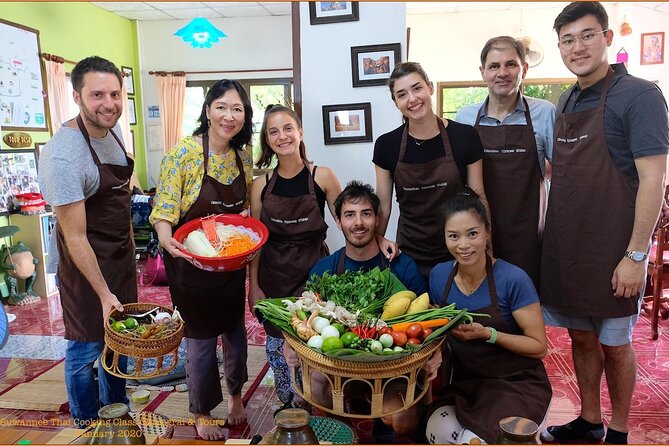
Fresh food, friendly teaching, real local flavor. This Chiang Rai cooking class combines a market visit with hands-on cooking, giving you more than a recipe sheet and a quick meal. I like the chance to shop for organic ingredients before cooking, and I like that each person has a cooking station. The main trade-off is that this is a compact half-day, so the pace may feel full if you want long, leisurely instruction.
The menu covers papaya salad, tom yum soup, chicken green curry, and a banana dessert. I also appreciate the small group limit of eight people and Suwannee’s reported care with spice levels. If you are hoping for alcohol or soda with lunch, bring that expectation down: those drinks cost extra and are not included.
Key points to know before booking
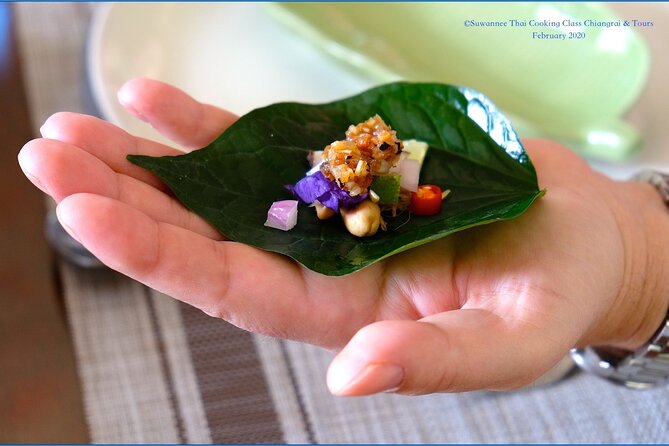
- The market comes first: You shop for the ingredients before cooking, with Suwannee explaining how they fit into Thai food.
- Four dishes fill the class: You prepare papaya salad, tom yum soup, chicken green curry, and a banana dessert.
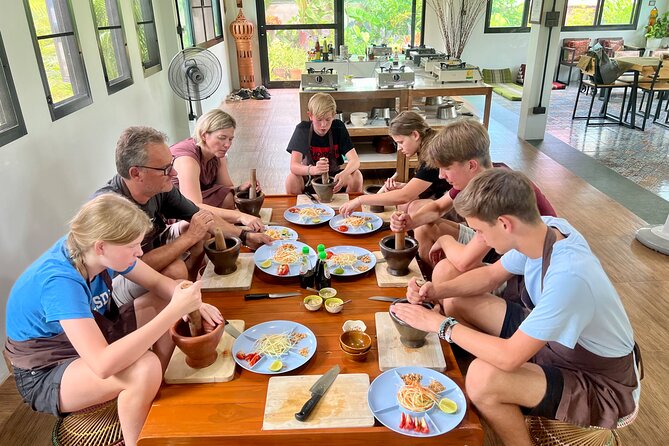
- You cook at your own station: This is a hands-on lesson, not a demonstration where you simply watch someone else work.
- Spice levels can be adjusted: Suwannee makes room for different tastes, useful if your group does not agree on heat.
- The group stays small: A maximum of eight people allows for more direct help at the stove and prep area.
- Lunch is part of the lesson: You sit down to enjoy the food you have made with the rest of the group.
Starting at Chiang Rai’s Old Clock Tower
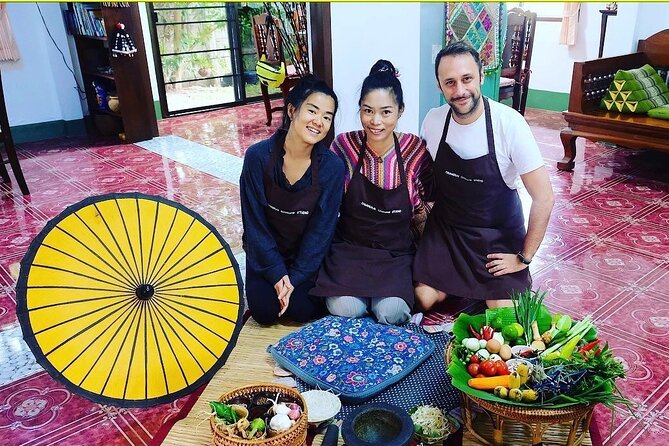
The class begins at the Old Clock Tower, at WR6J+46F on Suk Sathit in central Chiang Rai. That gives you a clear public meeting point and keeps the start easy to find in town. The activity runs from 9:30 a.m. to 2 p.m., though the stated duration is about four and a half hours.
I would plan to arrive early. A cooking class has little room for a late start, since the market visit, ingredient preparation, cooking, and meal all need to fit into one morning and early afternoon. The meeting point is also where the activity ends, so you do not need to arrange a separate finish point.
The schedule makes this a useful choice for a short stay in Chiang Rai. You still have the later afternoon free for another outing, a museum, or a slower walk through town. At the same time, this is not a quick one-hour food demonstration. You should expect a full morning built around food and conversation.
More Farm Cooking Classes in Thailand
- Half-Day Thai Cooking Class at Organic Farm in Chiang Mai
★ 5.0 · 19,087 reviews - Chiang Mai: Authentic Cooking Class with Market & Farm Visit
★ 4.9 · 4,546 reviews - Chiang Mai: Cooking Class with Organic Farm at Mama Noi
★ 4.9 · 1,151 reviews
Shopping for organic ingredients at the market
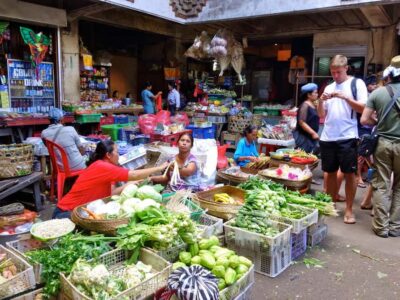
The market visit is one of the best reasons to choose this class. Instead of meeting at a kitchen with every ingredient already measured, you begin by shopping for the food you will cook. That small change makes the meal feel connected to Chiang Rai rather than separated from it.
Suwannee explains the ingredients used in Thai cooking while you look around the organic market. You get a chance to see what goes into the dishes before you handle a knife or turn on a burner. For anyone who has wondered which fresh items belong in curry, soup, or salad, this is a useful introduction.
The shopping also gives the menu a practical setting. You are not just memorizing a list of ingredients. You are seeing them as market food, choosing what is needed, and then following each item into the cooking process. That helps you remember the recipes after you return home.
One point to keep in mind: the market portion takes time from the cooking portion. I see that as a fair exchange, especially if you value local food culture. But if your only goal is to cook as many dishes as possible, a class without a market stop might feel more efficient.
The organic focus may also appeal to you if ingredient quality matters. The supplied details do not identify the market by name or explain its certification standards, so I would treat organic as the class’s stated ingredient approach rather than expect a formal lesson in farming or food certification.
Four dishes, four different Thai cooking lessons
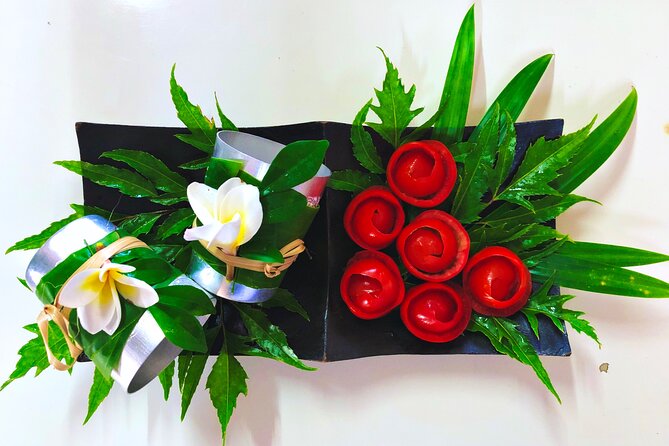
The planned menu gives the class a good spread of textures and techniques. You make papaya salad, tom yum soup, chicken green curry, and a banana dessert. That means your meal moves from fresh and crunchy to hot and sour, then creamy and savory, before ending sweet.
Papaya salad
Papaya salad gives you a direct introduction to the balance that makes Thai food so lively. The dish brings fresh ingredients into a preparation that can be adjusted to suit the group. It is a useful first dish because you can see how strong flavors work together without relying on a long cooking time.
More Thai Cooking Classes in Thailand:
- Chiang Mai: Cooking Class, Market & Thai Herbs Garden Tour
★ 4.9 · 4,824 reviews - Thai and Akha Cooking Class in Chiang Mai
★ 5.0 · 4,358 reviews - Phuket Thai Cooking Class with Market Tour Option
★ 5.0 · 2,665 reviews - Bangkok: Hands-on Thai Cooking Class and Market Tour
★ 4.9 · 1,614 reviews
Tom yum soup
Tom yum adds heat, sourness, and broth to the menu. It also shows that Thai cooking is not only about curry or chilies. The class gives you the chance to learn how the components come together and how timing affects the final taste.
Chicken green curry
Chicken green curry is likely the most involved savory dish on the menu. You work with the ingredients you helped purchase and see how they become a finished curry. The lesson is especially helpful for anyone who usually buys prepared curry paste or orders curry in restaurants.
Banana dessert
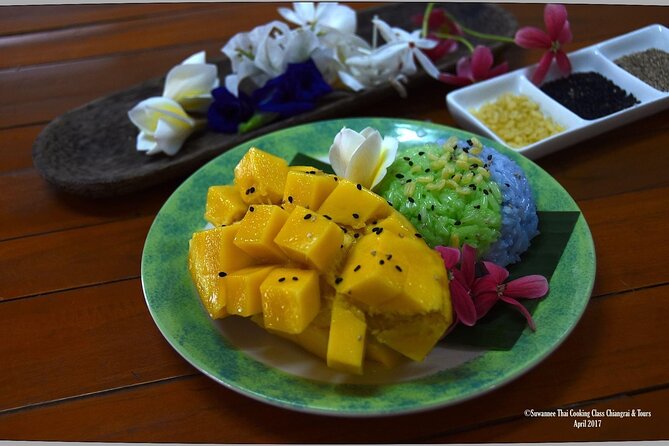
The banana dessert keeps the meal from ending with spice and salt. It is a simple but welcome final course, and it gives you one more Thai preparation to take home in your memory. Since the class includes a sweet dish, you are not left with a meal plan that covers only savory cooking.
The information provided does not specify the exact recipe, cooking equipment, or substitutions. If you have an allergy or a strong dietary restriction, contact the operator before booking rather than assuming the menu can be changed.
A personal station makes the lesson practical
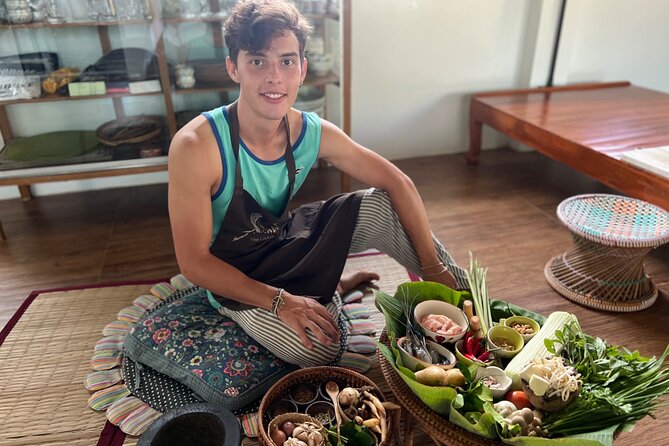
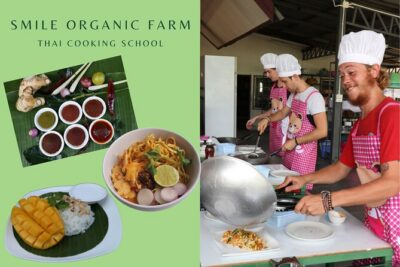
A major strength is that you have your own cooking station. That matters because you are doing the work yourself, not standing behind a crowd while a teacher handles every important step.
I like this format for beginners. You can see what happens when ingredients are prepared, seasoned, and cooked in sequence. You also get a better sense of portioning and timing than you would from a purely visual demonstration.
The class is capped at eight people, which is a sensible size for this kind of lesson. It should give Suwannee enough room to watch the group and offer corrections. A small group does not guarantee constant one-to-one attention, but it is far more personal than a large workshop.
The experience also seems friendly to people who do not consider themselves cooks. One couple described themselves as people who could not or would not cook, yet left feeling like chefs. That does not mean the class turns everyone into a professional, of course. It does suggest that the teaching style is encouraging rather than intimidating.
Suwannee’s teaching style and spice control
Suwannee is the name most closely linked with the class, and the strongest praise centers on her teaching. She is described as organized, flexible, and attentive to the group’s preferences. One particularly useful detail is her willingness to adjust the spice level for different participants.
That matters in a shared class. One person may want a strong chili kick, while another may prefer to taste the herbs and broth without too much heat. The ability to adjust the dishes keeps the meal enjoyable for more people.
The teaching also goes beyond simply listing steps. Suwannee explains the thinking behind taste, texture, color, and timing. Those ideas are more useful than a recipe alone because they help you judge the food as it cooks.
Another practical strength is menu coordination. Instead of having every participant cook a completely different set of dishes, the group can choose a menu together and cook in unison. That reduces confusion and makes the class feel like a shared meal rather than several unrelated mini-lessons.
The class has been praised for its hospitality as well as its cooking instruction. You receive complimentary drinking water, snacks, seasonal fruit, and a refreshing towel. These are modest touches, but they matter during a food-focused morning in Chiang Rai.
Eating what you prepare
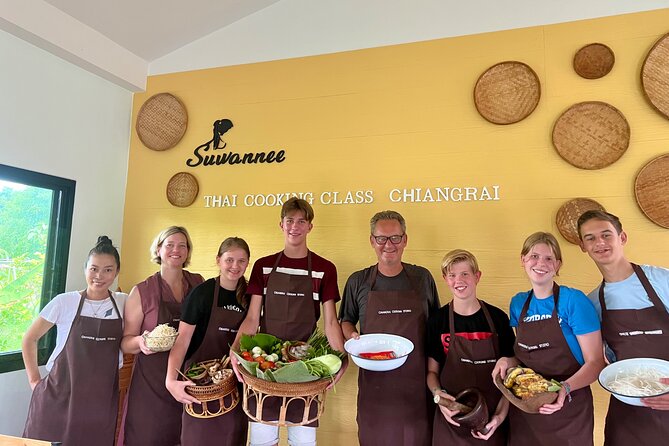
The final meal is not an afterthought. You sit down and enjoy the dishes you made with the group. That gives the class a satisfying finish and lets you compare the results of different preparations.
I value this part because cooking lessons can sometimes feel rushed once the food is ready. Here, eating is built into the experience. You get to taste the balance of the papaya salad, the soup, the curry, and the dessert while the instructions are still fresh in your mind.
It is also a social meal. If you are traveling alone, this offers a simple way to share food with other people without committing to a full-day group tour. If you are traveling as a couple or family, cooking together gives you a joint activity that is more active than simply sitting in a restaurant.
Do not expect included soft drinks or alcohol. Soda and alcoholic drinks are not part of the price. Water and snacks are included, so you will not be left without a drink, but anyone wanting something else should budget separately.
One earlier comment advised eating a light breakfast. That is sensible. With market snacks, several cooked dishes, fruit, and dessert, you will want room for the meal you make.
Is $56.66 a fair price?
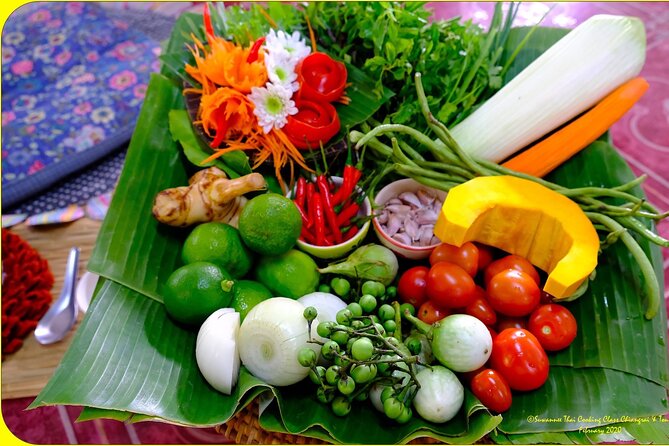
At $56.66 per person, the value depends on what you want from a food activity. You are paying for about four and a half hours, a market visit, organic ingredients, instruction, your own cooking station, four dishes, and the meal at the end.
That is a solid package if you would otherwise pay separately for a market experience and a cooking lesson. The small maximum of eight also adds value, since a more crowded class can make hands-on work frustrating.
The price is less attractive if you mainly want a cheap lunch. You can eat Thai food for far less in Chiang Rai. This activity earns its price through the teaching, shopping, preparation, and chance to repeat the dishes at home.
I would also count the menu flexibility and spice adjustments as part of the value. A rigid class may be cheaper, but it may not suit a group with different tastes. Suwannee’s willingness to adapt appears to be one of the class’s strongest practical benefits.
Who will enjoy this class most?
I would recommend it to first-time Thai cooks, curious eaters, couples, small families, and anyone who wants a food activity with cultural context. It also suits people who prefer learning by doing rather than watching.
You do not need to arrive as an experienced cook. The class is presented as suitable for beginners, and the supportive teaching style should help people who normally avoid the kitchen.
It is less suitable if you dislike group activities, cannot eat the listed ingredients, or want a quiet restaurant-style meal. It may also be a poor fit if your schedule is tight around noon, since the class occupies the period from 9:30 a.m. to 2 p.m.
Service animals are allowed. The maximum group size is eight, and confirmation is received at booking. These details are useful, but you should still share any food concerns with Suwannee before the class.
Booking and cancellation details
The class is often booked about eight days ahead, so I would not leave it until the last morning of your Chiang Rai stay. Booking confirmation arrives at the time of reservation, and the experience operates Monday through Sunday during the stated period.
You can cancel for a full refund up to 24 hours before the start time. Cancellations or changes made inside that 24-hour window are not refunded or accepted. The activity also requires a minimum number of participants. If that minimum is not met, you are offered another date or activity, or a full refund.
Should you book this Chiang Rai cooking class?
I would book this class if you want to understand Thai food through its ingredients, not just eat another restaurant meal. The market visit, organic produce, personal cooking station, four-dish menu, and small group give the half-day a clear purpose.
The best reason to choose it is Suwannee’s flexible teaching. She helps the group work together, explains why the food is prepared in certain ways, and adjusts spice levels so the meal does not punish anyone for having a different palate.
Skip it if you need a very short activity, want alcohol included, or have dietary needs that have not been confirmed with the operator. For most food-loving visitors in Chiang Rai, though, $56.66 buys a useful lesson, a generous meal, and recipes connected to a real market morning.
FAQ
Where does the Thai cooking class begin?
It begins at the Old Clock Tower, WR6J+46F, Suk Sathit, Tambon Wiang, Amphoe Mueang Chiang Rai, Chiang Rai 57000, Thailand.
Where does the activity end?
The activity ends back at the meeting point.
How long does the cooking class last?
The experience lasts approximately four hours and 30 minutes. Its stated operating hours are 9:30 a.m. to 2 p.m.
What dishes will I cook?
You will prepare papaya salad, tom yum soup, chicken green curry, and a banana dessert.
Are ingredients included?
Yes. The class includes shopping for organic ingredients at the market before cooking.
Are drinks included?
Complimentary drinking water is included, along with snacks, seasonal fruit, and a refreshing towel. Soda and alcohol are not included.
What is the cancellation policy?
You receive a full refund if you cancel at least 24 hours before the start time. Cancellations or changes made less than 24 hours before the start time are not accepted, and the amount paid is not refunded.
More Half-Day Experiences in Thailand
- Bangkok: Tingly Thai Cooking School Half-Day Cooking Class
★ 4.9 · 1,191 reviews - Chiang Mai: HALF-DAY COOKING COURSE at a Thai Cooking Farm
★ 4.9 · 705 reviews - Choose 5 Dishes: Half-Day Cooking Class in Sukhumvit with Market Tour
★ 5.0 · 281 reviews - Half-Day Cooking Class with Market Tour
★ 5.0 · 163 reviews
Just added around Thailand
- Aroidee’s Farm-Fresh Thai Cooking Experience★ 5.0 · 8 reviews
- Signature Thai Cooking Course★ 5.0 · 79 reviews
- Private Half-Day Thai Cooking Class in Chiang Mai★ 5.0 · 4 reviews
- Half Day Guided Thai Cooking Class in Chiang Mai★ 5.0 · 13 reviews
- Online Thai and Akha Cooking Class★ 5.0 · 70 reviews
- Private Virtual Thai Cooking Class★ 5.0 · 9 reviews
- Northern Thai Cooking Class in Chiang Mai in a Countryside Home★ 5.0 · 2 reviews
- 5 Hour Morning Thai Cooking Course★ 5.0 · 31 reviews
Farm & Countryside Cooking Classes, compared.
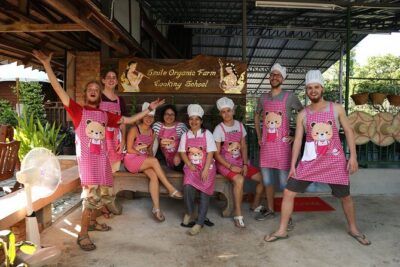
Half-Day Thai Cooking Class at Organic Farm in Chiang Mai
Read our review →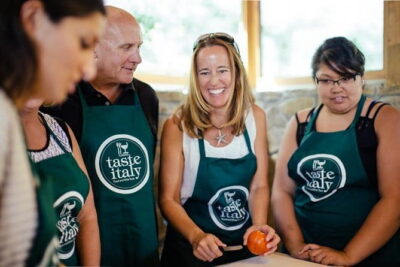
Cooking Class and Lunch at a Tuscan Farmhouse with Local Market Tour from Florence
Read our review →
Authentic Cooking Class with Market & Farm Visit
Read our review →