
REVIEW · CHENGDU, CHINA
Half-Day Chengdu Cooking Class with a Local Market Visit
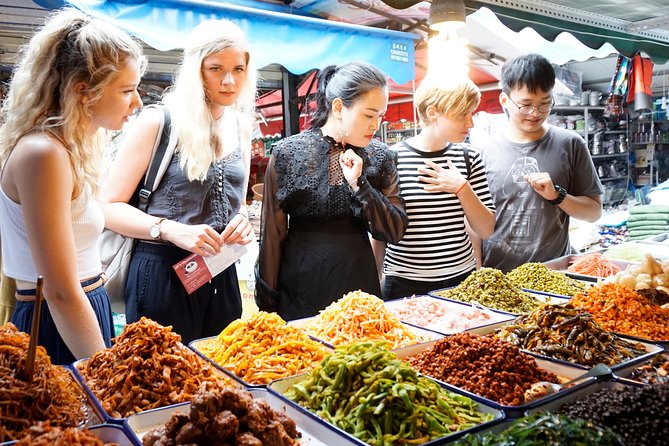
Chengdu tastes better when you cook it yourself. This four-hour experience pairs a walk through Liangjiaxiang market with hands-on Sichuan cooking at Chilli Cool’s Kitchen. I like the way the tour begins with everyday food shopping rather than a staged cultural display, and I like that your finished dishes become lunch or dinner. The chance to work with guides such as Lance or Jerry, then cook with chefs including Chef Lee and Chef Lei, gives the class a friendly local feel.
The main thing to consider is the pace. You cover a market, sample ingredients, learn cooking techniques, and prepare several dishes in one half-day. That is good value for food lovers, but it can feel full if you prefer a slow, quiet class. Spice levels and dietary needs also need to be discussed when you book.
Key points at a glance
- Liangjiaxiang market comes first: You learn about Sichuan spices, vegetables, fruits, and local shopping habits before entering the kitchen.
- Three to five dishes may be prepared: Past class menus have included mapo tofu, kung pao chicken, stir-fried cabbage, twice-cooked pork, cucumber salad, dumplings, wontons, and baozi.
- English support is part of the experience: Lance and Jerry help explain ingredients, translate instructions, and answer questions about local life.
- The meal is cooked by you: Ingredients, drinks, recipes, tastings, and lunch or dinner are included in the $90 price.
- Vegetarian cooking is available: Tell the provider when booking so the menu can be adjusted.
- The group can reach 15 people: Smaller groups and private bookings are also available, along with group discounts.
Why this Chengdu food tour works so well
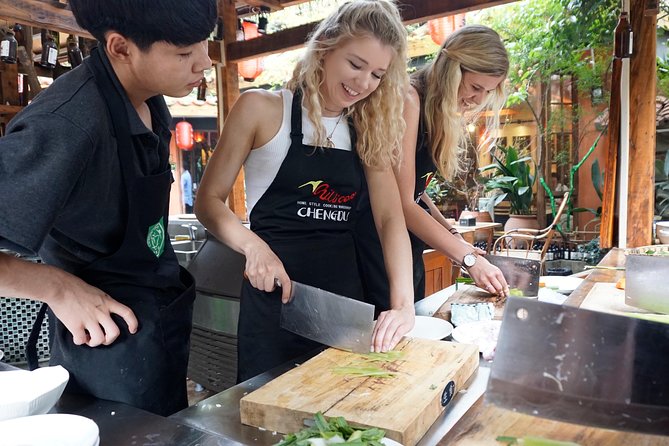
Sichuan food is not just about heat. It depends on balance: dried and fresh chilies, Sichuan pepper, fermented bean paste, vinegar, garlic, ginger, oil, and careful timing. A restaurant meal lets you enjoy the result. This class helps you see how the result is built.
That is the strongest feature here. The market walk gives meaning to the recipes. You do not simply arrive at a kitchen to find bowls of mystery ingredients waiting on the counter. You first see what local shoppers buy, learn about spices, and handle produce that may be unfamiliar to you.
I also like the social side of the experience. Lance is often praised for his English, warmth, and translation work, while Jerry is known for keeping the market walk lively and answering questions about Chengdu life. The class has enough structure to keep you moving, but it is not presented as a stiff professional cooking exam. Your dumplings do not need to look perfect. One class participant managed only two well-shaped dumplings out of ten and still had a fine time.
More Cooking Classes with a Market Tour in China
- Chengdu: Cooking Class with Fresh Market Half Day Experience
★ 5.0 · 42 reviews - Half-Day steamed Buns Cooking Class with a Local Market Visit
★ 5.0 · 26 reviews - Half-Day Professional Mapo Tofu Cooking with a Local Market Visit
★ 5.0 · 19 reviews
Starting at Liangjiaxiang market in Jinniu District
The experience begins at 163-11 Yi Huan Lu Bei San Duan in Chengdu’s Jinniu District. The meeting point is near public transportation, and the activity finishes back there. Some sessions have included a hotel pickup or help at a subway station, but you should confirm your exact meeting instructions before setting out.
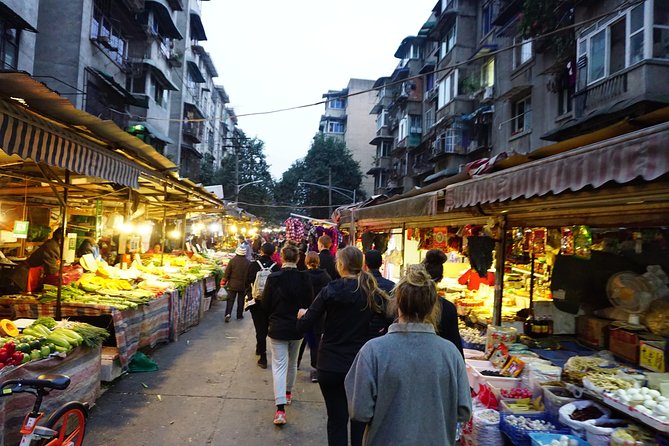
The market portion is the best reason to choose this class over a cooking lesson held entirely indoors. Liangjiaxiang is a working local market, not just a photo stop. You can expect to see fresh vegetables, spices, fruit, and other food ingredients used in Chengdu kitchens.
Your guide explains what you are seeing and may help you taste unfamiliar fruit or snacks. You might also practice ordering food in Chinese, learn how local people select produce, or watch a dumpling stall at work. One of the more unusual additions described by participants is a visit to a baijiu shop, where the group sampled different types of the strong Chinese spirit and could buy a bottle to take home.
The market walk is also a useful lesson in scale. Ingredients that seem obscure at home become easier to understand when you see them sold beside familiar greens, tofu, meat, and chilies. If you do not recognize most of the vegetables, do not worry. That is exactly where a guide earns the fee.
Learning Sichuan ingredients before the cooking begins
Sichuan cooking has a reputation for being fiery, but the class gives you a better sense of what creates the flavor. Sichuan pepper brings a tingling sensation. Bean pastes, aromatics, oil, and pickled or fermented ingredients add depth. Fresh produce keeps the dishes from becoming a simple contest in hotness.
The guides explain the ingredients in practical terms. You can ask how a spice is used, what it does to a dish, and how to find something similar at home. Some participants have also received help buying spices as souvenirs after the class.
This is where Lance’s role matters. He is not only walking you through the stalls. He can translate questions and connect the food to local customs and daily life. Jerry has also served as a guide and pickup host, and his easy manner has been a repeated strength of the experience.
The market is described as clean and interesting, but it is still a real food market. Expect walking, unfamiliar smells, and the possibility of wet conditions if it rains. Comfortable shoes are a must. The tour operates in all weather, so bring clothing that suits the forecast.
Tea, snacks, and the move to Chilli Cool’s Kitchen
After the market, the group heads to Chilli Cool’s Kitchen. The transition gives you a short break before the hands-on work starts. Tea and light refreshments are included, and some sessions have featured traditional tea in a calm workshop setting.
The kitchen has received strong praise for being clean, comfortable, and well set up. That matters more than fancy decoration. You want enough room to chop, mix, shape dumplings, and work around a hot wok without feeling crowded.
The kitchen also creates a useful bridge between market food and the finished meal. Ingredients are prepared for the lesson, but the class does not remove you from the process. You still learn what goes into each dish and how the cooking steps fit together.
Some visitors have cooked with Chef Lee, also called Auntie Lee, while others have worked with Chef Lei or Chef Jerry. The exact chef and menu may vary by session. The guides help translate instructions and keep the class moving, so the lesson remains accessible even when the chef’s English is limited.
Same place, a different thing to cook:
- Flavors of Beijing: Eat Like A Real Chinese
★ 5.0 · 78 reviews - Online Cooking Class Beijing Dumplings and Cuisine by Sunflowerli Renowned Chef
★ 5.0 · 65 reviews - Shanghai-Cooking Dumpling & Meal in Local Family-w/Vegan
★ 4.9 · 36 reviews - Private Cooking Class: Make Your Own Dim Sum In Shanghai
★ 5.0 · 27 reviews
What you may cook during the four-hour class
The menu is not presented as one fixed list for every class. Past dishes have included three-course combinations such as stir-fried cabbage, kung pao chicken, and mapo tofu. Other sessions have included twice-cooked pork, cucumber salad, dumplings, wontons, and baozi.
That range is useful because it shows several sides of Sichuan cooking. Mapo tofu teaches you how a soft ingredient carries a bold sauce. Kung pao chicken introduces a familiar restaurant dish in a more personal, hands-on way. Stir-fried cabbage looks simple, but the fast cooking and seasoning show why wok timing matters.
Dumplings and wontons add a different kind of work. You shape the wrappers by hand, fill them, and learn that attractive folds take practice. This is less about producing perfect parcels than about understanding the food as a daily tradition.
The class also teaches basic wok habits: preparing everything before the heat rises, controlling oil, chopping ingredients to the right size, and adding each item at the correct moment. You learn that stir-frying is not random fast movement. It is preparation followed by quick, deliberate action.
Recipes are included, which improves the value for anyone who wants to recreate the meal. They give you a practical reminder of the ingredients and methods after your China trip. You may not reproduce the exact restaurant flavor at home, but you will have a much better starting point.
Eating what you prepared
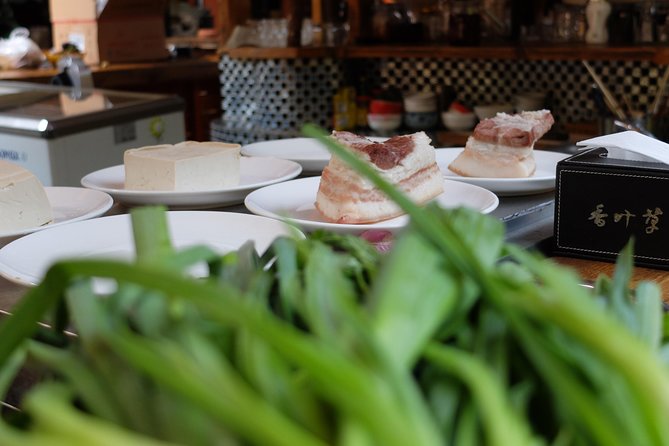
The meal at the end is more than a reward. It lets you judge what the technique changed. You can taste the difference between a dish you helped prepare and the chef’s version, and you can ask why one sauce feels hotter, sweeter, saltier, or more balanced than another.
Drinks, including beer, are included. The meal is served as lunch or dinner, depending on the class schedule. Additional dumplings have been served with the cooked dishes in some sessions, adding a little variety to the final table.
This shared meal is one of the class’s warmest details. You sit down with the guide, chef, and other participants, compare results, and talk about the food. Solo visitors can fit in easily, since the experience is available to individual participants and does not require you to arrive with a large party.
The final meal also helps you understand the value of the $90 price. You are paying for a market guide, food shopping, instruction, ingredients, tastings, drinks, a full meal, and recipes. It is not the cheapest meal you will eat in Chengdu, but it includes several hours of personal help and cultural context.
How the guides shape the experience
The strongest human element is the guide service. Lance is frequently the link between you and the chef, translating cooking instructions and explaining the ingredients in clear English. He has also helped participants with questions unrelated to food, which is useful when you are still finding your feet in Chengdu.
Jerry has handled market walks and, in some cases, hotel pickups. His role is more than transportation. He explains the neighborhood, helps with shopping, and keeps the mood relaxed. You may spend as much time asking about local habits and daily life as you do asking about chilies.
Chef Lee has been praised for sharing traditional skills with energy and patience. Chef Lei has also been mentioned as an accommodating instructor, especially for vegetarian cooking. The exact team can change, but the format remains similar: a local chef teaches, and an English-speaking host helps you follow along.
This arrangement is especially helpful if you are new to Chinese cooking. You can ask why an ingredient is added, how to adjust a sauce, or what to substitute at home. The class is not just a demonstration where you watch from the side.
Vegetarian diets, spice levels, and family suitability
A vegetarian option is available, but you must request it when booking. Do the same for other dietary requirements. The provider has adjusted dishes for vegetarian participants, though you should not wait until you arrive to explain an allergy or restriction.
The tour has a minimum age of five. That makes it possible for families to join, especially children who enjoy shaping dumplings or tasting new ingredients. Still, the market walk and hot cooking equipment require adult attention. Parents should decide if a four-hour food lesson suits their child’s patience and comfort.
You should also be ready for Sichuan seasoning. The class teaches authentic dishes, so the food may include chili and Sichuan pepper. Ask the guide or chef about adjusting the heat if you are sensitive to spice. The point is to learn the balance, not prove how much fire you can tolerate.
Timing, group size, and what to wear
The activity lasts about four hours. That is long enough to include both the market and the kitchen without taking your entire day. I would schedule it on a day when you are not racing to another major attraction.
The maximum group size is 15, with small-group and private options available. A larger group may feel less personal during the cooking portion, while a small group should give you more direct time with the chef. Group discounts can reduce the per-person cost when you book with family or friends.
Wear comfortable walking shoes. You will spend part of the experience on foot at the market, and the tour runs in all weather. A mobile ticket is provided, and booking confirmation is issued at the time of reservation. You need to provide each participant’s passport name, number, expiry date, and country when booking.
The average booking lead time is about 18 days. That is a useful sign that you should not leave this until the last morning of your Chengdu stay, particularly if you need a vegetarian menu or a private session.
Who should book this Chengdu cooking class?
I would choose this experience if you want food to explain the city. It suits first-time visitors who want more than restaurant recommendations, solo visitors looking for an easy social activity, and families with older children who like hands-on lessons.
It is also a smart choice if you are nervous about ordering at local markets or restaurants. The guide can explain ingredients, teach useful food words, and help you understand the flavors you are likely to meet elsewhere in Sichuan.
You may want a different activity if you dislike group lessons, cannot walk comfortably for part of the four hours, or want a highly technical chef-training course. This is practical and friendly rather than an advanced culinary qualification.
The tour is also not ideal for anyone who wants a completely fixed menu. The dishes and chef can vary, so tell the provider what you hope to cook, but understand that the final selection depends on the session.
Should you book the $90 Chengdu cooking class?
I would book it if you have room for one food-focused half-day in Chengdu. The market visit gives the class a real sense of place, the kitchen is designed for participation, and the included meal means you are not paying extra to taste the results.
The biggest value comes from the guides. Lance and Jerry add translation, local context, and good humor, while the chefs turn unfamiliar ingredients into dishes you can attempt at home. The recipes, drinks, tastings, and full meal make the price reasonable for a four-hour experience.
Book at least several days ahead, and sooner if you need a special menu. You can cancel for a full refund up to 24 hours before the start time, but changes or cancellations inside that window are not accepted. For food lovers, this is one of the better ways to connect Chengdu’s markets, kitchens, and dining table in a single outing.
FAQ
How long does the cooking class and market visit last?
The experience lasts approximately four hours, including the market walk, refreshments, cooking lesson, and meal.
Where does the experience begin?
It begins at 163-11 Yi Huan Lu Bei San Duan, Jinniu District, Chengdu, Sichuan, China, postal code 610051.
Where does the experience end?
The activity ends back at the meeting point.
Is the market tour included?
Yes. A guided visit to Liangjiaxiang market is included, along with explanations of local spices and ingredients.
Are food and drinks included?
Yes. Ingredients, food tastings, light refreshments, beverages including beer, recipes, and lunch or dinner are included.
Is a vegetarian menu available?
Yes. A vegetarian option is available, but you must request it at the time of booking.
How many people can join the class?
The activity has a maximum of 15 participants. Small-group and private options are also available.
What is the minimum age?
The minimum age is five years old.
What happens if I need to cancel?
You can cancel up to 24 hours before the start time for a full refund. Cancellations or changes made less than 24 hours before the experience are not accepted.
More Half-Day Experiences in China
- Half-Day Sichuan Cooking Class Experience in Chengdu
★ 4.0 · 17 reviews - Half-day Dandan Noodles Cooking Class with a Local Market Visit
★ 5.0 · 8 reviews - Half-Day Private Hot-Pot Cooking Class with a Local Market Visit
★ 5.0 · 3 reviews - Half-day Chengdu Handmade Tofu Making and Mapo Tofu Cooking Class
★ 5.0 · 3 reviews
Just added around China
- Private Panda Tour with Cooking Class One-day Trip★ 5.0 · 11 reviews
- Half-day Chengdu Handmade Tofu Making and Mapo Tofu Cooking Class★ 5.0 · 3 reviews
- Half-day Dandan Noodles Cooking Class with a Local Market Visit★ 5.0 · 8 reviews
- Half-Day Private Hot-Pot Cooking Class with a Local Market Visit★ 5.0 · 3 reviews
- Chengdu Dujiangyan Leshan Buddha Tea Plantation and Sichuan Cooking 3 Days★ 5.0 · 2 reviews
- Half day Chengdu Dumpling Class: Make from Scratch★ 5.0 · 8 reviews
- Half-Day Sichuan Cooking Class Experience in Chengdu★ 4.0 · 17 reviews
- Beijing: Private Dumpling Cooking Class in Local Family★ 5.0 · 3 reviews
Cooking Classes with a Market Tour, compared.
Hanoi Cooking Class: Culture, Local Market & Meaning CSR Impact
Read our review →
5 Traditional Dishes Hanoi Cooking Class with Market Trip
Read our review →
Cooking Class and Lunch at a Tuscan Farmhouse with Local Market Tour from Florence
Read our review →
Cooking Class, Market & Thai Herbs Garden Tour
Read our review →
Authentic Cooking Class with Market & Farm Visit
Read our review →
Paella Cooking Experience & Boqueria Market Tour
Read our review →
Cooking Class Hoi An:Local Market, Basket Boat, Fishing & Cooking
Read our review →
Hoi An Cooking Class(Market,BasketBoat Crabfishing&Cooking Class)
Read our review →Lists this class appears in