REVIEW · EMILIA-ROMAGNA, ITALY
Bologna: Pasta and Tiramisu Cooking Class with Wine
Fresh pasta makes a better souvenir than a fridge magnet. This three-hour Bologna cooking class pairs hands-on pasta making with tiramisu, a welcome glass of Prosecco, and wine served with the meal. I like the central restaurant setting, which gives the class a local, lived-in feel, and I like the friendly teaching style reported from instructors such as Luca, Al, Peter, and Steven. The main catch is that you prepare the food but the restaurant staff cooks the pasta, so this is more of a guided workshop and shared meal than a full cook-from-start-to-finish lesson.
You begin with tiramisu, then work through pasta dough, flour choices, rolling, cutting, and shaping. The food is generous enough to replace lunch or dinner, and the social side is a real part of the experience. Still, you should be comfortable with gluten, eggs, and dairy, since substitutions may be possible but the class follows traditional recipes and cannot promise a completely allergen-free environment.
Key points to know before you book
- Two Italian staples in one class: Make tiramisu first, then prepare fresh pasta, sometimes including two pasta shapes.
- A meal is included: Sit down together afterward and eat the food you helped prepare, with a glass of wine.
- English instruction: The class is taught in English by guides such as Luca, Al, Peter, or Steven, depending on the session.
- A social format: You cook at shared workstations and finish around a communal table with other participants.
- Good value at $57: The price includes the class, Prosecco, lunch or dinner, and wine.
- Dietary limits matter: Vegetarian options are available, but the activity is not suitable for vegans, people with food allergies, or those avoiding gluten or lactose.
What this Bologna cooking class is really like
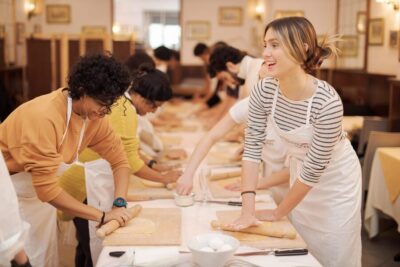
This is a relaxed food activity in central Bologna, designed to give you a break from churches, porticoes, museums, and long walks over cobbled streets. You arrive at a restaurant, receive a glass of Prosecco, and meet the instructor and the other people in your group.
The welcome drink does more than start the evening pleasantly. It helps turn a roomful of strangers into a table of temporary dinner companions. Several participants have described the atmosphere as friendly and easygoing, with humor from the instructor and plenty of conversation around the workstations.
The instructors are an important part of the experience. Luca is often praised for his clear explanations and relaxed humor. Al is described as attentive and personable, with useful suggestions for coffee and restaurants around Bologna. Peter brings plenty of energy, while Steven is especially good at answering questions and sharing facts about local food traditions.
The tone is informal rather than formal culinary school. You do not need cooking experience, and you will receive step-by-step help. If your dough looks uneven or your pasta shape is less than perfect, the class is built to keep you moving rather than make you feel tested.
More Cooking Classes with Wine Tasting in Bologna
- Bologna: Pasta Cooking Class, Ragu, Spritz, Wine & Gelato
★ 4.9 · 775 reviews - Bologna Local Pasta Cooking Class, Ragu, Spritz, Wine & Gelato
★ 5.0 · 527 reviews - Bologna: Pasta and Tiramisu Small Group Cooking Class with Wine
★ 5.0 · 409 reviews
Starting with tiramisu and its classic method
The first practical task is tiramisu. You wash your hands, put on an apron, and begin with one of Italy’s most famous desserts.
The class explains the traditional ingredients and method, along with some background about where tiramisu comes from. The useful part is not just assembling the dessert. You learn how the layers come together and why the texture matters, which gives you a better chance of repeating the recipe at home.
Tiramisu is a smart first course for a group class because it can be prepared ahead of the meal. Once your portion is finished, it can rest while you turn your attention to pasta. That keeps the three-hour schedule moving and lets dessert be ready when everyone sits down.
The recipe normally contains dairy and eggs, and the traditional instruction centers on those ingredients. If you have a dietary restriction, tell the provider when booking. Substitutions may be available, but the class does not promise a kitchen free from cross contamination.
This part of the experience suits beginners especially well. You get an early success before moving on to dough, and the task gives you something familiar to work with even if you rarely cook.
Making pasta dough by hand
Next comes the main event: fresh pasta. At your workstation, the instructor explains the basic dough and the role of different types of flour.
One useful lesson is the difference between pasta fresca and pasta secca. Fresh pasta is made and used soon after preparation, while dried pasta is produced for storage. That simple distinction adds context to what you are doing, rather than leaving you with a recipe but no sense of the wider Italian cooking tradition.
You will work the dough, roll it, and cut or shape it under guidance. The process is hands-on and repetitive in a good way. You feel how the dough changes as you work it, and you start to see why flour, moisture, pressure, and thickness all matter.
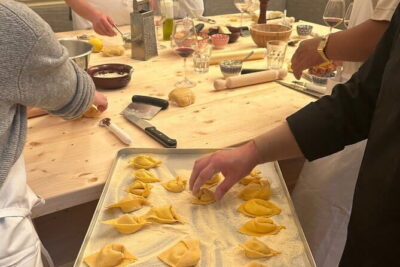
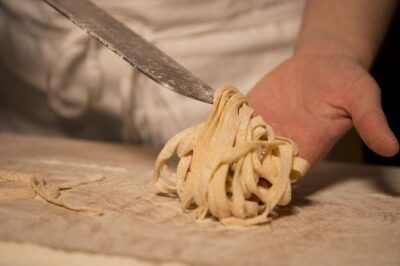
Some sessions include two types of pasta. Past examples described by participants include tagliatelle, fettuccine, and stuffed pasta with spinach and ricotta. The exact shapes may vary by class, so I would not book this expecting one specific pasta form unless the provider confirms it.
The instructor demonstrates each stage and then circulates to help. This is where the English language instruction matters. You can ask questions as you work, and guides such as Luca and Steven are praised for repeating steps and making the process easy to follow.
One practical point is worth knowing: you may not cook the pasta yourself. In at least one session, the restaurant chef took over after the group finished shaping the dough. That is not a serious flaw if your main goal is to learn the dough and enjoy a meal, but it does limit the amount of cooking practice you get.
Sitting down to eat what you made
At the end, everyone gathers for lunch or dinner. The restaurant cooks the pasta, adds the sauces, and serves the dishes you prepared as a group.
Reported combinations have included tomato sauce and a burnt butter and sage sauce. Stuffed pasta and long pasta may both appear, depending on the class. The key benefit is that your work becomes a proper meal rather than a small sample at the counter.
The included wine adds value here. The offer is described as a glass of wine with the meal, while many participants also found the Prosecco generous and enjoyable at the start. You should treat this as a food-focused gathering with drinks, not as a wine tasting with expert instruction.
Portions are described as satisfying, and one useful piece of advice is to arrive hungry. Pasta, tiramisu, and wine make a substantial meal. I would avoid booking a separate dinner afterward, particularly if you are attending an evening session.
The shared table is as important as the food. You may sit with couples, families, solo visitors, and people from several countries. That can make the class particularly appealing if you are traveling alone or want an evening activity that does not involve sitting by yourself in a restaurant.
More Cooking Classes with Wine Tasting in Italy
- Bologna: Pasta Tagliatelle al Ragu Cooking Class with Wine
★ 4.7 · 225 reviews - Bologna: In-Home Italian Pasta Making Workshop with Wine
★ 4.7 · 131 reviews - Bologna: Pasta Cooking Class, Ragu & Wine with Local Host
★ 4.9 · 113 reviews - Bologna: Tagliatelle & Ragù Home Cooking Class with wine
★ 4.5 · 55 reviews
Why the restaurant setting matters
The class takes place inside a working Bologna restaurant rather than a detached teaching kitchen. That gives the experience a more direct connection to the city’s food culture.
You get a glimpse of how a restaurant kitchen and dining room work together. The arrangement also makes the final meal easier, since the restaurant team can cook and serve the pasta once the group finishes preparing it.
There are tradeoffs. This is not a private home lesson, and the cooking area may feel more functional than scenic. One participant also had trouble identifying the correct restaurant on arrival because the confirmation did not make the restaurant name clear enough. If your confirmation only gives an address, check the exact meeting instructions before you set out.
The class is centrally located, which is convenient after sightseeing. You can reach it without arranging special transportation, although the supplied details do not specify a precise walking time from Bologna’s station or any particular landmark.
The instructors shape the mood
The repeated praise for the instructors is one of the strongest reasons to consider this class. Cooking lessons can become awkward when the teacher rushes, gives vague directions, or spends too much time demonstrating without helping the group. The feedback here points to a different style.
Luca is often described as humorous, calm, and clear. Al receives praise for his English, patience, and ability to keep the group on schedule. Peter is known for being personable and entertaining, while Steven combines jokes with detailed explanations and local food information.
That does not mean every class will feel identical. The instructor changes, and each guide has a different personality. But the format appears to rely heavily on a host who keeps people talking, cooking, and eating together.
The social atmosphere can be a major plus, but it is also something to consider. If you want a quiet, private lesson with lots of individual attention, a group class may not be your best choice. If you like meeting people and do not mind sharing a table, the group setting adds a lot.
Is $57 good value?
At $57 per person, the price is fair for a three-hour experience that includes instruction, ingredients, a welcome Prosecco, a full lunch or dinner, and wine.
The value is strongest if you count the class as both an activity and a meal. A pasta dinner and tiramisu in a central Bologna restaurant could already use a meaningful part of that price, while the lesson adds a skill you can take home.
The class is less valuable if you want advanced culinary training. You will learn a traditional method and practice the basics, but this is not a professional course. The restaurant staff may cook the pasta after you shape it, and the pace has to suit a mixed group of beginners and more confident cooks.
I also like that the experience does not depend on a long list of extra purchases. Your food, drinks, and instruction are part of the stated price. The reserve-now-and-pay-later option and free cancellation up to 24 hours before the activity also give you some flexibility, provided you follow the booking terms.
Who will enjoy this most?
I would recommend this class to first-time visitors who want one evening connected to Bologna’s food culture without committing to a full-day food tour. It also works well for couples, parent and adult child combinations, solo visitors, and families with older children.
Several families found that children could join in, but the activity is not suitable for children under three or babies under one year. The food and wine format is clearly aimed more at adults, even though older children may take part with their families.
You do not need to be a cook. In fact, beginners may get the most from the clear demonstrations and hands-on practice. Confident home cooks should still enjoy the social setting, but they may want a more advanced lesson if they already make fresh pasta regularly.
Vegetarians are well served, and at least one participant appreciated that the meal was entirely vegetarian. Vegans should not book this activity, despite the general note that dietary options may be available. The specific restrictions say the class is not suitable for vegans, and the traditional recipes rely on eggs and dairy.
People with serious allergies, gluten intolerance, or lactose intolerance should also avoid it. Substitutions may be offered, but the provider cannot guarantee the absence of cross contamination.
Practical advice for a smoother class
Wear comfortable clothes. You will be working with flour, dough, and food for several hours, so this is not the time for restrictive clothing or an outfit you want to keep spotless.
Tell the provider about allergies and food restrictions when you book, not when you sit down to eat. The class can sometimes adjust ingredients, but the instruction will still focus on the traditional recipes.
Arrive ready to eat. The pasta and tiramisu are samples of the dishes prepared during the class, and the portions can be generous. A separate dinner plan afterward is probably unnecessary.
Keep your schedule loose after the class. The official duration is three hours, but a warm group and an accommodating instructor can sometimes keep the evening going longer. That extra time is not guaranteed, but you should avoid scheduling something immediately afterward.
Finally, check the restaurant name and meeting instructions. One participant found the arrival details unclear, even though the instructor solved the problem once the class began. A quick check before leaving your hotel can prevent a needless moment of confusion.
Should you book this Bologna pasta class?
Book it if you want a friendly, food-centered activity with real hands-on work, a full meal, and drinks included. The strong points are the central restaurant, approachable English-speaking instructors, useful pasta basics, and the chance to meet people over food rather than simply watch a demonstration.
Skip it if you need a strictly allergy-free kitchen, a vegan menu, or advanced cooking instruction. You should also know that the restaurant may cook the pasta after you prepare it.
For most visitors, the $57 price makes sense because you get three hours of activity and a substantial meal in one package. Go hungry, wear comfortable clothes, and think of it as a social Bologna evening with a cooking lesson at its center.
FAQ
How long does the Bologna pasta and tiramisu class last?
The class lasts three hours. Starting times vary, so you need to check availability for the date you want.
What food will I make?
You will make tiramisu and fresh pasta. Depending on the session, you may prepare more than one pasta shape, such as tagliatelle, fettuccine, or stuffed pasta.
Is lunch or dinner included?
Yes. You sit down with the group for lunch or dinner and eat the dishes prepared during the class.
Are drinks included?
Yes. The experience includes a welcome glass of Prosecco and a glass of wine with the meal.
Is the class taught in English?
Yes. The listed instruction language is English.
Can vegetarians join?
Yes. Vegetarian dietary options are available, and the food served in at least one class was entirely vegetarian. Tell the provider about your needs when booking.
Can vegans or people with gluten allergies participate?
No. The activity is listed as unsuitable for vegans, people with food allergies, people with gluten intolerance, and people with lactose intolerance. Substitutions may be available for some preferences, but the class follows traditional recipes containing gluten, dairy, and eggs and cannot guarantee no cross contamination.
What should I bring?
Wear comfortable clothes. You will sample the pasta and tiramisu prepared during the class, so arriving hungry is also sensible.
More Tiramisu and Dessert Classes in Bologna
- Bologna: Original Lasagna & Gelato Class at a Cooking School
★ 4.9 · 59 reviews - Gelato Making Class in Bologna City center Cooking School
★ 4.7 · 43 reviews
More Pasta Making Classes in Bologna
- Authentic Bologna Home Cooking Class: Tagliatelle & Tortellini
★ 4.5 · 136 reviews - Bologna: Pasta & Tiramisu Cooking Class at a Local’s Home
★ 4.9 · 67 reviews - Bologna: Pasta & Tiramisu Cooking Class at a Local’s Home
★ 4.9 · 54 reviews - Learn and taste the real bolognese ragù and pasta making
★ 4.8 · 32 reviews
Just added around Bologna
- Traditional Bolognese Cooking Class in Bologna with Giovanna S★ 5.0 · 6 reviews
- 3 hour Lasagna Bolognese cooking class★ 5.0 · 6 reviews
- Tortelloni and Tagliatelle Cooking Class in Bologna + Wine★ 3.0 · 2 reviews
- Bologna Walking Tour & Traditional Cooking Class with Wine★ 5.0 · 3 reviews
- Pasta Making Class: Tagliatelle & Bolognese Sauce★ 5.0 · 15 reviews
- Bolognese Cooking Class with Margherita in the Historic Center★ 5.0 · 26 reviews
- Home Cooking: Pasta Making with Natural Colors in a Tiny Group★ 5.0 · 6 reviews
- Private Market Tour and Cooking Class in Bologna with Giovanna C★ 5.0 · 20 reviews
Pasta Making Classes, compared.
3 in 1 Cooking Class near Navona: Fettuccine, Ravioli & Tiramisu
Read our review →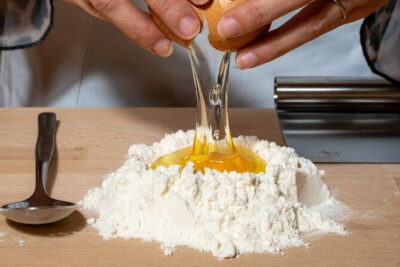
Pasta & Tiramisu Cooking Class with Unlimited Wine
Read our review →
Pasta Making Class with Wine, Limoncello, and Dessert
Read our review →
Rome Cooking Class: Make Pasta and 3 Spritz Cocktails
Read our review →
3-in-1 Fettuccine, Ravioli, and Tiramisu Cooking Class
Read our review →