REVIEW · EMILIA-ROMAGNA, ITALY
Bologna: Pasta & Tiramisu Cooking Class at a Local’s Home
Fresh pasta tastes better when you make it. This Bologna class brings you into a local home to roll sfoglia by hand, prepare two pasta dishes, and finish with tiramisu. I like the hands-on pasta work and the chance to share an aperitivo with a local cook. The main consideration is that your host’s address is private until after booking, so you cannot choose the exact neighborhood in advance.
I also like the personal scale of this class. Hosts such as Roberta, Oriana, Paola, Martina, Marco, and Silvia have welcomed cooks into their own kitchens, often adding family tips, local food advice, and recipes to take home. The only real drawback is that the class is not suitable for wheelchair users, and the final style of the meal depends on the host you are matched with.
Key points at a glance
- Roll sfoglia by hand: Learn the traditional method for turning dough into fresh pasta without relying on a machine.
- Make two pasta types: The exact dishes vary, but past classes have included tagliatelle, tortelloni, tortellini, ravioli, and carbonara or ragù.
- Prepare tiramisu from scratch: This gives you a simple dessert recipe you can repeat at home.
- Start with an Italian aperitivo: Prosecco, nibbles, water, wine, and coffee are included.
- Cook inside a local home: The setting feels more personal than a commercial cooking school, with family recipes and conversation.
- Plan for three hours: The class ends where it begins, but the host’s home may be in or outside central Bologna.
What this Bologna cooking class is really like
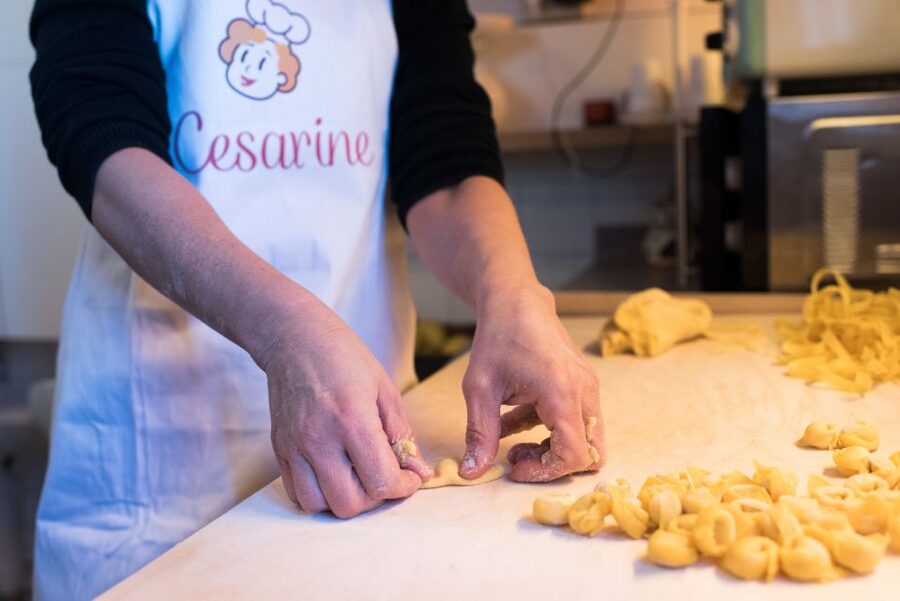
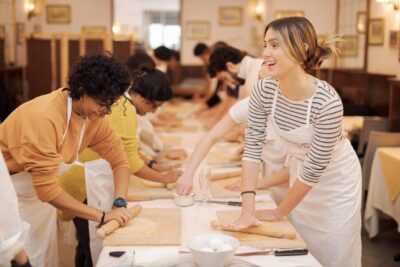
This is not a quick demonstration followed by a plate of food. You take part in the work, from handling dough to shaping pasta and assembling tiramisu. The aim is to show you how Italian home cooking works, not just how to reproduce a restaurant dish.
The class is arranged through Cesarine, a network of home cooks in more than 500 Italian cities. In Bologna, that means your teacher may be a lifelong local, a keen home cook, or a couple who enjoys sharing Emilia-Romagna food with visitors.
The setting matters. You are not standing behind a large counter in a busy culinary school. You are welcomed into a private home, where the host can explain how recipes fit into family life. Several hosts have cooked in kitchens with balconies, gardens, or open-air terraces, while others have welcomed families into comfortable apartments.
Because the host is matched after you provide your food needs and accommodation area, the exact setting can differ. Think of this as a home-hosted meal with a cooking lesson, not a standardized classroom.
More Pasta Making Classes in Bologna
- Bologna: Pasta Cooking Class, Ragu, Spritz, Wine & Gelato
★ 4.9 · 775 reviews - Bologna Local Pasta Cooking Class, Ragu, Spritz, Wine & Gelato
★ 5.0 · 527 reviews - Bologna: Pasta and Tiramisu Cooking Class with Wine
★ 4.7 · 507 reviews
Starting with prosecco and local conversation
The class begins with an Italian aperitivo: prosecco and small nibbles. Water, wine, coffee, and local taxes are also included.
This opening is useful for more than refreshment. You get a chance to meet the host and other participants before the flour appears. It also gives your host room to explain the plan, talk about Bologna’s food culture, and settle everyone into the kitchen.
A few hosts have made the opening especially social. Roberta has served appetizers before the pasta work, while other hosts have used the time to offer local restaurant suggestions and places to visit in Bologna. Marco and Silvia also made conversation part of the lesson, discussing their lives and the food traditions they learned from older family members.
I would not expect a formal wine tasting or a large selection of aperitivo dishes. This is a friendly Italian welcome, not a separate food tour. The value lies in the relaxed start and the chance to get comfortable in someone’s home.
Rolling sfoglia the old-fashioned way
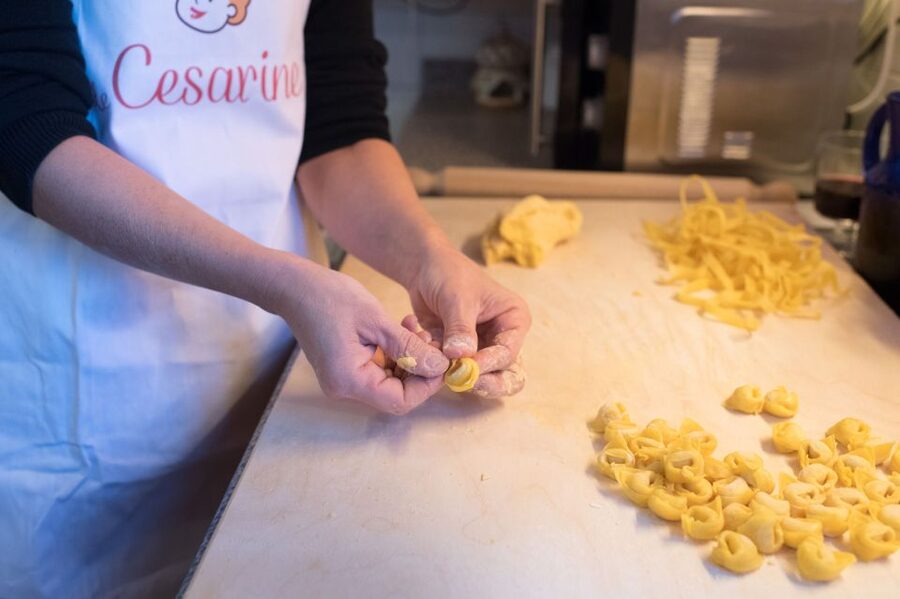
The heart of the class is the sfoglia, the thin sheet of fresh pasta rolled by hand. This is the part where you learn something that a recipe alone cannot quite explain.
You will work with dough, learn how to roll it thin, and see how pressure and movement affect the final sheet. A host can correct your technique as you go, which is far more useful than watching a video at home and wondering why your pasta keeps tearing.
The lesson is practical rather than showy. You may not produce perfectly identical sheets on your first attempt, and that is part of the fun. Fresh pasta rewards patience. The dough needs the right texture, and shaping it takes a little feel.
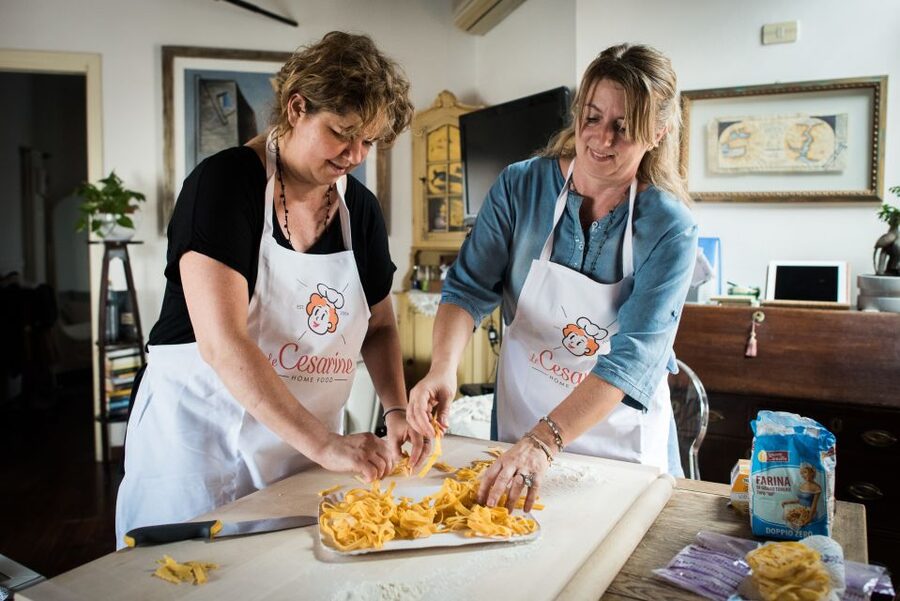
Hosts have taught different pasta forms, depending on their family recipes. You might make tagliatelle, tortellini, tortelloni, or ravioli. One class with Oriana included tagliatelle, ravioli, carbonara sauce, regular Bolognese sauce, and tiramisu. Another with Annamaria and Francesco focused on tortelloni and tagliatelle with ragù.
The exact menu is not fixed in the information provided, so do not book expecting one guaranteed pasta shape. The reliable promise is two iconic pasta types, made from scratch, with instruction in hand-rolled sfoglia.
Two pasta dishes, with room for family recipes
Once the dough is ready, the class moves from technique to cooking. You prepare two different pasta dishes and then eat what you have made.
This is where the host’s personal style matters most. One cook may focus on stuffed pasta, while another may teach a long pasta such as tagliatelle. Sauces can also vary. Ragù appears in several accounts, while carbonara was included in Oriana’s class.
A particularly useful detail is that a sauce such as ragù may be prepared ahead of time. A traditional ragù can take hours, so the host may explain the method and serve a sauce that has already had time to cook. That is not a shortcut in the bad sense. It is a realistic lesson in how Italian home cooks manage a meal.
You may also learn why pasta shapes pair with certain sauces, how to seal filled pasta, or how to handle the cooked dough. The specific teaching points depend on your host, but the class is designed to be participatory. You should get turns at the work rather than simply watch someone else do everything.
For families, this can be a strong choice. Martina’s class worked well for children, who enjoyed making the food and taking part in the whole process. The class also suits adults who want a useful skill rather than a polished cooking show.
More Tiramisu and Dessert Classes in Bologna
- Bologna: Pasta and Tiramisu Small Group Cooking Class with Wine
★ 5.0 · 409 reviews - Bologna: Original Lasagna & Gelato Class at a Cooking School
★ 4.9 · 59 reviews - Bologna: Pasta & Tiramisu Cooking Class at a Local’s Home
★ 4.9 · 54 reviews - Gelato Making Class in Bologna City center Cooking School
★ 4.7 · 43 reviews
Tiramisu brings the meal to a sweet finish
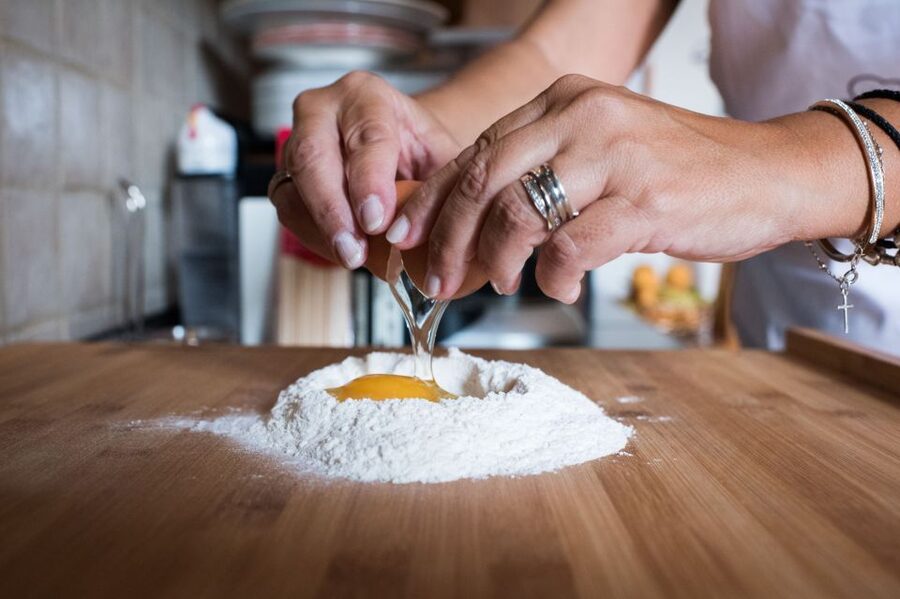
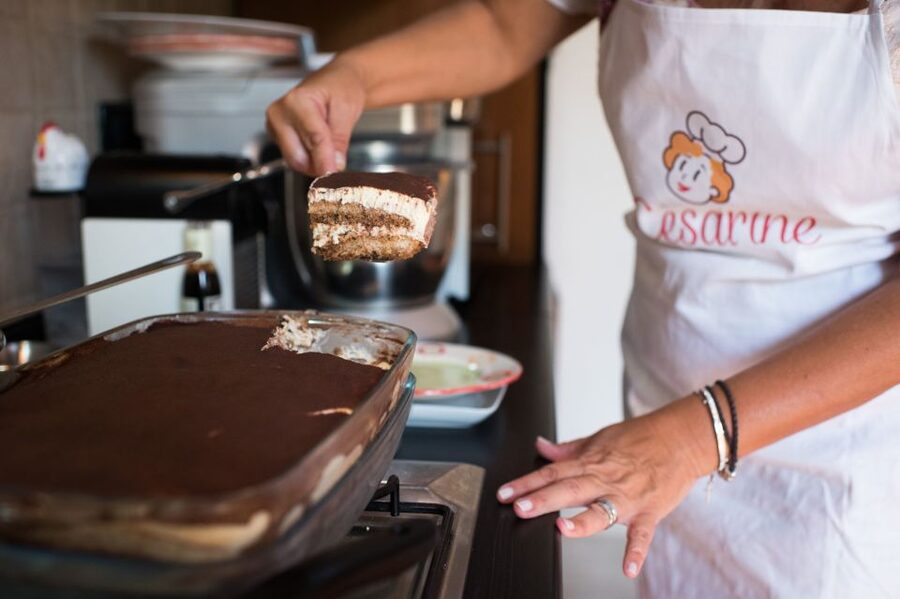
After the pasta, you prepare the iconic tiramisu. This gives the class a pleasant change of pace, since the dessert requires different skills from rolling and shaping pasta.
You learn the basic method and then eat the finished dessert as part of the meal. Several hosts have been praised for making tiramisu that was both delicious and easy to repeat at home. That matters if you want a recipe you can actually use after returning from Italy.
Do not expect a separate pastry course. Tiramisu is one part of the three-hour class, alongside the aperitivo and two pasta preparations. Still, it rounds out the meal and gives you a second recipe to carry home.
Some hosts send recipes afterward. That appears to depend on the individual host, so ask if written recipes are important to you. One person had waited for recipes after the class, which is a useful reminder not to assume every host follows the same follow-up routine.
Why the home setting makes a difference
The private home is the main reason to choose this class over a standard cooking school. You get a look at how a local host cooks, hosts, and talks about food in everyday life.
That can include simple details that a commercial class cannot provide. Maurizio’s home and garden terrace were part of the appeal for one group. Another class took place near a balcony, where participants cooked while enjoying the view. Marco and Silvia welcomed participants to a countryside home outside the city after meeting them at a rendezvous point.
That last example also shows why you should allow flexibility. Some hosts may be easy to reach by public transport, while others may be farther from central Bologna. Your full address arrives only after booking, once the organizer has your neighborhood, dietary information, and planned way of getting there.
The host may speak Italian and English. The class is not presented as a language course, but English instruction is available. Conversation can still vary depending on the host and group.
The private setting also means you should be courteous. You are entering someone’s home, not a public venue. Arrive ready to take part, follow kitchen instructions, and expect a social meal rather than a rushed activity.
How the three hours are best understood
Three hours sounds generous, but it passes quickly once you include the welcome drink, preparation, cooking, eating, and conversation.
A typical flow should include:
- Prosecco and nibbles to begin
- An introduction to sfoglia and fresh pasta dough
- Rolling and shaping two pasta types
- Cooking the pasta and discussing sauces
- Preparing tiramisu
- Sitting down to eat the pasta and dessert
- Wine, water, coffee, and conversation
The sequence may change. A host may prepare a long-cooking sauce ahead of time, for example, or serve some appetizers while the dough rests.
The class ends back at the meeting point, meaning the local home. If you have a timed museum visit or dinner reservation afterward, allow some breathing room. The cooking itself has a set duration, but the social pace may be unhurried.
What the $112.15 price includes
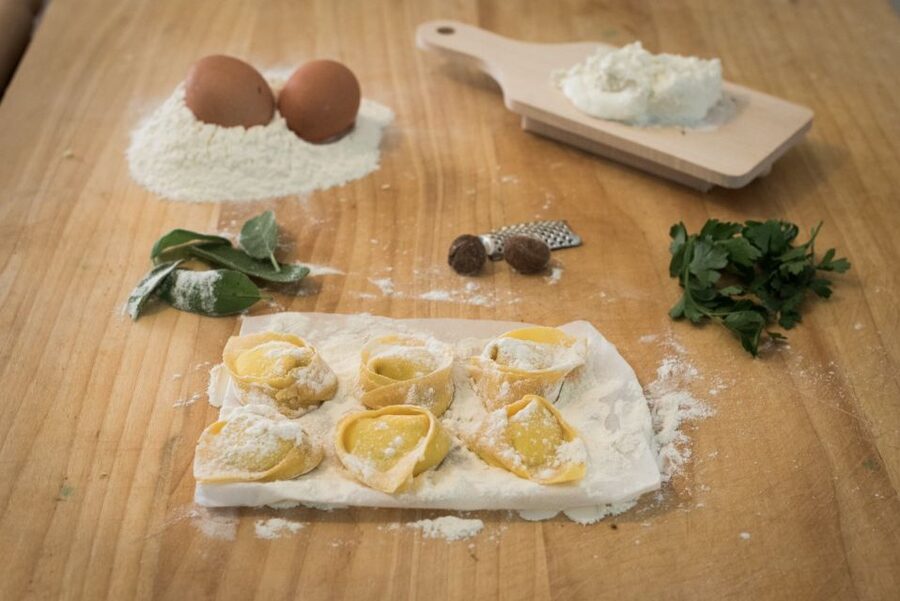
At $112.15 per person, this is not the cheapest way to eat pasta in Bologna. You can find a restaurant meal for less, especially if you choose a simple trattoria.
The comparison is not quite fair, though. Here you receive a three-hour activity, instruction, food, drinks, an aperitivo, and a meal that you helped prepare. You also get direct contact with a local cook and the chance to ask questions about techniques and regional food.
I see the price as reasonable for visitors who value participation and personal contact. It is less compelling if you only want a meal or if you already cook fresh pasta confidently.
The class has also earned a 4.9 rating from 67 reviews, with repeated praise for welcoming hosts, delicious food, and the chance to learn recipes properly. The strongest pattern is not one particular dish. It is the quality of the host relationship. People repeatedly describe hosts as patient, kind, and generous with their time.
That said, the experience is not completely uniform. Hosts differ, homes differ, and menus differ. The price buys the format and the Cesarine match, not a guaranteed named chef, neighborhood, or pasta recipe.
The hosts who make the class memorable
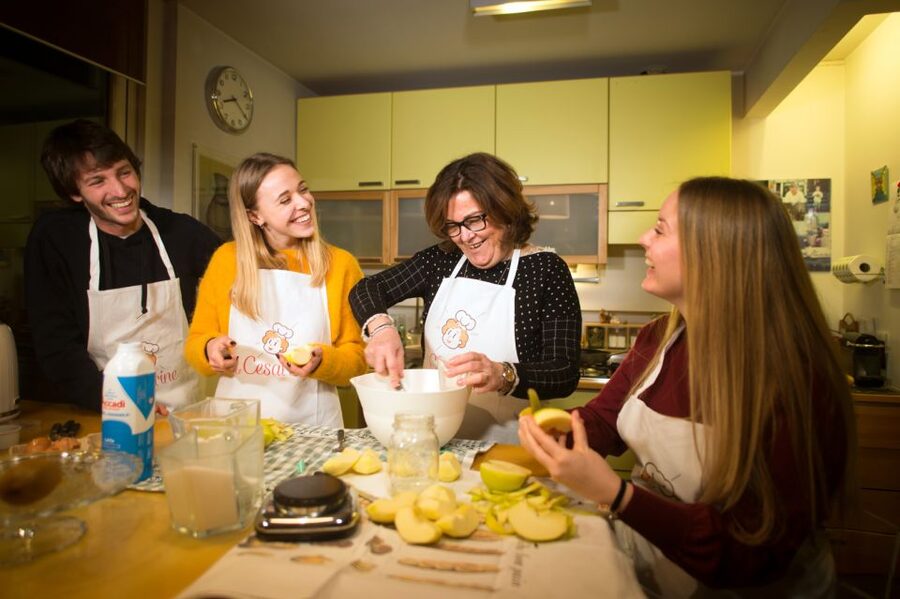
Several hosts have received especially warm praise for their teaching and hospitality.
Roberta is described as patient, accommodating, and generous with local suggestions. Her home and kitchen created a comfortable setting, and families found her welcoming.
Oriana has taught guests who had already taken a pasta class in Rome, yet still managed to offer new lessons. Her class included several pasta preparations, sauces, appetizers, and tiramisu, with cooking on a large open-air terrace.
Marco and Silvia worked as a team. Silvia taught pasta technique, while Marco handled cooking and added local stories. Their class took place in a countryside home and included a meal with wine and tiramisu.
Paola, Rosa, Alessandra, Saverio, Annamaria, Francesco, and Martina have also been praised for friendly teaching and a personal approach. Since you are matched to a host rather than selecting from a fixed daily roster, these names are examples of the kind of local personality you may encounter, not a guarantee of assignment.
Who should book this class
I would recommend it most strongly if you:
- Want to learn a practical Italian cooking skill
- Enjoy small-group activities and conversation
- Are interested in Bologna beyond its famous food stalls and historic center
- Are traveling with children who like hands-on activities
- Want a meal built around your own work
- Prefer a local home to a formal cooking school
- Have enough schedule flexibility for an address outside the city center
It is less suitable if you need a wheelchair-accessible venue, dislike eating in private homes, or want complete control over the menu and location.
Food allergies and intolerances should be provided when booking. You should also share the neighborhood where you are staying and how you plan to travel to the host’s home. This helps the organizer match you with an appropriate cook and send the full address and telephone details.
Cancellation is free up to 24 hours in advance, and you can reserve now while paying later. Those options are helpful if your Bologna plans are still changing.
Should you book it?
Book this class if you want Bologna to feel personal, not just delicious. The best part is the combination of hand-rolled pasta, home cooking, and a host who can explain how food fits into local family life.
The class is worth the price for people who will use the recipes at home and enjoy a slow, social meal. Go in expecting a flexible home-hosted format, not a fixed menu or a guaranteed central location. If that sounds appealing, this is one of the more memorable ways to spend three hours in Bologna.
FAQ
Where does the cooking class take place?
The class takes place in a local host’s home in Bologna. For privacy, the full address is provided after booking.
How long does the class last?
The class lasts three hours.
What time does the class start?
Starting times vary. You need to check availability for the available options.
What food will I make?
You will make two pasta types and tiramisu. The specific pasta shapes and sauces can vary by host.
Will I make pasta by hand?
Yes. The class teaches you how to roll sfoglia, or fresh pasta sheets, by hand.
Are drinks included?
Yes. Prosecco and aperitivo nibbles are included, along with water, wine, and coffee.
Will I eat the food I prepare?
Yes. The experience includes tasting the two pasta recipes and the tiramisu you make.
What languages are available?
The class is offered in Italian and English.
Can I provide allergy or food intolerance information?
Yes. You should provide food intolerance and allergy information when booking or email it to the activity provider afterward.
Is the class wheelchair accessible?
No. The experience is not suitable for wheelchair users.
Can I cancel the booking?
Yes. You can cancel up to 24 hours in advance for a full refund.
Do I pay at the time of booking?
The reserve-now, pay-later option allows you to book without paying immediately.
Just added around Bologna
- Traditional Bolognese Cooking Class in Bologna with Giovanna S★ 5.0 · 6 reviews
- 3 hour Lasagna Bolognese cooking class★ 5.0 · 6 reviews
- Tortelloni and Tagliatelle Cooking Class in Bologna + Wine★ 3.0 · 2 reviews
- Pasta Making Class: Tagliatelle & Bolognese Sauce★ 5.0 · 15 reviews
- Bologna Walking Tour & Traditional Cooking Class with Wine★ 5.0 · 3 reviews
- Bolognese Cooking Class with Margherita in the Historic Center★ 5.0 · 26 reviews
- Home Cooking: Pasta Making with Natural Colors in a Tiny Group★ 5.0 · 6 reviews
- Private Market Tour and Cooking Class in Bologna with Giovanna C★ 5.0 · 20 reviews
Pasta Making Classes, compared.


3 in 1 Cooking Class near Navona: Fettuccine, Ravioli & Tiramisu
Read our review →
Pasta & Tiramisu Cooking Class with Unlimited Wine
Read our review →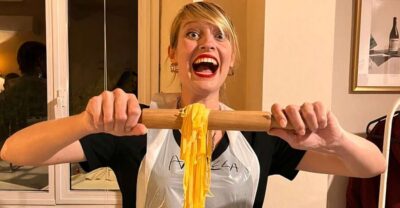
Pasta Making Class with Wine, Limoncello, and Dessert
Read our review →
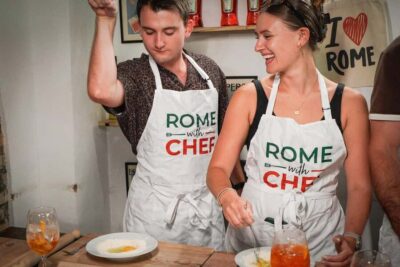
Rome Cooking Class: Make Pasta and 3 Spritz Cocktails
Read our review →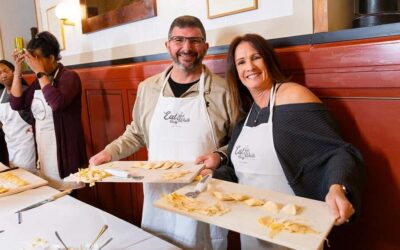
3-in-1 Fettuccine, Ravioli, and Tiramisu Cooking Class
Read our review →