
REVIEW · BASQUE COUNTRY, SPAIN
Bilbao: Immersive Basque Cooking Class
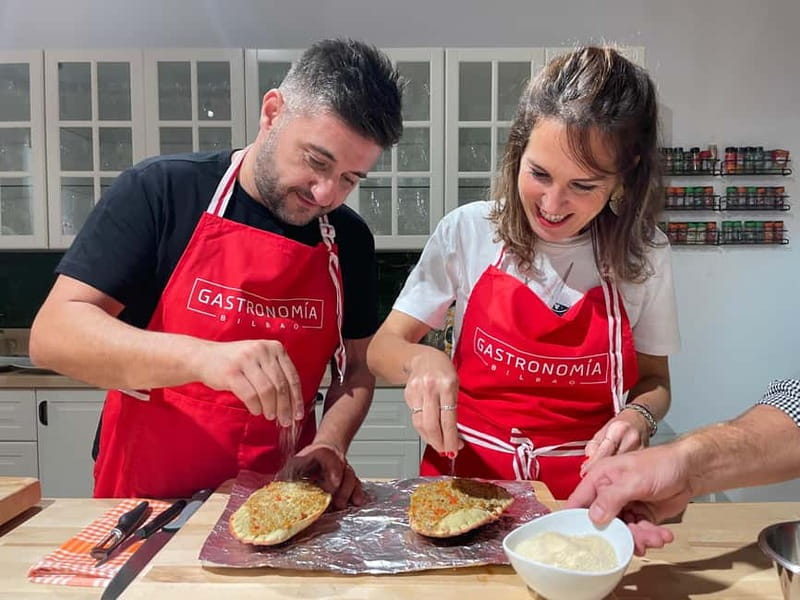
Bring an appetite to Bilbao. This hands-on Basque cooking class combines local food, wine, and stories in a downtown setting, with Mikel guiding you through dishes such as gilda, Marmitako, steak, and Basque toast. I like the generous menu, and I like that you eat the full meal you prepare rather than leaving with a few samples.
The local wine is another strong point, with refreshing Txakoli and Rioja served during the cooking and meal. The main consideration is participation: the class is described as fully hands-on, but one report found that the actual cooking time for some participants was limited, so your role may depend on the group and the dish being prepared.
Key points to know before booking
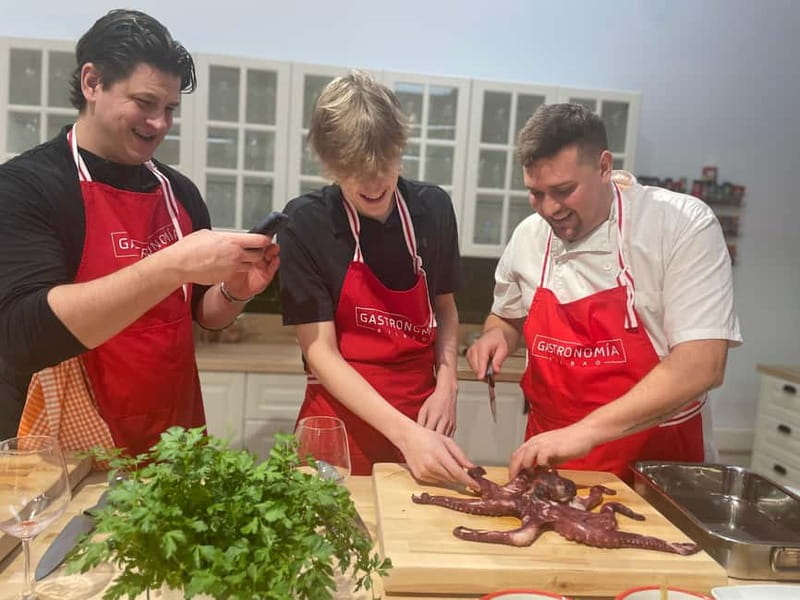
- Mikel brings local insight: He is a Basque chef and the guide most often named in the feedback, praised for his friendly manner, cooking skill, and stories about food and culture.
- You prepare a full meal: Expect 2 or 3 starters, one main course, and dessert, followed by a private meal with your group.
- The menu changes with the market: Possible dishes include gilda, Marmitako, chorizo in cider, T-bone steak, sweet red peppers, salad, and Basque toast.
- Wine is part of the lesson: Txakoli and Rioja are included, along with non-alcoholic drinks.
- The class runs about 3.5 hours: Some sessions have lasted closer to four hours, so avoid scheduling a tight activity afterward.
- It costs $165 per person: That is a high price for a cooking class, but it includes instruction, equipment, apron, recipes, wine, charcuterie, and a substantial meal.
Meeting at Gastronomía Bilbao
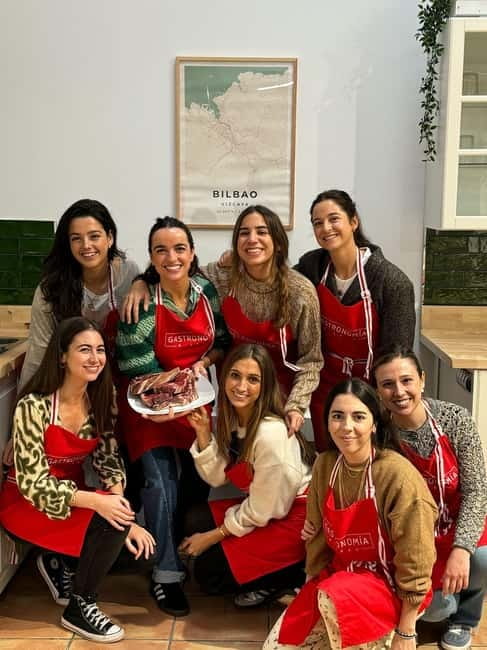
You meet by the gourmet shop at Gastronomía Bilbao, where someone checks you in before the class begins. This is a useful starting point because the venue combines a wine bar, gourmet shop, and cooking space, giving the lesson a food-focused setting from the first minute.
The location is in downtown Bilbao, so it works well as part of a city day. You do not need to arrange transport as part of the class, and the meeting instructions are simple. Look for the gourmet shop rather than expecting a large cooking-school sign.
The class is taught in English, with a bilingual instructor. Mikel is the name to know. He has been praised for making the atmosphere relaxed and social, while still explaining the ingredients, methods, and background behind each dish.
The group size can vary. One session had seven people, which is large enough for conversation but still small enough to share a meal around one table. A smaller group may give you more direct time at the counter, while a larger group can feel more sociable. The tradeoff is that not everyone may get equal time handling every dish.
A few more cooking classes around Spain worth a look
- Barcelona: Paella Cooking Experience & Boqueria Market Tour
★ 4.8 · 3,661 reviews - Barcelona Paella Cooking Class with Market Visit, Tapas & Sangria
★ 5.0 · 2,531 reviews - Barcelona Interactive Spanish Cooking Experience
★ 4.5 · 2,155 reviews
A Basque menu built around familiar local dishes
The proposed menu is unusually full for a cooking class. You may prepare two or three starters, a main course, and dessert, with cheese and charcuterie offered alongside the meal.
The exact dishes depend on what is available at the market. That flexibility is useful in a food class because ingredients are not treated as fixed props. It also means you should not book expecting every listed item to appear.
Possible dishes include:
- Gilda, a classic combination of olive, anchovy, and pickled pepper
- Marmitako, a Basque fish stew made with bonito, the tuna of northern Spain
- Chorizo cooked in cider
- Traditional T-bone steak
- Sweet red peppers prepared in the Etxebarri style
- A fresh green salad
- Basque toast for dessert
This selection gives you a broad taste of Basque cooking. You move from small bites and preserved ingredients to fish, meat, vegetables, and a sweet finish. The variety matters because it shows how the region’s food is not just about one famous dish or one cooking method.
Starting with gilda, cheese, and charcuterie
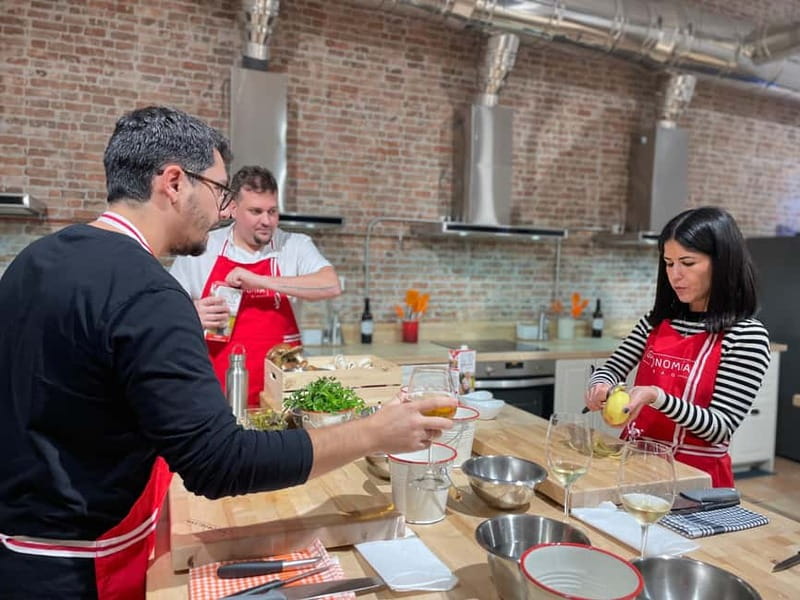
The class may begin with simple appetisers and a board of local cheese and charcuterie. These are not just fillers while the cooking starts. They help set the tone for Basque food, where small portions, strong ingredients, and relaxed eating all fit naturally together.
Gilda is a particularly good first lesson. It is easy to assemble, but its combination of salty, sharp, and briny flavors shows how a few well-matched ingredients can make a memorable pintxo. You learn the basic idea behind one of Bilbao’s most recognizable small bites without needing complicated equipment.
The cheese and cured meats also give you something to eat while the main dishes are underway. The class includes local wines, so this opening part can become a casual tasting as well as a lesson.
If you do not drink alcohol, non-alcoholic drinks are included. If you do drink, Txakoli and Rioja are the featured regional pours. Txakoli is refreshing and typically associated with the Basque Country, while Rioja gives the meal a fuller red wine option. The pairing is practical rather than formal: you can taste the wines while cooking and then continue with the meal.
Learning the base of Marmitako
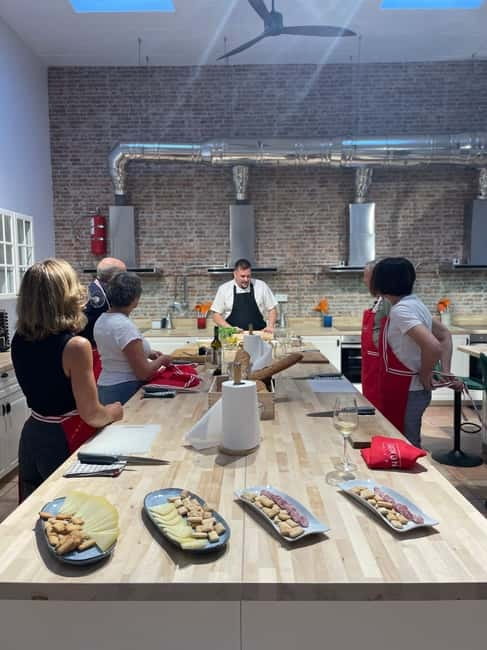
Marmitako is one of the most useful dishes on the menu because it teaches more than a recipe. It is a stew based on bonito, the local tuna of northern Spain, and it shows how fish can be turned into a filling one-pot meal.
You may help chop ingredients, build the base, and prepare the soup or stew. One participant specifically described working with sofrito and cooking the base for a soup and rice dish. That kind of lesson is valuable because the base often matters more than the final list of ingredients.
The instructor also explains the story behind each dish and offers small tricks for making it at home. Pay attention to those practical details. Recipes are included, but a written recipe cannot always explain the timing, texture, or small adjustments that make a stew taste right.
Marmitako is also a good contrast to the steak later in the class. You get to see both a humble, comforting preparation and a more celebratory cut of meat in the same meal.
Same place, a different thing to cook:
- Spanish Cooking Class Paella Tapas and Sangria in Madrid
★ 5.0 · 1,340 reviews - Paella Cooking Class, Wine Tasting & Central Market in Valencia
★ 5.0 · 1,150 reviews - Paella Cooking Class in Madrid with Bottomless Wine Pairing
★ 5.0 · 985 reviews - Seville: Spanish Cooking Class with Dinner
★ 4.9 · 900 reviews
Chorizo in cider and Basque-style flavors
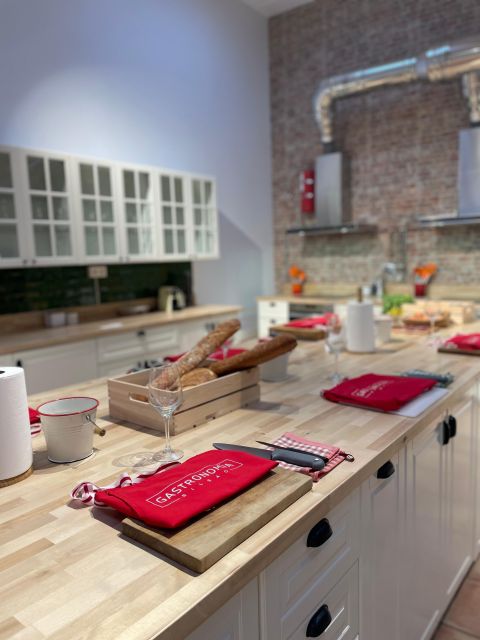
Chorizo cooked in cider brings together two ingredients closely linked with northern Spanish cooking. It is straightforward, but it gives the class another chance to show how local products can be prepared without a long list of additions.
The class is not built around restaurant-style precision. It is casual and social, with the instructor explaining techniques as the food comes together. That makes it suitable if you want to learn the basic logic of Basque cooking rather than train for professional kitchen work.
This relaxed style is also where the class gets much of its appeal. You can drink wine, talk with the other people in the group, and ask Mikel questions as the meal develops. The atmosphere has been described as easygoing, with plenty of time to talk and get to know the other participants.
If your main goal is to spend every minute actively chopping, stirring, and plating, keep your expectations in check. Some people may handle more of the work than others, especially when a dish needs close supervision or the group is larger.
Steak, peppers, and the main meal
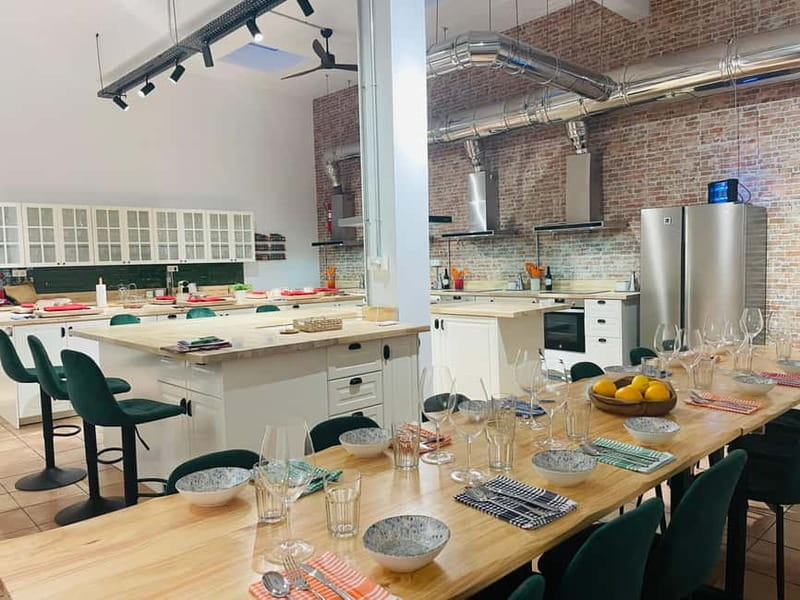
The possible T-bone steak is likely to be the centerpiece of the class. The traditional cut gives you a chance to learn how Basque cooking treats high-quality meat with restraint. The point is not to bury the steak under a heavy sauce, but to prepare and serve it in a way that respects the ingredient.
Sweet red peppers prepared in the Etxebarri style provide a useful vegetable contrast. They bring color and sweetness to a menu that could otherwise lean heavily toward meat, fish, and cured products. A green salad may also appear, adding freshness and balance before dessert.
The main course is prepared during the class, then served as part of the meal you eat afterward. This is an important value point. You are not paying $165 simply for a demonstration followed by a token tasting. The format gives you a complete lunch or dinner, with several courses and drinks included.
The quantity can be substantial. One class was described as lasting four hours, with food and wine available throughout. I would avoid planning a large restaurant reservation immediately afterward. You will likely want time to finish the meal, talk, and collect the recipes.
Basque toast for dessert
Dessert is a Basque toast, described in the menu as a fabulous final course. Another session included a bread pudding-style dessert, so the exact sweet dish can change with the menu.
That variation is worth noting. You receive a genuine local cooking lesson, but not a fixed restaurant menu. If you have your heart set on one particular dish, ask about the current menu before booking.
Ending with a simple bread-based dessert makes sense after such a large meal. It also gives the class a final technique that you can realistically repeat at home. You are not leaving with only advanced recipes or difficult restaurant presentations.
What the instruction feels like
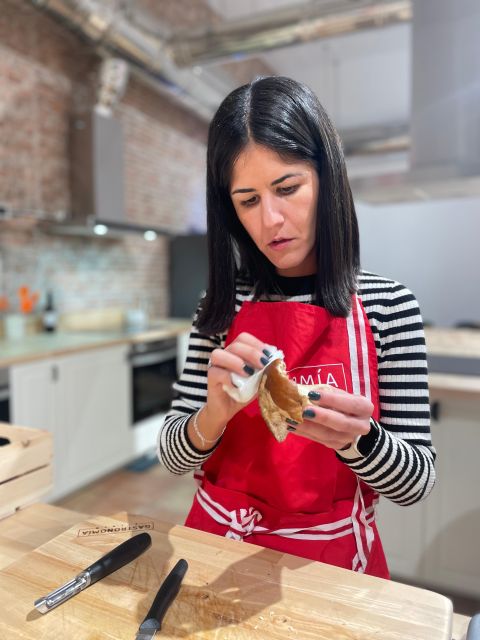
Mikel’s teaching style is one of the strongest reasons to choose this class. He has been praised for his passion for Basque culture, his cooking experience, and his ability to make people feel comfortable while they learn.
The class explains the background of the dishes, the role of ingredients, and tricks for preparing them again at home. That cultural context adds value. You learn not only what goes into Marmitako or a gilda, but why those foods belong in a Basque meal.
The setting is clean and prepared before the group arrives. Cooking equipment and aprons are supplied, and recipes are included. You therefore avoid the usual problem of a cooking class that expects you to bring tools or take frantic notes while the instructor works.
The phrase fully hands-on should be read with some flexibility. There is real participation, including chopping and preparing components, but the amount of work you personally do may depend on the number of people and the day’s menu. If you want a private lesson with constant individual instruction, this may not be the right format.
Wine, conversation, and the private dining room
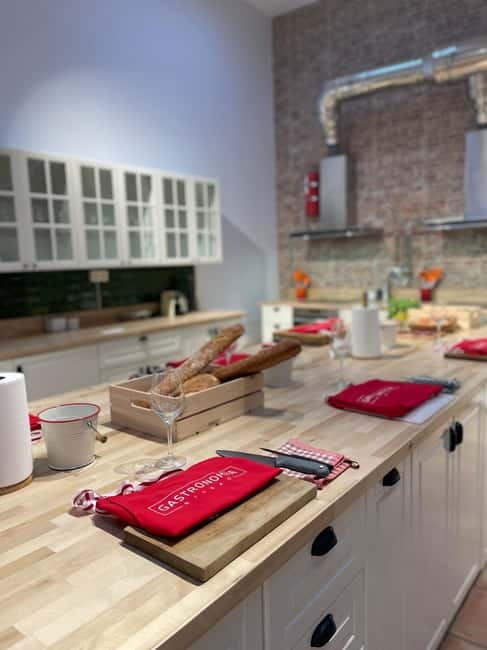
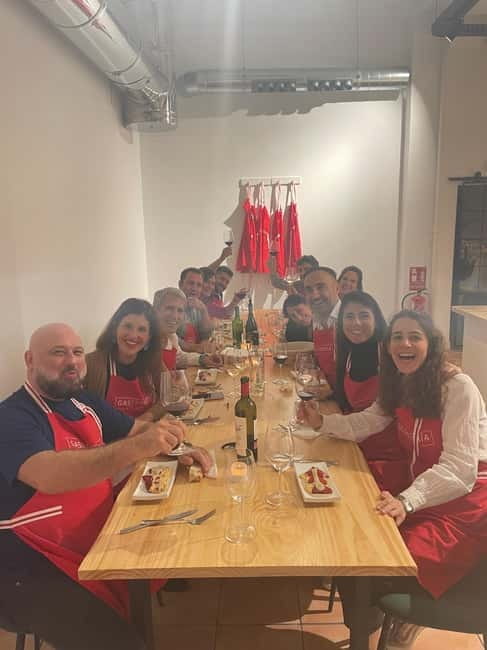
After the food is prepared, you eat it with your group in a private dining room. This changes the rhythm of the class. You are not rushed out after the last pan is cleaned, and you have time to enjoy the result of the work.
Wine is served as part of the class, including Txakoli and Rioja. The drinks are not an optional extra, so the $165 price covers more than the cooking lesson itself. Non-alcoholic drinks are also available.
The social side is a major part of the appeal. Cooking gives people an easy reason to talk, and the meal gives the group time to compare dishes and ask more questions. I would choose this class if you enjoy meeting other people while eating. It is less suited to someone looking for a quiet, private activity with no group interaction.
Is $165 a fair price?
At $165 per person, this is not a budget cooking class. You can find cheaper food activities in Bilbao, particularly short pintxos lessons or demonstrations.
The price becomes easier to justify when you add up what is included: a 3.5-hour class, an English-speaking Basque chef, equipment, apron, recipes, cheese and charcuterie, local wine, non-alcoholic drinks, and a full meal with several courses. You also receive cultural explanation and a downtown venue rather than just a quick recipe lesson.
The strongest value comes if you treat it as both a cooking class and a long meal. If you want dinner anyway, the cost covers a substantial food experience with drinks and instruction. If you are mainly looking for technical kitchen practice, the limited individual cooking time reported in one session may make the price feel high.
There is also a possible combination with a Bilbao food tour. A combined price may be available, but the exact cost is not provided here. Ask before booking if you are considering both activities.
Who should book this Bilbao class?
I would recommend it for food-focused visitors who want an introduction to Basque cooking without needing advanced kitchen skills. It suits couples, friends, solo visitors comfortable in a group, and anyone who prefers a long social meal to a short demonstration.
It is especially useful early in a Bilbao visit. After learning about gilda, Marmitako, Txakoli, Rioja, and other local foods, you will recognize more of what you see in restaurants and pintxos bars around the city.
Families with children should check the age policy before booking, since no age information is provided. People with food intolerances should notify the provider in advance. The menu can change, but advance notice gives the kitchen a chance to discuss what is possible.
Book with care if you need a tightly timed schedule. The stated duration is 3.5 hours, while one class lasted four hours. The food, wine, and conversation are part of the point, so this is not an activity to squeeze between two fixed appointments.
Final verdict: a generous introduction to Basque food
I would book this class if you want to eat well, learn the basics of Basque cooking, and spend several unhurried hours with a local chef. Mikel’s friendly teaching, the broad menu, and the included wine make it more substantial than a quick cooking demonstration.
I would hesitate only if you want nonstop individual cooking or a low-cost activity. The $165 price is serious, and your hands-on time may vary by group size. For most food lovers, though, the full meal, recipes, local drinks, and cultural explanation make it a worthwhile Bilbao splurge.
FAQ
Where does the cooking class meet?
Meet by the gourmet shop of Gastronomía Bilbao in downtown Bilbao. Someone will be waiting there to check you in.
How long does the class last?
The advertised duration is 3.5 hours. One session lasted four hours, so allow some extra time if your schedule is tight.
What language is the class taught in?
The instructor teaches in English. The experience also describes the instructor as bilingual and Basque.
What food will I cook?
The menu can vary with market availability. Possible dishes include gilda, Marmitako with bonito, chorizo cooked in cider, T-bone steak, sweet red peppers, green salad, and Basque toast.
Are drinks included?
Yes. Local Txakoli and Rioja wines are included, along with non-alcoholic drinks.
What happens if I need to cancel?
You can cancel up to 24 hours in advance for a full refund. The activity also allows you to reserve now and pay later.
Just added around Spain
- Basque Pintxos and Tapas Cooking Class in Bilbao★ 5.0 · 73 reviews
- Paella and Burnt Basque Cheesecake Cooking Class (in Bilbao)★ 5.0 · 46 reviews
- Small-group Immersive Basque Cooking Class in Bilbao with Open Bar★ 5.0 · 65 reviews
- Pintxos and Tapas Cooking Class in Bilbao★ 5.0 · 38 reviews
- Rooftop Paella Seafood Cooking Class Experience in Barcelona★ 5.0 · 59 reviews
- Private Authentic Paella Cooking Class in Barcelona with Josh★ 5.0 · 3 reviews
- Private Barcelona Market Tour & Paella Cooking Class with Josh★ 5.0 · 4 reviews
- Premium Cooking Class in Designer Loft: Paella & Spanish Tapas★ 5.0 · 18 reviews
Cooking Classes, compared.

Half-Day Thai Cooking Class at Organic Farm in Chiang Mai
Read our review →

3 in 1 Cooking Class near Navona: Fettuccine, Ravioli & Tiramisu
Read our review →
Pasta & Tiramisu Cooking Class with Unlimited Wine
Read our review →
Hanoi Cooking Class: Culture, Local Market & Meaning CSR Impact
Read our review →
5 Traditional Dishes Hanoi Cooking Class with Market Trip
Read our review →
Cooking Class and Lunch at a Tuscan Farmhouse with Local Market Tour from Florence
Read our review →
Cooking Class, Market & Thai Herbs Garden Tour
Read our review →Lists this class appears in