
REVIEW · ASTI, ITALY
Dining experience at a local’s home in Asti with show cooking
A meal can tell you more than a map. This Asti experience brings you into a local home for show cooking, family recipes, and a full Piedmontese meal. I like the chance to see pasta made in a real kitchen, and I like the relaxed conversation that gives the dishes a human story. The only caution is that the exact menu can change with the season and your host.
You pay $124.21 per person for about two and a half hours, including a starter, two savory courses, dessert, wine, and espresso. It is a private activity, so your group gets the table and the host’s attention, but the price makes most sense if you value personal contact and a generous meal more than a formal cooking-school lesson.
Key points to know before booking
- A local kitchen replaces a restaurant dining room: You eat in a private home in Asti, with a Cesarina host preparing family recipes.
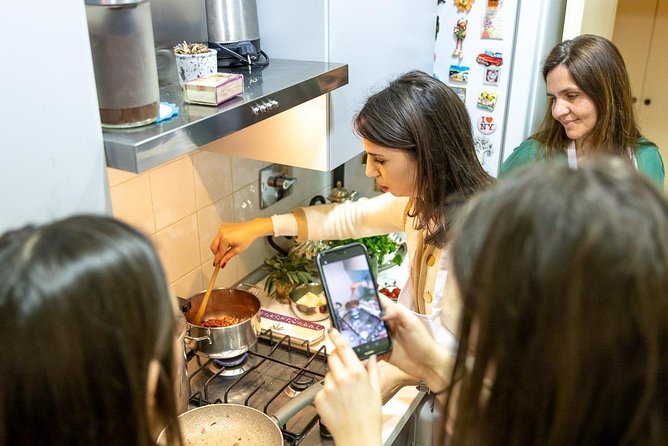
- The cooking is part of the meal: You watch the preparation and may take part, including helping with fresh pasta.
- The menu is strongly Piedmontese: Expect dishes such as cardoon tart, agnolotti, pumpkin gnocchi, bagna cauda, and Bonet.
- The evening is private: Only your own group participates, which makes conversation easier and the pace more personal.
- The meal is substantial: The format includes a seasonal starter, pasta, a second main course, dessert, wine, and espresso.
- The menu is not completely fixed: Your choices may include several traditional dishes, and seasonal availability can affect what appears.
Why a home meal works so well in Asti
Asti is a good setting for this kind of food experience because the focus is not on a polished dining room or a long list of restaurant courses. It is on the cooking that families have carried forward in their own kitchens.
Your Cesarina is a local home cook who prepares dishes from family cookbooks and explains the food as it reaches the table. That matters because Piedmontese cooking can look simple on the plate while requiring particular methods, patient preparation, or ingredients tied to local custom.
I like this format for a first taste of Asti because it connects food with place without turning the meal into a lecture. You hear stories and anecdotes about the dishes, then eat what you have just seen prepared. The result should feel more like being welcomed into a household than attending a standard restaurant service.
The private format also changes the tone. You are not joining a large group or trying to follow a demonstration from the back of a room. Your group has a more direct connection with the host, and the kitchen setting gives you room to ask questions or join in when the pasta is prepared.
More Home Cooking Classes in Italy
- Pastamama, Home Cooking Classes at Grace’s Home
★ 5.0 · 521 reviews - Traditional Home Cooking Experience in Venice
★ 5.0 · 377 reviews - Catania: Pistachio Ravioli, Pasta Home Cooking Class w/ Wine
★ 4.7 · 204 reviews
Arriving in Asti and meeting your Cesarina

The meeting point is in Asti, in the Province of Asti, Piedmont. The activity ends back at the meeting point, and it is near public transportation, which helps if you are arranging the meal around other time in town.
The booking confirmation arrives at the time of reservation. Since this is a home visit, check the meeting instructions carefully and allow enough time to reach the stated point without rushing. The supplied details do not provide a street address or a named neighborhood, so you should rely on the confirmed meeting information rather than assuming the home is beside Asti’s main sights.
Your host is called a Cesarina, the local cook who welcomes you into her home. The experience provider is Cesarine: Cooking Class, but this is not presented as a large commercial cooking school. It is a private meal with a cooking demonstration and personal exchange.
One host praised in the available material is Monica, who hosted with her daughters. If Monica is assigned to your visit, the family setting may include more than one generation at the table or in the kitchen. Do not assume that every booking has the same host, but the example gives you a useful sense of the warm, informal style this activity aims for.
The opening course: seasonal starter and cardoon tart
The meal begins with a seasonal starter. That phrase is important because it signals that you should not expect a rigid menu available every day of the year. The starter can reflect what is suitable at the time of your visit.
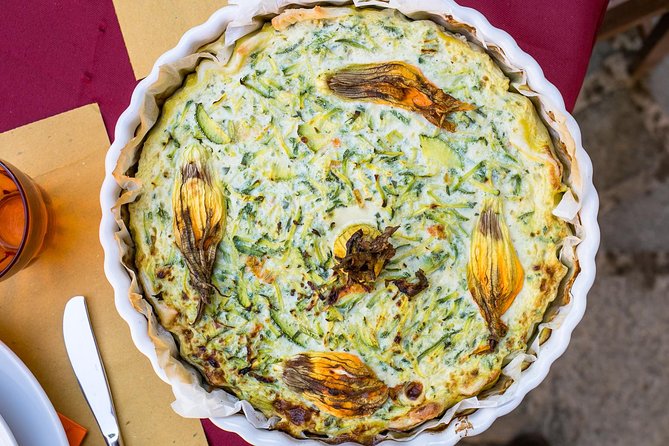
A named possibility is cardoon tart. Cardoon is a traditional Italian vegetable with a mild, artichoke-like character when cooked, and it fits Piedmont’s fondness for earthy, carefully prepared vegetable dishes. In tart form, it gives the opening course a distinctly local identity instead of relying on the usual tourist menu of cured meats and generic antipasti.
This is also where the host can begin explaining the food’s background. You may hear how the dish is made at home, why it belongs to the family repertoire, or how its ingredients fit the season. The information provided does not promise a formal recipe handout, so think of the cooking talk as part of the conversation rather than a structured class.
If you prefer a large selection of starters, this may feel limited. The value comes from the personal preparation and local character, not from choosing among ten small plates.
Fresh pasta takes center stage
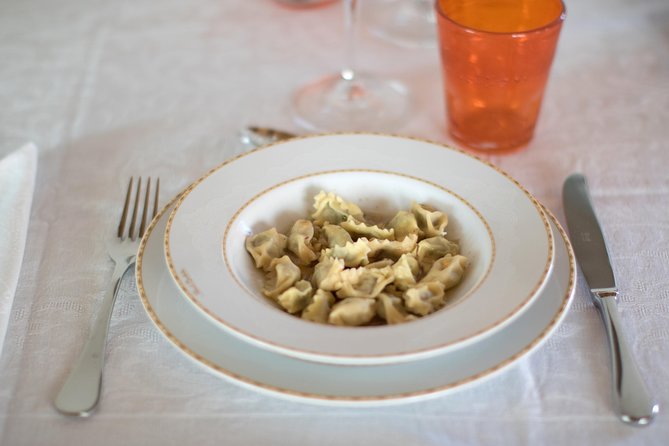
The first main course is fresh pasta. The listed possibilities include agnolotti, pumpkin gnocchi, or lasagne all’albese. Each one offers a different view of Piedmontese cooking.
Agnolotti are filled pasta parcels associated with Piedmont. They are a good choice if you want to see how a home cook handles pasta that depends on careful filling, folding, and cooking. Pumpkin gnocchi offers a softer, sweeter profile, while lasagne all’albese gives you a baked pasta option tied to the Alba area of Piedmont.
The show cooking is most useful here. Instead of simply receiving a plate and moving on, you can watch the host work with the pasta and hear about the family method. One account describes the group helping with pasta preparation, so you may have the chance to do more than observe.
That participation is a strong point, but keep your expectations realistic. This is a dining experience with cooking included, not a full technical course designed to train you in every pasta skill. The amount of hands-on work can depend on the host, your group, and the meal being prepared.
For me, this is likely the most valuable part of the event. Pasta is easy to order anywhere in Italy. Seeing how a local family makes its version, then eating it at the same table, gives the dish more meaning.
Same place, a different thing to cook:
- Florence: Pasta Cooking Class with Unlimited Wine
★ 4.9 · 10,285 reviews - 3 in 1 Cooking Class near Navona: Fettuccine, Ravioli & Tiramisu
★ 5.0 · 7,376 reviews - Florence: Pasta & Tiramisu Cooking Class with Unlimited Wine
★ 4.9 · 6,708 reviews - Cooking Class and Lunch at a Tuscan Farmhouse with Local Market Tour from Florence
★ 5.0 · 4,831 reviews
A second savory course with strong Piedmont character
After the pasta, the meal continues with a second main course. The possible dish is bagna cauda or insalata di finocchi e bra.
Bagna cauda is one of Piedmont’s best-known traditional preparations. It is a warm sauce built around anchovies and garlic, usually served as a dip for vegetables. It has a strong, savory flavor and is not the safest choice for someone who dislikes anchovies or garlic, though the menu may offer the fennel and Bra salad instead.
Insalata di finocchi e bra pairs fennel with Bra, a Piedmontese cheese known from the town of the same name. This option should be lighter and more refreshing after a pasta course, while still keeping the meal tied to regional ingredients.
The two choices show a useful balance in the menu. You are not being served a generic Italian meal that could come from anywhere. The dishes point directly toward Piedmont, and the host can explain why they belong to this part of Italy.
Because the exact choice may vary, ask your host about the ingredients if you have food restrictions or strong dislikes. The available information does not promise vegetarian, vegan, gluten-free, or allergy-specific substitutions.
Dessert, wine, and espresso finish the table
Dessert follows the savory courses, with possible choices including Bonet, Bicciolani biscuits, Bignole, or tiramisu.
Bonet is a traditional Piedmontese pudding made with a chocolate and amaretti profile. It is the most regionally distinctive dessert in the group. Bicciolani biscuits are associated with Vercelli in Piedmont, while Bignole are small filled pastries. Tiramisu is familiar across Italy and may be the easiest choice if you want a well-known finish.
The meal also includes wine and espresso. The supplied details do not name the wine, so you should not book this expecting a particular vineyard, tasting flight, or wine lesson. Still, wine with the savory courses and coffee after dessert make the format feel like a complete Italian meal rather than a short cooking demonstration followed by a small sample.
The menu is generous for a two-and-a-half-hour activity. You receive several courses, drinks, and time to talk. If you have a small appetite, pacing may matter more than quantity. If you enjoy long meals, the unhurried structure should suit you.
The stories are as important as the recipes
The host is expected to share stories and anecdotes about the dishes and their history. That is a key part of the value. A recipe can tell you what goes into a dish, but a family story can explain why it appears at a particular time of year, how it was served at home, or what makes one household’s version different from another.
A relaxed atmosphere was a major strength in the available feedback. The food was described as traditionally Piedmontese, and the host gave information about Asti and the area around it. That combination is useful because you are not only eating dinner. You are also getting a local perspective on the place you are visiting.
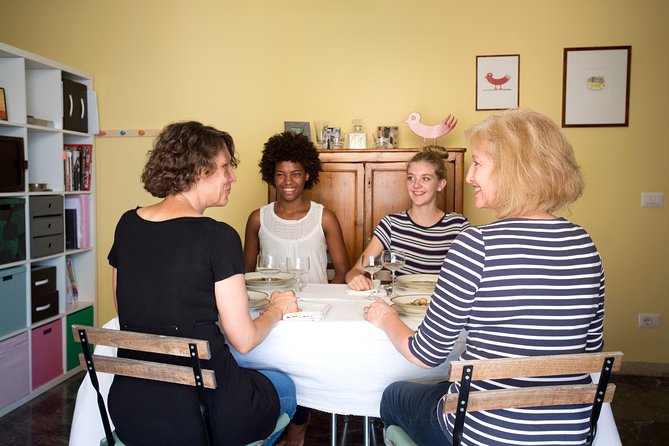
Another strong point was the feeling of being at home. Monica and her daughters were praised for creating a comfortable setting, explaining both the food and the preparation techniques, and encouraging an exchange of experiences. That is the kind of contact that a restaurant usually cannot provide.
The style may not suit you if you want a silent, highly formal meal or a tightly timed cooking class. Conversation is not an extra here. It is one of the main reasons to choose the activity.
How the private format affects the experience
Only your group participates. That gives the meal several advantages: you can ask questions without speaking over a crowd, the host can focus on your table, and the pace may feel more natural than a scheduled group demonstration.
A private home also means the setting is personal rather than standardized. That is part of the appeal, but it also means you should expect some variation from one Cesarina to another. The menu, amount of hands-on cooking, and rhythm of the conversation may not be identical for every booking.
The activity is offered in English, which makes it practical for English-speaking visitors. The details say most people can participate, and the meeting point is near public transportation. No special physical difficulty is described, but the information does not provide specific accessibility details for the private home, so ask in advance if you need step-free access or other arrangements.
Sanitary supplies are provided in the homes, including paper towels and hand-sanitizing gel. The guidance also asks people to maintain a one-meter distance when possible or use masks and gloves when they cannot. Follow the current instructions given by the host at the time of your visit.
Is $124.21 a fair price?
At $124.21 per person, this is not a bargain meal in the ordinary restaurant sense. You are paying for more than food. The price includes a private setting, a local host, show cooking, conversation, several courses, wine, and espresso over about two and a half hours.
I consider the value reasonable if you want personal contact and a meal built around regional recipes. A restaurant could offer pasta and dessert for less, but it would not normally give you the same access to a local kitchen or the chance to help prepare fresh pasta.
The value is weaker if your main goal is simply to eat as cheaply as possible or to take a long, technical cooking course. The activity is best understood as a social food experience with a cooking element.
The private booking helps justify the cost, particularly for couples, families, or a small group who want time with the host. Solo visitors may still appreciate it, but the per-person price can feel higher when there are fewer people sharing the experience.
Who should book this Asti meal?
I would recommend it to you if you enjoy food stories, family cooking, and a slower meal with conversation. It is especially well suited to visitors who want to understand Piedmont through dishes such as agnolotti, bagna cauda, cardoon tart, and Bonet rather than through a standard tourist menu.
Families and small private groups should appreciate the relaxed setting. People who like to ask questions will get more from it than those who prefer to remain observers.
You should think twice if you have strict dietary requirements, dislike strong flavors such as anchovy and garlic, or need a fully specified menu before booking. The menu includes possible dishes rather than one guaranteed set of courses, and the exact seasonal starter is not fixed.
Also remember that this is a home meal. The surroundings will be personal and informal, not a restaurant with a professional service team. That is a benefit for some people and a drawback for others.
Should you book the Cesarine experience in Asti?
Book it if you want a genuine connection with Piedmontese home cooking and you place a high value on the host as well as the plate. The fresh pasta preparation, private setting, regional dishes, wine, and stories make this a fuller experience than a simple meal out.
I would choose it for a first visit to Asti when I wanted food to be part of my understanding of the area. I would skip it only if I needed a fixed menu, a low-cost meal, or a formal cooking lesson with guaranteed hands-on instruction.
You can cancel for a full refund if you do so at least 24 hours before the local start time. Changes or cancellations made less than 24 hours ahead are not accepted for a refund, so check your plans before booking.
FAQ
Where does the dining experience take place?
It takes place at a local home in Asti, in the Province of Asti, Piedmont.
How long does the experience last?
The activity lasts approximately 2 hours and 30 minutes.
What language is the experience offered in?
It is offered in English.
Is this a private activity?
Yes. Only your group participates in the activity.
What food is included?
The meal includes a seasonal starter, fresh pasta, a second main course, dessert, wine, and espresso.
Which pasta dishes might be served?
The possible pasta dishes are agnolotti, pumpkin gnocchi, or lasagne all’albese.
Which second course might be served?
The possible second courses are bagna cauda or insalata di finocchi e Bra.
Is wine included?
Yes. Wine and espresso are included with the meal.
Can I cancel for a full refund?
Yes. You can receive a full refund if you cancel at least 24 hours before the experience start time. Cancellations or changes made less than 24 hours before the start time are not refunded or accepted.
More Meals Out in Italy
- Cooking class, dinner and wine tasting near Lecce
★ 5.0 · 350 reviews - Cooking lesson in Catania with lunch or dinner
★ 5.0 · 154 reviews - Naples: Traditional Italian Food Cooking Class at Restaurant
★ 4.8 · 106 reviews - Cagliari: Pasta Cooking Class with 3-Course Dinner
★ 5.0 · 96 reviews
More Dinner Trips in Italy
- Pasta Making & Wine Tasting with Dinner in Frascati from Rome
★ 5.0 · 1,326 reviews - Rome: Pasta Making with Wine Tasting and Dinner in Frascati
★ 4.9 · 979 reviews - Palermo: Pizza and Gelato Cooking Class with Dinner and Wine
★ 4.9 · 951 reviews - Tuscan Cooking Class and Dinner in Florence
★ 4.5 · 732 reviews
Just added around Italy
- Cooking Class in a Sicilian countryhouse★ 5.0 · 5 reviews
- Cesarine: Home Cooking Class & Meal with a Local in Catania★ 4.5 · 10 reviews
- Cesarine: Market Tour & Home Cooking Class in Catania★ 4.0 · 6 reviews
- Cooking Class in Taormina with Lunch Included★ 5.0 · 2 reviews
- Cooking Class and Wine Pairing in Capri★ 5.0 · 57 reviews
- Cooking class in Capri for small groups★ 4.0 · 4 reviews
- Private Cooking Class Experience in Reggio Calabria★ 5.0 · 5 reviews
- Lezione di Cucina : Pasta Fresca★ 5.0 · 12 reviews
Home Cooking Classes, compared.
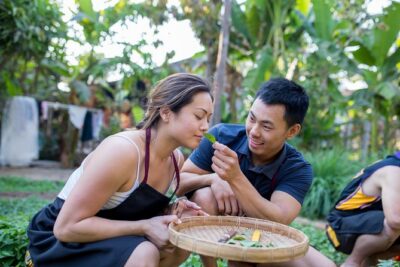
Khmer Cooking Class at a Local’s Home in Krong Siem Reap
Read our review →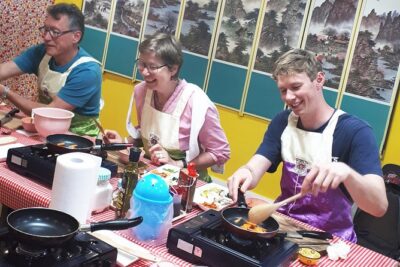
Local Home Korean Cooking Class & Market Adventure in Seoul
Read our review →
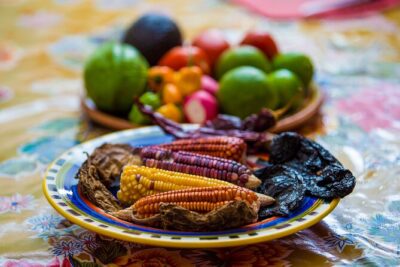
Mexican Cooking from Scratch in a Local Home in Tulum
Read our review →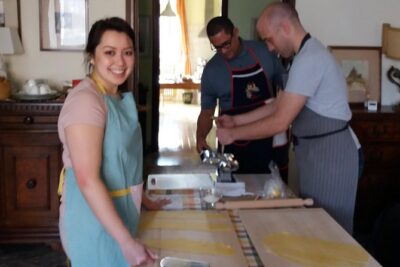
Pastamama, Home Cooking Classes at Grace’s Home
Read our review →
Traditional Cooking Class & meal with Local Family
Read our review →
Lists this class appears in