
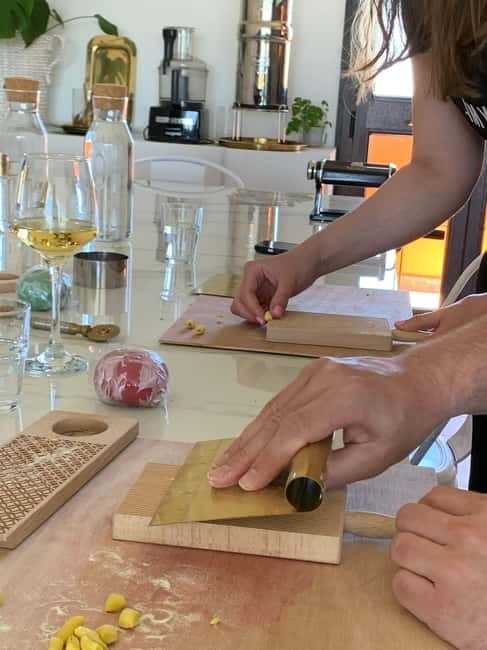
REVIEW · SARDINIA, ITALY
Cagliari: Pasta Cooking Class with 3-Course Dinner
Pasta tastes better with a sea view. This three-hour class near Cagliari combines hands-on Sardinian pasta making with a three-course meal, and I like that you eat the pasta you prepare rather than simply watching a chef work. I also like the small group size, capped at eight, and Ovan’s patient teaching style, which suits first-time pasta makers as well as confident home cooks.
The main consideration is location. The class takes place in Capitana, outside central Cagliari, and public transport still involves a 15-minute walk from the bus stop. The $105 price is not a quick cooking demonstration, either. It is a full food experience with ingredients, instruction, dinner, coffee, water, recipes, and a panoramic setting, but wine costs extra.
Key points to know before booking
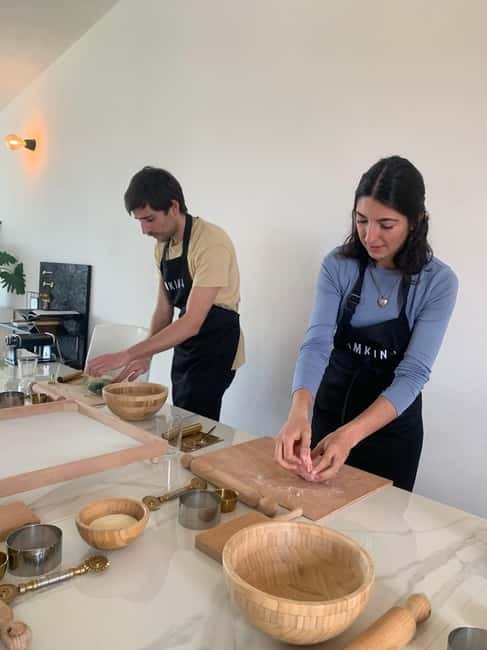
- Six or more handmade shapes: You may work with Sardinian pasta such as Malloreddus and Culurgiones, along with Ravioli, Mezzaluna, Casoncelli, and other forms.
- A fully plant-based menu: Organic ingredients and natural colors create pasta and sauces without meat, dairy, or eggs.
- Dinner with your own pasta: The three courses use the pasta made during the workshop, paired with sauces prepared by Ovan.
- Sea and mountain views: The meal takes place at a home studio in Capitana, with a panoramic view that becomes especially appealing at sunset.
- Small, friendly class: The group limit is eight, and the minimum is two people.
- Useful take-home recipe: The pasta dough recipe is sent by email after the class, so you can try it again at home.
A Sardinian pasta class with a different point of view
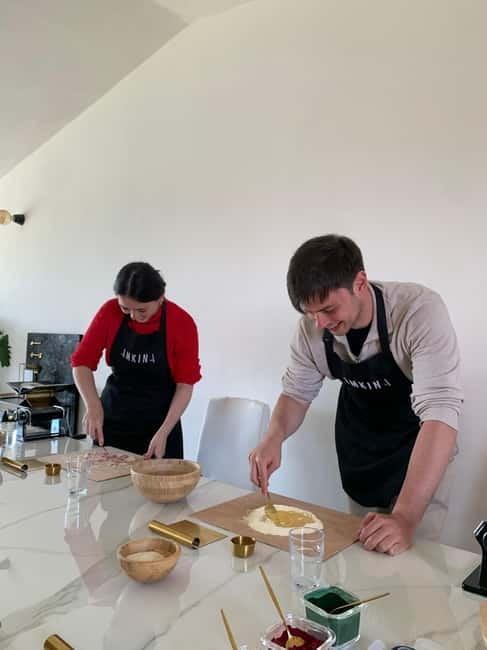
This is not a class built around one familiar pasta shape. Ovan introduces several styles, drawing from Sardinian traditions while adding forms found across Italy. You might make Malloreddus, the small ridged pasta often associated with Sardinia, alongside filled shapes such as Culurgiones, Ravioli, Mezzaluna, or Casoncelli.
That variety gives the three hours a good rhythm. You are not repeating the same motion for an entire afternoon. Each shape asks for a slightly different touch, fold, cut, or filling technique. It also lets you see how simple dough can become pasta with very different textures and looks.
I especially like the balance between tradition and experimentation. The class respects Sardinian forms, but it also encourages you to try your own variations. This makes the session useful for a complete beginner, while giving experienced cooks something beyond the standard tagliatelle lesson.
Ovan teaches in Dutch, English, and Italian. His approach is patient and clear, according to the experience details and the strong praise directed at his teaching. Several people who had never made pasta before found the instructions easy to follow, while more experienced pasta makers received tips on technique and gluten-free dough.
More Pasta Making Classes in Italy:
- Florence: Pasta Cooking Class with Unlimited Wine
★ 4.9 · 10,285 reviews - 3 in 1 Cooking Class near Navona: Fettuccine, Ravioli & Tiramisu
★ 5.0 · 7,376 reviews - Florence: Pasta & Tiramisu Cooking Class with Unlimited Wine
★ 4.9 · 6,708 reviews
What happens when you arrive in Capitana
The address is Via delle Rubinie 7 in Quartu Sant’Elena, in the Capitana area southeast of Cagliari. The meeting point is the last house on the street, marked by a small gate. You take the stairs up to the studio.
That wording matters because this is not a restaurant front on a busy street. Give yourself enough time to find the final house and gate, especially if you are arriving by bus. The class can be reached by public transport from central Cagliari, but you should expect about 15 minutes of walking from the bus stop.
The setting is part of the appeal. The home has a sea view, with mountains also visible from the property. You are not being ushered into a generic cooking school tucked inside a shopping district. You are entering a private studio where the meal and class share the same scenic setting.
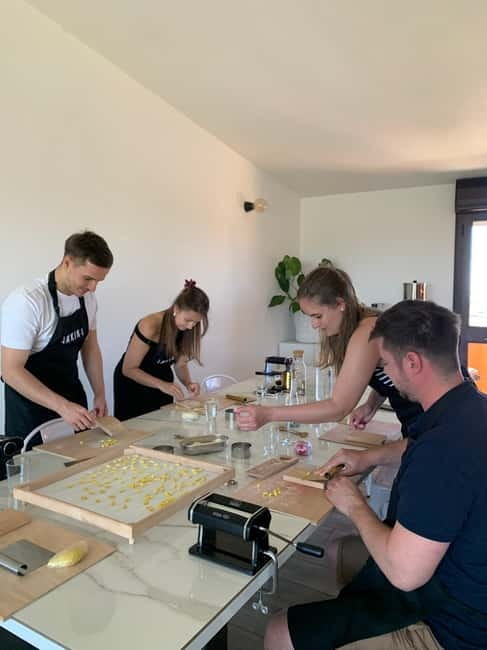
The group limit of eight keeps the lesson personal. That is large enough for a sociable evening but small enough for Ovan to watch how each person handles the dough. The minimum booking is two people. If fewer than two participants are booked, the provider says you will be contacted at least 24 hours ahead and offered another date or a private class at an additional cost.
Making the dough from plant-based ingredients
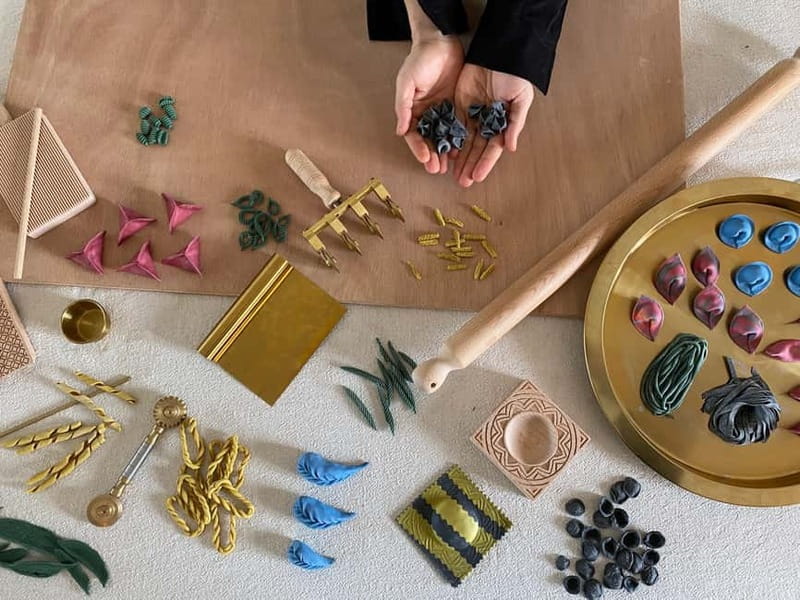
The workshop begins with the foundation: pasta dough. The ingredients are plant-based and organic, and the class focuses on healthy pasta made without animal products. Natural colors are used to give some varieties their appearance, rather than relying on artificial coloring.
This is an important point for anyone who assumes vegan pasta must be a compromise. Traditional fresh pasta often contains eggs, but this class takes a different route. The method is designed to produce good texture and flavor with plant-based ingredients, and the finished sauces follow the same approach.
You should expect to work with the dough rather than simply receive a prepared ball. The teaching covers texture, handling, and the feel of properly prepared pasta. That hands-on stage is where the class earns much of its value. You learn to notice whether the dough feels too dry, too wet, or ready to shape.
Ovan also shares ideas for gluten-free pasta, according to the details provided by one participant. Gluten-free dough can behave differently and may require more care, so this advice could be useful if you have dietary needs or want to experiment at home. Still, the experience information specifically describes the class as plant-based, not as a certified gluten-free workshop. Ask ahead if you need firm assurance about ingredients or cross-contact.
Shaping Malloreddus, Culurgiones, and more
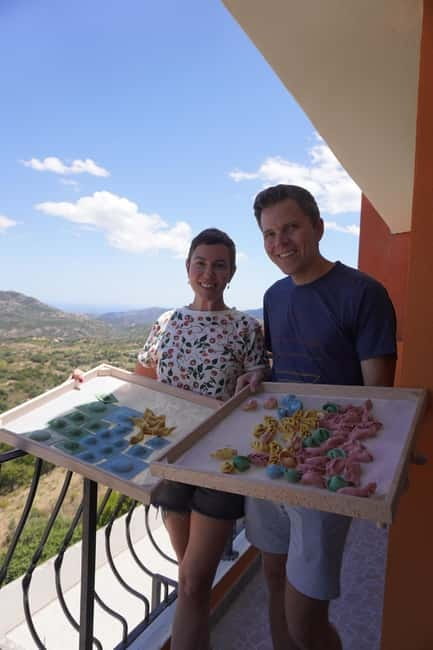
Once the dough is ready, the class becomes a lesson in small movements. Sardinian pasta shapes are the star, with Malloreddus and Culurgiones providing a local connection. Other shapes include Mezzaluna, Ravioli, and Casoncelli.
The precise number of shapes can vary with the session, but the supplied details describe several different forms, and one account recorded six shapes made from prepared dough. Another described three types of pasta dough and five traditional Sardinian shapes. That is a generous amount of variety for a three-hour class.
The shapes also give you a useful introduction to filled pasta. Ravioli, Mezzaluna, Culurgiones, and Casoncelli each have their own folding or sealing character. You get to see how a change in shape affects the balance between dough, filling, sauce, and bite.
This is where Ovan’s patience matters. Pasta making looks simple in a cookbook photograph, but the first attempts can be uneven. The class is designed to let you learn by doing, and the small group means you can ask for help instead of trying to copy a demonstration from across a crowded room.
Do not expect factory-perfect pasta. Handmade shapes have personality, and part of the fun is seeing your own variations emerge. The goal is not to produce identical pieces. It is to understand the technique well enough to repeat it at home.
More Dinner Trips in Italy:
- Pasta Making & Wine Tasting with Dinner in Frascati from Rome
★ 5.0 · 1,326 reviews - Rome: Pasta Making with Wine Tasting and Dinner in Frascati
★ 4.9 · 979 reviews - Palermo: Pizza and Gelato Cooking Class with Dinner and Wine
★ 4.9 · 951 reviews - Tuscan Cooking Class and Dinner in Florence
★ 4.5 · 732 reviews
A three-course meal made from your work
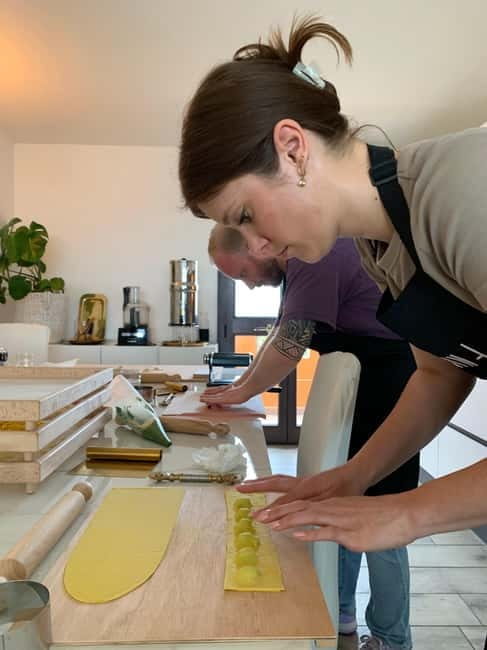
After the workshop, your pasta becomes the meal. The experience includes three courses, with your handmade pasta served alongside sauces prepared by Ovan. Water and coffee are included.
This structure gives the class a satisfying finish. You are not carrying a box of uncooked pasta back to your accommodation and wondering what to do with it. You taste the result while the methods are still fresh in your mind.
The sauces are plant-based as well, with healthy ingredients and creative combinations. That makes the menu suitable for vegans, but you do not need to be vegan to enjoy it. The strongest feedback comes from people who expected a meat-based meal and were surprised by how satisfying the food was.
The meal also shows why sauce matters. A pasta class can teach you a shape, but the finished plate teaches you how that shape works with seasoning and texture. The three-course format lets you compare different styles instead of eating one large serving of a single pasta.
Coffee and water are included. Botanical wines can be ordered on the spot for an additional fee. Do not assume wine is part of the $105 price, even though some past sessions included wine with the meal. If a wine pairing matters to you, ask about the current choices and cost before starting.
The sea view is more than decoration
The panoramic view is one of the most praised parts of this experience. You eat in a setting overlooking the sea, with views toward the mountains as well. At sunset, the timing can add a memorable final touch to the meal.
The view does not replace good food, and here it does not have to. The class has a clear purpose, and the scenery gives the meal a sense of place. Sardinia is not only beaches and archaeological sites. It is also food prepared in a home setting, with local pasta traditions explained by someone who enjoys teaching them.
The setting may suit a birthday, couples’ evening, or small family activity. One booking included children, and Ovan was praised for handling a group with children and an infant. Still, you should consider your own group’s needs before booking, since the class involves dough preparation, stairs to the studio, and a three-hour schedule.
What the $105 price includes
At $105 per person, this is not the cheapest meal in Sardinia. The fair question is what you receive for the money.
You get three hours of instruction, organic plant-based ingredients, multiple pasta shapes, a three-course meal, coffee, water, a sea view, and the pasta dough recipe sent by email. You also receive the practical benefit of learning a technique you can use again, rather than paying only for a one-time plate of food.
The group size strengthens the value. With no more than eight people, the session is not a mass-market cooking show. You have room to handle the dough, ask questions, and receive corrections. The price is easier to justify if you enjoy food activities and want an evening that combines a class with dinner.
It is less suitable if you only want a quick taste of local food or if your budget is tight. You also need to add the cost of any botanical wine, plus transport to Capitana if you are not already staying nearby. The recipe email is useful, but the real value lies in the instruction and the meal.
Who will enjoy this class most
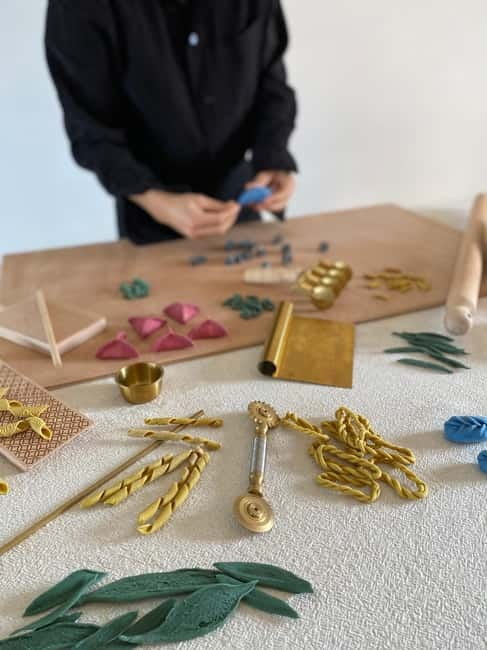
I would recommend it first to people who want to understand Italian food by making it. You do not need prior pasta experience. Beginners receive step-by-step guidance, and the variety of shapes keeps the class interesting for people who already cook.
It is also a strong choice for vegans and vegetarians who often have to check whether a pasta class uses eggs, butter, or cheese. Here, the focus is plant-based from the ingredients through the sauces. Non-vegans should not dismiss it, since the appeal is flavor and technique rather than dietary restriction alone.
Families can consider it too, especially because the class has handled children before. A small group, a patient instructor, and a meal at the end make it more welcoming than a formal restaurant cooking demonstration. You should still confirm the practical fit for young children before booking.
Couples and small groups will appreciate the shared activity. This is a class where you talk, make mistakes, compare shapes, and then sit down to eat. It is more engaging than simply booking another dinner.
Practical details that affect your choice
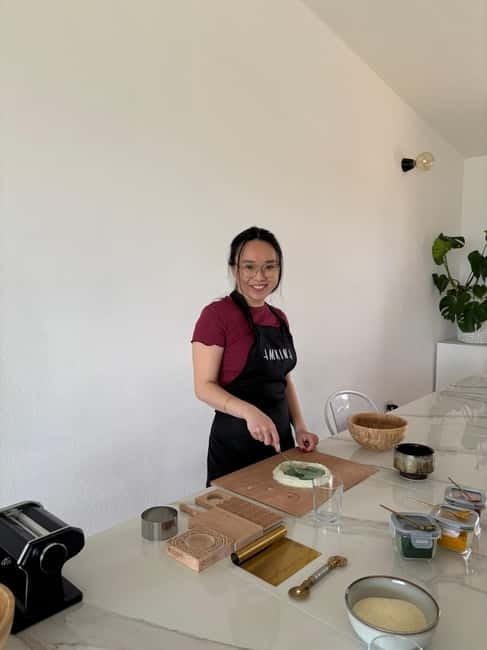
The experience lasts three hours, with starting times based on availability. It can be booked as a lunch or dinner, so check the schedule and think about how the timing fits with your day in Cagliari.
The instructor speaks Dutch, English, and Italian. The group is limited to eight, with at least two participants required. Pets are not allowed.
Cancellation is flexible up to 24 hours before the experience for a full refund. You can also reserve and pay later, which helps if your Sardinia plans are still changing. These policies are useful, but the bigger practical issue is getting to the correct house in Capitana and allowing time for the walk from public transport.
Should you book the Cagliari pasta class?
Book it if you want more than a meal. The strongest reasons are the hands-on work with Sardinian shapes, Ovan’s patient instruction, the fully plant-based menu, and the sea view at the end of the class. The emailed dough recipe gives you a way to carry the lesson home.
Think twice if you want a central Cagliari activity, dislike group cooking, or are counting every euro. The $105 cost is a commitment, and wine is extra. For a food-focused visit to southern Sardinia, though, the mix of cooking, local tradition, scenic dining, and personal instruction makes this a well-rounded choice.
FAQ
Where does the pasta class take place?
It takes place at Via delle Rubinie 7, 09045 Quartu Sant’Elena, in the Capitana area near Cagliari. It is the last house on the street with a small gate. Take the stairs going up to the studio.
How long does the experience last?
The class and meal take about three hours. Starting times depend on availability.
How much does the experience cost?
The listed price is $105 per person.
What pasta shapes might I learn to make?
The class draws on Sardinian shapes such as Malloreddus and Culurgiones. It may also include Mezzaluna, Ravioli, Casoncelli, and other handmade shapes.
Is the food vegan?
The class uses plant-based organic ingredients, and the sauces are plant-based as well. The experience is designed around vegan pasta and food.
Are drinks included?
Water and coffee are included. Botanical wines can be ordered at the studio for an additional charge.
Can I reach the class by public transportation?
Yes. You can reach the area from central Cagliari by public transportation, followed by about a 15-minute walk from the bus stop to the studio. Ask the provider for specific route information.
What happens if there are not enough participants?
At least two participants are required. If that minimum is not reached, you will be informed at least 24 hours ahead and can choose another date or arrange a private experience for an additional cost. The maximum group size is eight.
More Meals Out in Italy
- Cooking class, dinner and wine tasting near Lecce
★ 5.0 · 350 reviews - Cooking lesson in Catania with lunch or dinner
★ 5.0 · 154 reviews - Naples: Traditional Italian Food Cooking Class at Restaurant
★ 4.8 · 106 reviews - Naples: Fresh Pasta Cooking Class and Dinner with a Local
★ 4.9 · 69 reviews
Just added around Italy
- Cooking Class in a Sicilian countryhouse★ 5.0 · 5 reviews
- Cesarine: Home Cooking Class & Meal with a Local in Catania★ 4.5 · 10 reviews
- Cesarine: Market Tour & Home Cooking Class in Catania★ 4.0 · 6 reviews
- Cooking Class in Taormina with Lunch Included★ 5.0 · 2 reviews
- Cooking Class and Wine Pairing in Capri★ 5.0 · 57 reviews
- Cooking class in Capri for small groups★ 4.0 · 4 reviews
- Private Cooking Class Experience in Reggio Calabria★ 5.0 · 5 reviews
- Lezione di Cucina : Pasta Fresca★ 5.0 · 12 reviews
Pasta Making Classes, compared.


3 in 1 Cooking Class near Navona: Fettuccine, Ravioli & Tiramisu
Read our review →
Pasta & Tiramisu Cooking Class with Unlimited Wine
Read our review →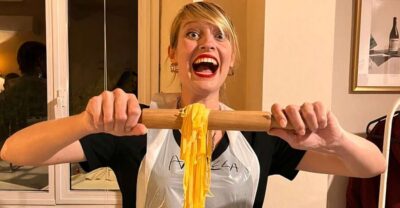
Pasta Making Class with Wine, Limoncello, and Dessert
Read our review →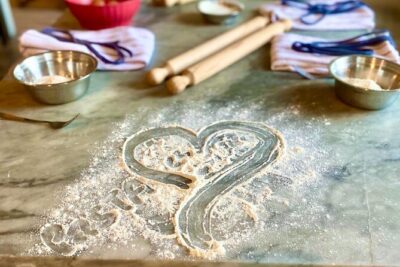
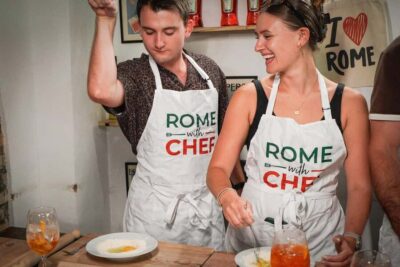
Rome Cooking Class: Make Pasta and 3 Spritz Cocktails
Read our review →
3-in-1 Fettuccine, Ravioli, and Tiramisu Cooking Class
Read our review →
Fettuccine Pasta Cooking Class in Rome’s City Center
Read our review →Lists this class appears in