
REVIEW · ALICANTE, SPAIN
Paella & Sangria Class with Tapas and Market Visit
Come hungry and bring your curiosity. This Alicante cooking experience links the Mercado Central with a real local restaurant kitchen, giving you a useful look at Spanish food before you sit down to eat it.
I like the market visit, where you learn how local shrimp, olives, Iberian ham, salted fish, and seasonal produce fit into Alicante cooking. I also like the hands-on format: you help prepare the food, mix sangria, and cook paella rather than simply watching a chef perform.
The main consideration is that paella portions and ingredients may not match every visitor’s expectations. The recipe places the emphasis on seasoned rice and stock, not on large piles of seafood, and the sangria includes orange juice and soda.
Key details before you book
- Shop at Alicante’s Central Market: Begin at Plaza 25 de Mayo and explore the Mercat Central d’Alacant with a local guide.
- Cook in a working restaurant kitchen: This is presented as a functioning local kitchen rather than a staged demonstration room.
- Choose your paella style: Select seafood, meat, or vegetarian paella when the class options are available.
- Make more than paella: The meal includes tapas, salad, sangria, olives, cured meats, and other local tastes.
- Expect a small-group setting: The published information lists a maximum of 15 in the highlights and 16 in the additional details.
- Plan about three and a half hours: The experience begins and ends at Plaza 25 de Mayo and costs $59.26 per person.
Starting at Plaza 25 de Mayo
Your meeting point is Plaza 25 de Mayo, beside Alicante’s central market. This is a handy place to begin because the market is the first stop, not an afterthought added to the cooking class.
The activity is offered in English, and confirmation arrives when you book. It is also close to public transportation, which makes it practical if you are staying outside Alicante’s central area.
The tour returns to the same meeting point at the end. That keeps the logistics simple, although you should allow roughly three and a half hours rather than trying to squeeze the class between tightly timed sightseeing plans.
The group size deserves a quick note. One part of the information lists a maximum of 15 participants, while another lists 16. Either way, this is intended to be a small-group activity, not a large coach excursion. Smaller groups matter here because everyone is expected to take part in food preparation.
Several especially strong experiences had groups of five, seven, or eight. That size allows more time for questions and easier movement around the market. A group closer to the maximum can still work well, but each person may get less time with the knife, pan, or cooking station.
More Cooking Classes with a Market Tour in Spain
- Barcelona: Paella Cooking Experience & Boqueria Market Tour
★ 4.8 · 3,661 reviews - Barcelona Paella Cooking Class with Market Visit, Tapas & Sangria
★ 5.0 · 2,531 reviews - Paella Cooking Class, Wine Tasting & Central Market in Valencia
★ 5.0 · 1,150 reviews
Shopping for ingredients at Mercat Central d’Alacant
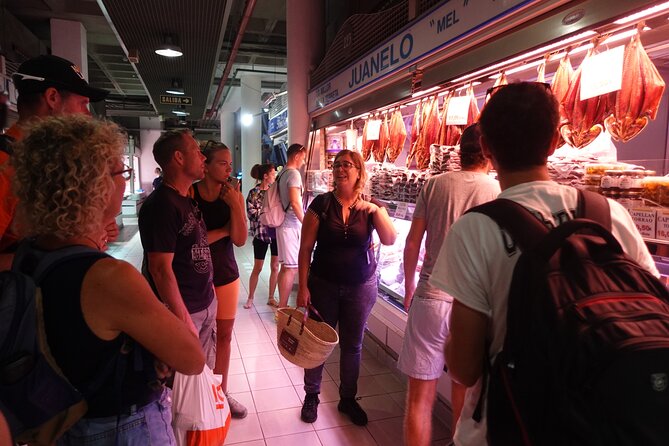
The market visit is one of the best reasons to choose this class. Instead of receiving a basket of anonymous ingredients, you walk through the Mercado Central with the guide and see the products before they reach the kitchen.
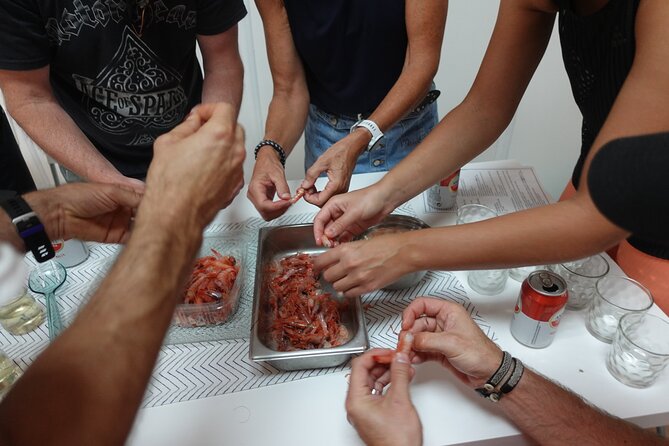
The guide explains Mediterranean ingredients and helps select what is needed for the meal. The market visit can include seafood, meat, vegetables, fruit, wine, olives, cured ham, and local sausages. You may also learn how to choose shrimp and how different olives are prepared in brine.
This part adds context that a standard cooking demonstration cannot provide. You see the ingredients in their normal setting, meet the idea of Spanish food as a daily purchase, and begin to understand why local paella is tied to the quality of its stock and rice.
The market is also a good introduction to Alicante’s food culture if you are new to the region. Iberian ham receives particular attention, along with salted fish, squid, cuttlefish, and the many types of shrimp sold around the Mediterranean.
You should expect some walking and standing during this first hour. The market is a working food hall, not just a photo stop, so the pace depends partly on the group and on the shopping itself.
A useful tip is to ask questions here. The market is where you can learn the difference between an everyday ingredient and one chosen for a traditional dish. Guides such as Federico, also called Fred or Freddy, have been praised for explaining products clearly and switching comfortably between English and Spanish.
From the market to the kitchen
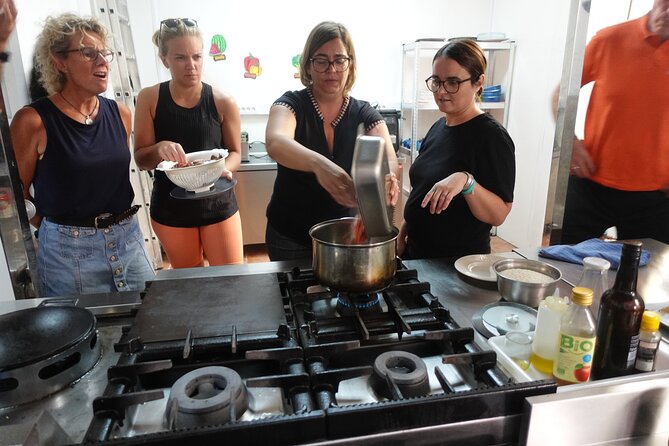
After shopping, the group walks roughly three blocks to the restaurant kitchen. The setting is described as a real working kitchen in a local restaurant, rather than a purpose-built classroom for tourists.
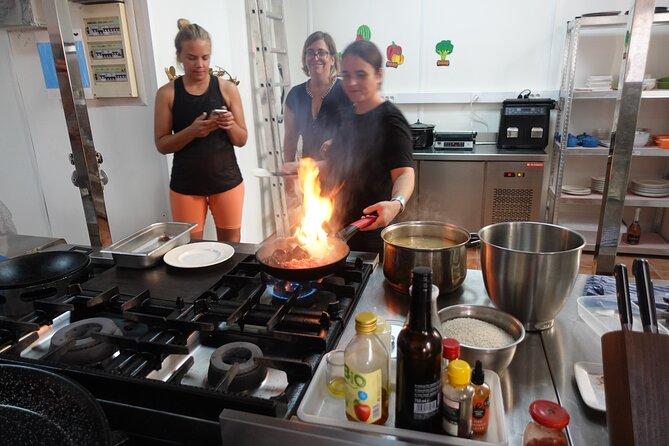
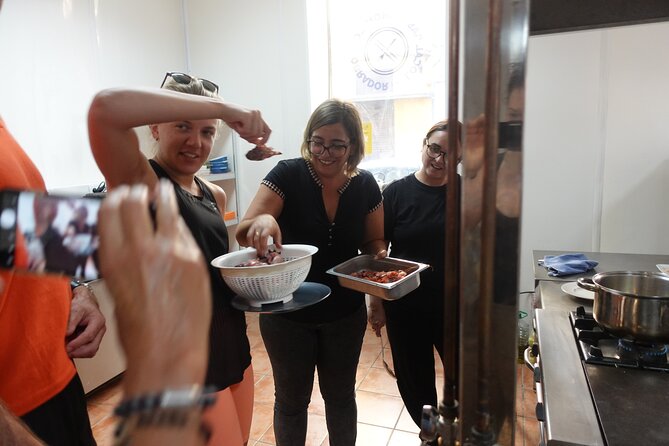
That distinction matters. You are not simply watching a chef prepare a finished paella. You help clean and prepare ingredients, take turns with cooking tasks, and see how the dish develops from stock to final rice.
The cooking team can include both a guide and a professional chef. Federico has received especially warm praise for his patience, humor, clear explanations, and ability to keep a mixed group involved. Chef Maria has also been singled out for guiding participants through food preparation and cooking.
The experience appears designed for beginners. You do not need advanced kitchen skills to participate, and the instructions are given step by step. Still, this is an active workshop, so you should be comfortable handling ingredients and taking a turn when invited.
Some of the more unusual tasks can include preparing dried fish or using a blowtorch for fish preparation. Those details give the class a playful edge, though the exact work assigned to you will depend on the menu and the group.
Building paella from stock to rice
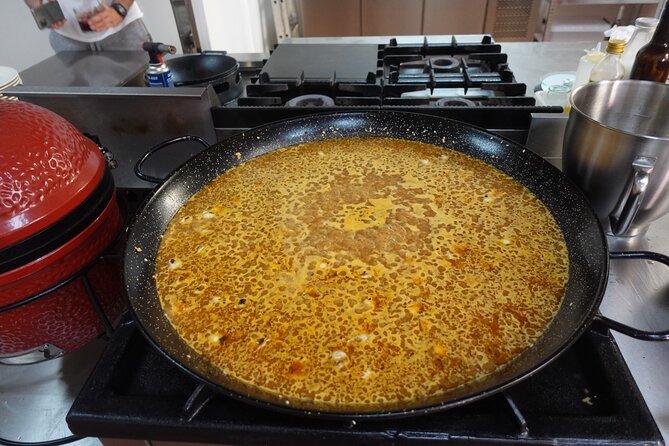
The class teaches more than a quick tourist version of paella. You learn about the broth, the salmorreta, and the balance of flavors that gives the rice its character.
Salmorreta is the seasoned sofrito base used in Alicante-style cooking. It helps explain why the dish does not depend on heaps of toppings to taste full and savory. The stock also matters greatly, especially for seafood paella, because it carries flavor through every grain of rice.
You can choose among seafood, meat, and vegetarian paella. That flexibility is useful for mixed groups, although the final options and ingredient balance depend on what the class has arranged at the market.
The seafood version can include local Mediterranean shrimp and squid or cuttlefish. One class used sepionet, a small cuttlefish, when the usual ingredient was unavailable. It is worth understanding the local approach before you arrive: smaller Mediterranean shrimp are not necessarily inferior to larger ocean shrimp, and traditional Alicante paella may use modest amounts of seafood with the rice doing most of the work.
This may be the biggest expectation issue. If you want a dish crowded with large prawns, mussels, and seafood, you could find the portions restrained. The class teaches a local style in which the stock, salmorreta, and rice are central.
That approach is authentic to the stated goal, but it will not please everyone. The most useful question to ask yourself is whether you want to learn how paella is built or simply eat a generous seafood platter with rice.
More Paella and Spanish Classes in Spain:
- Barcelona Interactive Spanish Cooking Experience
★ 4.5 · 2,155 reviews - Spanish Cooking Class Paella Tapas and Sangria in Madrid
★ 5.0 · 1,340 reviews - Paella Cooking Class in Madrid with Bottomless Wine Pairing
★ 5.0 · 985 reviews - Seville: Spanish Cooking Class with Dinner
★ 4.9 · 900 reviews
Mixing sangria and sharing tapas
While the paella cooks, you prepare fresh sangria. The drink can include wine, orange juice, soda, fruit, syrup, and liqueur. If you prefer a strong glass of wine, this may taste light to you. If you expect traditional sangria, the fruit and mixer are part of the point.
The class also includes tapas and small local dishes. Depending on the menu, you may receive Iberian ham, cured sausage from the surrounding mountains, olives, crisps, tomato salad, salted fish, and fresh fruit.
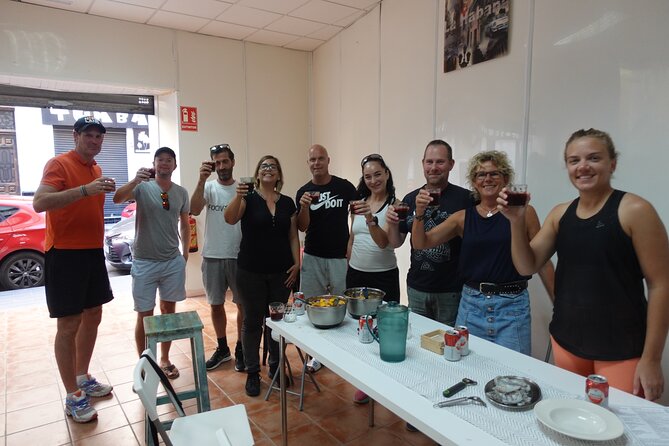
This is where the experience becomes social. Everyone has something to do, but there is also time to talk while the rice cooks. Groups often include people who arrived as strangers and leave having shared a meal, which suits solo visitors and couples who want an easy way to meet others.
The tapas are not just filler before the paella. They broaden the lesson. You taste salty, cured, fresh, and pickled elements that help explain how Spanish meals are built around sharing several small flavors.
Some sessions have prepared both fish and meat versions of the rice, allowing the group to compare styles. Other sessions may focus on one selected paella type. The exact spread can vary, so do not book this expecting a fixed restaurant menu with every item guaranteed.
Sitting down to eat what you made
The final meal is the payoff, but the food tastes different because you helped create it. You have seen the ingredients at the market, prepared them in the kitchen, and watched the rice absorb the stock.
The meal is served in a relaxed setting with the other participants. You eat the paella, drink the sangria, and share the tapas prepared during the class.
The food has received very high marks overall, especially the paella, salad, and sangria. Federico and the kitchen staff are frequently praised for keeping the tone friendly while still explaining the techniques clearly.
Recipes are provided, which improves the value for anyone who wants to repeat the meal at home. The class is not only an afternoon activity in Alicante. It gives you a method you can use later, even if your own kitchen lacks the exact local seafood.
Do keep expectations grounded. Cooking results depend on group participation, timing, ingredients available that day, and your personal taste. One critical experience found the seafood quantities too modest and the sangria too diluted. The provider’s response made the culinary argument clear: authentic paella is about the rice and stock, while sangria is intentionally mixed with juice and soda.
That disagreement is useful information. This class is best for people interested in regional cooking traditions, not for anyone judging value by the weight of seafood on the plate.
What the $59.26 price includes
At $59.26 per person, the price is fair if you treat the experience as a market tour, cooking lesson, tasting menu, and social meal in one.
You receive about three and a half hours of activity. That includes guided time at Alicante’s central market, ingredient shopping, food preparation, paella instruction, sangria preparation, tapas, and the meal you cook.
The value improves when the group is small. With five to eight people, you are more likely to get direct instruction and a meaningful turn at each task. At the published upper limit, the class remains reasonably intimate, but individual kitchen time may be shorter.
Two staff members may assist the group, including a guide and chef. That helps explain the price compared with simply ordering paella at a restaurant. You are paying for food, instruction, shopping time, staff attention, and the use of the kitchen.
It is less attractive if you only want lunch. A good restaurant meal may be simpler and perhaps more suitable if you dislike group activities or do not want to prepare your own food.
Who will enjoy this Alicante cooking class
I would recommend this experience to you if you enjoy learning through food and want more contact with local life than a standard sightseeing walk provides.
It suits:
- First-time visitors who want an introduction to Alicante’s ingredients
- Couples looking for a shared activity
- Solo visitors who enjoy meeting a small group
- Families with adult children who can participate in the cooking
- Beginners who want clear instruction and a recipe to take home
- Food lovers interested in the difference between local paella and international versions
It may not suit young children, especially because alcohol is part of the experience and the minimum age for alcohol consumption is 18. The published information does not give a separate child policy, so confirm details if you plan to bring anyone under 18.
You should also think twice if you need a strictly timed activity. The class involves shopping, group preparation, and a shared meal, so the pace is not as predictable as a museum visit.
Practical details that affect your day
The class is conducted in English and accepts mobile tickets. It is near public transportation, and the start and finish point is Plaza 25 de Mayo.
The experience is commonly booked about 19 days ahead, which suggests that reserving before your Alicante visit is sensible, especially if your dates are fixed.
Free cancellation is available when you cancel at least 24 hours before the start time. Cancellations made less than 24 hours ahead are not refunded, and late changes are not accepted. If the minimum number of participants is not reached and the activity is canceled, you are offered another date or experience, or a full refund.
The overall score is 4.8 out of 5, with 95 percent of participants recommending it. Those figures match the strongest features of the experience: warm guiding, active participation, good food, and the market visit.
Should you book the paella and sangria class?
Book it if you want to understand Alicante through its food, especially if you like market visits and hands-on cooking. The combination of Mercado Central, salmorreta, local seafood, tapas, and a shared meal gives the class more substance than a basic paella demonstration.
I would be cautious only if you expect oversized seafood portions, a strong wine-based drink, or a quiet restaurant lunch. The class follows local cooking ideas, with flavor built into the stock and rice and sangria softened with juice and soda.
For most food-minded visitors, the $59.26 price buys a useful and enjoyable half-day in Alicante. Ask for the seafood, meat, or vegetarian option that suits you, arrive ready to participate, and judge the paella by its rice rather than by the size of the shrimp.
FAQ
Where does the paella and sangria class begin?
The experience begins at Plaza 25 de Mayo, 03004 Alicante, beside the Mercat Central d’Alacant.
Where does the activity end?
The class ends back at the original meeting point.
How long does the experience last?
The activity lasts approximately three hours and 30 minutes.
Is the class offered in English?
Yes. The experience is offered in English.
What kinds of paella can I choose from?
The available choices include seafood, meat, and vegetarian paella.
Is alcohol included in the experience?
Yes. The class includes sangria. The minimum age for alcohol consumption is 18.
How many people can join the class?
The published information gives a maximum of 15 participants in one section and 16 travelers in another. It is intended to be a small-group activity.
Can I cancel for a full refund?
Yes, if you cancel at least 24 hours before the experience starts. Cancellations made less than 24 hours before the start time are not refunded.
Just added around Spain
- Basque Pintxos and Tapas Cooking Class in Bilbao★ 5.0 · 73 reviews
- Paella and Burnt Basque Cheesecake Cooking Class (in Bilbao)★ 5.0 · 46 reviews
- Small-group Immersive Basque Cooking Class in Bilbao with Open Bar★ 5.0 · 65 reviews
- Pintxos and Tapas Cooking Class in Bilbao★ 5.0 · 38 reviews
- Rooftop Paella Seafood Cooking Class Experience in Barcelona★ 5.0 · 59 reviews
- Private Authentic Paella Cooking Class in Barcelona with Josh★ 5.0 · 3 reviews
- Private Barcelona Market Tour & Paella Cooking Class with Josh★ 5.0 · 4 reviews
- Premium Paella & Tapas Feast: Unlimited Wine & Rambla Views★ 5.0 · 13 reviews
Cooking Classes with a Market Tour, compared.

Hanoi Cooking Class: Culture, Local Market & Meaning CSR Impact
Read our review →
5 Traditional Dishes Hanoi Cooking Class with Market Trip
Read our review →
Cooking Class and Lunch at a Tuscan Farmhouse with Local Market Tour from Florence
Read our review →
Cooking Class, Market & Thai Herbs Garden Tour
Read our review →
Authentic Cooking Class with Market & Farm Visit
Read our review →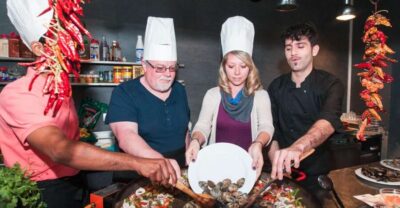
Paella Cooking Experience & Boqueria Market Tour
Read our review →
Cooking Class Hoi An:Local Market, Basket Boat, Fishing & Cooking
Read our review →
Hoi An Cooking Class(Market,BasketBoat Crabfishing&Cooking Class)
Read our review →Lists this class appears in