REVIEW · NORTE REGION, PORTUGAL
Porto: Pastel de Nata Cooking Class with Port Wine – Sé
Some pastries deserve a hands-on lesson. This 90-minute pastel de nata class at Domus Arte mixes practical baking with Port wine, local food advice, and a short story of Portugal’s favorite custard tart. I like the warm, social format, and I like that you leave with several pastries, a transport box, and recipes for both the custard and pastry. The main catch is simple: the puff pastry is prepared ahead of time, so you do not make every stage from scratch.
The class costs $41 per person, which is fair if you want more than a tasting. You get ingredients, drinks, snacks, instruction, and a useful recipe to try at home. Just keep expectations clear: this is a guided group workshop, not a private lesson where one person handles every step.
What makes this Porto baking class worth your time
- A central setting: Domus Arte is near Porto Cathedral and São Bento station, making the class easy to pair with sightseeing in the historic center.
- The custard is the star: You learn the key filling technique and baking process, while the difficult pastry stage is prepared in advance.
- Port wine keeps things social: Port, coffee, juice, water, and sweet and savory snacks are served during the class.
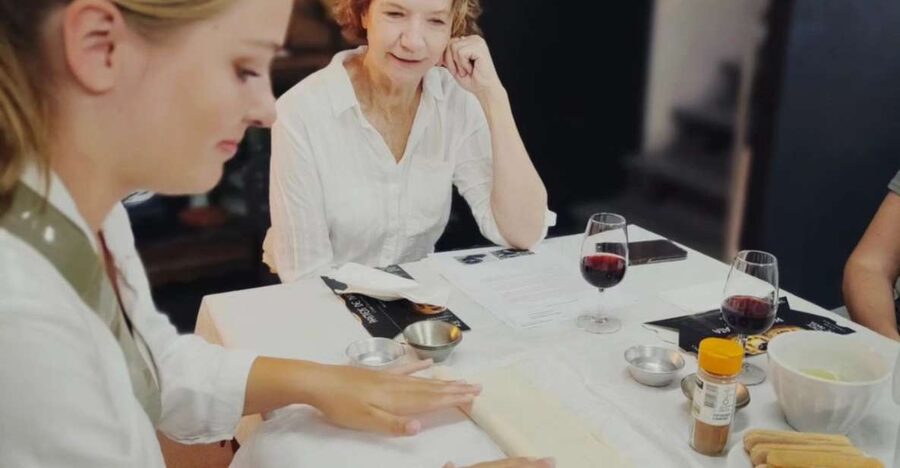
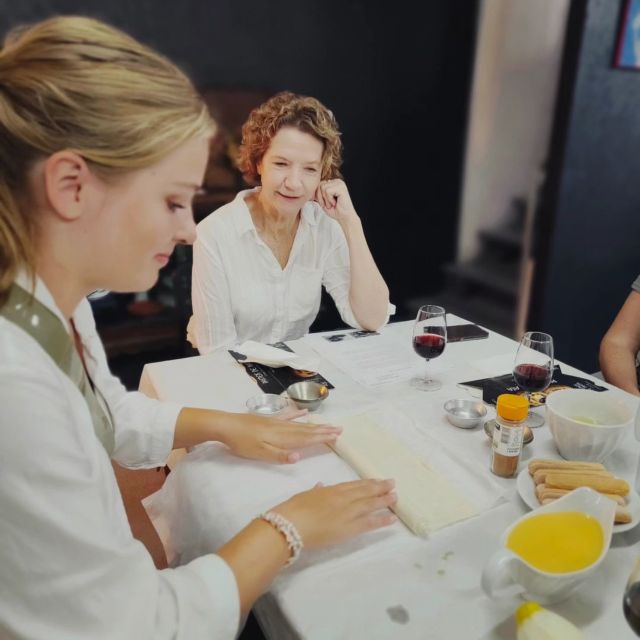
- Every participant gets a turn: The group shares the preparation, with instructors guiding each stage and helping nervous bakers.
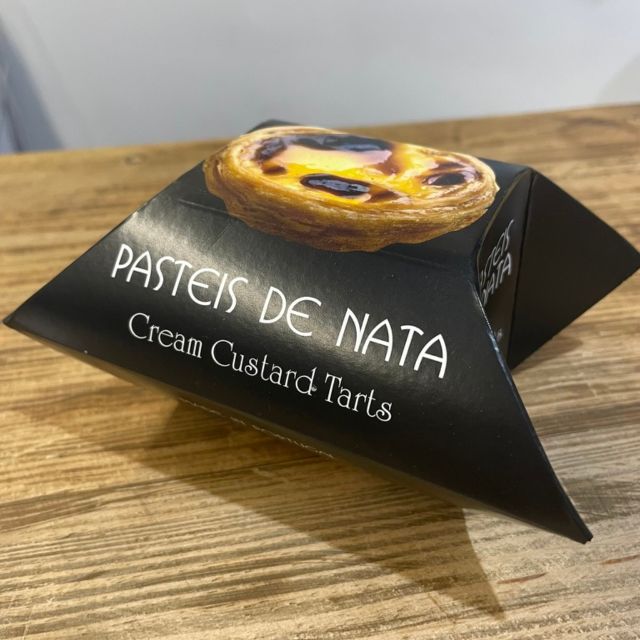
- You take home a useful souvenir: Several pastel de nata, a paper box, and recipes give you something more lasting than a quick taste.
- Dietary requests are possible: Lactose-free, gluten-free, and vegan versions can be arranged with advance notice.
Arriving at Domus Arte in central Porto
Domus Arte is a concept store in downtown Porto, close to Porto Cathedral and São Bento station. That location matters. You can fit the class between a morning around the cathedral and a later walk through the Baixa streets without spending half your afternoon crossing the city.
The venue is dedicated to handmade products, workshops, and art exhibitions. It is not just a rented kitchen hidden in an industrial area, so the setting adds a little creative character to the activity. You can treat the workshop as a break from churches, tiled façades, and steep Porto streets.
The class is offered in English. The instructors use a clear, practical approach, and the strongest part of the experience appears to be the friendly teaching style. Teresa is repeatedly praised for her humor and warmth, while Luis, Filipe, Sofia, Philip, and Ana are also singled out for making people feel included. The teaching team seems comfortable with complete beginners.
Group size can vary. Some sessions have only two or four people, while others bring together a larger small group. A smaller class means more attention at the worktable. In a larger group, you gain more of the social side, but your turn at each stage may be shorter.
More Cooking Classes with Wine Tasting in Portugal
- Porto: Pastel de Nata Cooking Class with Porto Wine (Sé do Porto)
★ 5.0 · 340 reviews - Portuguese Cooking Class in Porto with Portuguese Wine
★ 5.0 · 110 reviews - Porto Hands On Cooking Class-3 course-wine included-trained chef
★ 5.0 · 34 reviews
The first few minutes: pastel de nata from Lisbon to Porto
The class begins with a short introduction to pastel de nata. You learn how the pastry began in Lisbon and became one of Portugal’s best-known sweets.
This is not a long lecture, which is the right choice for a cooking class. The background gives the pastry a sense of place without taking time away from the oven and worktable. You also get a chance to ask about the recipe, local food, and places to eat in Porto.
That last part is especially useful. Several instructors offer restaurant and food suggestions, including advice for lunch after the session. It is a small bonus, but good local tips can save you from choosing a forgettable meal near a major sight.
The explanation also helps you understand why the class focuses on certain techniques. Pastel de nata looks simple: pastry, custard, heat. The balance is less simple. The custard must be smooth, the pastry must hold its shape, and the baking must create the familiar browned surface without ruining the filling.
Making the custard filling with help at every stage
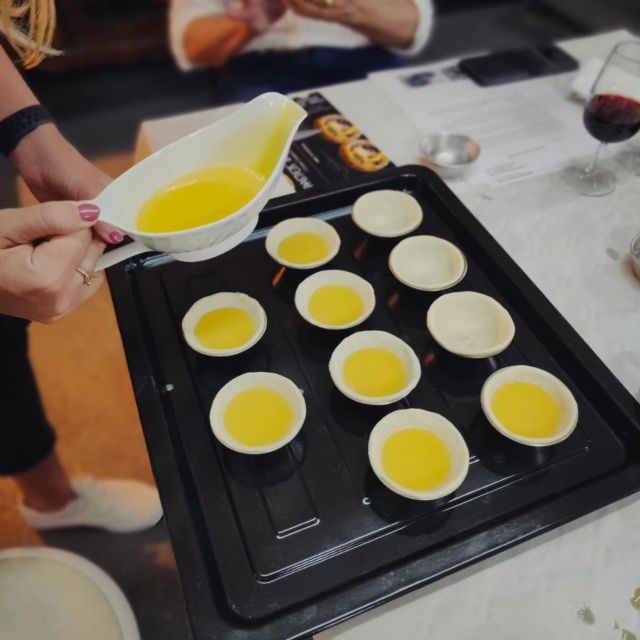
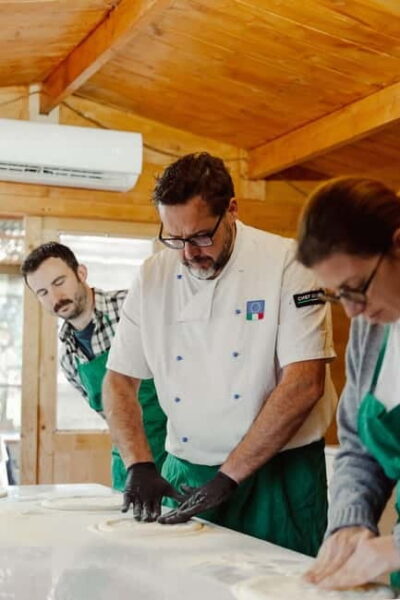
The main practical work centers on the custard. You take part in measuring, mixing, and preparing the filling under step-by-step instruction.
This is where the class works well for people who do not bake often. The instructors explain what to do, then guide each person through the process. You do not need to arrive with pastry skills or a detailed understanding of custard. The recipes are designed to feel manageable at home, and the teaching is intended to prevent common mistakes.
You will not necessarily handle every task from start to finish. The preparation is shared among the group, so participants take turns with the recipe. That keeps the class moving within 90 minutes, but it also means you should not expect a fully individual cooking station.
For full participation in every stage, a private workshop is the better choice. That option is worth asking about if you are a serious home baker, planning a special celebration, or want the instructor’s attention focused on one family or group.
The class also offers useful variations. You may receive suggestions for changing the flavor at home, along with guidance on dairy-free and gluten-free substitutions. The original session focuses on the traditional version, but the advice gives you room to experiment later.
The pastry question: what is prepared and what is not
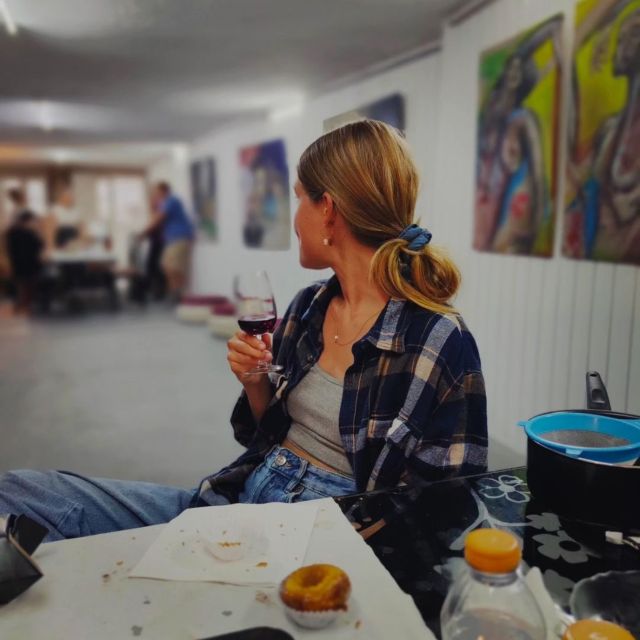
Here is the detail to understand before booking: the puff pastry is pre-prepared.
That is not a minor technicality. Making proper puff pastry takes several hours, and the class does not have enough time to prepare it and bake the tarts within the same 90-minute session. You receive a house-made recipe for the pastry, but you work with prepared dough during the workshop.
Some people will see this as a sensible compromise. The class can focus on custard, shaping, filling, and baking instead of turning into a long pastry course. You still learn the process and receive instructions for trying the dough at home.
If you are hoping to make traditional puff pastry from flour and butter during the session, you may feel disappointed. One participant specifically felt that store-bought pastry was not as good as the original crust. The supplied information describes the workshop dough as prepared in advance, so ask the team what type of pastry will be used for your date if this point matters to you.
For most visitors, the trade-off is reasonable. You get the most useful parts of the process within a short class, and you leave with a recipe for the more time-consuming stage.
Same place, a different thing to cook:
- Lisbon: Pastel de Nata Baking Class
★ 4.9 · 2,106 reviews - Porto: Pastel de Nata Cooking Class with Grandma’s Recipe
★ 5.0 · 1,565 reviews - Lisbon: Traditional Portuguese Cooking Class
★ 4.9 · 592 reviews - Porto: Pastel de Nata Cooking Class from Scratch
★ 4.9 · 468 reviews
Shaping, filling, and baking the tarts
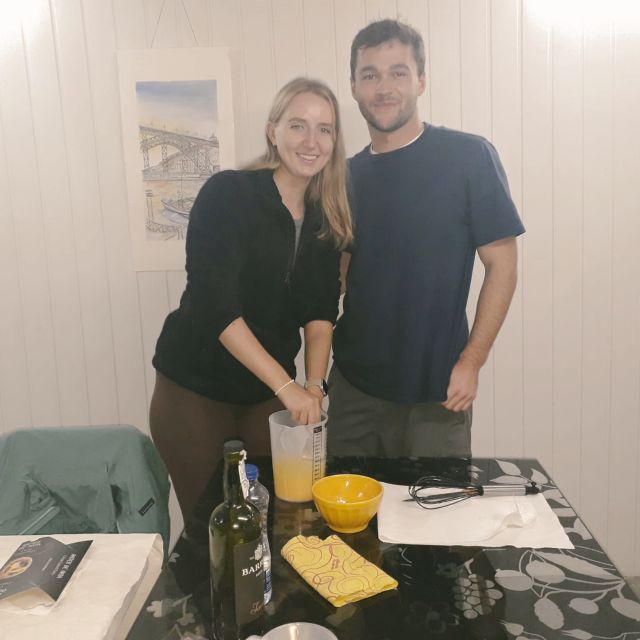
After the custard work, you move into the pastry and baking stage. This is where the class becomes more visual and satisfying. You see how the prepared pastry is handled, how the filling is added, and how the tarts change in the oven.
You prepare several pastel de nata per person. The exact number can vary, but participants commonly leave with a few each. The finished pastries can be eaten at Domus Arte or packed to take away in the included paper box.
Eating one warm is part of the pleasure. Taking the rest with you is practical, especially if you have plans immediately after the class. The box also stops your souvenir from becoming a buttery accident inside your day bag.
The baking stage gives the instructor a chance to talk through texture, timing, and possible variations. You can ask questions while the pastries bake instead of standing around waiting. Port wine, coffee, juice, water, and snacks keep this pause relaxed.
Do not expect a professional pastry-school setup. The charm is the informal, shared format. You work together, watch the baking, and enjoy the result with other people.
Port wine, snacks, and the social side
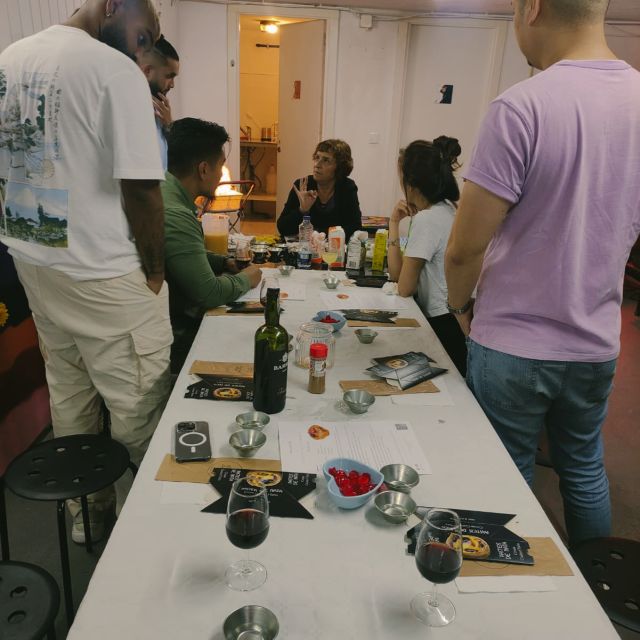
The drinks are more than a free extra. Port wine fits the pastry theme and gives the class a distinctly Portuguese feel. Coffee, juice, and water make the session suitable for people who do not drink alcohol, while sweet and savory snacks add something to nibble between tasks.
The atmosphere is designed to be social. You may arrive alone and still have a natural way to meet people, since everyone is working toward the same small reward. Couples, friends, families with older children, and solo visitors can all take part.
The instructors are praised for remembering names, making jokes, and keeping the group involved. Teresa is often noted for her energy and humor. Luis and Filipe are described as patient, clear, and good at helping beginners. Sofia is praised for her lively teaching style.
That personal approach is important. A cooking class can become awkward if the instructor talks at the group or lets confident bakers do everything. Here, the stated format gives each participant a turn, and the teaching team makes an effort to include everyone.
Children under three are not permitted. Older children can take part, but remember that the activity includes hot equipment, sharp tools, and food preparation. The class is best for children who can follow instructions and stay involved at the worktable.
Is $41 a good value?

At $41 per person, this is not the cheapest way to eat a pastel de nata in Porto. You can buy the pastry for much less at a bakery.
That is not the right comparison, though. The price includes instruction, ingredients, several pastries, Port wine, coffee, juice, water, snacks, a box, and recipes for both the custard and puff pastry. You are paying for the activity and the knowledge you carry home, not just for the food.
I think the price is strongest for first-time visitors who want a short cultural activity in the city center. It also makes sense for a rainy afternoon, a birthday, a bachelorette outing, or a break from sightseeing. The class has enough structure to feel worthwhile but does not take up an entire day.
The value is weaker if you already know how to make custard tarts or mainly want to prepare pastry from scratch. In that case, a private workshop may be a better fit, assuming it is available for your date.
The 4.8 rating from 888 reviews suggests a very consistent experience, and the repeated praise centers on the same points: friendly instructors, easy-to-follow guidance, delicious results, and a relaxed group mood. Those are the qualities that make the $41 feel justified.
Dietary needs and practical access
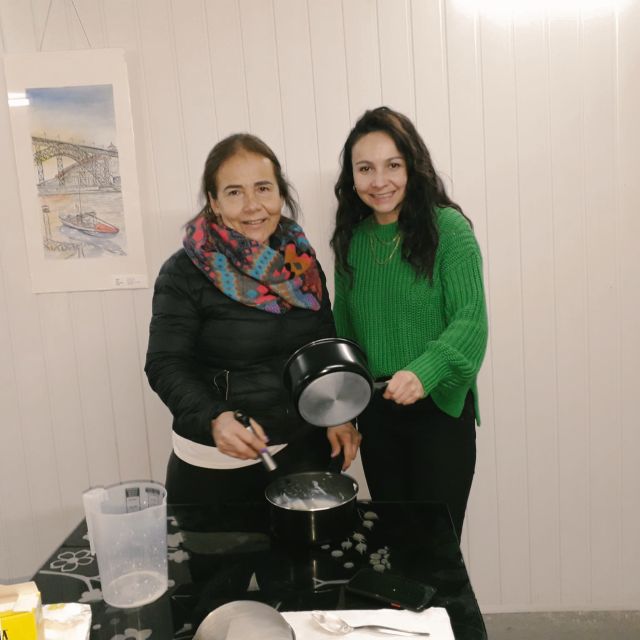
Lactose-free, gluten-free, and vegan options are available by request. You must give advance notice, and the team needs to confirm that the preparation can be arranged. Do not wait until you arrive and expect a substitute to appear.
The class is stroller accessible. Pets are allowed, and smoking is not permitted indoors.
The information about wheelchair access needs care. The activity is listed as not suitable for wheelchair users, although Domus Arte has a second location described as wheelchair accessible and stroller accessible. If you use a wheelchair, contact the provider before booking and confirm the exact venue, since the accessibility notes are not fully consistent.
There is no hotel pickup or drop-off. You make your own way to the central meeting point near the cathedral and São Bento station. That is usually easy to combine with a day in central Porto, but allow time for Porto’s slopes and cobblestones.
Cancellation is free up to 24 hours before the start time, and you can reserve now and pay later. Those terms help if your Porto schedule is still shifting.
Who should book this pastel de nata workshop?
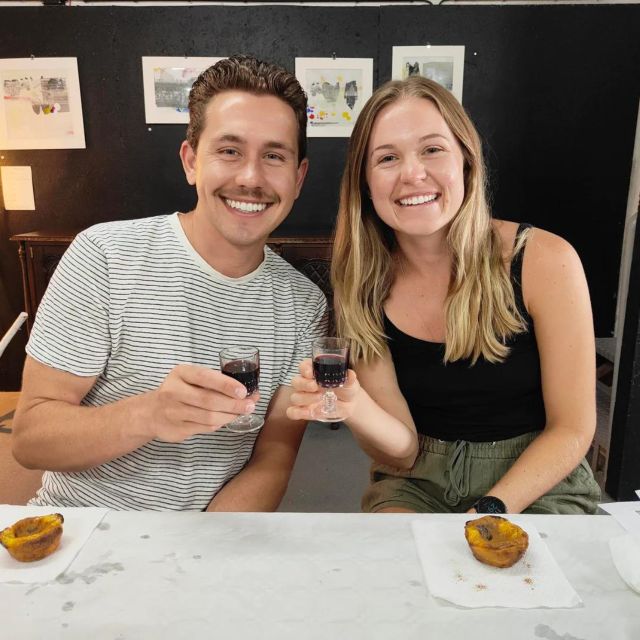
I would recommend it to:
- First-time visitors who want a food activity tied to Portuguese culture.
- Couples and friends looking for an easy shared experience.
- Solo visitors who enjoy meeting people through a structured activity.
- Families with children over three who can follow kitchen instructions.
- Amateur bakers who want a reliable custard recipe and practical tips.
- Anyone who likes to bring home a recipe rather than only a souvenir.
I would think twice if you want a full pastry course, completely individual participation, or a silent, highly technical lesson. The workshop is friendly and social. That is its strength, but it may not suit someone who wants advanced instruction and total control of every stage.
Should you book it?
Book this class if you want to make a Portuguese classic, enjoy a glass of Port, and spend a relaxed hour and a half in central Porto. The strongest reasons are the patient instructors, the approachable recipe, the take-home pastries, and the useful food advice.
Before booking, be clear about two things: the pastry is prepared ahead of time, and group members share the cooking. If those limits work for you, $41 buys a pleasant activity with something edible and repeatable to show for it. If you want every step made individually, ask about a private workshop instead.
FAQ
How long does the pastel de nata class last?
The workshop lasts 1.5 hours.
How much does the activity cost?
The price is $41 per person.
Where does the class take place?
It takes place at Domus Arte, a concept store in downtown Porto near Porto Cathedral and São Bento station.
What language is the class taught in?
The instructor teaches in English.
Do I make the puff pastry during the class?
No. The puff pastry is prepared in advance because it takes several hours to be ready. You receive a house-made recipe so you can prepare it at home.
What parts of the pastel de nata do I prepare?
The class focuses on the custard filling and baking process. Participants take turns helping with the recipe and follow the shaping and baking stages with instructor guidance.
What is included in the price?
Ingredients, instruction, Port wine, juice, water, coffee, sweet and savory snacks, a paper box, and recipes for the custard and puff pastry are included.
Can I request a dietary version?
Yes. Lactose-free, gluten-free, and vegan options are available by request. You must give advance notice, and the team must confirm the preparation.
Is the class suitable for children and wheelchair users?
Children under three are not permitted. The class is stroller accessible, but it is listed as not suitable for wheelchair users. Domus Arte also has a second location described as wheelchair accessible, so contact the provider to confirm the exact venue before booking.
Just added around Portugal
- Cooking Workshop in Cascais (group of 4 min)★ 5.0 · 13 reviews
- Cooking Class★ 5.0 · 17 reviews
- Terceira Island: Azores Cooking Class Experience★ 5.0 · 14 reviews
- Porto: Portuguese Cooking Class on the Terrace★ 5.0 · 2 reviews
- Porto: Cooking Class with Local Market Visit★ 5.0 · 15 reviews
- Porto: Local Market Tour & Cooking Class/Showcooking★ 4.9 · 32 reviews
- Porto: Coastal Villages Market & Seafood Cooking Tour★ 5.0 · 2 reviews
- Lagos: Market Tour and Cataplana Cooking Class★ 5.0 · 9 reviews
Cooking Classes with Wine Tasting, compared.
Pasta & Tiramisu Cooking Class with Unlimited Wine
Read our review →
Pasta Making Class with Wine, Limoncello, and Dessert
Read our review →
Cooking Class Pasta & Tiramisu Making Unlimited Wine
Read our review →
Fettuccine & Tiramisù: Cooking Class with Wine & Limoncello
Read our review →
Pasta Making & Wine Tasting with Dinner in Frascati from Rome
Read our review →
Rome Cooking Class: Make Pasta, Dine & Drink Wine With Local Chef
Read our review →