
REVIEW · ILE-DE-FRANCE, FRANCE
Paris: French Macaron Culinary Class with a Chef
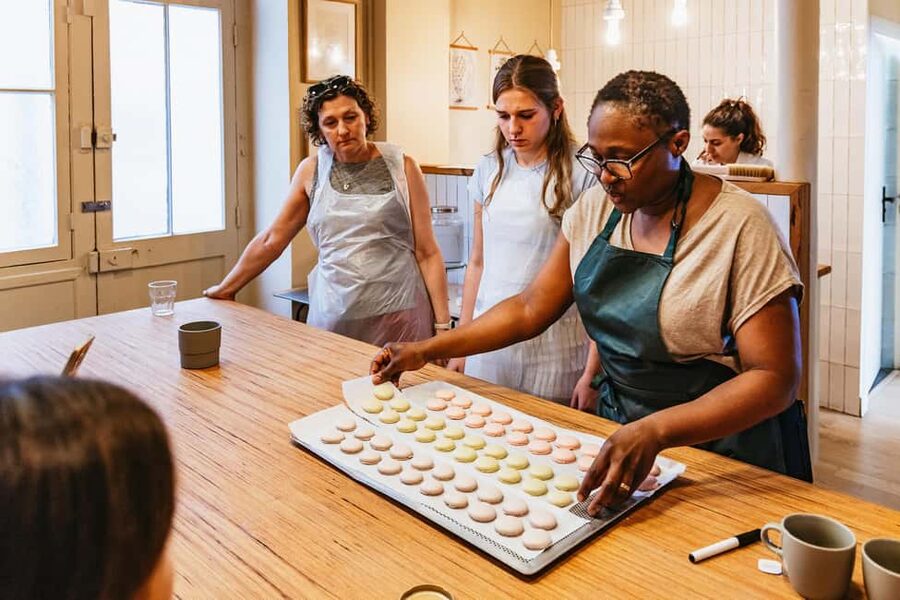
Macarons are small, but the technique is serious. At Maison Fleuret School, you learn the two parts that make or break this French favorite: a crisp shell and a soft center. I like the small group of up to six, which gives the chef time to watch your work, and I like that you leave with macarons you actually made. The main consideration is that the class may finish earlier than the advertised 150 minutes, so do not count on it filling every minute of a long afternoon.
This is a friendly, hands-on class rather than a pastry demonstration where you simply watch from the side. Chefs such as Alice, Amélie, Delphine, Christian, Matthieu, and William have been praised for clear instruction and a relaxed manner. If you want advanced pastry theory, the lesson may feel basic, and the room can get loud near the end, but it is a strong introduction for families, beginners, and anyone who wants a tasty Paris memory.
Key points at a glance
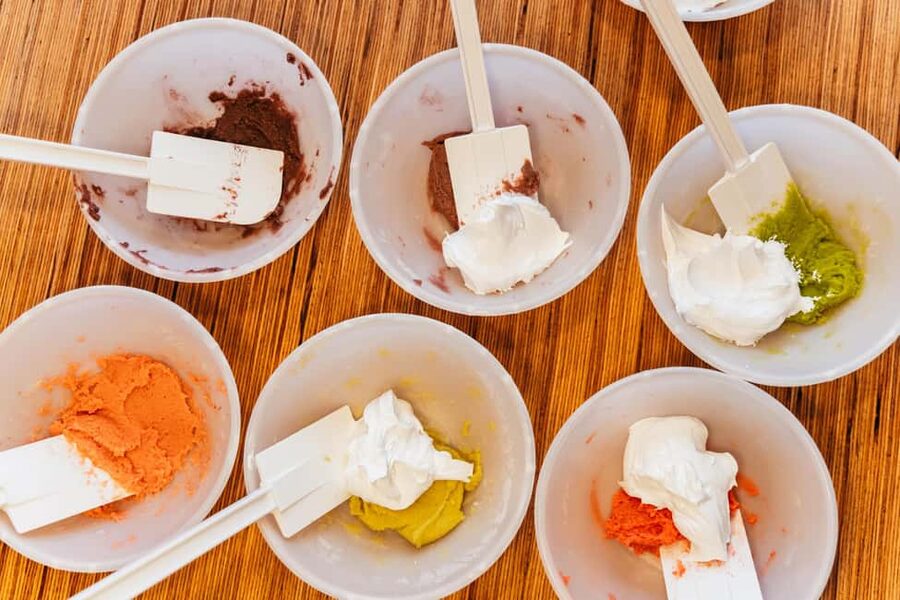
- A true hands-on lesson: You work through the meringue, shells, and ganache instead of only watching a chef.
- Limited to six participants: The small format allows the instructor to correct technique and help individual bakers.
- A useful beginner class: The steps are explained clearly enough for children and adults with little or no baking experience.
- Choose colors and flavors: Some sessions include colorful macarons and a choice of fillings, adding a personal touch.
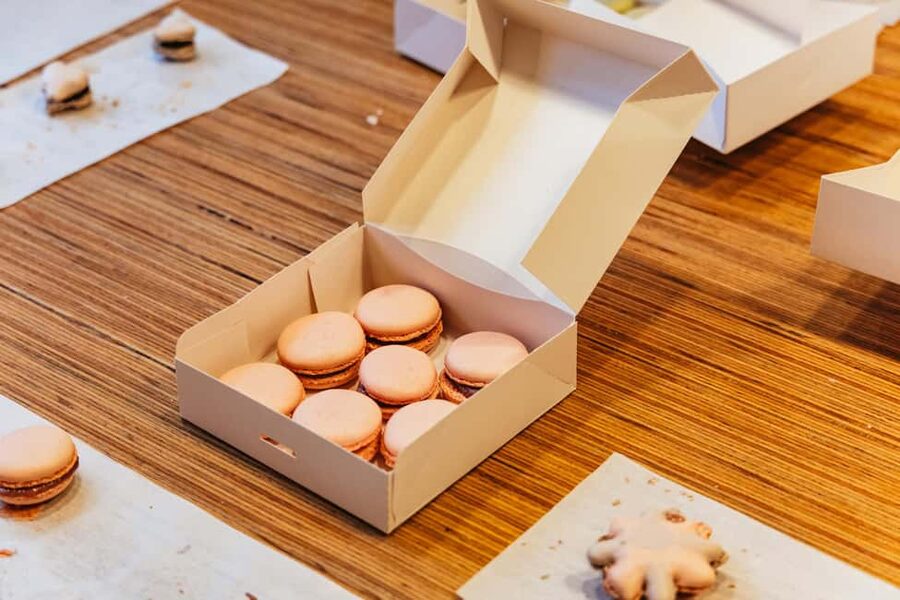
- Take-home results: You receive a box of macarons made during the class, with enough to share or enjoy over several days.
- English instruction: The class is offered in English, and Delphine has also been praised for explaining steps in both English and French.
Why macarons make a good Paris cooking class
A macaron looks simple in a pastry case. Two smooth shells, a neat filling, and perhaps a bright color. The trouble begins when you try to make one. Meringue can collapse, shells can crack, and the center can turn runny or overly firm.
That makes this a useful class for you if you want to understand what goes into a pastry that is often treated as a symbol of French baking. The lesson focuses on the parts that require the most care: preparing the meringue, piping or shaping the shells, getting a crisp outside, and making ganache with a pleasant, soft center.
I also like the scale of the class. With no more than six people, you are not lost in a large cooking group. The chef can look at your mixture, point out a problem, and help you fix it before the macarons go too far. That matters more here than it would in a simple cookie class, since small changes in texture can affect the finished result.
The class is also social without requiring you to arrive with a group. You meet other people at the school, work alongside them, and compare results as the pastries take shape. One useful detail from the classes is that people making macarons may be working near other pastry groups, including croissant or lemon tart classes. That gives the school a pleasant working-kitchen feel.
A few more cooking classes around Paris worth a look
- Paris Cooking Class and Lunch with Wine plus Market Visit Option
★ 5.0 · 1,024 reviews - Paris Croissant Small-Group Baking Class with a Chef
★ 5.0 · 910 reviews - Paris: French Croissant Baking Class with a Chef
★ 4.9 · 712 reviews
Finding Maison Fleuret School at the grey door
You meet at Maison Fleuret School in the Île-de-France region at the time shown on your reservation. The meeting instructions are simple: go to the grey door, where the team will welcome you.
Do not expect an obvious sign on the front. One participant found the entrance easy enough once the instructions were understood but noted the lack of exterior signage. I would save the meeting details on your phone and arrive with enough time to identify the grey door without rushing.
The provider has changed locations or class times on some occasions, with advance communication reported as clear and prompt. Still, check your final confirmation before setting out. This is especially important if you have built a tight museum or dinner schedule around the class.
The activity is listed as wheelchair accessible. Hotel pickup and drop-off are not included, so you make your own way to the school.
The opening: introductions, equipment, and a chef-led start
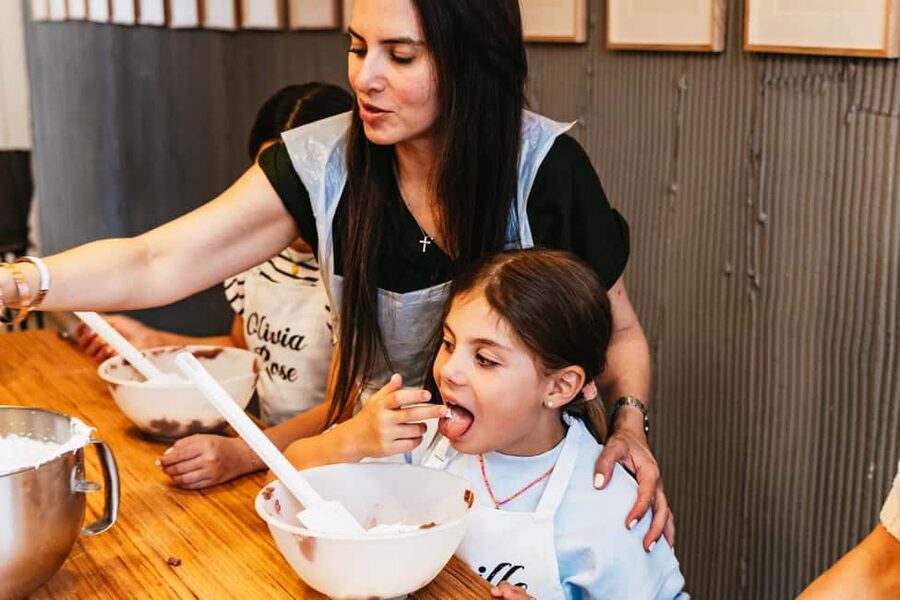
Once inside, you meet the rest of the group and receive an introduction from the chef. The class is conducted in English, and the teachers are used to helping people with different levels of baking experience.
The tone seems to be one of the strongest parts of the session. Chefs have been praised for being patient, funny, upbeat, and encouraging. Amélie, Alice, Christian, Matthieu, Delphine, and William are among the instructors singled out for making the class comfortable and easy to follow.
That matters if you are nervous about baking. One beginner arrived unsure of her ability and left feeling able to try macarons at home. Another person who had attempted macarons before and failed said the class offered the practical help needed to improve.
The chef demonstrates the process, then guides you through the work. Children are not pushed to the side. Families with children as young as five, six, seven, eight, nine, and older teenagers have found ways to participate, although the youngest children will naturally need help from an adult.
Making the meringue, the first serious test
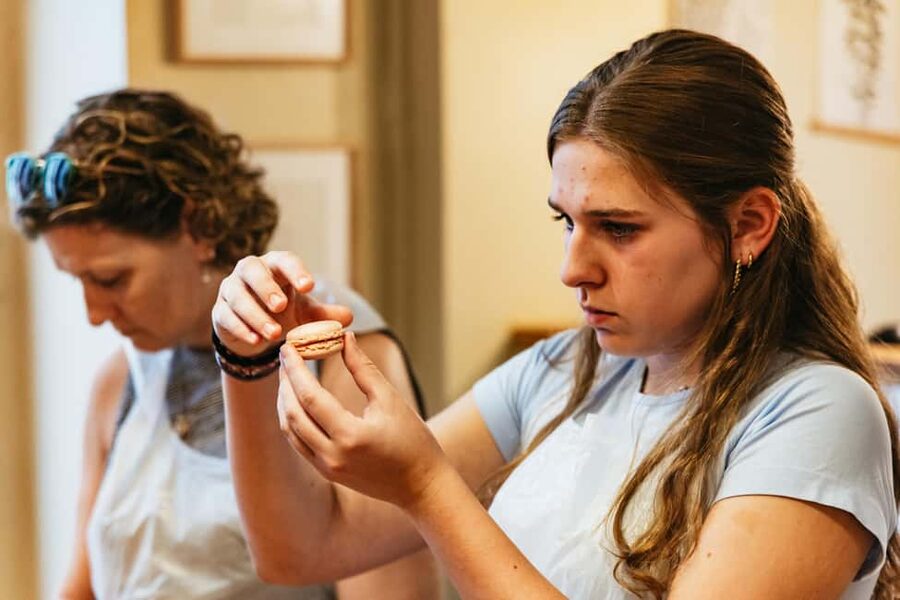
The meringue is the foundation of the macaron shell. If it is not handled properly, the mixture can become too loose, too stiff, or uneven. The chef explains how to reach the texture needed before the dry ingredients are folded in.
This is where a small class pays off. You are not simply following a recipe printed on a card. You can watch the chef’s demonstration, try the step yourself, and ask for help when the mixture does not look right.
The instruction is aimed at beginners, so you should not need prior pastry training. At the same time, the process is not reduced to a one-minute trick. You learn why the meringue matters and how it affects the final shell.
For a child, this part can be a little technical. For a teenager or adult interested in cooking, it is one of the most useful sections because it turns a mysterious pastry into a set of manageable steps.
Same place, a different thing to cook:
- Paris Cooking Class: Learn How to Make Macarons
★ 5.0 · 634 reviews - Paris Evening Cooking Class French Dinner and Market Visit Option
★ 5.0 · 430 reviews - Paris French Cuisine Small Group Cooking Class with Lunch
★ 4.5 · 418 reviews - Paris Macarons Small-Group Baking Class with a Chef
★ 5.0 · 316 reviews
Shaping crisp shells and soft centers
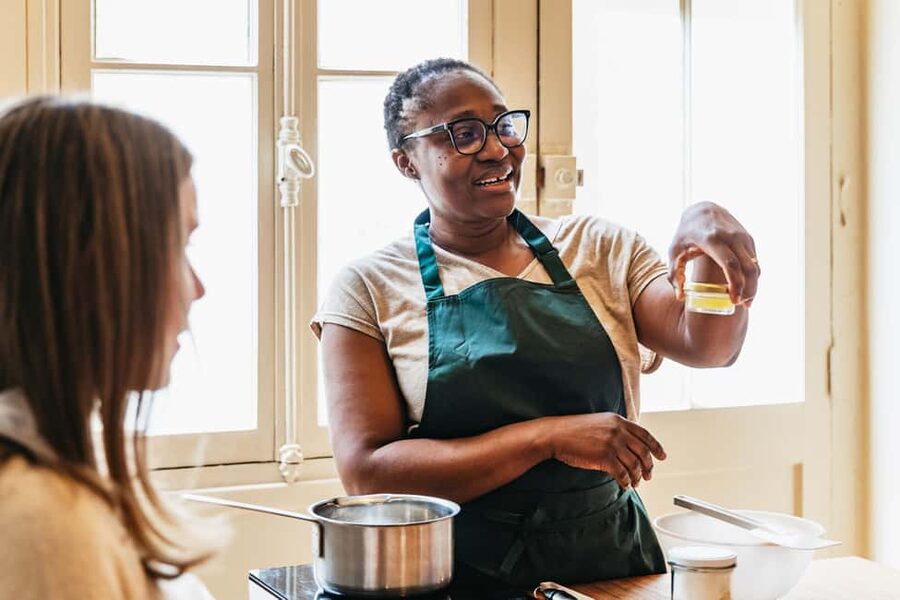
After the meringue work, the class moves toward creating the recognizable macaron shells. The goal is a crisp outer layer with a tender, flavorful middle. The chef shows you how to produce that contrast and helps you avoid the common problems that can spoil the appearance.
The final macarons are not expected to look identical. That is part of the fun. Yet the repeated reports of attractive results suggest that the process is designed to be forgiving enough for first-time bakers. One family was surprised that the macarons made by a six-year-old looked as good as those made by the adults.
You may also get to choose colors and flavors. Some classes include multi-colored macarons, which gives children and creative adults something extra to enjoy. The color choices make the finished box feel personal rather than mass-produced.
The class does not appear to offer an advanced pastry curriculum. If you already bake macarons often, you may want more detail on temperature control, ingredient ratios, troubleshooting, or professional production methods. One participant found the advanced information limited. For beginners, however, that simpler approach is likely a benefit.
Learning ganache without making it fussy
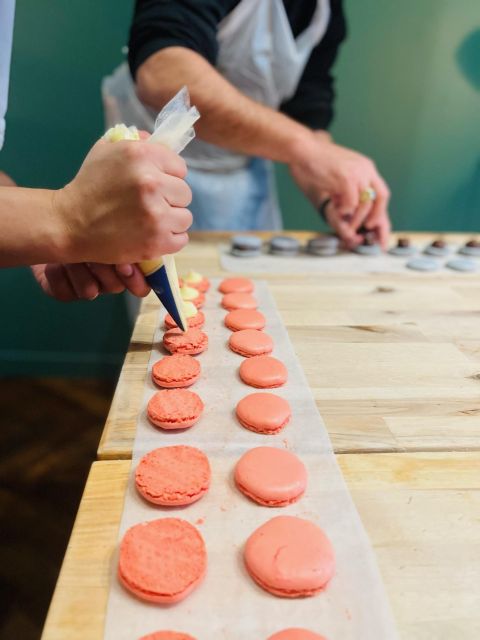
The filling gives the macaron its soft center and much of its flavor. The chef explains how to make the ganache and how to create the texture needed between the shells.
This part helps you see why a good macaron is more than a sweet, crunchy cookie. The shell should give a delicate bite, while the center provides moisture and flavor. If the filling is too loose, the pastry becomes messy. If it is too firm, the balance is lost.
The chef’s role is important here because the class is not just about measuring ingredients. You learn what the filling should look and feel like as you work. Delphine, in particular, has been praised for offering advice that people could use when making macarons at home.
You should leave with more than a box of sweets. You also gain a practical sense of how the shell and filling work together. That is the difference between buying macarons at a famous Paris shop and learning to make them yourself.
A box to take home, plus a practical storage question
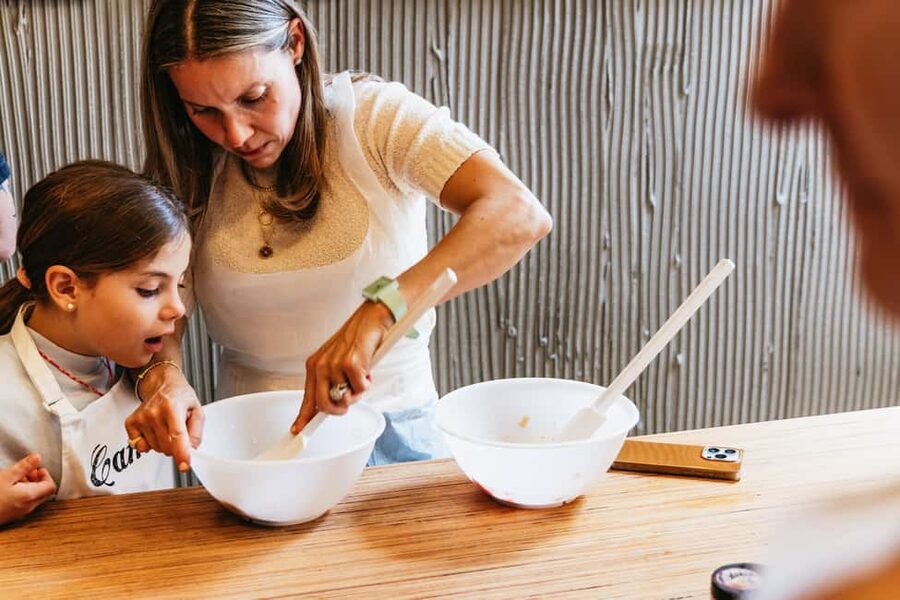
At the end, you receive a box of macarons made during the class. Several participants described leaving with roughly a dozen or more, though the exact quantity may vary by session. The box gives you something to enjoy later and lets family or friends share in the result.
One useful real-world detail is that the macarons can travel. A participant managed to take them back to the United Kingdom so family members could try them. The box and the weather still matter, so handle them with care, particularly in warm conditions.
The class is not only about eating the final product. The take-home box gives you a clear measure of what you accomplished. You can compare the shells, fillings, shapes, and colors, then use the chef’s advice when you attempt the recipe again at home.
How long the 150-minute class really feels
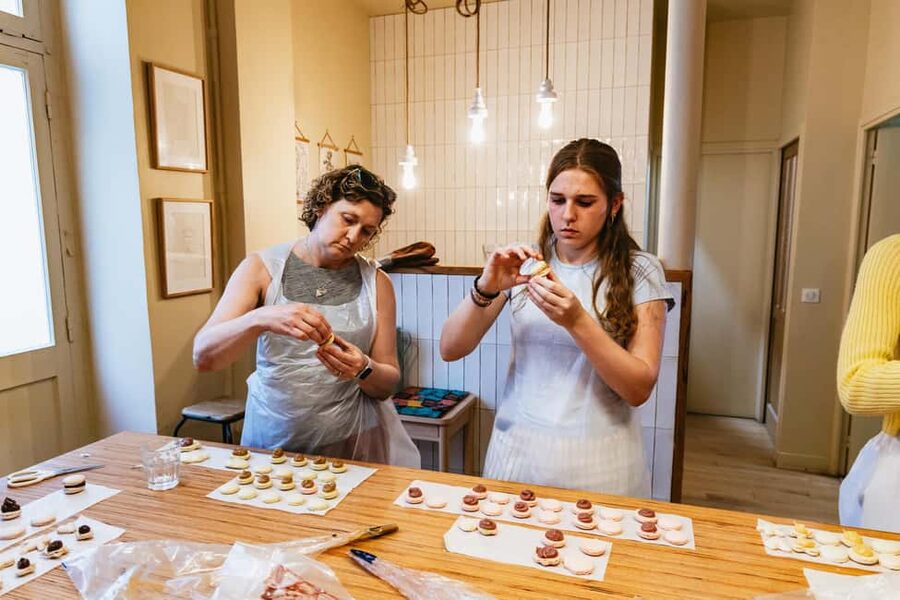
The advertised duration is 150 minutes, or two and a half hours. That gives you time for instruction, preparation, baking-related steps, filling, and packing the finished macarons.
One participant finished in about one hour and 45 minutes, so the exact pace can vary. I would reserve the full two and a half hours in your schedule, while understanding that you might finish sooner. That flexibility can be useful if you have a dinner booking or another activity afterward, but it can also feel short if you hoped for a long, detailed pastry seminar.
The class has enough time to feel like a real workshop without taking over your entire day. It works well as a morning or afternoon activity between sightseeing stops. Since macarons are delicate, I would avoid placing the class at the end of a day when you still plan to carry the box through many hours of walking.
What the class does especially well
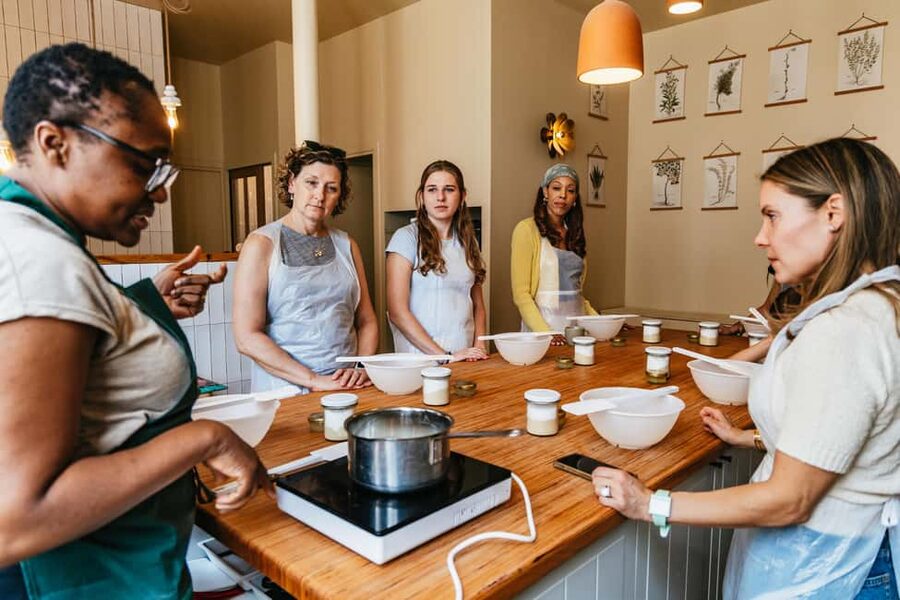
The strongest feature is the teaching. The instructors are repeatedly praised for clear explanations, patience, humor, and individual help. Matthieu has been described as careful and encouraging, while Christian was praised for being patient with the whole group. William and Alice received similar praise for making the class fun and easy to follow.
The second strength is the family appeal. Children are allowed to take part rather than simply watch an adult do the work. Several families with school-age children and teenagers described the class as a favorite Paris activity.
The third is the result. Even people who had never tried making macarons before produced attractive, tasty pastries. That is not a guarantee of perfect professional shells every time, but the structure of the workshop gives you a good chance of leaving proud rather than defeated.
The class also benefits from its setting. The kitchen is described as clean and professional, and the small format keeps the lesson personal. You get the pleasure of a Paris food activity without the formality of a high-end pastry school.
Limitations you should know before booking
This is a beginner-friendly class, not a specialist master class. If you already understand meringue, ganache, piping, and macaron troubleshooting, you may find the material familiar.
The group is small, but the room can become noisy during the final stages. One participant found the last part too loud. That is worth considering if you are sensitive to noise or prefer a quiet, highly structured lesson.
The front entrance may not have clear signage, so the grey door instructions matter. Arrive with the meeting information ready rather than searching casually around the neighborhood.
There is also a small difference between the published length and the actual pace reported by at least one participant. Keep your schedule flexible, and do not assume you will need every 150 minutes.
Finally, no hotel transportation is provided. You are responsible for reaching the school and getting back to your hotel or the next stop.
Who should book this macaron class
I would recommend it most strongly to families, couples, solo visitors who enjoy meeting people, and anyone who likes food-based activities. It is particularly well suited to you if you have always wanted to make macarons but found the pastry intimidating.
It also works for mixed-age groups. Children can help with the practical steps, teenagers get a creative activity, and adults can pay closer attention to technique. The small group means the chef can support different abilities at the same table.
You should look elsewhere if your main goal is advanced pastry science or a long professional-level course. You may also prefer a different activity if you dislike working in a group or do not want to carry a box of delicate pastries afterward.
Value, flexibility, and the final decision
No price is provided here, so I cannot judge the exact cost against other Paris cooking classes. The value comes from the combination of a chef-led lesson, a small group, hands-on work, and a box of macarons to take home. If the price is within your activity budget, that package is more useful than a simple pastry tasting because you gain a skill as well as a souvenir.
Free cancellation up to 24 hours before the class and the option to reserve now and pay later make it easier to fit into a changing Paris schedule. Those terms are helpful when weather, museum reservations, or family energy levels are uncertain.
I would book this class if you want a friendly, practical Paris food activity with a high chance of success. Choose it for the laughter, the small group, and the satisfaction of producing a pastry that often scares off home bakers. Skip it only if you need advanced instruction, a guaranteed full 150-minute session, or a completely quiet kitchen.
FAQ
How long is the French macaron class?
The listed duration is 150 minutes, or two and a half hours. One participant finished in about one hour and 45 minutes, so the actual pace may vary.
Where does the class meet?
The class meets at Maison Fleuret School. You are instructed to meet at the grey door at the time of your reservation.
Is the class taught in English?
Yes. The instructor language is English. Delphine has also been praised for explaining the techniques in both French and English.
How many people are in the class?
The activity is limited to six participants. This small format allows the chef to give individual help.
What do I make during the workshop?
You learn to prepare the meringue, create macaron shells with a crisp outer layer, and make ganache for the soft center. You may also choose colors and flavors, depending on the session.
Do I take macarons home?
Yes. A box of macarons made during the class is included. The quantity can vary, with one family reporting roughly a dozen or more.
Is the class wheelchair accessible?
Yes, the activity is listed as wheelchair accessible. Hotel pickup and drop-off are not included.
Can I cancel the booking?
You can cancel up to 24 hours in advance for a full refund. The activity also offers a reserve-now-and-pay-later option.
Just added around Paris
- Paris: Millefeuille baking class with a chef★ 5.0 · 5 reviews
- Paris: Macaron Baking Class★ 4.4 · 26 reviews
- Paris: Traditional Croissant Cooking Class With Local Baker★ 5.0 · 2 reviews
- Paris: Hands-On Small Group Cooking Class★ 4.9 · 19 reviews
- Paris: Lemon Tart Baking Class with a Pastry Chef★ 5.0 · 4 reviews
- Paris: The Soufflé Baking Class with Chef★ 4.5 · 2 reviews
- Paris: Evening Cooking Class with Optional Market Visit★ 4.8 · 19 reviews
- Paris Cooking Class: French Desserts Class★ 4.9 · 13 reviews
Cooking Classes, compared.
Half-Day Thai Cooking Class at Organic Farm in Chiang Mai
Read our review →
3 in 1 Cooking Class near Navona: Fettuccine, Ravioli & Tiramisu
Read our review →
Pasta & Tiramisu Cooking Class with Unlimited Wine
Read our review →
Hanoi Cooking Class: Culture, Local Market & Meaning CSR Impact
Read our review →
5 Traditional Dishes Hanoi Cooking Class with Market Trip
Read our review →
Cooking Class and Lunch at a Tuscan Farmhouse with Local Market Tour from Florence
Read our review →
Cooking Class, Market & Thai Herbs Garden Tour
Read our review →Lists this class appears in