
REVIEW · HONSHU, JAPAN
Osaka Sake Tasting with Takoyaki Cooking
Osaka comes with a delicious homework assignment. This two-hour class brings together two local favorites, hand-turned takoyaki and Japanese sake, with Momo, a sake sommelier and former brewer, guiding you through both. I especially like the small group of up to six, which gives the cooking plenty of personal help. I also like that the sake lesson is practical, helping you choose drinks with more confidence later in Japan. The main consideration is simple: you should come hungry, and you should be comfortable around alcohol.
The class takes place at MOMO to SAKE, on the second floor of a building near Osaka Namba. For $70 per person, you get the cooking ingredients, instruction, more than 10 sake choices, soft drinks, and an English-speaking local expert. It is not the cheapest meal in Osaka, but the combination of food, several tastings, and a focused lesson gives the price solid value, especially for couples, families, and anyone who wants more than a quick restaurant stop.
Key points to know before booking
- You make the takoyaki yourself: Learn Momo’s recipe, then cook octopus balls with options such as wagyu beef, cheese, kimchi, and corn.
- Momo gives sake useful context: She explains sake history, culture, brewing, styles, grades, and flavor differences in clear English.
- More than 10 sakes are available: The selection changes with the season, and you choose favorites with guidance from the sommelier.
- The group stays small: With no more than six people, you can ask questions and receive help at the hot plate.
- The setting is near Namba: The second-floor MOMO to SAKE location is easy to reach from Osaka’s main entertainment area.
- This is a generous tasting: Previous sessions have included several full pours, so pace yourself and use the water and snacks provided.
Why takoyaki is the right Osaka introduction
Takoyaki is not just food shaped like little golden balls. It is one of Osaka’s signature street foods, and making it yourself gives you a better feel for the city’s easygoing food culture.
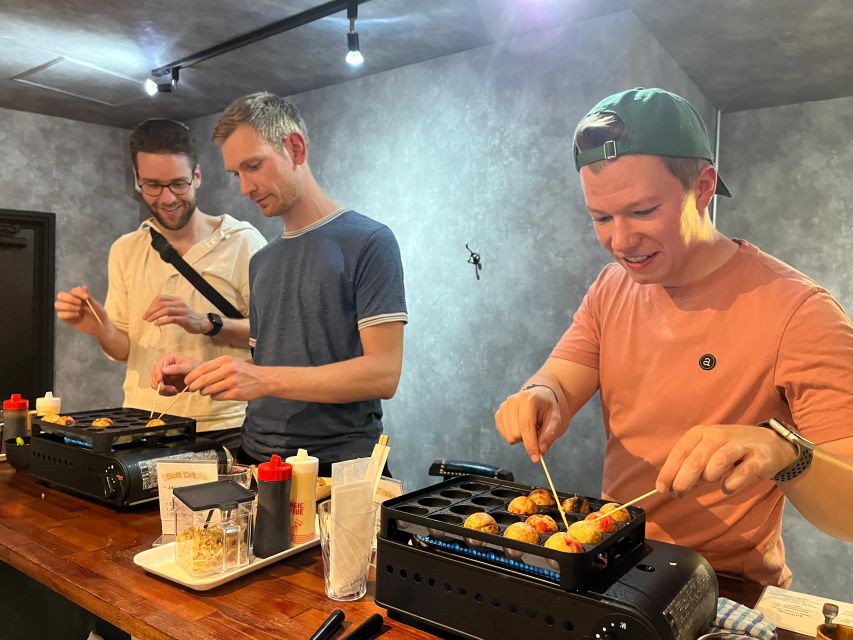
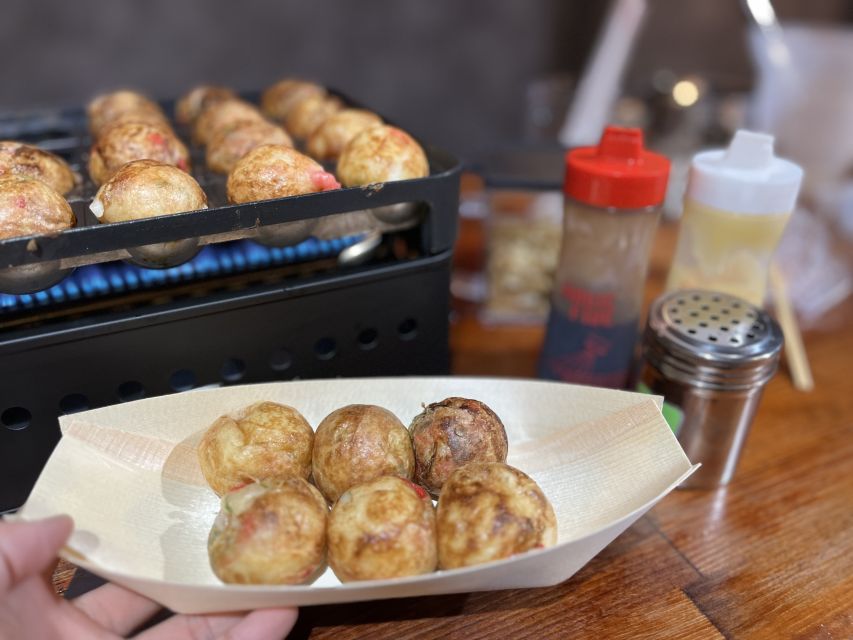
The batter goes into a special round pan, then you add the fillings and turn each piece as it cooks. That turning is the entertaining part. At first, your takoyaki may look like a collection of small disasters. With Momo’s help, it becomes a plate of browned, soft-centered bites.
The recipe includes octopus, but you are not limited to it. Wagyu beef and cheese are among the extra ingredients, and other combinations mentioned during the class include kimchi and corn. This matters if you dislike octopus, have children in your group, or simply want to experiment.
I like that the class does not treat cooking as a demonstration where you sit back and watch. You actually make the food. The finished takoyaki may not look perfect, but that is part of the fun. You leave with a better sense of how the dish is prepared, and you may start watching Osaka street vendors with a more informed eye.
More Drinks Tours in Osaka:
- Osaka: Cooking Class & Sake Tasting with Local Market Visit
★ 4.8 · 31 reviews - Osaka: Okonomiyaki Cooking Class with Beer or Soft Drink
★ 4.9 · 9 reviews - Ramen and Sushi Cooking Class with Sake Pairing Set in Tokyo
★ 5.0 · 291 reviews
The cooking session: hands-on, social, and slightly chaotic
The takoyaki portion comes before the sake tasting. That is a sensible order. You are active around the hot plate, and you can enjoy the food before beginning the alcohol portion.
Momo provides the ingredients and cooking instructions, then helps you through the process. The atmosphere is relaxed rather than formal. The activity works well for two people, but it also has the right mix of teamwork and laughter for a small group.
Expect to use the pan yourself. You will add batter, fillings, and toppings, then turn the pieces as they cook. The class is forgiving, and Momo’s patience is useful if you have never handled a takoyaki pan before.
The result is more filling than a token snack. Several people have found the handmade takoyaki so generous that they could not finish everything alongside the sake. That is why I would not schedule a large lunch immediately before this class.
Families can make it work, too. Children can enjoy the cooking and soft drinks while adults take part in the sake tasting. The experience is still centered on food, so it does not depend entirely on drinking.
Sake explained by a sommelier and former brewer
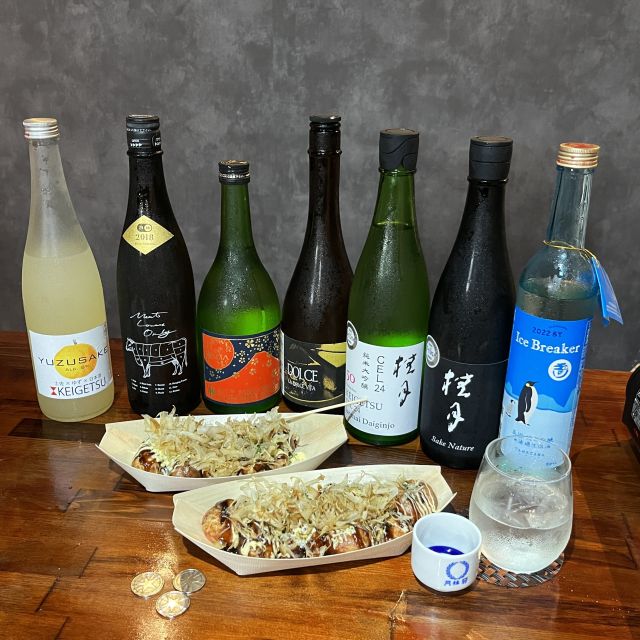
The sake portion is where this experience becomes more than a cooking class with drinks on the side. Momo explains the basics of sake, also called nihonshu, including its history, culture, brewing process, types, grades, and flavor profiles.
You do not need prior knowledge. The lesson is designed to help you understand what you are tasting without turning the evening into a technical lecture. Momo has a way of making the subject approachable, and her background as a former brewer gives the conversation useful depth.
The most practical part is learning how to choose sake. You get guidance on what different styles may taste like, then compare several options to find what suits you. This can make a real difference during the rest of your Japan trip. Instead of pointing at a bottle and hoping for the best, you will have some language for discussing sweetness, texture, aroma, and overall style.
Sake can seem confusing because labels and categories are unfamiliar to many first-time drinkers. A short guided tasting helps you connect those terms to actual flavors. I would book this early in your Osaka stay if you plan to visit sake bars afterward. The new information will have time to be useful.
More than 10 choices, with seasonal changes
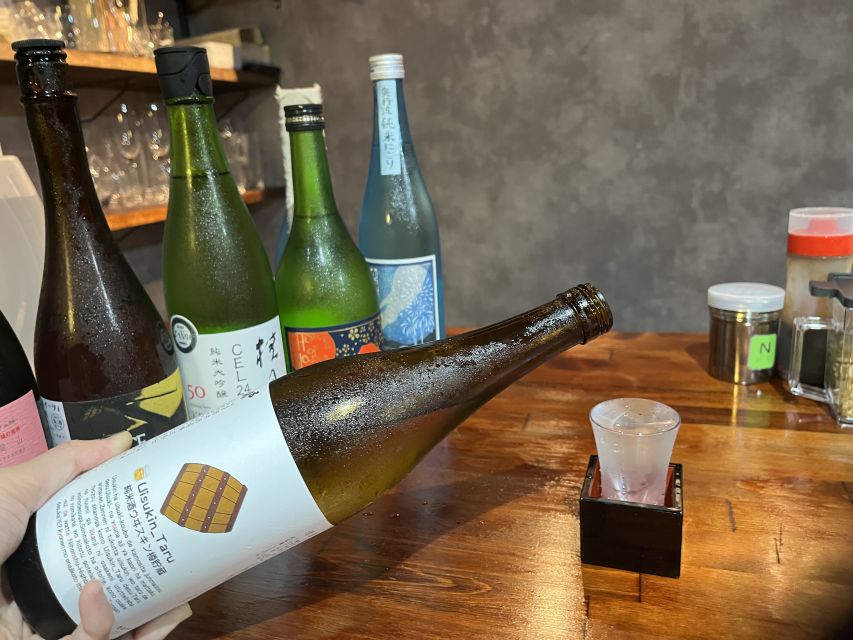
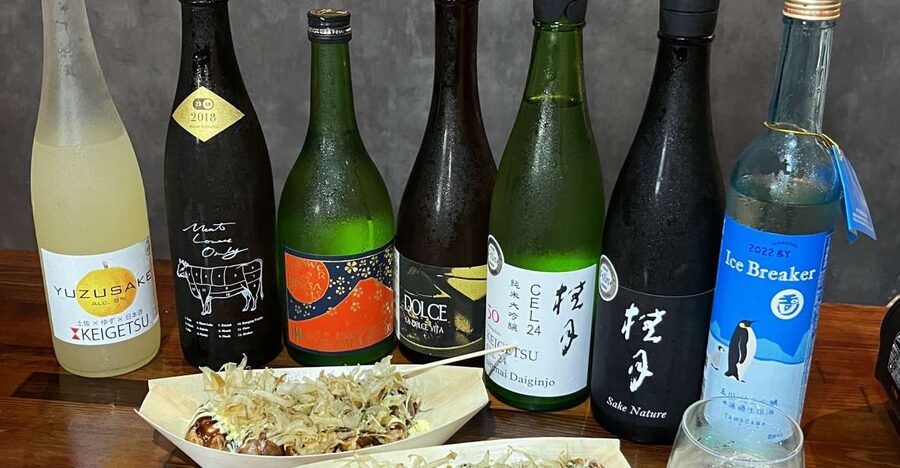
The experience offers more than 10 Japanese sakes, with a seasonal menu selected by Momo. You choose your preferred types with her help rather than receiving an identical flight with no explanation.
The exact number poured can vary. Past sessions have included seven or eight different sakes, with generous servings rather than tiny drops. That makes the tasting good value, but it also means you need to take the alcohol seriously.
The seasonal selection is another plus. Sake is not a fixed menu item here, so the choices may change with the time of year. You can ask Momo to compare styles and explain why a particular bottle tastes different from another.
This is not a lesson built around finding a single correct favorite. You may prefer a clean, delicate sake, while someone beside you prefers something fuller or more fragrant. Momo helps you identify your own preferences instead of telling you what you should like.
Soft drinks are included, which is helpful for children, non-drinkers, and anyone who wants to alternate. Water and snacks have also been provided during sessions, but you should still pace yourself. The class ends with you eating and drinking together, so a slow approach will make the final part more enjoyable.
More Food and Drink Trips in Osaka:
- Okonomiyaki&Takoyaki for Families:Osaka Street Food Festival
★ 5.0 · 4 reviews - Small Group Cooking Class & Market Food Tour in Florence
★ 5.0 · 1,574 reviews - Pasta Making & Wine Tasting with Dinner in Frascati from Rome
★ 5.0 · 1,326 reviews - Paella Cooking Class, Wine Tasting & Central Market in Valencia
★ 5.0 · 1,150 reviews
Eating your work with the sake
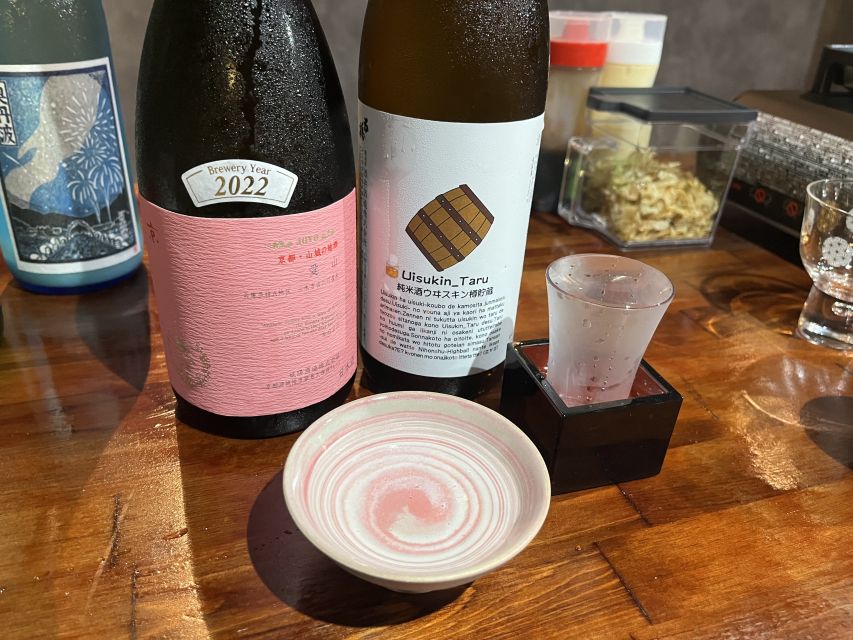
After the cooking, you sit down to enjoy your takoyaki with the sake you selected. This pairing is the payoff. The food gives the tasting a relaxed purpose, and the drinks become part of a meal rather than a series of isolated samples.
You can compare how different sakes work with the savory fillings. Octopus, wagyu beef, cheese, and kimchi each bring different flavors to the plate. The class does not require you to make formal tasting notes, but you can use the moment to notice which sake makes the food taste better to you.
Some sessions have also included dessert. It is a welcome finish after the hot plate and tasting, though the exact dessert is not specified, so I would treat it as a pleasant extra rather than a guaranteed course.
The meal is personal because you cooked it. Your takoyaki may be rounder than expected, or it may need a little more turning next time. Either way, you have a story to tell and a recipe you can try at home.
What the small group changes
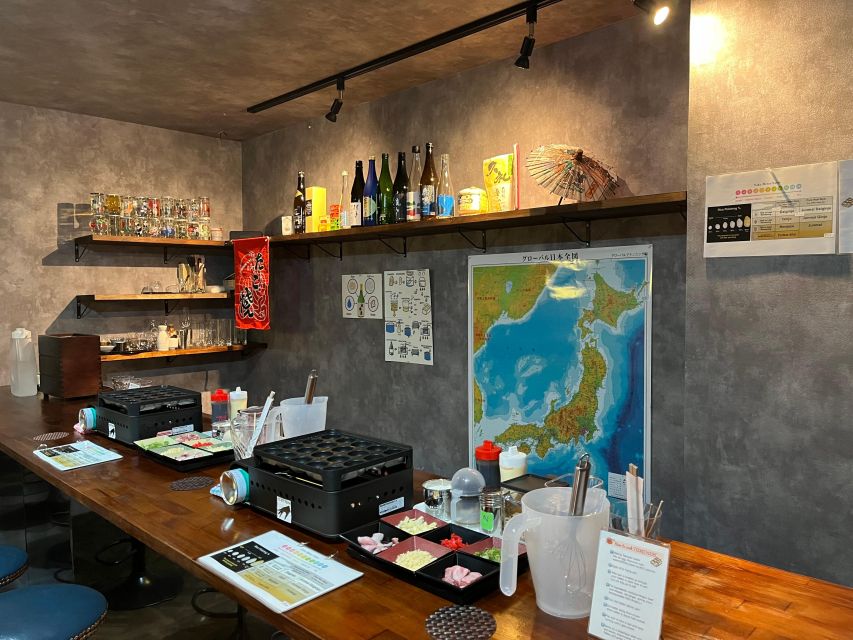
The maximum group size is six. That number matters here because the class depends on direct help at the pan and conversation during the tasting.
A small group gives you room to ask basic questions without feeling rushed. It also allows Momo to adjust the session. Some people focus on sake, while others care more about cooking. Families can ask for soft drinks, and people with food concerns can discuss possible changes in advance.
Past sessions have included private or nearly private groups, including couples and one-person bookings. That can make the class feel more like an evening with a local host than a large commercial demonstration.
The small size does not guarantee a private class. You may share the room with other participants, and the tone will depend partly on the group. Still, six people is a useful limit for an experience that involves conversation, cooking, and tasting.
Location and two-hour timing near Namba
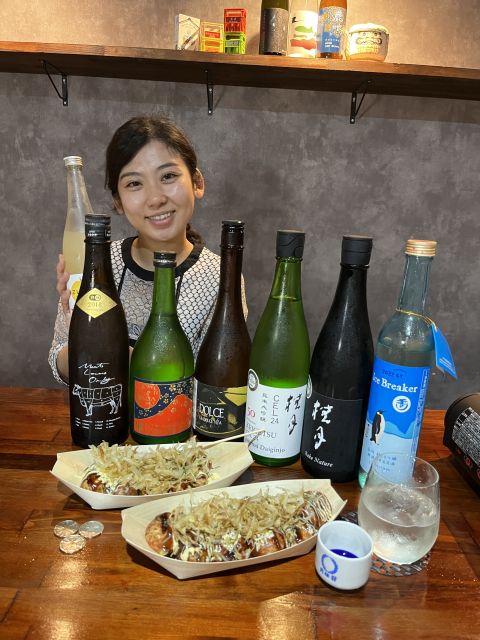
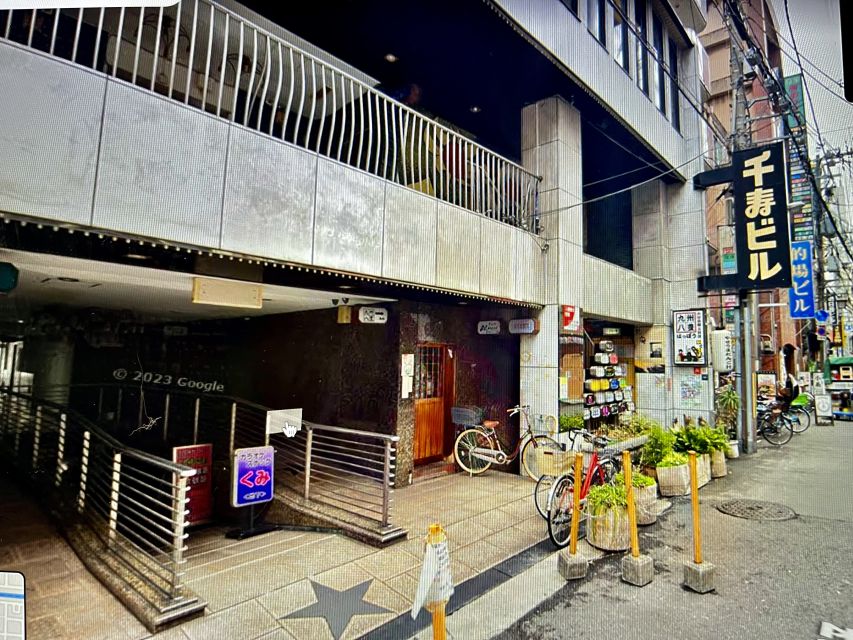
MOMO to SAKE is on the second floor of its building near Osaka Namba. This is a convenient area if you are already exploring the central Osaka food and entertainment district.
The meeting point is the store name itself, MOMO to SAKE. Pay attention to the second-floor location, since arriving at the right building is not quite the same as arriving at the room.
Two hours is enough time to cover the cooking, sake lesson, tasting, and meal without making the class an all-day commitment. You can fit it into an Osaka afternoon or evening, but leave enough time to arrive calmly. Cooking at a hot plate is more fun when you are not watching the clock.
The experience is particularly useful near the start of a Japan trip. You get a local food lesson, an introduction to sake, and practical advice for ordering drinks later. If your schedule is already packed with major sights, the class offers a slower change of pace.
The $70 price: fair value for the right person
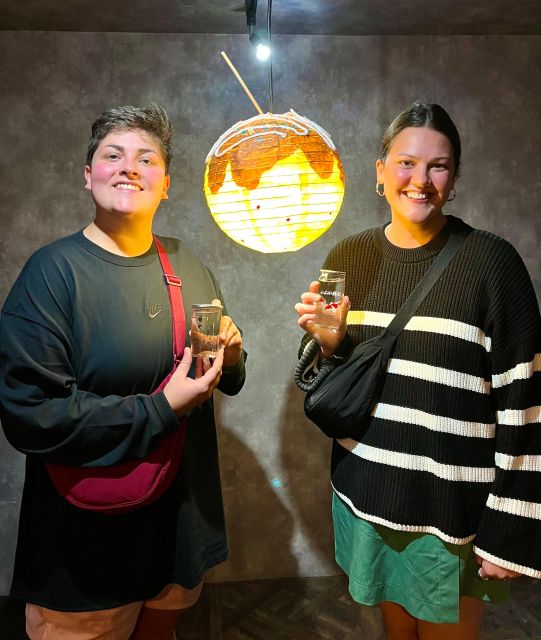
At $70 per person, this is more expensive than ordering takoyaki from a street stand and buying one drink. That comparison, however, misses the main point. You are paying for ingredients, instruction, a small group, an English-speaking sake specialist, multiple tastings, and a meal you prepare yourself.
The value is strongest if you want interaction. A casual snack gives you the food, but not the cooking lesson or sake guidance. A standard restaurant gives you dinner, but not the chance to compare more than 10 types with an expert.
The price is less appealing if you only want to eat takoyaki or if you do not drink alcohol. Soft drinks are included, and the cooking alone can still be enjoyable, but the sake portion is a major part of what you are buying.
For couples, the cost can feel worthwhile because the class gives you a shared activity rather than another meal across a restaurant table. For families, the value depends on how much the children enjoy cooking and whether the adults plan to use the sake advice later.
Who will enjoy this most
I would recommend the class to:
- First-time visitors who want an Osaka food experience with local context
- People who enjoy Japanese drinks but feel unsure about ordering sake
- Couples seeking a relaxed activity near Namba
- Small groups who like cooking together
- Families where adults want sake and children prefer cooking and soft drinks
- Anyone who wants a practical introduction before visiting sake bars
It may not suit you if you want a quiet, formal tasting with no cooking. It is also not ideal if you plan to drink heavily afterward, since the pours can be generous and the class already includes several samples.
Food allergies or dietary needs should be discussed before booking. One session successfully accommodated a coeliac participant, and other fillings make it possible to avoid octopus, but you should not assume every request can be handled without advance notice.
Booking details worth knowing
The activity costs $70 per person and lasts two hours. The instructor speaks English and Japanese, and the group is limited to six people.
Cancellation is free up to 24 hours before the experience for a full refund. You can also reserve now and pay later, which helps if your Osaka schedule is still changing.
The published rating is 5 out of 5 from 156 reviews, and the strongest pattern is clear: people value Momo’s warmth, clear explanations, patience, and ability to make both the cooking and tasting feel easy. That praise is most useful when you consider the nature of the class. The host is not just delivering food. She is the main reason the lesson works.
Should you book Osaka Sake Tasting with Takoyaki Cooking?
Yes, if you want an active food experience rather than another restaurant meal. The class gives you a useful introduction to sake, a hands-on way to make Osaka’s famous takoyaki, and enough conversation to make the evening feel personal.
Book it early if you plan to explore sake bars during your stay. Choose another activity if you dislike alcohol, want a large menu of cooked dishes, or prefer to watch rather than participate.
For most visitors, the best reason to book is the combination. You learn how to turn takoyaki, learn how to choose sake, then enjoy both together. That is a very Osaka way to spend two hours.
FAQ
Where does the experience take place?
It takes place at MOMO to SAKE, on the second floor of the building.
How long does the activity last?
The experience lasts two hours.
How much does it cost?
The price is $70 per person.
How many people can join?
The group is limited to six participants.
Which languages are available?
The instructor speaks English and Japanese.
How many types of sake are available?
More than 10 types of Japanese sake are available. The seasonal menu is selected by the sake expert.
Is food included?
Yes. All cooking ingredients and cooking instruction are included, and you eat the takoyaki you make.
Are soft drinks available?
Yes. Soft drinks are included along with the sake selection.
Can I cancel for a refund?
Yes. You can cancel up to 24 hours in advance for a full refund.
More Sake Tastings in Osaka
- Tokyo: Sushi and Ramen Cooking Class with Sake Pairing Set
★ 5.0 · 81 reviews - Tokyo: Sushi Cooking Class with Sake Tasting
★ 4.8 · 55 reviews
Just added around Osaka
- Okonomiyaki&Takoyaki for Families:Osaka Street Food Festival★ 5.0 · 4 reviews
- Osaka Okonomiyaki Cooking Experience for Families & Groups★ 4.9 · 8 reviews
- Osaka: Sashiko Japanese Craftsmanship Workshop★ 5.0 · 31 reviews
- Osaka : Exclusive Tea Ceremony & Wagashi Cooking★ 5.0 · 2 reviews
- Osaka: Okonomiyaki Cooking Class with Beer or Soft Drink★ 4.9 · 9 reviews
- Osaka: Cooking Class & Sake Tasting with Local Market Visit★ 4.8 · 31 reviews
- Osaka: Gluten-Free Ramen and Gyoza Cooking Class★ 5.0 · 42 reviews
- Osaka: Japanese Cooking Class with Matcha Experience★ 5.0 · 4 reviews
Cooking Classes, compared.

Half-Day Thai Cooking Class at Organic Farm in Chiang Mai
Read our review →

3 in 1 Cooking Class near Navona: Fettuccine, Ravioli & Tiramisu
Read our review →
Pasta & Tiramisu Cooking Class with Unlimited Wine
Read our review →
Hanoi Cooking Class: Culture, Local Market & Meaning CSR Impact
Read our review →
5 Traditional Dishes Hanoi Cooking Class with Market Trip
Read our review →
Cooking Class and Lunch at a Tuscan Farmhouse with Local Market Tour from Florence
Read our review →
Cooking Class, Market & Thai Herbs Garden Tour
Read our review →Lists this class appears in