
REVIEW · MONTEPULCIANO, ITALY
Tuscan Cooking Class – Traditional 5 course menù
Fresh pasta tastes better in Tuscany. This Montepulciano class combines seven hands-on preparations with a five-course meal, four local wine pairings, and a friendly small-group setting at Farmhouse Le Caggiole. I especially like the focus on organic, farm-to-table ingredients and the chance to learn techniques you can repeat at home.
I also like the personal touch from Giacomo, a chef and trained sommelier, along with Cristiana and their family. The main consideration is the class’s serious pace. You stand during the preparations, hygiene rules are strict, and Giacomo expects punctuality and attention.
Key points at a glance
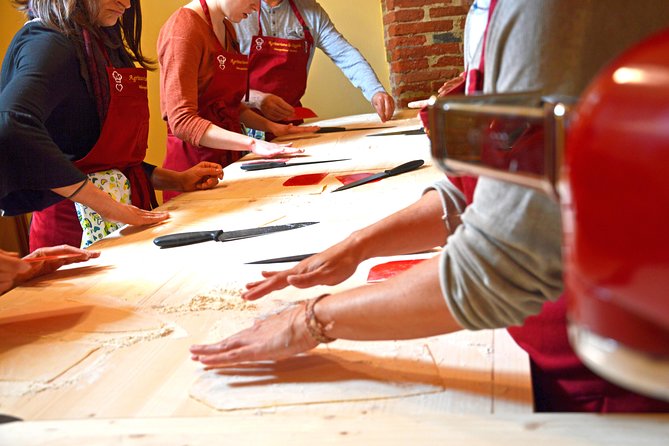
- A full five-course Tuscan menu: Prepare bruschette, gnocchi, pappardelle, Chianina beef with vegetables, and family-recipe tiramisu.
- Seven separate preparations: This is more than a pasta lesson, so expect a busy and involved five hours.
- Four local wine pairings: Giacomo teaches you how to match wine and food, not simply how to drink along with lunch.
- Small groups capped at eight: The limited size gives you more personal instruction and a more social table experience.
- A farmhouse setting near Montepulciano: The meal ends with dessert on the terrace and views across the Tuscan countryside.
- A serious teaching style: Comfortable shoes, punctuality, clean hands, and full attention matter here.
A five-course lesson at Farmhouse Le Caggiole
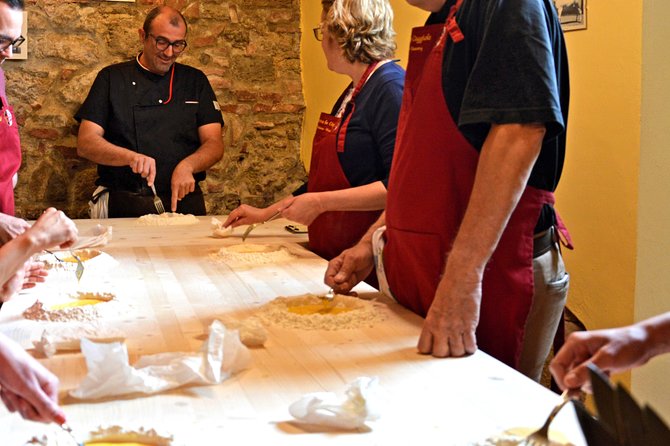
The class takes place at Farmhouse Le Caggiole, at Traversa di Montepulciano, 12, outside Montepulciano. It is an appealing setting for a cooking lesson because the experience connects the food with the place where it is made and eaten.
You arrive for the scheduled 3 pm start and spend about five hours working through the menu. The format shifts between practical cooking, demonstrations, tastings, and conversation. It is not a quick pasta workshop followed by a snack. You help create a complete meal, then sit down to eat it.
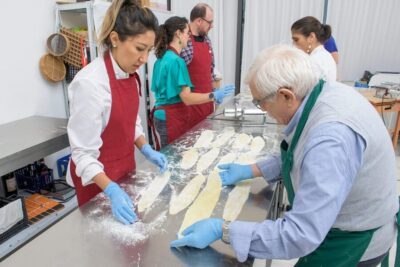
The maximum group size is eight people. That matters here. With several preparations underway, a large class would make it harder to see techniques or ask questions. A small group also helps create the social side of the afternoon, which is part of the appeal.
The class is offered in English. If you are traveling alone, contact the provider before booking. They may place you in an already scheduled small group, which is a better arrangement than running a one-person class or leaving you without a social setting.
More Italian Cooking Classes in Italy:
- Cooking Class and Lunch at a Tuscan Farmhouse with Local Market Tour from Florence
★ 5.0 · 4,831 reviews - Tuscan Cooking Class and Dinner in Florence
★ 4.5 · 732 reviews - Rome Pasta Making Class with Italian Sauces and Wine Included
★ 5.0 · 645 reviews
Giacomo’s approach to cooking and wine
Giacomo leads the class as both chef and sommelier. His method centers on simple, good ingredients and careful handling rather than showy tricks. You learn how to choose ingredients, prepare them properly, and understand why a particular technique works.
That practical focus is one of the strongest parts of the experience. Several participants have left feeling able to make pasta and sauces at home, even when they arrived with little cooking experience. One experienced Italian-American home cook also found that the knife work, egg whisking, and pasta techniques added useful skills after decades in the kitchen.
You should know that Giacomo appears to teach with firm expectations. He stresses punctuality, handwashing, and proper hygiene. He also wants everyone to follow the method closely enough to reproduce the dishes later.
That can be a plus if you want a real lesson. It may feel strict if you are hoping for a loose afternoon of joking around while someone else does most of the work. The class has a social and funny side, but it is still a structured cooking course.
Arrive on time. The provider specifically warns that late arrivals may be treated as no-shows, especially because the class has a fixed schedule and other participants are involved. In plain terms, this is not the place for a relaxed, last-minute arrival.
Seven preparations, not just one pasta dish
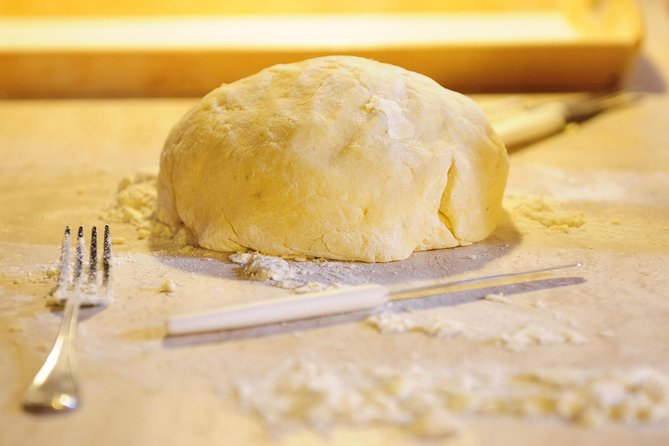
The menu includes seven different preparations that come together as a traditional five-course meal. The exact steps may vary slightly, but the published menu gives you a clear idea of the food you will work with.
Bruschette and a Tuscan starter
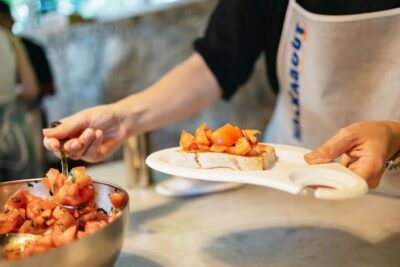
The meal begins with traditional bruschette and a typical Tuscan appetizer. This is a useful opening lesson because simple food leaves little room to hide mistakes. The quality of the ingredients, the balance of seasoning, and the treatment of the bread all matter.
You also begin learning how Tuscan cooking gets its character from straightforward ingredients. The goal is not to bury the food under complicated sauces. It is to handle each part well and let it taste like itself.
A few more cooking classes around Italy worth a look
- Florence: Pasta Cooking Class with Unlimited Wine
★ 4.9 · 10,285 reviews - 3 in 1 Cooking Class near Navona: Fettuccine, Ravioli & Tiramisu
★ 5.0 · 7,376 reviews - Florence: Pasta & Tiramisu Cooking Class with Unlimited Wine
★ 4.9 · 6,708 reviews - Rome Cooking Class: Make Pasta and 3 Spritz Cocktails
★ 5.0 · 2,937 reviews
Gnocchi with a traditional sauce
Gnocchi bring a different skill set from rolled pasta. Texture is crucial. Too much handling can make them heavy, while poor cooking can leave them unpleasantly soft.
The class uses gnocchi with a traditional sauce. This gives you a chance to see how the shape and texture of the pasta work with the sauce on the plate. If you have made gnocchi before, you may still pick up useful tips. If you have not, expect to pay close attention to Giacomo’s demonstrations.
Pappardelle with a family sauce
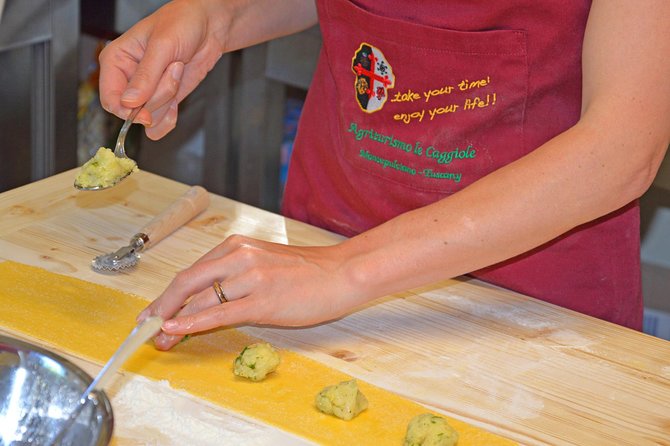
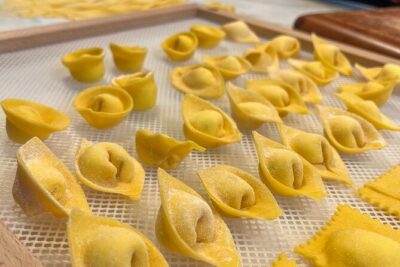
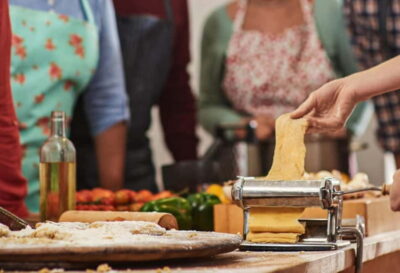
Pappardelle are broad ribbons of pasta, and preparing them gives the class its most recognizable hands-on pasta moment. The experience includes cutting pappardelle and learning how to work with the dough.
The pasta is served with a traditional family sauce. That family connection adds warmth to the lesson, but the teaching stays practical. You are not just handed a recipe. You learn techniques that can be applied to other pasta shapes and sauces.
The class is designed to make you more confident at home. Even a beginner can enjoy it, but you should expect to work, watch, repeat, and accept correction.
Chianina beef and vegetables
The main course features Chianina beef with vegetables. Chianina is a Tuscan cattle breed, so this course connects the meal to local food traditions in a direct way.
You also learn how the meat and vegetables fit into the larger menu. Since the class includes wine pairing, the main course is part of the tasting lesson as well as the cooking lesson. The food is not treated as separate from the drink.
Tiramisu on the terrace
Dessert is tiramisu made from the family recipe. Unlike the savory courses, dessert is not paired with a wine. After the cooking is done, you can sit more comfortably on the terrace with the dessert and the views.
That change of pace is welcome. Five hours on your feet is a long cooking session, so ending outdoors with tiramisu turns the final course into a relaxed finish rather than another task at the worktable.
Four wines and a useful food-pairing lesson
Four selected local wines are included with the meal. The wines include both red and white styles, and Giacomo explains how to pair them with different dishes.
This is more valuable than simply receiving a glass with lunch. You learn the basics of matching food and wine, including why one wine suits a dish better than another. For anyone interested in Tuscan food beyond this one meal, that knowledge is easy to carry into future restaurant visits and home dinners.
The wine tasting is spread through the meal, so you are not expected to drink everything at once. The pairing creates a sensory thread from the starter through the meat course. Dessert is served without a wine pairing.
Keep in mind that the price includes alcoholic beverages. If you do not drink alcohol, much of that portion of the experience will not be useful to you. The class may still be worthwhile for the cooking, but the wine component is a meaningful part of what you are paying for.
Organic ingredients and the farm-to-table idea
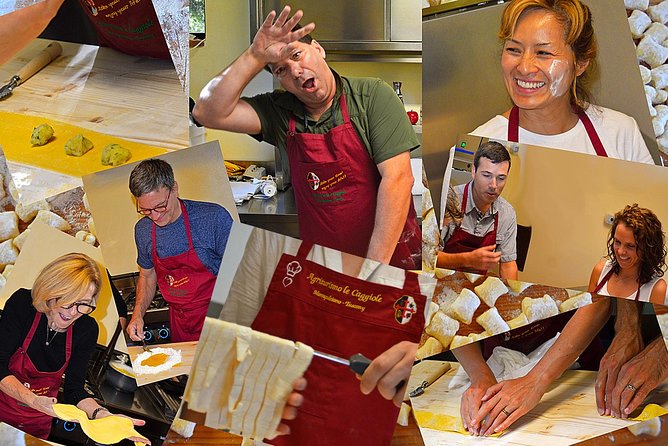
The ingredients are described as organic and farm to table. More important than the label is the way the class uses that idea. Giacomo talks about choosing good ingredients before you begin cooking, then treating them correctly.
That lesson is often more useful than a long recipe sheet. At home, you may not have the same local products, but you can still apply the principle: buy the best ingredients available, avoid unnecessary complications, and use techniques that respect the food.
The class includes all ingredients, along with aprons and kitchen tools. Pencil and notepaper are available on request. I would ask for them in advance if you want to record techniques, since the provider does not allow video or other recording during preparation.
The no-recording rule may disappoint people who want a full visual guide later. It also means you should stay alert and take written notes if permitted. The restrictions are clear, so decide before booking if you need to film each step.
Is $320.48 a fair price?
At $320.48 per person, this is an expensive cooking class. It costs more than a short pasta lesson or a basic market-to-table workshop.
The value comes from the length and scope. You receive about five hours of instruction, seven preparations, a five-course meal, four wine pairings, ingredients, equipment, an apron, and a small group capped at eight. You are also paying for Giacomo’s role as both chef and sommelier, plus the farmhouse setting and personal instruction.
I would consider it good value if you want a serious food experience and plan to use the skills later. The price is harder to justify if you mainly want a pleasant lunch with a little cooking on the side. This class asks you to participate fully, so the value depends on how much you want to learn.
The class is often booked about 50 days ahead. That suggests you should plan early, especially if your Montepulciano schedule is fixed. Free cancellation is available up to 24 hours before the start time. Changes or cancellations inside that window are not accepted, and the minimum number of participants must be met for the class to run.
What to wear and what to tell the provider
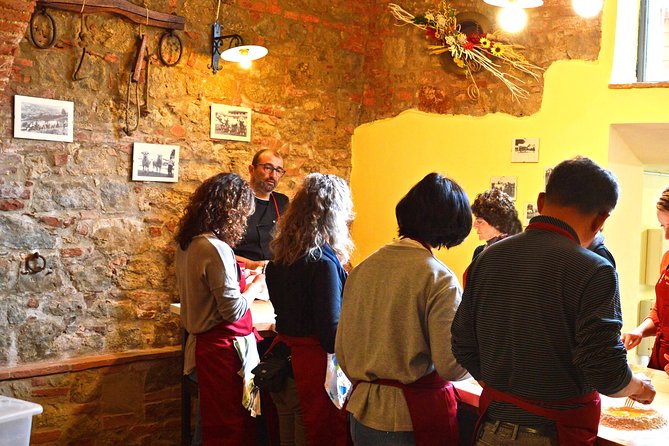
You will stand during all the preparations. Wear comfortable clothes and shoes, not your nicest travel outfit. Cooking can be messy, and five hours on your feet is demanding enough without uncomfortable footwear.
For hygiene reasons, you cannot wear rings, large bracelets, or artificial nails during the preparations. This is worth knowing before you arrive, since these rules are part of the working conditions rather than optional advice.
Tell the provider about food allergies or intolerances before completing the booking. They will assess whether dishes can be changed. After booking, menu changes may not be possible.
The provider also recommends eating a good breakfast before the class. Since the activity begins at 3 pm, that advice is slightly unusual in wording, but the point is sensible: do not arrive hungry and expect the first food to come immediately. The class begins with preparation, not a ready-made meal.
After your booking is confirmed, send a WhatsApp text with your name, booking date, and email address. This is a practical step that helps the provider match your reservation to the class.
Who will enjoy this class most?
This experience suits you if you enjoy learning by doing. It is especially good for home cooks who want better pasta skills, stronger kitchen habits, and a menu they can attempt again with family or friends.
It also works for beginners. The class has welcomed people who had never made pasta or sauces before, and the instruction is intended to help you repeat the dishes at home. You do not need to arrive as an Italian cook.
The best match is someone who appreciates direct teaching. Giacomo can be demanding, and he may correct your technique or insist that you follow hygiene procedures. If you want a relaxed demonstration where you watch while someone else cooks, choose a different format.
Couples, friends, and solo visitors can all fit the experience. A solo participant should contact the provider first so the booking can be arranged within an existing small group.
The drawbacks to consider before booking
The biggest drawback is the intensity. You stand for the preparations, follow a fixed program, and work through many dishes in one afternoon. That is a lot of activity, especially for anyone with mobility concerns or a short attention span.
The communication style may also feel firm. One participant found the class too serious and felt the technical level was beyond their group. The provider’s response makes the expectations clear: punctuality, respect for other participants, and hygiene are central to the experience.
I would not treat that criticism as a reason to avoid the class entirely. I would treat it as useful preparation. Come ready to listen, wash your hands when asked, and accept that this is a professional lesson rather than an unstructured party.
There is also no transfer or shuttle service. You must make your own way to Traversa di Montepulciano, 12, and the activity ends back at the same meeting point. Check your route before the day of the class, since arriving late can disrupt the entire group.
Should you book the Le Caggiole cooking class?
Book it if you want a full Tuscan food experience with real instruction, generous portions, local wine, and a small group. The strongest reasons are the breadth of the menu, the practical pasta training, the wine pairing, and the chance to eat what you helped prepare.
Skip it if you want a casual, low-effort afternoon, dislike strict instructions, or cannot stand comfortably for the cooking period. Also think twice if you are paying mainly for the wine, since non-drinkers will not get the full value.
For the right person, this is more than lunch. You leave with a meal in your memory, several techniques to practice, and a clearer sense of how Tuscan cooks turn simple ingredients into something special.
FAQ
Where does the cooking class take place?
The class takes place at Farmhouse Le Caggiole, Traversa di Montepulciano, 12, 53045 Montepulciano SI, Italy.
What time does the class start?
The scheduled start time is 3 pm, and the experience lasts about five hours. It ends back at the meeting point.
How many people can join the class?
The class has a maximum of eight participants, creating a small-group setting.
Is the class offered in English?
Yes. The cooking class is offered in English.
What food and drinks are included?
You prepare and eat a traditional five-course menu with bruschette, gnocchi, pappardelle, Chianina beef with vegetables, and tiramisu. Four selected local wines are included with food pairings.
Can food allergies or intolerances be accommodated?
You must tell the provider about allergies or intolerances before completing the booking. The provider will assess whether dishes can be changed, but menu changes requested after booking may not be accepted.
Just added around Italy
- Cooking Class in a Sicilian countryhouse★ 5.0 · 5 reviews
- Cesarine: Home Cooking Class & Meal with a Local in Catania★ 4.5 · 10 reviews
- Cesarine: Market Tour & Home Cooking Class in Catania★ 4.0 · 6 reviews
- Cooking Class in Taormina with Lunch Included★ 5.0 · 2 reviews
- Cooking Class and Wine Pairing in Capri★ 5.0 · 57 reviews
- Cooking class in Capri for small groups★ 4.0 · 4 reviews
- Private Cooking Class Experience in Reggio Calabria★ 5.0 · 5 reviews
- Lezione di Cucina : Pasta Fresca★ 5.0 · 12 reviews
Italian Cooking Classes, compared.
Cooking Class and Lunch at a Tuscan Farmhouse with Local Market Tour from Florence
Read our review →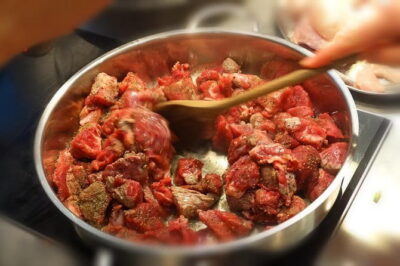
Rome Pasta Making Class with Italian Sauces and Wine Included
Read our review →
Cooking Class at a Tuscan Farm & Local Market Tour
Read our review →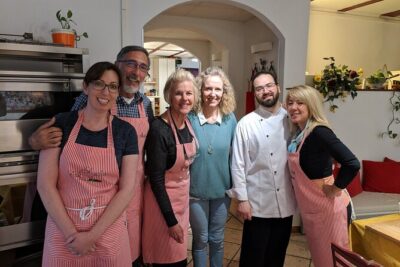
Tuscan cooking class with handmade pasta and wine
Read our review →Lists this class appears in