
REVIEW · GEORGIA
Tbilisi: Cooking Class with a Local Family
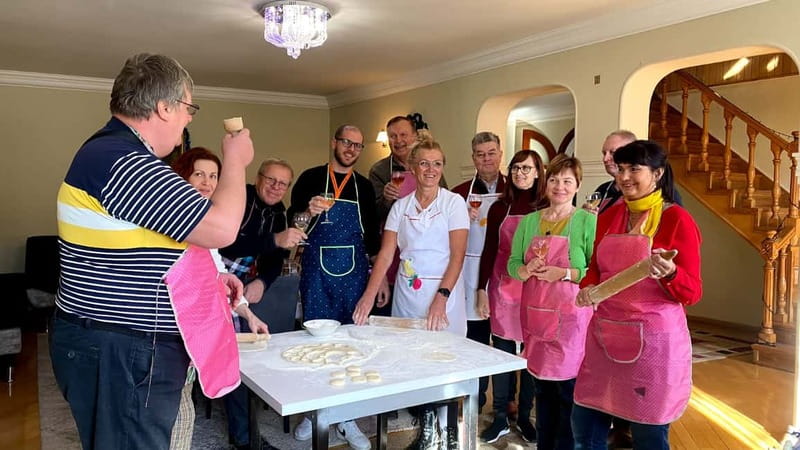
Georgian food is made for sharing. This three-hour class at Shorena’s Magic Kitchen combines hands-on cooking with a meal in a local family home, giving you a useful taste of daily Georgian hospitality rather than another restaurant dinner. I especially like the chance to shape khinkali yourself and sit down to eat what you made. The homemade wine, Sulguni cheese, and chacha add a proper Georgian touch.
I also like that an English-speaking guide handles the translation and explains the food, customs, and local life. Guides such as Maria, Ana, Nicolas, Nini, Salome, and Beka have all helped make the evening friendly and easy to follow. One thing to consider is that the host may speak little or no English, so the quality of the experience depends partly on your guide. Return transportation from the family home is not included, so plan for that before you arrive.
Key points to know before you book
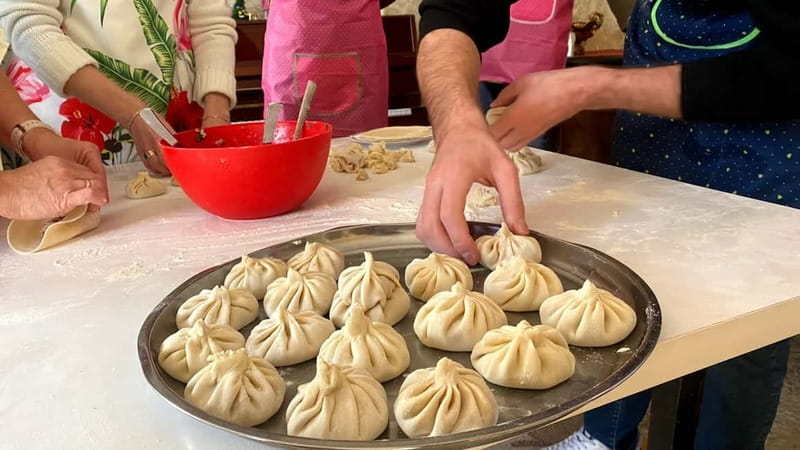
- Khinkali takes center stage: You shape Georgian meat dumplings by hand, then eat them fresh at the end.
- The setting is a real family home: Shorena lives with her husband and children, and some sessions take place in a garden with grapevines and plum trees.
- Your guide translates and adds context: The guide may explain regional cooking, Georgian customs, drinks, music, and everyday life.
- The meal is much more than dumplings: Expect dishes such as khachapuri, eggplant with walnuts, Georgian salad, and mchadi cornbread.
- Wine and chacha are part of the table: Homemade dry white wine, water, Sulguni cheese, and Georgian vodka are included.
- The class starts at 17:30: Meet the local partner outside Avlabari Metro Station, where a representative holds a branded orange flag.
Why a Tbilisi home meal is worth your evening
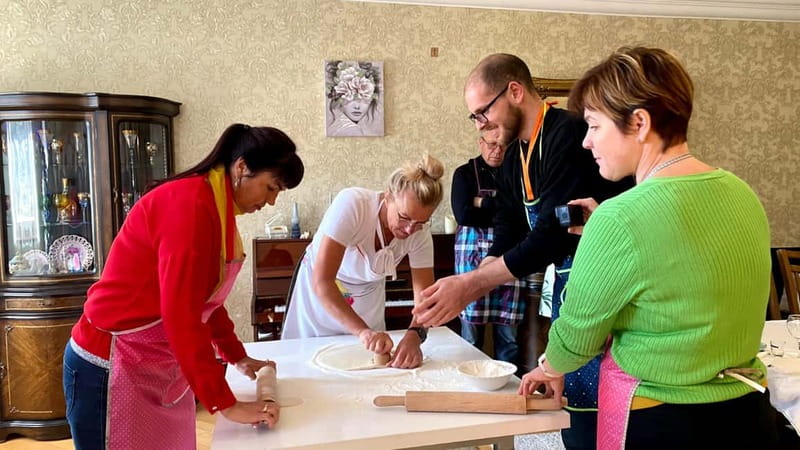
Food gives you a quick way into Georgia. You can read about khachapuri and khinkali in a guidebook, but shaping dough beside a Georgian cook tells you more about the food than simply ordering it in a cafe.
This experience also puts dinner inside a family setting. Shorena comes from western Georgia and has more than 30 years of cooking experience. Her recipes reflect the kind of food Georgians grow up eating, serving, and arguing about at the table.
I like the balance here. You are not simply watching a demonstration while someone else does all the work. You help prepare the dishes, then eat the results. At the same time, much of the preparation is arranged in advance, so you do not need professional cooking skills to keep up.
That makes the class a good choice if you want activity without pressure. You can participate at your own level, ask questions through the guide, and enjoy a generous meal even if your dumpling folds look more artistic than traditional.
More Home Cooking Classes in the world:
- Khmer Cooking Class at a Local’s Home in Krong Siem Reap
★ 5.0 · 2,731 reviews - Local Home Korean Cooking Class & Market Adventure in Seoul
★ 5.0 · 1,024 reviews - Marrakech: Moroccan Cooking Class with a Local Family
★ 4.9 · 668 reviews
Meeting at Avlabari Metro Station at 17:30
The evening begins at Avlabari Metro Station. Look for a representative holding a branded orange flag outside the station. This is a useful meeting system, especially if you are new to Tbilisi and do not yet know the local partner or guide.
The scheduled start is 17:30, and the class lasts about three hours. That timing makes it a natural evening plan after sightseeing in the old city or around Avlabari.
Transportation from the meeting point to the family home is included. The important practical catch is that transportation from the family home is not included, so ask the guide about the return plan before the meal ends. Do not assume the included ride works both ways.
Bring your passport or ID card. The class runs in rain or shine, so dress for the weather. Since some of the experience may take place in a garden or outdoor area, comfortable clothing and shoes make sense.
Meeting Shorena and entering the family kitchen
The main attraction is the shift from ordinary sightseeing to a home setting. Shorena welcomes you into her family environment and teaches the cooking herself, with an English-speaking guide translating instructions when needed.
The language point matters. Shorena may speak Georgian and only a few words of English, but guides have translated the steps and explained the food clearly. Nicolas, Maria, Ana, Nini, and Salome are among the guides praised for keeping the evening moving while adding useful context about Georgia.
You should expect a group activity rather than a private lesson with a chef. Some sessions have had several people, and one booking happened to be private because no one else had booked that day. Solo visitors fit in well, since the cooking naturally gives everyone something to do and talk about.
The social side is part of the value. You may arrive alone and leave having shared a long dinner with people from several countries. Couples, families, and solo visitors can all take part without needing to know anything about Georgian cooking beforehand.
Making khinkali by hand
Khinkali, the large Georgian dumpling, is usually the dish people most want to learn. The dough is filled, folded, and pinched into the familiar pleated shape. You get to work with your hands, which makes this more memorable than a standard food tasting.
The key lesson is not only the ingredients. You learn how the dumpling is assembled and how it fits into Georgian table customs. The guide can explain regional differences and the basic method as you work.
One practical detail varies by session. In at least one class, the dough had already been prepared, while participants handled most of the remaining work themselves. If making dough from the start is your main reason for booking, ask about that point in advance.
Still, pre-prepared dough has a benefit. It keeps the class within three hours and gives you a better chance of getting through several dishes without rushing. The cooking is designed to be approachable, so even people who do not cook often can take part.
When the khinkali are ready, you eat them with the rest of the meal. Come hungry. The amount of food can be generous enough for a much larger group than the one at the table.
A few more cooking classes around the world worth a look
- Half-Day Thai Cooking Class at Organic Farm in Chiang Mai
★ 5.0 · 19,087 reviews - Florence: Pasta Cooking Class with Unlimited Wine
★ 4.9 · 10,285 reviews - 3 in 1 Cooking Class near Navona: Fettuccine, Ravioli & Tiramisu
★ 5.0 · 7,376 reviews - Florence: Pasta & Tiramisu Cooking Class with Unlimited Wine
★ 4.9 · 6,708 reviews
Khachapuri, mchadi, and the rest of the Georgian table
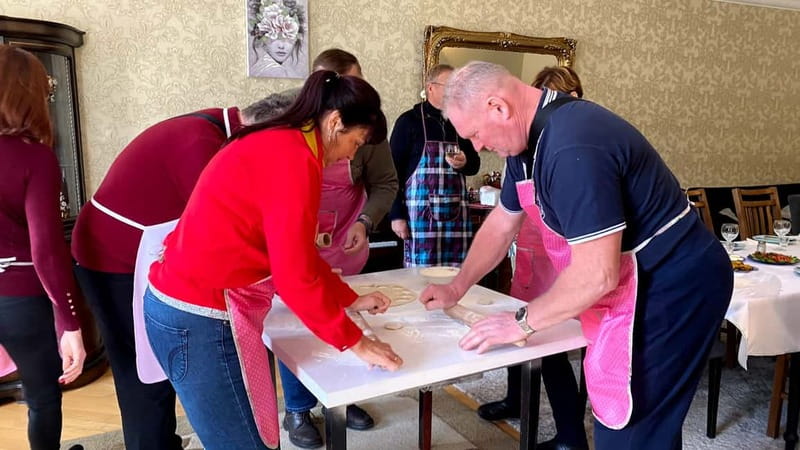
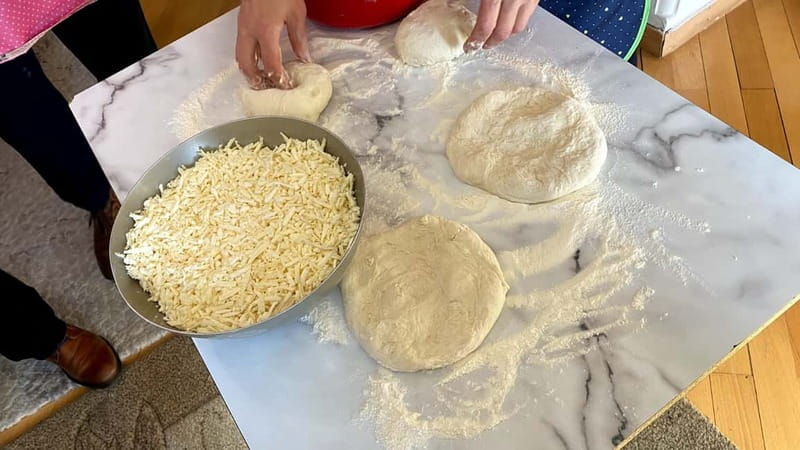
Khachapuri is Georgia’s famous cheese-filled bread, and it gives the class a second major cooking project. You work with bread and cheese, then eat it alongside the other dishes. Some sessions have included two types of khachapuri, though the exact preparation may vary.
Sulguni, a popular Georgian cheese, is included with the meal. Its salty, firm character helps explain why cheese plays such an important role in Georgian cooking.
Mchadi is a Georgian cornbread, often crisp and simple compared with the more elaborate khachapuri. Making it gives you a useful contrast between a bread built around cheese and one based on cornmeal.
The menu also includes eggplant with walnuts, often prepared as walnut-filled eggplant rolls known as nigvziani badrijani. This is one of the dishes that shows off Georgia’s love of walnuts, herbs, and strong savory flavors.
A Georgian salad of fresh tomatoes and cucumbers may accompany the meal. Some sessions have also included ajapsandali, a vegetable stew, or eggplant pkhali. The listed menu names six foods, while individual meals can include small differences, so treat the dish list as a guide rather than a strict restaurant menu.
That variety is one of the strongest parts of the evening. You are not spending three hours on a single recipe. You move through dumplings, bread, vegetables, salad, cheese, and drinks, then see how the separate dishes work together at the table.
Homemade wine, chacha, and Georgian toasts
The meal includes homemade dry white wine, water, and chacha, Georgia’s grape-based vodka. Sulguni cheese is also part of the spread.
The drinks are not just extras. Wine is closely tied to Georgian meals and social customs, and your guide may explain how people drink and toast. Beka has been especially good at leading traditional toasts and sharing stories around the table.
The alcohol deserves a practical note. Chacha is strong, and the class includes a shot. You can pace yourself, ask for water, and skip any drink you do not want. One account found the wine and chacha less impressive than the food, so expectations should stay sensible. The main value is the setting and the chance to taste local products, not a formal wine tasting.
Some evenings include Georgian music during dinner. The meal can stretch into a friendly social occasion, with conversation about food, family life, culture, history, and current events in Georgia.
What the guide adds to the cooking
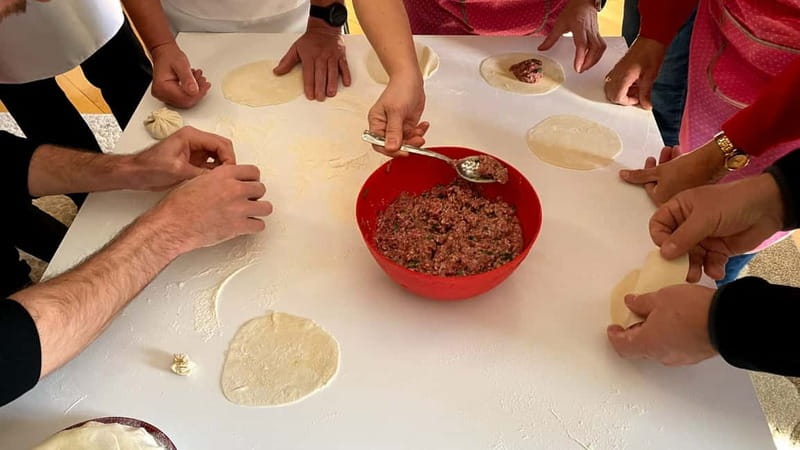
The guide is more than a translator. The best guides explain why the dishes matter, where recipes come from, and how food connects with Georgian culture.
Nicolas has been praised for discussing traditional dances, national customs, and the country itself. Maria has been described as both fun and educational, while Ana and Salome have helped create relaxed group dinners. These personal touches matter because the host may not be able to explain every step in English.
The guide can also make the evening easier for first-time visitors. You can ask how to fold khinkali, what to combine on your plate, or how a dish differs across regions. You get more than a recipe card because the food is placed in its cultural setting.
The experience is not a formal culinary school. You will not receive a technical lesson on professional knife work or advanced kitchen methods. Instead, you learn a handful of familiar Georgian dishes in a warm, social environment.
That is a strength for most people. You leave with recipes you can attempt at home, but also with a clearer idea of how Georgian food is served and enjoyed.
The final feast is the payoff
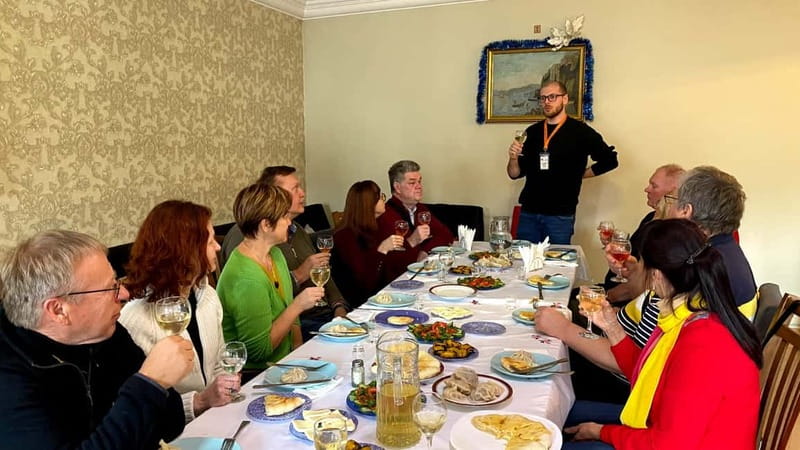
After the cooking, everyone sits down to eat. This is when the class makes sense as a whole. You taste the khinkali, khachapuri, mchadi, vegetables, salad, cheese, and other dishes together, with wine and chacha on the table.
The food is served family-style, which encourages you to try a little of everything. You may also learn useful combinations, such as how different dishes work together with cheese, vegetables, bread, and wine.
The meal can be very large. One evening included enough food for far more than the group, and another visitor carried leftover khachapuri away for breakfast the next morning. You do not need to finish everything, and you should not arrive expecting a small tasting menu.
This dinner is also where the family setting matters most. You are not merely eating food prepared for tourists. You have helped prepare it, watched the host work, and shared the table with a local family and your fellow participants.
Is $55 good value for three hours?
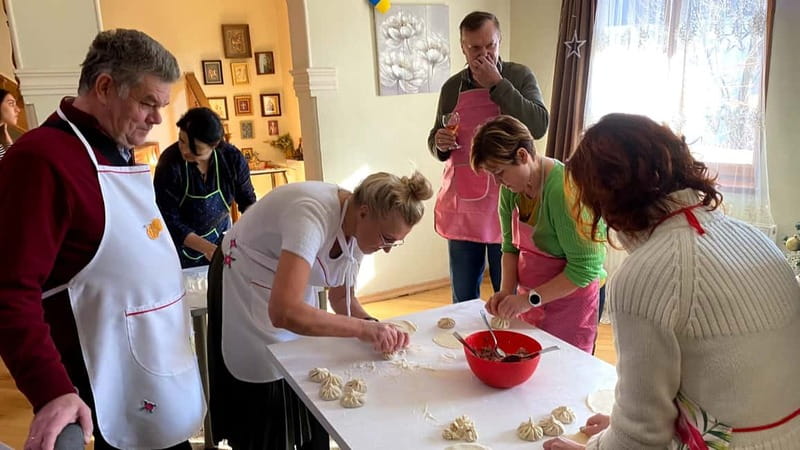
At $55 per person, the price is fair if you value a full meal, transport to the home, an English-speaking guide, several cooking lessons, and drinks in a local setting.
A restaurant meal alone would not give you the same hands-on time or the chance to learn recipes. A standard cooking demonstration might also cost less, but it would not necessarily include transportation from the meeting point, a family home, several dishes, wine, chacha, and dinner.
The value is strongest for people who would otherwise book both a food tour and a cultural activity. This combines the two in one evening.
The price is less compelling if you want a tightly controlled professional cooking course, detailed measurements for every recipe, or a polished wine experience. The class is informal, and some ingredients or preparation may already be handled before you arrive.
Still, the mix of food, instruction, conversation, and hospitality makes the cost reasonable for a special evening in Tbilisi.
Who should book this cooking class?
I would recommend it to first-time visitors who want to understand Georgian food beyond restaurant menus. It also suits solo visitors, since the group format makes meeting people easy without forcing you into a sightseeing tour.
Families can take part, and children may enjoy shaping dumplings and working with bread, although the supplied information does not specify an age limit. Couples may like it as a relaxed dinner with a clear activity built into the evening.
Vegetarians can request a vegetarian option in advance. Since the standard menu includes meat-filled khinkali, make that request before the class rather than waiting until you arrive.
You should also book it if you enjoy learning through food and do not mind a little uncertainty. The exact guide, group size, outdoor setting, and small menu details may differ, but the core format remains cooking, eating, and talking with a Georgian family.
Who might prefer another food experience?
This may not suit you if you want to spend the whole evening in central Tbilisi. The class requires a meeting point, a ride to the family home, and a separate plan for getting back.
It may also disappoint serious home cooks who expect every recipe to be prepared entirely from scratch. Some prep work can be done before the group arrives, which keeps the class manageable but limits the technical detail.
Finally, the drinks are part of the Georgian welcome, but they are not the main reason to book. If you do not drink alcohol, the food and cooking still provide the core experience, and water is included.
Final verdict: book it for food, family, and a full Georgian evening
Book this class if you want to cook the food you have been eating around Georgia, meet a local family, and sit down to a generous home meal afterward. The strongest reasons are the hands-on khinkali, the range of dishes, and the guides who explain more than the recipe.
Keep your expectations practical. The host may need translation, the dough may already be prepared, the drinks may be ordinary, and your return ride is your responsibility. If those details do not bother you, $55 buys a warm, filling, and unusually personal evening in Tbilisi.
FAQ
Where does the cooking class meet?
Meet outside Avlabari Metro Station at 17:30. A local partner’s representative will hold a branded orange flag.
How long does the experience last?
The cooking class and meal last about three hours.
What language is the class in?
The tour guide speaks English. The host may speak Georgian and only limited English, so the guide translates instructions and explains the cooking.
Is transportation included?
Transportation from the meeting point to the local family’s home is included. Transportation from the family home is not included.
What dishes do you make?
The class includes khinkali dumplings, khachapuri, eggplant with walnuts, Georgian salad, and mchadi cornbread. The menu description refers to six foods, and individual sessions may include dishes such as ajapsandali or eggplant pkhali.
Are food and drinks included?
Yes. The experience includes the prepared foods, Sulguni cheese, homemade dry white wine, homemade chacha, and water.
Is a vegetarian option available?
Yes. A vegetarian option is available upon request.
What should you bring?
Bring your passport or ID card. Dress for the weather because the class operates in rain or shine.
Can I cancel the booking?
You can cancel up to 24 hours in advance for a full refund.
Can I pay later?
Yes. You can reserve your place and pay later, keeping your travel plans flexible.
Just added around the world
- Aroidee’s Farm-Fresh Thai Cooking Experience★ 5.0 · 8 reviews
- Signature Thai Cooking Course★ 5.0 · 79 reviews
- Private Half-Day Thai Cooking Class in Chiang Mai★ 5.0 · 4 reviews
- Half Day Guided Thai Cooking Class in Chiang Mai★ 5.0 · 13 reviews
- Online Thai and Akha Cooking Class★ 5.0 · 70 reviews
- Private Virtual Thai Cooking Class★ 5.0 · 9 reviews
- Northern Thai Cooking Class in Chiang Mai in a Countryside Home★ 5.0 · 2 reviews
- 5 Hour Morning Thai Cooking Course★ 5.0 · 31 reviews
Home Cooking Classes, compared.
Khmer Cooking Class at a Local’s Home in Krong Siem Reap
Read our review →
Local Home Korean Cooking Class & Market Adventure in Seoul
Read our review →
Mexican Cooking from Scratch in a Local Home in Tulum
Read our review →
Pastamama, Home Cooking Classes at Grace’s Home
Read our review →
Traditional Cooking Class & meal with Local Family
Read our review →
Lists this class appears in