
REVIEW · SAMARQAND REGION, UZBEKISTAN
Samarkand: Cooking class with local family
A meal can open Samarkand’s front door. I like this experience for its local bazaar visit and its hands-on cooking session in a family home, where Uzbek food becomes a shared activity rather than a restaurant order. You also get lunch, bottled water, and air-conditioned transport for $65 per person.
I especially like the personal side: Navruz introduces you to his family, while Guli helps explain the cooking clearly. The possible drawback is that five hours goes quickly, especially if you want plenty of time at the bazaar, in the kitchen, and at every workshop.
Key points at a glance
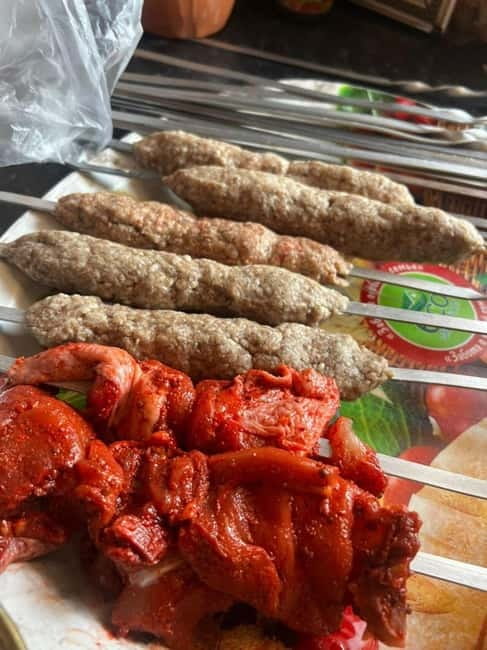
- Cook in a family home: Prepare Uzbek dishes from scratch with a local family, including plov, shashlik, and samsa.
- Start at the local bazaar: See where ingredients and everyday goods are bought, and watch ordinary Samarkand life unfold.
- Meet Navruz and Guli: Their warm, personal approach is a major part of the experience.
- Go beyond cooking: The outing also includes the Konigil paper factory, an oil meal workshop, and a pottery workshop.
- Private five-hour format: You get a private group and a guide in English, Korean, Russian, Uzbek, or Tajik.
- Good value with lunch included: The price covers transport, lunch, and water, along with the family visit and craft stops.
Why this Samarkand cooking class feels different
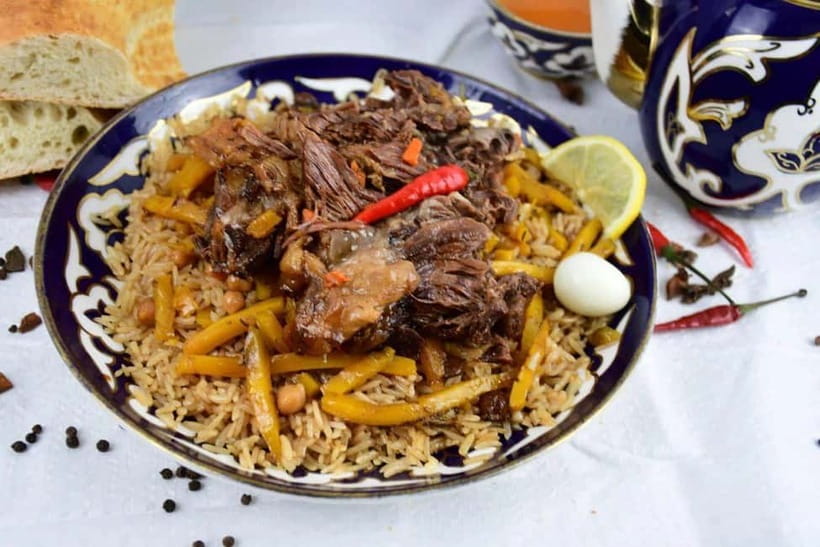
Many food activities keep you at a restaurant or teaching kitchen. This one takes you first to a local bazaar, then into a family home. That shift matters. You see the ingredients in their everyday setting before you help turn them into lunch.
I like the order of the day. The bazaar gives you a quick look at shopping and food culture, while the cooking session gives you time to talk, work, and eat with local people. You are not simply watching a demonstration. You are expected to roll up your sleeves.
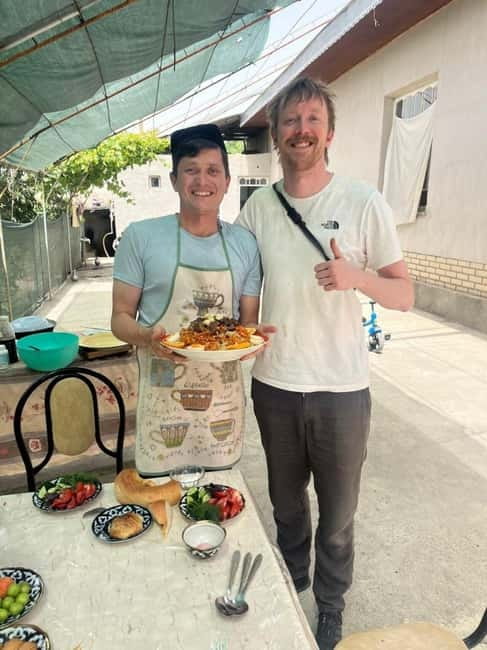
The family setting is the heart of the experience. Navruz welcomes you to his home with his wife and parents, and Guli helps make sure the instructions are clear. The visit can include stories about Uzbek customs and history, along with the simple pleasure of sharing a meal and perhaps playing chess.
That personal contact is why this outing feels more intimate than a standard sightseeing circuit. You learn how food fits into family life, hospitality, and celebration. At the same time, you should come ready for a social experience. If you prefer a quiet, tightly scheduled class with little conversation, this may feel less structured than you expect.
More Home Cooking Classes in the world:
- Khmer Cooking Class at a Local’s Home in Krong Siem Reap
★ 5.0 · 2,731 reviews - Local Home Korean Cooking Class & Market Adventure in Seoul
★ 5.0 · 1,024 reviews - Marrakech: Moroccan Cooking Class with a Local Family
★ 4.9 · 668 reviews
Beginning at a Samarkand bazaar
The day starts at a local bazaar, described as the center of everyday activity in Samarkand. You can expect colorful stalls, local vendors, and the ordinary trade of food and household goods.
This is not just a shopping stop. It gives you useful context for the meal ahead. You get to see the kind of setting where ingredients are bought, and you can watch the way people interact over food and goods. The bazaar also gives you a chance to ask your guide about local products and customs.
I would treat this part as a people-watching stop rather than a checklist of purchases. The value is in the sounds, colors, and small exchanges around you. Since the total experience lasts five hours, the exact time at the bazaar may be limited, so avoid expecting a long, leisurely market tour followed by a full-day class.
Your guide can help you navigate the visit and explain what you are seeing. Available guide languages are English, Korean, Russian, Uzbek, and Tajik. If you need detailed cooking explanations in English, Guli’s careful approach may be especially helpful.
Cooking plov, shashlik, and samsa with a local family
The cooking session takes place in a local family home. This is the part that gives the tour its strongest sense of place.
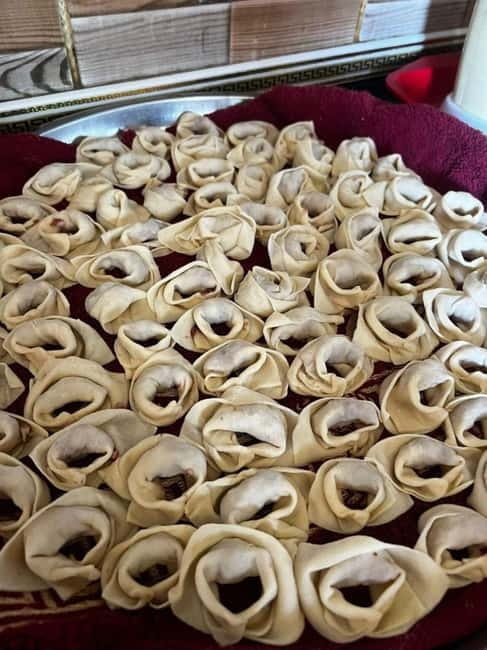
The planned dishes include plov, shashlik, and samsa. Plov is the famous rice dish associated with Uzbek food, while shashlik brings grilled meat to the table. Samsa is a savory pastry. Preparing all three gives you a useful introduction to different parts of the cuisine: rice, grilled food, and baked pastry.
You should expect to help prepare the dishes from scratch rather than simply watch someone cook. That hands-on work is important. You notice how ingredients are handled, how the family organizes the meal, and how cooking becomes a shared social event.
The class is not presented as a formal culinary course with professional equipment or a printed syllabus. Its strength is the setting and the contact with the family. You learn through conversation, demonstration, and participation.
Guli’s role is valuable here. One visit was especially praised for making sure every step was understood and for being accommodating during the class. That is a practical advantage if you are not familiar with Uzbek cooking or if language differences make instructions harder to follow.
The family may also talk about customs, traditions, and the history of Uzbekistan. You can ask about everyday routines and the meaning of hospitality. The conversation is as important as the food. Uzbek welcome is not treated as a staged performance, but as the natural way the family receives you.
Sharing lunch in the family home
Lunch is included, and it is prepared as part of the class. That makes the meal feel earned. You have seen the ingredients, helped with the cooking, and then sit down to eat what you made.
A family meal also changes the pace of the outing. After the bazaar and cooking work, you have time to talk and take in the setting. The family interaction may include stories, laughter, customs, and even a game of chess.
This is where you should set realistic expectations. The experience is designed around contact with local people, not around a polished restaurant service. The home setting may feel informal, which many people will see as the main attraction. If you want a private meal with a family and an easy chance to ask questions, this format works well.
Lunch, bottled water, and air-conditioned transport are included in the $65 price. Those inclusions make the cost easier to judge, especially since the price also covers a private guide and several cultural stops. You are paying for access and personal time, not just for a plate of food.
A few more cooking classes around the world worth a look
- Half-Day Thai Cooking Class at Organic Farm in Chiang Mai
★ 5.0 · 19,087 reviews - Florence: Pasta Cooking Class with Unlimited Wine
★ 4.9 · 10,285 reviews - 3 in 1 Cooking Class near Navona: Fettuccine, Ravioli & Tiramisu
★ 5.0 · 7,376 reviews - Florence: Pasta & Tiramisu Cooking Class with Unlimited Wine
★ 4.9 · 6,708 reviews
Konigil paper and the craft stops
The experience continues beyond the kitchen with a visit to the Konigil paper factory, an oil meal workshop, and a pottery workshop. These stops broaden the day from food to local production and craft.
The Konigil paper factory is tied to paper making dating to the first century, according to the information provided for the experience. That gives the stop a strong historical angle. You get to see an old craft tradition rather than spending the whole day inside a modern commercial attraction.
One visit also included a famous rug-making place where the rugs are made by hand. The standard description specifically names the paper factory, oil meal, and pottery workshop, while the detailed experience information also refers to the rug-making stop. Because the exact sequence can vary, I would confirm the planned stops when booking if the rug workshop matters to you.
These workshops are useful because they show how local skills connect to daily life and regional identity. You get a break from cooking and a chance to see work done with the hands. The pottery and paper stops should appeal to anyone who enjoys traditional crafts more than souvenir shopping.
The tradeoff is time. Five hours is a compact schedule for a bazaar, a family cooking class, lunch, and several workshops. You will get a broad introduction, but you should not expect a long, detailed visit at every location.
What the private format changes
This is a private-group experience, not a large class. That gives you more room to ask questions and lets the visit feel closer to a family introduction.
A private setting is particularly useful during the cooking portion. You can ask for an explanation again, spend more time on a step that interests you, or talk about customs without competing with a large crowd. Guli’s attentive approach is a good fit for this format.
The private arrangement also makes the outing suitable for different types of groups. Couples can keep the day personal, families can work together in the kitchen, and small groups can share the cost while still having a more direct connection with the hosts.
The available languages are English, Korean, Russian, Uzbek, and Tajik. Select the language that lets you take part most comfortably. A cooking class depends on clear instructions, and the social side is much better when you can ask questions freely.
Transport is by an air-conditioned vehicle. That is a practical benefit in Samarkand, particularly if you are moving between the bazaar, family home, and craft stops. The vehicle is not a sightseeing feature, but it keeps the day easier and more comfortable.
Is $65 per person a fair price?
At $65 per person, this is not the cheapest way to eat in Samarkand. You could certainly find a less expensive meal. The better question is what you receive beyond lunch.
The price includes five hours, a private group, an air-conditioned vehicle, bottled water, and a guided visit in several locations. It also includes access to a local family home and a hands-on cooking session. Those personal elements are difficult to compare with an ordinary restaurant meal.
I see the price as reasonable for someone who values contact with local people and wants more than monuments. The bazaar, family meal, and craft workshops create a fuller cultural day than a stand-alone cooking lesson.
The value is weaker if you mainly want to learn advanced kitchen technique. The experience is about food, family, and local customs together. You are buying a social and cultural visit as much as a recipe lesson.
The private format also matters. A small group can ask more questions and avoid the impersonal feel of a large organized class. If you are splitting the cost with family or friends, the price becomes easier to justify.
Clothing, alcohol, and household etiquette
The experience lists several clothing restrictions. Short skirts and tight clothing are not allowed, and nudity is prohibited. Dress conservatively and comfortably, especially because you are entering a family home.
Red wine, alcoholic drinks in the vehicle, alcohol, and drugs are not allowed. Do not plan to bring alcohol for the meal or use the transport as a place to drink.
These rules are simple, but they matter. You are visiting a private household and taking part in a family meal, so respectful clothing and behavior help keep the visit comfortable for everyone.
I would also choose clothes that you can cook in. The session is hands-on, and practical clothing is more useful than something delicate or formal.
Who will enjoy this experience most?
I would recommend this outing to you if you want to meet local people and understand Samarkand through food. It is a good match for anyone who prefers a family visit to another museum or monument.
Food lovers will appreciate the chance to prepare plov, shashlik, and samsa. You do not need to be an experienced cook. The appeal is taking part and learning how dishes fit into Uzbek home life.
It also suits visitors who want a flexible private experience. The guide languages cover English, Korean, Russian, Uzbek, and Tajik, and the small-group format gives you a more direct conversation with the hosts.
Families may enjoy the mix of cooking, crafts, and informal time together. Couples and friends can treat it as a relaxed cultural outing with lunch built into the day.
I would think twice if you dislike entering private homes, have strict food requirements that have not been discussed in advance, or want a long, slow visit at each workshop. The schedule covers a lot in five hours.
Practical details before you book
The tour lasts five hours, with starting times based on availability. Since the schedule includes several parts, it is worth choosing a start time that fits your wider plans in Samarkand.
The experience includes a live guide and a private group. Guide languages are English, Korean, Russian, Uzbek, and Tajik. You receive lunch and bottled water, and transport is in an air-conditioned vehicle.
You can cancel up to 24 hours in advance for a full refund. You can also reserve now and pay later, which helps if you are still arranging a wider Uzbekistan itinerary.
I would confirm the exact workshop sequence before booking if you especially want the rug-making visit. The main activity description lists the Konigil paper factory, oil meal, and pottery workshop, while the detailed account of one visit also includes hand-made rugs.
Should you book this Samarkand cooking class?
Book it if you want personal contact, home cooking, and local crafts in one compact outing. The strongest part is the family welcome from Navruz, Guli, and their relatives, followed by the chance to cook and eat together.
The $65 price is fair when you count the private format, transport, lunch, water, guide, bazaar visit, and workshop stops. Just remember that five hours means an introduction rather than a long study of Uzbek cuisine or craft.
For many people, this will be a more memorable way to understand Samarkand than another quick stop at a monument. You leave with food in your stomach, but the real value is the glimpse into family life and hospitality.
FAQ
How long does the Samarkand cooking experience last?
The experience lasts five hours.
How much does the cooking class cost?
The price is $65 per person.
Is the experience private?
Yes. It is offered for a private group.
Which dishes can I learn to prepare?
The cooking session includes traditional Uzbek dishes such as plov, shashlik, and samsa.
Where does the cooking take place?
The cooking takes place in the home of a local family.
Which languages are available for the guide?
The live guide is available in English, Korean, Russian, Uzbek, and Tajik.
Is lunch included?
Yes. Lunch is included, along with bottled water.
What other places are included besides the bazaar and family home?
The experience includes the Konigil paper factory, an oil meal workshop, and a pottery workshop. A detailed account of one visit also included a hand-made rug workshop.
What clothing and alcohol rules apply?
Short skirts and tight clothing are not allowed, and nudity is prohibited. Alcohol and drugs are not allowed, red wine is not allowed, and alcoholic drinks cannot be taken in the vehicle.
Just added around the world
- Aroidee’s Farm-Fresh Thai Cooking Experience★ 5.0 · 8 reviews
- Signature Thai Cooking Course★ 5.0 · 79 reviews
- Private Half-Day Thai Cooking Class in Chiang Mai★ 5.0 · 4 reviews
- Half Day Guided Thai Cooking Class in Chiang Mai★ 5.0 · 13 reviews
- Online Thai and Akha Cooking Class★ 5.0 · 70 reviews
- Private Virtual Thai Cooking Class★ 5.0 · 9 reviews
- Northern Thai Cooking Class in Chiang Mai in a Countryside Home★ 5.0 · 2 reviews
- 5 Hour Morning Thai Cooking Course★ 5.0 · 31 reviews
Home Cooking Classes, compared.
Khmer Cooking Class at a Local’s Home in Krong Siem Reap
Read our review →
Local Home Korean Cooking Class & Market Adventure in Seoul
Read our review →
Mexican Cooking from Scratch in a Local Home in Tulum
Read our review →
Pastamama, Home Cooking Classes at Grace’s Home
Read our review →
Traditional Cooking Class & meal with Local Family
Read our review →
Lists this class appears in