
REVIEW · PUDUCHERRY UNION TERRITORY, INDIA
Pondicherry: Indian Cooking Class with Market Visit
Start with the market, finish with lunch. This three-hour Pondicherry experience combines a guided visit to a local vegetable market with hands-on Indian cooking, giving you a useful look at both the ingredients and the finished dishes. I like the chance to choose from South Indian, North Indian, vegetarian, non-vegetarian, and vegan recipes, and I like that the class ends with a shared meal in the garden.
The small-group format, limited to 10 people, should make it easier to ask questions and take part in every step. The main caution is that the kitchen setup may feel cramped, and one recent account described the space as less clean and professional than expected. Your experience may depend heavily on the instructor and the group that day.
Key points to know before booking
- Goubert Market visit: Ride by autorickshaw to a local market and learn about unfamiliar vegetables, spices, and other ingredients.
- Four recipes of your choice: Menus can include dishes such as sambar, chicken Chettinad, palak paneer, carrot halwa, and Pondicherry-style meen kozhumbhu.
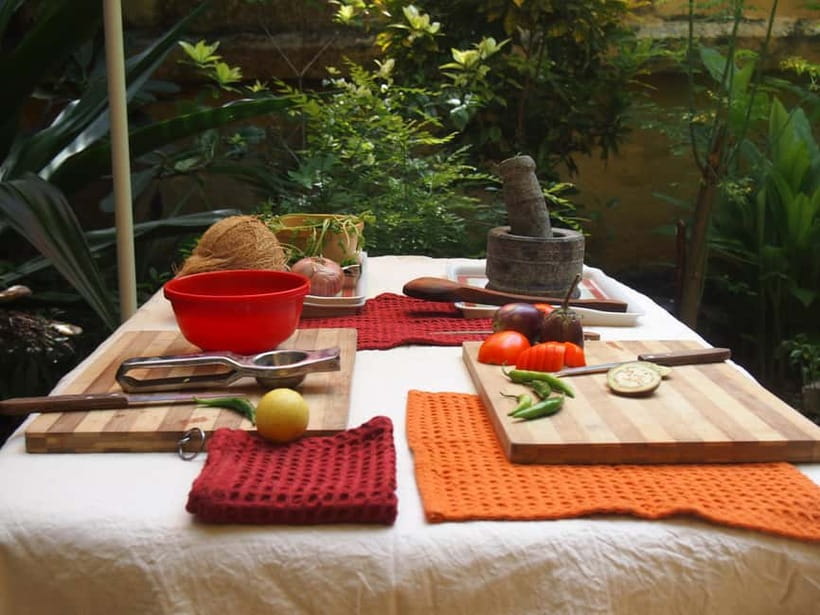
- Hands-on work: You can chop vegetables, grate coconut, season food, and help cook rather than simply watch a demonstration.
- Garden meal: The class ends with the food you prepared, served as a shared lunch or dinner.
- Small group size: A maximum of 10 participants allows for conversation and individual guidance.
- Family-friendly from age six: Children over six may join, and older children have taken part in the cooking alongside adults.
Why this class works better than a standard food tour
A market visit by itself can be fun, but it can also leave you wondering what to do with all those unfamiliar vegetables and spices. This class connects the market to the plate. You see an ingredient at the stall, hear how it is used, then handle it in the kitchen a short time later.
That link is the strongest part of the experience. Indian cooking is not just about adding curry powder to a pan. The class focuses on spices, fresh produce, coconut, lentils, vegetables, and the step-by-step work behind a meal.
I also like the choice built into the menu. You are not locked into one fixed dish. You can request vegetarian, vegan, non-vegetarian, South Indian, or North Indian food, then prepare around four recipes with guidance from the instructor.
The class is especially useful if you want to understand food rather than just eat it. You will have time to ask why an ingredient is used, how a dish can change, and what alternatives might work. The instructors speak English, Hindi, and French, though it is wise to confirm your preferred language when you book.
More Cooking Classes with a Market Tour in India
- Jaipur Market Tour & Vegetarian Rajasthani Home Cooking Class
★ 5.0 · 113 reviews - Spice Knight (Cooking Class -> Meal -> Local Market walk)
★ 5.0 · 59 reviews - New Delhi: Traditional Indian Cooking Class & Market Visit
★ 5.0 · 32 reviews
Walking through the local market by autorickshaw
The experience begins with transport to the market by autorickshaw. That detail matters because Indian markets can feel confusing on a first visit, especially if you do not know the names of the vegetables or how to judge what to buy.
Your instructor guides you through the stalls, points out fresh produce and spices, and explains what you are seeing. You may encounter ingredients that are completely new to you. One memorable example from a recent class was banana stem, an ingredient the participants had not seen before. After learning about it at the market, they added it to their menu.
That sort of flexibility gives the market visit real purpose. You are not just taking photographs of colorful produce. You are buying food for the meal you will prepare.
The market is also a chance to observe ordinary food shopping in Puducherry. Vendors call out to attract attention, shoppers compare produce, and the displays show how much Indian cooking begins with raw, fresh ingredients rather than packaged products.
Bring a camera if you like taking food and street photographs, but keep it secondary to the lesson. The useful part is listening to the explanation and noticing what the instructor selects.
From chopping vegetables to grating coconut
Back at the cooking school, the class becomes practical. You are expected to take part in the work, including chopping vegetables and grating coconut. The instructor explains each stage and helps you understand how the spices and ingredients fit together.
This is not a polished restaurant demonstration where you sit quietly and watch someone else do everything. That makes the class more useful, but it also means you should wear comfortable clothes and be ready to work.
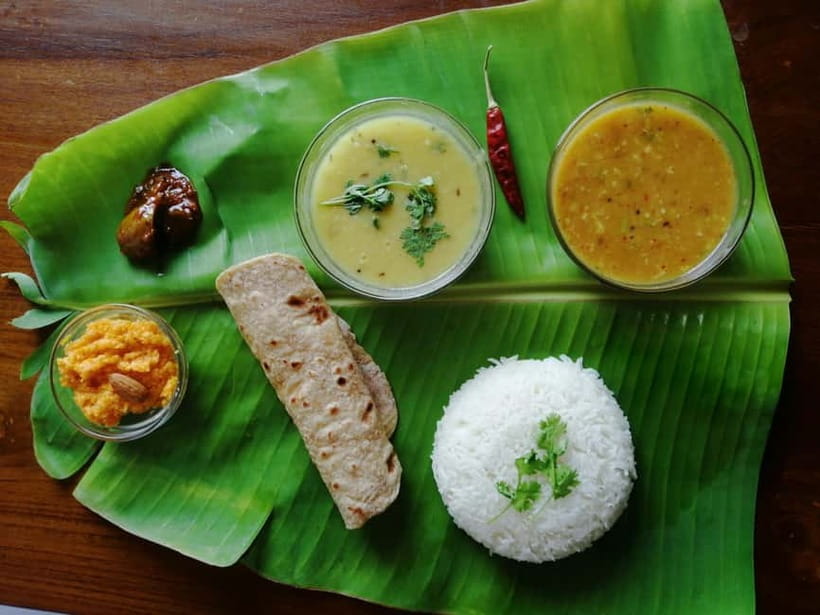
The exact menu can change according to your choices and the available ingredients. Possible dishes include sambar, a lentil and vegetable gravy that is a South Indian favorite, and meen kozhumbhu, a fish preparation associated with Pondicherry.
You might also choose chicken Chettinad, a strongly seasoned dish from southern India, or palak paneer, a North Indian combination of spinach and fresh cheese. For dessert, carrot halwa brings together carrots, milk, sugar, raisins, and cashew nuts.
The menu gives you a broad taste of India in one sitting. A South Indian meal may emphasize lentils, coconut, vegetables, and rice-friendly gravies, while a North Indian choice can bring paneer or different spice combinations. If you prefer vegan food, say so before the class so the instructor can plan suitable recipes.
Food allergies and dietary restrictions should also be mentioned ahead of time. The class can adapt to several food preferences, but clear communication is important when you are cooking with multiple ingredients.
The shared garden meal at the end
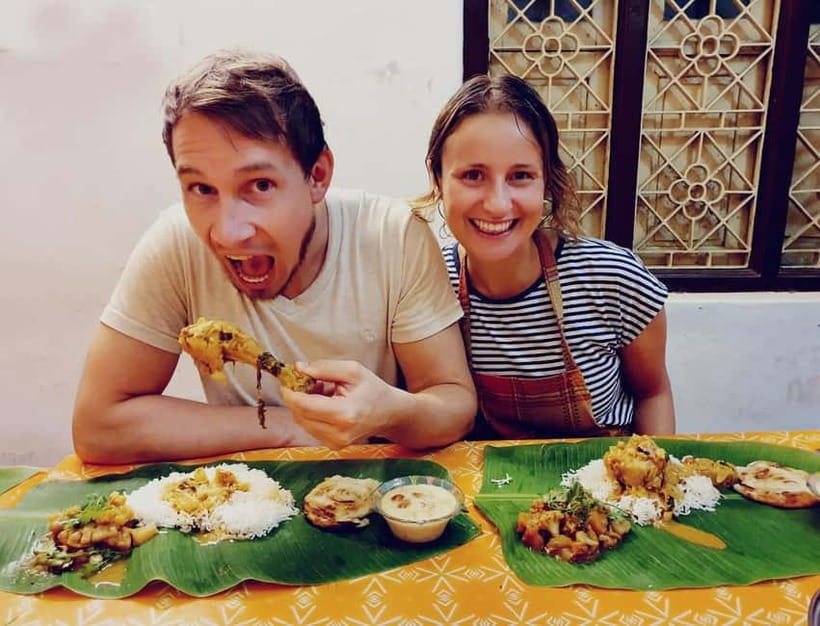
Once the cooking is finished, you eat what you prepared in the garden. This is a simple idea, but it gives the class a satisfying finish. You can see the dishes on the table, remember the work behind each one, and compare the results with the other participants.
Some meals may be served on a banana leaf, adding a traditional touch to the setting. The garden meal also gives the group time to talk without the pressure of following a recipe.
The social side is one reason this experience can be a good choice for solo visitors or couples who want to meet people. The maximum group size is 10, so the gathering should feel more personal than a large food demonstration.
The mood depends on the group and the instructor, of course. Several participants have found the meal warm and friendly, while one account described a much less successful class. That contrast is worth keeping in mind. This is a hosted cultural activity, not a restaurant with fixed standards at every sitting.
More Indian Cooking Classes in India:
- Indian Cooking Class in an Authentic Local Home – Learn 6 Dishes
★ 5.0 · 195 reviews - New Delhi: Indian Cooking Class in a Local Home
★ 5.0 · 65 reviews - Mumbai: Indian Cooking Class & Cultural Delights
★ 5.0 · 38 reviews - Private South Indian Tamil Cooking Class in Chennai with Srividya
★ 5.0 · 24 reviews
The instructors make a real difference
The strongest personal praise has gone to the instructors. Saranya has been singled out for her friendly manner, clear explanations, and strong understanding of the food. Krishti has also been praised as a welcoming host with many practical skills.
Keerthi, also written as Keerthy, guided participants through Goubert Market and then helped them prepare a colorful meal. Her work with families is worth noting: children aged 11 and 13 were able to take part alongside the adults and enjoyed the experience.
These names are useful when you book because the quality of a small cooking class often depends on who is leading it. A good instructor can turn an unfamiliar market into a readable lesson and help beginners feel comfortable with the cooking.
There is one language point to watch. The class is offered in English, Hindi, and French, but one French-language booking was conducted in English instead. The participants could speak English, so the problem was manageable, but you should confirm the language before the session if it matters to you.
Is $24 good value in Pondicherry?
At $24 per person, the price covers more than a cooking demonstration. It includes the market visit, autorickshaw transport during that visit, ingredients, cooking materials, and the lunch or dinner you prepare. You also receive an electronic recipe booklet afterward.
That makes the price reasonable for anyone who values participation and cultural context. You are paying for several connected parts: a guided food-shopping trip, instruction, a meal, and recipes you can use later.
The recipe booklet adds lasting value. A cooking class can be enjoyable but hard to remember once you return home. Having the recipes afterward gives you a better chance of repeating a dish and remembering what you learned.
The value is weaker if you mainly want a polished meal or a professional kitchen. One very negative account described a small, poorly maintained space and said the promised range of four dishes was not delivered. That is a serious concern, even though the overall score is 4.7 from 18 ratings and most experiences have been highly positive.
I would book this for the access and participation, not for luxury. If you want a clean, formal culinary studio with restaurant-level presentation, this may not be the right match.
Who should take this class?
This experience suits curious eaters who want to understand Indian food at ground level. You will get the most from it if you enjoy asking questions, handling ingredients, and trying dishes that may be unfamiliar.
It is also a good fit for families with children over six. Older children can chop, mix, and help prepare the meal, though parents should expect an active cooking session rather than a passive sightseeing stop.
Vegetarians and vegans have good reasons to consider it because the menu includes both options. Meat eaters can request dishes such as chicken Chettinad, and seafood fans may want to ask about meen kozhumbhu.
The class is less suitable if you dislike markets, do not want to cook, or need a highly controlled setting because of serious allergies. Smoking is not allowed, and comfortable clothing is recommended.
The three-hour duration is long enough to include the market, cooking, and meal without taking up an entire day. Check the available start times when booking, since the session may be offered as either lunch or dinner depending on the schedule.
Small details that can improve your visit
Tell the provider about food restrictions before the class. Do not wait until the instructor has already bought the ingredients at the market.
Wear clothes that are easy to move in and that you do not mind wearing in a kitchen. Bring a camera for the market and food, but make room for practical work with vegetables and spices.
If you are booking in French, confirm that the session will actually be taught in French. The listed languages are English, Hindi, and French, but language arrangements have not always matched the original selection.
Ask about the menu early in the session. The class offers flexibility, and that is one of its best features. If you have heard about a particular dish, such as banana stem preparation or carrot halwa, mention it before the shopping is finished.
Free cancellation is available up to 24 hours before the activity for a full refund, and you can reserve now and pay later. Those terms are useful if your Pondicherry plans are still changing.
Should you book the Pondicherry cooking class?
I would recommend this class if you want a hands-on food experience with a local market, a small group, and a meal at the end. The best parts are the market explanations, the chance to choose your dishes, the involvement in every cooking step, and the friendly instructors such as Saranya, Krishti, and Keerthy.
Book it with realistic expectations. You are choosing an informal cultural activity, not a luxury cooking school. The kitchen may be tight, standards may vary, and you should confirm the language and menu in advance.
For $24, the combination of autorickshaw market visit, ingredients, instruction, prepared meal, and recipe booklet is a fair deal. If you want to leave Pondicherry with more than photographs and restaurant memories, this is a worthwhile choice.
FAQ
Where does the cooking class take place?
The experience takes place in Puducherry Union Territory, India. The class includes transport by autorickshaw to a local vegetable market, followed by cooking at the school and a meal in the garden.
How long does the experience last?
The activity lasts three hours. Starting times vary, so you should check availability for the date you want.
What is included in the price?
The price includes all ingredients and cooking materials, transport for the market visit by autorickshaw, the lunch or dinner you prepare, and an electronic recipe booklet sent afterward.
Is transportation to the cooking class included?
Transportation to and from the cooking class location is not included. Transport for the market visit is included.
How many people can join?
The class is limited to 10 participants, making it a small-group activity.
Which languages are available?
The session can be taught in English, Hindi, or French. If you need French instruction, confirm the language arrangement when booking.
Can I choose the recipes?
Yes. You can choose from vegetarian, non-vegetarian, vegan, South Indian, and North Indian recipes. The class generally involves preparing around four recipes.
What dishes might be prepared?
Possible dishes include Pondicherry-style meen kozhumbhu, sambar, carrot halwa, palak paneer, and chicken Chettinad. The exact menu depends on your choices and the ingredients available.
Can children join the class?
Children aged six and older can join. Children under six are not suitable for this activity.
What should I bring?
Bring comfortable clothes and a camera if you want to photograph the market or food. Smoking is not allowed, and you should tell the provider about allergies or dietary restrictions before the class.
Just added around India
- Private tour to learn Traditional Indian Art, craft & Cooking★ 5.0 · 4 reviews
- Traditional Chettinad Cooking Class in a Local Home near Chennai★ 4.5 · 12 reviews
- Chennai Super Market Tour and Cooking Class with a Fun Local★ 5.0 · 9 reviews
- Neighborhood Market Tour & South Indian Cooking Class in Chennai★ 5.0 · 7 reviews
- Chennai Dosa Making Class & Home-Dining Experience with Jyashree★ 5.0 · 8 reviews
- Cooking experience in Bangalore, a half day tour★ 5.0 · 5 reviews
- Discover Bangalore’s Cuisine: Private Half-Day Cooking Experience★ 5.0 · 3 reviews
- Traditional Gowda Cooking Class and Meal in a Bangalore Home★ 5.0 · 31 reviews
Cooking Classes with a Market Tour, compared.
Hanoi Cooking Class: Culture, Local Market & Meaning CSR Impact
Read our review →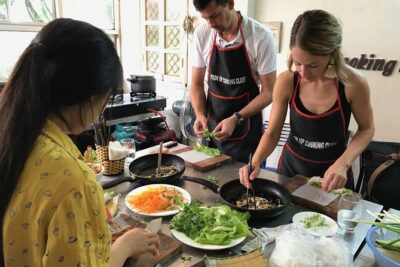
5 Traditional Dishes Hanoi Cooking Class with Market Trip
Read our review →
Cooking Class and Lunch at a Tuscan Farmhouse with Local Market Tour from Florence
Read our review →
Cooking Class, Market & Thai Herbs Garden Tour
Read our review →
Authentic Cooking Class with Market & Farm Visit
Read our review →
Paella Cooking Experience & Boqueria Market Tour
Read our review →
Cooking Class Hoi An:Local Market, Basket Boat, Fishing & Cooking
Read our review →
Hoi An Cooking Class(Market,BasketBoat Crabfishing&Cooking Class)
Read our review →Lists this class appears in