
REVIEW · MALAGA, SPAIN
Paella Cooking Class in Malaga
Good food makes Malaga easier to understand. This three-and-a-half-hour cooking class begins at Atarazanas Market, where you shop for paella ingredients with a local guide before walking to a modern kitchen in Soho. I like the market visit because it connects the dish to real Andalusian produce, and I like that you do the cooking yourself rather than simply watching a chef work. The main drawback is that the meeting-point information needs careful checking, since an outdated location has caused at least one group to miss the opening part.
The class costs $84.69 per person, which is fair if you value a full meal, drinks, market orientation, tastings, recipes, and instruction in one package. It suits curious eaters, couples, families, and small groups especially well. Just tell the operator about vegetarian or other dietary needs when you book, and confirm the exact starting point before setting out.
Key points to know before booking
- Atarazanas Market comes first: You walk through Malaga’s main indoor market and help select ingredients for the paella.
- The cooking is hands-on: You make gazpacho, prepare a sofrito, cook paella, and take part in the process with step-by-step help.
- Local tastings add real value: Olive oils, Aloreña olives, roasted almonds, rustic bread with salt cod and orange, seasonal fruit, and churros may all appear during the experience.
- The kitchen is in Soho: After the market, it is about a five to ten-minute walk to the cooking venue.
- The group size can vary: The stated maximum is 12 people, but some sessions have had around 16 participants.
- The start point deserves attention: The supplied meeting address is Kulinarea, Avenida de Manuel Agustín Heredia, 24, while the experience begins with a market visit. Check your current confirmation carefully.
Starting at Atarazanas Market in central Malaga
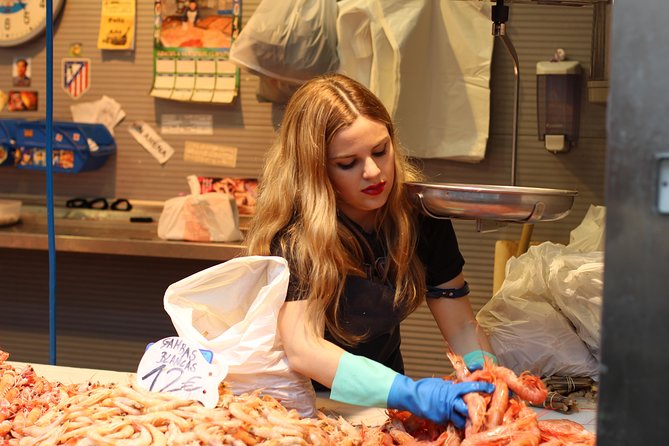
The class is designed around a simple idea: understand the ingredients before you cook them. You meet your guide in central Malaga and head into Atarazanas Market, an indoor food hall where fruit, vegetables, seafood, olives, oils, and other local products are displayed.
This is more than a quick shopping stop. Your guide explains what you are seeing and helps you choose suitable ingredients for the paella. That gives you a better feel for how Spanish cooking begins, with shopping, seasonality, and quality produce rather than a fixed recipe pulled from a cupboard.
Guides have included Carmen, Jose, Anais, Elise, Javier, Fernando, and Javi. The exact guide can vary, but the strongest part of the experience is the personal explanation. You can ask about unfamiliar foods, get help with Spanish signs and menus, and request ideas for restaurants or local dishes after the class.
The market also gives you a chance to buy something for later. Local olives, oils, almonds, and other products make useful edible souvenirs, though purchases beyond the class are your own expense.
One practical point matters here. The description places the opening at Atarazanas Market, while the stated meeting address is Kulinarea at Avenida de Manuel Agustín Heredia, 24. An outdated meeting location has caused confusion in the past, so check the latest booking message and map pin before leaving your hotel. Do not rely only on an old saved confirmation.
More Paella and Spanish Classes in Spain:
- Barcelona: Paella Cooking Experience & Boqueria Market Tour
★ 4.8 · 3,661 reviews - Barcelona Paella Cooking Class with Market Visit, Tapas & Sangria
★ 5.0 · 2,531 reviews - Barcelona Interactive Spanish Cooking Experience
★ 4.5 · 2,155 reviews
Walking to Soho and settling into the kitchen
After the market, you walk to the cooking venue in Malaga’s Soho district. The walk is described as about five minutes, though one account puts it closer to ten. Either way, this is a short central-city transfer, not a coach ride or a separate excursion.
Soho is known for its creative feel, and the class takes place in a modern kitchen rather than a cramped apartment. That setting matters. You need room to chop, stir, ask questions, and work alongside other people without feeling as if you are fighting for a patch of counter space.
The class often has an international mix. You may be cooking beside couples, families, solo visitors, or a group celebrating together. One family session included three generations, and another group used the class for a hen weekend. The cooking gives people an easy reason to talk, even if they arrived as strangers.
The stated maximum is 12 participants, although some sessions have included about 16 people. That difference could affect how much direct attention you receive. The chefs generally work in pairs or small working groups, and participants describe the layout as spacious enough to cook and interact comfortably.
Olive oil, olives, almonds, and Malaga on a plate
Before the main cooking begins, the class usually starts with local snacks and tastings. The included food can include roasted almonds, Aloreña olives, extra virgin olive oils, and tostón de bacalao.
Aloreña olives are a local Malaga specialty, so this is a useful chance to taste something with a clear regional connection. The tostón de bacalao is made with cateto bread, a thick-crusted rustic loaf, topped with salt cod and orange. It is a good example of the class’s approach: familiar Spanish ingredients are presented in combinations that may not appear on a standard tourist menu.
The olive oil tasting is another strong feature. You are not just told to use olive oil, you get to compare it and pay attention to flavor. That can change how you shop and cook at home, especially when a recipe uses only a few ingredients and the oil has nowhere to hide.
These tastings also make the class feel like a food tour rather than a narrow lesson about rice. You get an introduction to local eating habits before the main dish reaches the table.
Making gazpacho before the paella
The first dish you prepare is handmade gazpacho, the cold Andalusian soup made from raw tomatoes, cucumbers, peppers, and other simple ingredients. It is a smart choice for a class because the method is approachable, quick, and tied closely to the region.
You get to see how fresh produce becomes a finished dish without much cooking. The result is meant to be served cold, so the class moves from market ingredients to a recognizable Andalusian recipe in a direct way.
The menu also lists sangria and churros. Some sessions have included a lesson in making sangria, while others have served it with the meal. Churros may be prepared or served at the end, and one class included fresh churros made by the chef. Since the exact order and menu details can vary, think of these as part of the food program rather than assume every dish follows an identical schedule.
Nonalcoholic drinks have been available in at least some sessions. The minimum drinking age is 18, and wine or beer is paired with the meal for those who choose it.
A few more cooking classes around Spain worth a look
- Spanish Cooking Class Paella Tapas and Sangria in Madrid
★ 5.0 · 1,340 reviews - Paella Cooking Class, Wine Tasting & Central Market in Valencia
★ 5.0 · 1,150 reviews - Paella Cooking Class in Madrid with Bottomless Wine Pairing
★ 5.0 · 985 reviews - Seville: Spanish Cooking Class with Dinner
★ 4.9 · 900 reviews
Building paella from sofrito to final pan
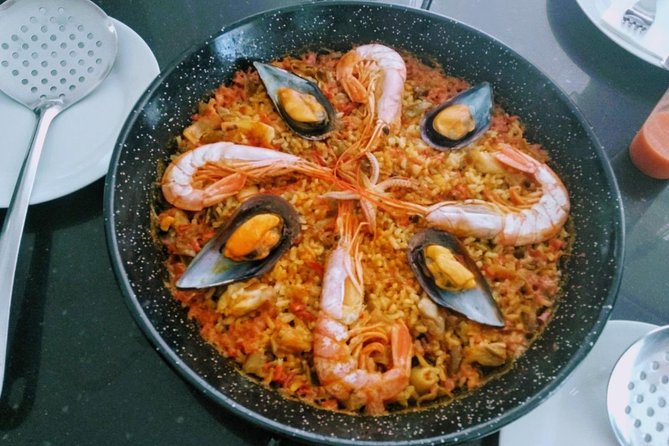
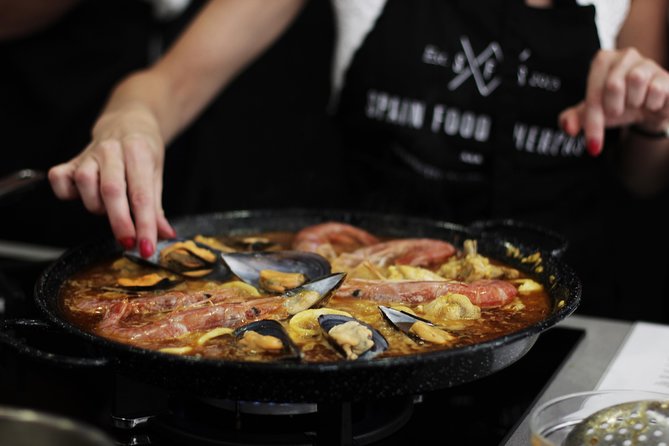
The main lesson focuses on mixed paella. The chef explains the rice and ingredients, then guides you through the cooking in stages.
You begin with the sofrito, the cooked base of ingredients that gives the dish much of its depth. From there, you gradually add the remaining components and build the paella in the pan. This staged method is useful because it shows you why timing matters. Paella is not simply rice mixed with whatever happens to be available.
The chefs are hands-on without taking the task away from you. Alba has received particular praise for giving clear instructions and helping participants at the stove. Pepo has been described as patient and attentive, while Ampara has worked successfully with children and with participants who needed translation. One session used Felipe to translate for a Spanish-speaking chef, and the language barrier did not prevent the group from following along.
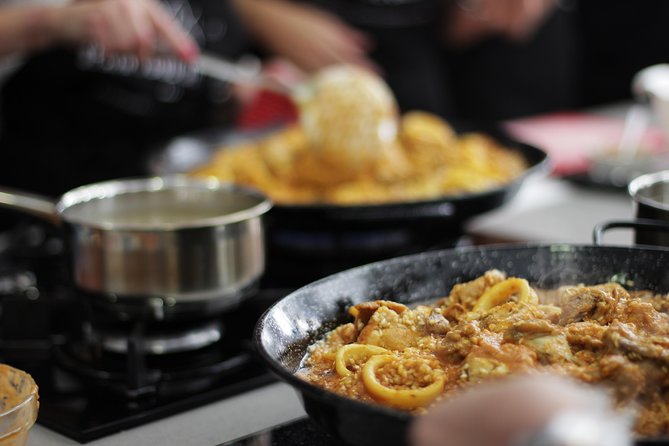
You generally work in pairs, with one paella shared by two people. That is worth knowing if you are hoping to prepare an individual pan. You still take part in the cooking, but the format is designed for cooperation rather than one dish per person.
The class is suitable for different ages and skill levels. A ten-year-old was kept involved during one session, and vegan participants received a tailored paella. Vegetarian options are available if requested in advance. You should also report allergies and other dietary needs when booking, since the group menu and market purchases need planning.
Sitting down to eat what you made
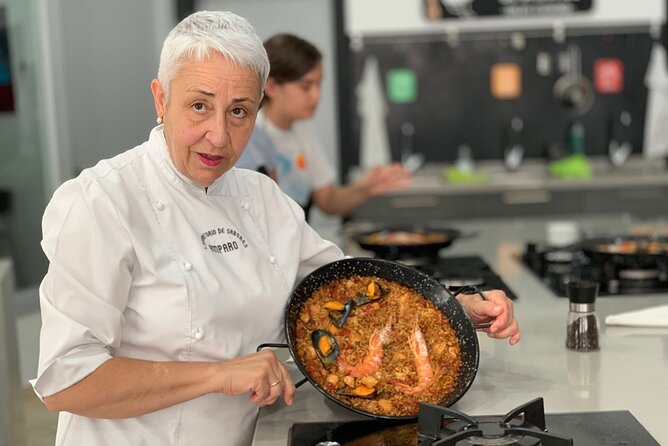
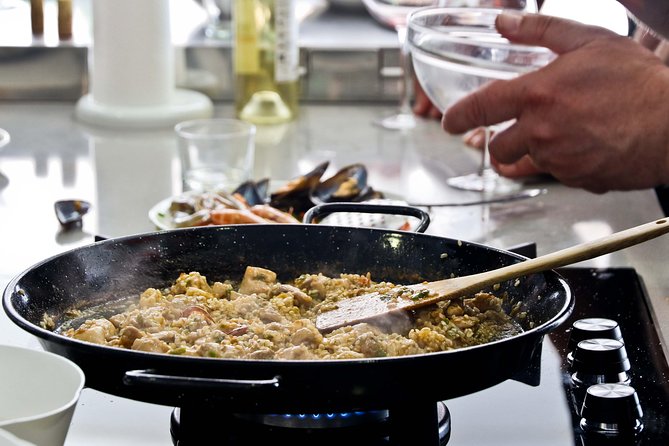
The best part of a cooking class is the meal at the end, and here you eat the paella you helped prepare. It is served with wine or beer, followed by seasonal fruit. Depending on the session, sangria and churros may also feature.
The social side is part of the value. Once the knives are put away, the atmosphere becomes relaxed, and conversation tends to flow more easily. You share food with people from different countries and compare the results of your cooking.
The food is not presented as a restaurant tasting menu. It is your own group’s work, guided by a chef. That means the experience is rewarding even if your paella is not perfect. You learn what worked, what you might change, and how the ingredients came together.
The class includes recipes, which makes the experience more useful after you leave. A few participants have had to request recipes again, so save the material when you receive it and ask before the session ends if anything is missing.
What makes the $84.69 price reasonable
At $84.69, this is not the cheapest way to eat paella in Malaga. You can find a restaurant meal for less, especially if you skip the market and drinks.
The comparison changes when you count what is included:
- A guided visit through Atarazanas Market
- Ingredient selection for the paella
- Olive oil tasting
- Local snacks
- Gazpacho
- Hands-on paella preparation
- Wine or beer with the meal
- Seasonal fruit
- Recipes for home use
You are paying for instruction and access to a structured food experience, not only for lunch. I think the price works best for someone who enjoys learning by doing. If you only want to sample paella, a restaurant is better value. If you want a market visit, local context, cooking guidance, and a full meal, the package is more convincing.
It is also a good choice early in a Malaga stay. You can ask the guide for restaurant tips, learn the names of local foods, and use that information during the rest of your visit.
Timing, group size, and practical concerns
The experience lasts about three hours and 30 minutes. That is long enough for a proper market visit and a relaxed meal, so avoid booking it immediately before a major timed attraction.
It is offered in English, though the guide may be multilingual. Staff have handled translation when the chef did not speak English, but if clear instruction is especially important to you, confirm the language arrangement at booking.
The tour is near public transportation, and there is no hotel pickup or drop-off. You need to make your own way to the start point and return independently after the meal.
Free cancellation is available if you cancel at least 24 hours before the local start time. Changes or cancellations inside that window are not refunded, and the activity may be canceled if the minimum number of participants is not reached. In that case, you are offered another date or experience, or a full refund.
Who should book this Malaga cooking class?
I would recommend it to food-focused visitors who want more than a recipe demonstration. It also works well for families, couples, solo participants who like meeting people, and small celebrations.
You do not need advanced cooking skills. The chef gives practical direction, and the process is broken into manageable steps. Children can take part, though the class still involves knives, hot pans, and group cooking, so adults should judge what suits their family.
It is less suitable if you dislike shared activities, need a completely private lesson, or want a fixed menu with no variation. The group size and staff can change, and the exact treatment of sangria, churros, and other dishes may differ from one session to another.
Should you book the paella class?
Book it if you want a social, hands-on introduction to Malaga’s food culture. The market visit, oil tasting, local snacks, gazpacho, paella, drinks, and recipes give you much more than a basic cooking lesson.
Before paying, confirm the meeting point, state your dietary requirements, and understand that the paella is usually prepared in pairs. If those details suit you, this is a strong use of half a day in Malaga, especially early in your trip when restaurant advice and food knowledge can improve the rest of your stay.
FAQ
How long does the paella cooking class last?
The experience lasts approximately three hours and 30 minutes.
Where does the experience begin?
The stated meeting address is Kulinarea, Avenida de Manuel Agustín Heredia, 24, Distrito Centro, 29001 Málaga, Spain. The experience includes a visit to Atarazanas Market, so check your current booking confirmation for the exact meeting instructions.
Where does the class finish?
The activity ends back at the meeting point.
Is the class offered in English?
Yes. The experience is offered in English, and the guide may be multilingual.
What food is included?
The experience includes olive oil tasting, Aloreña olives or roasted almonds, gazpacho, paella, wine or beer, seasonal fruit, and recipes. Sangria and churros are also listed in the sample menu.
Is a vegetarian option available?
Yes. A vegetarian option is available, but you must request it when booking.
Can I report other dietary requirements?
Yes. You should provide specific dietary requirements at the time of booking.
Is alcohol included, and who may drink it?
Wine or beer is paired with the menu. The minimum drinking age is 18. A nonalcoholic option has also been available in some sessions.
Is hotel transportation included?
No. Hotel pickup and drop-off are not included. The experience is near public transportation.
What is the cancellation policy?
You can cancel for a full refund up to 24 hours before the experience starts. Cancellations or changes made less than 24 hours before the start time are not refunded or accepted.
Just added around Spain
- Basque Pintxos and Tapas Cooking Class in Bilbao★ 5.0 · 73 reviews
- Paella and Burnt Basque Cheesecake Cooking Class (in Bilbao)★ 5.0 · 46 reviews
- Small-group Immersive Basque Cooking Class in Bilbao with Open Bar★ 5.0 · 65 reviews
- Pintxos and Tapas Cooking Class in Bilbao★ 5.0 · 38 reviews
- Rooftop Paella Seafood Cooking Class Experience in Barcelona★ 5.0 · 59 reviews
- Private Authentic Paella Cooking Class in Barcelona with Josh★ 5.0 · 3 reviews
- Private Barcelona Market Tour & Paella Cooking Class with Josh★ 5.0 · 4 reviews
- Premium Paella & Tapas Feast: Unlimited Wine & Rambla Views★ 5.0 · 13 reviews
Spanish & Paella Cooking Classes, compared.
Paella Cooking Experience & Boqueria Market Tour
Read our review →
Barcelona Paella Cooking Class with Market Visit, Tapas & Sangria
Read our review →
Barcelona Interactive Spanish Cooking Experience
Read our review →
Pasta & Tiramisu Cooking Class near the Spanish Steps
Read our review →
Spanish Cooking Class Paella Tapas and Sangria in Madrid
Read our review →
Paella Cooking Class, Wine Tasting & Central Market in Valencia
Read our review →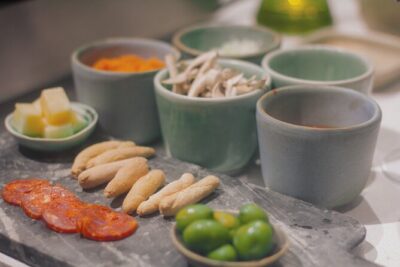
Paella Cooking Class in Madrid with Bottomless Wine Pairing
Read our review →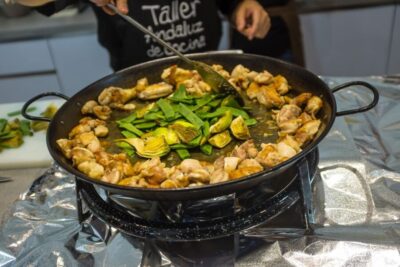
Lists this class appears in