REVIEW · LOMBARDY, ITALY
Milan: Pasta & Tiramisu Cooking Class with Premium Products
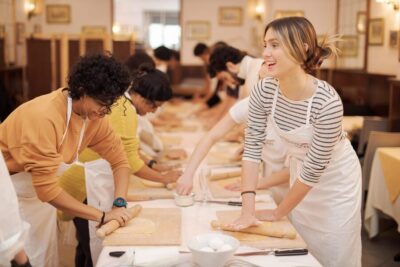
Pasta tastes better when you make it. This three-hour Milan cooking class brings you into chef Rafael’s private loft for fresh pasta, two sauces, and tiramisu. I especially like the small group of up to eight and the generous tasting of olive oils, balsamic vinegar, and artisan bread before the cooking begins. You also finish with wine and a proper meal, not just a few bites at the counter.
The main thing to understand is the setting. This is a private home, not a polished cooking school or restaurant kitchen. That makes the class warm and personal, but space may feel snug, and you should be comfortable entering someone’s home for a social evening. Rafael’s conversational style is a big part of the experience, so this suits you best if you enjoy cooking and chatting, not only following a recipe in silence.
What makes this Milan cooking class special
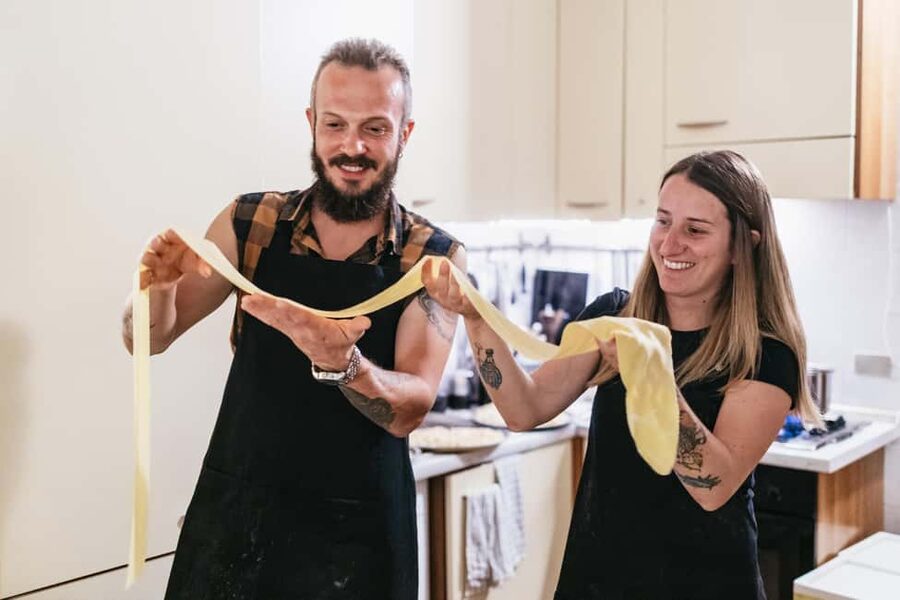
- Rafael teaches from his own Milan loft, creating the feel of being invited to cook with a friend.
- You make fresh pasta from eggs and flour, then shape it with a pasta machine.
- Two pasta sauces are included, a full-flavored tomato sauce and a creamy Parmesan-based sauce.
- The opening tasting has a purpose, with olive oils, balsamic vinegar, and artisan bread used to show how quality ingredients taste.
- Tiramisu is made from scratch, with practical advice for adjusting sweetness and texture.
- The meal includes a bottle of Italian wine, either red or white, plus water and the food you prepare.
Arriving at Rafael’s Milan loft
Your meeting point is in front of Brambilla Universal Shoes Store. From there, the class takes place in a historic Milanese building, inside Rafael’s private home.
That detail matters. The experience does not begin in a commercial kitchen with rows of identical workstations. You enter a personal space, and the tone is closer to a relaxed dinner with a chef than to a formal lesson. Rafael welcomes the group, introduces the ingredients, and starts building the evening through conversation.
The class is offered in English. Rafael, also called Rafa in some feedback, is praised for his open, friendly manner and his ability to keep conversation moving. He talks about Italian food, his own life, and the choices behind the dishes. If you are traveling alone, this setup can be especially comfortable because the small group encourages people to cook and eat together rather than split into separate couples.
You should arrive ready to take part. This is not a demonstration where you watch a chef do everything while you take notes. You will handle ingredients, work with dough, help prepare sauces, and contribute to the final meal.
More Pasta Making Classes in Milan
- Milan: Pasta and Tiramisu Cooking Class with Wine
★ 4.8 · 1,106 reviews - Milan: Pasta and Tiramisu Small Group Cooking Class with Wine
★ 5.0 · 660 reviews - Milan Culinary Experience: Pasta & Gelato or Tiramisù Class
★ 5.0 · 337 reviews
Starting with olive oil, vinegar, and bread
Before the main cooking starts, you taste Italian olive oils and balsamic vinegars with artisan bread. This can sound like a small extra, but it is one of the more useful parts of the class.
Many visitors buy olive oil or balsamic vinegar in Italy without knowing what they are tasting. A guided comparison gives you a simple way to notice differences in aroma, sharpness, sweetness, and finish. Rafael also explains how to look for better-quality products and how Italian labels can help you make sense of what you are buying.
The lesson is not only about choosing expensive food. Several people found Rafael’s approach practical: use good ingredients, understand what you are paying for, and avoid assuming that a high price always means better flavor. That is advice you can use later in Milan’s food shops or back home.
The bread gives the tasting a useful base. It helps you compare the oil and vinegar without turning the opening into a lecture. You are already eating, talking, and getting a feel for the group before the hands-on work begins.
Making pasta from eggs and flour
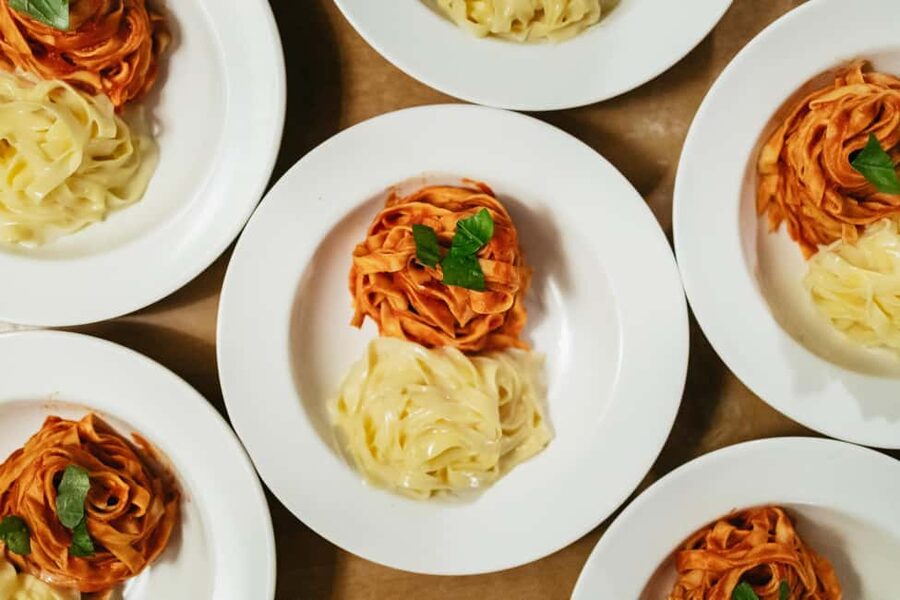
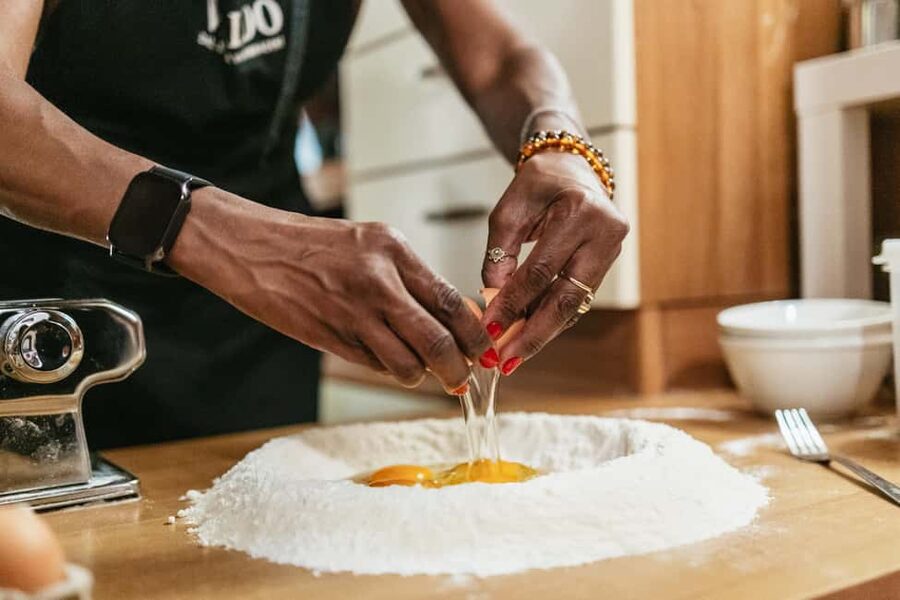
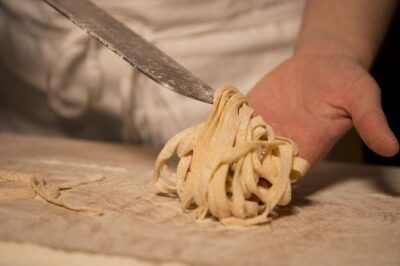
The central lesson is fresh pasta. Rafael shows you how eggs and flour become dough, then guides the group through kneading and working the mixture until it reaches the right consistency.
This is where the class earns its place over a recipe video. A recipe can tell you quantities, but it cannot easily show what dough should feel like under your hands. Rafael explains what to look for and helps beginners through the process. Several people were surprised by how manageable fresh pasta became once the steps were broken down.
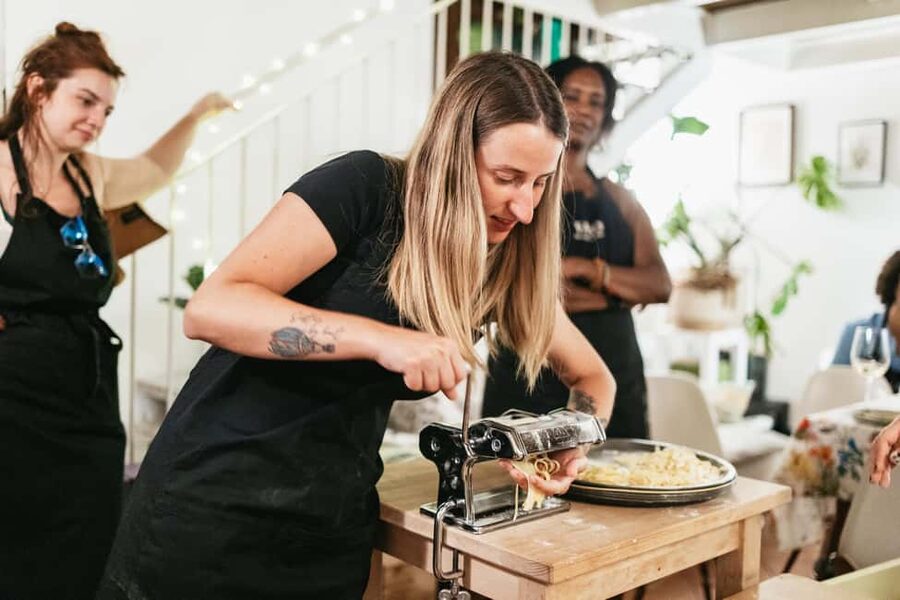
You then use a pasta machine to roll and shape the dough. The shared process makes the class social: everyone contributes, and the meal later reflects the work of the whole group. You are not simply preparing an individual serving for yourself.
The class produces two pasta dishes. The exact shapes are not specified in the supplied details, so you should not book expecting one particular regional pasta form. The important point is that you learn the basic method, from dough to shaped pasta, and then pair it with two traditional sauces.
For home cooks, this is the part with the greatest lasting value. You leave with a technique rather than only a finished plate. Fresh pasta can seem like a restaurant-only project, but Rafael focuses on making it practical and efficient. One of the strongest themes running through the experience is that excellent food does not need complicated equipment or an entire day.
Two sauces, two different lessons
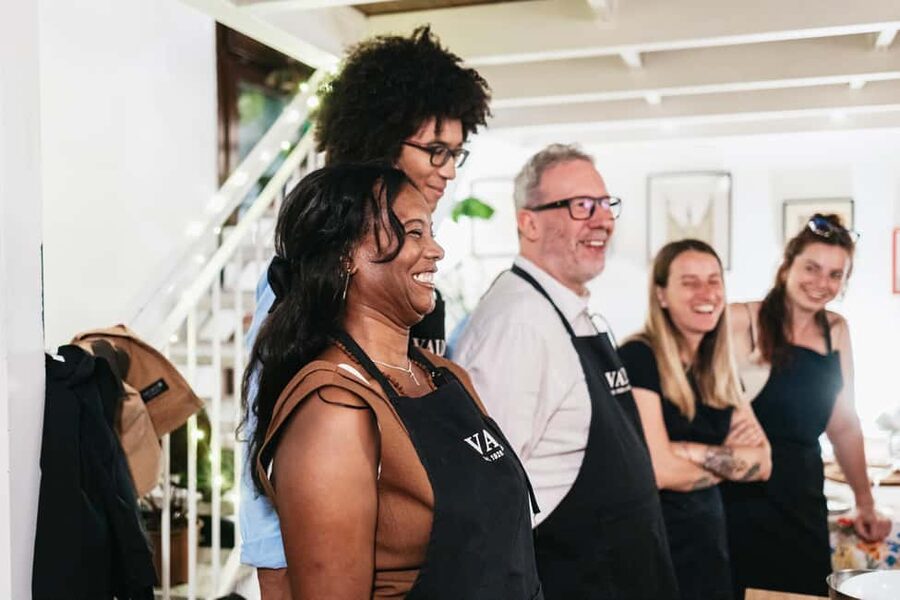
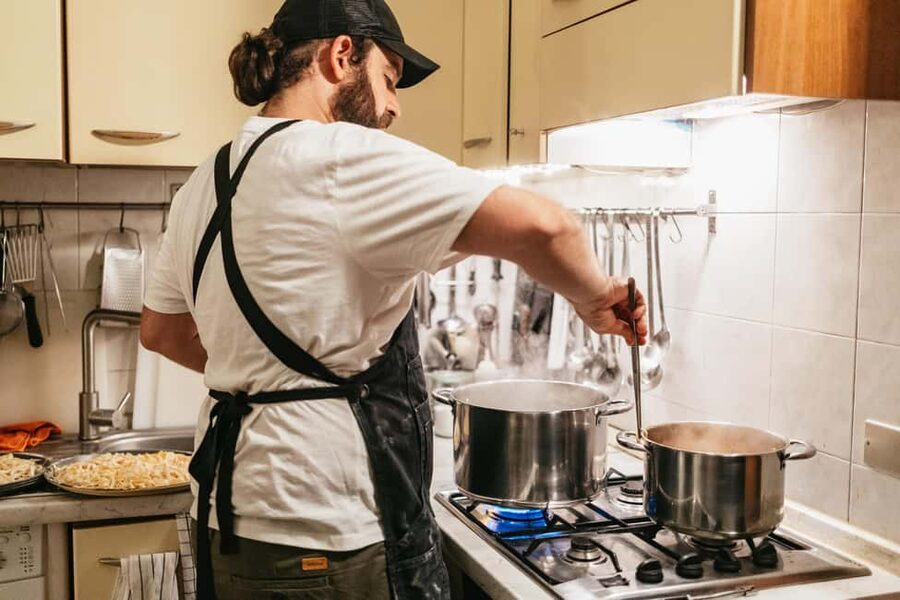
The first sauce is a rich tomato sauce. It gives the fresh pasta a familiar Italian partner and shows how a simple sauce depends on ingredient quality and balance.
The second is a savory Parmesan-based sauce with a creamy character. Having two sauces in the same class is useful because you can compare how fresh pasta behaves with different textures and flavors. The tomato sauce brings brightness and depth, while the Parmesan sauce is fuller and more comforting.
Rafael explains the process as you work rather than leaving you to copy a recipe without context. He places attention on taste, texture, and ingredient selection. That approach is helpful if you want to recreate the dishes at home, because you learn how to judge the result instead of treating every step as fixed.
The food is described by past participants as simple but very satisfying. That is a strength here. You are not being asked to produce a complicated restaurant dish for the sake of theater. You make food that a home cook can reasonably attempt again.
More Tiramisu and Dessert Classes in Milan
- Milan Cooking Class: Authentic Pizza & Gelato Making
★ 5.0 · 582 reviews - Milan: Pasta, Ravioli, and Gelato Class in a Glamorous Home
★ 4.9 · 268 reviews - Pizza Cooking Class with Tiramisù and Wine Tasting in Milan
★ 5.0 · 172 reviews - Milan: Pasta, Gnocchi and Tiramisù Cooking Class with Wine
★ 5.0 · 117 reviews
Tiramisu, the sweet finish
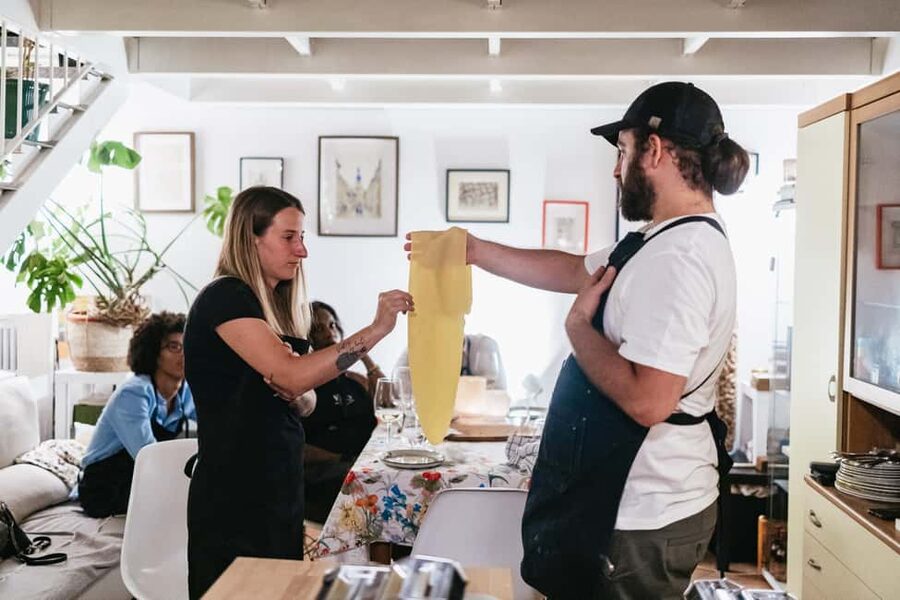
After the pasta work, the group prepares tiramisu. Rafael explains the method and the background of this familiar Italian dessert, then guides you through assembling it.
The class pays attention to balance rather than treating tiramisu as a sugar-heavy finale. You learn how ingredient proportions can affect sweetness and how you can adjust the preparation to suit your taste. That makes the lesson more useful than memorizing one rigid formula.
The tiramisu is prepared during the class and served as part of the final meal. Participants consistently describe it as a highlight, with several noting its balance and smooth texture. You do not need advanced baking skills for this section, but you should expect to take an active role in preparing it.
Because tiramisu benefits from time to set, the precise handling and serving sequence may depend on the class flow. The provided information confirms that you prepare and eat it during the experience, but it does not promise a particular presentation or recipe variation.
The family-style meal and Italian wine
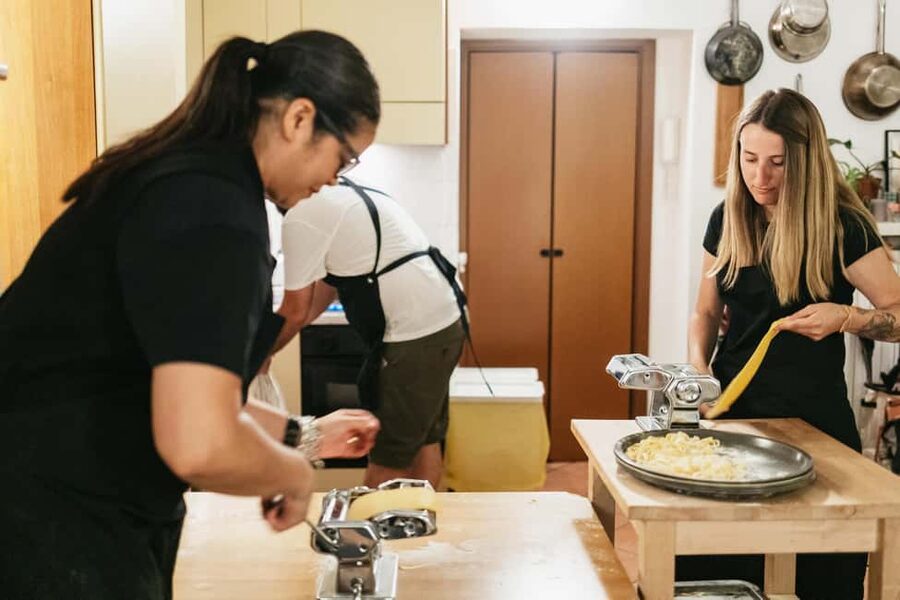
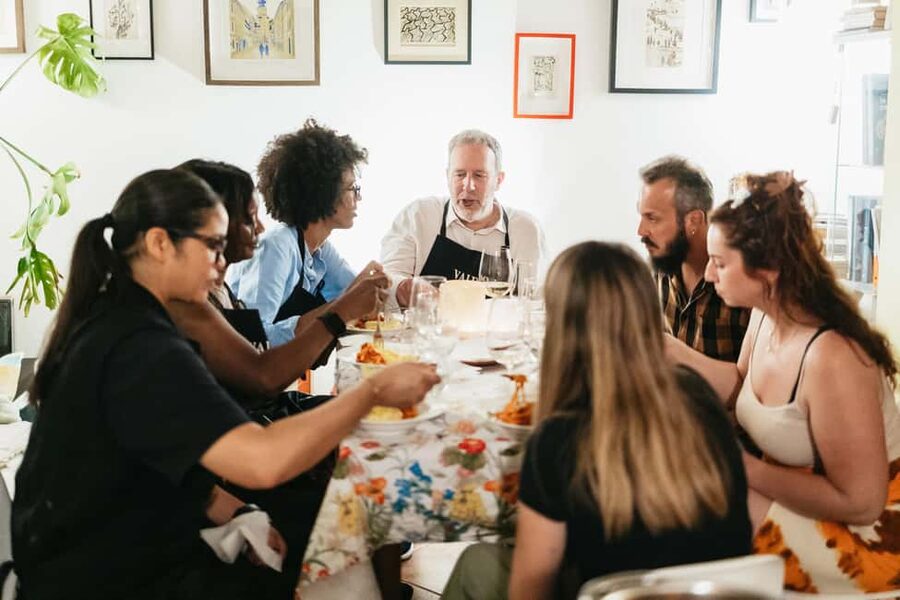
The class ends around a shared table with the food you helped make. You eat two pasta dishes, tiramisu, and drink a bottle of Italian wine, either red or white. Water is also included.
This final meal is important because it turns the workshop into a complete evening. You are not rushed out after shaping dough. You sit down, taste the results, and talk with the chef and the rest of the group.
The family-style format also helps explain the high satisfaction with the experience. The food is connected to a shared effort, and the meal gives everyone time to relax. Rafael pours the wine and keeps the conversation going, creating the feeling of a hosted dinner rather than a class that ends when the burners go off.
If you do not drink alcohol, water is included, but the supplied details do not specify alternative wine arrangements. If wine matters to you, expect it to be part of the social rhythm of the meal. If you have allergies, dietary restrictions, or strong dislikes, ask before booking because the available information does not describe substitutions.
Why the small group matters
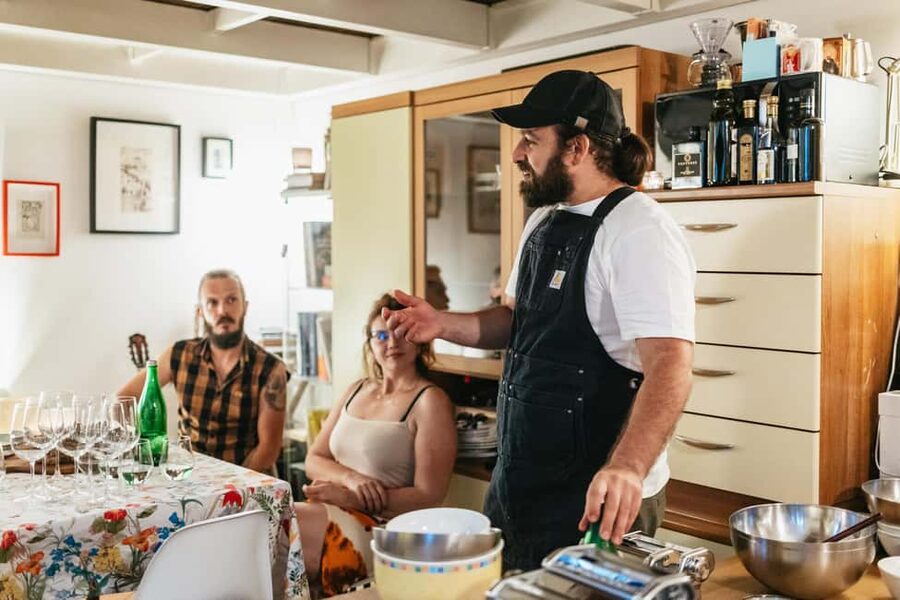
The maximum group size is eight. That is small enough for Rafael to watch what you are doing and answer questions without turning the lesson into a crowded assembly line.
A small group also suits the private-home setting. The kitchen is not described as a large professional school kitchen, and one person found the apartment tiny for eight participants. At the same time, that same setting was viewed as more personal and no less effective than a modern teaching kitchen.
This is an important tradeoff. If you want space, bright workstations, and a polished culinary studio, this may not be your ideal class. If you prefer conversation, personal guidance, and a less commercial atmosphere, the home setting is a major advantage.
Solo visitors can fit in well. One person booked at the last minute and ended up receiving a private lesson when the rest of the group canceled. Rafael still hosted the class, which suggests a flexible and personal approach, though you should not assume every booking will become private.
Rafael’s teaching style
Rafael’s personality is central to the experience. He is described as talkative, caring, funny, and passionate about Italian food. He shares stories about his life and explains how food connects with Italian culture.
That style works best if you enjoy a host who talks while teaching. You will get more than a list of ingredients, but you may also hear personal stories and broader discussion about food production, labels, and cooking traditions. The class is not designed as a quiet technical workshop.
His advice does not stop when the meal ends. Some participants received local food recommendations and ideas for places to visit afterward. That can be valuable in Milan, where knowing how to choose a restaurant or specialty shop is often as useful as knowing which famous sight to visit.
The teaching appears particularly strong for beginners. Rafael explains the steps clearly, encourages people as they work, and makes the process seem less intimidating. More experienced cooks may not learn advanced professional techniques, but they can still benefit from the ingredient tasting, sauce preparation, and discussion of Italian food culture.
Is the $80 price good value?
At $80 per person, this is not the cheapest way to eat pasta in Milan. It is also more than the cost of buying a plate of pasta in a casual restaurant. The better comparison is a hosted three-hour food experience that includes instruction, tastings, two pasta dishes, tiramisu, a family meal, wine, and water.
By that measure, the price is reasonable, especially if you value personal instruction and an intimate setting. You are paying for the chef’s time, the ingredients, the meal, and the social experience. You also leave with methods you can use at home.
The value is weaker if you only want dinner. Milan has plenty of places where you can eat without spending three hours making the food. This class earns its cost when the cooking itself is part of what you want from the evening.
The phrase premium products should also be read sensibly. You taste quality olive oils, balsamic vinegars, and artisan bread, but the experience is not presented as an extravagant luxury meal. The food is straightforward Italian cooking done carefully.
Timing, language, and practical details
The advertised duration is three hours. One past session lasted about four hours, so allow some flexibility if you have a train, flight, or fixed dinner reservation afterward. Conversation and the shared meal may stretch the evening.
The class is taught in English. The meeting point is in front of Brambilla Universal Shoes Store, and accurate contact details are important so the chef can send further instructions or reach you if plans change.
You can cancel up to 24 hours before the activity for a full refund. Reserve now and pay later is also available, which helps if your Milan schedule is still shifting.
This experience takes place in a private home. Read that detail carefully before booking. It is the reason the class feels personal, but it also means the surroundings will be domestic rather than purpose-built for tourism.
Who should book this class?
I would choose this for you if you want to learn a practical Italian cooking skill while meeting people. It is a strong fit for couples, families, solo visitors, and food lovers who prefer a relaxed evening to a formal lesson.
It also works well as a birthday activity or a memorable alternative to sightseeing. Several people used it as a special part of their Milan visit, and the meal gives the event a clear beginning, middle, and finish.
You may want to skip it if you dislike group activities, do not enjoy conversation, need a spacious professional kitchen, or want a strictly timed itinerary. It is also not the right choice if you expect a silent demonstration or a restaurant-style tasting menu.
Should you book it?
Book it if you want Milan food culture served with stories, hands-on work, and a seat at a shared table. The strongest reasons are Rafael’s warm teaching style, the small group, and the fact that you make the entire meal rather than watching a chef perform.
I would book this class before a standard tourist cooking demonstration, especially at $80 with wine and a full meal included. Just keep your expectations clear: you are entering a private home, working in a cozy space, and spending an evening with a host whose personality is part of the recipe.
FAQ
Where does the cooking class take place?
It takes place in a professional chef’s loft inside a private home in a historic Milanese building. The meeting point is in front of Brambilla Universal Shoes Store.
How long does the experience last?
The advertised duration is three hours. One past session lasted about four hours, so leaving extra time afterward is sensible.
What language is the class taught in?
The instructor teaches in English.
How many people can join?
The class is limited to eight participants.
What will I learn to cook?
You will make fresh pasta from eggs and flour, prepare two pasta sauces, and make tiramisu.
What food and drink are included?
The experience includes olive oil and balsamic vinegar tastings with artisan bread, two pasta dishes, tiramisu, a family-style meal, one bottle of Italian wine, and water.
Is the cooking class held in a restaurant?
No. It takes place in the chef’s private home, not in a restaurant or cooking school.
Can I cancel my booking?
You can cancel up to 24 hours in advance for a full refund. Reserve now and pay later is also available.
Just added around Milan
- Small Group Cozy Cooking Class in a Typical Milanese Home★ 4.8 · 27 reviews
- Pizza and Tiramisu Cooking Class with Wine in Milan★ 4.9 · 80 reviews
- only in ITALIAN – International aperitif + cooking class in Italian★ 4.8 · 22 reviews
- Milan: Private Cooking Class at a Local’s Home★ 5.0 · 9 reviews
- Milan: Market and Cooking Class at a Local’s Home★ 4.0 · 5 reviews
- Milan: Cooking Class for Families with Children★ 5.0 · 5 reviews
- Milan: Pasta, Gnocchi and Tiramisù Cooking Class with Wine★ 5.0 · 117 reviews
- Milan: Homemade Pasta, Sauce, and Tiramisu Cooking Class★ 5.0 · 3 reviews
Pasta Making Classes, compared.
3 in 1 Cooking Class near Navona: Fettuccine, Ravioli & Tiramisu
Read our review →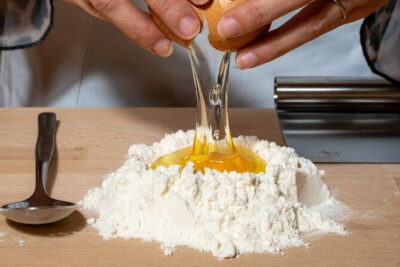
Pasta & Tiramisu Cooking Class with Unlimited Wine
Read our review →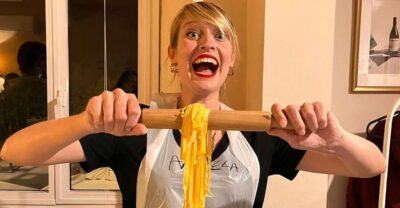
Pasta Making Class with Wine, Limoncello, and Dessert
Read our review →
Rome Cooking Class: Make Pasta and 3 Spritz Cocktails
Read our review →
3-in-1 Fettuccine, Ravioli, and Tiramisu Cooking Class
Read our review →