
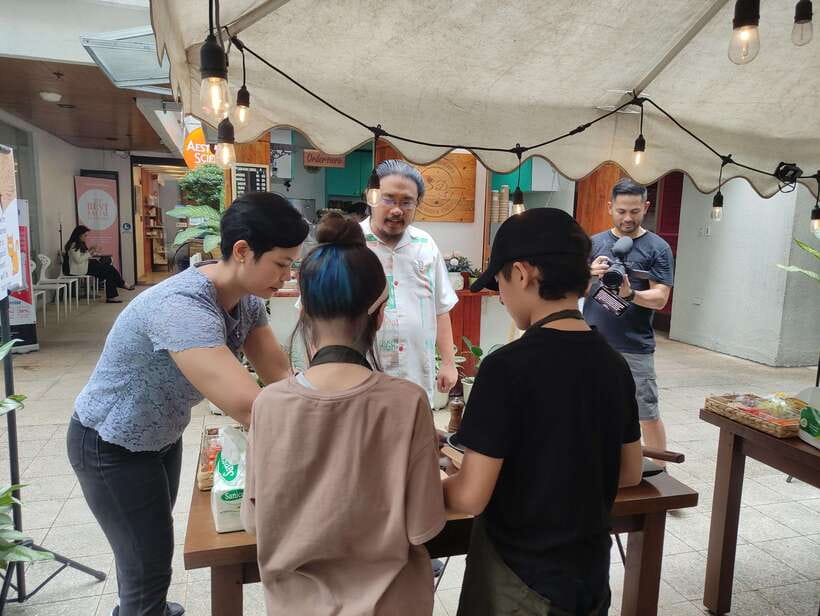
REVIEW · NUEVA VIZCAYA, PHILIPPINES
Makati: Hands on Manila Cooking Class
Filipino food tells a story. This two-hour class in Makati gives you a practical taste of that story while you prepare pancit noodles, lumpia spring rolls, and sweet turon. I especially like the small four-person limit, which gives you room to cook instead of merely watching, and the warm teaching style of Chyl, who adds family stories and food traditions as you work.
The food is another strong point. These recipes use familiar ingredients and are simple enough to repeat at home, yet the portions are generous enough to feel like a full meal. The main caution is the outdoor setting: one past session was disrupted by rain, and the $60 price may feel high if you are judging the class only by the amount of food.
Key points before you book
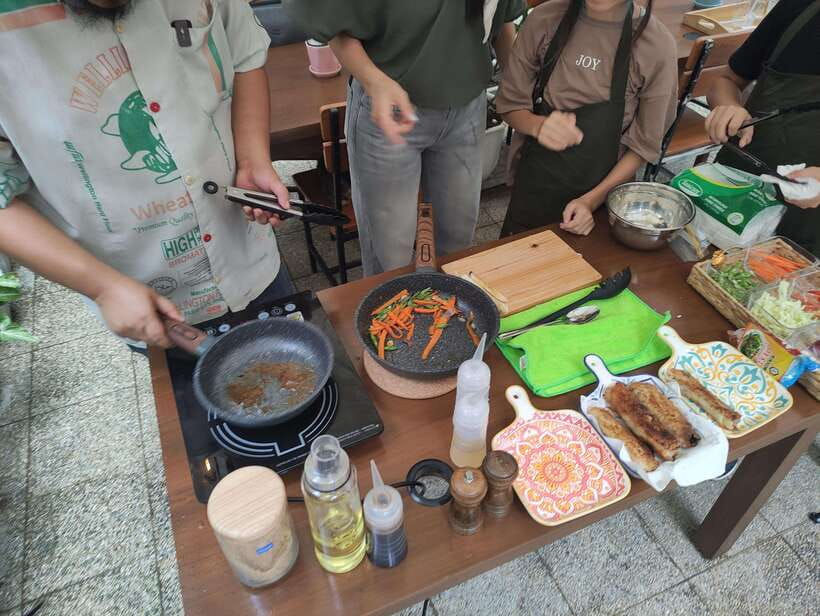
- Three Filipino dishes in two hours: Prepare pancit, savory lumpia, and sweet banana turon.
- Chyl leads the class: She explains each step calmly and adds stories about Filipino family life and food customs.
- Small group format: The class accepts up to four participants, with personal guidance at each cooking station.
- More than a snack: The advertised meryenda can amount to two meals, so arrive hungry.
- Convenient Makati location: The class takes place in an outdoor courtyard near the coffee kiosk, with Greenbelt Mall and The Peninsula Hotel noted as nearby landmarks.
- A practical souvenir: You leave with recipes and the confidence to try them at home, not just a few holiday photographs.
Why this Makati cooking class is worth your afternoon
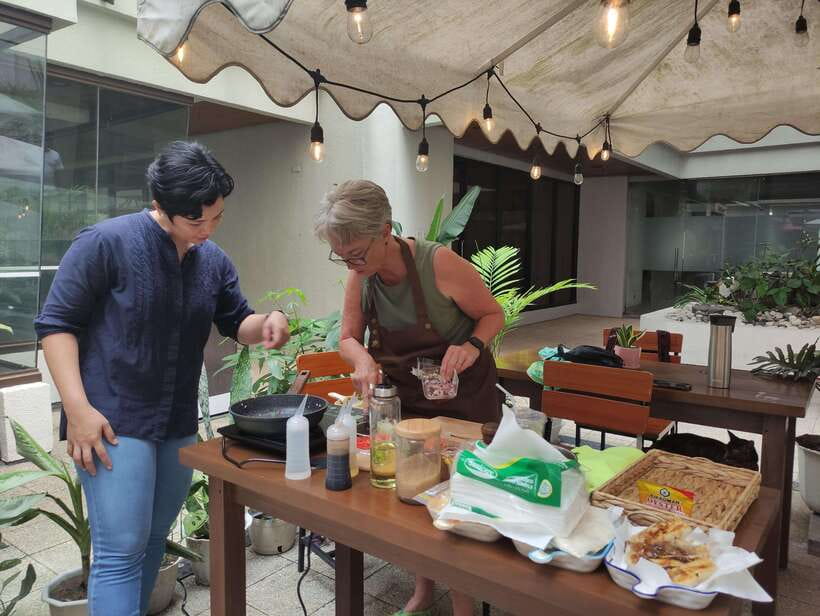
Filipino cooking can look simple at first glance. Noodles, vegetables, wrappers, bananas, sugar. But the meaning sits in the details: food prepared for family, snacks shared at gatherings, and recipes shaped by many islands and generations.
This class works because it does not treat Filipino food as a museum piece. You handle the ingredients, cook at your own station, and eat what you make. That makes the lesson useful for a first-time cook and still enjoyable for someone who already knows their way around a pan.
The session is offered in English and is limited to four people. That size matters. You are not standing at the back of a large demonstration while someone else does the work. Chyl can watch your preparation, answer questions, and let you take the lead when you are ready.
I also like the cultural layer. Chyl talks about Filipino family life, food traditions, and the background of each dish. The explanations are not an extra lecture pasted onto the cooking. They help explain why these foods matter and why a modest snack can carry memories of home.
A few more cooking classes around the world worth a look
- Half-Day Thai Cooking Class at Organic Farm in Chiang Mai
★ 5.0 · 19,087 reviews - Florence: Pasta Cooking Class with Unlimited Wine
★ 4.9 · 10,285 reviews - 3 in 1 Cooking Class near Navona: Fettuccine, Ravioli & Tiramisu
★ 5.0 · 7,376 reviews
Finding the courtyard near Makati’s shopping district
The meeting point is an outdoor courtyard in front of a coffee kiosk. The setting is convenient for people staying near central Makati, and the area is close to Greenbelt Mall and The Peninsula Hotel.
Still, allow extra time to find the exact spot. One useful warning from an earlier session is that the venue may be hard to locate unless you coordinate with the organizer beforehand. The instructions ask you to look for your instructor at the courtyard, but a busy hotel and shopping district can have several open areas that look similar.
Traffic can also slow you down. Download the Grab app before the class so you can arrange a car more easily. One participant arrived late after trouble getting a Grab, and Chyl waited and still provided the full cooking time. That is kind and helpful, but I would not rely on it. Give yourself a cushion, especially during busy periods.
The location information deserves one check before payment. The activity is presented as a Makati experience in the heart of the city, while one supplied location label names Nueva Vizcaya. Because the meeting instructions and detailed descriptions point to Makati, confirm the exact address and map pin directly before setting out.
The welcome: cold drinks and a ready-to-use station
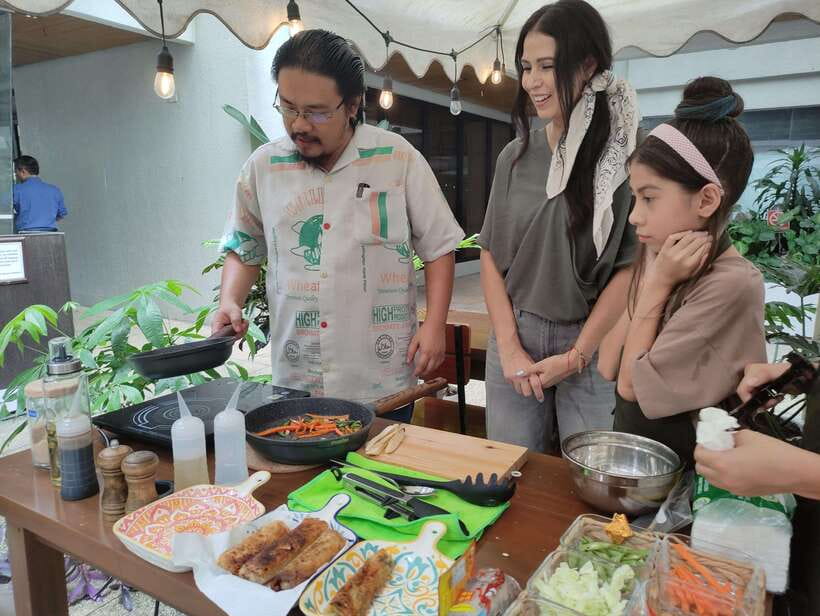
The class begins with the equipment and ingredients prepared for you. You do not need to shop, measure a pantry full of items, or bring cooking tools. Equipment and ingredients are included, along with a nonalcoholic drink.
A previous class included cold lemonade, a welcome touch in Manila’s heat. The tables are set up so each participant can work through the recipes without waiting too long for a shared knife or pan. The equipment has included induction cookers and pans, and the cooking tools were described as clean and in excellent condition.
Bring comfortable clothes. You will be chopping, wrapping, stirring, and working around hot cookware. The class is hands-on, so this is not the moment for restrictive clothing or anything you would worry about near food and cooking equipment.
The outdoor arrangement creates a pleasant, casual feel. You can talk with the other participants and compare how each dish turns out. But it also leaves the class exposed to weather. Rain once forced the staff to rearrange and dry the setup, so the open-air atmosphere is a benefit with a small practical risk.
Pancit: a useful first lesson in Filipino noodles
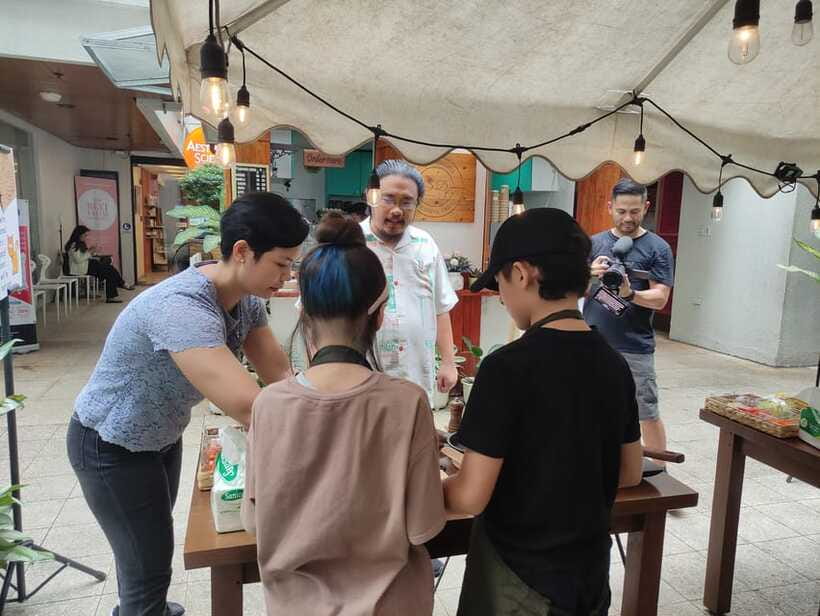
The savory part of the class includes pancit, a Filipino noodle dish that makes a good starting point because it combines preparation, timing, and seasoning.
You learn to work through the ingredients before cooking, then bring them together in the pan. That order matters. It is the kind of lesson you can use later at home, even if your own kitchen has different vegetables or noodles.
Pancit also shows why Filipino cooking is easy to adapt. The class recipes are built from accessible ingredients and are not presented as fragile restaurant formulas. You learn a method, not merely a final plate.
Chyl guides the process while allowing you to do the actual work. If you cook often, you can ask more detailed questions about technique. If you are new to cooking, the class is designed to keep the steps manageable.
The result is savory, filling, and practical. Pancit is one of the dishes most likely to become part of your home rotation because it can work as a snack, a light meal, or a shared dish.
Same place, a different thing to cook:
- Florence: Pasta & Tiramisu Cooking Class with Unlimited Wine
★ 4.9 · 6,708 reviews - Hanoi Cooking Class: Culture, Local Market & Meaning CSR Impact
★ 5.0 · 5,147 reviews - 5 Traditional Dishes Hanoi Cooking Class with Market Trip
★ 5.0 · 4,890 reviews - Cooking Class and Lunch at a Tuscan Farmhouse with Local Market Tour from Florence
★ 5.0 · 4,831 reviews
Lumpia: rolling, frying, and getting involved
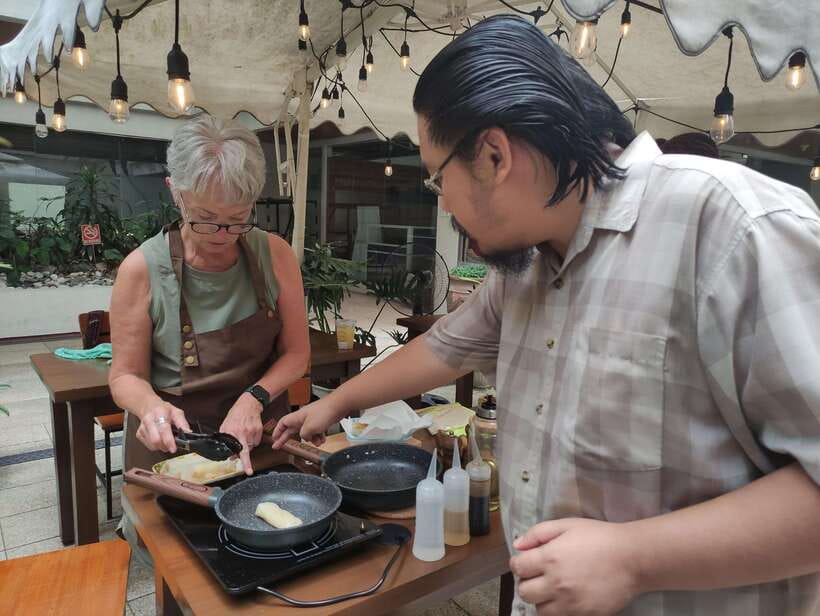
Next comes lumpia, the crisp spring roll that gives the class a more tactile job. You prepare the filling, place it in the wrapper, and roll it before cooking.
This is where the small group pays off. Wrapping looks easy when somebody else does it, but your first roll may be too loose, too full, or shaped like a small culinary envelope with a mind of its own. Chyl can show you how to adjust the amount and seal the wrapper properly.
The class keeps the dish approachable. You are not expected to work alone without guidance, but you are encouraged to take part rather than watch. One participant noted that the host let the group take the lead in cooking, which is exactly what you want from a hands-on lesson.
Lumpia also gives you a useful skill to bring home. Once you understand the filling and rolling method, you can adapt the idea for different vegetables or other ingredients. The lesson is not just about eating a fried snack in Makati. It teaches a repeatable technique.
Use care around the hot cooking equipment, and wear comfortable clothes that allow you to work freely. The class is family-friendly in spirit, but children under nine are not accepted.
Turon: a sweet ending with a family connection
The dessert is turon, a sweet banana preparation wrapped and fried until crisp. It is one of the class’s most memorable elements because it turns a few humble ingredients into a dessert with a satisfying contrast between the crunchy outside and soft fruit inside.
Chyl uses the dish to explain how everyday Filipino snacks connect with family kitchens and wider food customs. That kind of story gives the cooking more meaning. You are not simply following a recipe. You are learning why a banana snack can be part of ordinary life for so many people.
The class has also been described as teaching sweet banana crepes or bananas fried and wrapped. The exact preparation may depend on the session, but the common thread is a sweet Filipino snack built from banana, wrapping, and heat.
Turon is especially appealing if you want a recipe that looks impressive without demanding advanced skills. It is simple enough for a beginner and distinctive enough to remind you of the Philippines when you make it later.
Why the food portion may surprise you
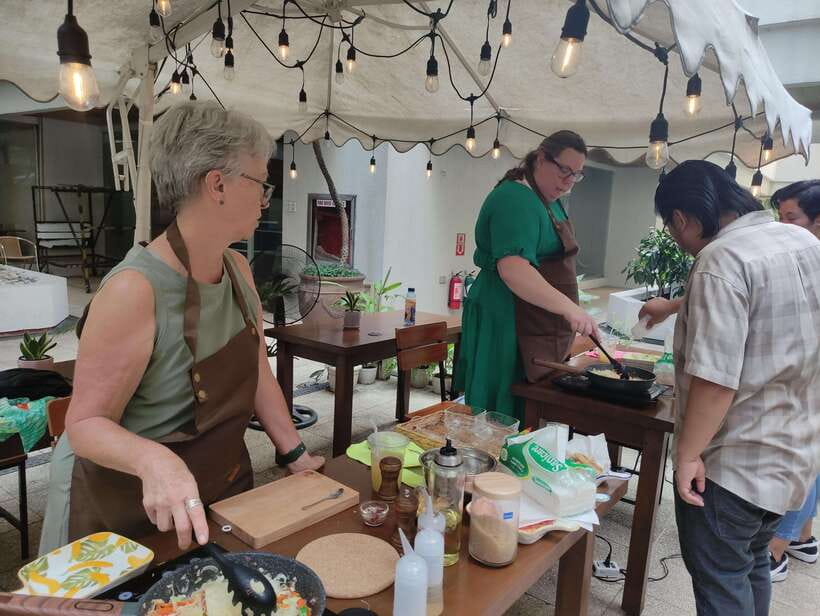
The word meryenda usually suggests a snack. Do not picture a tiny afternoon plate. The class serves what several participants described as a heavy snack, with two savory dishes and one dessert.
You may eat pancit, lumpia, and turon during the same session. That is a lot of food for two hours, particularly if you are also tasting as you cook. I would arrive hungry and avoid scheduling a large meal immediately afterward.
The generous portion improves the value of the experience. At $60 per person, the class is not the cheapest way to obtain three dishes. You are paying for instruction, ingredients, equipment, a drink, the small group setting, and the chance to cook with a local host.
If your goal is simply to eat Filipino food, a restaurant will cost less. If you want to understand the dishes and repeat them at home, the price becomes easier to justify. The recipes are straightforward, the ingredients are not presented as impossible to find, and the lesson gives you more than a finished plate.
Leftovers are possible. One participant had enough food remaining for dinner and breakfast. That will depend on your appetite and how much you share, but it reinforces the point: this is a full food activity, not a quick tasting.
Chyl’s teaching style makes the difference
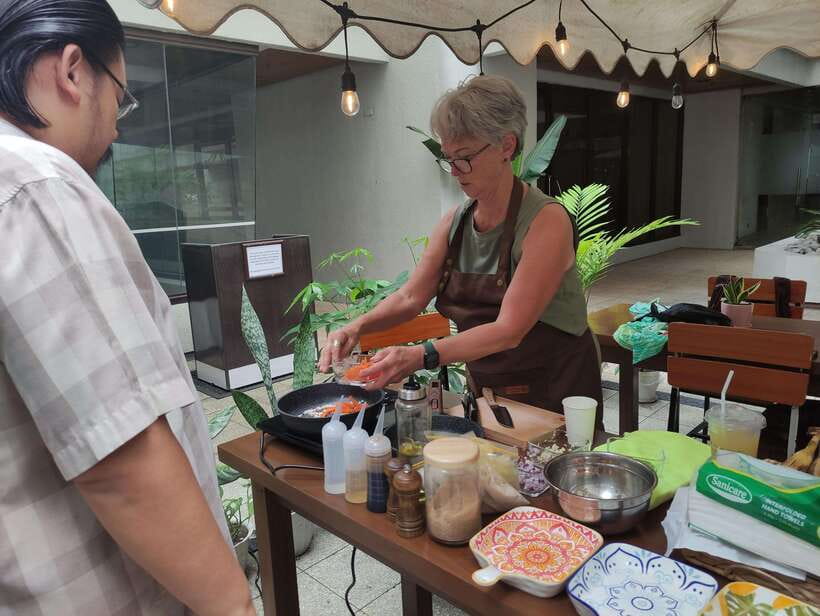
The strongest part of this class is Chyl. She is described as calm, patient, welcoming, and clear. Those traits matter more than flashy presentation in a cooking lesson.
A good instructor watches where you need help without grabbing the task away from you. Chyl’s approach appears to balance guidance with independence. You get instructions, then you handle the chopping, cooking, wrapping, and assembly yourself.
Her storytelling adds warmth. She talks about childhood, family, Filipino life, and the role of food during celebrations. This gives you cultural context without turning the class into a formal history lesson.
The teaching also works across skill levels. Experienced cooks can ask many questions and take more control. Beginners get a steady sequence of tasks and reassurance when something does not look perfect. The recipes are forgiving enough that everyone can feel capable by the end.
The class can proceed with only one participant, which gives a solo visitor a very personal experience. That is a plus if you like conversation and want to ask many questions. It may feel less social than a full group, though the four-person maximum already keeps the session intimate.
Who should book, and who should think twice
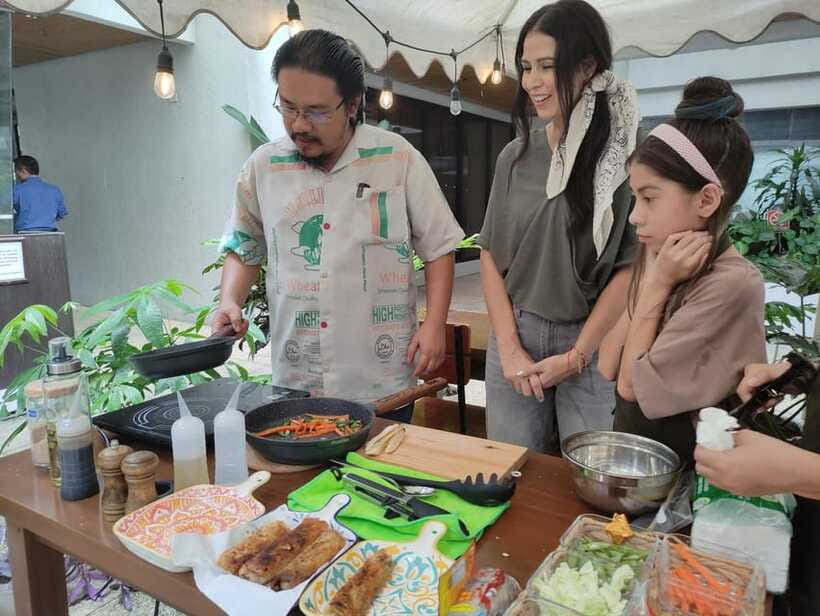
I would recommend this class to solo visitors, couples, siblings, and small groups of friends who want an activity with a useful result. It also suits families with older children, provided everyone is at least nine and comfortable working around cooking equipment.
You do not need to be a confident cook. In fact, beginners may get the most from the class because the steps are clear and the recipes are not intimidating. Experienced cooks will enjoy the cultural conversation and the chance to compare Filipino methods with their own.
The class may not suit you if you dislike outdoor seating, need a fully weatherproof venue, or want a quiet restaurant meal rather than active participation. It is also not suitable for visually impaired people, according to the activity information.
Wheelchair access is listed, but the outdoor location and exact surface should still be confirmed if you have specific mobility needs. The meeting point and weather exposure make those practical details worth checking before booking.
Small details that improve the experience
A few simple choices can make the afternoon easier:
- Confirm the exact Makati meeting point and map pin before leaving.
- Download Grab in advance, especially if you are unfamiliar with local transport.
- Wear comfortable clothing suitable for food preparation.
- Arrive hungry, since the three dishes can amount to a large meal.
- Ask Chyl about substitutions and preparation methods while you cook, since the recipes are intended to be useful at home.
- Leave room in your schedule for eating the food you prepare. Two hours is enough for the lesson, but it should not feel rushed.
Cancellation is free up to 24 hours before the activity for a full refund, and you can reserve now and pay later. Those terms are helpful if your Makati plans may shift, but they do not replace checking the weather and meeting location.
Should you book this Filipino cooking class?
Book it if you want to do more than sample Filipino food. For $60, you receive a small-group lesson, three substantial dishes, ingredients, equipment, a drink, and personal guidance from Chyl. The best value comes from the recipes you can repeat after returning home.
I especially recommend it for first-time visitors who want a friendly introduction to Filipino food culture without committing half a day. The class is short, active, and filling. Just confirm the exact Makati venue, allow time for traffic, and accept that the outdoor setup may be affected by rain.
Skip it if you want the lowest-cost meal or a fully sheltered venue. For most curious eaters, though, this is a practical and personable way to spend two hours in Makati, with pancit, lumpia, and turon as the delicious proof of what you learned.
FAQ
Where does the cooking class meet?
Meet your instructor at the outdoor courtyard in front of the coffee kiosk. The activity is described as taking place in central Makati, near Greenbelt Mall and The Peninsula Hotel. Confirm the exact meeting point before going because the venue can be difficult to find.
How long does the class last?
The class lasts two hours. Check the available starting times when booking.
What dishes will I prepare?
The class includes a Filipino meryenda, or snack meal, featuring a noodle dish such as pancit, savory lumpia spring rolls, and a sweet banana treat such as turon.
Is the class suitable for children?
Children under nine are not permitted. Older children may enjoy the family-friendly, hands-on format.
What is included in the price?
The price includes cooking equipment, food ingredients, and a nonalcoholic drink. Hotel pickup and drop-off are not included.
Can I cancel or pay later?
You can cancel up to 24 hours in advance for a full refund. Reserve now and pay later is also available.
Just added around the world
- The Mediterranean Diet & Lifestyle Cooking Class.★ 5.0 · 11 reviews
- Gourmet Cooking Class & Culture in the rural Montes de Malaga.★ 5.0 · 37 reviews
- Cooking Classes and olive oil tasting.The real taste of Greece!★ 5.0 · 56 reviews
- Beach day experience + Mexican Cooking Class + Massage★ 4.5 · 21 reviews
- Italian Pasta Cooking Class in Denver (Includes 3-Course Meal)★ 5.0 · 3 reviews
- Corfood bites – Cooking classes by Christos★ 5.0 · 77 reviews
- Authentic Beachfront Mexican Cooking Class Cafe Jaguar Costa Maya★ 5.0 · 50 reviews
- Authentic Sinhalese Cooking Class in Colombo with a Local Family★ 5.0 · 9 reviews
Cooking Classes, compared.

Half-Day Thai Cooking Class at Organic Farm in Chiang Mai
Read our review →

3 in 1 Cooking Class near Navona: Fettuccine, Ravioli & Tiramisu
Read our review →
Pasta & Tiramisu Cooking Class with Unlimited Wine
Read our review →
Hanoi Cooking Class: Culture, Local Market & Meaning CSR Impact
Read our review →
5 Traditional Dishes Hanoi Cooking Class with Market Trip
Read our review →
Cooking Class and Lunch at a Tuscan Farmhouse with Local Market Tour from Florence
Read our review →