
REVIEW · COMMUNITY OF MADRID, SPAIN
Madrid: 10 Tapas 2.5-Hour Cooking Class
Come hungry, leave with recipes. This 2.5-hour Madrid cooking class turns Spanish food into a social, hands-on meal, with dishes from several regions and a professional chef guiding the work. I especially like the regional focus, from Basque gilda skewers to Catalan pan tumaca, and the fact that you eat the food your group prepares with sangría afterward. The main consideration is that you do not personally cook every dish, and a larger class can mean less time at the counter.
The class costs $80 per person, which is not cheap for a short activity. Still, the meal, sangría, recipe booklet, apron, cultural explanations, and practical cooking lessons make it a fair buy if you want more than a standard restaurant dinner. This is best for visitors aged 14 and older who enjoy meeting people and do not mind sharing kitchen tasks.
Key things to know before you book
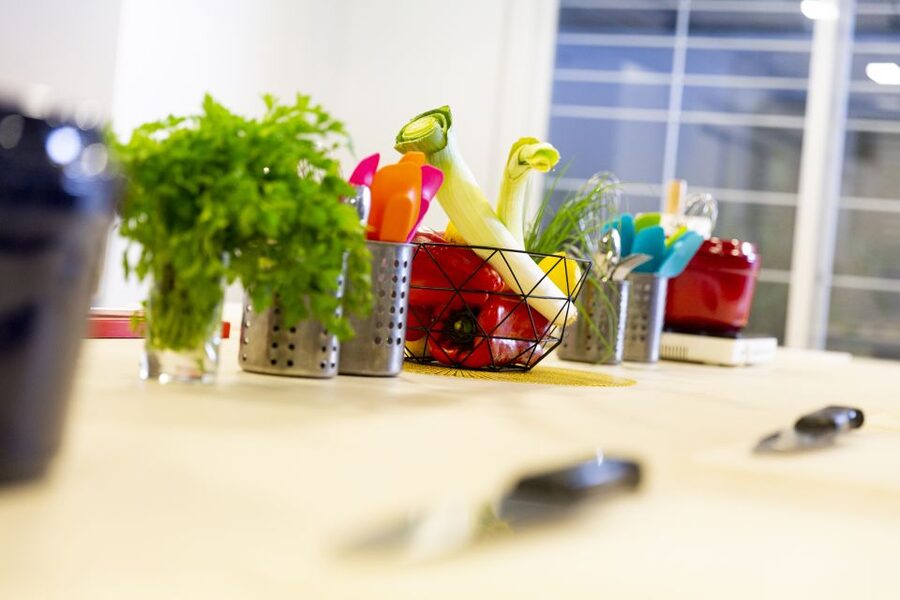
- Ten tapas, several Spanish regions: Prepare a broad selection of small dishes, including gilda from the Basque Country and pan tumaca from Catalonia.
- You cook in teams of three or four: The class is hands-on, but each person is assigned only some tasks.
- Sangría and dinner are included: Sit down at the end and eat the food made by the entire group.
- The class is taught in English: Previous cooking experience is not required.
- Half the menu is vegetarian: The plates cannot be changed, so this matters for strict dietary needs.
- You leave with useful souvenirs: The school gives you an apron and the recipes prepared during class.
Arriving at A Punto Cooking School on Calle de la Farmacia
The meeting point is outside the A Punto shop at Calle de la Farmacia, 6. Pay attention to the instructions: meet at street level outside the shop, not inside the building.
Transportation is not included, so you will need to make your own way there. Starting times vary, and the class lasts two and a half hours. That makes it easy to fit into a Madrid evening, though you should allow enough time to find the address and arrive ready to begin.
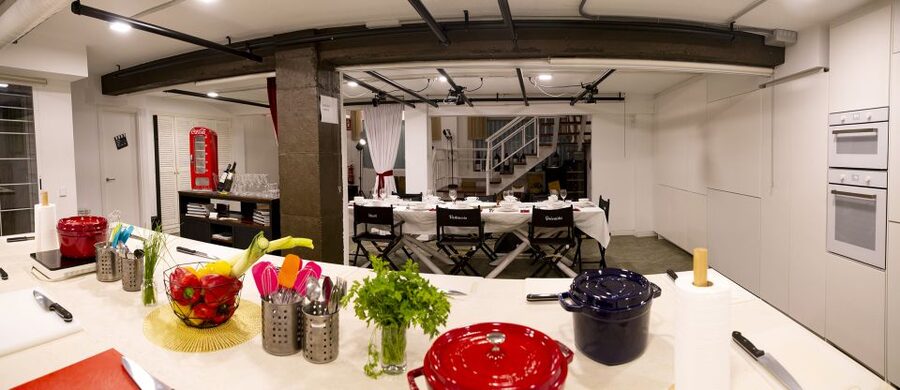
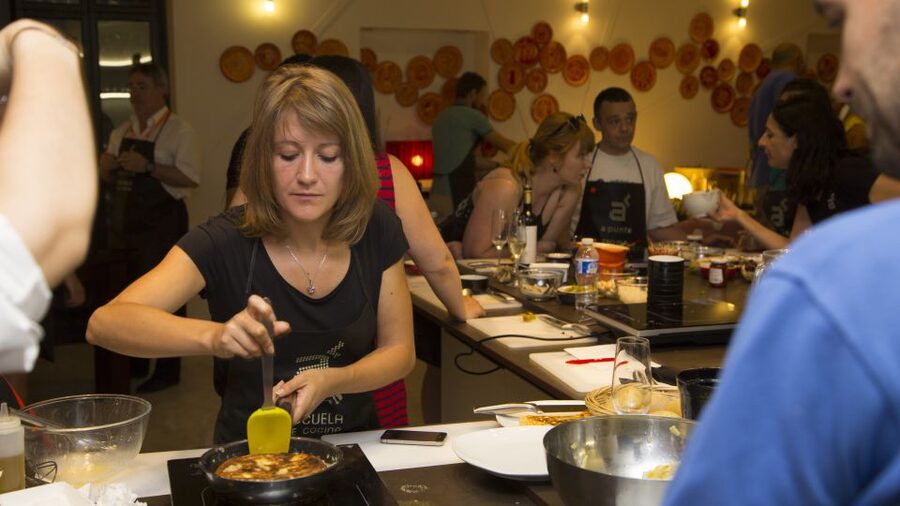
The class takes place in a fully equipped kitchen. You do not need to bring cooking equipment or any special skill. The practical nature of the setting is important here. This is not a demonstration where you sit back and watch a chef do everything.
More Paella and Spanish Classes in Spain:
- Barcelona: Paella Cooking Experience & Boqueria Market Tour
★ 4.8 · 3,661 reviews - Barcelona Paella Cooking Class with Market Visit, Tapas & Sangria
★ 5.0 · 2,531 reviews - Barcelona Interactive Spanish Cooking Experience
★ 4.5 · 2,155 reviews
Ten tapas, ten small lessons in Spanish food
The appeal of the class is its range. Instead of focusing on one famous dish, you move through small plates connected with different parts of Spain. Each recipe offers a little lesson in ingredients, preparation, or local food customs.
Two named examples give you a good idea of the approach. Gilda, associated with the Basque Country, combines peppers and anchovies on a skewer. It is simple, salty, sharp, and very different from pan tumaca, the Catalan preparation of bread with tomato.
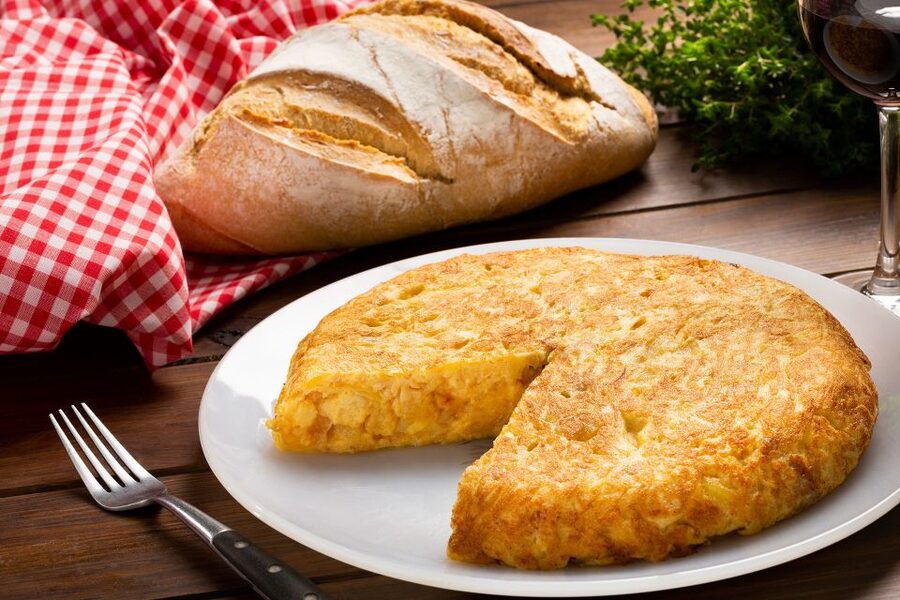
You may also prepare Spanish tortilla, a dish several participants singled out as a highlight. Learning the proper method matters because tortilla looks simple but depends on timing, texture, and careful handling. The point is not merely to copy a recipe. You learn why these dishes work and how Spanish families prepare them.
The menu includes ten tapas, although the exact division of work means you will not make all ten from start to finish yourself. Small teams of three or four share the jobs, so one person might work on one dish while another handles a different preparation.
That arrangement lets the class cover a lot of ground in a short time. It also creates the main tradeoff. If you want to personally make every recipe, this will feel less complete. If you prefer a lively group meal with a wide range of tastes, the shared format works well.
How the 2.5-hour class unfolds
The chef begins by explaining the recipes, ingredients, and traditional methods. Instruction is in English, and no prior cooking experience is expected.
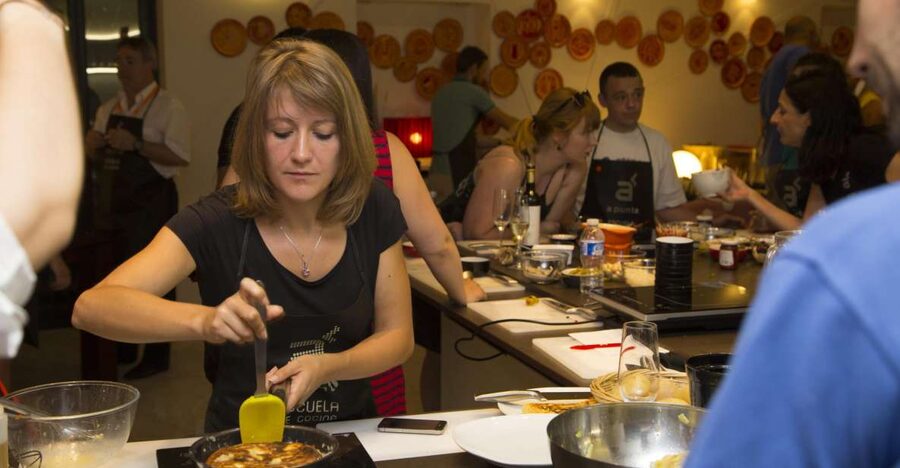
Next, the class divides into small groups. The chef and staff assign tasks and help with the work as the tapas come together. The pace is organized, but several dishes are prepared at the same time. One participant found it difficult to follow every detail while concentrating on an assigned task, so you should expect to learn some recipes directly and pick up other techniques by watching and listening.
The best part of this format is the contact with other people. You are chopping, assembling, stirring, and preparing food beside people from different countries. The chef helps break the ice, and the group naturally has something to discuss because everyone is working toward the same meal.
Guides vary by session. Gustavo receives especially strong praise for his humor, warmth, and clear explanations. Homer, also referred to as Omero in feedback, is described as friendly and well organized, while Eosa and Diego are also praised for creating a relaxed class. The individual chef matters because the experience depends as much on the teaching style as on the recipes.
Past classes have included around 12 people in one session and about 16 in another. The exact size can change. A smaller group gives you more direct help, while a larger class may feel more social but can spread the chef’s attention thinly.
Eating the meal you helped prepare
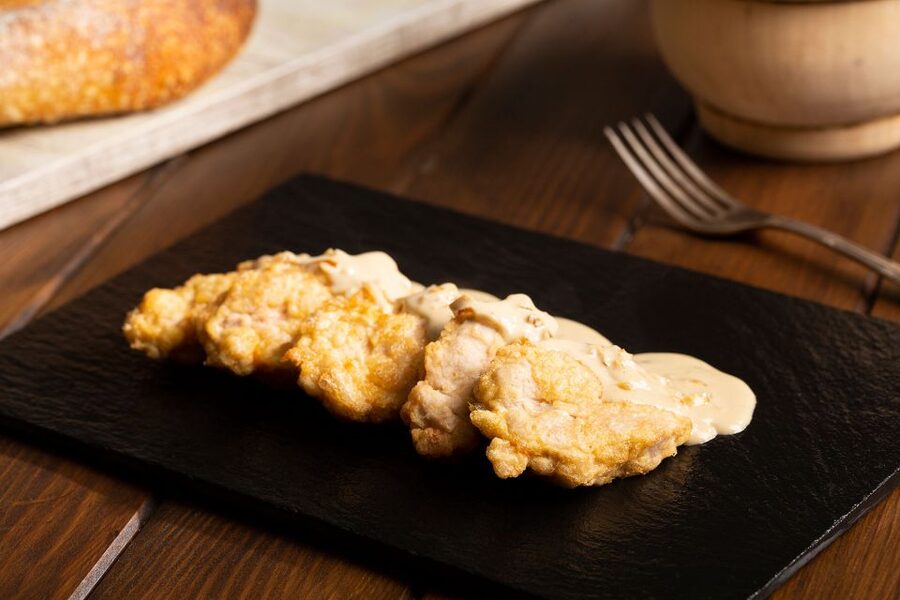
At the end, everyone sits down to eat the tapas together. This is not a token tasting. The class produces enough food to function as a full meal, and one participant specifically noted leaving with plenty to eat.
Sangría is included, giving the final meal a festive Spanish touch. Wine is not included, however, so do not assume the class comes with a wider selection of drinks. One person suggested buying a bottle of wine, but that would be an extra cost and should be treated separately from the advertised inclusions.
The shared table is where the class becomes more than a cooking lesson. You can compare the dishes, talk about how each one was made, and hear more about Spanish food traditions. Several people valued the historical and cultural explanations, as well as suggestions about restaurants and local food.
I like this ending because it rewards the work immediately. You do not prepare a dish and then watch someone else serve it. You sit down with the results, which gives the recipes a stronger connection to the place and the people you met.
A few more cooking classes around Spain worth a look
- Spanish Cooking Class Paella Tapas and Sangria in Madrid
★ 5.0 · 1,340 reviews - Paella Cooking Class, Wine Tasting & Central Market in Valencia
★ 5.0 · 1,150 reviews - Paella Cooking Class in Madrid with Bottomless Wine Pairing
★ 5.0 · 985 reviews - Seville: Spanish Cooking Class with Dinner
★ 4.9 · 900 reviews
What you take home
The recipe copy is the most useful souvenir. It gives you a practical way to recreate the dishes after returning home, and several people specifically looked forward to trying the recipes with family.
The apron is a lighter keepsake, but it is still a nice touch. It marks the activity as something you participated in rather than a meal you simply purchased.
The recipes also make the $80 price easier to judge. You are paying for a meal and a class, not just food. You receive instruction, kitchen access, a guide’s time, sangría, printed recipes, and an apron. Compared with a regular tapas dinner, the class costs more. Compared with a private cooking lesson, it offers a wider social setting at a lower per-person price.
The value is strongest if you will actually use the recipes. If you only want to eat tapas, Madrid has plenty of restaurants that will cost less. If you want to understand how the food is made and bring home something useful, the price is more reasonable.
Vegetarian diners and fixed dishes
About half the menu is vegetarian, which makes this class more suitable for vegetarians than many Spanish food activities. Several dishes can be enjoyed without meat, and one participant appreciated having many vegetarian options.
The important limitation is that the plates cannot be changed. That means the vegetarian provision is built into the menu rather than handled as a fully custom meal.
You should also take care with allergies and strong dietary restrictions. One person with food allergies had a positive experience, but the stated information does not promise individual menu changes. Since dishes cannot be swapped, contact the provider before booking if your diet requires strict avoidance of particular ingredients.
This is not the right pick if you need a completely personalized menu. It is a better fit if you can eat from the planned selection and enjoy trying several small portions.
The social side of the cooking class
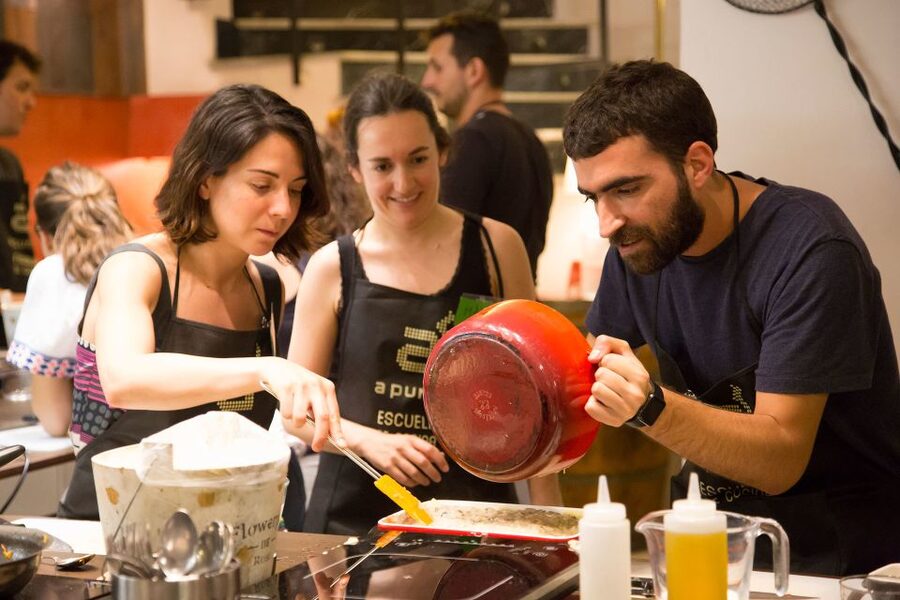
This class works especially well for solo visitors, couples, and friends who want an evening activity with conversation built in. The shared tasks make it easier to meet people without forcing awkward introductions.
The chef’s manner has a big effect. Gustavo is often praised for humor and energy, and other instructors have been described as attentive, friendly, and good at explaining both cooking methods and Spanish food customs. Some sessions have ended with people exchanging contact details, which tells you this can become a sociable night rather than a quiet lesson.
That social energy will not suit everyone. If you want calm, private instruction, a larger group may feel noisy or distracting. You may also spend part of the class watching another team prepare a dish rather than handling it yourself.
I would think of this as a communal kitchen experience. You are part student, part assistant, and part diner. The reward is variety and company, not complete control over every pan.
Practical limits to keep in mind
Children under 14 are not allowed, so this is an adults and older-teen activity. Baby strollers and baby carriages are not permitted, and smoking and audio recording are also prohibited.
The class is conducted in English. That is helpful for many international visitors, but it is not a Spanish-language lesson. You will hear Spanish food names and learn about local traditions, yet the instruction itself is in English.
No transportation is provided. The meeting point is central enough to reach independently, but the booking does not include a pickup or drop-off service.
Cancellation is flexible up to 24 hours before the activity for a full refund, and you can reserve now and pay later. Those terms are useful when your Madrid schedule is still changing, especially since the class may have different starting times.
Who will enjoy this most?
I would recommend the class to you if you like food, enjoy a little teamwork, and want a ready-made social activity in Madrid. It is also a good choice if you have already seen the major sights and want an evening tied to Spanish daily life.
It suits beginners because the chef explains the methods and provides help throughout. It also works for competent home cooks who want regional context and a collection of recipes rather than advanced culinary training.
The class is less suitable if you want private attention, need to choose every ingredient, or expect to make all ten tapas independently. The group format is central to the experience, not a minor detail.
Should you book the Madrid tapas class?
Yes, if you want a friendly, food-centered evening and accept the shared-work format. The strongest reasons to book are the range of regional tapas, the chance to eat a full meal of the group’s cooking, and the useful recipes and apron you take home.
The main warning is simple: you will not personally prepare every dish, and a larger class can make it harder to follow every step. Still, the $80 price is defensible because it includes dinner, sangría, instruction, cultural background, and souvenirs.
Book it if you want to cook a little, learn a lot, and meet people over Spanish food. Skip it if your priority is a private lesson or a fully customized menu.
FAQ
How long does the Madrid tapas cooking class last?
The class lasts 2.5 hours.
How many tapas will be prepared?
The class covers 10 tapas from different regions of Spain. You will prepare them in small groups rather than making every dish alone.
Is the class taught in English?
Yes. The instructor teaches the class in English.
Is sangría included?
Yes. Sangría and the meal are included. Wine is not included.
Is a vegetarian option available?
Yes. About half of the menu is vegetarian. The plates cannot be changed, so the class does not offer a fully customizable menu.
Are children allowed to attend?
No. Children under 14 are not allowed.
Just added around Spain
- Basque Pintxos and Tapas Cooking Class in Bilbao★ 5.0 · 73 reviews
- Paella and Burnt Basque Cheesecake Cooking Class (in Bilbao)★ 5.0 · 46 reviews
- Small-group Immersive Basque Cooking Class in Bilbao with Open Bar★ 5.0 · 65 reviews
- Pintxos and Tapas Cooking Class in Bilbao★ 5.0 · 38 reviews
- Rooftop Paella Seafood Cooking Class Experience in Barcelona★ 5.0 · 59 reviews
- Private Authentic Paella Cooking Class in Barcelona with Josh★ 5.0 · 3 reviews
- Private Barcelona Market Tour & Paella Cooking Class with Josh★ 5.0 · 4 reviews
- Premium Paella & Tapas Feast: Unlimited Wine & Rambla Views★ 5.0 · 13 reviews
Spanish & Paella Cooking Classes, compared.
Paella Cooking Experience & Boqueria Market Tour
Read our review →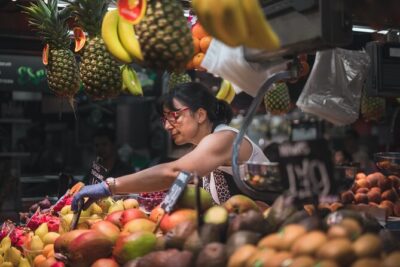
Barcelona Paella Cooking Class with Market Visit, Tapas & Sangria
Read our review →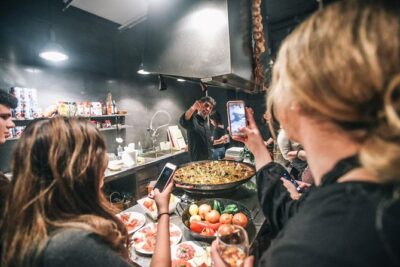
Barcelona Interactive Spanish Cooking Experience
Read our review →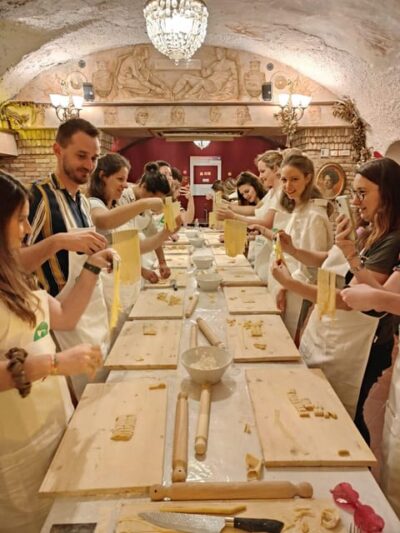
Pasta & Tiramisu Cooking Class near the Spanish Steps
Read our review →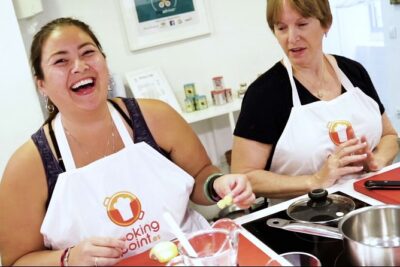
Spanish Cooking Class Paella Tapas and Sangria in Madrid
Read our review →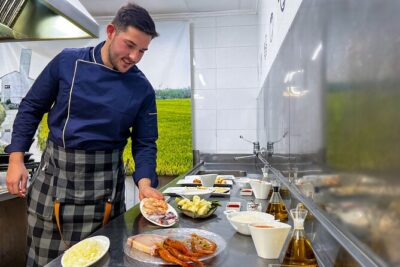
Paella Cooking Class, Wine Tasting & Central Market in Valencia
Read our review →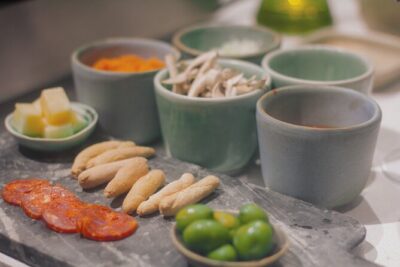
Paella Cooking Class in Madrid with Bottomless Wine Pairing
Read our review →
Lists this class appears in