
REVIEW · ACCRA, GHANA
Local Ghanaian Cooking Class in Accra to help support wellness community center
Food is the quickest way into a new culture. This Accra cooking class combines a local market visit with practical lessons in Ghanaian home cooking, then sends you back to the Global Wellness Mission with a meal you helped prepare. I like the friendly, family-style setting and the chance to support a community center that offers health screenings, nutrition education, exercise programs, and activities for children. The main thing to consider is that the hands-on work can vary, and some participants have found that ingredients were already prepared.
The class costs $45 per person, includes lunch and local alcoholic drinks, and takes roughly six hours according to the tour details. In practice, some sessions have lasted closer to two hours, so you should confirm the expected timing when you book. Small groups allow more contact with your host, though the activity can accept up to 20 people.
Five things to know before booking
- The market stop comes first: You travel by car to a local market to gather ingredients for the meal.
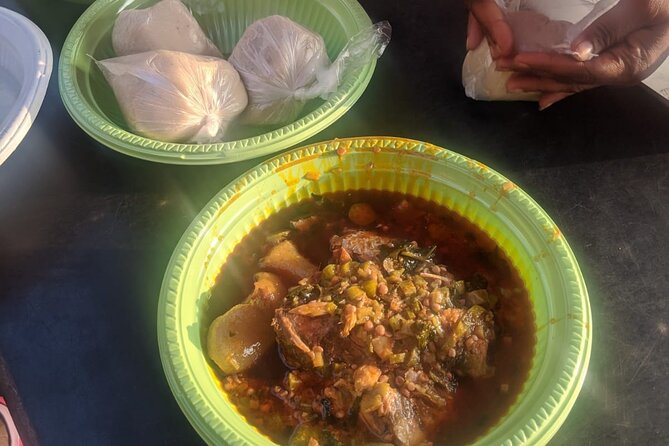
- You choose from Ghanaian staples: Possible dishes include fufu, banku, jiji, rice balls, okra soup, groundnut soup, palm-nut soup, light soup, plain soup, stew, fish, chicken, and jollof rice.
- Local spirits are part of the welcome: Emergency, Hatso, and Uwuba are made with akpeteshie and infused with bark or tree leaves.
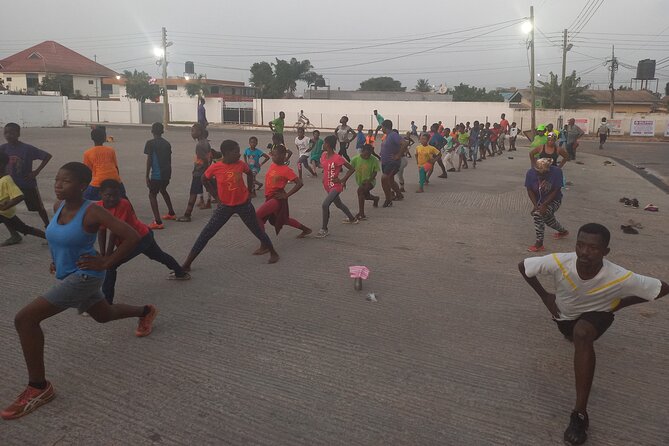
- Your booking supports local programs: The Global Wellness Mission provides physical activity, nutrition, health, school, art, and dance programs.
- The level of participation may differ: Some sessions are very hands-on, while others may have much of the chopping or preparation finished before you arrive.
- Plan for a flexible schedule: The stated duration is about six hours, but one account describes a two-hour class.
Starting at the Global Wellness Mission in Accra
The class begins at Global Wellness Mission, CM7, Third Oloti Street, Accra. It runs Monday through Saturday, with the published start window listed from 8:00 a.m. to noon. The experience ends at the same meeting point.
That return to the starting place is useful if you are arranging another activity later in the day. Still, do not build a tight schedule around the advertised six hours. The actual cooking period may be shorter, and the pace can depend on the group, the market visit, and the dishes selected.
The center itself gives the class more purpose than a standard food lesson. Your payment helps fund physical activity programs, nutrition education, health screenings, after-school lectures for children, and art and dance programs. That does not turn the class into a formal charity visit, but it gives the experience a clear local benefit.
You are not simply paying for lunch and a recipe demonstration. You are helping sustain a place that works on health and community programs. For many people, that added connection will make the $45 price feel fair.
A few more cooking classes around the world worth a look
- Mini Group: Authentic Thai Cooking & Wellness Experience
★ 4.9 · 7 reviews - Thai Culinary Class by the Beach at Melati Resort & Spa
★ 5.0 · 6 reviews
Shopping for ingredients at a local market
After meeting your host, you travel by provided car to a local market. The purpose is practical: you help gather the ingredients needed for the dishes you will cook.
This part can be one of the most useful pieces of the experience. Ghanaian cooking depends on ingredients and methods that may be unfamiliar if you usually cook from packaged goods. Seeing the ingredients before they reach the pot helps you understand the meal as a whole, rather than treating each recipe as an isolated set of instructions.
The market visit also gives you a look at ordinary shopping in Accra. The available details do not specify the market’s name, exact walking route, or the length of the stop, so you should not expect a fixed sightseeing tour. Think of it as a food-focused errand with cultural value, not a major market excursion.
The transport matters, especially in Accra, where getting between neighborhoods can take time. Since the car is provided, you do not have to arrange a taxi for this part. Ask at the start how long the market portion will last if your day is tightly planned.
Learning Ghanaian dishes from scratch
Back at the cooking location, the class turns to the main event. You may learn how to pound fufu, banku, jiji, or rice balls while preparing a soup or stew.
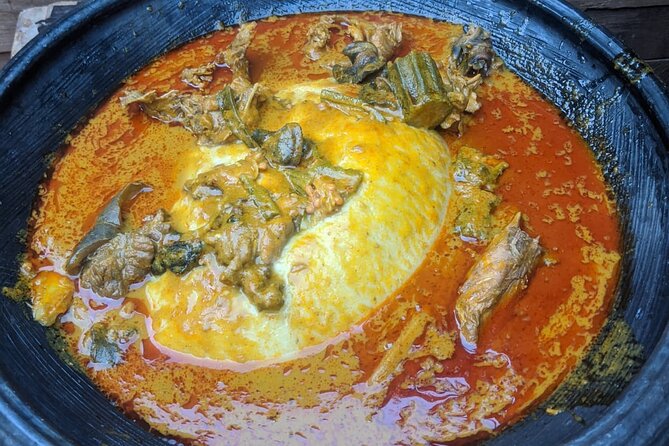
These dishes offer different textures and techniques. Fufu and banku require work beyond simply boiling or frying. The pounding and mixing are central to the lesson, so the class can give you a better feel for Ghanaian food than a meal at a restaurant would.
The possible soups and stews include okra soup, groundnut soup, palm-nut soup, light soup, and plain soup. You may also prepare foods such as fried fish, chicken, stew, or jollof rice. The exact menu is not fixed in the information provided, so your selection may depend on the group and the host.
One particularly enthusiastic account singled out a meal of banku, fried fish, stew, chicken, and jollof rice, with the jollof receiving the highest praise. Another session focused on fufu with soup. These examples show that the class can cover a broad range of Ghanaian cooking, but you should ask what will be prepared before you arrive if you have a specific dish in mind.
A useful tip is to state your preferred dish and dietary needs early. Dietary requests can be accommodated when requested in advance. This is especially important if you do not eat meat, fish, peanuts, or alcohol. The information confirms that requests are possible, but it does not list a standard alternative menu.
How hands-on is the cooking?
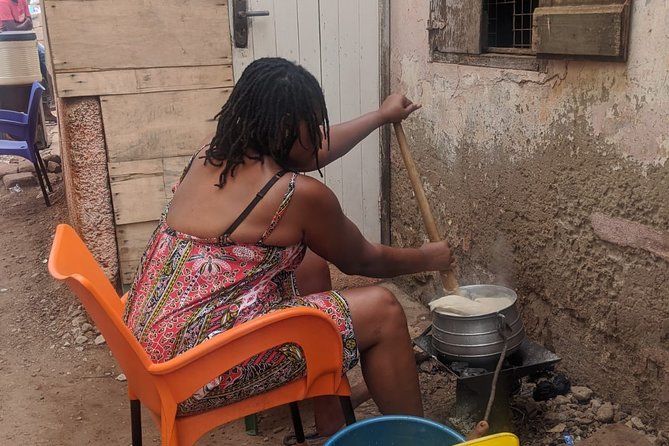
This is the most important point to clarify before booking. The class is presented as hands-on, and several accounts describe active participation, cooking, laughter, and close guidance from the host and family members.
At the same time, one participant expected more direct work and found that some ingredients had already been prepared. That means the experience is not identical every day. You may do the pounding, stirring, seasoning, and cooking yourself, or you may receive more of a guided demonstration with selected tasks.
If you want a full cooking lesson, ask these questions ahead of time:
- Which dishes will I personally prepare?
- Will the chopping and ingredient preparation be done before arrival?
- How many people will share the cooking tasks?
- Can I select a dish such as jollof rice, banku, fufu, or okra soup?
The maximum group size is 20, but smaller groups are possible and are likely to provide more time with the host. The experience specifically emphasizes small-group attention, although the exact group size for your date is not guaranteed.
Same place, a different thing to cook:
- Half-Day Thai Cooking Class at Organic Farm in Chiang Mai
★ 5.0 · 19,087 reviews - Florence: Pasta Cooking Class with Unlimited Wine
★ 4.9 · 10,285 reviews - 3 in 1 Cooking Class near Navona: Fettuccine, Ravioli & Tiramisu
★ 5.0 · 7,376 reviews - Florence: Pasta & Tiramisu Cooking Class with Unlimited Wine
★ 4.9 · 6,708 reviews
Meeting the hosts and local families
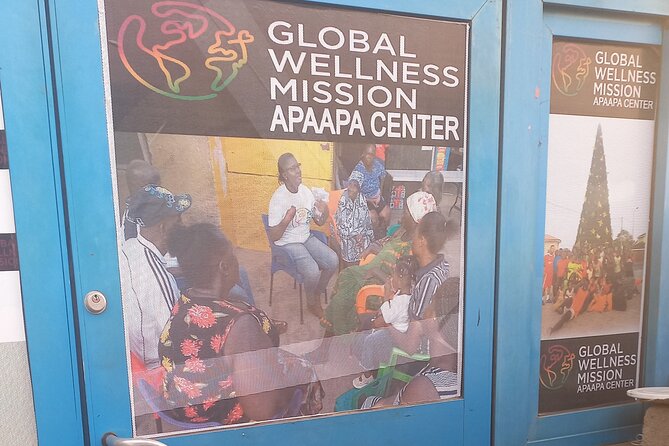
The strongest part of the experience is the human contact. Hosts named in the feedback include Auntie Irene, Ms. Pat, Gifty, and Ms. Linda. Their roles may vary by date, but the repeated pattern is warm instruction, conversation, and help with the food.
One session with Auntie Irene included banku, fried fish, stew, chicken, and jollof rice. Gifty was praised for taking time to make sure the participant understood the process and for adapting the morning to personal preferences. Ms. Pat and her family were described as welcoming, with plenty of conversation and laughter around the meal.
That family setting can make the class feel personal rather than commercial. You get a chance to ask questions while the food is being made, and the meal becomes a shared activity. The tradeoff is that a family kitchen may not run with the exact timing or structure of a professional culinary school.
I would choose this class for connection and local guidance, not for a polished cooking studio. If you want strict recipes, printed measurements, and a fixed lesson plan, this may feel loose. If you enjoy learning by watching, trying, tasting, and talking, the format should suit you well.
Tasting akpeteshie-based local spirits
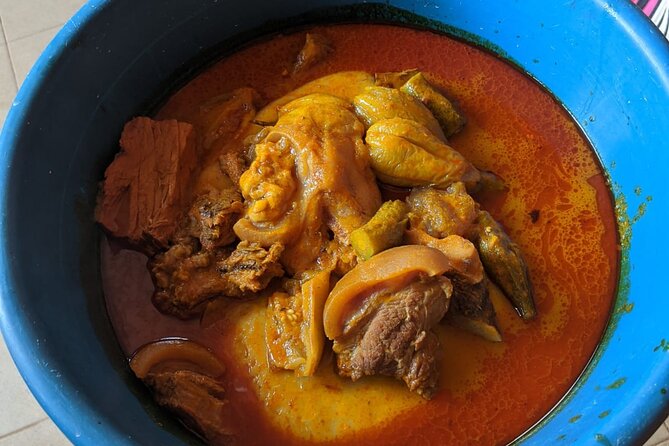
Before or during the cooking, you may taste local spirits called Emergency, Hatso, and Uwuba. These are made from akpeteshie and soaked with local bark or tree leaves.
This is a distinctive part of the experience. The spirits offer a taste of local drinking culture that you are unlikely to find in a standard cooking class aimed at an international audience. You can ask the host what is in each drink and how it is traditionally served.
Alcohol is included, while soda and beer are not. If you do not drink, say so when booking or at the start. The available information confirms that dietary requests can be accommodated, but it does not specifically state a nonalcoholic replacement.
You should also pace yourself. The class includes food, conversation, and practical work, so there is no need to treat the spirit tasting as a drinking session. It is best approached as a small cultural sample.
Sitting down to eat what you prepared
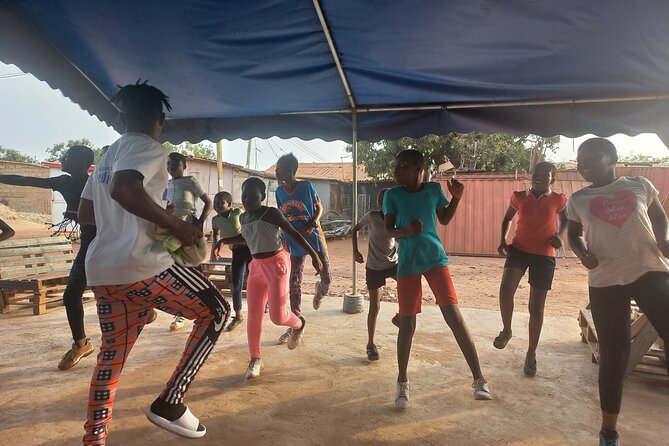
Lunch is included, and you eat the food made during the class. This gives the cooking a satisfying finish: you see the ingredients at the market, work with them in the kitchen, then taste the result at the table.
The dishes can vary, but the examples include soup with fufu, banku with okra stew, fried fish, chicken, stew, and jollof rice. The strongest food praise focused on the jollof, though the food was also described as very good across other sessions.
This is not only about flavor. Ghanaian staples such as fufu and banku are often eaten with soup or stew, and the texture and method are part of the experience. You get a chance to understand how the food is handled and enjoyed, rather than simply ordering an unfamiliar dish from a menu.
The meal also gives you time for conversation. Several accounts valued the laughter and friendly talk as much as the cooking itself. That makes this a good choice for people who want a social morning rather than a silent, technical lesson.
The real value of the $45 price

At $45, the class is reasonably priced for a six-hour activity that includes transport to the market, ingredients, lunch, instruction, and local spirits. The community connection adds value, since your booking supports programs at the wellness center.
The value is less clear if your session lasts only about two hours and much of the preparation is finished before you arrive. In that case, you are paying mainly for a hosted meal, cultural exchange, and a shorter lesson. That can still be worthwhile, but it is different from a full-day culinary workshop.
I would judge the price by what you want. If you want a broad Accra sightseeing tour, $45 will not buy that here. If you want a local food experience with a meal, market shopping, transport, and a community benefit, it is a sensible price.
The class is often booked about 36 days ahead, so plan early if your Accra dates are fixed. Free cancellation is available until 24 hours before the start time. Changes or cancellations inside that window are not refunded.
Who should book this Accra cooking class?
I would recommend it to people who:
- Want to learn Ghanaian dishes rather than only eat them
- Enjoy small-group conversation and family-style hospitality
- Like market visits with a clear food purpose
- Want their spending to support community programs
- Are open to a flexible schedule and changing menu
- Need dietary requests considered in advance
It may be less suitable if you need a guaranteed six-hour class, a formal kitchen setup, or a precise menu. It is also not the best match if you dislike spirits or expect every ingredient to be prepared in front of you.
The activity is near public transportation, and service animals are allowed. The provided car covers the trip to the market, while the class begins and ends at the Global Wellness Mission.
FAQ
How much does the cooking class cost?
The price is $45 per person. Lunch and local alcoholic beverages are included, while beer and soda are not.
How long does the experience last?
The published duration is approximately six hours. One account describes a class lasting about two hours, so the actual schedule can vary.
Where does the class begin and end?
It begins at Global Wellness Mission, CM7, Third Oloti Street, Accra, Ghana, and ends back at the same meeting point.
What Ghanaian foods might I learn to prepare?
Possible dishes include fufu, banku, jiji, rice balls, okra soup, groundnut soup, palm-nut soup, light soup, plain soup, stew, fried fish, chicken, and jollof rice. The exact menu can vary.
Are dietary requests accepted?
Yes. Dietary requests can be accommodated when made in advance.
Can I cancel for a full refund?
Yes, if you cancel at least 24 hours before the experience begins. Cancellations or changes made less than 24 hours ahead are not refunded.
Should you book it?
Book this class if you want local food, friendly instruction, and a direct community benefit more than a tightly scripted culinary course. The market trip, Ghanaian staples, akpeteshie tasting, and shared meal make it a useful cultural experience at a fair price.
Before paying, confirm the expected duration, the menu, and how much preparation you will personally handle. With those details clear, this is a strong pick for an Accra morning or half-day, especially if you enjoy meeting local families and learning by doing.
Just added around the world
- Aroidee’s Farm-Fresh Thai Cooking Experience★ 5.0 · 8 reviews
- Signature Thai Cooking Course★ 5.0 · 79 reviews
- Private Half-Day Thai Cooking Class in Chiang Mai★ 5.0 · 4 reviews
- Half Day Guided Thai Cooking Class in Chiang Mai★ 5.0 · 13 reviews
- Private Virtual Thai Cooking Class★ 5.0 · 9 reviews
- Northern Thai Cooking Class in Chiang Mai in a Countryside Home★ 5.0 · 2 reviews
- Online Thai and Akha Cooking Class★ 5.0 · 70 reviews
- 5 Hour Morning Thai Cooking Course★ 5.0 · 31 reviews
Cooking Classes, compared.

Half-Day Thai Cooking Class at Organic Farm in Chiang Mai
Read our review →

3 in 1 Cooking Class near Navona: Fettuccine, Ravioli & Tiramisu
Read our review →
Pasta & Tiramisu Cooking Class with Unlimited Wine
Read our review →
Hanoi Cooking Class: Culture, Local Market & Meaning CSR Impact
Read our review →
5 Traditional Dishes Hanoi Cooking Class with Market Trip
Read our review →
Cooking Class and Lunch at a Tuscan Farmhouse with Local Market Tour from Florence
Read our review →