
REVIEW · CENTRAL THAILAND, THAILAND
Mini Group: Authentic Thai Cooking & Wellness Experience
Good food begins at the market. This five-hour Thai cooking experience combines a shrine visit, market shopping, herb lessons, and hands-on cooking at Uncle and Aunty Cooking House. I like the small group of eight and the chance to make curry paste and coconut milk from scratch. The main consideration is the early 8:00 AM start and the moderate walking and standing involved.
I also like the family setting, herbal welcome drink, garden visit, and daily menu changes. The class feels more personal than a large demonstration, and Sunee, her family, and the staff help create a warm atmosphere. If you want to choose every dish yourself, though, this may not be the right class, since your menu depends on the day of the week.
Key Points at a Glance
- Start at Ganesha Shrine: Begin with a short cultural stop before walking to Huai Khwang Market.
- Shop at Huai Khwang Market: Choose vegetables, herbs, fruit, spices, and other ingredients with your guide.
- Learn the foundations: Make coconut milk and curry paste using traditional methods.
- Cook in a group of eight or fewer: Get direct help while preparing Thai soup, curry, stir-fried dishes, salads, and dessert.
- Enjoy a home-style setting: The class takes place at Uncle and Aunty Cooking House, with a garden tour and herbal drink.
- Take home useful extras: Receive digital recipes, photographs from the class, and a certificate of completion.
From Ganesha Shrine to Huai Khwang Market
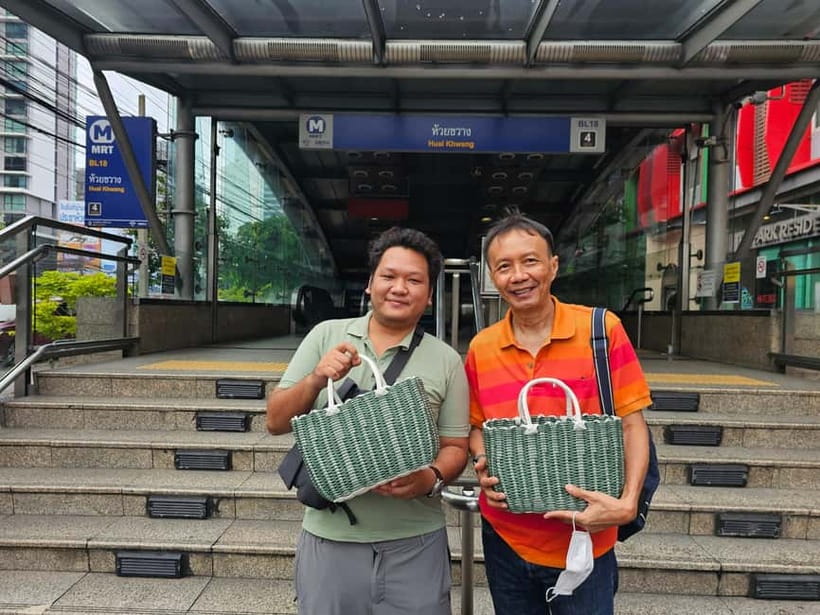
The experience begins at 8:00 AM at MRT Huai Khwang Station, Exit 4. Your guide meets you there, so you do not need to find a private house or cooking school on your own.
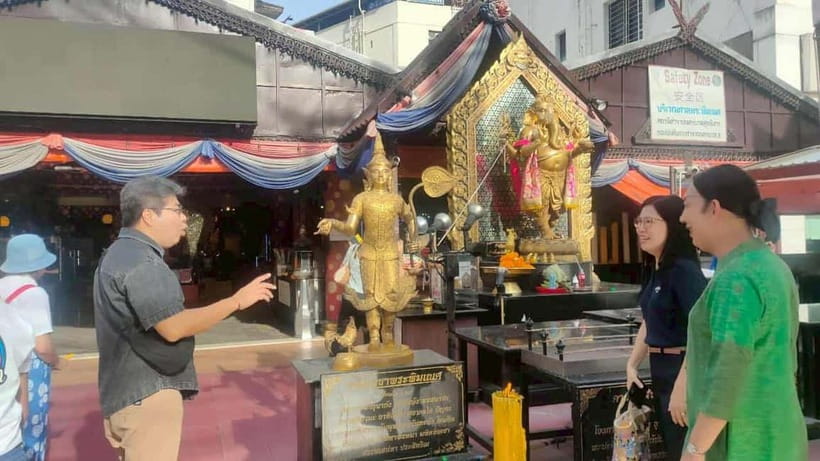
The first stop is Ganesha Shrine, a spiritual site associated with wisdom and prosperity. You will see traditional offerings and rituals before moving on to the food portion of the morning. It is a brief cultural introduction, not a long temple tour, but it gives the day a sense of place.
From the shrine, you walk about 400 meters to Huai Khwang Market. That short distance matters: you get a quick look at an ordinary neighborhood route instead of being dropped at a cooking venue with no connection to local daily life.
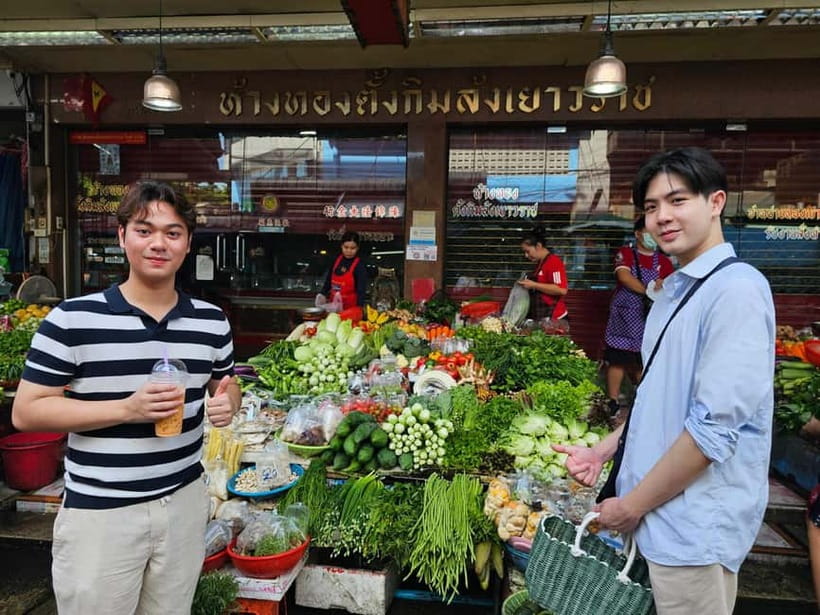
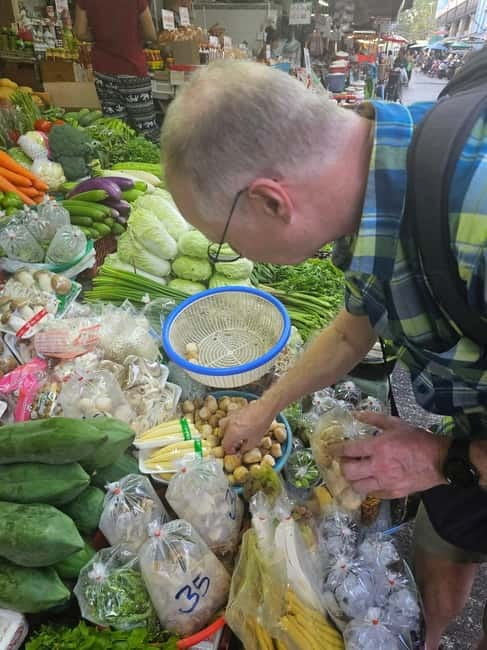
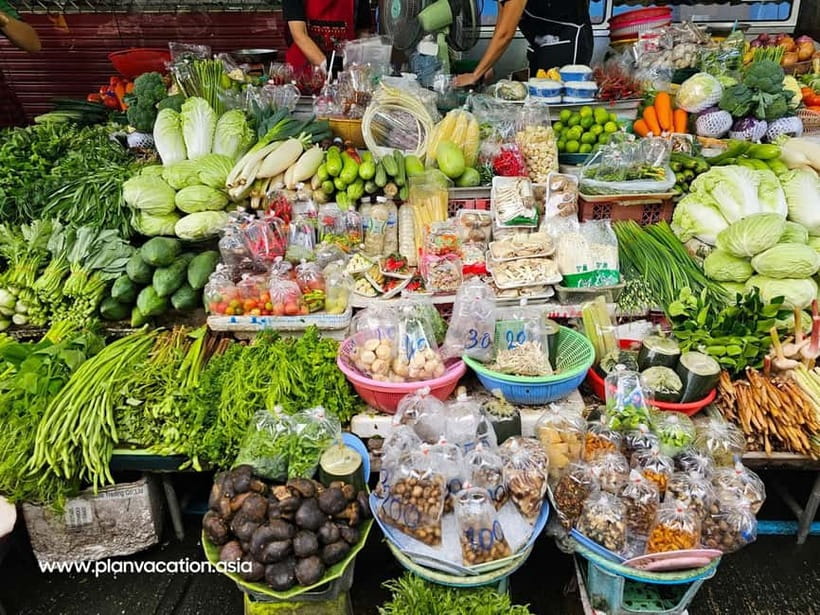
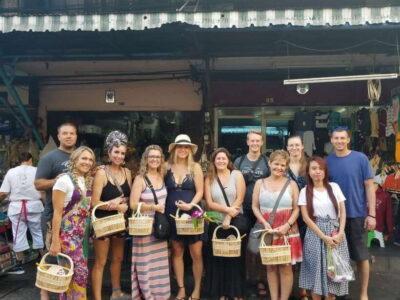
At the market, your guide helps you select the ingredients used later in the class. Expect stalls filled with vegetables, fragrant herbs, tropical fruit, and Thai spices. You may also see less familiar ingredients that do not often appear in Western supermarkets.
This part is more useful than simply taking photographs. You begin to see how Thai cooking is built around fresh produce, herbs, curry pastes, and several contrasting flavors. If you have never shopped for Thai ingredients before, the explanations can make later recipes easier to repeat at home.
Wear comfortable shoes. The walk is not long, but the morning includes shopping, standing, and carrying on with the rest of the class. You should also arrive on time because the market visit is the first fixed part of the schedule.
More Thai Cooking Classes in Bangkok:
- Bangkok: Hands-on Thai Cooking Class and Market Tour
★ 4.9 · 1,614 reviews - Bangkok: Tingly Thai Cooking School Half-Day Cooking Class
★ 4.9 · 1,191 reviews - Bangkok: Maliwan Thai Cooking Class with Market Tour
★ 4.9 · 1,133 reviews
A Tuk-Tuk Ride and a Garden Welcome
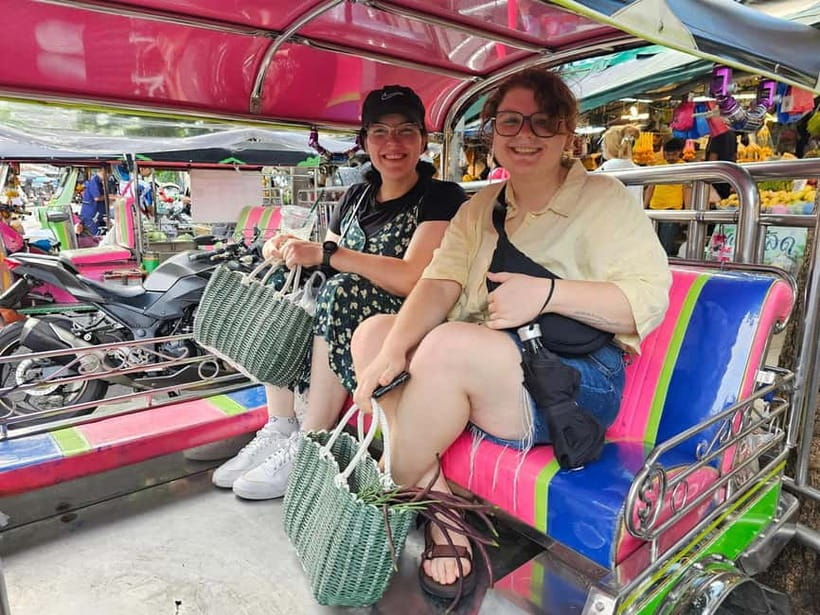
After the market, transportation takes you to Uncle and Aunty Cooking House. One account of the experience describes the ride as a short tuk-tuk trip, adding a bit of local flavor to the transfer. The exact transport arrangement may vary, but transportation from the market to the cooking venue is included.
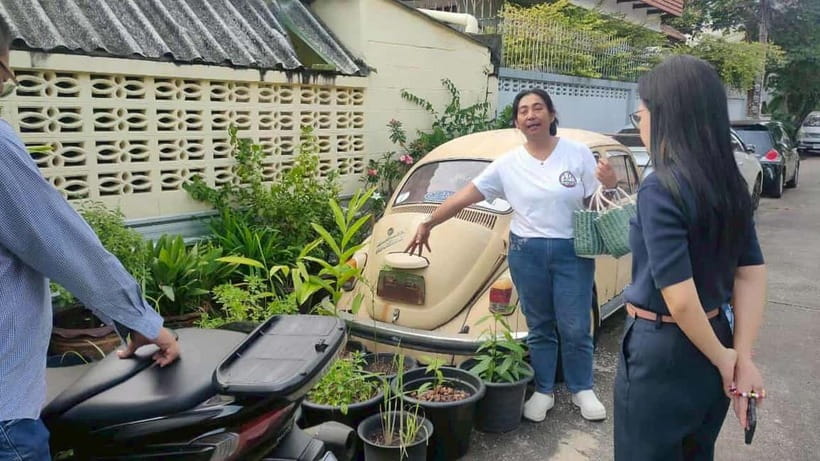
At the house, you receive a herbal welcome drink and have time to walk through the garden. The garden contains herbs and flowers used in Thai cooking, giving you a chance to see ingredients in plant form before they reach the chopping board.
This is where the wellness side of the experience makes sense. It is not a spa treatment or a formal health program. Instead, it connects food with herbs, fresh plants, and a calmer home setting. The garden also provides a welcome change after the noise and movement of the market.
The cooking venue is described as Sunee’s home, where her family and employees help run the class. That family connection is one of the strongest reasons to choose this experience. You are not simply watching an instructor perform recipes in a commercial kitchen. You are cooking in a home-style setting with people who treat the meal as a shared event.
Making Coconut Milk and Curry Paste From Scratch
Before cooking the daily menu, the instructor introduces the ingredients selected at the market and garden. You learn what they are used for and how they affect the finished dish.
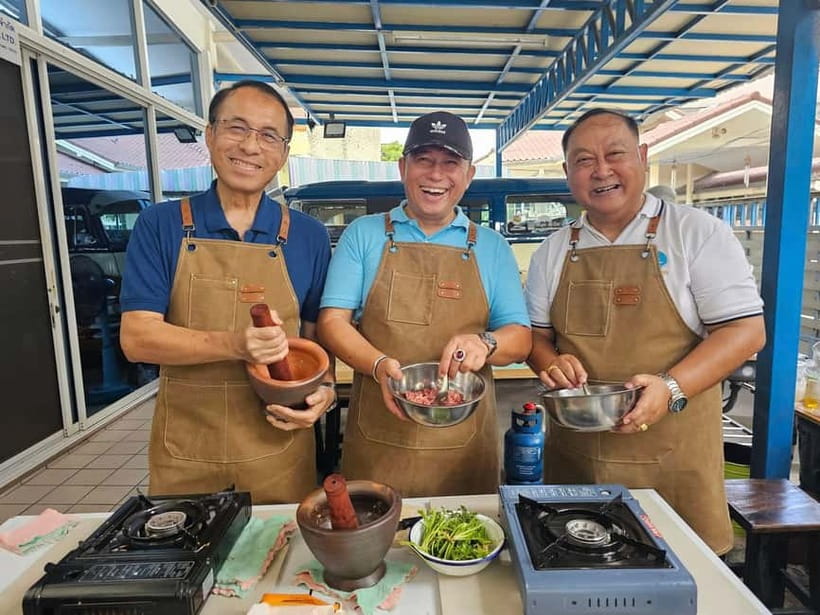
Two especially useful lessons focus on coconut milk and curry paste. These are basic building blocks in Thai food, yet many classes skip the process and start with ready-made products. Here, you learn the traditional preparation methods instead.
Making these foundations yourself gives you a better sense of why Thai curries taste different from one another. It also helps you judge what can be adapted at home and what depends on fresh ingredients.
The class provides all ingredients and equipment. Instruction is available in English, and German guidance is also offered. The small group limit, a maximum of eight participants, should give you room to ask questions and receive help while preparing your food.
The format is hands-on. You are not just sitting at a table while someone else does the difficult work. You prepare dishes under supervision, with guidance through the steps. That makes the class a good fit if you want practical cooking skills rather than a food demonstration.
What You Cook Depends on the Day
The menu rotates daily, so check the day of your booking before you reserve. You do not select a custom menu from the full weekly list. That is both a strength and a limitation: the changing schedule keeps the class fresh, but you may need to book a particular day if you have your heart set on green curry or mango sticky rice.
Here is the weekly schedule:
- Monday: Beef Panang curry, stir-fried morning glory with red chili, poached eggs, fried chicken with Thai herbs, and Khanom Tom, a coconut sweet.
- Tuesday: Tom Kha Gai, stir-fried tofu with bean sprouts, deep-fried pork with herbs, fried rice, and steamed pandan layer cake.
- Wednesday: Hot and sour shrimp soup with mixed vegetables, stir-fried chicken with holy basil, Thai omelet, Thai-style fried noodles, and Kanom Tuay, a steamed coconut custard.
- Thursday: Stir-fried bamboo shoot with curry paste, clear tofu soup, deep-fried pork belly with herbs, Chinese-style fried noodles, and steamed banana cake.
- Friday: Chicken green curry, stir-fried kale with salted fish, fried chicken with garlic and pepper, stir-fried rice noodles with soy sauce, and a soft mung bean crepe.
- Saturday: Som Tum, spicy minced meat salad, hot and spicy soup, fried chicken with Thai herbs, and banana in coconut milk.
- Sunday: Tom Yum Gai, stir-fried Napa cabbage, stir-fried beef with red curry paste, stir-fried rice noodles with chicken, and poached pumpkin in coconut milk.
The schedule includes several preparations each day, with soup or salad, stir-fried food, curry or another main dish, and dessert represented across the menu. The description refers to four dishes, while the daily menus list five preparations, so you should think of this as a multi-dish tasting and cooking session rather than four large restaurant portions.
The menu offers a useful range. Tom Kha Gai and Tom Yum Gai show two different styles of Thai soup. Panang and green curry offer different curry profiles. Som Tum introduces raw papaya salad, while dishes such as fried rice, fried noodles, and stir-fried vegetables give you techniques that are easy to practice at home.
There are also ingredients you may not expect, including salted fish, holy basil, bamboo shoots, mung beans, and coconut custard. This makes the class more interesting than a tourist menu built only around Pad Thai.
A few more cooking classes around Bangkok worth a look
- Local Ghanaian Cooking Class in Accra to help support wellness community center
★ 4.5 · 22 reviews - Thai Culinary Class by the Beach at Melati Resort & Spa
★ 5.0 · 6 reviews
Eating Together at Midday
Cooking begins around 10:00 AM, and the meal is served at about noon. You eat the food you have prepared with the other participants, which gives the class a social finish.
The shared meal is one of the best parts of the format. You can compare how the dishes taste, talk about the morning, and see how the separate preparations work together. The setting is friendly and informal rather than polished or formal.
The food you prepare is the focus, so do not expect a separate restaurant lunch with a long selection of additional dishes. Your portion and the exact menu depend on the day’s class. The experience includes a herbal welcome drink, but alcoholic drinks are not included.
Tell the provider about allergies or dietary restrictions at least 48 hours ahead of time. The information provided does not promise that every menu can be changed, so early notice is important. If your diet is especially restricted, ask before booking rather than assuming the daily dishes can be replaced.
Why the Small Group Matters
A limit of eight people is a major advantage here. Thai cooking often involves quick timing, several ingredients, and unfamiliar techniques. In a large class, you can end up waiting for equipment or watching from the back. A group this size should make it easier to follow each step and ask for help.
The small setting also supports the family atmosphere. Sunee and her family are part of the experience, and the cooking house feels more personal than a busy training kitchen. The strongest praise focuses on the friendly people, the cozy setting, and the fun of cooking four dishes under supervision.
You should still keep your expectations realistic. A small group does not mean one private instructor for each person. You will be sharing the kitchen and working alongside other participants. The goal is a social class with personal guidance, not a one-to-one professional cooking lesson.
At the end, you receive online recipes and a certificate. Photos are also part of the experience described by participants, which gives you a useful record of the day. The certificate is a souvenir rather than a professional qualification, but the digital recipes have real value if you plan to cook Thai food again.
Is $44 a Fair Price?
At $44 per person, the price is reasonable for a five-hour activity that includes the market tour, cooking class, ingredients, equipment, welcome drink, garden visit, transfers between the market and cooking house, digital recipes, certificate, and travel insurance.
The value is strongest if you appreciate several activities in one package. You are not paying only for a meal. You are also paying for market guidance, ingredient instruction, hands-on preparation, transport between the main stops, and a small class.
The price is less compelling if you mainly want to eat Thai food cheaply or if you already know how to make curry paste and coconut milk. Bangkok has less expensive meals, and a cooking class takes most of a morning. Still, the combination of shopping, cooking, and eating makes this a solid choice for a visitor who wants a practical cultural activity.
Personal expenses, extra snacks, alcohol, and travel to the meeting point are not included. You are responsible for reaching MRT Huai Khwang Station. The class ends back at MRT Huai Khwang Exit 4, which makes it easier to continue your day from the same transport connection.
Who Should Book This Class?
I would recommend this experience to first-time visitors who want more contact with everyday Thai food. It suits couples, solo participants, families, and small groups who enjoy cooking and do not mind sharing the work.
It is also a good choice for anyone who wants to understand ingredients before trying recipes at home. The market stop and garden visit provide context that a kitchen-only class would miss.
You may want to choose another activity if you dislike early starts, moderate walking, standing for several hours, or menus set by the calendar. The class is not designed for pets, and alcohol and drugs are not allowed. Bring a passport or ID card, along with comfortable clothing and shoes suitable for walking and cooking.
The experience offers free cancellation up to 24 hours before the start time, and you can reserve now and pay later. Those options help if your Bangkok schedule is still changing.
Final Verdict: A Friendly, Useful Morning in Bangkok
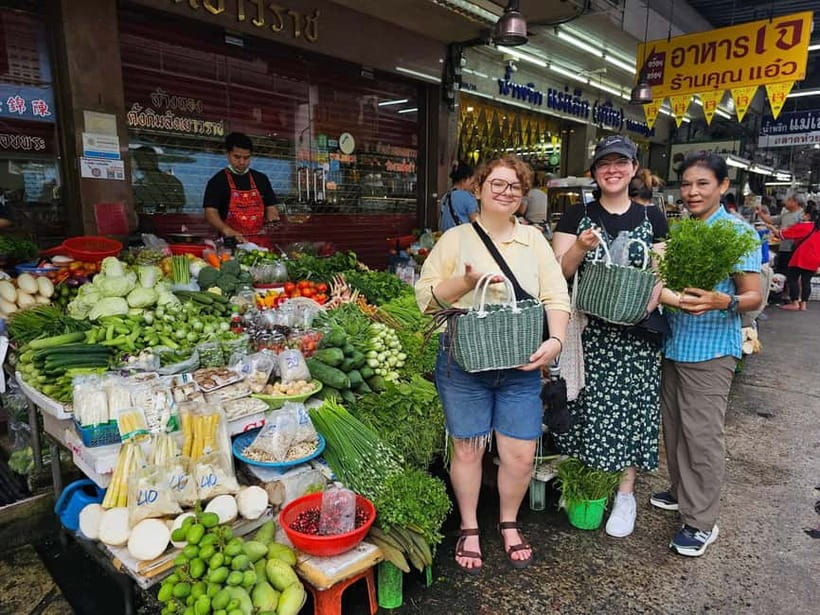
Book this class if you want a personal, home-style introduction to Thai food rather than a quick demonstration. The market visit, herb garden, scratch-made coconut milk and curry paste, and small group all add substance to the morning.
The biggest strengths are the friendly family setting, the rotating menu, and the chance to cook several dishes yourself. The main drawbacks are the early meeting time, the fixed daily menu, and the need to manage walking and standing.
For $44, you get a full half-day of food, culture, instruction, and a shared meal. Pick your booking date based on the dishes you want, notify the provider about dietary needs early, and arrive at Huai Khwang MRT Exit 4 ready to cook.
FAQ
Where does the Thai cooking experience begin?
The experience begins at MRT Huai Khwang Station, Exit 4. Your guide meets you there at the scheduled start time.
Where does the experience end?
The activity ends back at MRT Huai Khwang Station, Exit 4.
How long does the experience last?
The experience lasts about five hours. The listed schedule runs from 8:00 AM until approximately 1:00 PM.
What happens during the market visit?
You walk to Huai Khwang Market, located about 400 meters from Ganesha Shrine, and select fresh vegetables, herbs, tropical fruit, spices, and other ingredients for the class.
How many people are in the group?
The class is limited to eight participants.
Which languages are available?
Live guidance is available in English and German.
Is transportation included?
Transportation from the market to the cooking venue and from the cooking venue back to the first meeting point is included. You must arrange your own transportation to MRT Huai Khwang Station.
Can I choose the dishes I cook?
The menu changes by day, so your dishes depend on the date you book. The weekly schedule includes soups, curries, salads, stir-fried dishes, fried foods, noodles, rice dishes, and desserts.
What should I bring?
Bring a passport or ID card and comfortable shoes. Wear clothing suitable for walking and cooking, and tell the provider about allergies or dietary restrictions at least 48 hours in advance.
Just added around Bangkok
- Bangkok Udomsuk Thai Cooking Class with local market tour★ 5.0 · 5 reviews
- Thai cooking class experience in Bangkok with Tingly Thai cooking school★ 5.0 · 59 reviews
- Hands-On Thai Cooking Class Bangkok with Local Chef (Small Group)★ 5.0 · 119 reviews
- Thai Cooking Class★ 5.0 · 25 reviews
- Thai Cooking Class in Bangkok★ 5.0 · 23 reviews
- White Lotus Thai Cooking Class in Bangkok★ 5.0 · 31 reviews
- Baipai Thai Cooking School: Authentic Cooking Class Tour★ 5.0 · 3 reviews
- Sompong Thai Cooking School: Hands-On Culinary Experience★ 5.0 · 4 reviews
Thai Cooking Classes, compared.

Half-Day Thai Cooking Class at Organic Farm in Chiang Mai
Read our review →
Cooking Class, Market & Thai Herbs Garden Tour
Read our review →
Phuket Thai Cooking Class with Market Tour Option
Read our review →
Tingly Thai Cooking School Half-Day Cooking Class
Read our review →
Lists this class appears in