
REVIEW · SIEM REAP PROVINCE, CAMBODIA
Cambodian Cooking Class from Siem Reap
Food opens doors. This half-day class takes you beyond Siem Reap’s main streets and into Cambodian home cooking, with a village visit, local ingredients, and your own outdoor cooking station. I especially like the small groups of no more than six and the chance to eat the meal you prepare, rather than watching a chef do all the work. The only drawback is that the open-air setting can feel hot, especially in warmer weather.
I also like the easy tuk tuk transport and the friendly, patient teaching style of guides such as Sophia Lauren and chef Prey. You should know that the exact opening can vary: many sessions include a stop at a local market, while the stated program centers on a village walk, family home, and garden visit.
Key points to know before booking
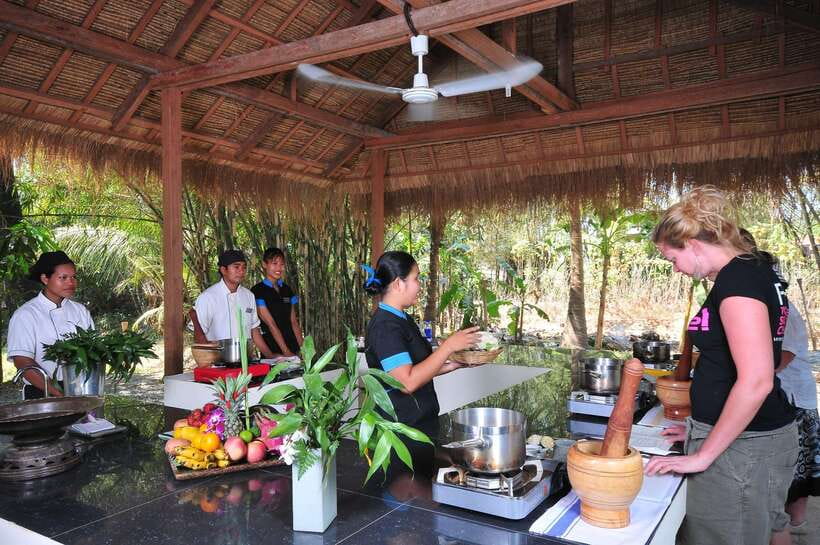
- Your own cooking station: Every participant receives equipment and takes part in the preparation, rather than standing behind a demonstration counter.
- A rural Cambodian setting: The class takes place in an outdoor pavilion beside a pond, with a quiet village atmosphere.
- Market and home visits: Depending on the session, you may begin by exploring a local market or visit a family home, vegetable garden, and kitchen.
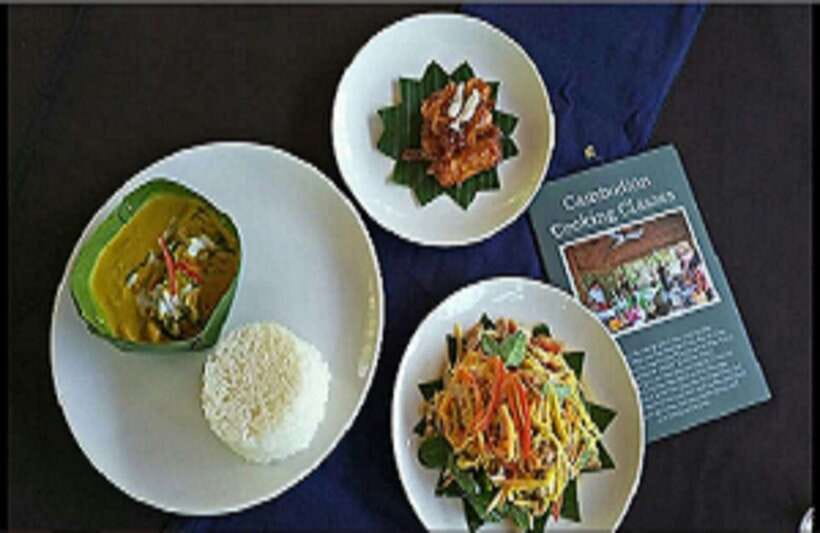
- Three dishes and a recipe book: You learn practical Khmer recipes, including fish amok, Cambodian curry, mango salad, and local sweets.
- A small-group experience: Classes are capped at six people, which allows the chef to help with chopping, pounding, seasoning, and cooking.
- Good value at $32: The price includes tuk tuk transport, instruction, lunch, a drink, and recipes to take home.
A short tuk tuk ride into rural Siem Reap
The experience begins with pickup from your hotel in Siem Reap. You travel by tuk tuk to the class area, with the ride taking you away from the city center and toward a quieter rural setting.
That short journey matters. You are not simply entering a hotel kitchen for a tourist demonstration. The road out gives you a quick look at the less polished, more ordinary side of Siem Reap. One person described the ride as lasting about 20 minutes, while the exact time will depend on your hotel and traffic.
Pickup and return are included, though the return is to the centrally located Beyond office rather than necessarily back to your hotel. Check this point before booking if you are staying far from central Siem Reap or have a tight afternoon plan.
The group limit of six is one of the strongest practical features. Cooking classes can become awkward when twenty people share two cutting boards. Here, you should have room to work and a fair chance to ask questions.
A few more cooking classes around Siem Reap worth a look
- Khmer Cooking Class at a Local’s Home in Krong Siem Reap
★ 5.0 · 2,731 reviews - Siem Reap: Khmer Cooking Class at a Local’s Home
★ 5.0 · 1,108 reviews - Award-Winning Cooking Class Experience with Professional Teacher
★ 5.0 · 745 reviews
The market, village, and family kitchen
The first part of the day introduces the ingredients before you cook them. In many recent sessions, the guide has taken the group through a local market, explaining produce, herbs, leaves, spices, and unusual items along the way.
This is more useful than it may sound. Cambodian cooking often depends on ingredients that look unfamiliar if you have only seen them chopped and plated. Smelling the leaves, seeing fresh vegetables in their everyday setting, and learning which items can be replaced at home helps turn a recipe into something you can actually repeat.
Some sessions include tastes of local fruit or small market treats. Guides have also helped curious participants buy ingredients to try. That kind of gentle explanation gives the market visit a purpose, instead of making it a quick photo stop.
The stated program also includes a walk through a Cambodian village, with a visit to a local family’s home, kitchen, and vegetable garden. You learn how herbs and vegetables are grown and how food preparation works in a Khmer household. This is a valuable part of the experience because it links the finished dishes to ordinary daily life.
The setting is rural, but you should keep your expectations sensible. This is a short cultural visit, not an in-depth village study. You are being given a respectful glimpse of household cooking and local food growing, not a full picture of Cambodian life.
Wear comfortable shoes and bring a hat. The walk is short, but sun and heat can make even a brief stroll feel longer.
Cooking beside the pond
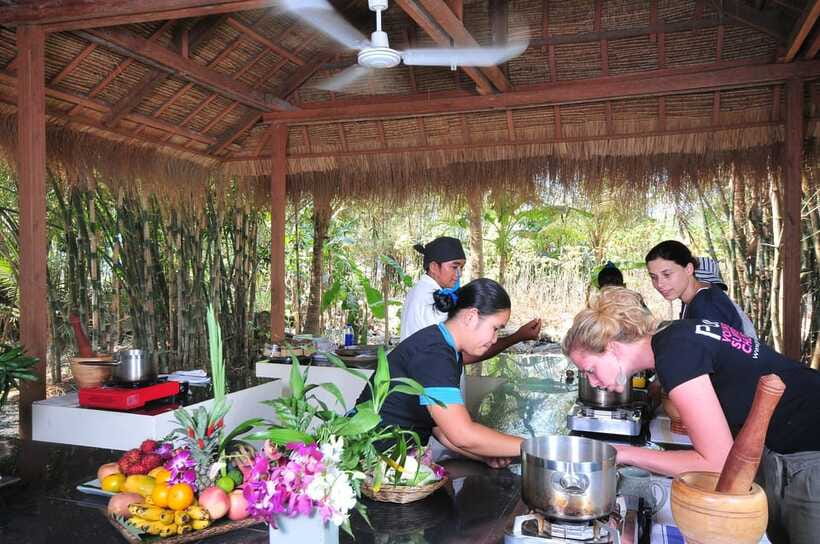
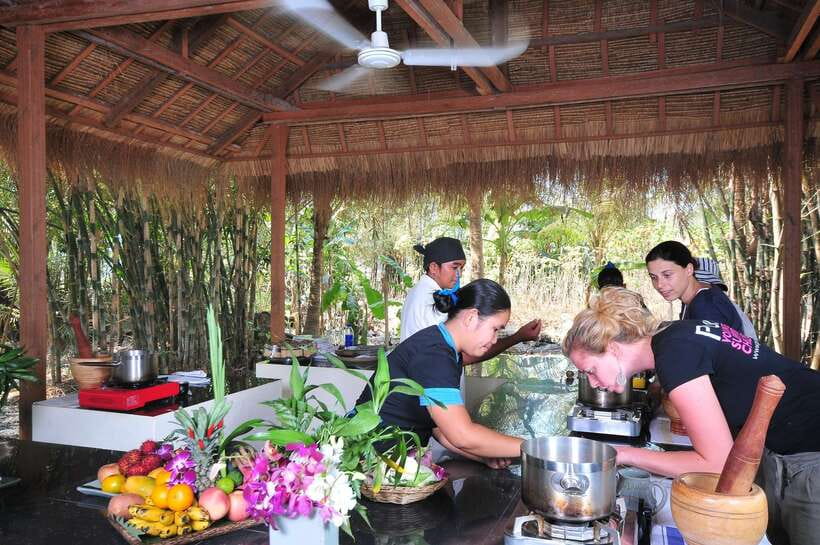
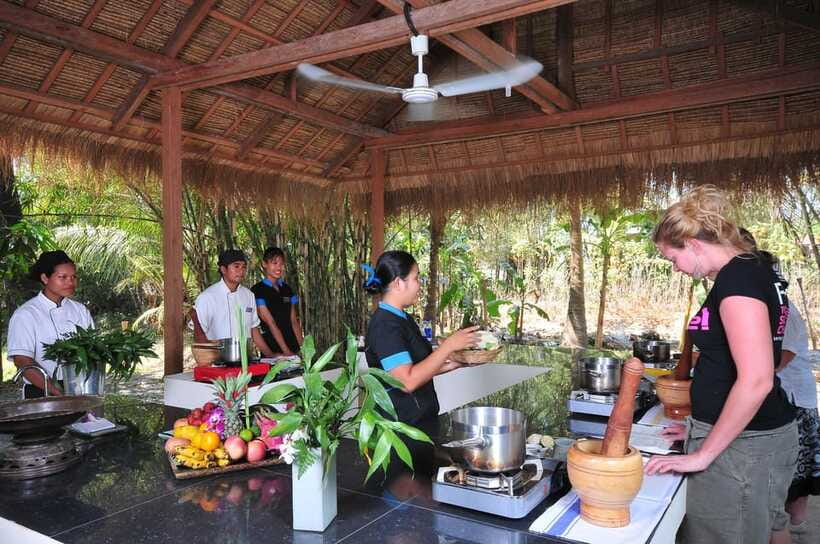
After the market or village visit, you head to an outdoor pavilion near a pond. The area has been described as clean, peaceful, and attractive, with wooden seating and water in front. One session even had turtles swimming in the pond.
The open-air design gives the class a pleasant sense of place. You can hear and see more of the countryside than you would in an enclosed city kitchen. It also creates the main tradeoff: the pavilion is covered but not fully air-conditioned, so warm weather will be noticeable.
The class is fully hands-on. You receive your own cooking station and equipment, then prepare the dishes with help from the chef and guide. You may chop, mix, pound ingredients with a mortar and pestle, prepare curry paste, and cook over a small mobile grill or burner.
That practical work is where the class earns its keep. The chef can correct your technique, explain the order in which ingredients go into the pan, and show you how to balance fragrant spices without making the food painfully hot.
The English instruction has been praised for being clear and patient. Sophia Lauren is often named as a warm and attentive guide, while Prey is described as a helpful cooking instructor. Names and staff can change, but the teaching approach is built around personal help rather than a one-way lecture.
What you cook in the morning
The morning menu includes three dishes:
- Cambodian mango salad
- Fish amok
- Sticky rice balls with palm sugar and grated young coconut
Mango salad is a good opening dish. It uses fresh, light ingredients and gives you an early lesson in balancing sweet, sour, salty, and fresh flavors. It is also one of the easiest recipes to recreate at home if you can find suitable fruit and herbs.
Fish amok is the main event for many people. This smooth curry is one of Cambodia’s best-known dishes and is often prepared in a young coconut. The recipe may also be adapted with chicken or tofu, which helps if you do not eat fish.
The cooking process gives you a chance to understand why amok tastes different from a standard Thai curry. Cambodian food uses spices and aromatic ingredients, but it is generally less hot than food from neighboring countries. The flavor comes from the paste, herbs, coconut, and careful cooking, not simply from adding more chili.
The sticky rice dessert finishes the morning menu with palm sugar and young coconut. It is simple, sweet, and filling. Portions can be generous, and some sessions have provided containers for leftovers.
Same place, a different thing to cook:
- Cambodian Village Cooking Class
★ 5.0 · 265 reviews - Siem Reap Cooking Class
★ 5.0 · 170 reviews - 3-Hour Siem Reap Guided Cooking Class and Market with Pick up
★ 4.5 · 26 reviews - Cambodian Cooking Class
★ 4.9 · 25 reviews
What you cook in the afternoon
The afternoon menu changes to:
- Prahet Chien, minced fish on sugar cane
- Cambodian curry
- Nom Tong Noun, Khmer brandy snaps
Prahet Chien gives you a different way to work with fish, using sugar cane as both a skewer and a source of aroma. The preparation is more hands-on than simply placing fish in a pan, and it adds variety to the menu.
Cambodian curry is a useful dish for understanding the country’s spice blends. It should not be confused with a fiery curry. The style here relies on layers of fragrant seasoning, and the chef explains how to build that flavor.
Nom Tong Noun is a slightly sweet Khmer dessert with a crisp texture. It provides a pleasant finish and helps make the afternoon menu feel like a full meal rather than a single cooking exercise.
Menus are assigned by the time of day, so check the available session if one dish matters greatly to you. Dietary needs can often be accommodated, and past participants with restrictions received careful help, but you should tell the provider in advance.
Eating what you made
Once the cooking is finished, you sit in the wooden pavilion and your dishes are served one by one. This part is relaxed and gives you time to compare the flavors and notice how your preparation affected the result.
Lunch includes what you cook, along with a complimentary beer, soft drink, or bottled water. The meal is generous enough that some people have needed containers for leftovers. That is a nice touch, since a cooking class should leave you satisfied, not searching for lunch immediately afterward.
Eating beside the pond also gives the experience a calm finish. You are not rushed back into a vehicle as soon as the final dish leaves the stove.
The meal is also the best test of the class. You find out which flavors you can reproduce and which techniques need another attempt. The recipe book helps here, and it includes more recipes than the dishes prepared during your session.
What makes the $32 price worthwhile
At $32 per person, the class is reasonably priced for a 3.5-hour activity. You are paying for more than instruction. The price includes hotel pickup by tuk tuk, transport to the central office after the class, the village or market experience, an English-speaking chef and guide, ingredients, lunch, a drink, and a recipe book.
The small group improves the value. A larger class might cost less per person, but it would be harder to get help with your own curry paste or cooking time. Here, you have a better chance of leaving with skills rather than just a few photographs.
The class also supports a form of tourism that puts local people at the center. The cooking school is connected with an organization that helps local people gain skills and improve their economic prospects. That does not turn the activity into a charity visit, but it gives the price an added purpose.
There are still limits. The experience is not designed for children under 12 unless a private family class is arranged. Personal expenses are not included, so market purchases or extra items would cost more. The class is also less suited to anyone who dislikes outdoor heat, village walks, or trying unfamiliar foods.
Who should take this class?
I would recommend it most strongly to people who want to understand Cambodian food beyond ordering fish amok in a restaurant. You will get the most from it if you enjoy asking questions, handling ingredients, and learning how dishes are built.
It works well for couples, friends, solo participants, and small family groups with children over 12. Solo participants may get especially close instruction if the class is not full. Several sessions had only one to four participants, though the maximum is six.
The class also suits people who want a break from temple visits and city sightseeing. It provides a half-day change of pace without requiring a full day trip.
You do not need cooking experience. The instructions are designed for beginners, and the chef helps with each stage. You should be comfortable with basic food preparation and outdoor conditions, but there is no need to arrive with professional knife skills.
Practical advice for a better morning or afternoon
Tell the provider about allergies or dietary restrictions before the class. Vegetarian alternatives such as tofu can be used for amok, and other adjustments may be possible when arranged ahead of time.
Bring a hat, comfortable footwear, and water for the walk, even though a drink is included. Light clothing will make the pavilion more comfortable in warm weather.
If you want the market visit, confirm the day’s exact plan when booking. The market stop appears frequently in the actual sessions, while the formal description emphasizes the village, family home, and garden. Both versions support the same goal: showing you where Khmer ingredients come from before you cook them.
Allow more than the stated 3.5 hours if you have a fixed appointment afterward. Tuk tuk travel, the market or village visit, cooking, and the meal all need a little breathing room.
Free cancellation is available up to 24 hours before the activity, and you can reserve without paying immediately. Those policies are useful if your Siem Reap schedule is still changing.
Should you book it?
Yes, if you want a small, friendly cooking class with real local context and enough hands-on time to learn. The market or village visit, outdoor pond setting, and meal you prepare yourself make this more than a standard recipe demonstration.
I would skip it only if you want a fully air-conditioned venue, a very fast activity, or a class focused on advanced culinary technique. For most visitors, $32 buys a well-filled half-day, a proper lunch, transport, and recipes you can try again at home.
FAQ
How long does the Cambodian cooking class last?
The activity lasts 3.5 hours, including transport, the market or village visit, cooking, and the meal.
How much does the class cost?
The listed price is $32 per person.
Is tuk tuk transport included?
Yes. Tuk tuk pickup from your hotel is included, along with return transport to the centrally located Beyond office after the class.
How many people can join?
Classes are capped at a maximum of six participants.
Is the cooking class taught in English?
Yes. The tour includes an English-speaking guide and chef.
What dishes are prepared in the morning?
The morning menu includes Cambodian mango salad, fish amok, and sticky rice balls with palm sugar and grated young coconut.
What dishes are prepared in the afternoon?
The afternoon menu includes Prahet Chien, Cambodian curry, and Nom Tong Noun, a Khmer sweet known as brandy snaps.
Are drinks included?
Yes. You receive one complimentary beer, soft drink, or bottled water.
Can children join the class?
Children must be over 12 to join the regular cooking class. Private family classes can be arranged on request.
Just added around Siem Reap
- Siem Reap: Morning Cooking Class & Market Tour★ 5.0 · 7 reviews
- Siem Reap: Khmer Cooking Class at a Local’s Home★ 5.0 · 2 reviews
- Siem Reap: Guided Day Trip to Local Village & Cooking Class★ 5.0 · 3 reviews
- Siem Reap: Cambodian Desserts Cooking Lesson with Tastings★ 4.8 · 9 reviews
- Siem Reap: Half-Day Cambodian Cooking Class★ 4.9 · 6 reviews
- Cambodian Cooking Class★ 4.9 · 25 reviews
- Siem Reap: Afternoon Cooking Class & Village Tour★ 5.0 · 5 reviews
- Siem Reap Guided Day Trip to Local Village and Cooking Class★ 5.0 · 7 reviews
Cooking Classes, compared.
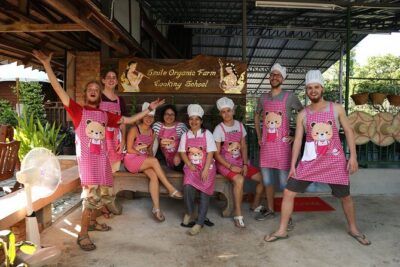
Half-Day Thai Cooking Class at Organic Farm in Chiang Mai
Read our review →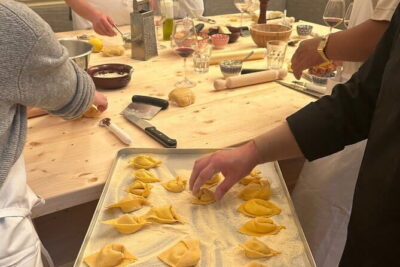
3 in 1 Cooking Class near Navona: Fettuccine, Ravioli & Tiramisu
Read our review →
Pasta & Tiramisu Cooking Class with Unlimited Wine
Read our review →
Hanoi Cooking Class: Culture, Local Market & Meaning CSR Impact
Read our review →
5 Traditional Dishes Hanoi Cooking Class with Market Trip
Read our review →
Cooking Class and Lunch at a Tuscan Farmhouse with Local Market Tour from Florence
Read our review →
Cooking Class, Market & Thai Herbs Garden Tour
Read our review →Lists this class appears in