
REVIEW · GULF OF THAILAND, THAILAND
Khao Lak: Half-Day Cooking Class and Ingredient Hunt
Thai food starts at the market. This four-hour Khao Lak class combines a guided ingredient hunt with hands-on cooking in an open-air garden kitchen. I like the chance to see unfamiliar produce before it reaches the wok, and I love that the class ends with a proper communal Thai feast, not just a few samples. The main consideration is mobility: market visits, transfers, and cooking activities may not suit people with mobility impairments.
The small-group format, limited to 10 people, keeps the lesson personal without making it feel private or formal. Guides such as Apple and Pui have earned especially warm praise for clear English, energy, and patience, including with children. You should also know that the exact number of dishes depends on group size, with four to nine dishes prepared in total.
Key things to know before booking
- The market visit comes first: You shop for ingredients with a guide and may sample local sweet treats along the way.
- You cook in a garden setting: The open-air kitchen offers a relaxed change from a restaurant dining room.
- Your group shapes the meal: The class prepares four to nine dishes, selected from several menus.
- You eat what you make: Lunch or dinner, soft drinks, tea, and coffee are included, with takeaway available.
- The group stays small: A maximum of 10 participants allows room for questions and hands-on practice.
- Hotel pickup has a clear boundary: Transfers are included in Lam Kean, Bangsak Beach, and south Khao Lak, while Nam Khem and north Khao Lak require an extra 200 THB round trip.
A Thai cooking class with a market at its heart
Many cooking classes begin with ingredients already measured and lined up. This one starts earlier, at a local market where you can see how the meal begins.
That matters. Thai cooking depends on fresh herbs, seafood, vegetables, curry pastes, and fragrant seasonings. When your guide explains an unfamiliar ingredient beside the market stall, you gain context that a printed recipe alone cannot provide. You can use your eyes, nose, and taste buds before you ever reach the stove.
The market visit is also a useful look at everyday Khao Lak. It is not only a shopping stop designed to fill time. You are there to help choose the food that will become your meal. The guide answers questions about ingredients, which is especially helpful if you do not know the difference between several types of eggplant, herbs, chilies, or seafood.
One German participant particularly enjoyed being able to ask about unfamiliar foods, while another praised the chance to try local sweets. Those small tastes add something extra to the outing. You are not simply buying groceries. You are getting a brief lesson in how food fits into local life.
The pace should suit most people who like to look around rather than rush. Still, markets can involve walking and standing, and the experience is not recommended for people with mobility impairments. If that is a concern, ask the operator before booking.
More Half-Day Experiences in Thailand:
- Half-Day Thai Cooking Class at Organic Farm in Chiang Mai
★ 5.0 · 19,087 reviews - Bangkok: Tingly Thai Cooking School Half-Day Cooking Class
★ 4.9 · 1,191 reviews - Chiang Mai: HALF-DAY COOKING COURSE at a Thai Cooking Farm
★ 4.9 · 705 reviews
What happens during the four-hour outing
The experience lasts about four hours, including transportation, market shopping, cooking, and eating. Pickup is available from hotels in Lam Kean, Bangsak Beach, and south of Khao Lak. The operator confirms the exact time by email, so check your inbox and be ready in the hotel lobby at least 10 minutes before pickup.
The transfer gets you to the local market, where the cooking team guides your ingredient hunt. This is a practical part of the class, not a sightseeing lecture. You see the raw materials, learn what they are used for, and help select what will appear on your table later.
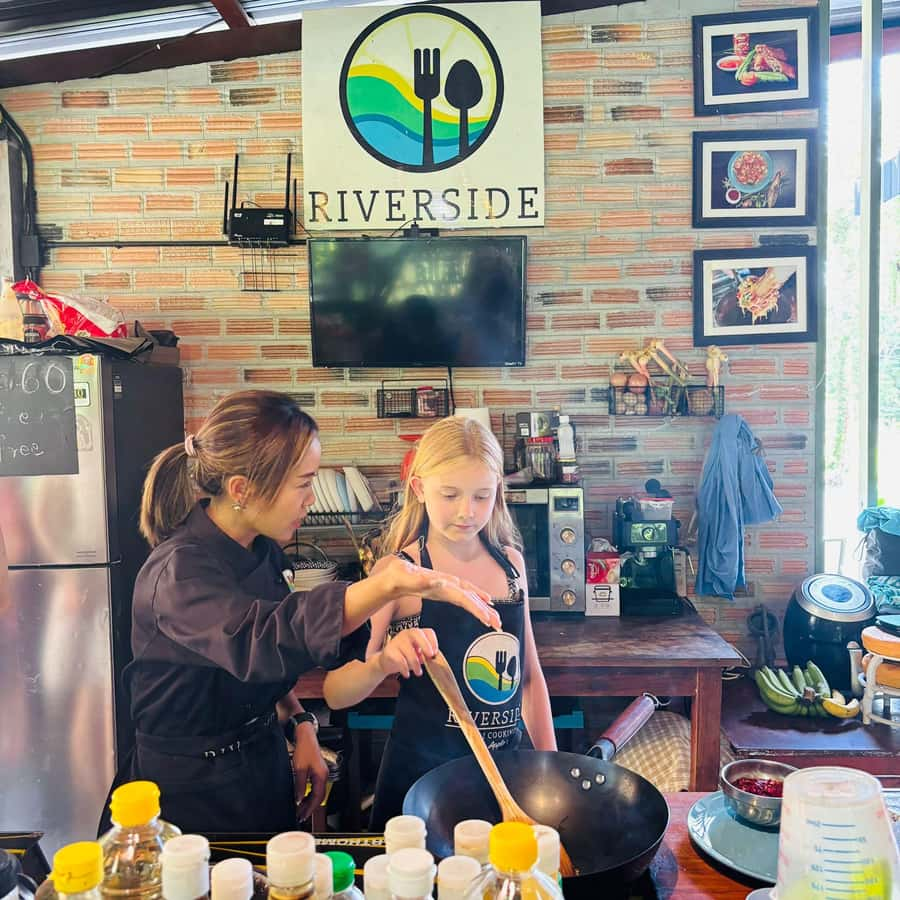
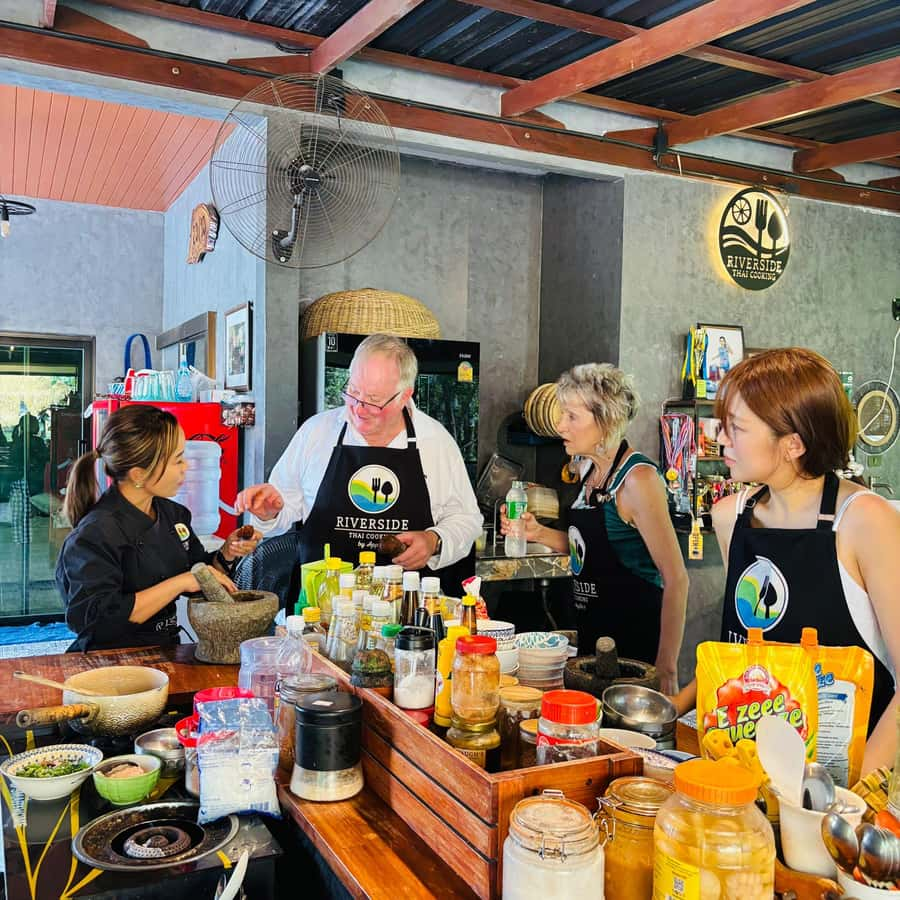
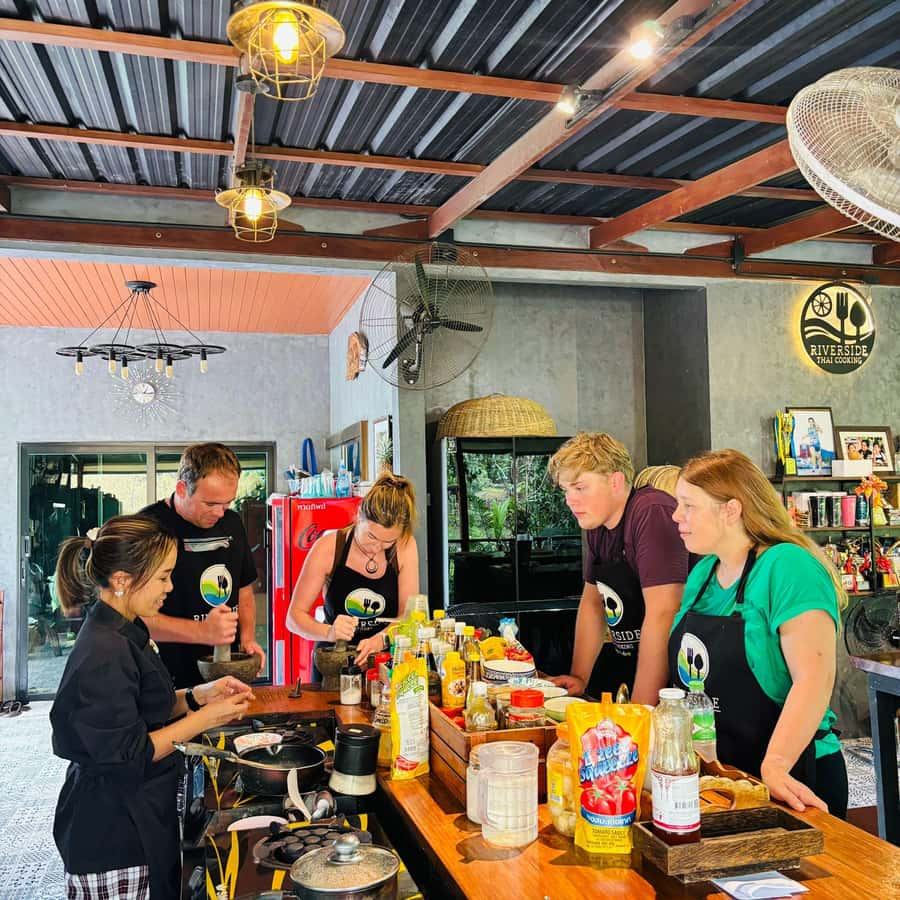
After the market, you continue to a quiet garden kitchen. The open-air setting gives the lesson a lighter, more informal feel than a conventional cooking school. You can expect direct instruction, preparation work, and time at the stove, with the guide explaining each stage as you go.
The class includes dishes such as spring rolls, curries, soups, salads, stir-fries, rice, noodles, and seafood preparations. You may learn to roll and fry vegetable spring rolls, simmer curry in coconut milk, season a salad with herbs, or balance sweet, sour, salty, and spicy flavors in a stir-fry.
The meal plan is organized into eight possible menus. The choices include:
- Panang curry chicken, sweet and sour fish, tamarind prawns, spring rolls, and red curry chicken with eggplant
- Pumpkin, prawn, and coconut soup, seafood salad with fragrant herbs, and shrimp or chicken with curry powder
- Yellow curry prawns, stir-fried chicken with lemongrass, and Massaman curry with chicken, pork, or beef
- Golden needle mushroom salad with shrimp, coriander pork or beef with fresh pineapple, and fried jasmine rice with prawns and Thai basil
- Lemongrass salad, stir-fried noodles with black soy sauce, and a choice of chicken, pork, or beef
- Stir-fried eggplant with Thai basil and minced chicken, plus chicken with galangal in coconut milk soup
- Drunken fried seafood, fresh mushroom tom yum, shrimp with vermicelli, and stir-fried beef with greens
- Fried chicken with basil leaves, steamed fish with chili sauce, chicken curry, and fish fillet with chili lime sauce
The published menus include meat, seafood, and shellfish, so you should raise dietary needs when booking. The information provided does not promise vegetarian, vegan, halal, or allergy-specific alternatives.
Why the menu choice matters
The food is not a fixed single recipe for every booking. The group chooses from the available menus, and the total number of dishes varies from four to nine depending on group size.
That arrangement works well for families and private groups with shared tastes. A group that loves curry and seafood can choose accordingly, while another may prefer noodles, soup, vegetables, or chicken. The trade-off is that the final menu may not give every person an entirely separate set of dishes. You are cooking as a group, so discuss preferences early.
The menus also give you a good introduction to the range of Thai food. Curry is only one part of the lesson. You may work with lemongrass, galangal, basil, tamarind, coconut milk, black soy sauce, fresh herbs, and chili-lime sauces. The result is a better sense of how Thai meals balance several flavors at once.
I would pay attention to the techniques rather than trying to memorize every ingredient. A recipe for Massaman curry is useful, but learning how to judge seasoning or when a stir-fry is ready will help you recreate Thai food at home.
The guides make the difference
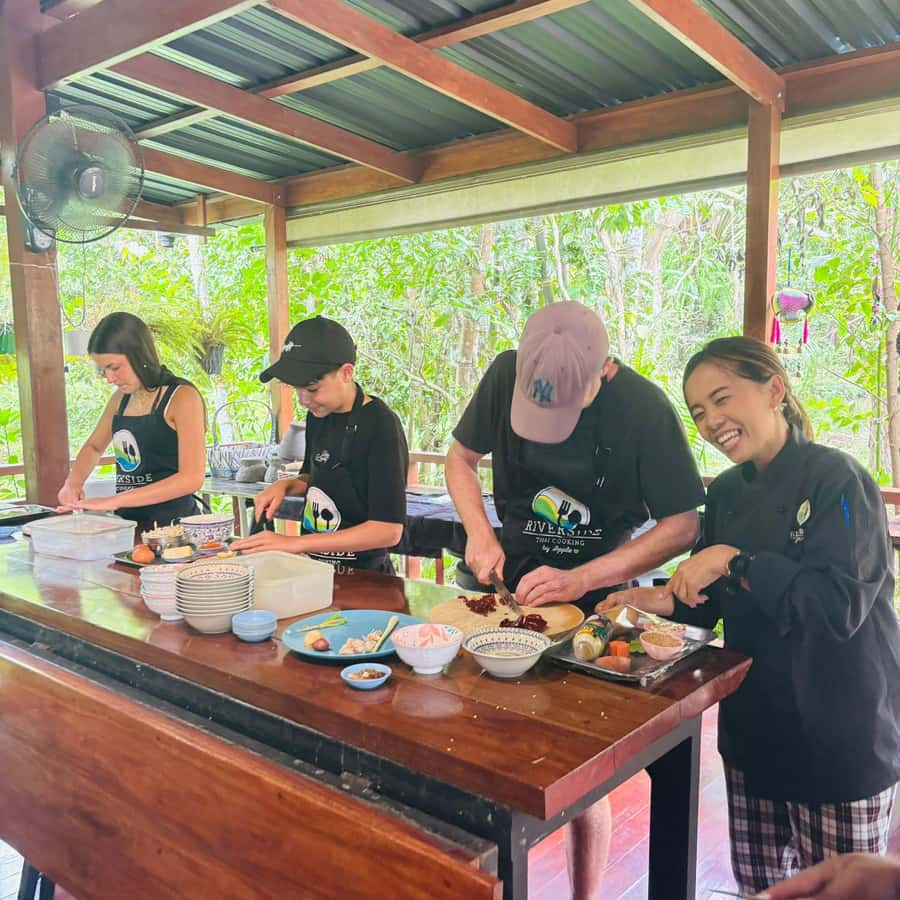
A cooking class can be either warm and social or stiff and instructional. Here, the human side appears to be a major strength.
Apple receives particularly strong praise for her teaching style, clear English, and cheerful energy. One family found the class enjoyable from beginning to end, while another participant said Apple answered market questions clearly and kept the whole event well organized. She also continued answering questions after the class and shared recipe ideas and cooking videos through her YouTube channel.
Pui is also praised as a strong teacher. One class continued through a power outage, with the food still prepared and served. That detail tells you something useful about the atmosphere. The setting may be relaxed rather than polished to a luxury standard, but the staff can adapt when conditions are less than perfect.
The class is suitable for families, couples, solo food lovers, and older children or teenagers who can manage the physical demands of the activity. Children are not given a separate program, so younger participants will need adult help and attention around cooking equipment.
With a maximum of 10 participants, you should have a better chance to ask questions than in a large demonstration class. The exact level of individual attention still depends on the makeup of your group and the number of dishes being prepared.
A few more cooking classes around Thailand worth a look
- Chiang Mai: Cooking Class, Market & Thai Herbs Garden Tour
★ 4.9 · 4,824 reviews - Chiang Mai: Authentic Cooking Class with Market & Farm Visit
★ 4.9 · 4,546 reviews - Thai and Akha Cooking Class in Chiang Mai
★ 5.0 · 4,358 reviews - Phuket Thai Cooking Class with Market Tour Option
★ 5.0 · 2,665 reviews
Eating together in the garden kitchen
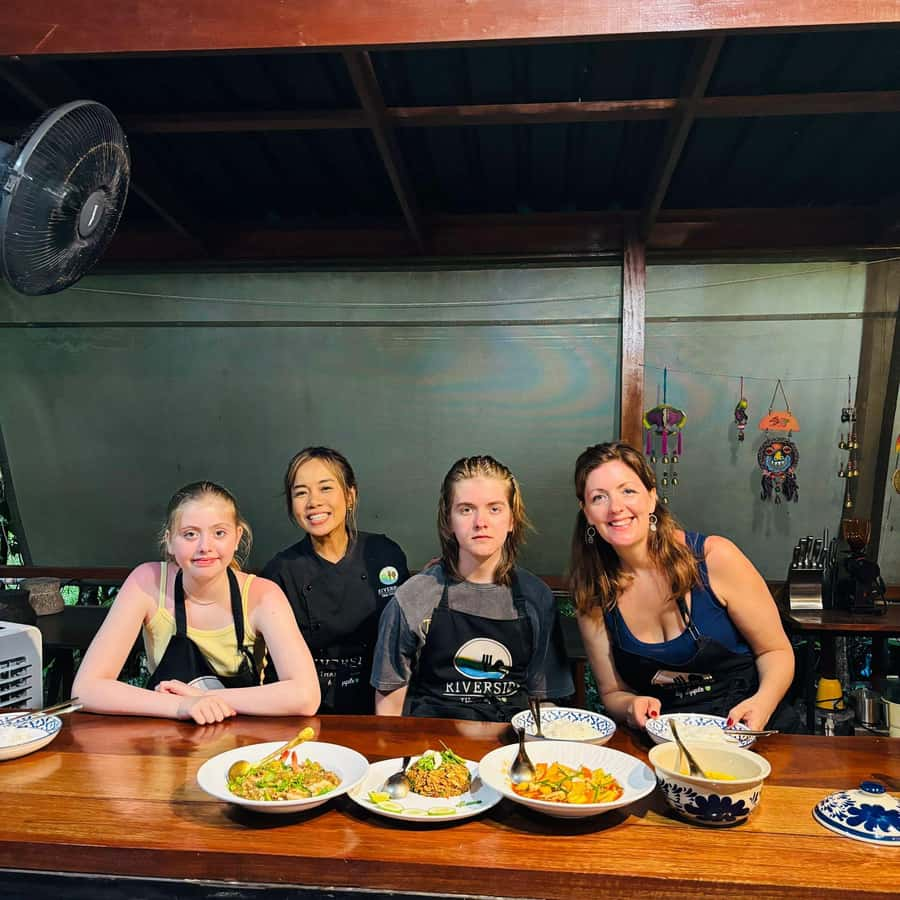
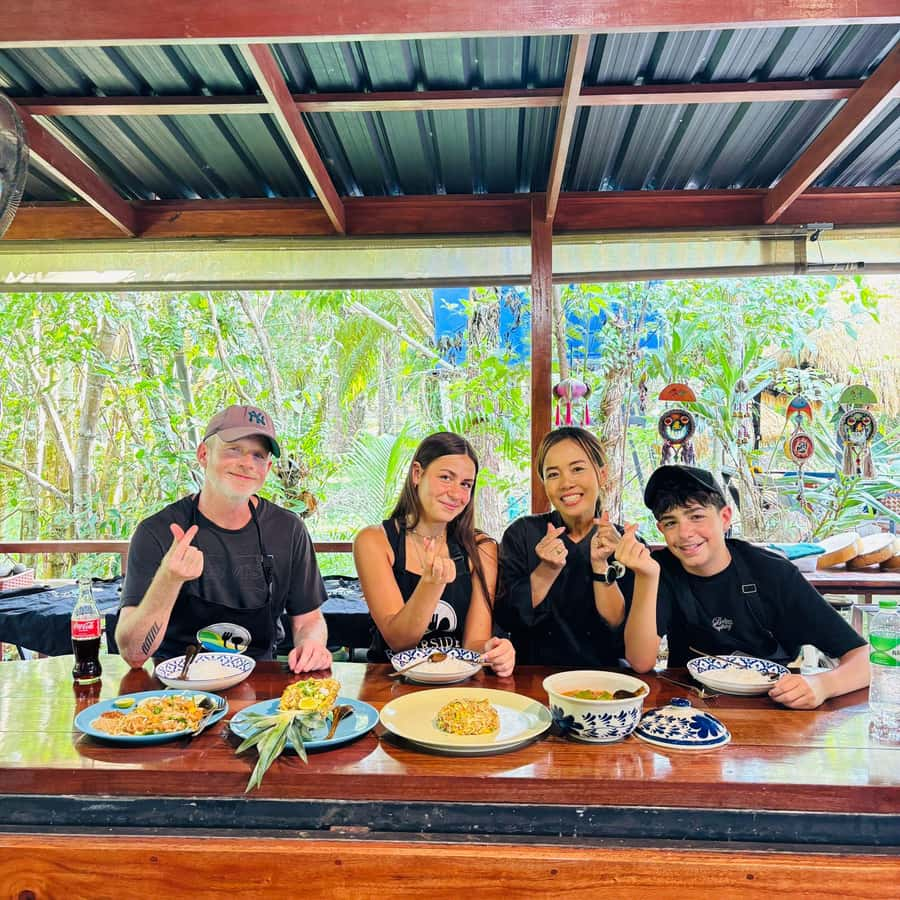
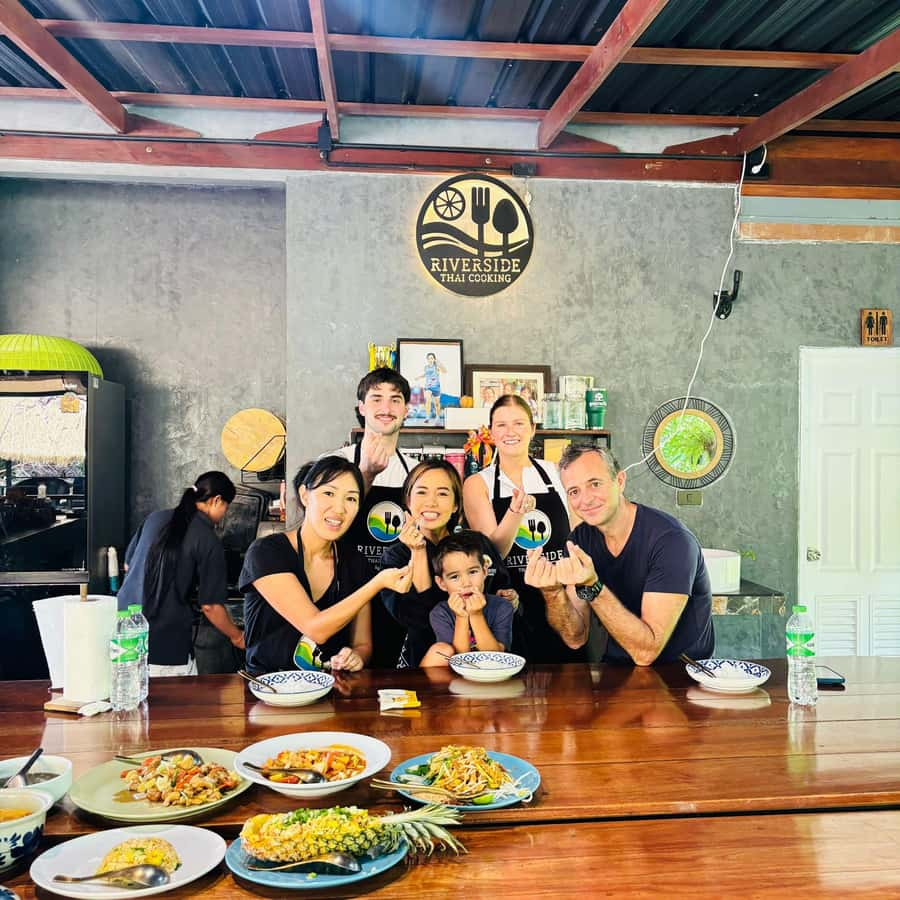
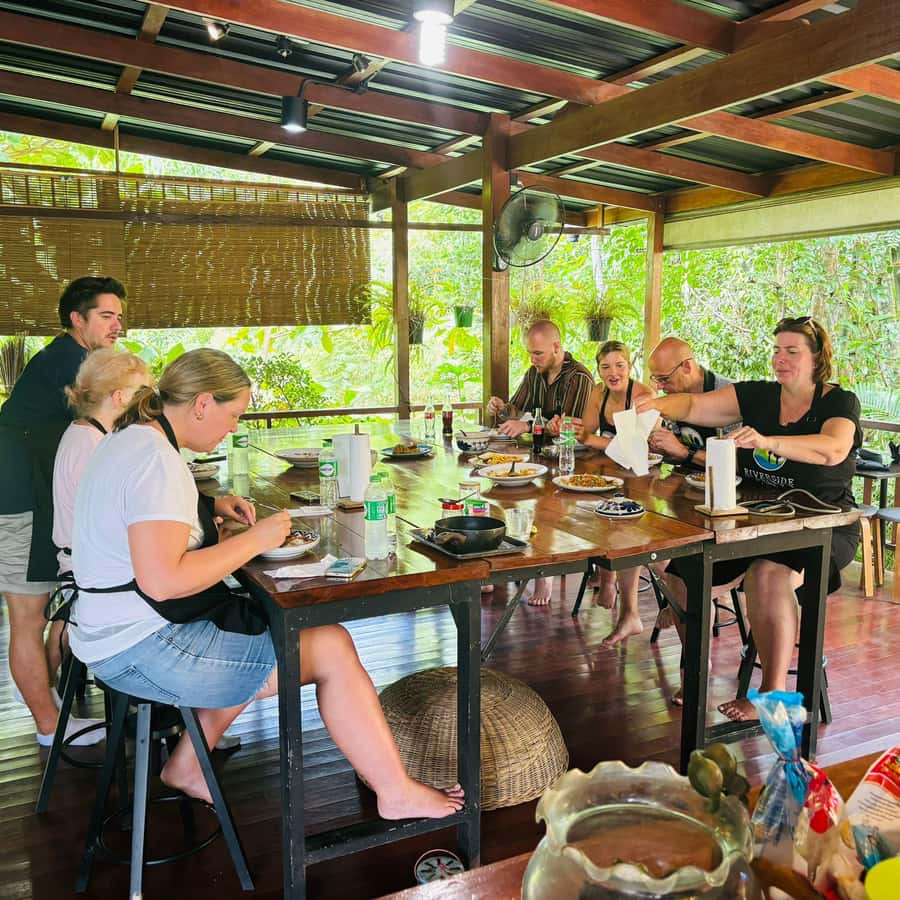
The final meal is part of the lesson, not an afterthought. You sit down with the group and eat the dishes you prepared, with lunch or dinner included along with soft drinks, coffee, and tea.
This communal format is one of the most appealing parts of the experience. Thai meals are often shared, with several dishes placed in the middle rather than one plate served to each person. Eating your own cooking in that format helps connect the market visit, the preparation work, and the finished meal.
You can also take food away. That is handy if the class has produced more than you can comfortably eat in one sitting, though the supplied details do not specify the containers or how much can be packed. Ask the guide on the day if takeaway matters to you.
The class is designed to leave you full. One participant described finishing the meal completely satisfied, and the cooking range explains why. Several curries, salads, stir-fries, soup, rice, or noodles can add up to a substantial feast.
Do not expect a restaurant-style tasting menu with long pauses between courses. This is a practical cooking session followed by a shared meal. You will be active before you eat, and the final table will reflect what the whole group prepared.
Is $72 good value?
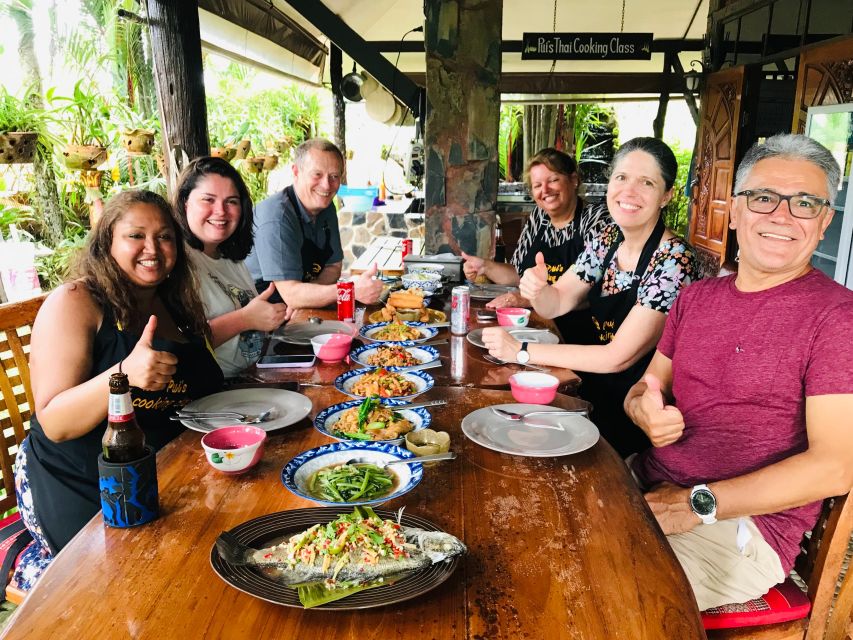
At $72 per person, the price is reasonable if you make use of the full package. You are paying for a four-hour activity, hotel pickup and return within the included areas, a guided market visit, ingredients, instruction, lunch or dinner, nonalcoholic drinks, and English-language recipes.
A restaurant meal alone would cost less if your only goal were to eat. That is not the point here. The value comes from combining a market experience, a cooking lesson, and a meal in one half-day outing. You also leave with recipes you can use later, which gives the experience a longer life than a single dinner.
The value is strongest for couples, families, and small groups who enjoy shared activities. Solo visitors may also appreciate the social meal, though the final menu depends on the group rather than on one person alone.
The transfer coverage deserves attention. Hotels in Lam Kean, Bangsak Beach, and south Khao Lak receive free pickup and return. If you are staying in Nam Khem or north of Khao Lak, there is an extra 200 THB round-trip transfer charge. Check your hotel location before comparing the headline price with other cooking classes.
You can reserve now and pay later, and cancellation is free up to 24 hours before the activity for a full refund. Those terms are useful if your Khao Lak plans are still changing.
Practical advice for a smoother class
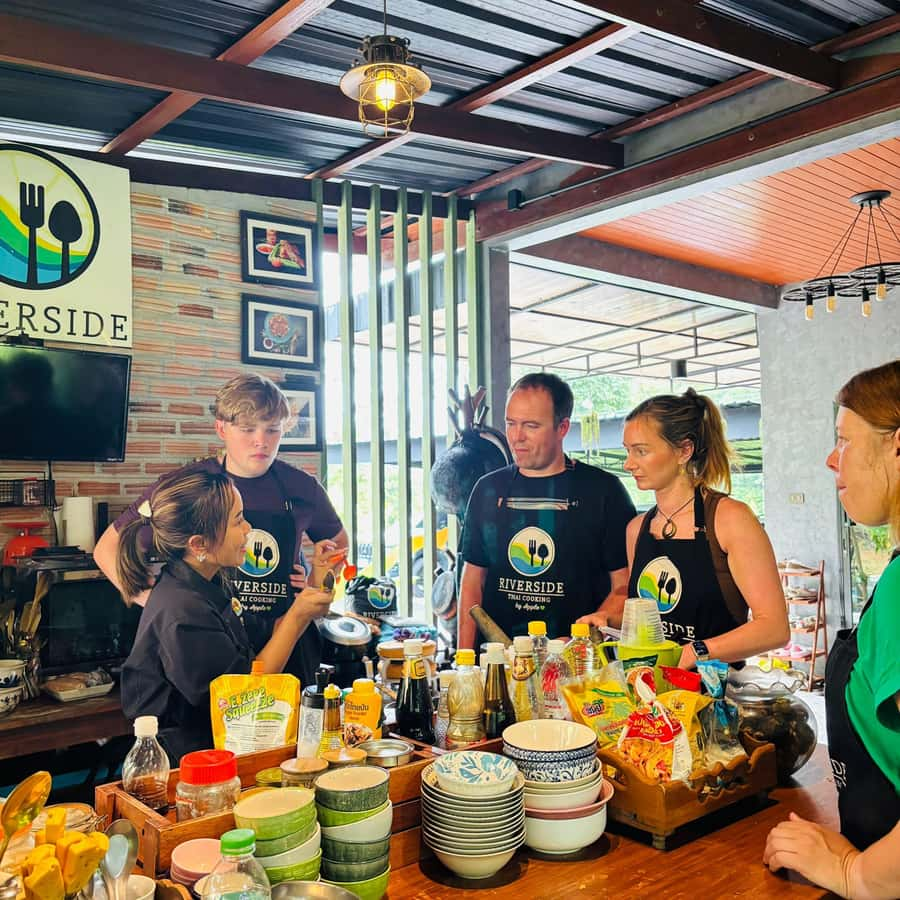
Check your email for the confirmed pickup time. The operator asks you to meet in the lobby at least 10 minutes before pickup, and arriving late can mean the guide leaves without you.
Bring a passport or identity card. A copy is accepted, so you do not necessarily need to carry the original document.
Wear clothes suitable for cooking and market walking. The supplied information does not specify a dress code, but you should expect to stand, handle ingredients, and work in an open-air kitchen.
Tell the operator about food restrictions before the day. The menus include prawns, shrimp, fish, seafood, chicken, pork, beef, coconut milk, and several herbs and spices. The information does not confirm substitutions, so do not assume every dietary request can be handled on arrival.
If you dislike spicy food, ask how the heat can be adjusted. The tour details do not promise a particular spice level or individual customization, but it is sensible to raise the issue before cooking begins.
Finally, keep the recipe sheets. The written recipes are in English, and the class has a useful after-class connection through questions, recipe ideas, and cooking videos according to the information provided.
Who should book this Khao Lak class?
I would choose this experience if you want more than a restaurant meal and enjoy taking part in your food. It suits families particularly well, since the market, cooking, and shared table create several different activities within one outing.
It also works for couples who want a relaxed cultural experience without committing to a full-day tour. Solo food lovers can join, but should be comfortable sharing the menu and meal with a small group.
I would be more cautious if you have limited mobility, strict dietary requirements, or little interest in seafood, curry, herbs, and chili-based food. The market and cooking format also require more participation than a standard sightseeing stop.
For most people who enjoy Thai food, the strongest reason to book is the combination of market context and hands-on instruction. You do not just taste the finished dish. You see the ingredients, help prepare them, learn the method, and sit down to eat the result.
FAQ
How long does the cooking class last?
The full experience lasts four hours, including the market visit, cooking class, meal, and transfers.
What languages does the guide speak?
Guided instruction is available in Thai and English.
How many people can join the class?
The group is limited to 10 participants.
Is hotel pickup included?
Pickup and return are included for hotels in Lam Kean, Bangsak Beach, and south of Khao Lak.
Is there an extra transfer fee for hotels north of Khao Lak?
Yes. Hotels in Nam Khem and north of Khao Lak require an extra 200 THB round-trip transfer charge.
What food is included?
Lunch or dinner, soft drinks, coffee, and tea are included. You eat the dishes prepared during the class, and takeaway is available.
Do I receive recipes after the class?
Yes. Written recipes in English are included.
What should I bring?
Bring a passport or identity card. A copy is accepted. You should also be ready in your hotel lobby at least 10 minutes before the confirmed pickup time.
Should you book it?
Book this class if you want an active, friendly introduction to Thai food rather than a passive meal. The market visit, small group, practical recipes, and communal feast give you several useful experiences for the $72 price.
I would especially recommend it to families, couples, and first-time visitors who want a taste of local food culture in half a day. Confirm your pickup area, explain dietary needs in advance, and be realistic about the walking and standing involved. If those points work for you, this is a well-rounded Khao Lak activity with plenty to eat and something useful to take home.
Just added around Thailand
- Aroidee’s Farm-Fresh Thai Cooking Experience★ 5.0 · 8 reviews
- Signature Thai Cooking Course★ 5.0 · 79 reviews
- Private Half-Day Thai Cooking Class in Chiang Mai★ 5.0 · 4 reviews
- Half Day Guided Thai Cooking Class in Chiang Mai★ 5.0 · 13 reviews
- Online Thai and Akha Cooking Class★ 5.0 · 70 reviews
- Private Virtual Thai Cooking Class★ 5.0 · 9 reviews
- Northern Thai Cooking Class in Chiang Mai in a Countryside Home★ 5.0 · 2 reviews
- 5 Hour Morning Thai Cooking Course★ 5.0 · 31 reviews
Cooking Classes, compared.

Half-Day Thai Cooking Class at Organic Farm in Chiang Mai
Read our review →

3 in 1 Cooking Class near Navona: Fettuccine, Ravioli & Tiramisu
Read our review →
Pasta & Tiramisu Cooking Class with Unlimited Wine
Read our review →
Hanoi Cooking Class: Culture, Local Market & Meaning CSR Impact
Read our review →
5 Traditional Dishes Hanoi Cooking Class with Market Trip
Read our review →
Cooking Class and Lunch at a Tuscan Farmhouse with Local Market Tour from Florence
Read our review →
Cooking Class, Market & Thai Herbs Garden Tour
Read our review →Lists this class appears in