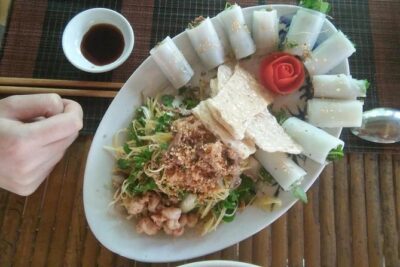
REVIEW · VIETNAM
Immersive Cooking Class & Market Tour By Local Chef+Cookbook
Start with the market, then eat your homework. This Ho Chi Minh City experience pairs a guided walk through Ben Thanh Market with a hands-on Vietnamese cooking class led by a local chef. I like the private cook stations, which let you prepare the food instead of merely watching, and I like the practical recipe book you take home with 25 or more Vietnamese dishes. The main drawback is that the market visit can feel more like a guided introduction than a true shopping trip, since ingredients are generally prepared in advance for the class.
The price is $33 per person, including transportation from the market to the cooking school, a complimentary cocktail, the meal you prepare, gratuity, and the cookbook. I would allow extra time for the market, especially in the morning when the fresh-food areas are at their busiest, and I would confirm the transport details because the meeting instructions are not perfectly clear about the return journey.
Key points to know before booking
- Meet at Ben Thanh Market’s West Gate: Start at Cua Tay, Gate 5, where the guide waits for the group.
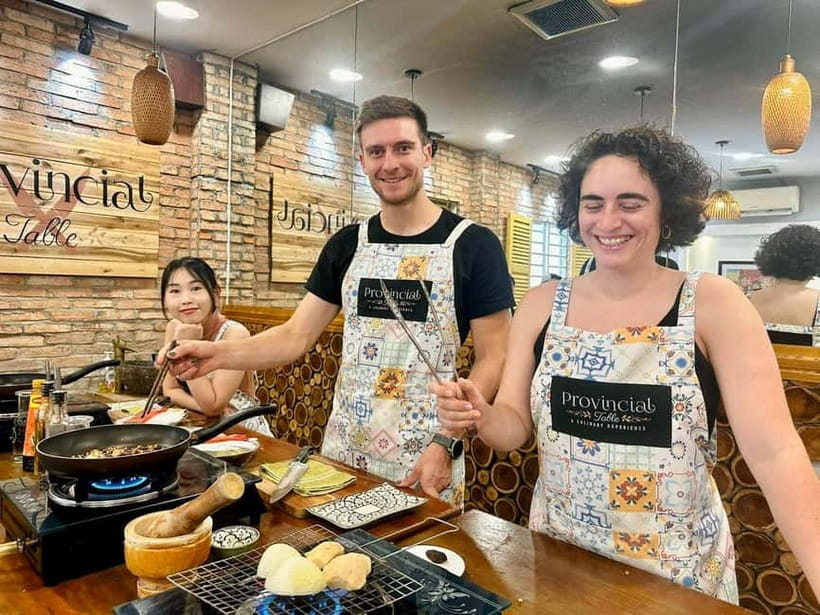
- Cook at your own station: Each participant receives a private work area, ingredients, and equipment for the class.
- Expect three dishes and dessert: The exact menu can vary, with examples including pho ga, spring rolls, mango salad, bun cha, sizzling beef, and banh xeo.
- The market tour is educational: You learn about produce, meat, seafood, fruit, and ingredient selection, but you may not personally shop for everything used in class.
- A cookbook is included: The attractive book contains at least 25 recipes, and some participants received editions with 37 recipes.
- Plan for a small, social class: Groups of around 10 have been reported, with sit-down dining at the end and plenty of food.
Meeting at Ben Thanh Market’s West Gate
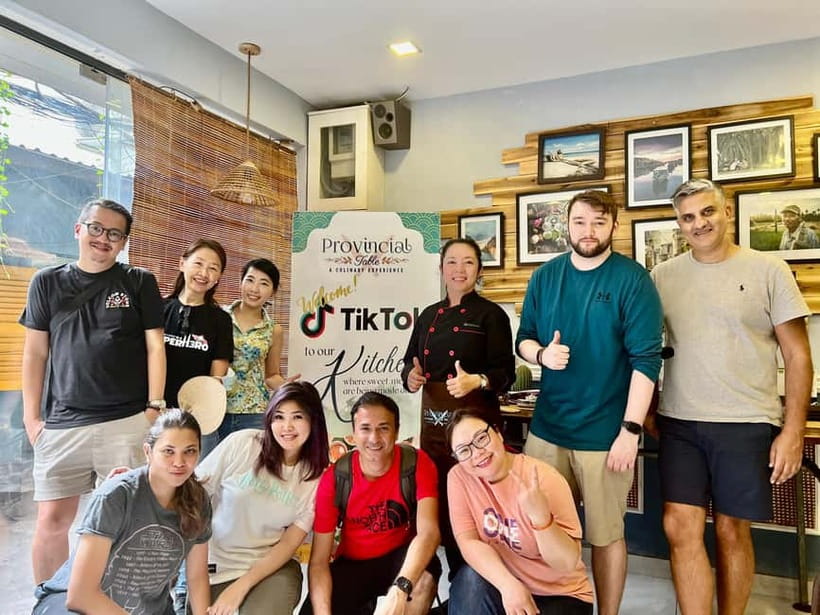
Your afternoon or morning begins at Cua Tay, the West Gate of Ben Thanh Market, also marked as Gate 5. This is an important detail. Ben Thanh has several entrances, and the market can feel like a maze when motorbikes, shoppers, sellers, and tour groups are all moving at once.
Arrive early enough to find the correct gate without rushing. The guide is supposed to wait there, and the tour begins promptly. English and Vietnamese are available, so you can ask about ingredients, local food customs, or the market layout as you walk.
The market stop gives the cooking lesson a useful starting point. Instead of meeting a chef in an isolated classroom and cooking from a prepared list, you first see the raw materials that shape Vietnamese meals. You might be introduced to herbs, fruit, vegetables, meat, fish, seafood, and other pantry items used in daily cooking.
Several guides have been praised for making this part easy to follow. Sarah, Ann, Anna, Bi, Titus, Dung, Anh, and Chef Khoa are among the instructors named by participants, and each seems to bring a slightly different personality to the experience. That matters here. A good guide turns a row of unfamiliar leaves or spices into something you can recognize later in a shop or market back home.
More Cooking Classes with a Market Tour in Ho Chi Minh City
- Small-group Mekong Floating Market Day Trip from Ho Chi Minh City
★ 5.0 · 886 reviews - Chef Vu Cooking Class Plus Market Trip in Saigon Center (Pick up by Cyclo)
★ 5.0 · 477 reviews - Immersive Cooking Class & Wet Market Tour by Local Chef +Cookbook
★ 5.0 · 367 reviews
What the 45-minute market visit is really like
The market portion lasts about 45 minutes according to one useful timing tip. I would treat it as a guided orientation rather than a chance to fill a basket with ingredients for your own kitchen.
You may sample local fruit and see the fresh-food section, but the ingredients for class are generally already arranged before you arrive. A few people hoped to buy or select ingredients during the walk, so you should not expect to choose your own chicken, herbs, or seafood and then carry them into the lesson.
That is not necessarily a flaw. Ben Thanh can be crowded, hot, and hectic, and a structured walk keeps the focus on learning. You can concentrate on how ingredients are displayed and used instead of worrying about bargaining or keeping track of a shopping list.
The time of day affects the atmosphere. The morning is the better choice if the wet-market side is a priority, since there is more activity in the fresh-food areas. During Tet, the market tour may not operate at all because of holiday closures. In that case, the cooking class can still go ahead, but you lose the market context that gives the experience much of its local flavor.
From the market to the cooking school
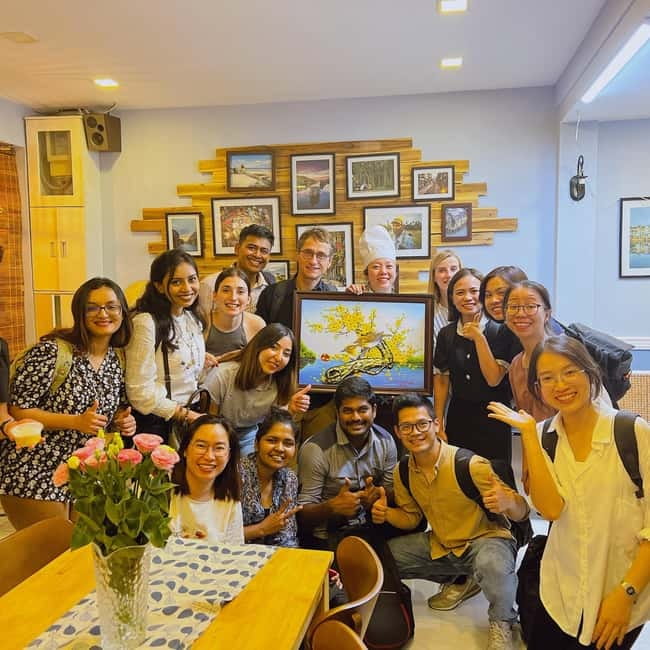
Transportation is provided from Ben Thanh Market to the cooking facility. This saves you from arranging a taxi across Ho Chi Minh City and keeps the group together in theory, but pay attention during the transfer.
A small number of people had trouble when a taxi driver did not know the kitchen location. Another participant would have preferred transportation back to the original meeting point. The written details also say there is no return to the original departure point, while another section says the activity ends back at the meeting point. Because of that contradiction, ask the guide at the market where the class ends and how you should arrange your onward ride.
The cooking facility itself receives strong praise. It is described as clean, modern, air-conditioned, and large enough for a full class. The neat preparation is part of the appeal. You are not sent hunting for a cutting board or waiting for one pan to become available. The ingredients are ready, the stations are arranged, and the chef can focus on teaching.
That setup makes the class suitable for beginners. You do not need to be a confident cook to take part, and you will not be stuck at the back watching someone else chop herbs.
Cooking three dishes, plus dessert
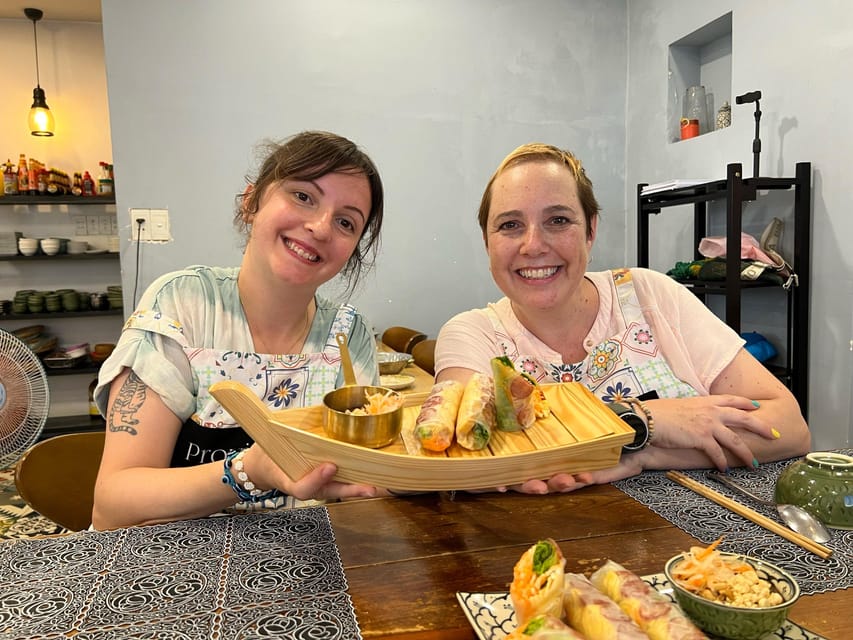
The class is advertised as a three-course meal with dessert, and the menu can vary. Dishes reported by participants include spring rolls, sizzling steak or dancing with fire beef, pho ga, mango salad, bun cha, and banh xeo.
That variety gives you a useful taste of Vietnamese cooking rather than a single narrow specialty. You may work with fresh herbs, rice noodles, vegetables, meat, dipping sauces, and the balance of sweet, sour, salty, and spicy flavors that makes Vietnamese food so appealing.
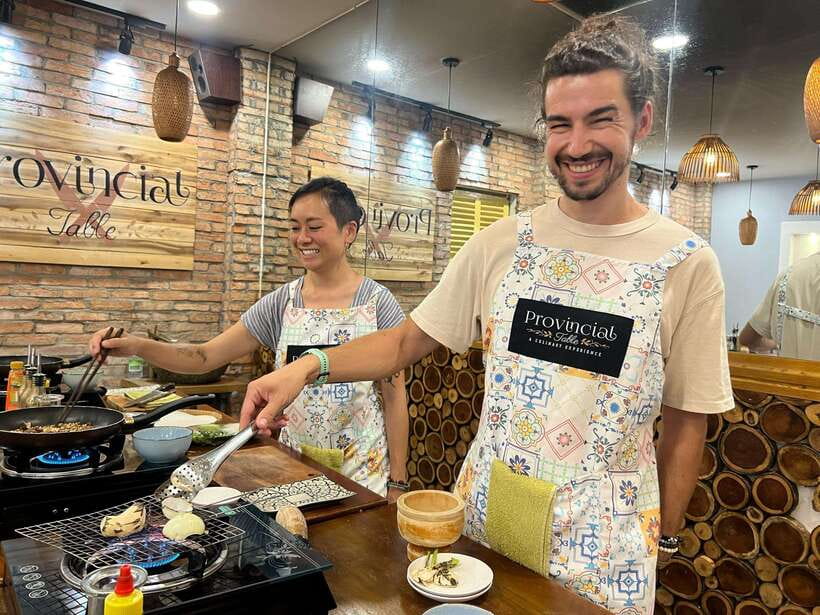
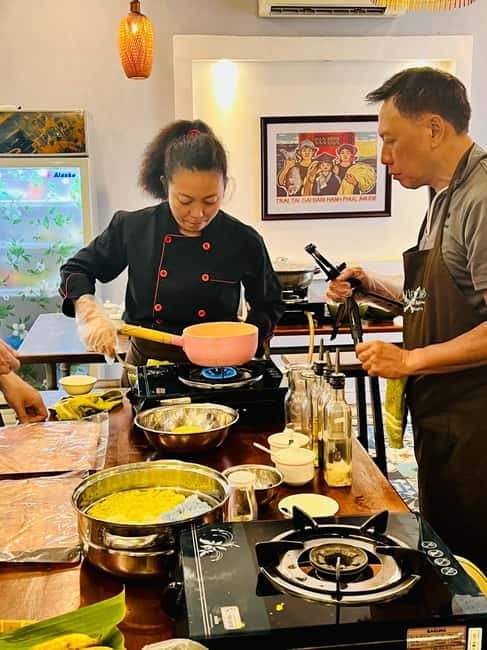
Chef-led instruction is the heart of the experience. The instructor demonstrates each stage, then guides you through the same process at your own station. The best part is the correction and encouragement along the way. If your rolling technique is loose, your pan is too cool, or your seasoning needs adjustment, you can ask right away.
Chef Dung has been praised for explaining every step carefully and helping beginners feel comfortable. Chef Bi has been noted for explaining ingredient choices and cooking methods in a clear way. Chef Anh brings humor to the room, while Chef Titus has been praised for making the class entertaining as well as useful. Names and teaching styles may vary by date, but the pattern is consistent: the chef is active, patient, and involved.
The class also appears to include a bit of friendly fun. One instructor added a small competition, and several people described the room as relaxed and social. This is not a silent technical workshop. You cook, ask questions, laugh at the occasional imperfect roll, and then sit down together to eat.
More Cooking Classes with a Market Tour in Vietnam
- Small-group 2-Day Mekong Delta: Floating market, Cooking Class…
★ 5.0 · 194 reviews - Authentic Vietnamese Cooking Class with Market Visit in HCMc
★ 5.0 · 182 reviews - Cooking Class with Ben Thanh Market visit
★ 4.9 · 94 reviews - HCM: 2-Day Mekong Floating Market with Cooking & Bike Ride
★ 4.6 · 68 reviews
The meal you make is the main reward
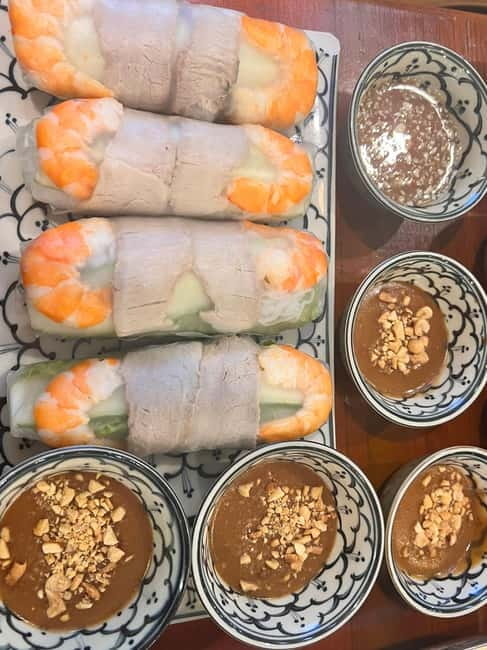
At the end, you sit down to eat the dishes you prepared. This is more than a convenient lunch or dinner. It gives you a clear sense of what each technique was meant to produce, and you can compare your results with the chef’s guidance while the flavors are fresh.
Pho ga has been singled out as especially good, while bun cha, banh xeo, spring rolls, mango salad, and the beef dish have also made strong impressions. Portions appear generous. One person advised arriving hungry, and another took home a doggy bag because there was more food than could be finished at the table.
The meal is also a pleasant social finish. You are not simply handed a plate and sent away. The sit-down format lets you talk with the chef and other people in the class, and it gives the cooking a sense of completion.
A complimentary cocktail is included. Alcoholic beverages are listed as part of the package, but beer, Coke, and wine are specifically excluded. If you want one of those drinks, expect to pay separately.
The cookbook gives the class lasting value
The cookbook is one of the strongest extras. It is described as elegant, with clear photographs and at least 25 recipes. Some editions mentioned by participants contain 37 recipes.
A recipe book changes the value of the class. Without it, you might remember the general idea of pho or spring rolls but forget the ratios, timing, or sauce ingredients by the time you get home. With the book, you have a practical prompt to recreate the meal.
There is one small catch. The included dishes may not always appear in the book, depending on the menu and edition. One participant specifically noted that the prepared recipes were not all included. Before leaving, write down any variations the chef gives you, especially sauce measurements and substitutions.
Price, group size, and overall value
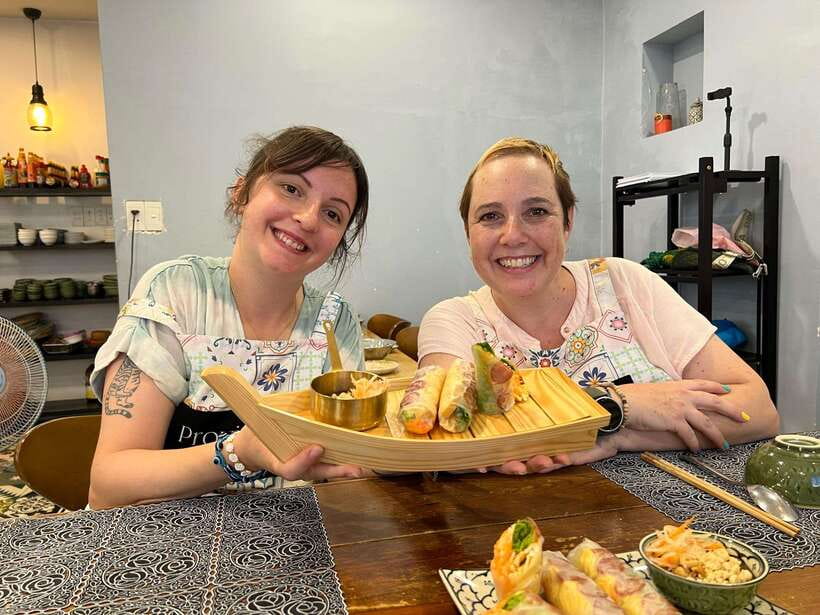
At $33, this is good value for Ho Chi Minh City if you want both food and cultural context in one activity. You are paying for the market walk, transportation to the kitchen, chef instruction, private station, ingredients, a sit-down meal, cocktail, gratuity, and cookbook.
The private station is the key value point. Many cooking demonstrations let you watch a chef work while you stand at the side. Here, you get to handle the ingredients and make the dishes yourself. That makes the lesson more memorable and gives you a better chance of repeating it at home.
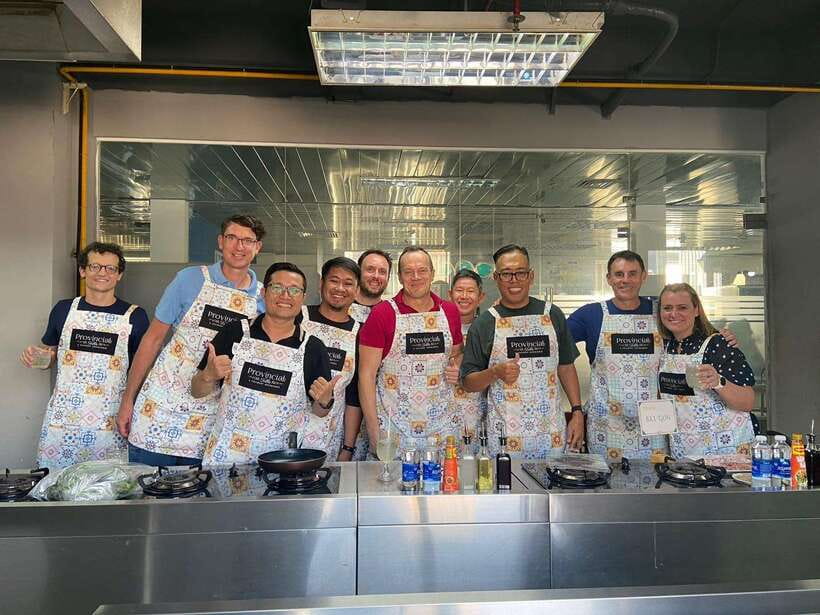
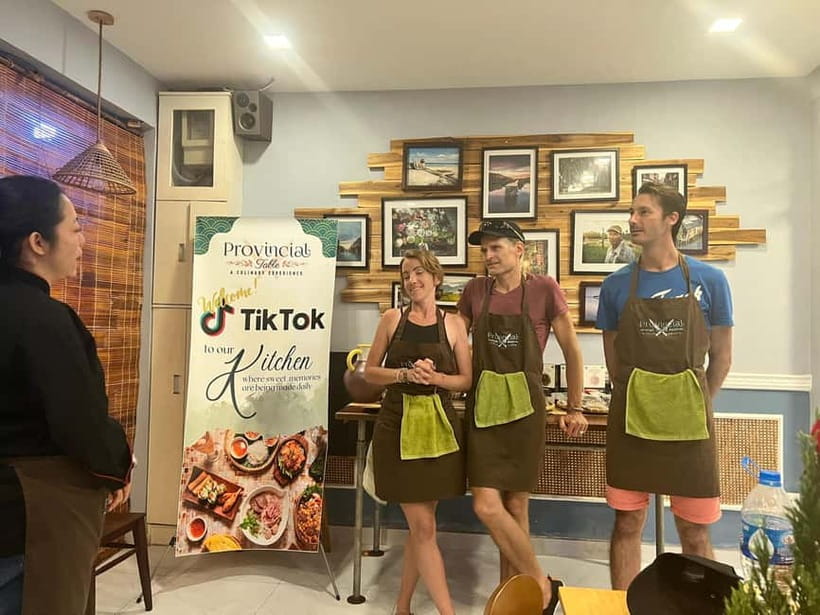
Group size also matters. Several people describe classes of about 10, which is small enough for the chef to check individual dishes. The exact number can vary, but the setup is designed for participation rather than a large lecture.
The meal can be substantial, so this is not just a short activity squeezed between sightseeing stops. Give yourself enough time to enjoy the cooking and the final meal without staring at your watch.
Vegetarian requests and family suitability
Vegetarian options are available if you request them in advance. I would make that request clearly when booking and repeat it to the guide at the start, since Vietnamese dishes often include fish sauce or meat stock even when the main ingredients look vegetarian.
This activity is not suitable for children under seven. Older children who can follow kitchen instructions may enjoy the private stations and shared meal, especially if they like working with food. The family-focused feedback is positive, but the market and cooking session still require attention and patience.
The class suits several kinds of visitors:
- First-time visitors who want a local introduction beyond sightseeing.
- Food lovers who want to understand Vietnamese ingredients.
- Beginners who prefer hands-on instruction.
- Couples and families looking for a shared activity.
- People who want recipes they can use after returning home.
- Vegetarians who arrange their needs ahead of time.
You do not need to consider yourself a cook. One of the appealing features is that the dishes are approachable enough for beginners, while experienced home cooks can still pick up new techniques and seasoning ideas.
Small practical issues to keep in mind
The biggest weakness is communication around transport and timing. Bring the exact meeting instructions, find Gate 5 carefully, and ask where the class ends before leaving the market.
Do not assume the market tour includes personal shopping. You may see and taste local produce, but the ingredients used in class are largely prepared in advance. If buying coffee or ingredients is important to you, use free time before or after the activity rather than counting on the tour to handle it.
There is also no promise that one fixed chef or menu will lead every session. That is normal for a cooking school, and the named instructors have generally made a strong impression, but your dishes may differ from those described by someone attending on another day.
Cancellation is flexible up to 24 hours before the experience for a full refund, and you can reserve now and pay later. That helps if your Ho Chi Minh City plans are still shifting.
Should you book this cooking class?
I would book it if you want a practical taste of Vietnamese food culture and prefer doing over watching. The best features are the private cooking station, the patient chef-led instruction, the generous shared meal, and the cookbook you can use at home.
Choose a morning session if the wet market matters most. Request vegetarian food ahead of time, arrive hungry, and confirm the end point after the market transfer.
Skip it only if you want a serious market-shopping trip, a fixed menu, or a highly technical chef course. For most visitors, $33 buys a friendly, useful afternoon with real food skills and plenty to eat.
FAQ
Where does the experience begin?
It begins at Cua Tay, the West Gate, Gate 5, of Ben Thanh Market in Ho Chi Minh City.
What languages are available?
The experience is available in Vietnamese and English.
Is transportation included?
Transportation is provided from Ben Thanh Market to the cooking kitchen. The provided meeting details are unclear about transportation back to the original meeting point, so confirm the end point with the guide.
How many dishes will I cook?
The experience includes three courses plus dessert, described in some places as a four-course meal. The exact dishes can vary.
What dishes might be on the menu?
Possible dishes include spring rolls, sizzling beef, pho ga, mango salad, bun cha, and banh xeo.
Do I get my own cooking station?
Yes. Each participant receives a private cook station and the ingredients needed for the class.
Are vegetarian meals available?
Yes. Vegetarian options are available upon request. Make your request before the class.
Is the cookbook included?
Yes. An elegant Vietnamese cookbook with 25 or more recipes is included. Some participants received a version containing 37 recipes.
Can I cancel for a full refund?
Yes. You can cancel up to 24 hours in advance for a full refund. You can also reserve and pay later.
Just added around Ho Chi Minh City
- Top Home Cooking Class with Stunning River View AC Kitchen★ 5.0 · 25 reviews
- Street Food Walking Tour with a Cooking Instructor★ 5.0 · 5 reviews
- M.O.M COOKING CLASS★ 4.8 · 6 reviews
- Mama Lan’s Home Cooking Class with 30+ Years of Experience★ 5.0 · 3 reviews
- MY Kitchen – Vietnamese Home Cooking Class in Hoi An★ 5.0 · 6 reviews
- Ho Chi Minh: Local Cooking Class At Auntie’s Home★ 4.9 · 14 reviews
- Ho Chi Minh City: Vietnamese Homestyle Cooking Class★ 4.9 · 91 reviews
- Farm-To-Table Healthy Cooking Class: Half-Day Tour★ 4.8 · 41 reviews
Cooking Classes with a Market Tour, compared.
Hanoi Cooking Class: Culture, Local Market & Meaning CSR Impact
Read our review →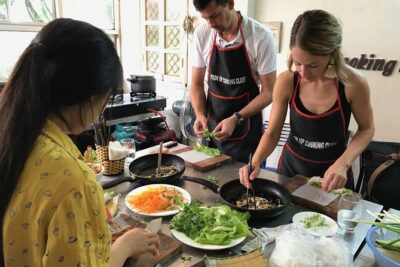
5 Traditional Dishes Hanoi Cooking Class with Market Trip
Read our review →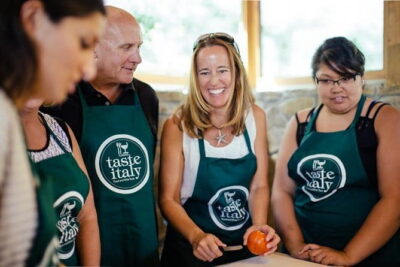
Cooking Class and Lunch at a Tuscan Farmhouse with Local Market Tour from Florence
Read our review →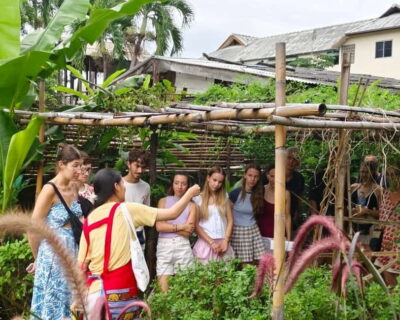
Cooking Class, Market & Thai Herbs Garden Tour
Read our review →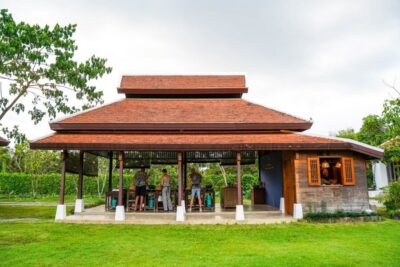
Authentic Cooking Class with Market & Farm Visit
Read our review →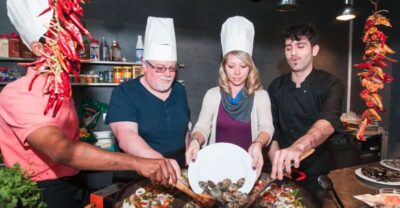
Paella Cooking Experience & Boqueria Market Tour
Read our review →
Cooking Class Hoi An:Local Market, Basket Boat, Fishing & Cooking
Read our review →