
REVIEW · CENTRAL BOHEMIAN REGION, CZECH REPUBLIC
Explore Typical Czech Foods: Tasting, cooking & dining event
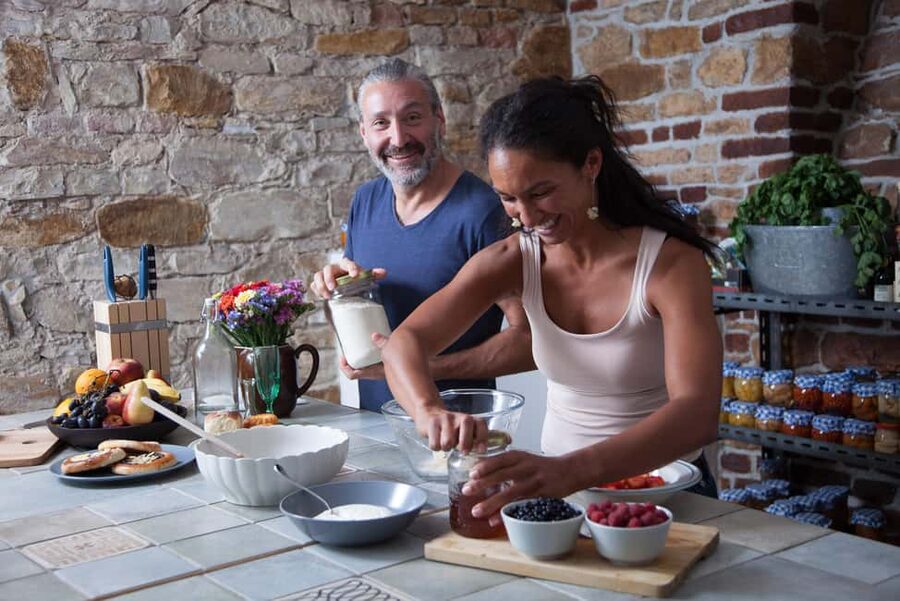
Czech food tells a bigger story. This three-hour gathering combines tasting and cooking in a relaxed home setting, so you do not just eat traditional dishes, you learn why they became part of Czech life. I like the mix of cheese, sausages, preserves, drinks, hands-on recipes, and a proper seated meal. I also like the small limit of eight people, which should keep the cooking personal rather than turning it into a crowded demonstration.
The main consideration is the price: $172 per person is a serious meal budget. Still, all food, drinks, cooking ingredients, instruction, and recipes sent afterward are included. If you want a quick sample of Czech cuisine, this is more time and money than necessary. If you want context, conversation, and active participation, the package makes better sense.
Four details that shape the experience
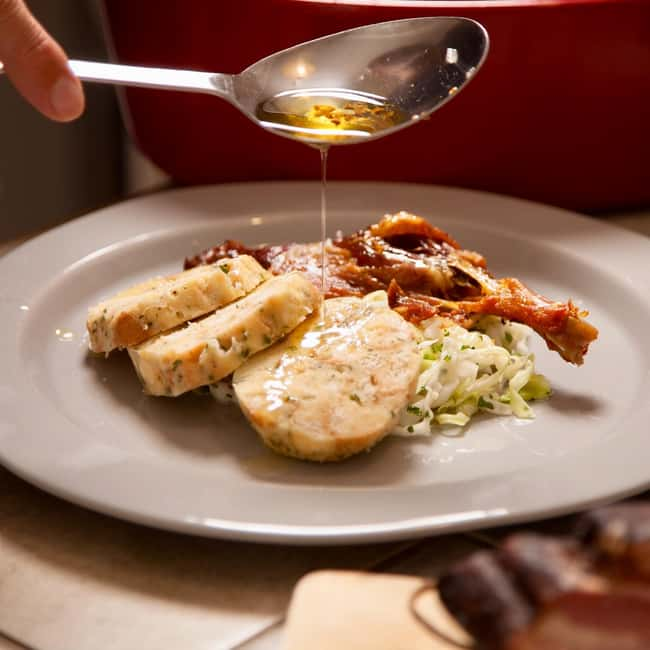
- Three ways to meet Czech food: You taste prepared items, cook three traditional recipes, and finish with a seated dinner.
- A small group of eight: The limited size suits solo visitors, couples, families, and friends who want room to participate.
- A homey setting in Karlin: Good Food Atelier occupies a 400-year-old place at Krizikova 67 in Prague 8.
- Drinks are part of the lesson: You taste three Czech wines or a selection of homemade lemonades, infusions, and other non-alcoholic drinks.
- Recipes arrive afterward: You receive the recipes by email, giving you a practical way to repeat part of the meal at home.
- The chef gets strong praise: Hayk’s short April 2025 note singled out the chef, while Daniel’s October 2024 visit was better than expected.
Starting at Good Food Atelier on Krizikova Street
The meeting point is Krizikova 67, in Karlin, one of Prague’s expanding districts. The venue is behind a large wooden gate between U Pani Loan restaurant and Anthony bar. Look for the doorbells on the right and ring the one marked Good Food Atelier.
This address needs a little care. Google Maps may show 70/67, but the orientation number you need is 67. If you use a taxi or Uber, give the driver house number 67 clearly. That small tip can save you from being dropped at the wrong entrance.
The atelier occupies a 400-year-old place that has been designed as a food-focused meeting space. The setting is not presented as a formal restaurant or a large cooking school. It is meant to feel relaxed and homey, which matters here because the point is conversation as much as technique.
The activity lasts three hours, with starting times available according to the booking calendar. Since the menu includes tasting, cooking, drinks, and dinner, plan to stay for the full session rather than treating it as a quick stop between sightseeing appointments.
More Dinner Trips in the world:
- Palermo: Pizza and Gelato Cooking Class with Dinner and Wine
★ 4.9 · 951 reviews - Seville: Spanish Cooking Class with Dinner
★ 4.9 · 900 reviews - Greek Cooking Class in Athens Including Rooftop Dinner with Acropolis View
★ 5.0 · 826 reviews
Tasting Czech snacks before the cooking begins
The first stage introduces the ingredients and flavors through a selection of typical Czech delicacies. You may taste cheeses, sausages, homemade jams, pickles, bread, and other home-produced items. This gives you a useful entry point before you start handling ingredients yourself.
I like this approach because Czech food can be hard to understand from a menu alone. A pickle, sausage, or slice of bread may seem ordinary, but the host connects it to the food habits of the country and to what people could grow, raise, preserve, or buy at different times.
The tasting is not limited to solid food. You also sample Czech drinks, including three wines or homemade lemonades, infusions, and non-alcoholic beverages. The choice of alcohol-free drinks makes the activity easier to enjoy if you do not drink wine, and it keeps the focus on local flavor rather than alcohol.
The exact food selection may vary, since homemade products and seasonal ingredients can change. The important point is the range: you are introduced to everyday Czech flavors, not just a single famous dish selected for tourists.
Food stories from farms, homes, and geography
The hosts use the meal to explain what was commonly eaten in Czech households and why. You learn what was grown and farmed in the region, how ingredients became household dishes, and how geography, economics, and custom shaped the national table.
That context gives the food more meaning. Bread dumplings are not just a side dish. Fruit dumplings are not merely a sweet course. Potato and sauerkraut pancakes reflect the practical use of filling, familiar ingredients. You hear the stories behind old and newer recipes while eating them.
The class also looks at what was typical for this latitude. This is useful if you have seen Czech cuisine reduced to heavy dishes and beer-hall fare. The menu still includes hearty food, but the discussion shows how preservation, farming, household habits, and available produce affected what ended up on the plate.
The hosts speak English and Czech, and an English audio guide is included. The experience is led by one or both hosts. That arrangement should make it suitable for an international group, though the cooking portion may move between demonstration, explanation, and participation depending on the size and makeup of your group.
Cooking three familiar Czech dishes together
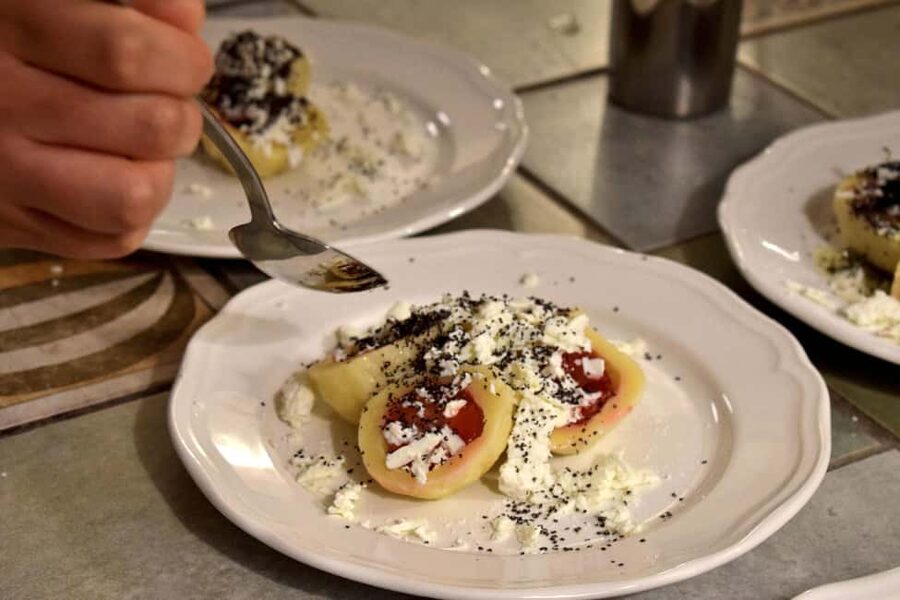
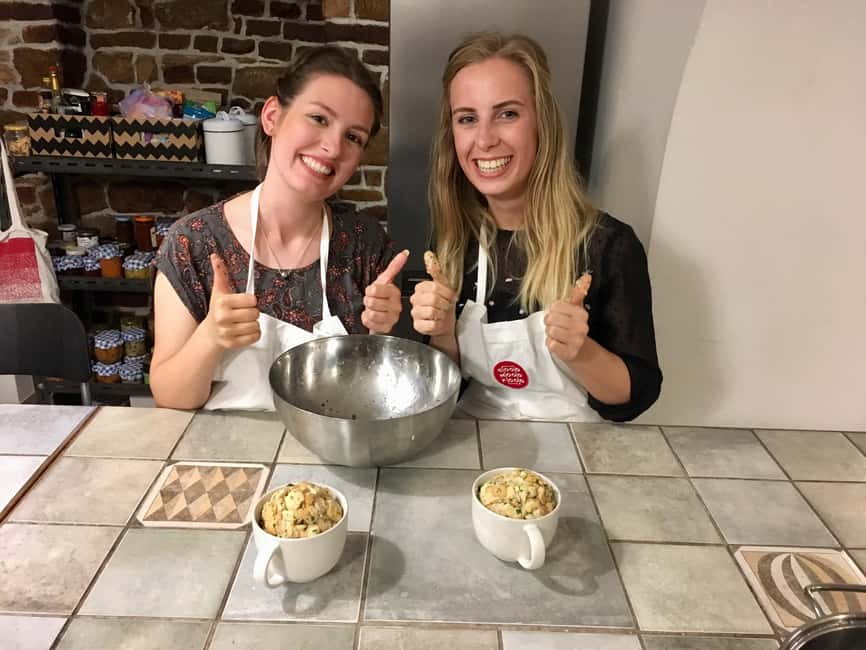
The hands-on section centers on three easy but traditional preparations. You help make bread dumplings, fruit dumplings or kremrole, and potato-sauerkraut pancakes.
More Meals Out in the world:
- Tuscan Cooking Class and Dinner in Florence
★ 4.5 · 732 reviews - Greek Small-Group Athens Cooking Class & Dinner
★ 5.0 · 574 reviews - Paella Cooking Class with Professional Chef: Four Course Dinner
★ 5.0 · 561 reviews - Lisbon Portuguese Cooking Class with 3-Course Dinner
★ 5.0 · 445 reviews
Bread dumplings
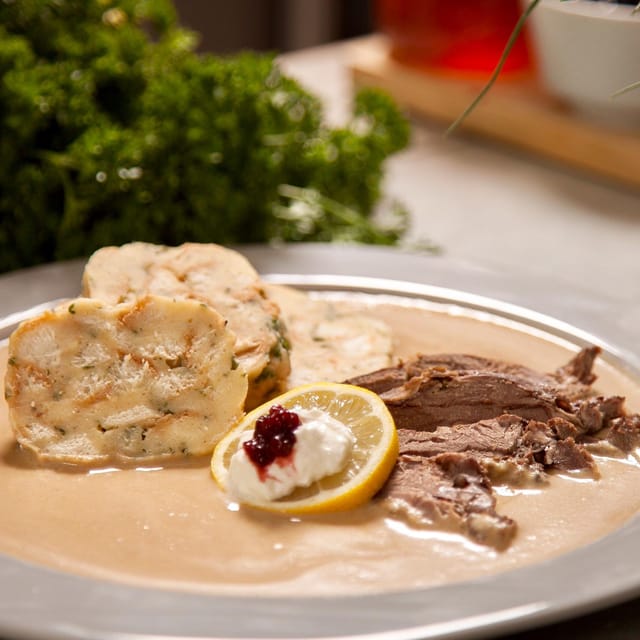
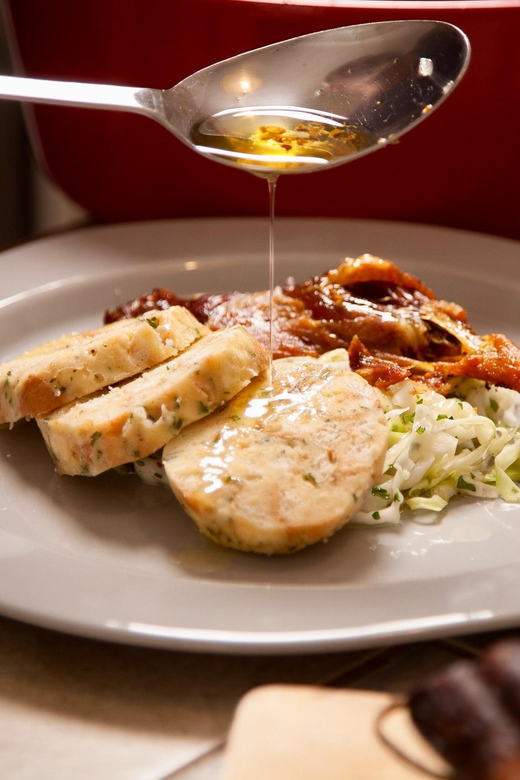
Bread dumplings are one of the clearest ways to understand the structure of a Czech meal. They are commonly served with a main dish and sauce, so preparing them gives you a useful skill for recreating a classic plate at home.
The listing does not specify every step or ingredient, so you should not expect a formal recipe breakdown here. What is clear is that you cook them together with guidance from the host. This is a good choice for a class because the result is closely tied to the final dinner.
Fruit dumplings or kremrole
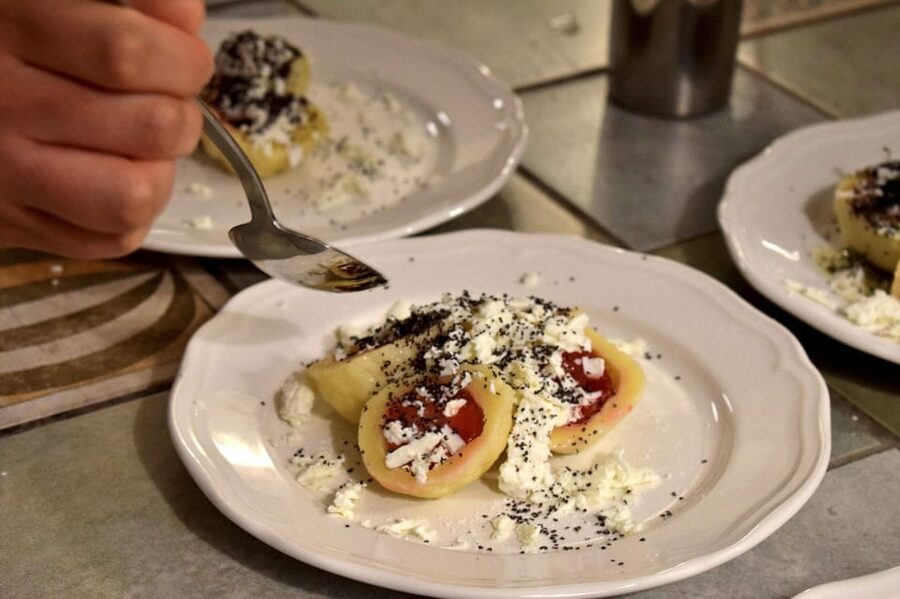
The sweet preparation offers a choice between fruit dumplings and kremrole. Fruit dumplings show how simple dough and fruit can become a full dessert. Kremrole provides a different style of Czech treat, with a more pastry-focused character.
Because the class offers one of these options rather than promising both, ask the host if you have a strong preference. The available choice may depend on the planned menu. Either way, the sweet course helps show that Czech cooking is not only about meat, potatoes, and dumplings served with sauce.
Potato-sauerkraut pancakes
The potato-sauerkraut pancakes bring together two familiar ingredients in a simple, filling preparation. This is the sort of dish that helps explain household cooking: practical food, strong flavor, and ingredients that can be stored or found locally.
I like that the menu includes a preparation this approachable. You do not need advanced cooking skills to take part, and you leave with recipes that are more realistic for a home kitchen than a complicated restaurant plate.
The prepared main dish and seated dinner
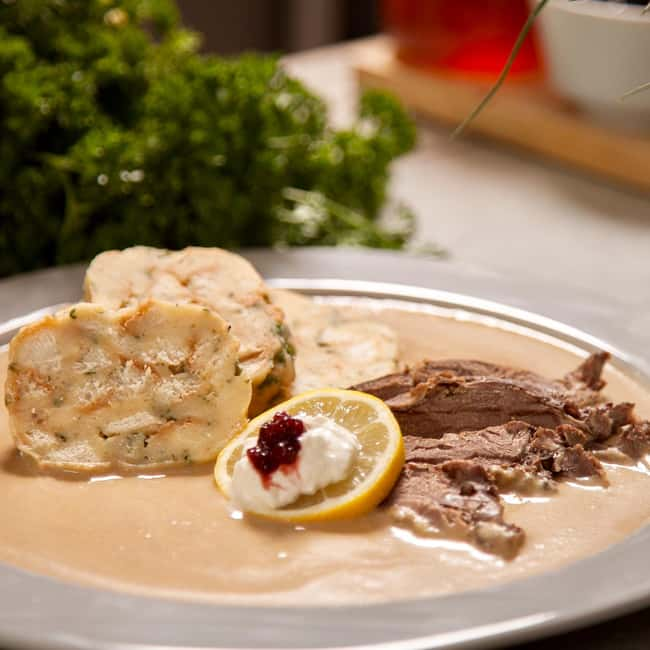
The main dish is cooked in advance by the hosts. You then serve it with the bread dumplings you helped prepare, followed by dessert.
This division is sensible. If every part of the meal were cooked from scratch during the three-hour session, you would spend much of the time waiting for dough, sauces, or meat to finish. Preparing the main course ahead of time leaves room for tasting, stories, and participation without making dinner feel rushed.
The final seated meal is important because it brings the separate parts together. You have already sampled individual ingredients and worked on recipes. Now you can see how the dumplings fit with the main dish and how the dessert completes the meal.
The meal should feel more like a shared table than a restaurant service. That fits the purpose of the atelier, which is to connect food with Czech habits and hospitality. If you prefer a quiet dinner with fast service, this may feel talkative and slow. If you enjoy eating with a story attached, the pace is part of the value.
What the $172 price really includes
At $172 per person, this is not a budget food stop. You are paying for a three-hour small-group activity, not only for the food on the plate.
The price includes all drinks, food, cooking ingredients, and instruction for the cooking section. You also receive the recipes by email after the class. The three wine tastings add value for wine drinkers, while the homemade lemonades, infusions, and non-alcoholic drinks mean the package is not built only around alcohol.
The group limit of eight matters here. A larger class could offer a lower price, but you would have less room to ask questions and take part. With eight or fewer participants, the cost includes a more personal format and a host-led meal rather than a standard restaurant order.
I would consider this a better value for someone who actively wants food education and social time. It is less attractive if you simply want to taste Czech dishes at the lowest possible cost. Prague offers cheaper meals, but they will not normally include the explanations, cooking, drinks, and recipes gathered into one sitting.
Two short pieces of feedback help explain the appeal. Hayk from Armenia gave the chef a direct five-star compliment in April 2025. Daniel from the United States visited in October 2024 and found the whole session better than expected. Those comments point to the people leading the class and the overall experience as its strongest features, not just the menu.
Who will enjoy this Czech food session most
I would recommend this to solo visitors who want an easy way to meet people over a meal. The eight-person limit gives a solo participant a better chance to join the conversation than a large group tour.
Couples and friends can also enjoy it, especially if one person likes cooking and another prefers tasting and listening. The activity does not demand advanced kitchen skills, and the hosts lead the cooking portion.
It also suits visitors who want something beyond Prague’s major sights. You still learn about Czech culture, but through food habits, farming, household recipes, and drinks rather than through a museum display.
Families may appreciate the relaxed format, but the supplied information does not give a minimum age or child policy. Check those details before booking if you are traveling with children.
Wine fans have a clear reason to choose it, with three Czech wines included. Non-drinkers are covered as well through homemade lemonades, infusions, and other non-alcoholic beverages.
Practical points before you reserve
Tell the hosts about any allergies before the experience. This is especially important because the meal includes shared tastings, bread, pastries, sausages, dairy, pickled foods, and several cooked dishes, though the exact ingredients are not fully specified.
The session is available in English and Czech. An English audio guide is included, and the host or greeter can communicate in English or Czech.
You can cancel up to 24 hours before the start for a full refund. You can also reserve now and pay later, which helps if your Prague schedule is still changing. Check the booking calendar for available start times rather than assuming the class runs at one fixed hour.
The activity takes place at Krizikova 67. Use the second number if a map or driver causes confusion. Ring Good Food Atelier at the wooden gate, with the doorbells on the right.
Should you book Good Food Atelier?
Book it if you want to understand Czech food from the inside: what people ate, what they grew, how they preserved ingredients, and how simple recipes became tradition. The combination of tasting, cooking, drinks, stories, and a seated dinner gives you more than a standard food tour.
Think twice if you want a cheap meal, a quick tasting, or a tightly timed class with a fixed menu explained in advance. At $172, the value depends on your interest in participation and conversation.
For the right person, this is a warm, practical introduction to Czech culture. You eat well, learn several recipes, and leave with a better sense of why Czech food looks and tastes the way it does.
FAQ
Where does the Czech food experience take place?
It takes place at Good Food Atelier, Krizikova 67, Prague 8, in the Karlin district.
How do I find the entrance?
Look for a large wooden gate between U Pani Loan restaurant and Anthony bar. The doorbells are on the right, and you should ring the one marked Good Food Atelier.
What address should I give a taxi or Uber driver?
Give the driver house number 67. Google Maps may display 70/67, but the orientation number you need is 67.
How long does the activity last?
The activity lasts three hours. Starting times vary, so check availability when booking.
What food will I taste?
The tasting includes typical Czech delicacies such as cheese, sausages, homemade jams, pickles, bread, and other homemade products.
What will I cook?
You prepare three traditional dishes: bread dumplings, fruit dumplings or kremrole, and potato-sauerkraut pancakes.
Are drinks included?
Yes. Drinks are included in the price. The experience includes three Czech wines or homemade lemonades, infusions, and other non-alcoholic beverages.
How many people can join?
The activity is limited to eight participants.
Are recipes provided after the class?
Yes. The recipes are sent by email after the cooking class.
More Food and Drink Trips in the world
- Small Group Cooking Class & Market Food Tour in Florence
★ 5.0 · 1,574 reviews - Paella Cooking Class, Wine Tasting & Central Market in Valencia
★ 5.0 · 1,150 reviews - Athens: Food Market Visit and Cooking Class with Wine
★ 4.9 · 1,087 reviews - Undiscovered Charleston: Half Day Food, Wine & History Tour with Cooking Class
★ 5.0 · 948 reviews
Just added around the world
- Aroidee’s Farm-Fresh Thai Cooking Experience★ 5.0 · 8 reviews
- Signature Thai Cooking Course★ 5.0 · 79 reviews
- Private Half-Day Thai Cooking Class in Chiang Mai★ 5.0 · 4 reviews
- Half Day Guided Thai Cooking Class in Chiang Mai★ 5.0 · 13 reviews
- Online Thai and Akha Cooking Class★ 5.0 · 70 reviews
- Private Virtual Thai Cooking Class★ 5.0 · 9 reviews
- Northern Thai Cooking Class in Chiang Mai in a Countryside Home★ 5.0 · 2 reviews
- 5 Hour Morning Thai Cooking Course★ 5.0 · 31 reviews
Cooking Classes, compared.

Half-Day Thai Cooking Class at Organic Farm in Chiang Mai
Read our review →

3 in 1 Cooking Class near Navona: Fettuccine, Ravioli & Tiramisu
Read our review →
Pasta & Tiramisu Cooking Class with Unlimited Wine
Read our review →
Hanoi Cooking Class: Culture, Local Market & Meaning CSR Impact
Read our review →
5 Traditional Dishes Hanoi Cooking Class with Market Trip
Read our review →
Cooking Class and Lunch at a Tuscan Farmhouse with Local Market Tour from Florence
Read our review →
Cooking Class, Market & Thai Herbs Garden Tour
Read our review →Lists this class appears in