

REVIEW · ATHENS, GREECE
Cooking Class with Aspasia in the Heart of Athens
Athenian cooking works best around a table. Aspasia’s three-hour class brings you into her bright, carefully decorated home, where you help prepare a seven-dish Greek meal, drink two glasses of white wine, and eat with your host. I like the personal setting and the chance to taste dishes from several parts of Greece in one sitting. I also like that the experience is private, so your group gets Aspasia’s attention instead of competing with a full class. The main caution is simple: if you expect a hands-on cooking school with every dish made from scratch by you, the format may feel too much like a hosted meal.
The meeting point is Tsocha 3 in Athens, and the activity ends there after about three hours. At $130.04 per person, this is not a cheap meal, but you are paying for food, wine, instruction, conversation, and access to a local home. Read the menu closely before booking, since the dishes are familiar Greek comfort food rather than advanced culinary projects.
Key points to know before booking
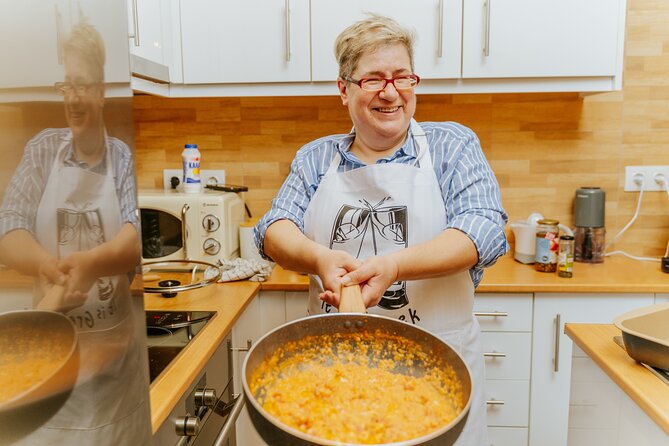
- Seven dishes cover several Greek regions: You prepare food connected with Crete, Mani, Northern Greece, and everyday family cooking.
- The class takes place in Aspasia’s home: The bright, harmonically decorated setting feels more personal than a restaurant or commercial cooking studio.
- Two glasses of white wine are included: Wine accompanies the meal and helps turn the lesson into a social evening.
- This is a private experience: Only your group participates, which allows for more direct attention and a quieter pace.
- The menu is traditional but not unusual: Expect meatballs, eggs, peppers, eggplant, salad, bread, cheese, and cake.
- Hands-on participation may vary: One person found the class very engaging, while another felt the hosts prepared too much of the food.
Entering Aspasia’s bright Athens home
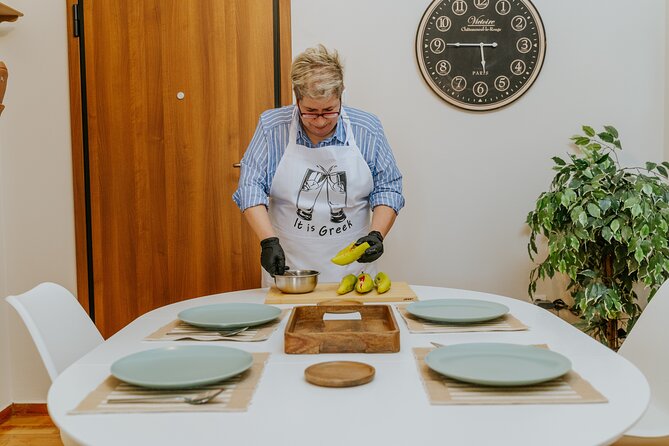
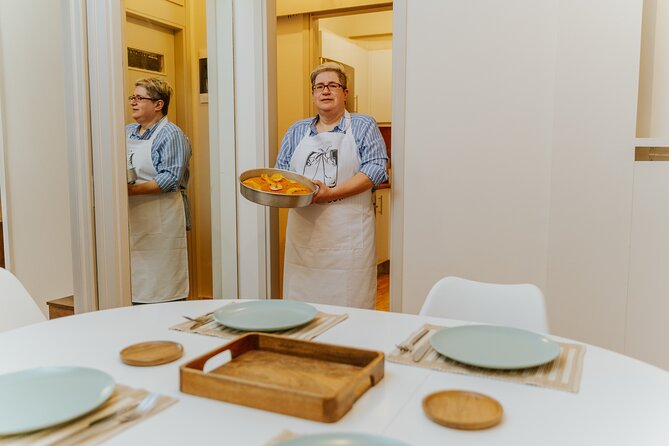
The first surprise is the setting. You are not meeting in a restaurant kitchen or a large teaching room. You go to Tsocha 3, in Athens, and enter Aspasia’s light-filled home for a meal that mixes cooking instruction with conversation.
That home setting is the heart of the experience. I like the way it places food in its natural context. Greek cooking is often tied to family kitchens, long lunches, and recipes explained while someone is already chopping, stirring, or setting the table. You get a version of that rhythm here.
The décor is described as bright and harmonious, which matters more than it may sound. Three hours in a pleasant home feels quite different from standing at a crowded counter under harsh lights. If you want a polished culinary school with workstations and strict timing, this is not that sort of class. If you want a personal evening with a local host, the setting is a strong point.
Because the activity is private, only your group takes part. That is useful for couples, families, or friends who want to ask questions freely. It also means the quality of the evening depends heavily on how much active participation your group wants and how Aspasia structures the cooking.
A few more cooking classes around Athens worth a look
- Athens: Classic Cooking Class with Market Visit and Wine
★ 5.0 · 1,101 reviews - Athens: Food Market Visit and Cooking Class with Wine
★ 4.9 · 1,087 reviews - Greek Cooking Class in Athens Including Rooftop Dinner with Acropolis View
★ 5.0 · 826 reviews
Seven Greek dishes, from bread to dessert
The menu moves through several small starters, two main dishes, and dessert. It is a generous spread, not a single recipe lesson. You will see ingredients and cooking ideas repeated across Greek food, including tomatoes, herbs, olive oil, cheese, eggplant, and meat.
The meal begins with paximadi bread, olives, and graviera cheese. Paximadi is a crisp Greek bread, often made with barley, and it has a dry, sturdy texture that works well with olive oil and cheese. Graviera is a hard cheese that can taste mildly sweet or slightly sharp and spicy.
This opening course is not likely to challenge an experienced home cook. Its value is cultural rather than technical. It introduces basic Greek table flavors before the more prepared dishes arrive. If you enjoy simple food built around good ingredients, you will appreciate it. If you are looking for a lesson in complicated sauces, this course will feel basic.
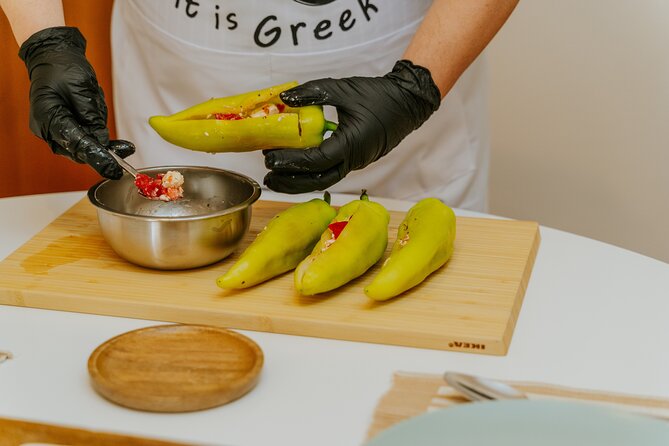
Next come stuffed long sweet peppers. The peppers are filled with feta, tomatoes, and herbs such as spearmint. This dish gives you a useful look at the Greek habit of combining salty cheese, soft vegetables, and fresh herbs.
The recipe is vegetarian, which adds balance to a menu that later includes beef and cured pork. The filling also provides a clear lesson in seasoning. Spearmint is especially important because it brings a cool, fragrant note to the feta and tomato mixture.
Eggs Kayanas and the food of Mani
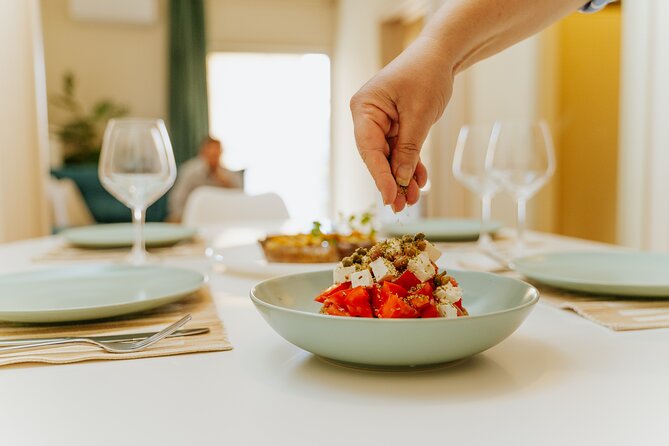
The Greek eggs Kayanas connect the meal to Mani, a region in the southern Peloponnese. The dish combines scrambled eggs, fresh tomatoes, and siglino, a cured pork product associated with the area.
This is the sort of dish that explains Greek home cooking better than a grand restaurant plate. The ingredients are ordinary, but the combination is satisfying and tied to a specific place. You get a lesson in how tomatoes can become part of the base for eggs, rather than just appearing raw in a salad.
The cured pork gives the dish a deeper, saltier flavor. If you do not eat pork, you should ask about the preparation before booking, since this is one of the named dishes. The experience includes a vegetarian stuffed pepper and eggplant dish, but the full menu is not vegetarian.
Kayanas is also a good example of why you should check your expectations. You are not learning restaurant-style plating. You are learning dishes that families might prepare with familiar ingredients and strong regional associations.
Cretan dakos brings crunch to the table
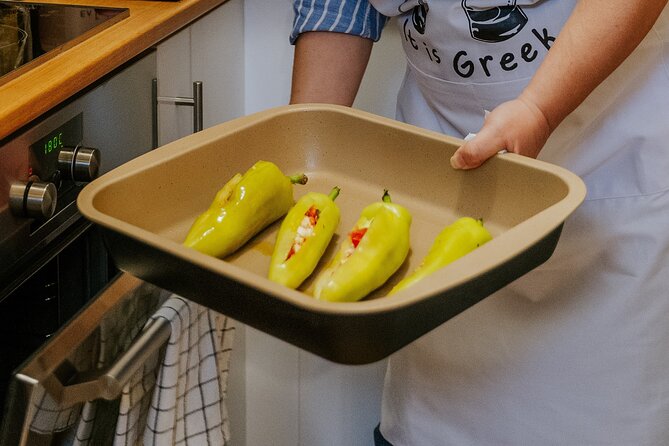
The Cretan dakos salad is one of the most distinctive items on the menu. It uses crisp barley rusks topped with tomato, olive oil, and feta cheese.
Unlike a leafy salad, dakos has a firm, crunchy base. The tomatoes and olive oil soften the rusks while keeping some texture. It is a useful reminder that Greek salads go well beyond the familiar chopped cucumber and tomato combination.
For you, this may be the most clearly regional dish of the early courses. It comes from Crete and uses barley rusks in a way that feels practical and traditional. The recipe also shows how a few strong ingredients can create a complete dish without a long list of steps.
The dakos may be prepared partly in advance, depending on the flow of the class. That is worth keeping in mind if your main goal is to do every task yourself. The menu gives you a taste of Cretan food, but the exact amount of chopping, mixing, and assembling you perform is not clearly fixed.
Same place, a different thing to cook:
- Greek Small-Group Athens Cooking Class & Dinner
★ 5.0 · 574 reviews - Athens: Greek Cooking Class & Dinner on a Rooftop
★ 5.0 · 383 reviews - Athens: Greek Cuisine Cooking Class and 3-Course Dinner
★ 4.8 · 270 reviews - Traditional Greek cooking class and lunch or dinner with an Acropolis view
★ 5.0 · 250 reviews
Meatballs with yogurt sauce and Greek family cooking
The first main dish is Greek meatballs with yogurt sauce. The meatballs use ground beef, flour, and Greek spices. They are described as a classic grandmother-style dish, which tells you what kind of food to expect: familiar, filling, and designed for a family table.
The yogurt sauce adds coolness to the seasoned meat. It also gives you a simple pairing you can reuse at home. Meatballs are not a rare or difficult food, and one person specifically felt that several menu items were too familiar. That criticism is fair if you already cook regularly.
At the same time, familiar food can be the point. You are not paying only to discover an ingredient you have never seen. You are paying to prepare and eat a Greek version of a dish you may already know, with the host explaining how it fits into local cooking.
One important distinction is participation. A particularly positive account described Aspasia as patient and helpful with someone who did not cook. That person felt guided through stuffed peppers, eggplant, eggs, meatballs, and dessert, and left feeling encouraged. Another account said the hosts did most of the cooking and served food that had not been requested.
Those two experiences suggest that you should state your expectations clearly at the start. Tell Aspasia if you want to chop, mix, shape, season, and assemble as much as possible. A private class gives you a good chance to ask, but you should not assume that every dish will be made entirely by your hands.
Eggplants Imam, a slow and savory centerpiece
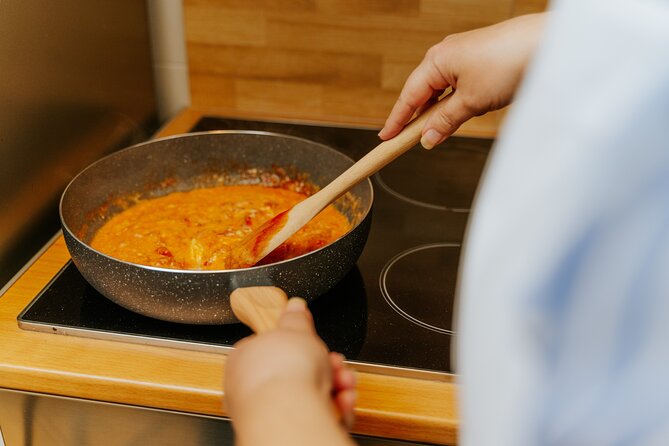
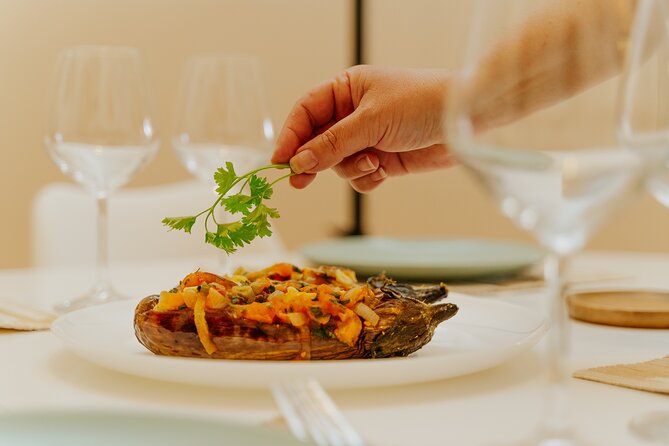
Eggplants Imam are stuffed with onions, tomatoes, garlic, herbs, and spices. The dish is savory and soft, with the eggplant acting as a base for the aromatic filling.
This recipe shows a different side of Greek cooking from the meatballs. It is vegetable-centered and built around slow cooking and layered flavor. You get the sweetness of onion and tomato, the sharpness of garlic, and the earthy quality of eggplant.
Eggplant can be a divisive ingredient. If you enjoy it, this is likely to be one of the strongest dishes in the meal. If you find eggplant soft or bitter, you may not be won over by this preparation. Still, it is a useful dish to learn because it demonstrates how Greek meals can make a substantial main course from vegetables.
The name Imam suggests a dish with a story, but the supplied information focuses on ingredients rather than a full explanation of its origin. You should expect practical cooking guidance, not necessarily a long history lecture.
Ravani and the question of dessert
Dessert is listed as ravani, a semolina cake soaked in aromatic syrup. It comes from Northern Greece and finishes the meal with a soft, sweet texture.
Ravani is a sensible choice for a group class because the cake can be prepared in a manageable way and served in portions. The syrup is the important detail. It gives the cake moisture and sweetness and makes it quite different from a dry sponge cake.
One past account described rice pudding instead, so the dessert may vary or the menu may have changed. If ravani is important to you, confirm the current dessert when you book. The named menu currently points to ravani, but that earlier difference is worth noting.
The meal also includes two glasses of white wine per person. That is enough to accompany the food without turning the class into a drinking activity. You can expect the wine to support the social side of the evening, with conversation and a shared meal after the cooking.
What the three-hour format really means
Three hours sounds generous, but seven dishes create a full schedule. Some work will involve preparation, while other food may need cooking time, resting time, or advance preparation. You should not expect three straight hours of constant knife work.
The strongest version of this experience is a mix of demonstration and participation. Aspasia explains recipes, gives background, and invites you to help, then everyone sits down to eat. That format suits a first-time cook or someone who wants a relaxed introduction to Greek food.
It may disappoint a serious home cook who wants detailed instruction on sauces, spice ratios, substitutions, and technique. One dissatisfied participant wanted more active preparation and felt the cost was high compared with the amount of cooking. That concern is especially relevant because the price is $130.04 per person.
I would judge the value as an experience price, not a restaurant price. At a restaurant, you would pay for the finished meal, service, and setting. Here, you also pay for the private home, interaction with Aspasia, recipes, cooking guidance, wine, and the time spent hosting you. The value is good if personal contact matters to you. It is weaker if you mainly want the cheapest way to eat Greek food or a formal cooking qualification.
Who will enjoy this Athens cooking experience?
I would recommend it most strongly to:
- First-time cooks who want patient guidance
- Couples looking for a private food-focused activity
- Small groups who prefer conversation to a large class
- Visitors who want a meal connected to regional Greek cooking
- People who enjoy home settings more than polished restaurant rooms
I would be more cautious if you are an experienced cook seeking advanced technique. The dishes are classic and approachable, but they are not unusual. You may already know how to make meatballs, stuffed peppers, bread with cheese, or a simple cake.
Dietary needs also deserve attention. The menu includes beef, cured pork, dairy, eggs, and wheat-based items. Service animals are allowed, and the home is near public transportation, but the available information does not give a full accessibility description or confirm substitutions. Ask before booking if you have allergies or strict dietary requirements.
The experience is offered in English. Confirmation arrives at booking, and the activity returns to the same meeting point. You can cancel for a full refund up to 24 hours before the start time. If the minimum number of participants is not reached and the activity is canceled, you will be offered another date or experience, or a full refund.
Should you book Aspasia’s cooking class?
Book it if you want a private Greek home meal with cooking included, especially if you value a warm host and relaxed conversation. The strongest promise here is personal attention, not culinary complexity.
Before paying, look carefully at the menu and decide if these dishes are new enough for you. Tell Aspasia that you want hands-on work, and ask which parts you will prepare yourself. If you are comfortable with a demonstration-led class and want to eat seven Greek dishes with wine in a local home, this is a memorable Athens choice.
Skip it if you want advanced technique, unusual ingredients, or a strict cooking-school format. At $130.04, the experience needs to feel personal and participatory to justify its price. The private setting and highly praised patience of Aspasia can make that happen, but your expectations should match the menu and the informal style.
FAQ
Where does the cooking class begin and end?
It begins at Tsocha 3, Athina 115 21, Greece, and ends back at the same meeting point.
How long does the experience last?
The cooking class lasts approximately three hours.
Is this a private activity?
Yes. Only your group participates in the experience.
What language is the class offered in?
The experience is offered in English.
What food and drink are included?
The menu includes paximadi bread with olives and graviera cheese, stuffed sweet peppers, Greek eggs Kayanas, Cretan dakos salad, Greek meatballs with yogurt sauce, eggplants Imam, and ravani. Two glasses of white wine are served per person.
Can I cancel for a full refund?
Yes. You can cancel at least 24 hours before the start time for a full refund. Cancellations or changes made less than 24 hours before the start time are not refunded or accepted.
Just added around Athens
- Private Greek Cooking Class in Athens-Learn to Cook with Angelina★ 5.0 · 3 reviews
- Cook with Katerina: Authentic Greek Home Cooking Class in Athens★ 5.0 · 15 reviews
- Private Walking Meze Cooking Course★ 5.0 · 6 reviews
- Cooking Class in Athens: Learn the Art of Phyllo with Christina★ 5.0 · 24 reviews
- Greek Cooking Class with Acropolis View★ 5.0 · 76 reviews
- Athens: Traditional Vegan Cooking Class incl. Drinks★ 5.0 · 41 reviews
- Greek Meze Cooking class and dinner with an Acropolis view★ 5.0 · 41 reviews
- Hands On Greek Cooking Classes in Athens★ 5.0 · 7 reviews
Cooking Classes, compared.

Half-Day Thai Cooking Class at Organic Farm in Chiang Mai
Read our review →

3 in 1 Cooking Class near Navona: Fettuccine, Ravioli & Tiramisu
Read our review →
Pasta & Tiramisu Cooking Class with Unlimited Wine
Read our review →
Hanoi Cooking Class: Culture, Local Market & Meaning CSR Impact
Read our review →
5 Traditional Dishes Hanoi Cooking Class with Market Trip
Read our review →
Cooking Class and Lunch at a Tuscan Farmhouse with Local Market Tour from Florence
Read our review →
Cooking Class, Market & Thai Herbs Garden Tour
Read our review →Lists this class appears in