
REVIEW · SICILY, ITALY
Cooking Class Arancini in Catania
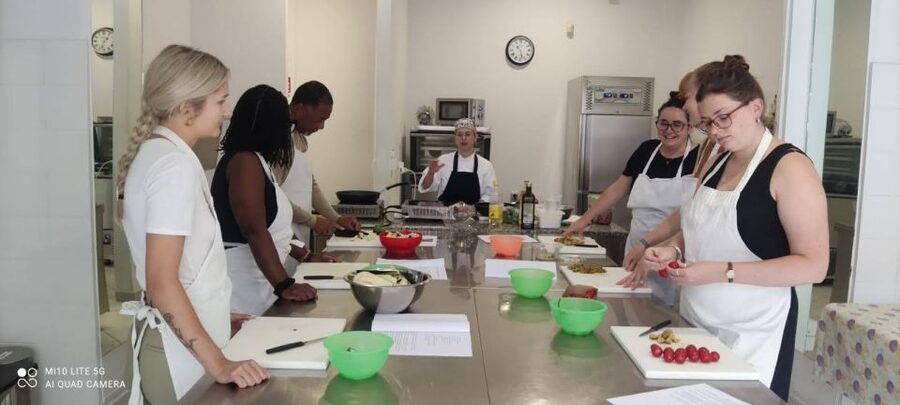
Come hungry, leave with Sicilian skills. This three-hour class at a real cooking laboratory teaches you to prepare arancini and almond paste with a professional chef, then sit down to taste what you made. I like the small groups, limited to six, and the chance to make several fillings, including vegetarian options. I also like that wine, coffee, and a recipe booklet are included.
The main caution is the recipe booklet. While several people found the class clear and useful, one participant received only two copied recipes with incomplete instructions and no quantities for the rice. If you want precise recipes for recreating the dish at home, ask the chef to write down measurements before you leave.
Key points at a glance
- Two classic Sicilian foods: Learn arancini, the famous stuffed rice fritters, and Sicilian almond paste.
- Small class size: A maximum of six participants allows plenty of time for questions and hands-on work.
- Several arancini fillings: You learn how to prepare different fillings, with vegetarian choices available.
- Professional instruction: The class is taught in English or Italian by a chef, with Agata praised for both teaching and cooking.
- A full tasting afterward: Sample the arancini and almond paste with Sicilian-style wine, water, and coffee.
- Flexible booking: You can cancel up to 24 hours before the activity for a full refund and reserve without paying immediately.
What makes this Catania cooking class worthwhile
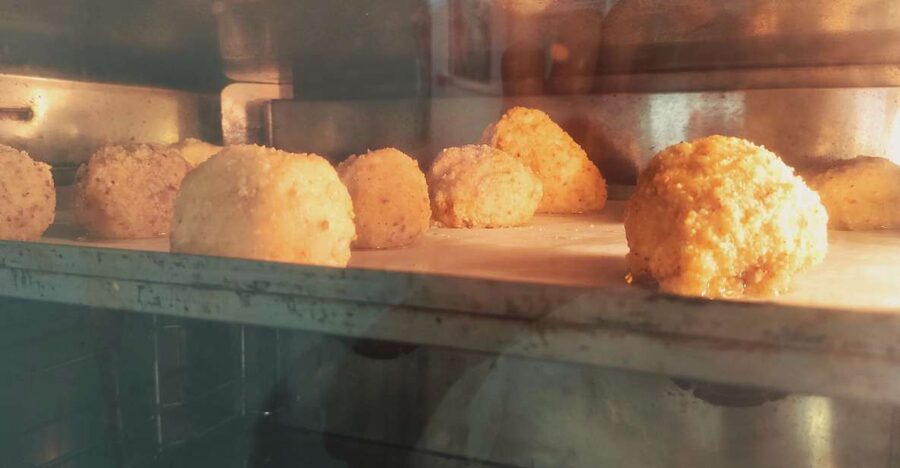
Catania gives you plenty of chances to eat arancini from a counter or bakery. This class offers something different: you learn why the rice holds together, how fillings are prepared, and how the crisp coating is built.
That matters because an arancino is not simply a ball of leftover rice. The rice needs the right texture, the filling must work with it, and the outside needs a firm coating that turns crisp during cooking. The class breaks down those parts in a practical order, so you can understand the technique rather than only enjoy the finished snack.
I especially like the balance between instruction and eating. You are not watching a chef prepare everything while standing around hungry. You help make the food, then taste different versions at the end. One participant even had enough food left to take some home, though the exact amount will depend on the group and the day.
The almond paste adds a useful second lesson. It gives the class a sweet finish and introduces another food strongly linked with Sicily. You are not spending three hours on one repetitive recipe. Instead, you work with both savory and sweet preparations.
A few more cooking classes around Catania worth a look
- Catania: Pistachio Ravioli, Pasta Home Cooking Class w/ Wine
★ 4.7 · 204 reviews - Cooking lesson in Catania with lunch or dinner
★ 5.0 · 154 reviews - Catania: Market Tour and Cooking Class with Chef Riccardo
★ 5.0 · 40 reviews
Arriving at the cooking laboratory
The meeting point is listed as Laboratorio di cucina, at coordinates 37.51484298706055, 15.102240562438965. Since the supplied information does not name a nearby landmark or provide transport directions, use the exact meeting-point details when planning your arrival.
Allow enough time to find the laboratory without rushing. A cooking class starts with a practical rhythm, and arriving late could mean missing the explanation of the rice or the first preparation steps. Because the group may be as small as two people, a late arrival could also be more noticeable than it would be on a large food tour.
The setting is a working kitchen rather than a sightseeing route. That is good news if you want to focus on Sicilian food. You will not spend part of the three hours moving between attractions, and you will have a proper place to work with the chef.
Instruction is available in English and Italian. Several English-speaking participants found the explanations easy to follow, and one specifically praised the chef’s English. If a technical step is unclear, ask at once, especially when the rice is being prepared.
Learning the rice behind the arancino
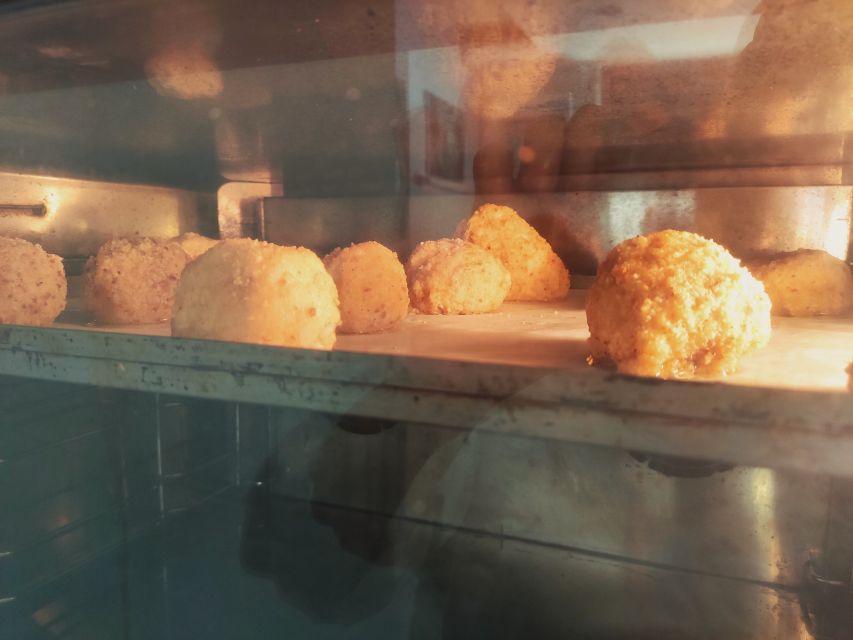
The first major lesson concerns the rice that forms the body of the arancino. The chef explains how it should be cooked and prepared before you begin shaping it.
This is the point I would pay closest attention to. The rice is the foundation of the dish, and the final shape depends on its texture. One participant enjoyed the class but later found the written instructions incomplete, especially because the booklet did not explain how to make the rice or give exact quantities. Take notes during this stage rather than assuming the booklet will cover every detail.
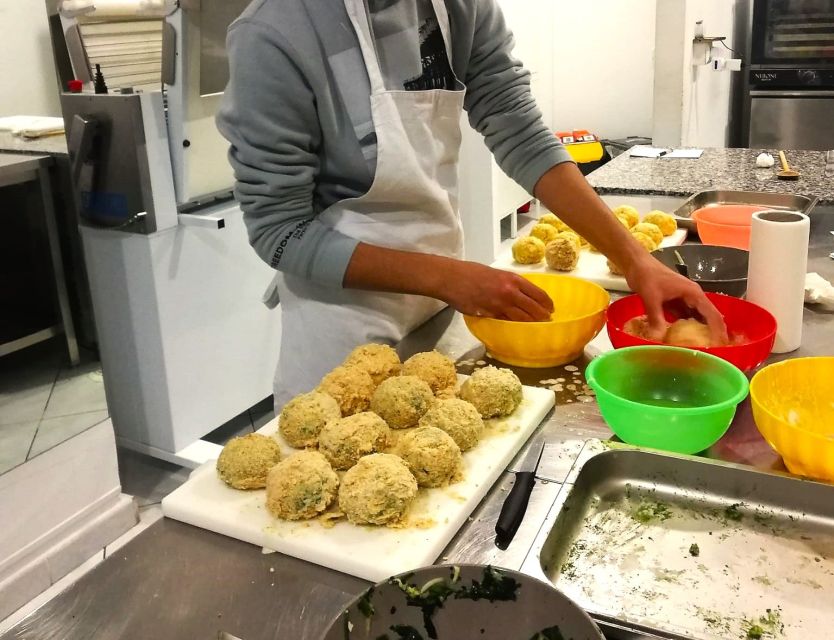
The class is designed to let you handle the process. You learn how the cooked rice is combined and prepared for stuffing, then how it is shaped around the filling. The exact shape may vary, but the key lesson is building a firm rice shell without letting it fall apart.
This is also where a small group helps. With no more than six people, the chef can watch your technique and correct problems before you move on. In a class of only two, the atmosphere can feel almost private. In a full group, you still have a more personal setting than a large demonstration class.
Making several fillings, including vegetarian choices
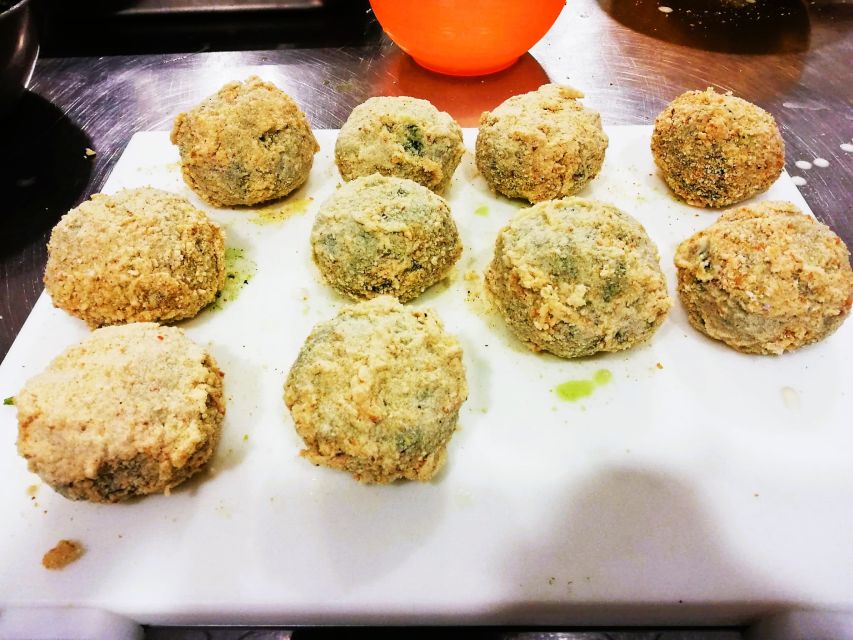
Once the rice is ready, the class moves to the fillings. You are shown different types, giving you a chance to compare several arancini rather than preparing only one standard version.
The availability of vegetarian fillings is an important detail. Sicily has plenty of food choices for vegetarians, but not every cooking experience makes that clear in advance. Here, you can ask for a vegetarian option when the fillings are being planned.
The filling lesson also shows why arancini can be so varied. The rice provides a familiar outer shell, while the center changes the flavor and texture. Making several versions gives you a better sense of how flexible the dish can be at home.
I would ask the chef which filling is easiest to repeat in an ordinary kitchen. The class may include several options, but some could require ingredients or preparation methods that are less convenient once you return home. Your recipe booklet is intended to help, yet the conflicting experience with incomplete recipes makes it sensible to write down anything that seems missing.
Same place, a different thing to cook:
- Catania: Pasta & Tiramisu Cooking Class at a Local’s Home
★ 4.8 · 39 reviews - Catania: Pizza Cooking Class
★ 4.9 · 18 reviews - Cooking class fresh pasta
★ 4.8 · 17 reviews - Cesarine: Home Cooking Class & Meal with a Local in Catania
★ 4.5 · 10 reviews
Building the crunchy breading
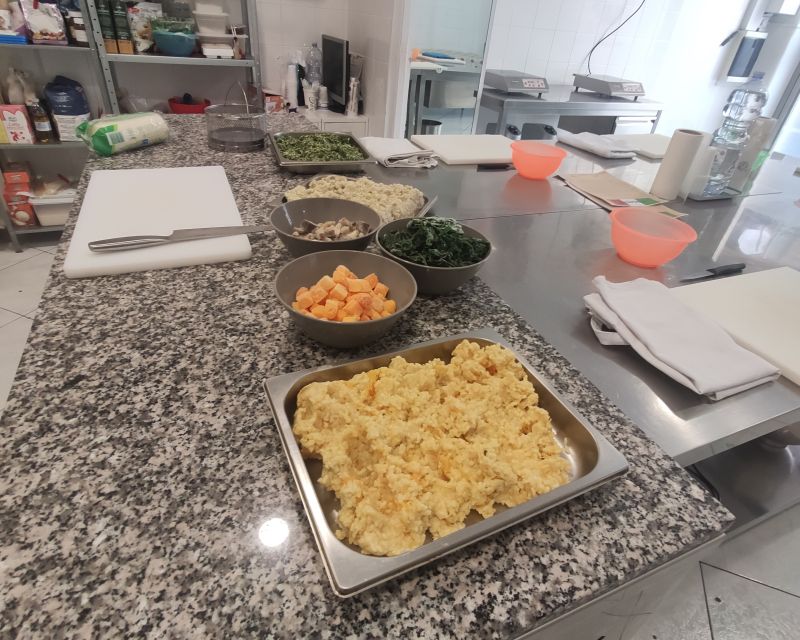
The final savory technique is the breading. The chef explains how to coat the shaped rice so the outside becomes crisp while the center stays soft.
This step is easy to underestimate. A good arancino depends on contrast: a crunchy exterior, warm rice, and a filling inside. The breading lesson helps connect the earlier stages. If the rice is too loose, shaping becomes difficult. If the coating is uneven, the finished result may not cook consistently.
You will also see how the different fillings work once the arancini are coated and prepared for cooking. The class focuses on the method, not just on a finished plate placed in front of you. That hands-on approach is the strongest reason to choose this activity over simply ordering arancini at a café.
Because the activity takes place indoors, it can be a smart choice on a very hot day. One participant found it particularly enjoyable as a break from Sicily’s summer heat. You still get a food-focused experience without spending three hours walking in the sun.
A sweet lesson in Sicilian almond paste
The almond paste lesson gives the class a different pace. After working with rice, fillings, and breading, you turn to a traditional Sicilian sweet preparation.
The class description does not provide the full almond paste method or list every ingredient, so I would treat this as an introduction rather than a specialist pastry course. Still, it adds real value. You leave having worked with two recognizable Sicilian foods, one savory and one sweet.
The almond paste is prepared during the class and included in the final tasting. Some participants described making almond cookies, so the finished result may be presented in that style. If the distinction matters to you, ask the chef how the almond paste will be shaped or served on your date.
This part may also suit people who are less interested in a full meal. The arancini are the main event, but the almond preparation gives you another recipe to try with family or friends.
Tasting arancini, almond paste, wine, and coffee
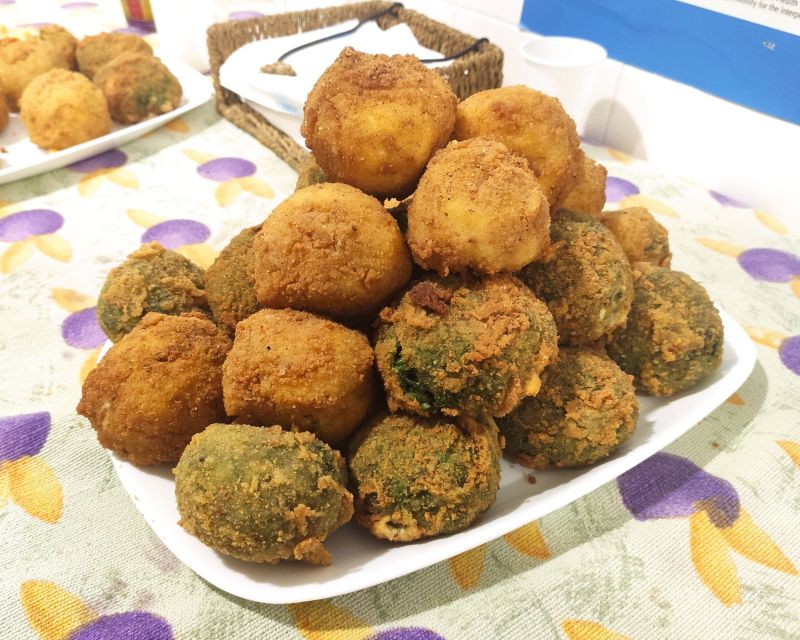
At the end, you taste the different arancini and the almond paste you have prepared. Sicilian-style wine, water, and coffee are provided, turning the final stage into a relaxed shared meal.
I like this finish because it lets you judge the results while the techniques are still fresh. You can compare fillings, notice the texture of the rice, and ask why one coating came out differently from another. The meal is not an afterthought. It is part of the lesson.
The class may also create a social moment between separate cooking groups. One participant enjoyed sharing the prepared food with another couple who had made a different dinner. That kind of exchange is a pleasant bonus, though the exact arrangement depends on who else is booked.
Do not think of this as a restaurant dinner with a cooking demonstration attached. You are eating food that you have helped prepare, and the meal may be informal. That is part of the appeal. The focus is on participation and Sicilian food, not polished service.
The recipe booklet and what to write down
A booklet with the recipes is provided at the end, which is useful if you want to repeat the class at home. It gives the experience a longer life than a single meal in Catania.
However, I would not rely on the booklet alone. One participant found two photocopied recipes incomplete and could not recreate the dish without remembering the class. The missing rice instructions and quantities were the main problems.
Before leaving, check that you have:
- The rice ingredients and quantities
- The cooking method for the rice
- The measurements for each filling
- The breading ingredients and order of steps
- The almond paste ingredients and method
- Any cooking temperature or timing details
This is not a complaint that applies to every class, but it is useful preparation. If the written material is brief, use the chef as your best source. Ask for exact quantities and take notes on your phone if permitted.
Group size, teaching style, and atmosphere
The class is limited to six people, and that small size shapes the whole experience. You should have more direct access to the chef than in a large group, and you can ask questions as you work.
The teaching received strong praise for being friendly, clear, and fun. Agata was singled out as an excellent chef and teacher. Other participants described the women leading the class as gracious and hospitable. These details matter because cooking classes can feel awkward if the instructor is rushed or overly formal.
The tone here appears relaxed without losing the practical side. You learn, cook, taste, and share the result. The class can work well for couples, friends, solo visitors, and small family groups who want a shared activity in Catania.
The language choice is English or Italian. If you speak English, you should be able to follow the main instruction, but cooking terms and measurements are still worth confirming when needed.
Timing, age limits, and booking flexibility
The experience lasts three hours. That is long enough for several preparations and a meal, but short enough to fit into a Catania sightseeing day. Check the available starting times before booking so the class does not collide with another fixed activity.
The published age restrictions are somewhat repetitive, listing babies under one and children under two, three, and four among those not suited to the activity. In practical terms, this is not presented as a class for children under four. Confirm the age policy when booking if you are traveling with a young child.
Cancellation is free up to 24 hours before the start time for a full refund. You can also reserve now and pay later, which helps if your plans around Catania are still changing. These policies are useful, but the real value depends on the price shown for your date.
No price is supplied here, so I would judge the cost by what is included. You receive three hours of instruction, several types of food, a tasting, wine, water, coffee, and recipes. A small group and a professional chef also add value, especially if you want more than a quick street-food sample.
Who should book this class?
I would recommend it to you if you want a hands-on food experience rather than a simple meal. It suits anyone curious about how arancini are made, especially if you want to try several fillings or need a vegetarian option.
It is also a good choice for a hot afternoon, a couple seeking an indoor activity, or a small group that enjoys cooking together. The class has enough structure to teach useful skills, but the tasting and wine keep it from feeling like a formal school lesson.
You may want to choose another experience if you need a polished recipe manual with exact measurements. You should also look elsewhere if your main interest is pasta, pizza, a private home meal, or a scenic setting, since this class focuses specifically on arancini and almond paste in a cooking laboratory.
Should you book Cooking Class Arancini in Catania?
Book it if you want to understand two Sicilian specialties by making them yourself. The strongest points are the small group, friendly English instruction, several arancini fillings, vegetarian possibilities, and the chance to eat the finished food with Sicilian-style wine and coffee.
Go in with a notebook and ask detailed questions about the rice. That small precaution addresses the main weakness reported about the written recipes. If the price fits your budget, the class offers good value for a three-hour Catania activity that combines instruction, food, and a proper tasting.
FAQ
Where does the cooking class take place?
The meeting point is a cooking laboratory listed as Laboratorio di cucina in Catania. Its coordinates are 37.51484298706055, 15.102240562438965.
How long does the class last?
The cooking class lasts three hours. Starting times vary, so you need to check availability for your chosen date.
What foods will I learn to make?
You will learn to prepare Sicilian arancini and Sicilian almond paste. The arancini lesson covers the rice, fillings, shaping, and crunchy breading.
Are vegetarian arancini available?
Yes. The class includes the possibility of preparing vegetarian fillings.
Is the class taught in English?
Yes. Instruction is available in English and Italian.
How many people are in the group?
The class is limited to six participants. It may sometimes be smaller, including a group of only two.
What is included after the cooking lesson?
You taste different types of arancini and almond paste. Sicilian-style wine, water, and coffee are offered, and you receive a booklet with the recipes.
Just added around Catania
- Cesarine: Home Cooking Class & Meal with a Local in Catania★ 4.5 · 10 reviews
- Cesarine: Market Tour & Home Cooking Class in Catania★ 4.0 · 6 reviews
- Cooking Class in Taormina with Lunch Included★ 5.0 · 2 reviews
- Join us for a Sicilian cooking class in a professional kitchen on Etna, using fresh ingredients from our organic garden★ 4.2 · 4 reviews
- Cooking Class with lunch or dinner★ 4.9 · 7 reviews
- Cooking class, visit to the Catania market and light lunch★ 5.0 · 7 reviews
- Catania: Pizza Cooking Class★ 4.9 · 18 reviews
- Cooking class fresh pasta★ 4.8 · 17 reviews
Cooking Classes, compared.

Half-Day Thai Cooking Class at Organic Farm in Chiang Mai
Read our review →

3 in 1 Cooking Class near Navona: Fettuccine, Ravioli & Tiramisu
Read our review →
Pasta & Tiramisu Cooking Class with Unlimited Wine
Read our review →
Hanoi Cooking Class: Culture, Local Market & Meaning CSR Impact
Read our review →
5 Traditional Dishes Hanoi Cooking Class with Market Trip
Read our review →
Cooking Class and Lunch at a Tuscan Farmhouse with Local Market Tour from Florence
Read our review →
Cooking Class, Market & Thai Herbs Garden Tour
Read our review →Lists this class appears in