REVIEW · CHIANG MAI PROVINCE, THAILAND
Chiang Mai: Half Day Cooking Class at Organic Farm
Thai food tastes better when you make it yourself. This five-hour Chiang Mai class combines a local market visit with hands-on cooking, fresh herbs, and a meal you prepare from scratch. I like the choice of city or farm settings, and I like that every participant gets an individual cooking station. The main thing to watch is that the three locations are not interchangeable, especially if you want the farm option.
The class is also unusually friendly to different diets. You can ask for mild food, vegetarian dishes, or vegan versions, but tell the team in advance if you have strict dietary needs. At $31 per person, it offers a lot of food and instruction for the money, though the timetable can feel a little loose at busy moments.
Key points at a glance
- Start with Chiang Mai’s local market: Learn about the herbs, curry ingredients, and produce before you cook with them.
- Choose from three settings: Pick a city organic garden, a city yard garden, or a farm outside Chiang Mai.
- Cook several dishes yourself: The menu can include curry paste, curry, soup, stir-fried food, spring rolls, and dessert.
- Set your own spice level: Thai food can be adjusted from mild to fiery, with vegetarian and vegan options available.
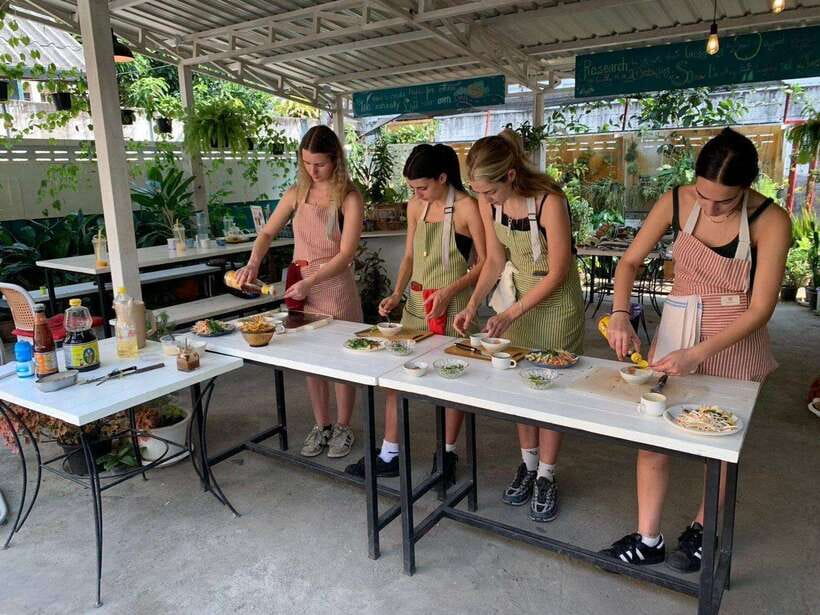
- Small classes keep help close: Groups are limited to 10, and each person receives an individual cooking station.
- Recipes go home with you: The online PDF recipe book helps turn the class into meals you can repeat at home.
A five-hour introduction to Thai cooking
This is not a quick demonstration followed by a sample plate. You spend about five hours moving from market to kitchen, then from kitchen to table. The morning and evening versions cover the same general format, so you can fit the class around sightseeing in Chiang Mai.
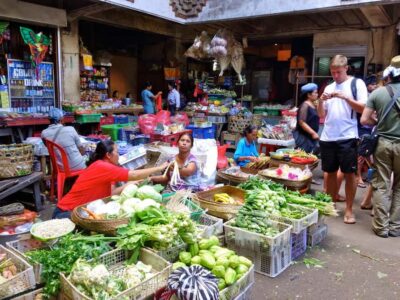
The experience begins with a short visit to a local market. This matters because Thai ingredients can look confusing when they are lined up in a kitchen without context. The market portion gives you a chance to see the herbs, vegetables, curry ingredients, and other products before they are chopped and cooked.
The market visit is not meant to be a long food tour. One practical note is that the market stop can feel brief if you want detailed shopping time. Think of it as an ingredient lesson, not a full market excursion. You will learn what goes into Thai cooking, then move on to the main event.
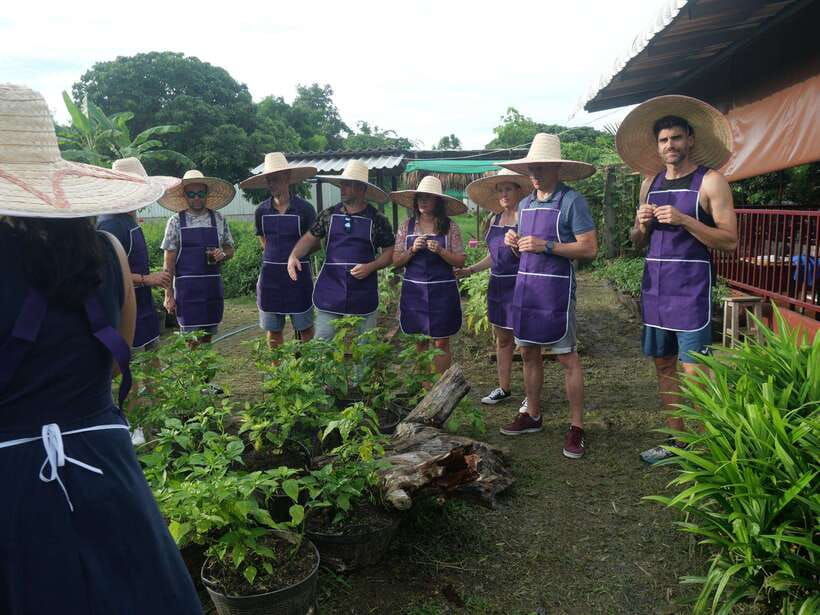
After the market, you continue to the cooking location you selected. Depending on your booking, that may be a city organic garden, a city yard garden, or a farm garden outside the city. Check this choice carefully before paying, since the farm option may not be available at short notice.
More Farm Cooking Classes in Chiang Mai
- Half-Day Thai Cooking Class at Organic Farm in Chiang Mai
★ 5.0 · 19,087 reviews - Chiang Mai: Authentic Cooking Class with Market & Farm Visit
★ 4.9 · 4,546 reviews - Chiang Mai: Cooking Class with Organic Farm at Mama Noi
★ 4.9 · 1,151 reviews
The three location choices matter
The city organic garden is the most convenient choice if you are staying near Chiang Mai’s old city. It gives you a garden setting without taking you far from the central sights. This option may suit you best if you want to keep transport simple or have only a short stay in Chiang Mai.
The city yard garden provides another central setting, with a more compact garden feel. The supplied information does not promise that every dish or activity differs between the two city options, so I would choose based mainly on location and the atmosphere you prefer.
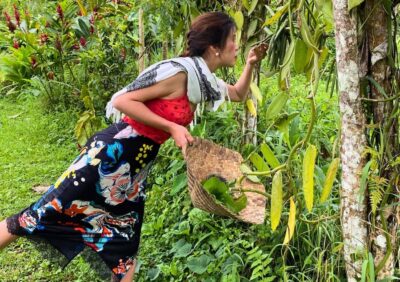
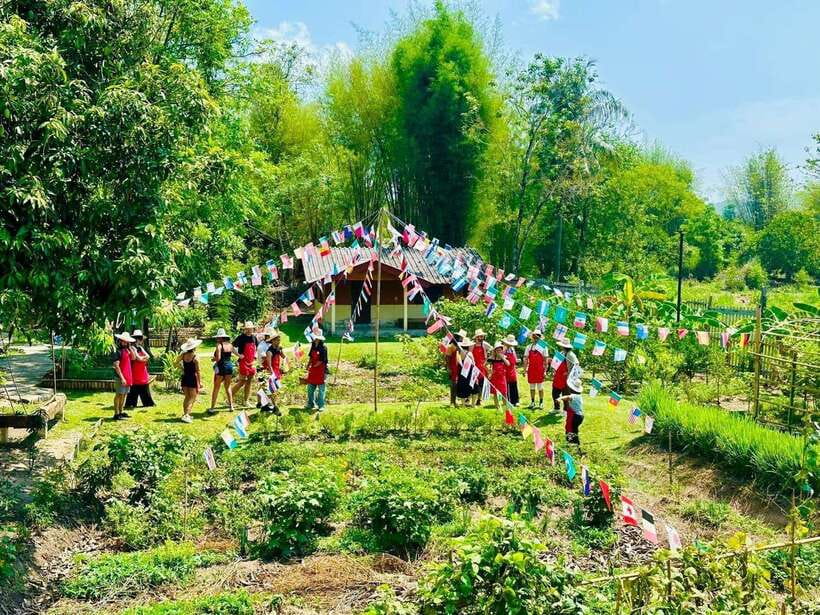
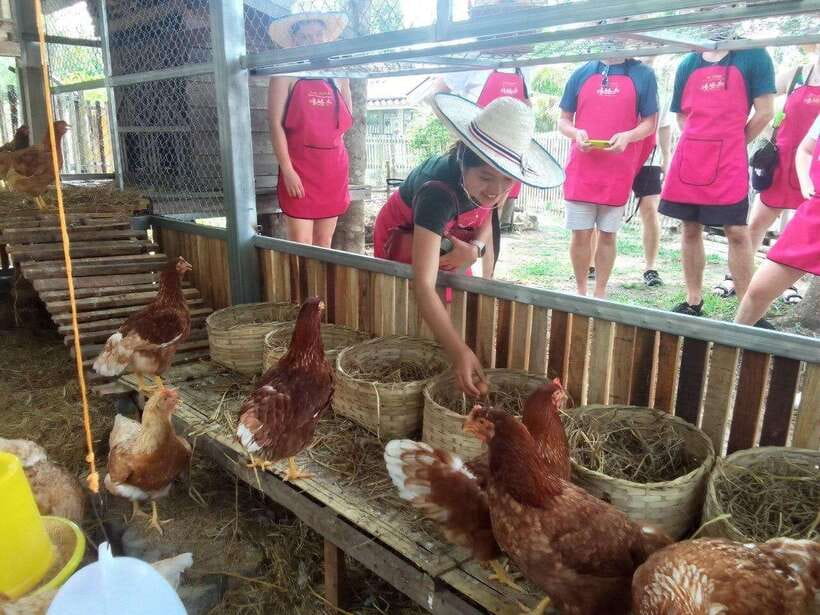
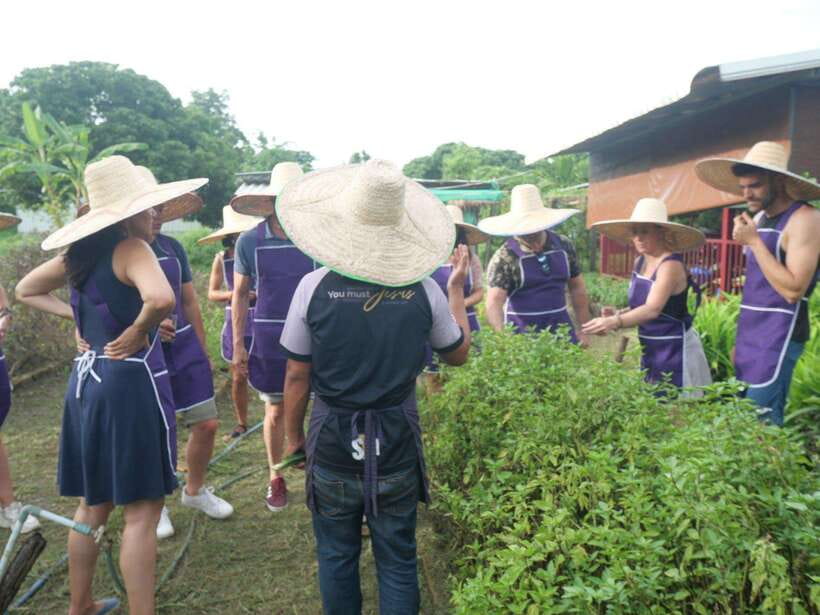
The farm option is outside the city and adds more countryside time. You receive a guided tour of the organic farm and can taste herbs grown on site. That is a useful extra for anyone interested in where Thai ingredients come from, but you should not assume the farm is always available for a last-minute booking. One booking had to be switched from the farm to the city option because the farm was already full.
The exact setting affects the rhythm of the day. A city class is easier to combine with temples, cafés, and evening plans. The farm class is the better pick if the garden and growing side of Thai food are a major reason for booking.
What you cook during the class
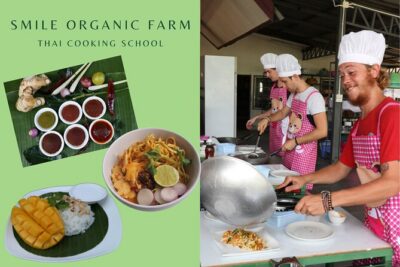
The menu is flexible rather than fixed to one single list. You can usually choose from several categories, including curry paste, curry, stir-fried dishes, soup, spring rolls, and dessert. Common main-course choices include Pad Thai, chicken fried rice, fried chicken with cashew nuts, and Pad Kra Pao.
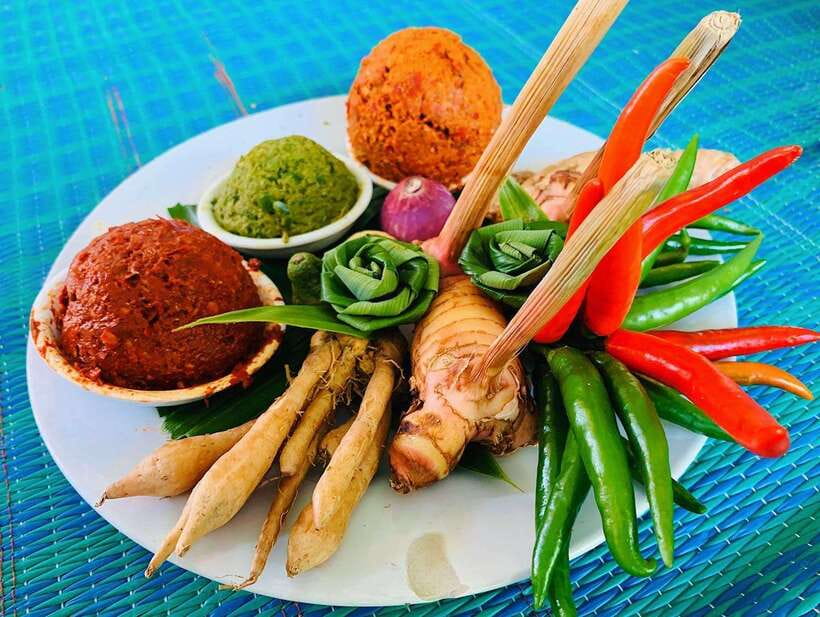
Curry fans get a particularly good choice. You may select red, green, Phanaeng, Massaman, or Khao Soi curry paste, depending on the available menu. Making your own curry paste is one of the most useful parts of the lesson because it shows how fresh herbs, spices, and aromatics create the base flavor.
Several dishes are prepared per person. The exact count can vary, but the experience may include a stir-fry, curry, soup, and dessert such as mango sticky rice. Some people prepare three dishes, while other sessions produce five or six categories of food. If you are booking because of one exact recipe, check the current menu rather than assuming every session includes every dish.
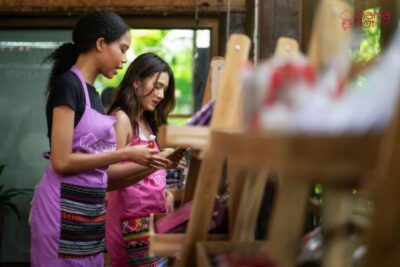
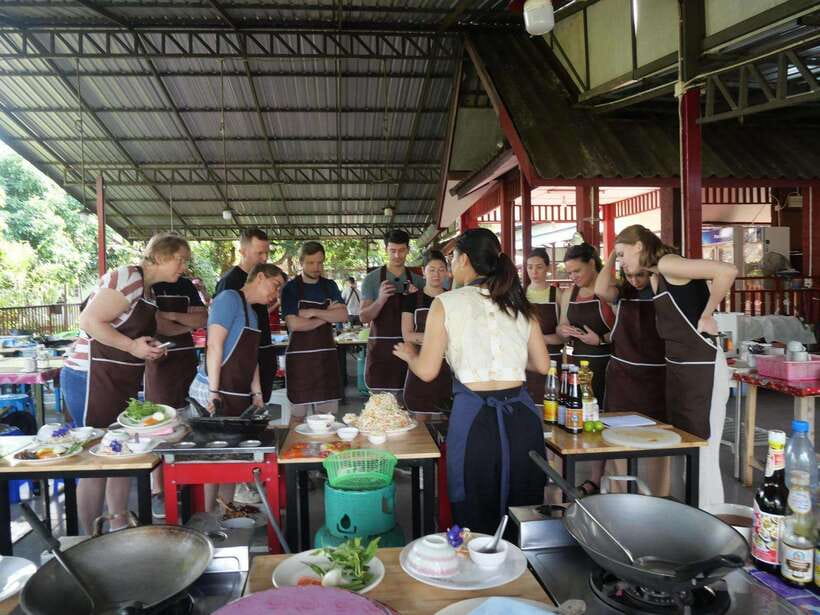
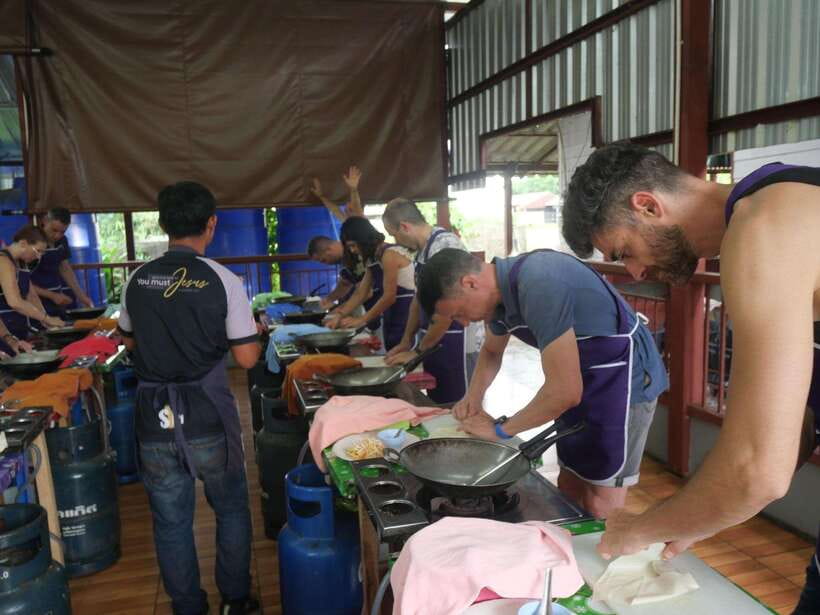
You will not simply watch someone cook a large shared meal. Each participant receives ingredients and an individual cooking station, then follows the instructor through the steps. That format gives you a better chance to learn practical details such as how much paste to use, when to add herbs, and how to adjust seasoning.
Mild, spicy, vegetarian, and vegan cooking
You can decide how spicy your food should be. This is welcome news if you enjoy Thai flavors but do not have a taste for serious heat. The class can also prepare dishes as vegetarian or vegan.
Tell the instructor about dietary needs at the start, and ideally before the class. One participant specifically advised vegan cooks to make their requirements clear up front. That is sensible because curry paste, sauces, and stock can contain ingredients that are easy to miss.
The instructors appear comfortable adapting food for different palates. A class led by Thai was praised for handling vegetarian requests and mild European preferences with patience. That does not mean every possible allergy or restriction is automatically covered, so give clear information when booking.
More Farm Cooking Classes in Thailand
- Full Day Thai Cooking at Farm (Chiang Mai)
★ 5.0 · 1,127 reviews - Chiang Mai: HALF-DAY COOKING COURSE at a Thai Cooking Farm
★ 4.9 · 705 reviews - Cooking Class with Organic Farm in Chiang Mai at Mama Noi
★ 5.0 · 502 reviews - Evening Cooking Class in Organic Farm with Local Market Tour
★ 5.0 · 394 reviews
Friendly instructors and a small-group feel
The group limit is 10 people, which is a good size for a practical cooking lesson. You have enough company to make the meal social, but the group should remain small enough for the instructor to check individual stations.
The teaching team changes by session. Names praised in the supplied feedback include Wave, Auntie Sawat, Anya, Toy, Balloon, Poppy, Jade, and Thai. Anya was described as warm, funny, and especially good at explaining both recipes and food culture. Balloon brought a playful mood to the class, while Toy received praise for being kind and helpful.
The personalities are part of the appeal. This is not a stiff culinary school lesson. The class is designed to be social, and several people found it a good way to meet others while cooking. English is the teaching language.
There is one small caution. One session was described as slightly disorganized, even though the food and overall enjoyment remained strong. With several dishes being prepared at once, the class may have a relaxed, hands-on rhythm rather than the precise timing of a professional kitchen.
Eating what you have made
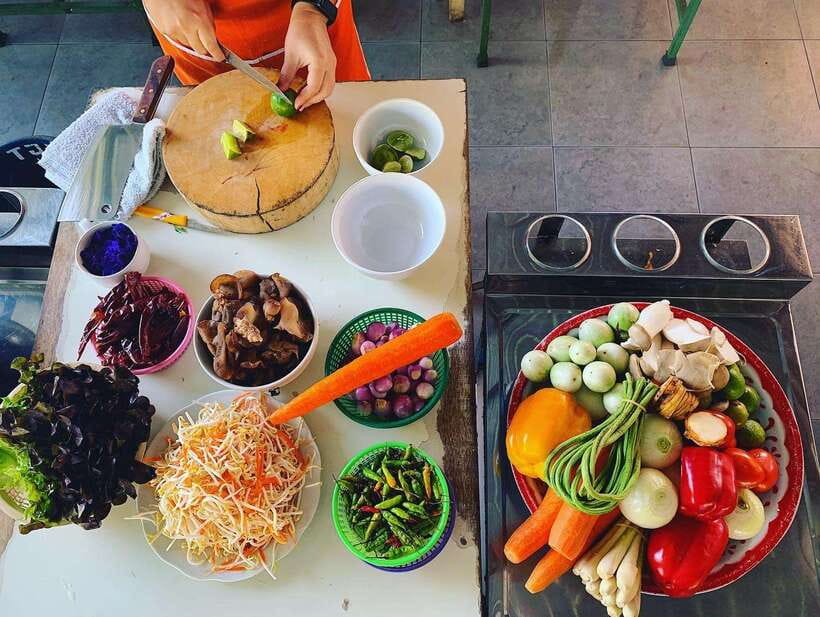
At the end, you sit down and eat the food you cooked in the traditional Thai style offered by the school. This is where the quantity becomes clear. You may prepare enough dishes to make a very filling meal, so arrive hungry rather than treating the class as a light snack.
The food is built around fresh ingredients from the market and, depending on the location, herbs from the garden. That connection between the market, garden, cooking station, and table gives the experience a clear sense of place. You are not only learning a recipe. You are seeing how common ingredients move through a Thai kitchen.
You may also be able to take away food you cooked. Ask the team about packaging on the day, since the practical details can depend on how much you have prepared and what is safe to carry.
Seasonal fruit, drinking water, and a welcome snack are included. Evening participants may find beer for sale at the school, although alcohol is not part of the listed inclusions. If you prefer, one useful tip is to pick up drinks at the market before continuing to the class.
Recipes, photographs, and what you take home
The recipe book is provided as a PDF, making it easy to save on your phone or print later. The instructions are designed to be followed step by step, which is important because Thai cooking often depends on ingredient order and preparation rather than one long cooking time.
The recipes give you a real chance to repeat the food at home. You will already have made the curry paste, handled the ingredients, and seen the cooking process, so the PDF is more useful than a souvenir menu.
An online photo album is also available on the class Facebook page. This is a pleasant extra, particularly if you are cooking with family or friends. It means you can leave with both practical instructions and a record of the day.
Is $31 good value?
At $31 per person, this is strong value if you want more than a single meal. The price includes the market visit, cooking instruction, ingredients, drinking water, recipe PDF, and hotel pickup and drop-off when you are within 3 kilometers of Chiang Mai’s old city. You also receive a garden or farm visit depending on the option selected.
The individual station matters here. In a demonstration class, you may eat well but learn less. This setup lets you chop, mix, fry, season, and make decisions for your own plate. The number of dishes can also turn the class into both lunch or dinner and a substantial food activity.
Transport adds value for anyone staying within the included pickup area. If you are farther away, the meeting point is Burger King, where you should arrive 10 minutes before the start. Pickup is optional, and the transport service received a high score, with 88 percent giving it a perfect rating.
The main limit is not the cost but the menu and setting. You need to check which location you selected, and you should not book the farm at the last minute without confirming it. If you want a long, detailed market tour, this class may also feel too cooking-focused.
Who will enjoy this Chiang Mai class?
I would recommend it most strongly to first-time visitors who want a practical introduction to Thai food. You get a quick lesson in local ingredients, several dishes, and recipes you can use later. It is also a good fit for couples, families, and solo visitors who like social activities.
Families receive a lot for the time and price. One family described it as a great shared activity, and the range of dishes gives different cooks something to do. Children may need close supervision around hot pans and knives, but the supplied details do not specify a minimum age, so ask before booking for young children.
It also suits vegetarians and vegans, provided you explain your needs ahead of time. People who dislike spicy food should feel comfortable asking for mild versions.
I would be more cautious if you use a wheelchair, since the activity is not suitable for wheelchair users. It is also listed as unsuitable for people over 95 years old. Anyone with mobility concerns should confirm the garden and kitchen arrangements before booking.
Practical booking advice for a smoother day
Choose the location first, not just the date. The city options are easier for central accommodation, while the farm gives you more of a countryside and garden experience. If the farm is the main reason you want to book, reserve early and confirm that option.
For a morning class, avoid planning a large breakfast. You may cook several dishes and eat them afterward. For an evening class, leave room for dinner and consider asking about drinks before the lesson begins.
If you are not using hotel transfer, go to Burger King 10 minutes before the start time. For hotel pickup, the included radius is 3 kilometers from Chiang Mai old city. The activity lasts five hours, so do not schedule a tight appointment immediately afterward.
Cancellation is flexible up to 24 hours before the activity for a full refund, and you can reserve now and pay later. That is useful if your Chiang Mai plans are still shifting, though the farm location itself deserves early attention.
FAQ
How long does the Chiang Mai cooking class last?
The class lasts five hours. Morning and evening sessions are available, with start times depending on the date.
What dishes can I cook?
Possible dishes include curry paste, curry, stir-fried food, soup, spring rolls, Pad Thai, chicken fried rice, fried chicken with cashew nuts, Pad Kra Pao, and dessert. The exact selection can vary by session.
Can I choose mild, vegetarian, or vegan food?
Yes. You can choose how spicy your food is, and vegetarian and vegan versions are available. Tell the team about vegan or other dietary needs in advance.
Is hotel pickup included?
Hotel pickup and drop-off are included within a 3 kilometer radius of Chiang Mai old city. Pickup is optional. Without hotel transfer, the meeting point is Burger King, and you should arrive 10 minutes before the start.
How large is the cooking group?
The class is limited to 10 participants, and each person receives an individual cooking station.
Can I cancel the booking?
You can cancel up to 24 hours before the activity for a full refund. The experience also offers a reserve now and pay later option.
Should you book it?
Book this class if you want to eat a full Thai meal, learn several recipes, and spend time with a friendly small group without paying a premium cooking-school price. The market stop, garden setting, individual station, and recipe PDF make it more useful than a simple restaurant meal.
Choose the city option for convenience, and choose the farm only if you confirm availability. Tell the instructor about dietary needs early, ask for mild seasoning if needed, and arrive ready to eat. For $31, this is an especially good choice for first-time cooks, families, and anyone who wants to bring a practical piece of Chiang Mai home.
Just added around Chiang Mai
- Aroidee’s Farm-Fresh Thai Cooking Experience★ 5.0 · 8 reviews
- Signature Thai Cooking Course★ 5.0 · 79 reviews
- Private Half-Day Thai Cooking Class in Chiang Mai★ 5.0 · 4 reviews
- Half Day Guided Thai Cooking Class in Chiang Mai★ 5.0 · 13 reviews
- Online Thai and Akha Cooking Class★ 5.0 · 70 reviews
- Private Virtual Thai Cooking Class★ 5.0 · 9 reviews
- Northern Thai Cooking Class in Chiang Mai in a Countryside Home★ 5.0 · 2 reviews
- 5 Hour Morning Thai Cooking Course★ 5.0 · 31 reviews
Farm & Countryside Cooking Classes, compared.

Half-Day Thai Cooking Class at Organic Farm in Chiang Mai
Read our review →
Cooking Class and Lunch at a Tuscan Farmhouse with Local Market Tour from Florence
Read our review →
Authentic Cooking Class with Market & Farm Visit
Read our review →