
REVIEW · CAMPANIA, ITALY
Cooking Lesson: Neapolitan pasta homemade
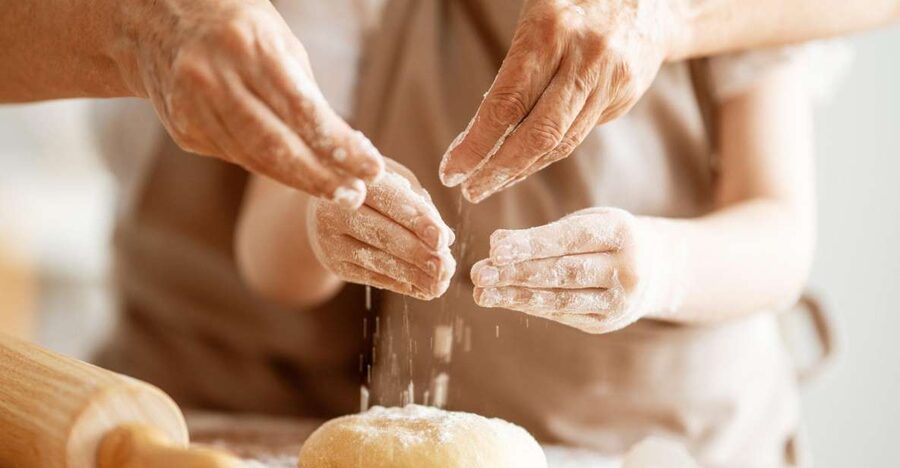
Pasta tastes better when you make it by hand. This two-hour lesson in Naples gives you a practical way to learn ravioli and fettuccine using a rolling pin, family recipes, and old-fashioned methods. I like the hands-on work and the chance to taste Vesuvian tomatoes, homemade bread, and fresh pasta in the same sitting. The main drawback is simple: this is not suitable for anyone with gluten intolerance, and the class may feel short if you want a long, relaxed cooking workshop.
The setting adds appeal. You meet at Naples Cooking Lab on Spaccanapoli, in the heart of the historic center, though the class may sometimes move to Pizzeria Mammina inside Galleria Umberto I. I also like that the class includes lunch or dinner, a drink, kitchen tools, an apron, and a chef diploma, rather than stopping once the dough hits the table.
Key points to know before booking
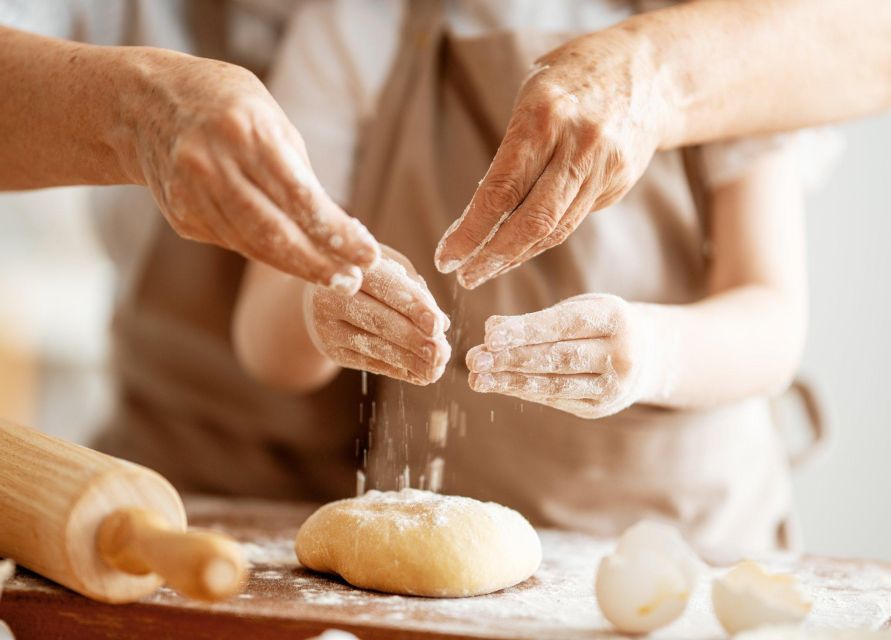
- Hand-rolled pasta, not machine-made: You knead and roll the dough with traditional tools, then cut it into several pasta shapes.
- Two finished dishes: You prepare fettuccine with Neapolitan sauce and ravioli with ragù.
- A taste of Campania first: The starter includes organic Vesuvian tomatoes and homemade bread.
- Chef Amos leads the lesson: He has been praised for explaining each stage clearly and keeping the class friendly.
- A full two-hour activity: The price is $92 per person and includes the food, first drink, instruction, equipment, and diploma.
- A central Naples meeting point: Spaccanapoli makes this easy to pair with sightseeing in the old city.
Why this Naples pasta lesson feels different
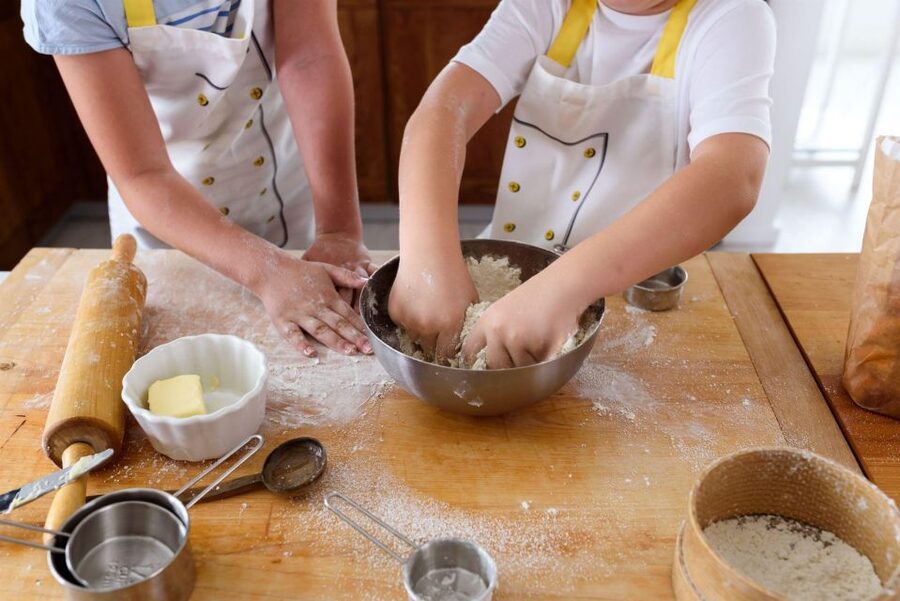
Many pasta classes rely on a pasta machine to save time. This one takes the slower route. You work the dough with your hands and a rolling pin, following methods passed down through the instructor’s family.
That choice matters. You learn how dough feels at each stage, not just which button to press. You also see why the thickness of the sheet affects the final pasta. Fettuccine needs a different cut from tagliolini, while ravioli requires dough that is thin enough to cook well but sturdy enough to hold its filling.
I like this kind of practical instruction because you can repeat it at home without buying special equipment. A rolling pin and a clean work surface are far more useful souvenirs than a complicated kitchen gadget.
The class also explains different pasta types before you begin. That gives the lesson a little context without turning it into a lecture. You learn what makes egg pasta different and how the dough fits each shape.
The experience has earned a 4.8 rating from four posted ratings, with strong praise for the traditional hand-rolling and the final meal. One particularly useful point comes from the class led by Chef Amos: he explains the stages throughout the activity and stays ready to help. That matters in a cooking class, where a small mistake in dough texture can affect everything that follows.
More Pasta Making Classes in Naples
- Naples: Pasta Making Class with Starter and Drink
★ 4.9 · 1,060 reviews - Naples: Pasta Cooking Class with Tiramisù and a Drink
★ 4.6 · 415 reviews - Amazing Pizza and Pasta Class at Savio’s kitchen cooking school
★ 5.0 · 104 reviews
Meeting at Spaccanapoli in Naples
The usual meeting point is Naples Cooking Lab on Spaccanapoli, one of the main streets through Naples’ historic center. This is a good location for a food activity because it places you in the middle of the old city rather than in a distant suburb.
You should check the exact meeting information before setting out. On some dates, the lesson takes place at Pizzeria Mammina in Galleria Umberto I instead. The provider says you will be informed ahead of time if the venue changes.
The central location makes this easy to combine with a day in Naples. You could schedule the class between visits in the historic center, though you should allow enough time to find the correct entrance. The activity offers a separate entrance for the class, which can help keep arrival straightforward.
The venue change may be the only logistical wrinkle. If you have already planned your walking route around Spaccanapoli, a class at Galleria Umberto I will require a small adjustment. It is not a major problem, but you should not assume the class always uses the same room.
The opening lesson: pasta types and family dough
The class begins with an explanation of different pasta types. Then you start making egg pasta based on the instructor’s family recipe.
This is where the activity shifts from sightseeing to participation. You are not simply watching a chef prepare lunch. You learn what goes into the dough and how the ingredients work together. The description refers to a traditional dough connected to 1800s methods, giving the lesson a clear link to older home cooking.
You can expect the instructor to explain the ingredients before the kneading begins. That is useful for anyone who hopes to make the recipe later, since pasta success depends on more than following a list of quantities. The feel of the dough tells you when it is ready, and that is easier to understand when someone is guiding you at the table.
The class suits beginners best. You do not need advanced cooking skills to join, and the focus is on learning through the process. Still, pasta dough can be physical work, so you should expect to use your hands and stay involved rather than sit back.
A Vesuvian starter while the dough rests
Once the dough has been worked, it needs time to rest. Instead of leaving you waiting, the instructor serves a local starter.
This includes organic tomatoes from Vesuvius and homemade bread. It is a small part of the lesson, but I consider it one of the more valuable details. You get to taste local ingredients on their own before they are mixed into sauces or combined with pasta.
The tomatoes connect the cooking lesson to Campania’s food culture. The point is not just that the ingredients are local. It is that quality and simplicity matter in Neapolitan cooking. A tomato with good flavor needs little decoration, and homemade bread gives you a useful comparison with ordinary packaged bread.
The starter also breaks up the work. Kneading, rolling, and cutting can feel repetitive, especially in a compact two-hour class. A short tasting gives you time to pause while the dough rests, and it helps the activity feel like a meal rather than a basic demonstration.
One drink is included with the food. You can choose an alcoholic or non-alcoholic option. Additional drinks after the first one cost extra, so keep that in mind if you expect to linger at the table.
Same place, a different thing to cook:
- Naples: Neapolitan Pizza and Tiramisu Cooking Class
★ 4.9 · 258 reviews - Naples Pizza and Tiramisu Cooking Class
★ 5.0 · 173 reviews - Naples: Traditional Italian Food Cooking Class at Restaurant
★ 4.8 · 106 reviews - Naples Pizza Class: Learn, Bake & Eat the Authentic Pizza Taste
★ 5.0 · 103 reviews
Rolling the dough without a pasta machine
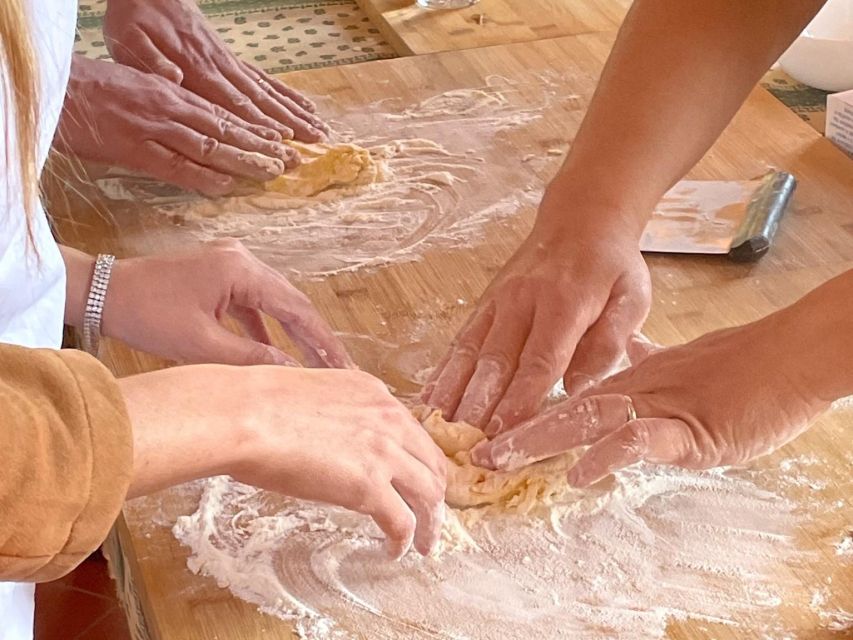
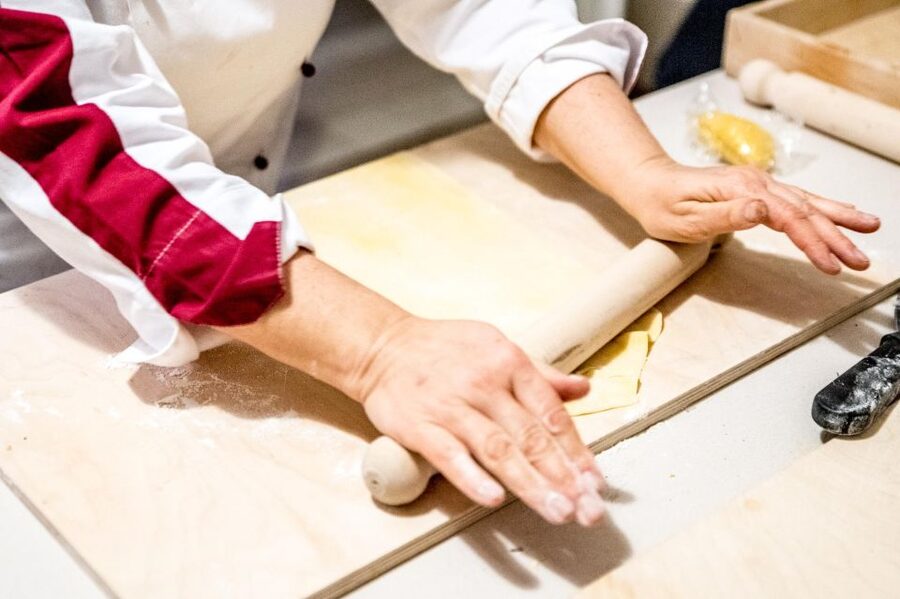
After the rest, you roll out the dough with a rolling pin. The class does not use machinery for this part.
This is probably the strongest feature for anyone who wants an old-style cooking lesson. You learn how to turn a lump of dough into a thin sheet by hand, using pressure and patience. The method may take more effort than a machine, but it gives you a skill you can use in almost any home kitchen.
The instructor also shows you how the dough can become several shapes. You make fettuccine and ravioli, and you also see how to prepare tagliolini and pappardelle.
That range is useful because the shapes are not simply decorative. They vary in width, texture, and the way they carry sauce. Fettuccine gives you a broad strand for a tomato-based dish. Tagliolini is thinner, while pappardelle is wider and more substantial. Ravioli adds another challenge because you must work with filling and sealed edges.
The hands-on format is likely to appeal to families, couples, and small groups looking for an activity with a clear result. It also suits people who enjoy learning traditional techniques. If you prefer a polished demonstration with minimal work, this may feel more active than expected.
Filling, sealing, and cooking the ravioli
Once the pasta sheets are ready, you mix the ingredients for the ravioli filling. You then place the filling into the dough and shape the ravioli.
This stage requires care. Too much filling can make the pasta difficult to seal, while too little leaves the finished piece less satisfying. The lesson gives you a chance to understand that balance by doing the work yourself.
The ravioli is then cooked in water. Fresh pasta cooks quickly, so the transition from preparation to meal happens fast. After a few minutes, the pasta is ready for its sauces.
The listed meal includes two finished preparations: fettuccine with Neapolitan sauce and ravioli with ragù. That gives you a useful comparison between the pasta shapes and the sauces served with them.
The experience description uses both fettuccine and tagliatelle when describing the final plate. The exact cut may depend on the class process, but you should expect a fresh, broad noodle served with a Neapolitan-style sauce, along with ravioli and ragù.
The final dish is not an extra purchase. It is part of the class price, which makes the lesson feel more complete than a workshop where you leave with uncooked food.
What the $92 price includes
At $92 per person, this is not the cheapest meal in Naples. You are paying for instruction and participation, not just a plate of pasta.
The value improves if you use the class for several purposes at once. You receive:
- A two-hour cooking lesson
- Instruction from a chef
- Kitchen tools and an apron
- A local starter
- Homemade fettuccine and ravioli
- Lunch or dinner
- One alcoholic or non-alcoholic drink
- A chef diploma
For someone already planning to eat out, the included meal offsets part of the cost. The bigger value is the technique. You learn hand-rolling, pasta cutting, filling, and sauce pairing in a format that can be repeated at home.
The price makes less sense if you are only interested in sampling food. Naples offers many less expensive meals, and this activity asks you to spend time working. I would choose it when you want an activity with a meal attached, not when you simply need a quick lunch.
The mood of the class and Chef Amos
The cooking style sounds friendly rather than formal. Chef Amos has been praised for being kind and willing to explain each part of the process, including during a group event organized for a bachelorette celebration.
That detail suggests the class can handle a social atmosphere. You can expect conversation and shared work rather than a silent technical session. The class is suitable for a group that wants to learn something together and eat the results at the same table.
The teaching is available in English, Italian, French, and Spanish. That is a real help for international groups, especially during the dough and filling stages, when clear instructions matter.
The experience has also been described as fun and useful by people who enjoyed making pasta from scratch. The strongest praise centers on the traditional method and the taste of the finished dish. If you want a cooking activity with a relaxed social side, those are encouraging signs.
The main limitation is the small amount of published feedback. Four ratings are enough to show a clear positive pattern, but not enough to predict every class atmosphere or teaching style. Your experience may also vary slightly depending on the venue and group.
Who should book this experience
I would recommend this lesson to you if you:
- Want to learn pasta without using a machine
- Enjoy hands-on activities
- Like the idea of eating what you prepare
- Are interested in family recipes and local ingredients
- Want a central Naples activity lasting only two hours
- Are planning a food-focused celebration or group outing
It also works well for people who want a practical memory of Naples. You leave with a method, not just a photograph of a meal. The chef diploma is a playful extra, especially for children or a celebratory group.
I would be cautious if you have gluten intolerance, since the activity is specifically based on wheat pasta. The available information does not present a gluten-free alternative.
The class is wheelchair accessible, which makes it more practical for many visitors. You should still confirm the exact venue when booking, since the location may change from Naples Cooking Lab to Pizzeria Mammina.
Cancellation is flexible: you can cancel up to 24 hours before the activity for a full refund. You can also reserve now and pay later, which helps if your Naples schedule is still shifting.
Should you book the Naples pasta lesson?
Book it if you want to make pasta the traditional way, eat a full meal, and learn a technique you can repeat at home. The strongest reasons are the hand-rolled dough, the two finished pasta dishes, the Vesuvian starter, and the clear guidance associated with Chef Amos.
Skip it if you want a very short food tasting, dislike hands-on kitchen work, or cannot eat gluten. At $92, the class earns its price through instruction, ingredients, equipment, and the included meal. It is a good fit for curious cooks and groups who want more than another restaurant table in Naples.
FAQ
Where does the pasta cooking lesson meet?
The usual meeting point is Naples Cooking Lab on Spaccanapoli street, in the heart of Naples’ historic center. On some dates, the lesson may take place at Pizzeria Mammina in Galleria Umberto I. You will be informed in advance if the venue changes.
How long does the class last?
The cooking lesson lasts two hours.
What pasta will I make?
You will learn to make homemade ravioli and fettuccine. The chef also shows you how to prepare tagliolini and pappardelle.
Is the pasta made by hand?
Yes. You roll the dough with a rolling pin, without using a pasta machine. The lesson focuses on traditional methods.
What food and drinks are included?
The experience includes a local starter with products such as Vesuvian tomatoes and homemade bread, plus a meal of fresh pasta. You receive fettuccine with Neapolitan sauce and ravioli with ragù, along with one alcoholic or non-alcoholic drink.
Is the activity suitable for people with gluten intolerance?
No. The activity is not suitable for people with gluten intolerance.
Can I cancel the booking?
Yes. You can cancel up to 24 hours in advance for a full refund. Reserve now and pay later is also available.
More Italian Cooking Classes in Naples
- Naples: Neapolitan Pizza and Tiramisu Cooking Class
★ 4.9 · 258 reviews - Naples: Traditional Italian Food Cooking Class at Restaurant
★ 4.8 · 106 reviews - Cooking Class and Lunch at a Tuscan Farmhouse with Local Market Tour from Florence
★ 5.0 · 4,831 reviews - Tuscan Cooking Class and Dinner in Florence
★ 4.5 · 732 reviews
Just added around Naples
- Naples: Hands-On Pasta Class Making Gnocchi & Tagliatelle★ 5.0 · 18 reviews
- Naples: 3 Recipes Cooking Class at Local’s Home★ 4.8 · 5 reviews
- Naples: Pasta and Tiramisu Cooking Class with Local Chef★ 4.9 · 50 reviews
- Naples: Traditional Italian Food Cooking Class at Restaurant★ 4.8 · 106 reviews
- Naples: Fresh Pasta Cooking Class and Dinner with a Local★ 4.9 · 69 reviews
- Naples: Markets and Cooking Class at Local’s Home★ 4.7 · 3 reviews
- Naples: Pasta and Gelato Cooking Class★ 4.9 · 8 reviews
- Cooking Class with Chef Alfio★ 5.0 · 3 reviews
Pasta Making Classes, compared.


3 in 1 Cooking Class near Navona: Fettuccine, Ravioli & Tiramisu
Read our review →
Pasta & Tiramisu Cooking Class with Unlimited Wine
Read our review →
Pasta Making Class with Wine, Limoncello, and Dessert
Read our review →
Rome Cooking Class: Make Pasta and 3 Spritz Cocktails
Read our review →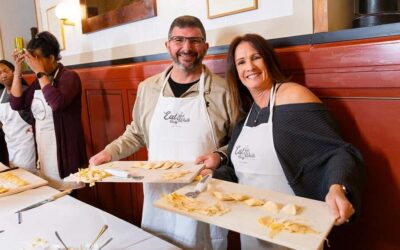
3-in-1 Fettuccine, Ravioli, and Tiramisu Cooking Class
Read our review →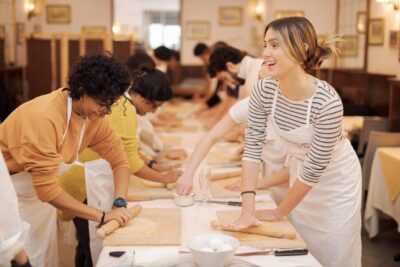
Fettuccine Pasta Cooking Class in Rome’s City Center
Read our review →Lists this class appears in