REVIEW · ROME, ITALY
Rome Cooking Class: Fresh Pasta Two Ways & Tiramisu with wine
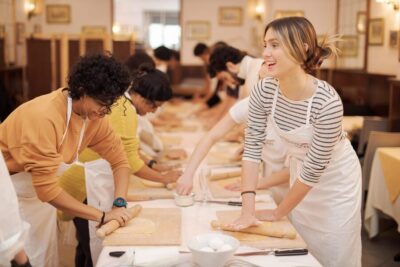
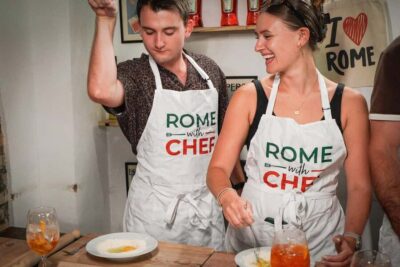
Pasta tastes better when you make it yourself. This three-hour Rome cooking class puts you at a worktable near the Vatican Museums, where you prepare fettuccine, ravioli, and tiramisu with steady help from an Italian chef. I like the small group size and the fact that the food you make becomes your meal, rather than a quick demonstration followed by a separate restaurant dinner. I also like the welcome Spritz, Roman snacks, and included wine, beer, or soft drink. The main drawback is finding the entrance, since one person wished the restaurant name and a photo had been clearer before arrival.
The class costs $54.44 per person, which is fair for roughly three hours of instruction, ingredients, a full meal, drinks, and use of the cooking equipment. It is especially appealing if you want a relaxed break from sightseeing or need a family-friendly activity near the Vatican.
Key points at a glance
- Three Roman staples in one class: Make fresh fettuccine, filled ravioli, and your own customized tiramisu.
- Aperitivo before the work begins: Start with a Spritz and homemade cacio e pepe chips, then enjoy bruschetta later in the meal.
- Small groups keep the class personal: The maximum is 14 people, with some sessions arranged around tables of about 12.
- Good for first-time pasta makers: The chef provides hands-on help with kneading, shaping, filling, and cooking.
- Near the Vatican Museums: The meeting point at Via Andrea Doria, 41 M is close to public transport and easy to pair with Vatican sightseeing.
- Dietary requests are possible: Vegetarian, pescatarian, dairy-free, and gluten-free options can be arranged if you ask in advance.
Why this class works well near the Vatican
The location is one of the strongest practical features. The class begins at Via Andrea Doria, 41 M, in postal code 00192, a short distance from the Vatican Museums. That makes it easy to build into a day of sightseeing, especially if you want an evening activity after visiting St. Peter’s Basilica or the museums.
The address is central and near public transportation. Still, give yourself a little extra time to find the exact entrance. The class takes place in a restaurant, but the restaurant name and exterior guidance have not always been obvious to everyone. I would save the full address on your phone and check it before leaving your hotel.
The restaurant is air-conditioned, which matters in Rome’s warmer months. Working with dough, flour, and a crowded table can become uncomfortable in a hot room, so cool air makes the three-hour format easier.
The maximum group size is 14. That is small enough for the instructor to move around and help, but large enough to create a sociable meal. You may share the table with couples, families, and people from different countries. The mood is intended to be relaxed rather than formal.
More Cooking Classes with Wine Tasting in Italy
- Rome: Pasta Making Class with Wine, Limoncello, and Dessert
★ 4.9 · 3,177 reviews - Fettuccine & Tiramisù: Cooking Class with Wine & Limoncello
★ 4.9 · 2,103 reviews - Pasta Making & Wine Tasting with Dinner in Frascati from Rome
★ 5.0 · 1,326 reviews
The Spritz, cacio e pepe chips, and the start of the evening
The class opens with a proper Italian aperitivo. You receive a bubbly welcome drink, described as a Spritz, along with homemade chips flavored with a typical Roman cheese and black pepper.
That first drink does more than fill time. It gives the group a chance to settle in, meet the chef, and get comfortable before handling flour. The cacio e pepe flavor also introduces one of Rome’s best-known combinations: cheese and black pepper. It is a small detail, but it sets the tone for the meal.
The class also includes bruschetta, made with wood-oven-toasted bread, garlic, oregano, basil, and tomato. This is served as part of the meal rather than as the main cooking project. It provides something familiar to eat while your pasta is being finished.
The included drinks are useful when you calculate the price. Along with the welcome aperitivo, you receive one meal drink, such as wine, beer, or a soft drink, plus water. One session included a limoncello cocktail among the drink choices, but you should treat that as an example rather than a guaranteed option.
Making fettuccine from fresh dough
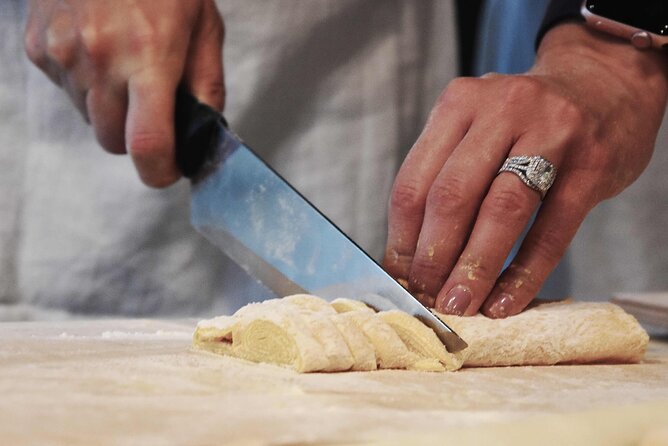
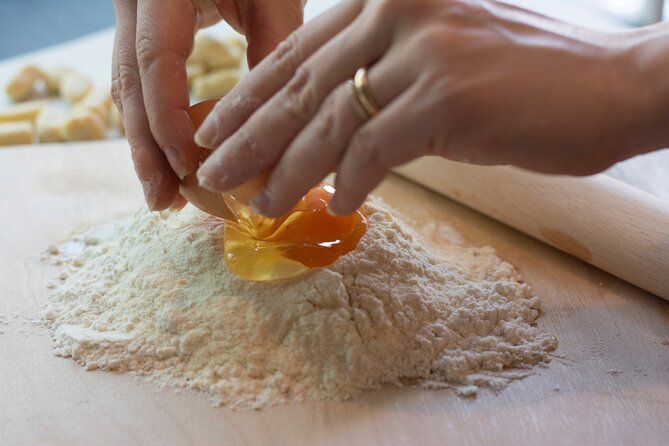
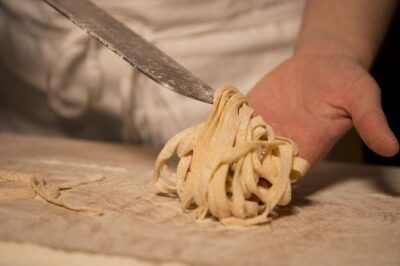
The main hands-on work begins with pasta dough. Under the chef’s direction, you knead the dough and shape it into fettuccine. This is a good format for beginners because you are not left to guess how the dough should feel or how thin it should become.
Fresh pasta is simple in theory, but the texture matters. Too much flour can make it dry. Too little can make it sticky. The value of an instructor is clear here, since a chef can correct your technique at the table rather than waiting until the final plate.
You should expect flour on your hands and a little trial and error. That is part of the fun. This is not a polished cooking demonstration where you sit back and take notes. You make the pasta yourself, with the chef stepping in when a shape or piece of dough needs help.
The class is especially suitable for adults who have never made pasta and for children who like practical activities. Marina received particular praise for explaining each step clearly and encouraging children during the work. The class is not presented as a kids-only activity, so adults can enjoy the food and the social side as well.
Filling ravioli with help from the chef
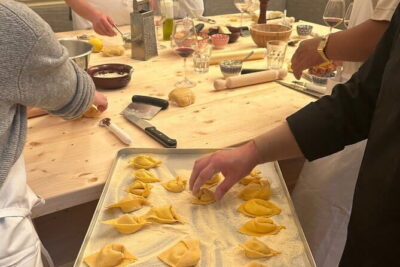
The second pasta project is handmade ravioli. You prepare and fill the pasta, then the chef cooks it and finishes it with sauce.
Ravioli adds a different skill from fettuccine. You must portion the filling, seal the dough, and avoid trapping too much air inside. The process gives you a chance to work more carefully, and it keeps the class from feeling like the same pasta exercise twice.
The finished ravioli is served with sauce prepared by the chef. That arrangement is sensible. You get to make the important parts of the pasta, while the chef handles the timing and final cooking so the meal arrives properly.
The exact filling is not specified, so do not book this expecting a particular ravioli recipe. The same applies to the pasta sauces. The class may include traditional Roman choices, but the menu notes that selections can include cacio e pepe, carbonara, and more.
More Cooking Classes with Wine Tasting in Rome
- Rome Cooking Class: Make Pasta, Dine & Drink Wine With Local Chef
★ 5.0 · 1,263 reviews - Rome: Combo Pizza and Pasta Cooking Class with Wine
★ 4.6 · 1,180 reviews - Rome: Pasta Making with Wine Tasting and Dinner in Frascati
★ 4.9 · 979 reviews - Super Fun Pasta & Gelato Class by Vatican with Wine + Oil Tasting
★ 5.0 · 726 reviews
Roman sauces and the meal you helped prepare
Once the cooking session ends, you sit down to eat the food you made. This is a major advantage over classes that offer only a small taste at the end. Here, the fresh fettuccine and ravioli become the main course, accompanied by sauces prepared by the chef.
Cacio e pepe is an especially good match for the setting. It is a Roman sauce built around cheese and black pepper, and the same flavor appears in the opening chips. Carbonara may also be available, along with other traditional sauces.
Your meal includes bruschetta, fresh pasta, one drink, and water. The portions are substantial enough that dessert may arrive after you are already full. One family found the tiramisu delicious but had trouble finishing it because the pasta course had been so filling. That is not a serious complaint, but it is useful to know: this is a full dinner, not a light tasting.
The chef handles the sauces and final cooking, so the meal has more polish than a completely self-service class. You still do the core work, but you are not asked to manage every burner and pan while also socializing.
Building your own tiramisu
The dessert session focuses on tiramisu. You assemble your own portion and personalize it with a selection of toppings.
This is a pleasant change of pace after the pasta work. The dessert does not require the same physical effort as kneading and shaping dough, but it still gives you something to make rather than simply receive. The class description does not specify the full list of toppings, so the exact choices may vary.
Tiramisu is also a useful dish to learn at home. It does not require special pasta equipment, and the basic method can be repeated after your trip. If you want a class with both savory and sweet recipes, this one covers both without adding another location or a separate demonstration.
Recipes have been provided digitally after some sessions, while one person did not receive them. I would ask the instructor how to access the recipes before leaving. That small step could make the difference between remembering the meal and actually repeating it at home.
The instructors make the biggest difference
The food matters, but the chef’s manner shapes the whole evening. The strongest feedback centers on patient, funny, encouraging instruction.
Eduardo was praised for being patient and for running a clean restaurant in an easy-to-find location. Merci was described as a lively teacher who made pasta and tiramisu clear while keeping the room cheerful. Marina was especially good with children, offering simple explanations and plenty of encouragement.
The chef may vary by session, so you should not assume one particular instructor will lead your class. The useful point is the teaching style: expect help at the table, not a lecture from across the room.
This is a good choice if you feel nervous about cooking in front of other people. The class is designed for beginners, and the repeated praise for patient guidance suggests that mistakes are treated as part of the process. You are there to learn and enjoy dinner, not pass a pasta exam.
Is $54.44 good value?
At $54.44, the class is priced below many tourist cooking experiences in major European cities. The value comes from the number of elements packed into the session:
- About three hours at the restaurant
- Two hours of hands-on cooking
- Instruction from an Italian chef
- All ingredients
- Apron and cooking utensils
- Spritz or another welcome drink
- Cacio e pepe chips
- Bruschetta
- Fresh fettuccine and ravioli
- Tiramisu
- Wine, beer, or soft drink
- Water
You are paying for both a meal and an activity. If you only want the cheapest plate of pasta near the Vatican, a restaurant will cost less. If you want dinner plus a skill you can take home, the price is more convincing.
The small group also matters. A maximum of 14 people gives the chef a reasonable chance to watch your work. A large class could turn pasta making into a distant demonstration, but this setup is intended to keep the instruction close and practical.
Who should book this Rome cooking class?
I would recommend it to first-time pasta makers, couples, families, and solo visitors who enjoy meeting people over food. It works particularly well for parents because the pasta shaping gives children something concrete to do, and the instructors have shown patience with younger cooks.
It is also a good fit if you are staying near the Vatican or planning a museum day. You can combine major sightseeing with an activity that feels less rushed and more social.
Food-focused visitors should appreciate the Roman sauce choices and the chance to eat fresh pasta immediately after making it. The class also suits people who want a taste of Italian home cooking without giving up an evening to a formal restaurant reservation.
You may want to choose another activity if you are looking for advanced culinary training. The class is beginner-friendly, and the emphasis is on fun, clear instruction, and a shared meal. It is not presented as a professional pasta workshop.
Dietary needs can be handled, but you must communicate them in advance. Vegetarian and pescatarian diners are welcome, and dairy-free or gluten-free versions can be arranged on request. Do not wait until you sit down, since the kitchen needs notice.
Timing, booking, and cancellation
The experience lasts about three hours, with around two hours devoted to hands-on preparation. The rest of the time covers the welcome drink, meal, and dessert.
It is often booked about 60 days ahead, so reserve early if you have fixed Vatican sightseeing plans. A mobile ticket is provided, and the class is offered in English.
Free cancellation is available up to 24 hours before the start time for a full refund. Changes or cancellations made inside that 24-hour window are not refunded or accepted. The start time is based on local Rome time.
The activity requires a minimum number of people. If that minimum is not reached and the class is canceled, you will be offered another date or experience, or a full refund.
FAQ
Where does the cooking class begin?
It begins at Via Andrea Doria, 41 M, 00192 Roma RM, Italy. The class ends back at the same meeting point.
How long does the experience last?
The experience lasts approximately three hours. About two hours are hands-on cooking time.
What dishes will I make?
You will make fresh fettuccine, handmade ravioli, and tiramisu. The pasta is cooked and served as part of your meal.
Are drinks included?
Yes. You receive a welcome aperitivo, one meal drink consisting of wine, beer, or a soft drink, and water. A Spritz is listed as the welcome drink.
Can dietary requirements be accommodated?
Yes. The class is suitable for vegetarians and pescatarians. Dairy-free and gluten-free options are available if you request them in advance.
What happens if I need to cancel?
You can cancel at least 24 hours before the start time for a full refund. Cancellations or changes made less than 24 hours before the start time are not refunded or accepted.
Should you book it?
Yes, if you want a practical, social evening near the Vatican and enjoy the idea of eating what you make. The strongest reasons to book are the patient instruction, beginner-friendly format, small group, full dinner, and mix of pasta and dessert.
Save the exact meeting address, ask about the recipe download before leaving, and provide dietary information ahead of time. With those details handled, this is a well-priced way to turn an ordinary Rome dinner into something you can repeat in your own kitchen.
More Tiramisu and Dessert Classes in Rome
- Rome: Pasta & Tiramisu Cooking Class near the Spanish Steps
★ 4.8 · 1,395 reviews - Cooking Class in the Heart of Rome: Pizza and Tiramisu Making
★ 5.0 · 1,330 reviews - 2-in-1 Pasta and Tiramisu Cooking Masterclass in Rome
★ 5.0 · 832 reviews - Rome: Traditional Pasta Making Class with Wine & Gelato
★ 4.9 · 677 reviews
More Pasta Making Classes in Rome
- 3 in 1 Cooking Class near Navona: Fettuccine, Ravioli & Tiramisu
★ 5.0 · 7,376 reviews - Rome Cooking Class: Make Pasta and 3 Spritz Cocktails
★ 5.0 · 2,937 reviews - Rome: 3-in-1 Fettuccine, Ravioli, and Tiramisu Cooking Class
★ 4.9 · 2,704 reviews - Rome: Fettuccine Pasta Cooking Class in Rome’s City Center
★ 4.8 · 2,414 reviews
Just added around Rome
- Testaccio: Home Cooking Cacio e Pepe, Amatriciana, Carbonara★ 4.9 · 57 reviews
- Super Fun Pasta and Gelato Cooking Class by the Vatican★ 5.0 · 6 reviews
- Spritz and Spaghetti Traditional Cooking Class in Rome★ 4.9 · 30 reviews
- ROME:Hands-On Lasagna & Marsala Tiramisu Cooking Experience”★ 5.0 · 3 reviews
- Rome: Trastevere Pasta Making Class★ 4.9 · 33 reviews
- Rome: Traditional Pasta and Tiramisu Cooking Class★ 5.0 · 4 reviews
- Rome: Vatican Food Tours, Cooking classes & Free Tours★ 4.9 · 11 reviews
- Rome: Small Group Pasta cooking class near Piazza Navona★ 4.9 · 8 reviews
Pasta Making Classes, compared.
3 in 1 Cooking Class near Navona: Fettuccine, Ravioli & Tiramisu
Read our review →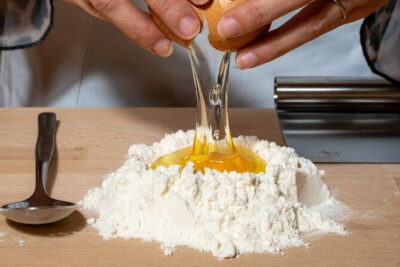
Pasta & Tiramisu Cooking Class with Unlimited Wine
Read our review →
Pasta Making Class with Wine, Limoncello, and Dessert
Read our review →
Rome Cooking Class: Make Pasta and 3 Spritz Cocktails
Read our review →
3-in-1 Fettuccine, Ravioli, and Tiramisu Cooking Class
Read our review →