
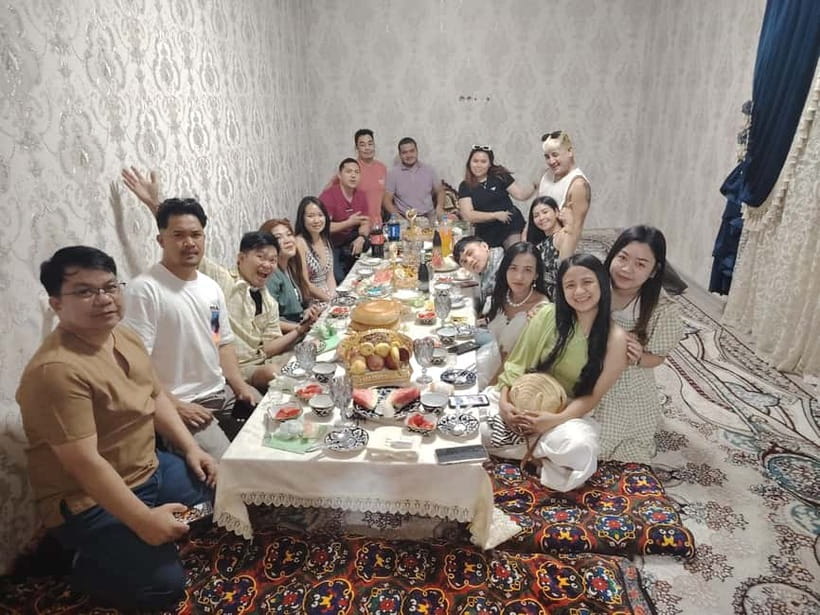
REVIEW · SAMARQAND REGION, UZBEKISTAN
cooking traditional food in Samarkand with local people
Samarkand’s best meal may be outside town. This five-hour experience takes you from Siab Bazaar to a family home in Ravot village, where you can help prepare Uzbek dishes and eat with local hosts. I especially like the combination of market shopping and home cooking, plus the chance to see a garden and ordinary village life beyond the monuments. The main thing to know is that the cooking can be hands-on, but some visitors have had a more watch-and-learn session than a full cooking lesson.
The $62 price is strong value if you use the included pickup, return transport, guide, market visit, cooking class, and meal. I also like the warm, personal contact with families such as Akram’s and Navruz’s, along with the option to help make plov and bake bread in a tandir. Siab Bazaar is closed on Mondays, so your schedule matters.
Key points to know before you book
- Ravot village is only 14 kilometers from Registan Square: The paved, good-quality road makes this an easy change of scene from central Samarkand.
- Siab Bazaar adds useful food context: You see the ingredients and market culture before handling them in the kitchen.
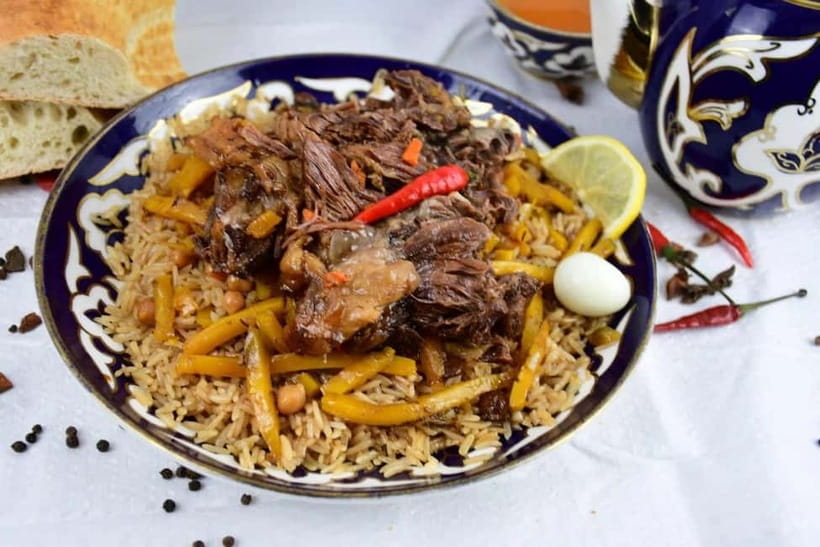
- Plov is often the main event: You may help prepare Samarkand’s famous rice dish, along with salads, hanim, or other Uzbek foods.
- The welcome is family-based: Time in the garden, home, and neighborhood gives you a look at daily life, not just a formal demonstration.
- Cooking activity can vary: Some people take part step by step, while others mainly chop vegetables and watch.
- The $62 fee covers a lot: Airport, hotel, or station pickup and drop-off are included, along with food, drinks, guiding, and the class.
From Siab Bazaar to a family kitchen
This experience works because it links two sides of Uzbek food culture. You begin at Siab Bazaar, Samarkand’s best-known food market, then continue to Ravot in the Toyloq district, about 14 kilometers from Registan Square.
That order matters. At the bazaar, you can get a sense of the raw materials before seeing them become lunch or dinner. You might look at produce, herbs, rice, spices, and other ingredients used in Uzbek cooking, then recognize them later in the family kitchen. The market stop gives the meal a setting and a story instead of making the cooking feel like an isolated class.
The bazaar is closed on Mondays. If it is important to you, avoid booking this activity that day or confirm how the plan will change. The experience still includes the family visit and cooking outside the market, but the advertised bazaar portion will not be available.
After the market, your guide drives you to Ravot village. The road from Samarkand is described as good quality and not bumpy, which is welcome after a day spent walking around historic sites. Pickup can be arranged from your hotel, airport, or station, and the return ride can take you back to one of those locations.
That transfer is more than a convenience. It lets you visit a village without having to work out a local taxi, find the house yourself, or arrange a separate ride back. If you are arriving or leaving Samarkand on the same day, the station or airport transfer may be especially useful, though you should allow enough time around your transport plans.
More Food and Drink Trips in the world:
- Small Group Cooking Class & Market Food Tour in Florence
★ 5.0 · 1,574 reviews - Paella Cooking Class, Wine Tasting & Central Market in Valencia
★ 5.0 · 1,150 reviews - Athens: Food Market Visit and Cooking Class with Wine
★ 4.9 · 1,087 reviews
A village home, garden, and a real Uzbek welcome
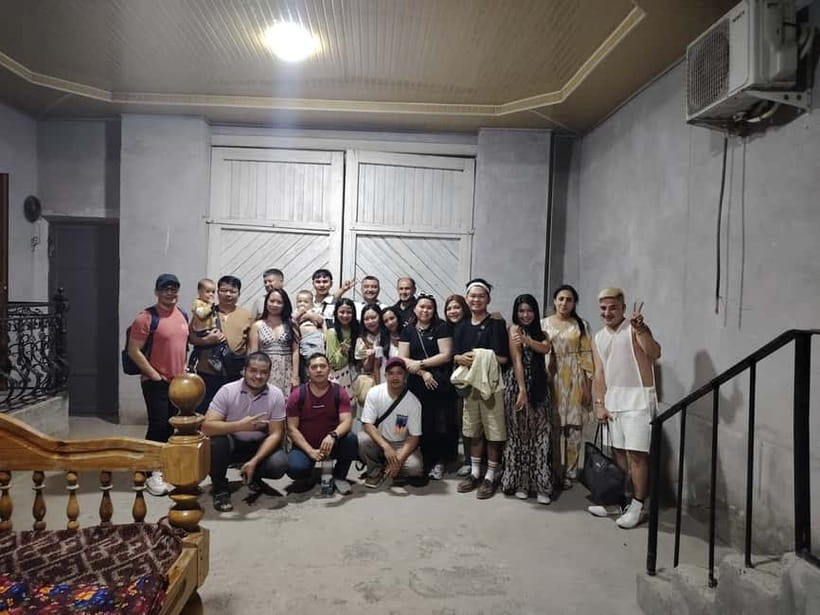
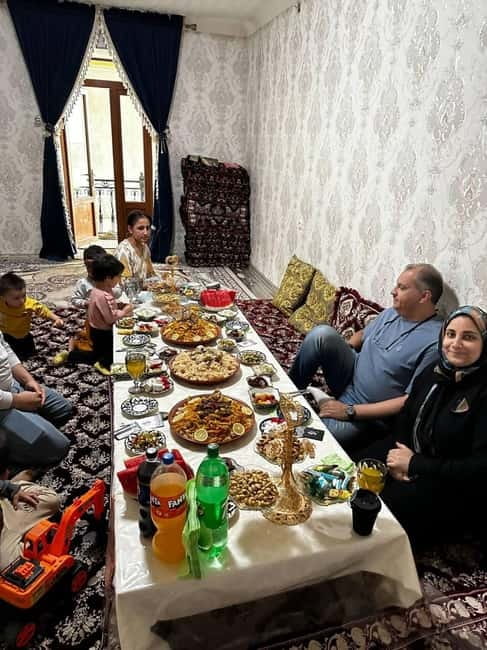
At the house, the focus shifts from sightseeing to conversation and shared work. The family may show you the garden, fruit trees, neighborhood, and parts of the home. One account describes a garden full of fruit trees, while another highlights a vegetable garden and time spent meeting the wider family.
These details are small, but they are exactly what gives the experience value. You are not just learning that Uzbek food uses certain ingredients. You are seeing where some food is grown, how a family organizes its home life, and how hospitality works in a village setting.
The hosts named in the feedback include Akram, Navruz, and family members who help with the cooking. Akram is praised for speaking excellent English and for explaining Uzbek life and traditions clearly. The names appear to vary by the person leading the visit, so your host may not be the same person as another booking. The consistent point is that the guide is expected to interpret the food and family customs in English.
The mood is informal and welcoming, but remember that this is a visit to a private family home. You should be ready to remove yourself from the role of a fast-moving sightseer. Conversation, pauses, tea, preparation, and shared food are part of the experience. If you want a tightly timed restaurant-style class with professional workstations, this may feel loose. If you want contact with local people, that relaxed pace is a major strength.
What you may cook in five hours
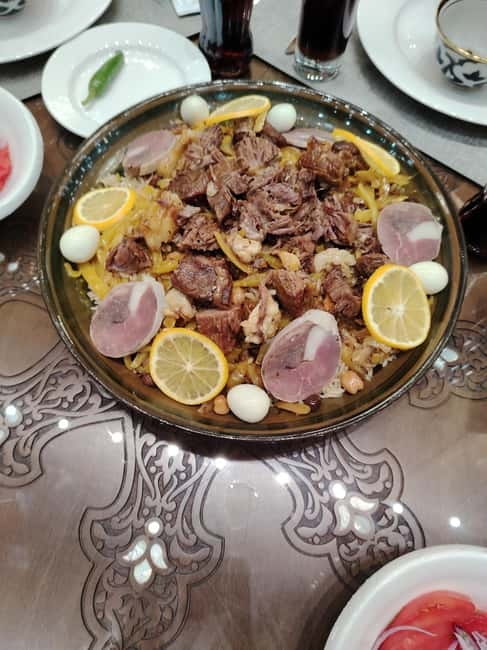
The main dish is often plov, Uzbekistan’s celebrated rice meal. At its simplest, plov combines rice with meat, carrots, onions, and seasoning, though each cook and region has its own method. Here, you can see how the ingredients are prepared and how the dish develops in a household setting.
Several people specifically enjoyed making plov with the host and his mother. That family connection is important. You are not simply following a printed recipe. You are watching a dish being made in the way a family prepares it, with explanations about tools, ingredients, and local habits along the way.
The food choices can be adjusted to your preference. The activity may include different salads and other Uzbek dishes, with hanim named as one possible choice. One Spanish-speaking visitor selected plov and hanim and was allowed to follow the process and then try it independently.
You can participate if you want. The host explains how the work is done, what products are used, and which tools are suitable. Cooking may take place over gas or an o’choq, a traditional cooking hearth. You may also get to see bread baked in a tandir, the clay oven used for Central Asian bread.
That range makes the class useful for different levels of interest. You can take a more active role by chopping, mixing, shaping, or helping with preparation, or you can watch and ask questions. Still, do not assume that every booking will involve equal hands-on time. One person expected more direct cooking and ended up preparing some vegetables before watching the rest. I would tell the host at the start that you want to do as much as possible.
The meal includes salads, cooked food, and beverages. Since you eat what you have helped prepare, the final meal feels like the natural finish to the visit. It is also a good chance to ask about the dishes while they are still in front of you.
What makes the food lesson useful
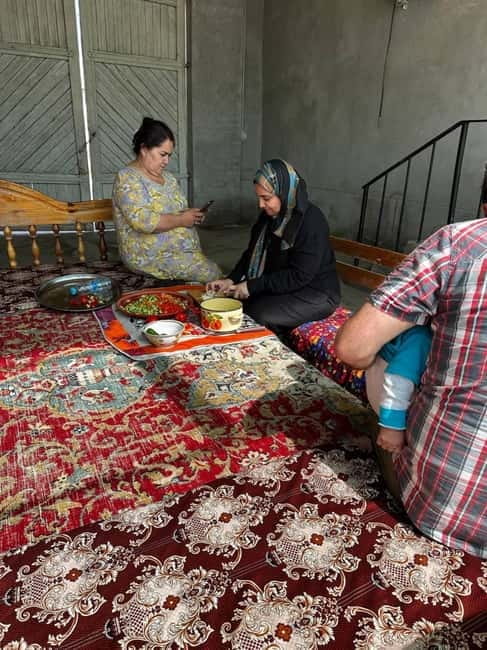
A cooking class in a private home can teach you things a restaurant cannot. At a restaurant, you taste the finished plov. Here, you can ask why a certain ingredient is used, how the family handles the rice, what changes when food is cooked over an o’choq, and how bread is made in a tandir.
You also get a look at the social side of food. Uzbek hospitality is expressed through offering food, welcoming people into the home, and taking time over a shared meal. The experience gives those customs a practical shape. You are not reading about hospitality in a guidebook. You are sitting at the table where it happens.
For me, the strongest part is the connection between kitchen work and culture. The guide can explain local traditions, daily routines, and village life while you prepare food. That makes the conversation easier and more natural than a formal question-and-answer session.
The class also suits people who do not cook much. You do not need to arrive with specialist skills. The hosts can show you the process, and you choose how involved you want to be. Ask for a practical role early if you want more than a demonstration.
Food restrictions and preferences are not explained in the details provided, so tell the provider before booking if you have dietary needs. The menu can be adapted according to preference, but the exact limits of that flexibility are not stated.
More Food Trips in the world:
- Undiscovered Charleston: Half Day Food, Wine & History Tour with Cooking Class
★ 5.0 · 948 reviews - Vietnamese Food Cooking Class in Hanoi with Market Experience
★ 5.0 · 778 reviews - Milan: Italian Cooking Class with Food and Wine
★ 4.7 · 509 reviews - Mexican Cooking Class with Food Market Visit in Mexico City
★ 5.0 · 506 reviews
Is $62 good value?
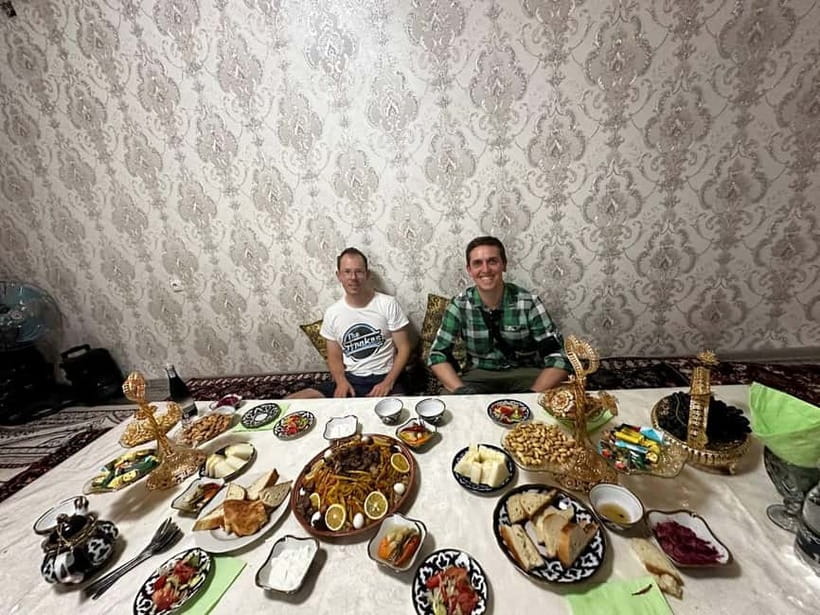
At $62 per person, this is not just a cooking lesson. The price includes pickup from a hotel, airport, or station, transport to and from Ravot, an English-speaking guide, the Siab Bazaar visit, the class, and a meal with salads, drinks, and cooked dishes.
That package makes the price attractive for solo visitors and anyone who would otherwise need to arrange separate transport. A private ride to a village, a market visit, and a family meal could quickly add up if booked separately. The included return transfer is also useful if you are carrying luggage or traveling on a tight schedule.
The value depends on what you want from the cooking portion. If your priority is a professional, highly structured lesson in which you prepare every dish yourself, the experience may not fully meet that expectation. If you value conversation, family contact, a garden visit, local food, and a look at village life, the price makes more sense.
The high rating of 4.8 from 17 bookings reflects the strongest parts of the experience: friendly hosts, excellent English from the guide, smooth transport, delicious food, and a personal view of Uzbekistan. The lower assessment focused on the amount of hands-on cooking, not on the welcome, transport, or meal. That is useful information when deciding.
Practical timing and clothing advice
The activity lasts five hours, with starting times based on availability. The exact balance between market, travel, cooking, conversation, and eating can vary, so it is sensible not to place a separate major appointment immediately afterward.
The provider lists the activity as wheelchair accessible. Because the visit includes transport, a bazaar, a village home, and cooking areas, you should still discuss your exact access needs when booking.
Dress modestly. Short skirts and tight clothing are not allowed, and the activity also prohibits weapons or sharp objects, explosive substances, and nudity. These rules fit the setting of a family home and help you arrive prepared.
Monday is the key scheduling issue because Siab Bazaar is closed. If the market is a central reason for booking, choose another day. The village visit and meal remain the main elements, but the market stop cannot operate as described on Monday.
Free cancellation is available up to 24 hours before the activity for a full refund. You can also reserve and pay later, which helps if your Samarkand schedule is still shifting.
Who will enjoy this most?
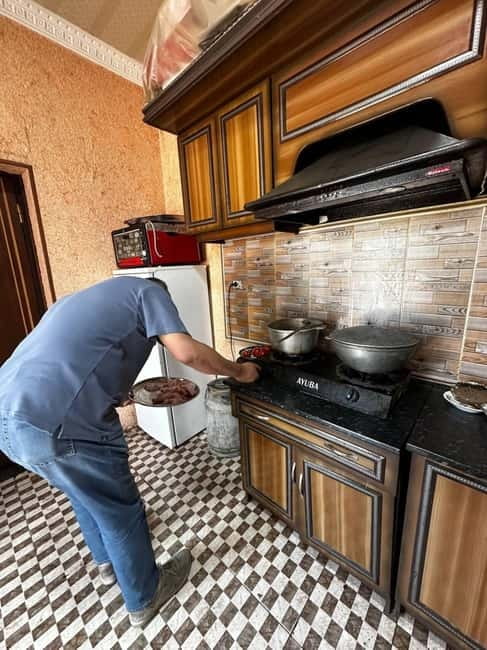
I would recommend this for you if you want to meet local people, eat in a family home, and learn about food through conversation and participation. It is a particularly good choice after visiting Samarkand’s major monuments, when you want an afternoon focused on daily life rather than another historic site.
It also suits solo visitors. The included pickup removes the stress of finding the village, and an English-speaking guide gives you someone to talk with throughout the visit. Couples, families, and small groups who enjoy food and cultural exchange should also find plenty to appreciate.
This is less suitable if you dislike flexible plans, private-home visits, or shared meals. It may also disappoint you if your main goal is to master several recipes through intensive practice. The hosts aim to involve you, but the amount of direct cooking can depend on how the session develops.
Ask clearly for a hands-on role. Say that you want to chop, mix, shape, stir, or prepare as much as possible. That small request may make the difference between watching a family meal being made and feeling that you helped make it.
Should you book the Ravot village cooking experience?
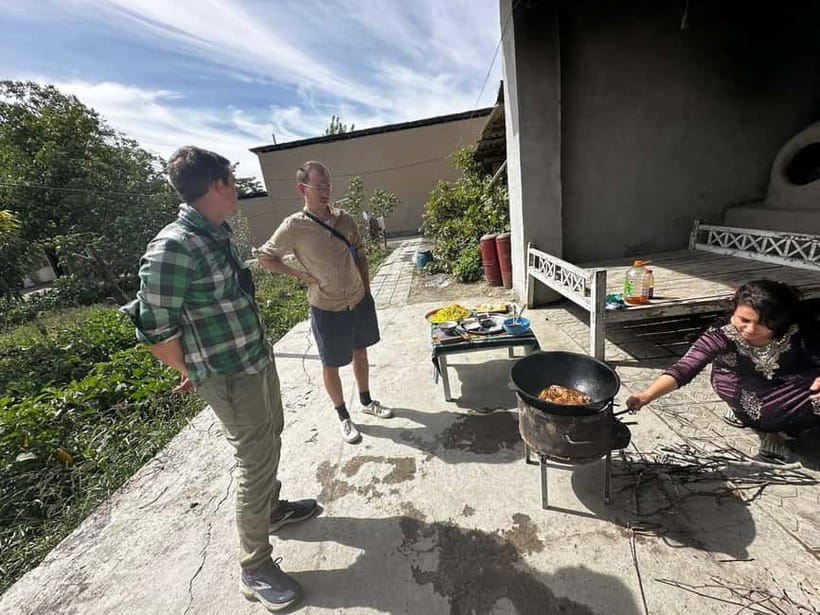
Book it if you want the human side of Samarkand. The strongest reasons are the family welcome, the garden and neighborhood visit, the chance to prepare plov, the tandir bread demonstration, and the easy transport from the city.
I would not book it solely for a formal cooking certificate or a tightly scripted lesson. Instead, think of it as a village visit built around food. You get a market, a family kitchen, an English-speaking guide, a generous meal, and a practical look at Uzbek hospitality for $62.
Choose a day other than Monday, tell the host how actively you want to cook, and leave room in your schedule for conversation. Do that, and this can become one of the most personal parts of a Samarkand visit.
FAQ
How long does the experience last?
The experience lasts five hours.
How much does it cost?
The listed price is $62 per person.
Where does the cooking take place?
The cooking takes place in Ravot village in Toyloq district, about 14 kilometers from Registan Square.
Is Siab Bazaar open every day?
No. Siab Bazaar is closed on Mondays.
Is transportation included?
Yes. Pickup is available from an airport, hotel, or station, and drop-off can be arranged to a hotel, airport, or station.
What food might I prepare?
Possible dishes include plov, salads, hanim, and other Uzbek foods. The exact choices can depend on your preference.
Is there an English-speaking guide?
Yes. The activity includes a live English-speaking guide.
Can I cancel for a refund?
Yes. You can cancel up to 24 hours in advance for a full refund.
Just added around the world
- Aroidee’s Farm-Fresh Thai Cooking Experience★ 5.0 · 8 reviews
- Signature Thai Cooking Course★ 5.0 · 79 reviews
- Private Half-Day Thai Cooking Class in Chiang Mai★ 5.0 · 4 reviews
- Half Day Guided Thai Cooking Class in Chiang Mai★ 5.0 · 13 reviews
- Online Thai and Akha Cooking Class★ 5.0 · 70 reviews
- Private Virtual Thai Cooking Class★ 5.0 · 9 reviews
- Northern Thai Cooking Class in Chiang Mai in a Countryside Home★ 5.0 · 2 reviews
- 5 Hour Morning Thai Cooking Course★ 5.0 · 31 reviews
Cooking Classes, compared.

Half-Day Thai Cooking Class at Organic Farm in Chiang Mai
Read our review →

3 in 1 Cooking Class near Navona: Fettuccine, Ravioli & Tiramisu
Read our review →
Pasta & Tiramisu Cooking Class with Unlimited Wine
Read our review →
Hanoi Cooking Class: Culture, Local Market & Meaning CSR Impact
Read our review →
5 Traditional Dishes Hanoi Cooking Class with Market Trip
Read our review →
Cooking Class and Lunch at a Tuscan Farmhouse with Local Market Tour from Florence
Read our review →
Cooking Class, Market & Thai Herbs Garden Tour
Read our review →Lists this class appears in