
REVIEW · DA NANG, VIETNAM
5 traditional dishes Da Nang cooking class with market trip
Da Nang tastes better from a market basket. This four-hour class combines a visit to Cho Bac My An with hands-on cooking, giving you a useful look at Central Vietnamese food beyond restaurant menus. I like the market stop for its local focus, and I like the menu, which covers soup, pancakes, rolls, salad, and dessert in one sitting. The main drawback is that some dishes may be prepared as a shared group effort rather than entirely by you.
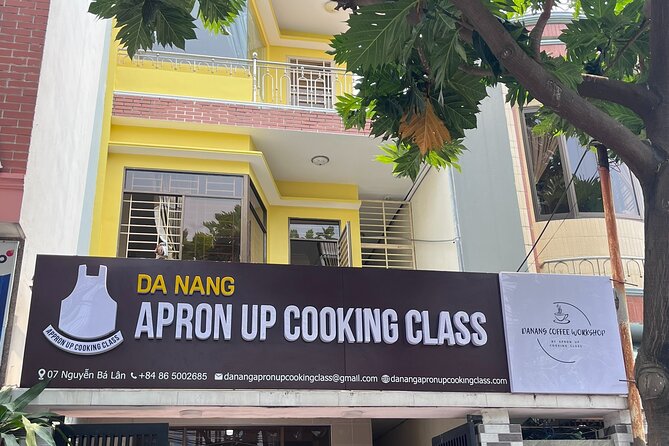
The class meets at 07 Nguyen Ba Lan Street, about 10 minutes before starting time, and returns there at the end. Blue, Bora, and Chi are among the instructors associated with past sessions, with a friendly teaching style that works well for beginners and families. Groups can reach 30 people, so ask about the class size if personal cooking time matters to you.
Key points at a glance
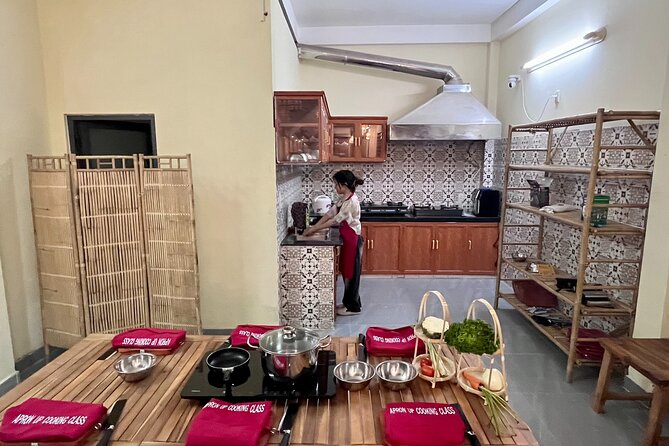
- A real local market visit: Shop for ingredients at Cho Bac My An before cooking, with an instructor explaining the produce and its role in each dish.
- Five Central Vietnamese recipes: The menu includes Bun Bo Hue, Banh Xeo, Tam Huu fresh rolls, young jackfruit salad, and Da Nang avocado ice cream.
- Good variety in four hours: You get soup, a savory pancake, fresh rolls, salad, and dessert rather than five similar recipes.
- Family-friendly teaching: Past sessions have worked well for children aged 10 and 13, with patient explanations and practical demonstrations.
- Useful take-home extras: You receive a cookbook and certificate, then sit down to eat the food prepared during class.
- Strong value at $39: The price includes the market visit, cooking equipment, meal, fruit, tea or coffee, and rice vodka.
Why this Da Nang cooking class works
A cooking class can be little more than a recipe demonstration with a meal at the end. This one has a better shape. You begin with shopping, return to the kitchen, prepare a five-dish menu, and finish by eating together.
That order matters. At the market, you see ingredients before they are cleaned, chopped, wrapped, or turned into something familiar. In the kitchen, those same ingredients gain a purpose. A herb is no longer just a fragrant leaf in a tray. It becomes part of a roll, salad, broth, or dipping mixture.
I especially like the Central Vietnam focus. Da Nang food is often overshadowed by Hanoi and Ho Chi Minh City, yet this menu gives you several local touchstones. Bun Bo Hue brings a spicy beef noodle soup from nearby Hue. Banh Xeo introduces the crisp rice-flour pancake found across the region. Tam Huu offers a fresh roll, while young jackfruit salad shows how Vietnamese cooking uses vegetables and fruit in savory ways.
The menu is also varied enough to keep the session moving. You are not spending four hours making five versions of the same spring roll. You move from broth to batter, fresh wrapping, salad, and dessert.
More Cooking Classes with a Market Tour in Vietnam
- 5 Dishes Cooking Class with Market Trip in Da Nang
★ 5.0 · 466 reviews - Da Nang Cooking Class with Coffee Tasting and Market Visit
★ 5.0 · 310 reviews - Market Tour, Basket Boat Ride & Cooking Class by Hangcoconut
★ 4.8 · 95 reviews
Starting at Cho Bac My An
You meet at 07 Nguyen Ba Lan Street in the Bac My An area of Ngu Hanh Son, arriving 10 minutes before the scheduled start. From there, the group visits Cho Bac My An, the nearby market named in the itinerary.
The market stop is one of the most valuable parts of the experience. You are not simply shown a market as a sightseeing stop. You shop for the ingredients needed in class. That gives the visit a job to do and helps you understand how a home-style Vietnamese meal begins.
Expect the market to be practical rather than polished. You might find fresh produce, herbs, meat, noodles, fruit, and other everyday cooking supplies. The details of the market visit can vary with the day and the ingredients required, but the purpose is clear: your instructor explains local products and gathers what the kitchen needs.
This is also a useful chance to ask questions. If you have wondered how Vietnamese cooks choose herbs, identify produce, or balance a meal, the market gives you something concrete to point at. The visit should appeal to you if you prefer food experiences tied to ordinary local life rather than a staged cooking show.
There is a small practical tradeoff. Markets can be busy, warm, and crowded, and a group of up to 30 people will not move with the ease of a private guide and one companion. The maximum group size is worth noting, especially if you want a quiet market walk or plenty of one-to-one attention.
Five dishes, five different skills
Back at the kitchen, you prepare five dishes. The exact amount of individual work can depend on the group, and one shared soup preparation has been noted as part of the format. Even so, the menu gives you a useful spread of techniques.
Bun Bo Hue
Bun Bo Hue is the most substantial dish on the menu. This spicy beef noodle soup is associated with Hue, the former imperial city a short distance north of Da Nang. It gives you a look at the role of broth, noodles, meat, seasoning, and herbs in Central Vietnamese food.
Soup preparation can also be the least individual part of a group class. A large pot is more practical than five separate pots, so you may help with ingredients and seasoning while the group works together. If you want every dish to be made fully by your own hands, this is the point to keep in mind.
Still, a shared soup is not a weak choice. It lets the instructor explain how several components come together in one bowl, and you share the finished result at the meal.
More Cooking Classes with a Market Tour in Da Nang:
- Da Nang Cooking: Market tour, farming, and cooking class
★ 4.8 · 13 reviews - Hanoi Cooking Class: Culture, Local Market & Meaning CSR Impact
★ 5.0 · 5,147 reviews - 5 Traditional Dishes Hanoi Cooking Class with Market Trip
★ 5.0 · 4,890 reviews - Cooking Class and Lunch at a Tuscan Farmhouse with Local Market Tour from Florence
★ 5.0 · 4,831 reviews
Banh Xeo
Banh Xeo is a crisp Vietnamese pancake, usually folded around a savory filling and eaten with herbs, greens, or dipping sauce. The class focuses on the skills that make it work: handling the batter, getting the pancake browned, and folding it without losing its crisp texture.
This was a favorite part for families in past sessions, especially because the process is easy to see and satisfying to repeat. You can tell quickly if the pan is hot enough and if the batter has spread properly. The dish rewards attention, but it is not limited to experienced cooks.
The pancake also gives the class a little theater. You watch a loose batter become a thin, browned shell, then add the filling and serve it with fresh elements. If you want a recipe that feels impressive when you recreate it at home, Banh Xeo is likely the strongest candidate.
Tam Huu fresh roll
Tam Huu is a fresh roll that calls for careful assembly. Rolling rice paper sounds simple until the wrapper sticks, tears, or refuses to hold its shape. The class gives you a chance to practice the technique with guidance.
This is one dish where patience matters more than speed. Previous sessions have shown that the rolls can fall apart when the filling or wrapper is not handled correctly. The instructor can demonstrate the right method, but you still need a light touch.
The flavor is also more delicate than the soup or pancake. If you expect every dish to deliver a strong hit of seasoning, this may feel quieter. Its value is in the fresh texture and the useful wrapping skill, not in heavy spice.
Young jackfruit salad
The young jackfruit salad brings a different texture and shows how Vietnamese cooking turns an unripe fruit into a savory dish. It adds freshness and contrast to the meal, which is important when the menu also includes a rich soup and fried pancake.
This is the kind of recipe that can change how you think about familiar ingredients. Young jackfruit is not treated as a sweet fruit here. It becomes part of a salad with a savory balance, making the dish a good introduction to everyday Vietnamese ingredient choices.
The class menu is designed to adjust for dietary needs, and a vegetarian version is available. You should mention your requirements when booking or before the class begins, since the kitchen needs to plan the ingredients.
Da Nang avocado ice cream
Dessert is Da Nang avocado ice cream, a regional-style sweet ending that uses avocado in a way many visitors may not expect. It gives the meal a cool finish after the hot dishes and adds a local touch to the menu.
This is not simply a standard Western ice cream course. The use of avocado makes it a conversation piece and a fun recipe to try at home. It also keeps the menu from becoming too serious. After working through broth, batter, rolls, and salad, dessert gives you an easygoing final task.
Vegetarians can request the vegetarian version of the menu. The supplied information does not list every substitution, so ask the instructor what will change in advance if you have strict dietary restrictions.
The teaching style and group feel
The instructors are a major part of the experience. Blue has been praised for being warm, patient, and clear, while Bora and Chi have also led enjoyable sessions. One instructor was especially well received for working with children, explaining techniques carefully, and keeping the mood light.
That matters because Vietnamese cooking often involves unfamiliar ingredients and quick hand movements. A good instructor slows down at the right moment, demonstrates the action, and lets you try. The teaching style here appears suited to mixed ability levels, from complete beginners to people who already cook regularly.
Language ability has also been a strength. You should be able to ask about ingredients, cooking steps, and local food customs without feeling rushed. The friendly tone helps, but the class still has practical value. You leave with recipes, not just photos.
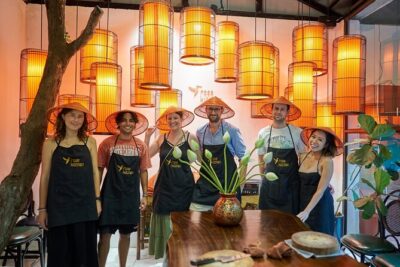
The maximum group size is 30, though some sessions have been much smaller. A group of six offers a more personal experience, while a full group may mean sharing tasks and waiting for a turn. If you are traveling with children, the class format can work well, but a smaller session will give them more direct time at the cooking station.
Eating what you prepare
After the cooking, you sit down to eat the food made during the class. Fruit, rice vodka, and coffee or tea are included. The meal is the payoff, but it is also the point where you can compare the five dishes and see how they balance one another.
I like that the menu has both filling and refreshing parts. Bun Bo Hue provides the main bowl, Banh Xeo brings crispness, Tam Huu keeps things fresh, jackfruit adds a different texture, and avocado ice cream closes the meal. It feels more like a small Vietnamese feast than a single recipe lesson.
You may not personally plate every dish from start to finish. The soup is prepared as a group recipe, and shared plating has been a minor concern for some participants. That is a fair limitation for a class that can hold many people, but it does not erase the value of learning the techniques.
The meal also creates time to talk with the instructor about local life. That informal conversation can be as useful as the written recipe. You can ask what to order in Da Nang, how the ingredients are used at home, or which dishes are realistic to make in your own kitchen.
What the $39 price includes
At $39 per person, this is good value if you take part in each stage. You are paying for about four hours, a guided market visit, cooking instruction, tools, ingredients, and a full meal. Coffee or tea, fruit, rice vodka, a cookbook, and a certificate are also included.
A restaurant meal alone would cost less, but it would not give you the market context or the practical instruction. A private cooking lesson could offer more personal attention, but it would usually cost more than this shared format. The value here comes from combining several activities into one half-day.
The price is strongest for people who want to learn recipes they can repeat. It is less compelling if you only want a quick lunch or dislike group activities. The class asks you to spend four hours cooking, shopping, and eating, so the return depends on how much you value that process.
Timing, meeting point, and practical notes
The class lasts about four hours and starts at 07 Nguyen Ba Lan Street. You should arrive 10 minutes early. The activity ends back at the same meeting point, so you do not need to arrange a separate return transfer.
The meeting address is near public transportation, which helps if you are staying around Da Nang. A mobile ticket is accepted, and confirmation is provided at booking. Service animals are allowed.
Free cancellation is available if you cancel at least 24 hours before the start time. A cancellation within 24 hours is not refunded, and changes inside that period are not accepted. The class also requires a minimum number of participants. If that minimum is not met, you are offered another date or experience, or a full refund.
Who should book this class?
I would recommend it to first-time visitors who want a friendly introduction to Central Vietnamese food. It suits curious eaters, beginner cooks, families with older children, and anyone who enjoys meeting other people over a shared meal.
It is also a smart choice if you are staying in Da Nang and want an activity connected to the city rather than a generic cooking lesson. The Cho Bac My An visit gives the class a local starting point, while the recipes connect Da Nang with the wider food culture of Central Vietnam.
You may want a different format if you require a private lesson, need every dish prepared individually, or have serious dietary restrictions that need exact substitutions. A group of up to 30 can limit personal attention, and shared dishes mean you will not control every step.
Should you book the Da Nang cooking class?
Yes, if you want more than a recipe card and a meal. The market visit, Central Vietnamese menu, friendly instruction, and cookbook make this a well-rounded four-hour experience for $39.
Go in expecting a shared class, not a private chef lesson. You may help with group dishes, and one roll or pancake may take a try or two before it behaves. That is part of the appeal. You shop, make mistakes, learn the method, and then sit down to eat food that feels connected to the place.
FAQ
Where does the cooking class meet?
It meets at 07 Nguyen Ba Lan Street, Bac My An, Ngu Hanh Son, Da Nang 550000, Vietnam. You should arrive 10 minutes before the start time.
How long does the experience last?
The class lasts approximately four hours, including the market visit, cooking, and meal.
Which market does the class visit?
The group visits Cho Bac My An to learn about local produce and buy ingredients for the cooking session.
Which dishes are prepared?
The menu includes Bun Bo Hue, Banh Xeo, Tam Huu fresh roll, young jackfruit salad, and Da Nang avocado ice cream. A vegetarian version is available.
What is included in the price?
The experience includes coffee or tea, cooking tools, lunch or dinner, the market visit, ingredients, fruit, rice vodka, a cookbook, and a certificate.
What is the cancellation policy?
You can cancel at least 24 hours before the start time for a full refund. Cancellations or changes made within 24 hours are not accepted for a refund.
Just added around Da Nang
- Market Tour, Basket Boat Ride & Cooking Class by Hangcoconut★ 4.8 · 95 reviews
- HOI AN Cooking Class and Lantern Workshop★ 4.7 · 6 reviews
- Da Nang Vegetarian Cooking and coffee Class★ 4.6 · 11 reviews
- Da Nang Family Cooking Class – with Local Family in Da Nang★ 4.3 · 4 reviews
- Da Nang: Cooking Pho & Vietnamese Dishes With Local Chef★ 5.0 · 5 reviews
- Da Nang: Coffee Making And Cooking Class★ 5.0 · 7 reviews
- Da Nang Cooking: Market tour, farming, and cooking class★ 4.8 · 13 reviews
- Da Nang: Cooking Class and tasting Pho with Local Girl★ 5.0 · 6 reviews
Cooking Classes with a Market Tour, compared.
Hanoi Cooking Class: Culture, Local Market & Meaning CSR Impact
Read our review →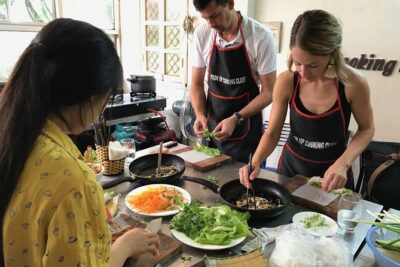
5 Traditional Dishes Hanoi Cooking Class with Market Trip
Read our review →
Cooking Class and Lunch at a Tuscan Farmhouse with Local Market Tour from Florence
Read our review →
Cooking Class, Market & Thai Herbs Garden Tour
Read our review →
Authentic Cooking Class with Market & Farm Visit
Read our review →
Paella Cooking Experience & Boqueria Market Tour
Read our review →
Cooking Class Hoi An:Local Market, Basket Boat, Fishing & Cooking
Read our review →
Hoi An Cooking Class(Market,BasketBoat Crabfishing&Cooking Class)
Read our review →Lists this class appears in