
REVIEW · CENTRAL VIETNAM, VIETNAM
Da Nang: Coffee Making And Cooking Class
Coffee comes first, but lunch steals the show. At Jolie Cooking Class near Da Nang’s Dragon Bridge, you learn the slow ritual of phin brewing, taste egg, salt, and coconut coffee, then cook local dishes from the ground up. I like the small-group format and the patient English-speaking guides, especially Rosie, Nhan, Hannah, and Kate. I also like that this is not only a tasting: you chop, cook, and eat what you make.
The main consideration is caffeine. Three strong coffee styles, and sometimes a fourth cup, can leave you buzzing, so eat breakfast and avoid too much coffee beforehand. At $50 per person, the class is good value if you want both a coffee workshop and a substantial cooking session, but it is a long half-day if you only came for a quick cup.
Key points to know before booking
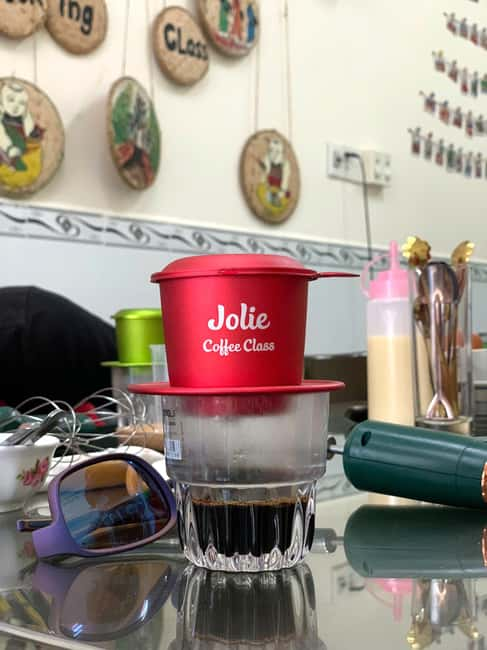
- You brew with a traditional phin filter, the small metal brewer used in Vietnamese cafés.
- Three local coffee styles take center stage: egg coffee, salt coffee, and coconut coffee.
- The cooking session is hands-on, including chopping ingredients and preparing traditional Da Nang dishes.
- Rosie, Nhan, Hannah, and Kate are praised for clear English and patient instruction.
- The class lasts 4.5 hours, with morning and afternoon start times near Dragon Bridge.
- Children are welcome and the venue is wheelchair accessible, but people with heart problems should not take part.
Why this Da Nang class is more than a coffee tasting
Vietnamese coffee is not simply coffee poured into a cup. The brewing method, the beans, the sweet additions, and the time spent waiting all matter. This class gives you a useful introduction to that culture instead of handing you a finished drink and sending you on your way.
The focus is on Robusta beans, the coffee variety closely linked with Vietnam’s strong, full-bodied brews. You learn why the beans matter, how the phin filter works, and why Vietnamese coffee is made slowly. That pause is part of the pleasure. You watch the coffee drip while learning how the drink fits into daily café life.
I like this approach because it gives you something practical to take home. After the class, you should understand the basic phin method and have a better chance of recreating the drinks in your own kitchen. The coffee will not magically taste identical without the same ingredients and tools, but you will know what you are aiming for.
The class also gives you three very different ways to taste Vietnamese coffee:
- Egg coffee: Coffee topped or blended with a sweet, creamy egg mixture.
- Salt coffee: Coffee balanced with a salty element, giving the drink a striking sweet-savoury character.
- Coconut coffee: Coffee paired with coconut for a cooler, sweeter style.
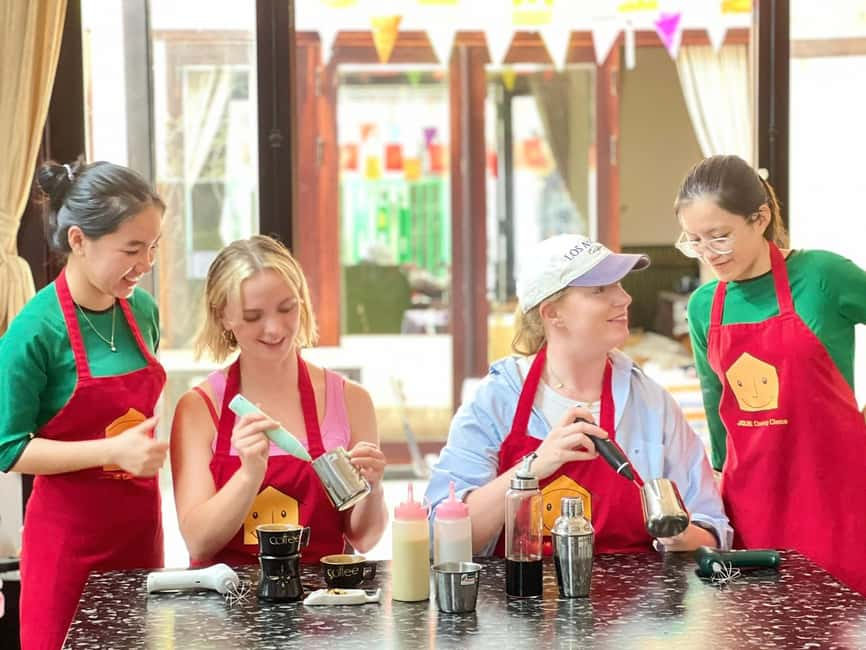
The exact balance depends on how you prepare each drink, which is why the hands-on part matters. You are not just sampling finished cups. You see the process, make the drinks yourself, and can ask questions as you go.
More Coffee Stops in Da Nang:
- Da Nang Cooking Class with Coffee Tasting and Market Visit
★ 5.0 · 310 reviews - Da Nang Vegetarian Cooking and coffee Class
★ 4.6 · 11 reviews - Hanoi Cooking Class: Pho/Bun Cha/Banh Xeo…+Free Egg/Salt Coffee
★ 5.0 · 267 reviews
Meeting at 14 An Trung Dong 6 near Dragon Bridge
Jolie Cooking Class is at 14 An Trung Dong 6, close to Da Nang’s Dragon Bridge. The central location is handy if you are staying in the city and want to fit the class around sightseeing.
There is no stated hotel pickup, so plan to make your own way to the meeting point. Check the location before setting out, particularly if you are using a taxi or ride-hailing service. The class begins at either 8:30 AM or 2:00 PM, depending on the booking time.
The morning schedule is the better choice if you want to use the rest of the day for Da Nang. The afternoon class works well if you prefer a slower start, though you will finish around 6:30 PM. Both options follow the same basic four-and-a-half-hour pattern.
Wear clothing you can move around in and do not bring anything precious that you would worry about in a cooking area. A camera is recommended, and there should be plenty of moments worth recording, from the first coffee drip to the finished meal.
The welcome snack and coffee culture talk
The first part begins with a local snack and an introduction to Vietnamese coffee culture. This is a useful opening because the class does not treat coffee as an isolated recipe. You hear about the drink’s place in everyday life and learn why the phin filter remains such an important part of the experience.
The English instruction is one of the strongest parts of the class. Rosie is described as enthusiastic and funny, while Nhan, Hannah, and Kate are also praised for speaking clearly and explaining each step well. That matters in a class where small details affect the result.
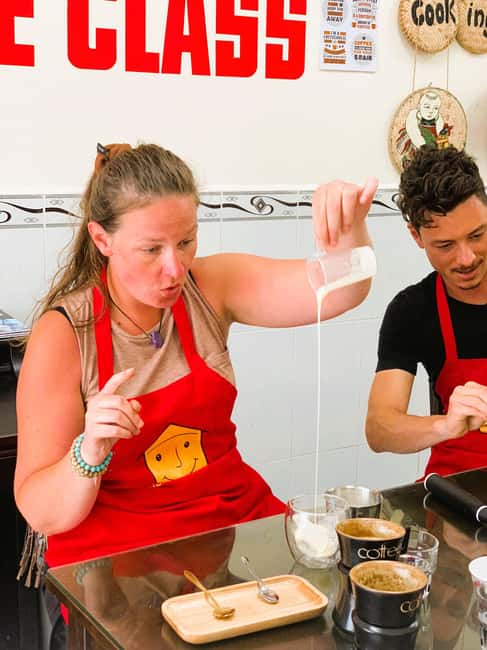
You can ask questions as you work, rather than trying to absorb everything from a long speech at the beginning. The small-group setting helps here. One particularly useful detail is that the guides take time to correct mistakes and repeat steps. If your egg coffee does not come together on the first try, you are not simply left with a failed cup.
Do not drink a large amount of coffee before arriving. The class is designed for tasting several styles, and the caffeine adds up. Eat something beforehand, especially if you choose the morning session. You will also be preparing and eating a full meal later.
Brewing with the phin, one slow drip at a time
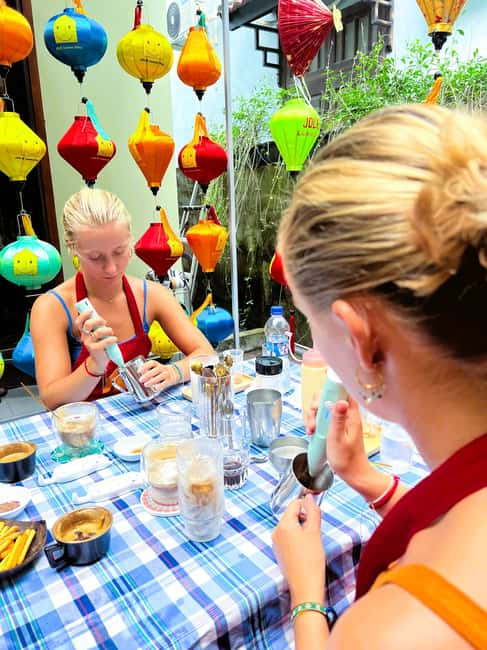
Around 15 minutes after the morning start, or shortly after the afternoon class begins, you move into hands-on brewing. The phin is simple, but it rewards patience. Coffee passes slowly through the metal filter, giving you time to watch the process and discuss what you are tasting.
This is the part that feels most different from a standard cooking class. You are not rushing from one recipe to the next. The slow drip creates a pause, much like sitting in a Vietnamese café and waiting for your cup to finish brewing at the table.
You prepare the named coffee styles one by one. Egg coffee gives you a sweet, creamy contrast to the strong coffee base. Salt coffee shows how a small savoury note can change the drink. Coconut coffee is softer and sweeter, making it a useful contrast with the other two.
The class information highlights three styles, while the cooking and coffee format has also included four coffees for some participants. Do not assume every booking will produce exactly the same number of cups, but you should expect to taste the three featured styles.
For coffee beginners, this is a friendly way to learn because you do not need much prior knowledge. For coffee fans, the value is in the method and the cultural context. You can compare the drinks, ask why each ingredient is used, and work out which style you would order again.
The only real drawback is the amount of caffeine. One cup might feel like a treat. Several cups, especially before lunch, can be a lot. Take small tastes rather than forcing yourself to finish everything if you are sensitive to coffee.
A few more cooking classes around Da Nang worth a look
- 5 Dishes Cooking Class with Market Trip in Da Nang
★ 5.0 · 466 reviews - Da Nang Authentic Home Cooking Class
★ 5.0 · 354 reviews - 5 traditional dishes Da Nang cooking class with market trip
★ 5.0 · 331 reviews - Hoi An: Lantern Making, Basket Boat, and Cooking Class
★ 4.9 · 233 reviews
From coffee cups to Da Nang cooking at 10:30 AM
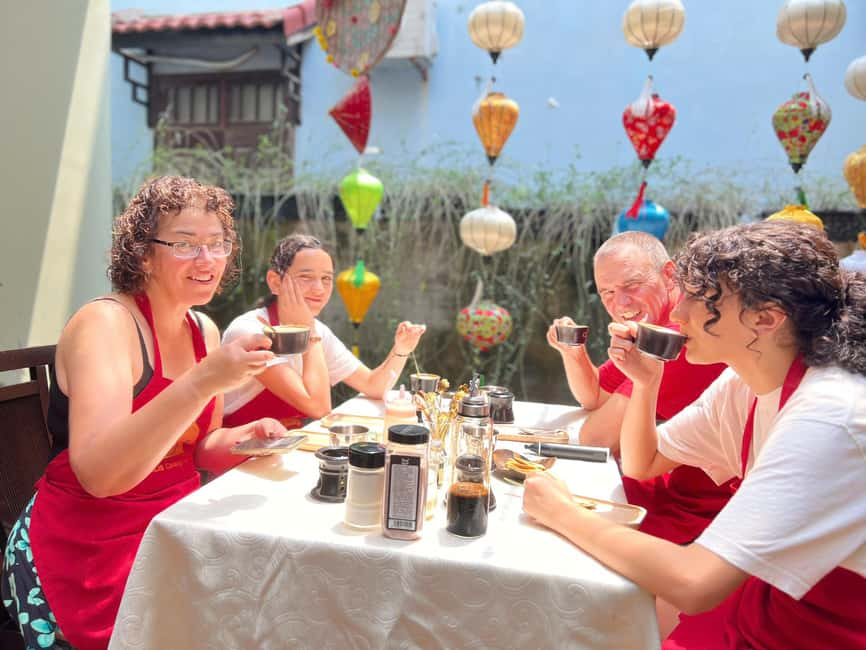
At about 10:30 AM for the morning class, or 4:00 PM for the afternoon session, the focus shifts to food. This is not a demonstration where you watch someone else do all the work. You take part in the preparation, including chopping ingredients and cooking the dishes.
The class description emphasizes herbs, spices, and traditional techniques. That gives the food section a useful purpose: you learn how Vietnamese cooking builds flavour through a combination of fresh ingredients and careful preparation, not just through a single sauce.
The dishes are described as traditional Da Nang food, and the format has included four dishes in some classes. The exact menu is not specified, so do not book expecting a particular named recipe. Instead, think of this as a local cooking session where you learn the style of the food and take part in the full process.
I like the change of pace. After sitting with coffee and listening to stories, you get to work with your hands. The cooking section also makes the $50 price easier to justify, since you are getting more than a beverage lesson and a few samples.
You should be ready for a proper meal by this point. The practical tip is simple: do not arrive stuffed. The class notes specifically warn you to be ready for a food belly, and the final meal is made from the dishes you helped prepare.
Eating what you made around 1:00 PM or 6:30 PM
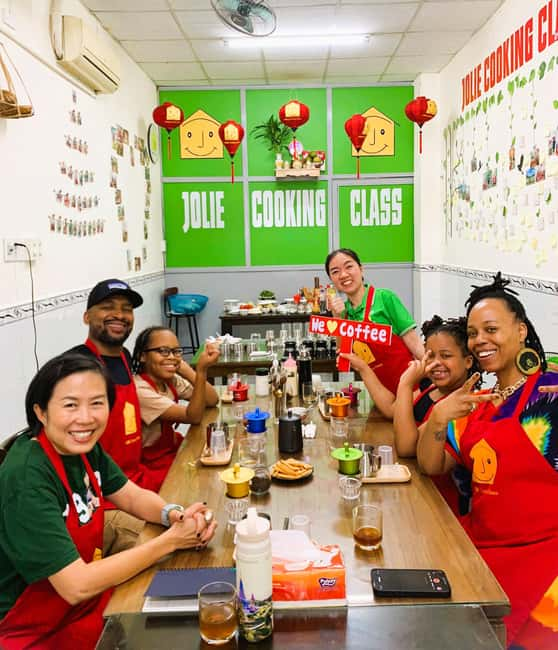
The final stage is the meal. In the morning, you should finish around 1:00 PM. In the afternoon, the class ends around 6:30 PM. You sit down and enjoy the food you prepared, which gives the cooking lesson a satisfying finish.
This is where the class feels personal rather than commercial. You have handled the ingredients, followed the instructions, and seen the dishes take shape. Eating the result helps you remember the techniques better than simply receiving a printed recipe.
There may also be time to play guitar or piano if you can. That detail gives the ending a relaxed, home-style feel, though you should not treat the instruments as a main feature of the booking.
The meal is also a good reason to choose this activity instead of a short coffee tour. You get a cultural introduction, several drinks, a cooking lesson, and food at the end. The tradeoff is time: you need to set aside nearly half a day.
Is $50 good value for 4.5 hours?
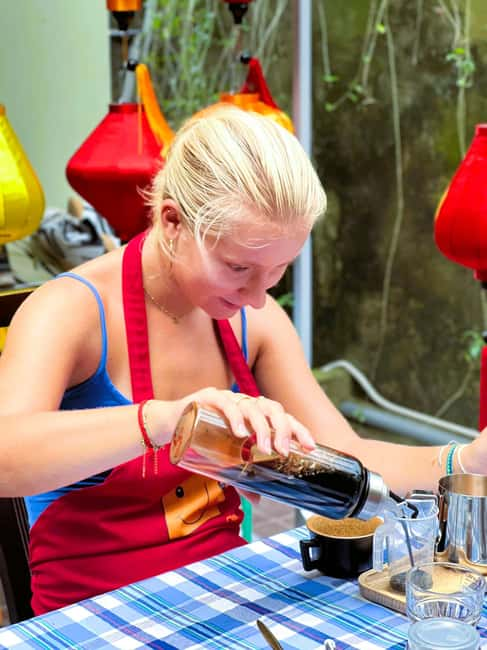
At $50 per person, this is not the cheapest way to drink coffee in Da Nang. You can buy a coffee for far less. That comparison misses the point, though. The fee covers instruction, several coffee preparations, a cooking session, and the meal you prepare.
The value is strongest for people who want an activity with substance. You learn a brewing method, hear about coffee culture, cook traditional food, and spend time with English-speaking instructors. Small groups also tend to make practical instruction easier, since you can ask questions and get help when a recipe goes wrong.
The value is weaker if you only want to sample Vietnamese coffee or if you dislike cooking. Four and a half hours is a serious time commitment, and the class asks you to participate rather than sit back.
The price also makes sense for a family or small group that wants a shared activity. Children are welcome, and the food preparation gives the session more variety than a coffee-only workshop. People with heart problems should not take part, and anyone sensitive to caffeine should plan carefully.
Free cancellation up to 24 hours before the start gives you some flexibility, and you can reserve now and pay later. Wheelchair access is available. English is the stated teaching language.
Who will enjoy this class most?
I would recommend this class to:
- Coffee drinkers who want to understand the phin rather than only order a finished cup.
- First-time visitors who want a practical introduction to Vietnamese food and café culture.
- Couples, families, and small groups looking for a shared indoor activity.
- Home cooks who enjoy learning by chopping, mixing, and tasting.
- People staying near central Da Nang who want an easy-to-reach half-day activity.
You may want to skip it if you do not drink coffee, dislike strong caffeine, or have a heart condition. It is also not ideal if your schedule is packed and you cannot spare 4.5 hours.
For the best experience, have a light breakfast or lunch beforehand, avoid too much caffeine, wear comfortable clothes, and bring a camera. The guides are patient, but you still need to take part. This is a class, not a show.
Should you book Jolie Cooking Class?
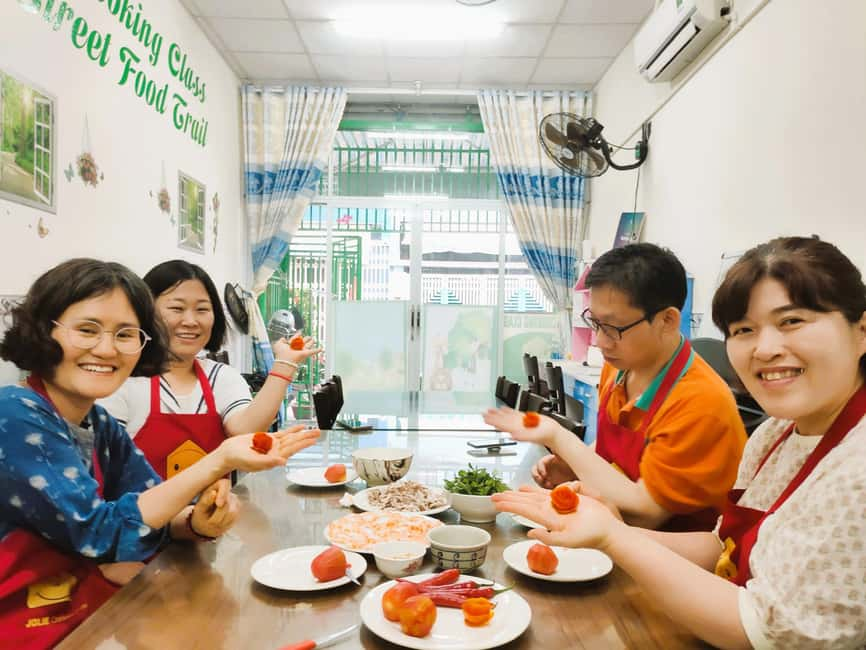
Book it if you want coffee and food in one well-paced activity. The strongest features are the phin brewing, the three distinctive coffee styles, the small-group attention, and the hands-on cooking. Rosie, Nhan, Hannah, and Kate add to the appeal with clear English and a friendly teaching style.
I would choose the morning session if you want an early start and a free afternoon. Pick the afternoon if you prefer a slower morning and do not mind finishing around dinner time.
The class is especially good value for anyone curious about Vietnamese coffee but also eager to eat something substantial. It is less suitable for a quick coffee stop, caffeine-sensitive visitors, or people who do not enjoy cooking. For most food-loving visitors with half a day free, it offers a useful taste of Da Nang that you can carry home in the form of recipes, brewing skills, and a better idea of what to order at a local café.
FAQ
Where does the coffee and cooking class meet?
The class meets at Jolie Cooking Class, 14 An Trung Dong 6, Da Nang, near Dragon Bridge.
How long does the class last?
The activity lasts 4.5 hours.
What coffee styles will I make?
The class includes egg coffee, salt coffee, and coconut coffee. Some class formats have included a fourth coffee as well.
What start times are available?
The stated start times are 8:30 AM and 2:00 PM. The morning class finishes around 1:00 PM, and the afternoon class finishes around 6:30 PM.
Is the class taught in English?
Yes. English is the stated teaching language.
Is the class suitable for children and wheelchair users?
Children are welcome, and the activity is wheelchair accessible. It is not suitable for people with heart problems.
Just added around Da Nang
- Market Tour, Basket Boat Ride & Cooking Class by Hangcoconut★ 4.8 · 95 reviews
- HOI AN Cooking Class and Lantern Workshop★ 4.7 · 6 reviews
- Da Nang Vegetarian Cooking and coffee Class★ 4.6 · 11 reviews
- Da Nang Family Cooking Class – with Local Family in Da Nang★ 4.3 · 4 reviews
- Da Nang: Cooking Pho & Vietnamese Dishes With Local Chef★ 5.0 · 5 reviews
- Da Nang Cooking: Market tour, farming, and cooking class★ 4.8 · 13 reviews
- Da Nang: Cooking Class and tasting Pho with Local Girl★ 5.0 · 6 reviews
- RICE PAPER Noodle Making Experience & Hoi An Cooking Class Class★ 5.0 · 164 reviews
Cooking Classes, compared.

Half-Day Thai Cooking Class at Organic Farm in Chiang Mai
Read our review →

3 in 1 Cooking Class near Navona: Fettuccine, Ravioli & Tiramisu
Read our review →
Pasta & Tiramisu Cooking Class with Unlimited Wine
Read our review →
Hanoi Cooking Class: Culture, Local Market & Meaning CSR Impact
Read our review →
5 Traditional Dishes Hanoi Cooking Class with Market Trip
Read our review →
Cooking Class and Lunch at a Tuscan Farmhouse with Local Market Tour from Florence
Read our review →
Cooking Class, Market & Thai Herbs Garden Tour
Read our review →Lists this class appears in