REVIEW · CHIANG MAI, THAILAND
Cooking Class with Organic Farm in Chiang Mai
Come hungry, leave with recipes. This six-hour Chiang Mai cooking class combines a local market visit, an organic farm, and a full meal you prepare yourself. I especially like the chance to pick herbs and vegetables from a 1.6-acre garden, then use them at your own cooking station. I also like the choice of six dishes from six menu groups, including Pad Thai, Tom Yum, Thai curries, salads, and desserts.
The main consideration is the pace. You start at 9:00 am, travel about 30 minutes to the farm after the market stop, and cook six dishes in one day. That is excellent value for hungry food lovers, but it may feel like a lot if you prefer a short, relaxed lesson or want more time in Chiang Mai city.
Key points to know before booking
- Six dishes, six menu groups: Choose one dish each from salad, stir-fried, soup, curry paste, curry, and dessert.
- A real farm setting: Pick ingredients from a 1.6-acre organic garden with more than 20 types of plants.
- Market and countryside combination: Start with a look at local food buying before heading roughly 30 minutes out to the farm.
- Individual cooking stations: You prepare your own dishes rather than simply watching a chef work.
- Small maximum group: The class is limited to 12 people, which helps keep the hands-on format practical.
- Vegetarian help is available: The instructor can explain substitutions for vegetarian dishes, an important plus for plant-based eaters.
Why this Chiang Mai cooking class works so well
A Thai cooking lesson can be little more than a demonstration followed by a quick meal. This one gives you a fuller picture of how Thai food reaches the plate. You see ingredients at a local market, learn about plants at the farm, cook the food yourself, and sit down to eat what you made.
That sequence gives the day a clear rhythm. The market shows you the buying side of Thai cooking. The farm explains the growing side. The kitchen brings those pieces together.
I also like the amount of food involved. You choose six dishes, one from each of six categories. This is not a class where you make one curry and leave still wondering what to eat for lunch. One food-focused review described the portions as enough to last the whole day, so plan on arriving without a large breakfast.
The class is priced at $46.95 per person. For about six hours, with transportation from central Chiang Mai, market time, farm access, ingredients, instruction, a cooked meal, and a recipe book, the price is fair. You are paying for more than a lesson. You are paying for a half-day countryside outing and lunch made with ingredients you help select.
More Farm Cooking Classes in Chiang Mai
- Half-Day Thai Cooking Class at Organic Farm in Chiang Mai
★ 5.0 · 19,087 reviews - Chiang Mai: Authentic Cooking Class with Market & Farm Visit
★ 4.9 · 4,546 reviews - Chiang Mai: Cooking Class with Organic Farm at Mama Noi
★ 4.9 · 1,151 reviews
Meeting at Tha Phae Gate at 9:00 am
The stated meeting point is Tha Phae Gate on Tha Phae Road. This is a useful central location in Chiang Mai, and the area is near public transportation. Pickup is also offered from hotels in Chiang Mai city, so check the exact arrangement when booking.
The 9:00 am start matters. You will need to be ready early enough to meet the group without rushing. Since the activity lasts about six hours and ends back at the meeting point, you can still use the afternoon for another Chiang Mai plan.
Round-trip transport removes one common headache. You do not need to arrange a taxi to a rural cooking school or work out how to get back after eating a very large lunch. The exact transfer setup should be confirmed before the day, especially if you are staying outside the central city area.
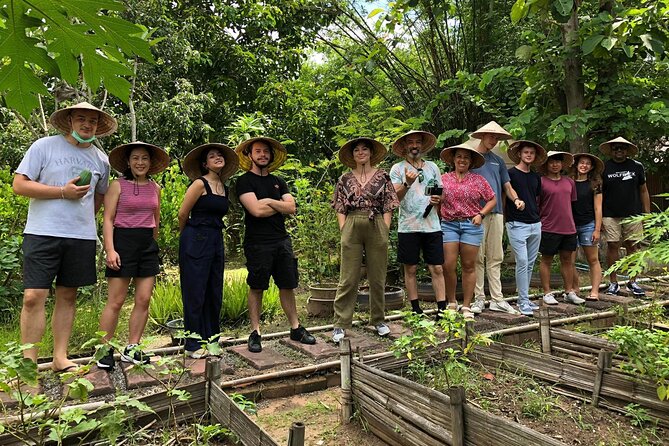
The maximum group size is 12 people. That is small enough to make an individual cooking station useful, while still allowing the class to have some social energy. If you want a private lesson, this is not described as a private activity. If you like meeting other cooks and sharing a kitchen, the group format should suit you.
The local market comes before the farm
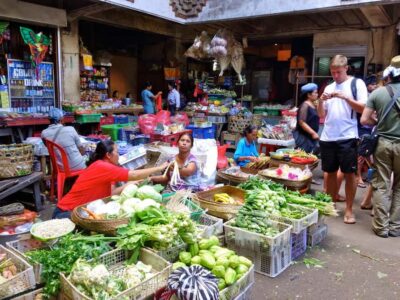
The first stop is a local market in the Chiang Mai countryside. This is not just a shopping pause before the real activity begins. It gives you a chance to see the ingredients in their everyday setting and learn about the traditional food culture of the area.
The market visit is especially useful if you are not familiar with Thai vegetables, herbs, curry ingredients, or noodles. Seeing them whole, rather than already measured in small bowls, makes the later cooking lesson easier to follow.
You should think of this stop as an introduction rather than a long market tour. The available information does not promise a detailed food history presentation or a long period of free shopping. The point is to understand the ingredients and local food habits before continuing to the farm.
One practical tip is to eat lightly before leaving. You will cook six dishes later, and one account specifically advised against having a big breakfast. A little food may help you through the morning, but saving room for lunch makes sense.
A 30-minute ride to a working organic farm
After the market, the group travels by car for about 30 minutes to the farm. The drive shifts the setting from central Chiang Mai to quieter countryside. That change is part of the appeal, though it also adds travel time to the day.
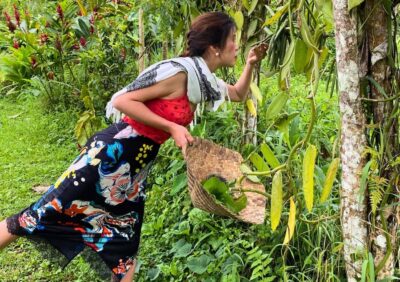
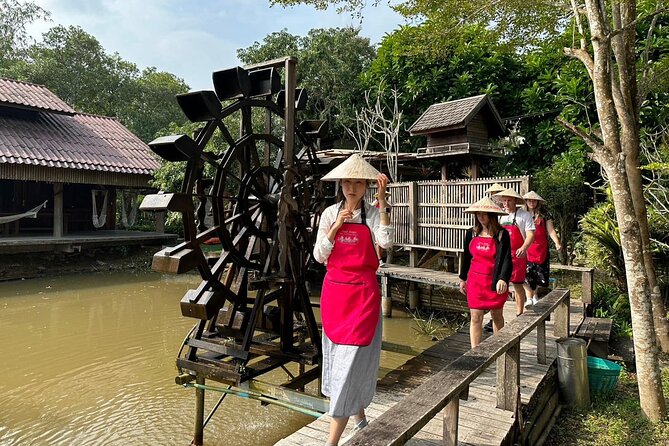
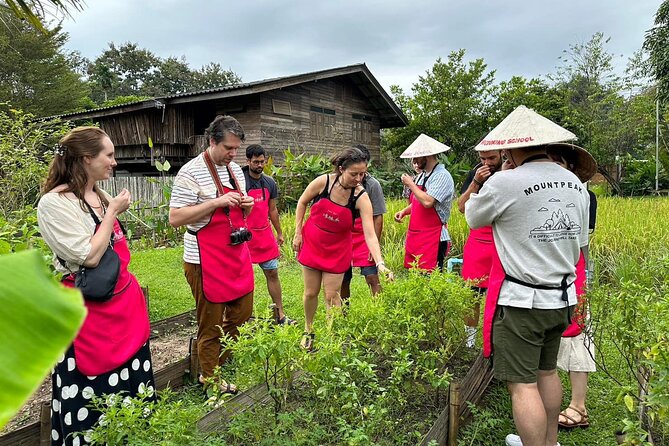
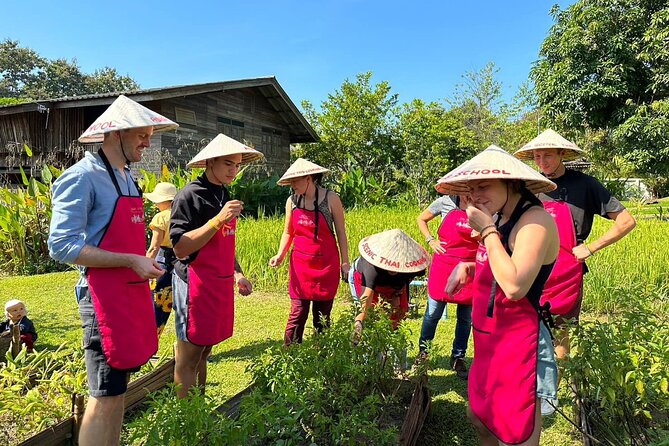
The farm covers 1.6 acres and contains more than 20 types of plants. You can walk through the garden, taste fresh herbs, and learn what is grown on-site. This gives the ingredients a practical context. You do not just hear that Thai cooking uses fresh basil, chilies, or other herbs. You see where some of those ingredients come from and handle them before cooking.
You also have time to explore the farm between cooking activities. That detail matters. A tightly packed lesson can leave you moving from one station to the next without a pause. Here, the garden provides a welcome change from chopping and stirring.
The farm is a strong part of the experience for anyone who enjoys food with a clear connection to place. It is less suitable if your only goal is to master as many restaurant-style techniques as possible. Some of the day is devoted to the garden, market, transfers, and eating, not just knife work and recipes.
More Farm Cooking Classes in Thailand
- Full Day Thai Cooking at Farm (Chiang Mai)
★ 5.0 · 1,127 reviews - Chiang Mai: HALF-DAY COOKING COURSE at a Thai Cooking Farm
★ 4.9 · 705 reviews - Cooking Class with Organic Farm in Chiang Mai at Mama Noi
★ 5.0 · 502 reviews - Evening Cooking Class in Organic Farm with Local Market Tour
★ 5.0 · 394 reviews
Choosing your six Thai dishes
You choose one dish from each of six groups. This gives you plenty of control over the meal and lets you build a menu around your interests.
The salad group includes:
- Spicy chicken salad
- Papaya salad
- Glass noodle salad
For stir-fried dishes, choices include Pad Thai, Pad See Ew, hot basil stir-fry, and cashew nut with chicken. Pad Thai is the familiar choice, but Pad See Ew and hot basil stir-fry give you a chance to learn other everyday Thai favorites.
The soup group includes coconut milk soup, Tom Yum, and Tom Sab. Tom Yum brings the well-known hot and sour style, while coconut milk soup offers a softer, creamier direction.
You can also choose a curry paste and a finished curry. Paste options include red, green, Massaman, Panang, and Khao Soi. Curry options use the same main styles. This is useful because you can learn both the seasoning base and the finished dish, though choosing two similar options may make the meal feel repetitive.
Dessert choices are deep-fried banana, banana in coconut milk, and sticky rice with mango. Ending with dessert makes the class feel like a complete Thai meal rather than a single savory lesson.
The menu provides variety, but six dishes is still a lot. You may need to make choices quickly, especially if the instructor explains several options at once. If you have strong preferences, decide ahead of time which categories matter most to you.
Cooking at your own station
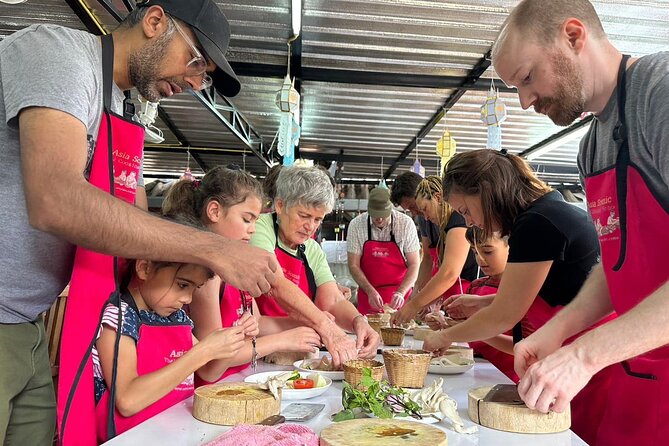
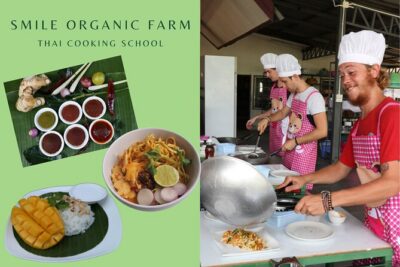
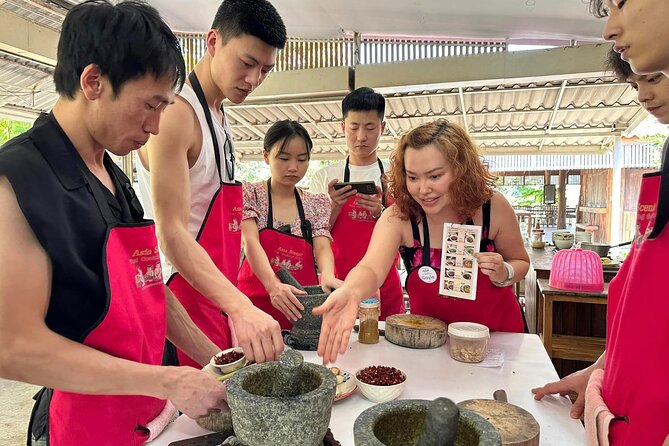
At the farm, you work at an individual cooking station. This is one of the most important details in the experience. You are not simply watching a chef prepare food at the front of the room.
Hands-on cooking helps you understand texture and timing. You can see how ingredients change as they cook, adjust your own pace, and take responsibility for the finished dish. It also makes the recipe book more useful later because you have already performed the steps.
The instructors are described as experienced, and the class is led by a certified chef. Guides named Gayle and Lily have been praised for making the session funny, friendly, and easy to enjoy. Their style appears to be a strong part of the day, especially for first-time cooks.
A good cooking instructor does more than list ingredients. You need help with substitutions, spice levels, order of preparation, and the difference between a dish that is merely cooked and one that tastes balanced. The class is designed to teach the basics of Thai cooking, so it should work for beginners rather than only confident home cooks.
The pace may be lively. Six dishes require organization, and you will likely move between preparation and cooking several times. If you want a slow, highly technical lesson focused on one dish, this is not the right format. If you want a broad introduction and plenty to eat, the busy schedule is part of the value.
Vegetarian cooking and ingredient substitutions
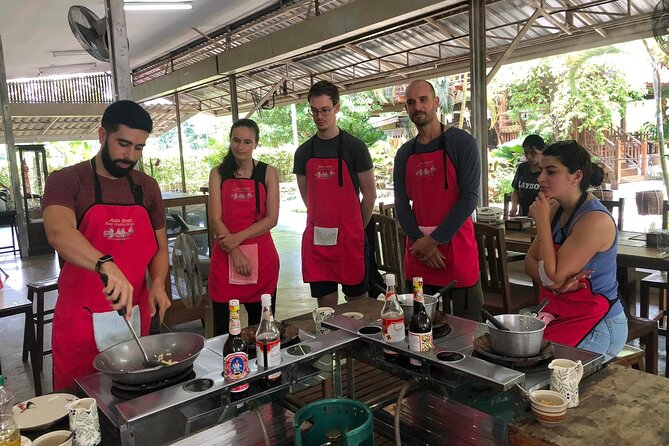
Vegetarian cooking is possible here, and the instructor can explain substitutions. This is a meaningful advantage because Thai dishes often rely on ingredients that are not obvious from the menu name.
Tell the operator about your dietary needs when booking and repeat them at the start of the class. The supplied information confirms help with vegetarian substitutions, but it does not specify separate kitchens, allergy controls, vegan guarantees, or gluten-free arrangements.
The six-category structure also helps you build a vegetarian menu. Salads, some curries, soups, stir-fries, curry pastes, and desserts may be adaptable, but the exact substitutions depend on the dish and the cooking plan. Ask clearly before choosing.
Eating what you cook and taking the recipes home
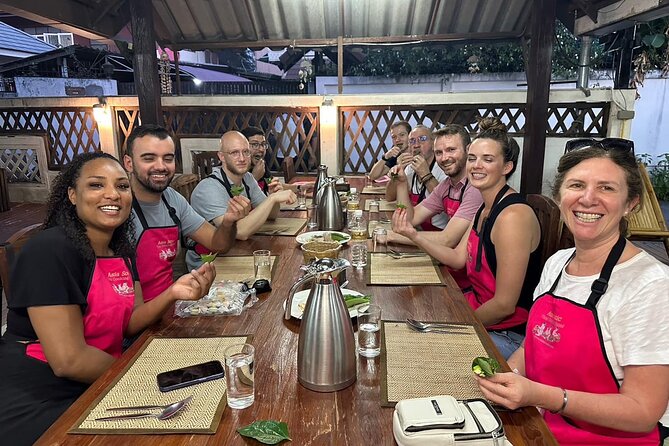
After the cooking is finished, you eat the meal you prepared. Because you make six dishes, this is likely to be the most filling part of the day. It also gives you a chance to compare the dishes and enjoy the results without having to rush off to another restaurant.
The meal is more satisfying because you have picked some of the ingredients yourself. That small connection changes how you experience the food. A handful of herbs from the garden becomes part of your own lunch, not just a garnish added by someone else.
You receive a recipe book at the end. This is one of the best practical features. Thai cooking can be difficult to recreate from memory, especially when several sauces, pastes, and ingredient combinations are involved. The book gives you a starting point for making the dishes again at home.
Do not expect the recipe book to replace the instructor. Ingredients available in your home country may differ, and the book may not capture every visual cue you learned in class. Still, it turns a pleasant day into something you can use after returning home.
Who should book this six-hour experience
I would recommend this class most strongly to:
- First-time visitors who want a food activity beyond restaurant dining
- Couples, families, and friends who enjoy cooking together
- People who want a countryside break from central Chiang Mai
- Food lovers who want a large, freshly prepared meal
- Beginners who prefer guided, hands-on instruction
- Vegetarian cooks who need help adapting Thai dishes
Children aged 5 to 11 are listed as eligible. The day is long enough that younger children may need patience and supervision, but the individual stations and garden setting can make the activity engaging for school-age children.
I would be more cautious if you dislike structured group activities, cannot manage a six-hour outing, or want a quiet day with minimal transportation. The class includes an early start, a market stop, a 30-minute drive, garden time, and six dishes. That is a full morning and afternoon.
The experience is booked an average of 18 days ahead, so it is sensible to reserve early if your Chiang Mai dates are fixed. Free cancellation is available up to 24 hours before the start time. Changes or cancellations inside that 24-hour window are not refundable.
What to know about weather and changes
The activity requires good weather. If poor conditions force a cancellation, you are offered another date or a full refund. The same basic choice applies if the minimum number of participants is not reached.
That policy is reasonable for a farm-based activity, though it means you should not leave this for the final day of a short Chiang Mai visit. A canceled cooking class could be difficult to replace at the last minute.
The stated endpoint is back at the meeting point. If you use hotel pickup, confirm where the return transfer will leave you. The activity includes mobile ticketing, and booking confirmation is sent at the time of reservation.
Should you book the Chiang Mai organic farm cooking class?
I would book it if you want a full food day rather than a quick cooking demonstration. The combination of local market, organic garden, individual station, six dishes, large meal, and recipe book gives you plenty for the $46.95 price.
The best reason to choose it is the connection between ingredients and cooking. You see the food at the market, find plants in the garden, and then turn them into lunch. Guides such as Gayle and Lily add a human touch, and vegetarian substitutions make the class more flexible.
Skip it if six dishes sound excessive or if you want to stay in central Chiang Mai all day. Otherwise, this is a practical, generous introduction to Thai cooking, with enough food to count as lunch and enough instruction to keep the experience useful after you return home.
FAQ
Where does the cooking class start?
The stated meeting point is Tha Phae Gate on Tha Phae Road in Chiang Mai.
What time does the class begin?
The activity starts at 9:00 am.
How long does the experience last?
The cooking class and farm experience last approximately six hours.
Is hotel pickup available?
Yes. Round-trip transfers are offered from hotels in Chiang Mai city.
How many dishes can I cook?
You can choose and prepare six dishes, with one selection from each of six menu groups.
What kinds of Thai dishes are available?
Choices include salads, stir-fries, soups, curry pastes, curries, and desserts. Examples include Pad Thai, papaya salad, Tom Yum, green curry, Khao Soi, and sticky rice with mango.
Can vegetarians join the class?
Yes. The instructor can help with vegetarian substitutions. Ask about your specific needs before choosing your dishes.
How many people can join the class?
The activity has a maximum of 12 participants.
What happens if the weather is poor?
If bad weather causes cancellation, you will be offered another date or a full refund.
Just added around Chiang Mai
- Aroidee’s Farm-Fresh Thai Cooking Experience★ 5.0 · 8 reviews
- Signature Thai Cooking Course★ 5.0 · 79 reviews
- Private Half-Day Thai Cooking Class in Chiang Mai★ 5.0 · 4 reviews
- Half Day Guided Thai Cooking Class in Chiang Mai★ 5.0 · 13 reviews
- Online Thai and Akha Cooking Class★ 5.0 · 70 reviews
- Private Virtual Thai Cooking Class★ 5.0 · 9 reviews
- Northern Thai Cooking Class in Chiang Mai in a Countryside Home★ 5.0 · 2 reviews
- 5 Hour Morning Thai Cooking Course★ 5.0 · 31 reviews
Farm & Countryside Cooking Classes, compared.

Half-Day Thai Cooking Class at Organic Farm in Chiang Mai
Read our review →
Cooking Class and Lunch at a Tuscan Farmhouse with Local Market Tour from Florence
Read our review →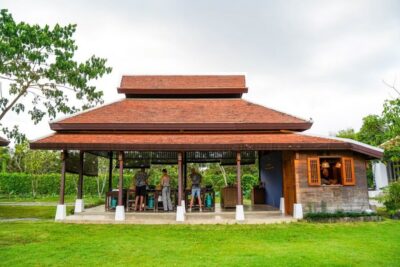
Authentic Cooking Class with Market & Farm Visit
Read our review →