REVIEW · CHENNAI, INDIA
Traditional Vegetarian Cooking Class in Chennai with Gayathri
Food tells family stories. In Ramapuram, Gayathri shares recipes learned from her Thanjavur grandmother through a private hands-on class and a traditional meal at home. I like the personal setting and the chance to use old cooking tools, including a stone grinder and soapstone vessels. The main consideration is that this is a vegetarian Tamil Brahmin kitchen, so it will not suit anyone seeking meat, seafood, or a broad restaurant-style menu.
The cooking lesson focuses on one main dish and one side dish, with the exact menu changing by season. I also like the choice between a traditional meal and a South Indian breakfast of dosa, sambar, medu vada, coconut chutney, and filter coffee. The meeting point is in Ramapuram, and hotel pickup is not included, so you need to plan your own way there.
Five things to know before booking
- Gayathri learned from her Thanjavur grandmother: The class is built around family cooking rather than a commercial kitchen demonstration.
- You cook with traditional vessels: Depending on the dishes, you may use kal chatti, eeya chombu, or mann chatti.
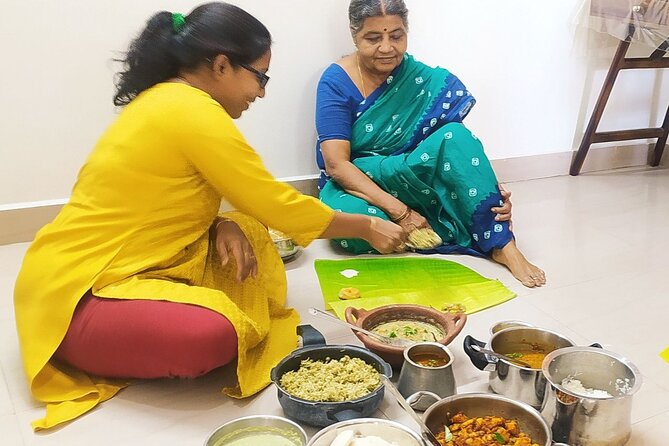
- The meal is served on a banana leaf: You sit on the floor and eat with your hands, following a familiar South Indian home tradition.
- The class is fully private: Only your own group participates, making it easier to ask questions and discuss dietary needs.
- You can request breakfast instead: Ask for dosa, sambar, medu vada, coconut chutney, and filter coffee when booking if that appeals more than a standard meal.
A Chennai cooking class built around family recipes
This experience offers something more personal than a standard cooking lesson. You visit Gayathri’s home in Ramapuram, meet a local host, and learn food shaped by her Tamil Brahmin family background.
Gayathri was raised by her grandmother, a skilled cook from Thanjavur. That matters because Thanjavur cooking has its own proud food traditions, and this class gives you a direct connection to one family’s way of preparing South Indian vegetarian food.
I like that the emphasis is not on showing off complicated restaurant techniques. You chop, stir, fry, and learn how ordinary ingredients and spices come together. The food is meant to be cooked and eaten at home, which gives the class a practical feel.
The activity is private and personalized. If you are curious about why a spice is added at a certain point, how a dish should look before serving, or how a traditional vessel changes the cooking process, you can ask without competing with a large group.
The published experience lasts about three hours, while the hands-on cooking lesson itself takes about 1.5 hours. The remaining time allows for the meal and the home visit. That makes this a relaxed food activity rather than a quick demonstration squeezed between sightseeing stops.
More Vegetarian Cooking Classes in India
- Jaipur Market Tour & Vegetarian Rajasthani Home Cooking Class
★ 5.0 · 113 reviews - Private Vegetarian Indian Cooking Class in Mumbai
★ 5.0 · 17 reviews - South Indian Vegetarian Cooking Class in Chennai with Meena
★ 5.0 · 17 reviews
What happens during the 1.5-hour cooking lesson
The class begins with an introduction to the ingredients, spices, and cooking methods used in a Tamil Brahmin kitchen. You should expect to take part rather than simply watch.
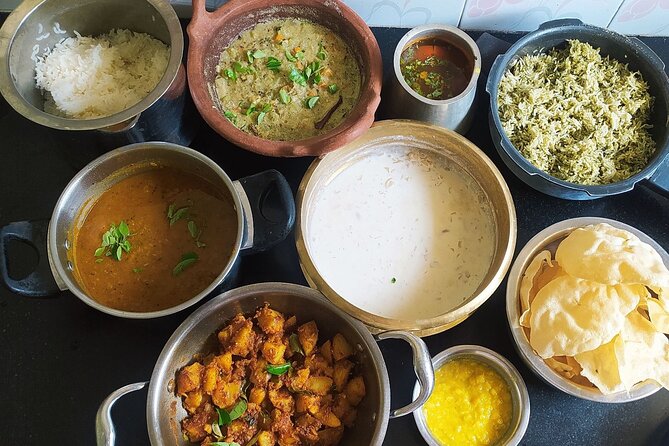
The menu includes one main dish and one side dish. The exact choices depend on the season, so you should not book with the expectation of preparing one fixed recipe every time. The supplied details and cooking feedback point to dishes such as kootu, sambar, poriyal, and tomato-onion chutney, but your menu may differ.
That seasonal approach is useful. South Indian home cooking often follows what is available, and a changing menu keeps the class connected to local habits. It also means you may learn dishes that fit the time of year rather than a standard package repeated daily.
You will work with local ingredients and spices, learning small kitchen techniques along the way. The value here is in the explanation. A recipe alone tells you what to add, but a host can explain how the ingredients are used in a home kitchen and how to judge the cooking as you go.
For the tomato-onion chutney, you use a traditional stone grinder. This is slower and more physical than using an electric blender, but it gives you a feel for an older method. It is also one of the more distinctive parts of the class because you are handling the equipment instead of merely hearing about it.
The strongest praise for the cooking lesson centers on Gayathri’s step-by-step guidance. That should help if you are new to South Indian cooking or unsure about working with ingredients you have not used before.
Traditional vessels and the cooking methods behind them
One of the best reasons to choose this class is the chance to cook with traditional vessels. Depending on the dish, Gayathri may use a kal chatti, an eeya chombu, or a mann chatti.
A kal chatti is a soapstone vessel. An eeya chombu is made from a tin alloy, while a mann chatti is a terracotta pot. These are not decorative props added for a photo. They are part of older kitchen practice and help explain how South Indian food was prepared before modern cookware became common.
You should not expect a technical lecture on cookware materials. Instead, the vessels are likely to appear naturally as part of the cooking process. That is a strength. You see how the dish is made in the setting where the method belongs.
The traditional equipment may also make the class feel less fast than cooking with modern appliances. That is not a flaw unless you want a rapid, highly polished lesson. If you enjoy hands-on work and cultural context, the slower pace is part of the appeal.
Gayathri also introduces medicinal herbs used in a traditional Tamil Brahmin kitchen. The information adds another layer to the food. You are not only learning recipes, but also seeing how a home kitchen can connect cooking with familiar household remedies and plant use.
Sitting on the floor for a banana-leaf meal
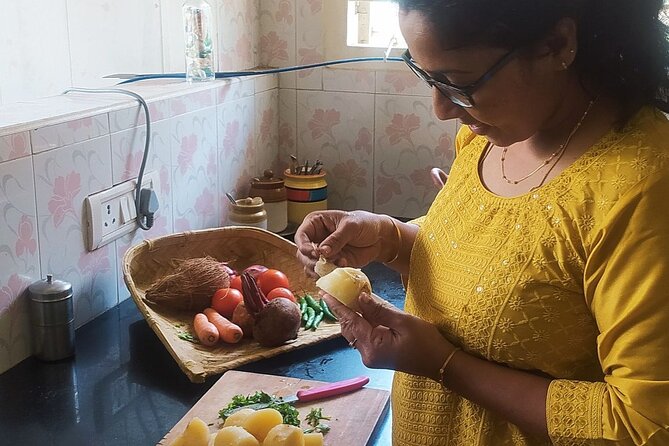
After cooking, you sit down to eat the meal you helped prepare. The food is served on banana leaves, and you eat with your hands.
This is an important part of the visit, not just a serving choice. In South India, the banana leaf meal creates a clear order and rhythm to eating, and using your hands lets you mix rice, vegetables, and sauces in the traditional way.
If that is unfamiliar, Gayathri can help you understand how to manage it. You do not need to arrive as an expert. The point is to take part respectfully and enjoy the meal without worrying about perfect technique.
Sitting on the floor is also worth considering before you book. The activity details specifically describe the meal this way, so it may not be comfortable for everyone. If you have mobility concerns, ask about the setup when arranging the visit.
The meal is vegetarian throughout. That is not a limited version of the class. It reflects Gayathri’s Tamil Brahmin home cooking, where vegetarian food is prepared for the family. If you already enjoy lentils, vegetables, chutneys, rice dishes, and spice-based cooking, this focus is a major advantage.
If you want meat or seafood, this is the wrong choice. The host only offers vegetarian food.
Same place, a different thing to cook:
- Pink City Cooking Class
★ 5.0 · 452 reviews - Five Course Cooking Class & Meal
★ 5.0 · 250 reviews - Veg and Non veg : Private Cooking Class in Delhi home (7 meal)
★ 5.0 · 226 reviews - Indian Cooking Class in an Authentic Local Home – Learn 6 Dishes
★ 5.0 · 195 reviews
Choosing between a traditional meal and South Indian breakfast
Gayathri offers a second menu option for people who would rather try classic South Indian breakfast foods. You can request dosa, sambar, medu vada, coconut chutney, and filter coffee.
Dosa is a thin pancake made from fermented batter of ground black gram and rice. Medu vada is a fritter made with black lentils. Sambar is a tangy lentil soup with vegetables, and coconut chutney provides a cool, creamy contrast.
This breakfast choice is useful if you are especially interested in foods commonly associated with South Indian mornings. It also gives you a chance to compare several textures in one meal: crisp dosa, a light but savory fritter, spoonable sambar, and chutney.
You need to state your preference when booking. Do not assume you can decide only after arriving, since the host needs to plan the ingredients and menu. If you have allergies, dietary restrictions, or particular cooking preferences, share those at the same time.
The menu may vary with the season. That is normal for a home cooking experience, but it means the class is best approached as a lesson in methods and food traditions rather than a guarantee of one exact dish.
Why the private format matters
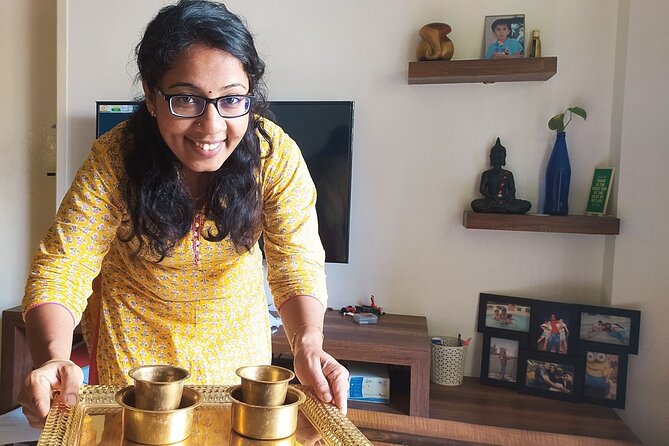
This is a 100 percent private activity, so only your group takes part. That changes the tone of the lesson.
In a large cooking class, you may spend part of the time waiting for a turn or listening to questions that do not concern you. Here, the class can focus on your interests and cooking ability. You can ask more questions about herbs, vessels, spices, or the customs behind the meal.
The private format is especially useful for families, couples, and small groups with different levels of kitchen experience. A confident cook can ask about technique, while a beginner can get more direct help.
It also makes the home visit feel more personal. Gayathri and her family enjoy meeting people from different parts of the world, and the activity is designed as an exchange as well as a lesson.
Still, private does not mean formal or luxurious. This is a local home visit, not a professional culinary school. If you want chef uniforms, a printed recipe portfolio, or a restaurant-grade kitchen, you may find the setting too simple. If you want family food and direct conversation, the simplicity is the point.
The value of $48 per person
At $48 per person, this is priced above a basic restaurant meal but includes much more than eating. You receive a private cooking lesson, personal instruction from Gayathri, a home-cooked vegetarian meal, and an introduction to local kitchen customs.
The value depends on what you want from a food activity. If your goal is simply to fill up cheaply, many Chennai meals will cost less. If you want a personal connection to South Indian food and the chance to prepare it yourself, the price is easier to justify.
The activity is also more useful than a one-time tasting if you plan to cook at home later. You learn how ingredients are handled, how a chutney is ground, and how traditional vessels are used. The dishes may change by season, but the methods can stay with you.
The strongest praise focuses on the clear, step-by-step teaching and the feeling of learning from a family elder. That is the experience’s main value. You are paying for access to Gayathri’s home knowledge, not only for the food on the leaf.
Timing, meeting point, and practical planning
The meeting point is in Ramapuram, Chennai, and the activity ends back there. Hotel pickup and drop-off are not included, so you need to arrange your own transportation to and from the home.
Because the class lasts about three hours, allow enough time around it. The cooking lesson takes about 1.5 hours, followed by the meal and the rest of the home visit. Do not schedule a major attraction immediately afterward unless you have built in extra time.
The experience is near public transportation, but the supplied details do not specify a particular bus, train, or route. Check the exact meeting instructions after booking and allow time to reach Ramapuram.
A mobile ticket is provided, and confirmation arrives at booking. Service animals are allowed. The activity is private, which can make timing and conversation easier for your own group.
You can cancel for a full refund if you do so at least 24 hours before the start time. Changes or cancellations made within 24 hours are not accepted for a refund, and the cutoff follows Chennai local time.
Who will enjoy this cooking experience most
I would recommend this class to anyone who values food as a way to understand family life and local customs. It is particularly well suited to first-time visitors who want an activity with personal contact rather than another standard sightseeing stop.
It is also a good fit if you:
- Prefer vegetarian food
- Enjoy hands-on activities
- Want to learn South Indian recipes in a home setting
- Are curious about traditional cookware
- Like slow meals and direct conversation
- Want a private class for your own group
- Would choose dosa, sambar, and filter coffee over a large restaurant breakfast
You may want to skip it if you need hotel transportation included, dislike eating with your hands, cannot sit on the floor comfortably, or want a menu that includes meat and seafood.
The experience is also not ideal if you need a fixed menu for a specific dish. Since the food can change with the season, contact the host ahead of time if a particular recipe matters to you.
Should you book Gayathri’s Chennai cooking class?
Book it if you want to cook, eat, and learn inside the traditions of one Chennai family. The combination of Gayathri’s grandmother-taught recipes, old-style vessels, medicinal herbs, stone-ground chutney, and banana-leaf meal gives the visit real character.
The $48 price is fair for a private three-hour activity that includes instruction and food, especially if you value personal teaching over a cheap meal. Just plan your own transportation to Ramapuram, confirm dietary needs in advance, and decide between the traditional vegetarian menu and the South Indian breakfast option before you arrive.
FAQ
Where does the cooking class take place?
The class takes place at Gayathri’s home in Ramapuram, Chennai, Tamil Nadu. The activity ends back at the meeting point.
How long does the experience last?
The full experience lasts approximately three hours. The hands-on cooking lesson itself lasts about 1.5 hours, followed by the meal and home visit.
What food will I cook?
You will learn to cook one main dish and one side dish. The menu can change according to the season. Dishes associated with the class include kootu, sambar, poriyal, and tomato-onion chutney.
Is the food vegetarian?
Yes. Gayathri only offers vegetarian food because her family cooks vegetarian food at home.
Can I request a South Indian breakfast?
Yes. Instead of the traditional meal, you can request dosa, sambar, medu vada, coconut chutney, and filter coffee. Tell Gayathri your preference when booking.
Is hotel pickup included?
No. Hotel pickup and drop-off are not included. You must arrange your own transportation to and from the meeting point in Ramapuram.
What is the cancellation policy?
You can cancel for a full refund up to 24 hours before the experience starts. Cancellations or changes made less than 24 hours in advance are not accepted for a refund.
Just added around India
- Private tour to learn Traditional Indian Art, craft & Cooking★ 5.0 · 4 reviews
- Chennai Super Market Tour and Cooking Class with a Fun Local★ 5.0 · 9 reviews
- Neighborhood Market Tour & South Indian Cooking Class in Chennai★ 5.0 · 7 reviews
- Traditional Chettinad Cooking Class in a Local Home near Chennai★ 4.5 · 12 reviews
- Chennai Dosa Making Class & Home-Dining Experience with Jyashree★ 5.0 · 8 reviews
- Cooking experience in Bangalore, a half day tour★ 5.0 · 5 reviews
- Discover Bangalore’s Cuisine: Private Half-Day Cooking Experience★ 5.0 · 3 reviews
- Traditional Gowda Cooking Class and Meal in a Bangalore Home★ 5.0 · 31 reviews
Vegan & Vegetarian Cooking Classes, compared.
Moroccan Cooking Class for vegetarians and vegan
Read our review →
Vegetarian Cooking Class w Local Family and transfer
Read our review →
Jaipur Market Tour & Vegetarian Rajasthani Home Cooking Class
Read our review →
Ramen & Dumpling Cooking in Tokyo with Chef/Vegan possible
Read our review →Private Cooking Class – Personalized menu with glutenfree & vegan
Read our review →