
REVIEW · BUCHAREST, ROMANIA
Cooking Class traditional food
Come hungry, leave with recipes. This private Bucharest cooking class brings you into a local kitchen, with a market visit, hands-on preparation, and a homemade meal built around two beloved Romanian dishes. I especially like the small private format, which gives you direct help from your hosts, and the chance to learn recipes you can repeat at home. The main consideration is that the advertised three-course lunch is clearly described around bulz and papanași, so you should not expect a long restaurant-style menu.
The class lasts about two and a half hours and costs $108.02 per person. I also like that the hosts add conversation about Romanian food, Bucharest, and local customs rather than treating cooking as a simple demonstration. If you are looking for a polished culinary school or a broad tour of Romanian cuisine, this may feel modest, but for a friendly home meal with local people, it offers good personal contact.
Key Points Before You Book
- Shop for seasonal ingredients: The experience includes a visit to a local market before cooking begins.
- Make two Romanian classics: You prepare bulz, a hot polenta dish with Transylvanian cheese, and papanași, a fried sweet-cheese dessert.
- Private instruction: Only your group takes part, making it easier to ask questions and get help at each stage.
- Meet local hosts: Patricia, Dan, and Lavinia are praised for their warmth, conversation, and practical tips about Romania.
- Recipes go home with you: Recipes are provided after the class, including guidance for finding suitable ingredients in the United States.
- Plan your timing: The class runs from 11:00 a.m. to 2:00 p.m. and begins and ends at Calea Rahovei 352.
What This Bucharest Cooking Class Is Really Like
This is less a formal cooking school and more a meal with local people who guide you through Romanian food. You meet at Bloc 20A, Calea Rahovei 352, in Bucharest, then spend roughly two and a half hours shopping, preparing food, talking, and eating.
The hosts are Patricia and Dan in some of the feedback, and Lavinia and Dan in other comments. That suggests the hosting team may vary, but the personal nature of the experience remains consistent. The strongest praise centers on the hosts being warm, attentive, and willing to include participants in every step.
The activity is offered in English and is private. That matters. You are not trying to hear instructions over a large group, and you can ask about ingredients, Romanian words, food traditions, or the best places to eat during the rest of your Bucharest stay.
The class also suits solo visitors. One person took the class alone and still described it as a comfortable, social experience. Couples and families with children have also enjoyed the format.
More Food and Drink Trips in the world:
- Small Group Cooking Class & Market Food Tour in Florence
★ 5.0 · 1,574 reviews - Paella Cooking Class, Wine Tasting & Central Market in Valencia
★ 5.0 · 1,150 reviews - Athens: Food Market Visit and Cooking Class with Wine
★ 4.9 · 1,087 reviews
Starting at the Market With Seasonal Ingredients
The market visit gives the class a useful beginning. Instead of treating Romanian food as a set of fixed recipes, it shows you how ingredients connect with daily life. Seasonal produce and local products help explain why these dishes taste the way they do.
The supplied information does not identify the market by name or specify exactly how long you spend there. You should think of it as part of the food experience rather than a separate market tour. The point is to shop for ingredients and start seeing Romanian cooking through local produce, cheese, and pantry staples.
One particularly memorable detail from the experience is meeting a farmer who visits once a week to cook for local people. That kind of encounter is exactly why this part can add value. You are not simply handed ingredients in a kitchen. You get a small look at how food moves from local producers to the table.
The market stop may be less important to you if you already plan to spend a lot of time shopping in Bucharest. But if you want a guided introduction to local ingredients, it gives the cooking a stronger sense of place.
Making Bulz With Polenta and Transylvanian Cheese
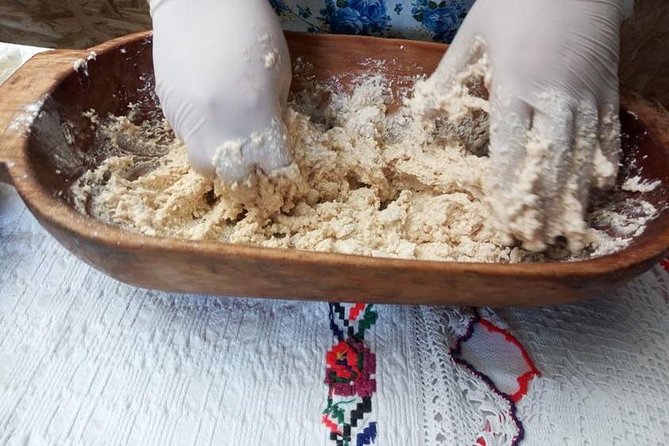
The first dish is bulz, a rustic Romanian preparation built around polenta. You make a creamy mixture from corn flour, salt, and sour cream, then combine it with authentic cheese from Transylvania and melted cheese.
This is a good dish for a hands-on class because the technique is simple enough to follow, but the texture and balance still matter. Polenta can be plain when handled badly. Sour cream gives it softness and tang, while the cheese brings salt and richness.
The dish is served hot and is described as similar to polenta. That makes it hearty rather than delicate. If you arrive hungry, bulz gives you an early taste of the meal and shows how Romanian home cooking can turn a few basic ingredients into something satisfying.
I would pay close attention to how the hosts explain the consistency. Corn flour, dairy, and heat can produce very different results depending on the proportions and timing. Since the class is private, you can ask how to adjust the dish at home if your mixture turns too thick or too loose.
Bulz is also a useful introduction to regional cooking. The Transylvanian cheese is not just a garnish. It gives the dish a connection to a particular part of Romania and adds a local touch that you are unlikely to get from a generic polenta lesson.
Frying Papanași, Romania’s Favorite Dessert
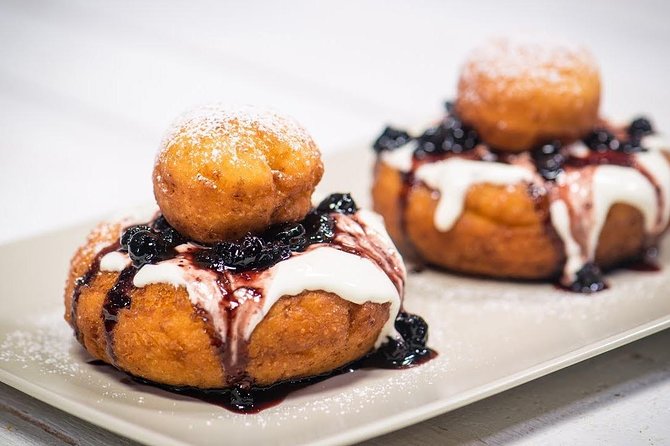
Papanași is the sweet finale, and it may be the most memorable dish for anyone with a serious dessert habit. You make a dough from sweet cheese, eggs, flour, and a little cinnamon, then fry it until golden and crisp outside.
The finished papanași is served with sour cream and strawberry, blueberry, or cherry jam. The combination is rich, sweet, creamy, and slightly tart. It is not a restrained dessert, and that is part of its appeal.
This recipe also gives you more technique to practice than the bulz. You work with a soft dough, shape it, and watch the frying process. The contrast between the crisp exterior and tender center is the key result, so you will want to notice how the hosts judge the dough and cooking time.
The dessert is widely regarded in the experience as one of Romania’s best traditional sweets. That makes it a smart choice for a short class because it gives you a dish that feels distinctly Romanian, rather than a recipe that could belong to almost any country.
If you prefer lighter desserts, papanași may feel heavy after a cheese-filled polenta dish. Come with an appetite and expect a filling meal. Several people specifically advise arriving hungry, and that is sensible advice here.
More Food Trips in the world:
- Undiscovered Charleston: Half Day Food, Wine & History Tour with Cooking Class
★ 5.0 · 948 reviews - Vietnamese Food Cooking Class in Hanoi with Market Experience
★ 5.0 · 778 reviews - Milan: Italian Cooking Class with Food and Wine
★ 4.7 · 509 reviews - Mexican Cooking Class with Food Market Visit in Mexico City
★ 5.0 · 506 reviews
A Meal That Feels More Personal Than Formal
After the cooking, you sit down and eat what you made. This is where the class shifts from instruction to social time. The hosts may also serve other Romanian foods, bread, and a local drink, though the exact extras can vary.
Dan is described as contributing conversation about Bucharest and Romanian history even though he is not the main cook. That balance is useful. Lavinia or Patricia handles the kitchen guidance, while Dan adds context and conversation around the meal.
The tone is informal. You are not expected to sit quietly and watch a chef perform. You help prepare the dishes, ask questions, and eat together. One of the strongest details is that the experience can feel like having lunch with friends rather than attending a standard activity.
That personal approach is valuable if you want more than food alone. You can ask for suggestions for the rest of your Bucharest visit, practice Romanian, or talk about local life. One person specifically used the opportunity to practice Romanian, while also noting that the hosts speak fluent English.
Still, you should set the right expectations. This is not a full cultural lecture, a professional certification course, or a large food tour. It is a friendly home-based cooking session with local conversation built around lunch.
Recipes You Can Make After Returning Home
A cooking class earns its price more easily when the food does not end at the front door. Recipes are emailed afterward, and the instructions can include alternatives for ingredients available in the United States.
That is a practical touch. Romanian dairy products and regional cheese may be difficult to find outside Romania, so substitutions matter. You can enjoy the dish in Bucharest, then try to recreate it at home without relying on memory.
I would take notes during the class anyway. Pay attention to texture, frying time, and the way the hosts handle the dough and polenta. Written recipes tell you what to use, but the hands-on lesson shows you what the mixture should look and feel like.
This makes the activity a good choice for home cooks, food-focused couples, and families who want a souvenir that is more useful than a photograph. You leave with a meal in your memory and recipes that can become part of your own kitchen routine.
Price, Timing, and Practical Value
At $108.02 per person, this is not a cheap lunch. The value depends on what you want from the day.
If you measure the price against the food alone, it may seem high for polenta and a fried cheese dessert. You are paying for more than ingredients, though. The cost includes a private activity, market shopping, instruction, a cooked meal, local conversation, and recipes to take home.
The private setup is the biggest value point. Only your group participates, so the hosts can adjust the pace and respond to questions. That is especially helpful for families, solo participants, or anyone with food allergies. The hosts have accommodated allergies thoughtfully, but you should still communicate any needs before the class.
The class runs from 11:00 a.m. to 2:00 p.m. This works well as a late breakfast or early lunch, followed by an afternoon of sightseeing. It ends back at the starting point, so you do not need to arrange a separate return transfer.
The meeting address is Bloc 20A, Calea Rahovei 352, Bucharest 052034, Romania. It is near public transportation, but the information does not specify which route or stop to use. Check your route before leaving and allow time to find the building.
The experience is often reserved about 33 days ahead. That does not guarantee it will sell out, but it is a useful hint if your Bucharest dates are fixed. Booking early also gives you more room to handle the cancellation deadline.
You can cancel for a full refund up to 24 hours before the start time. Changes made inside that window are not accepted, and a late cancellation is not refunded. The activity requires good weather, so a weather cancellation brings either another date or a full refund.
Who Will Enjoy This Most
I would choose this class if you want direct contact with Romanian hosts and a meal that you help create. It is especially well suited to:
- Solo visitors who want a social activity without joining a large group
- Couples seeking a relaxed food experience
- Families with children who enjoy hands-on tasks
- Home cooks who want recipes to recreate later
- People curious about Romanian food beyond restaurant menus
- Visitors who appreciate conversation and local tips as much as cooking
It may not suit you if you want a professional chef-led course with several advanced dishes. The menu is focused, and the pace appears friendly rather than intense. Also, although the experience is presented as a three-course lunch, the clearly named dishes are bulz and papanași. Ask ahead if the number of dishes matters to you.
The class may also be less appealing if you dislike dairy, fried food, or rich meals. Cheese, sour cream, and jam play a major role in both the savory and sweet dishes.
Final Verdict: Should You Book It?
Book this experience if you want a personal Romanian food lesson, a home-style meal, and a chance to talk with local people. The strongest reasons are the private format, friendly hosts, market connection, allergy awareness, and recipes that remain useful after your trip.
I would not book it solely for a large menu or a formal culinary curriculum. The food focus is narrow, and the price is substantial for a two-and-a-half-hour activity. But if your goal is to understand two classic Romanian dishes while sharing lunch in a relaxed setting, the cost is reasonable for the personal attention.
Bring an appetite, arrive ready to participate, and keep the rest of your afternoon free. This is the kind of Bucharest activity that works best when you want conversation at the table, not just another stop on a sightseeing checklist.
FAQ
Where does the cooking class begin?
It begins at Bloc 20A, Calea Rahovei 352, București 052034, Romania.
How long does the experience last?
The class lasts approximately two hours and 30 minutes, from 11:00 a.m. to 2:00 p.m.
Is the cooking class private?
Yes. Only your group participates in the activity.
Which dishes will I prepare?
You will prepare bulz, a hot polenta dish made with cheese and sour cream, and papanași, a fried sweet-cheese dessert served with sour cream and jam.
Is the class offered in English?
Yes. The experience is offered in English.
Can I cancel for a full refund?
Yes. You can cancel at least 24 hours before the start time for a full refund. Cancellations and changes made less than 24 hours before the start time are not accepted or refunded.
Just added around the world
- Aroidee’s Farm-Fresh Thai Cooking Experience★ 5.0 · 8 reviews
- Signature Thai Cooking Course★ 5.0 · 79 reviews
- Private Half-Day Thai Cooking Class in Chiang Mai★ 5.0 · 4 reviews
- Half Day Guided Thai Cooking Class in Chiang Mai★ 5.0 · 13 reviews
- Online Thai and Akha Cooking Class★ 5.0 · 70 reviews
- Private Virtual Thai Cooking Class★ 5.0 · 9 reviews
- Northern Thai Cooking Class in Chiang Mai in a Countryside Home★ 5.0 · 2 reviews
- 5 Hour Morning Thai Cooking Course★ 5.0 · 31 reviews
Cooking Classes, compared.

Half-Day Thai Cooking Class at Organic Farm in Chiang Mai
Read our review →

3 in 1 Cooking Class near Navona: Fettuccine, Ravioli & Tiramisu
Read our review →
Pasta & Tiramisu Cooking Class with Unlimited Wine
Read our review →
Hanoi Cooking Class: Culture, Local Market & Meaning CSR Impact
Read our review →
5 Traditional Dishes Hanoi Cooking Class with Market Trip
Read our review →
Cooking Class and Lunch at a Tuscan Farmhouse with Local Market Tour from Florence
Read our review →
Cooking Class, Market & Thai Herbs Garden Tour
Read our review →Lists this class appears in