
REVIEW · BANJUL, GAMBIA
Private Full-Day Gambian Home Cooking Experience in Banjul
Cook where daily life happens. This private Banjul-area experience takes you beyond hotel dining and into a real Gambian compound, where you shop for ingredients, dress in local clothing, prepare drinks, and share the meal you make. I like the market visit in Serrekunda and the chance to meet a Gambian family in their own home.
I also like the hands-on menu, especially baobab juice and wonjo, a hibiscus drink. You are not simply watching a cooking demonstration. You pound, stir, shop, and eat. The main consideration is that this is a full, active day built around food and conversation, not a quick sightseeing stop.
Key points
- Serrekunda market comes first: You have about 45 minutes to shop for the ingredients used later in the meal.
- A real family compound: Cooking takes place in a Gambian home, giving the day a personal setting rather than a restaurant kitchen.
- Two local drinks: You prepare baobab juice and wonjo, a hibiscus-based mix.
- Lunch is part of the lesson: The meal includes food you helped buy and prepare.
- Door-to-door transport: Hotel pickup and drop-off are included, with transport by Land Rover.
- Private from start to finish: Only your group participates, with a minimum booking of two people.
Why this cooking day feels different
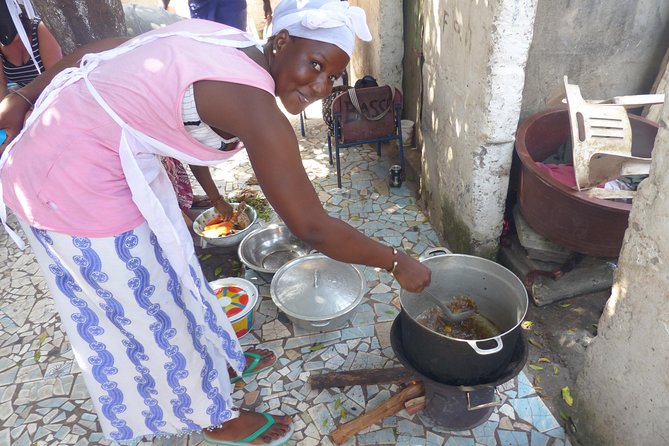
Many food tours keep you at a table while somebody else does the work. This one puts you in the chain from shopping to lunch. You begin at a local market, carry those ingredients into a Gambian home, and then help turn them into a shared meal.
That order matters. Shopping gives you a reason to look closely at the food around you. Cooking gives you a reason to ask questions. Eating gives the day a natural finish. You are not collecting a string of disconnected stops. You are following one meal from market stall to family table.
The setting is also important. The cooking class takes place in a real Gambian compound, not a hotel classroom designed for tourists. That means the experience is tied to an ordinary home and a local family. If your goal is to get closer to daily life in The Gambia, this is the strongest part of the day.
You should still keep your expectations practical. The supplied details do not promise a polished culinary school, a long list of dishes, or a formal recipe book. The value is in participating, listening, and eating together. This is a cultural food experience first and a technical cooking lesson second.
More Home Cooking Classes in the world:
- Khmer Cooking Class at a Local’s Home in Krong Siem Reap
★ 5.0 · 2,731 reviews - Local Home Korean Cooking Class & Market Adventure in Seoul
★ 5.0 · 1,024 reviews - Marrakech: Moroccan Cooking Class with a Local Family
★ 4.9 · 668 reviews
A 9:00 a.m. pickup keeps the day simple
The day begins at 9:00 a.m., with hotel pickup and drop-off included. You do not need to arrange separate taxis to a market, a cooking site, and your hotel. That saves time and removes one of the harder parts of getting around an unfamiliar city.
Transport is provided by Land Rover, and the booking includes a driver or guide, live commentary, and a local guide. The private format means the day is shaped around your own group rather than a busload of strangers. That can make it easier to ask questions or slow down when something catches your eye.
The exact length is listed as approximately one day. Plan your schedule around a full-day commitment rather than trying to squeeze in another major tour at the same time. Cooking, shopping, conversation, and lunch all take time, and rushing would weaken the experience.
The tour has a minimum of two people per booking. That makes it a natural choice for couples, friends, or family members traveling together. A child rate is available only when a child shares with two paying adults.
Serrekunda market: shopping with a purpose
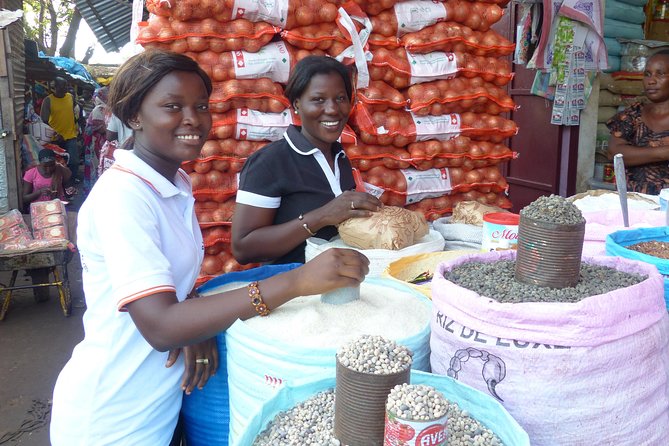
The first listed stop is Serrekunda, where you spend about 45 minutes buying the ingredients for the meal. Admission is free, and the market visit is not treated as a separate sightseeing ticket. Its purpose is practical: you are gathering what you will later cook and eat.
I like this approach because it gives the market a clear role. Instead of simply walking through and taking pictures, you have a shopping list shaped by the meal ahead. You can see food as an ingredient rather than as a display.
Your guide leads the purchase of the ingredients. That matters, since local shopping can involve unfamiliar names, quantities, and choices. You are not expected to arrive with culinary knowledge. The point is to take part with guidance.
Forty-five minutes is enough for a focused visit, but it is not an open-ended market exploration. If you want long browsing time, this may feel brief. The market is one stage of a larger day, not the entire activity.
This is also the point where you should raise food allergies or dietary needs. Any allergies need to be shared before shopping so the ingredients can be selected safely. A vegetarian option is available, but you must request it when booking.
Traditional dress and a welcome inside the compound
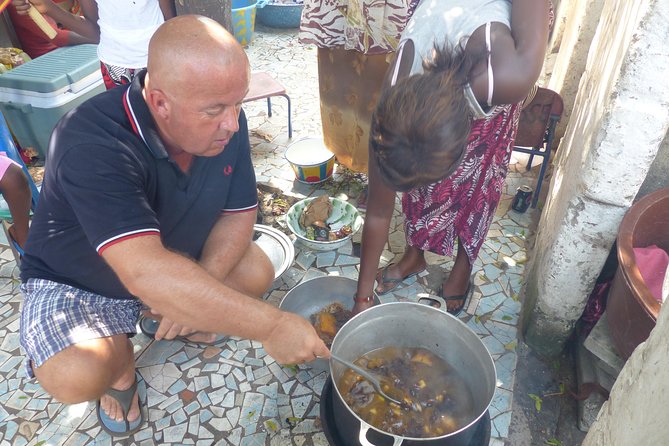
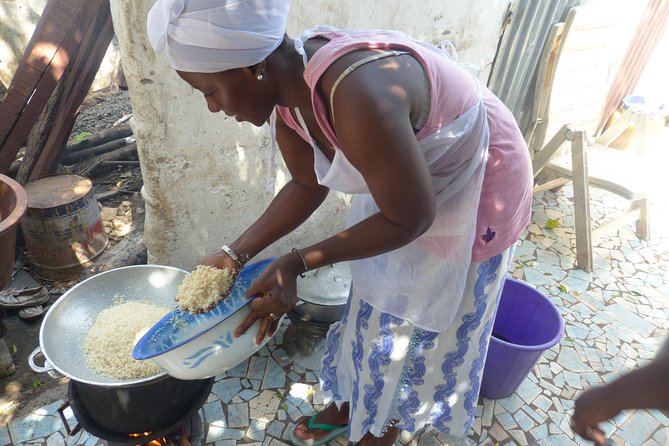
After the market, you head to the family compound for the cooking portion of the day. One of the unusual touches is the chance to put on traditional Gambian dress. It adds a visual and social element to the activity without requiring a separate cultural show.
The clothing is part of the welcome and the setting. You are entering a home environment and taking part in a family-centered meal, so dressing for the occasion can make the day feel more connected to the people hosting you.
The compound is also where the experience moves from observation to participation. You get to know the family and community while you pound and stir. Those simple actions are useful because they create a natural way to talk. You do not have to sit across from someone and force a conversation. Your hands are busy, and the meal gives you something to share.
The available information does not specify the family’s names, the exact clothing provided, or the layout of the compound. I would treat this as an informal home visit rather than a staged performance. Go with respect, follow the household’s lead, and remember that you are being welcomed into a private setting.
More Private Cooking Classes in the world:
- PRIVATE Authentic Balinese Cooking Class in Ubud at Putu’s Home
★ 5.0 · 644 reviews - Private Market Tour & Cooking Class in Puerto Vallarta with Manu
★ 5.0 · 241 reviews - Private Cooking Class with 5 dishes of your choice
★ 5.0 · 227 reviews - Veg and Non veg : Private Cooking Class in Delhi home (7 meal)
★ 5.0 · 226 reviews
Baobab juice and wonjo bring the lesson to life
The drink-making portion gives you two clear tastes of local food culture. You prepare baobab juice and wonjo, a hibiscus mix. Both are included with the experience, along with bottled water and other beverages.
Baobab is especially interesting because it connects the drink to a familiar African tree and a local ingredient. Wonjo adds a second flavor and color to the meal. Preparing both drinks helps show that Gambian cooking is not only about the main dish. A meal also includes refreshing drinks made from ingredients with their own local identity.
This is a good part of the day for anyone who enjoys learning by doing. You are not just told what the drinks are called. You help make them, then drink them with lunch. That creates a memory you can carry home more easily than a list of food names.
Do not expect alcohol to be supplied. Alcoholic drinks are excluded, while lunch, beverages, and bottled water are included. If you want anything alcoholic, you would need to handle that separately, although the provided details do not specify availability or permission at the compound.
Cooking with a family, then eating what you made
The main event is the meal. You help prepare an authentic Gambian lunch using ingredients purchased earlier at the market. The meal is included in the price, so you do not pay again for the food you cook.
I like the simple logic of this format. The market gives you the raw materials, the compound gives you the kitchen and the people, and lunch gives you the reward. There is a clear sense of progress throughout the day.
The cooking work includes pounding and stirring, according to the experience details. Those tasks may sound basic, but that is part of their value. You are taking part in the physical work of preparation instead of standing at a distance while a host performs for you.
The exact dishes are not specified, so I would not book this expecting a guaranteed menu. That is a minor drawback for anyone with a particular dish in mind. It is also one reason to contact the provider before the day if dietary needs matter to you. Vegetarian requests are accepted, and allergies must be given before the shopping begins.
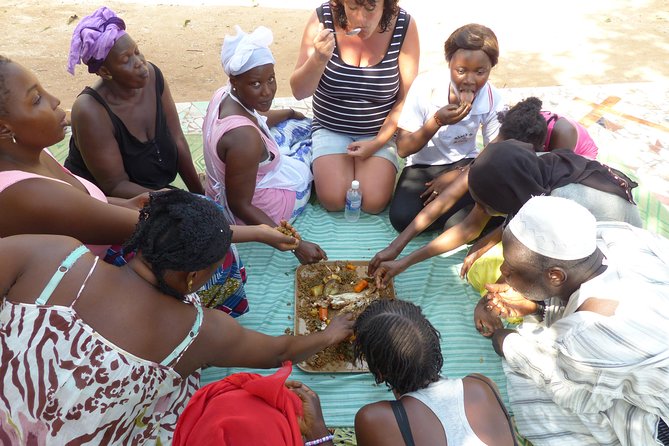
Lunch is likely to be the most social moment. You have spent the morning buying and preparing food, and then you sit down to eat it together. For me, that shared meal is the best measure of the tour’s value. You are paying for access to an exchange, not just for a plate of food.
What the private format adds
This is a private tour, so only your group takes part. That makes a real difference in a home setting. You are not trying to hear a guide over a large crowd, and the family does not have to repeat the same activity for several separate groups at once.
A private format can also help if you have a specific interest in food, family life, or local customs. You can ask more questions and spend more time on the parts that matter to you. The tradeoff is that the price is listed per person, and the minimum booking is two people.
The experience costs $105.94 per person. That is more than a basic market visit or a standard restaurant lunch, but the price covers much more: private transportation, hotel pickup and drop-off, a driver or guide, a local guide, the market visit, the cooking session, drinks, bottled water, and lunch.
The best value comes if you would otherwise pay separately for transport and a food activity. It is also a useful choice if you want one organized day that combines culture, food, and local contact. If you only want to sample Gambian dishes, a restaurant meal will cost less and take less time.
This experience is booked an average of 56 days ahead, so I would not leave it until the last minute if it is central to your plans. That booking pattern suggests you should reserve early, especially if you have a fixed arrival date or need a vegetarian menu.
Who should book this Gambian food experience
I would recommend this day to you if you enjoy active cultural experiences. You will get more from it if you like asking questions, trying unfamiliar foods, and taking part in preparation. You do not need to be a cook. Curiosity is more useful than skill.
It is also well suited to couples and small private groups who want a personal activity. Families may appreciate the child rate, but the day requires a child to share with two paying adults. Parents should decide if their children will enjoy market shopping, cooking, and a long meal-centered outing.
This is a strong pick for cruise passengers or anyone staying in Banjul who wants a structured way to meet local people. Door-to-door transport removes the need to organize the route yourself. The Land Rover adds a practical, tour-based feel rather than a luxury transfer.
I would be less enthusiastic if your priority is a fast schedule, a detailed cooking syllabus, or a particular promised dish. The experience is designed around a family, a market, and a shared meal. Its strength is human contact, not culinary precision.
Practical details before you reserve
Confirmation is provided at booking, and most people can participate. The experience is private, with only your group taking part.
Tell the provider about vegetarian needs when you book. Share all food allergies before shopping for ingredients. These are not small details, since the market purchases shape the meal you will later eat.
The start time is 9:00 a.m. Hotel pickup and drop-off are included, but you should make sure your accommodation details are correct when arranging the booking. The supplied information does not name a separate meeting point beyond the stated start time and included pickup.
Free cancellation is available when you cancel at least 24 hours before the local start time. Cancellations or changes made within 24 hours are not accepted for a refund. That policy is reasonable for a private experience involving transport, food purchases, and a household preparing to host you, but leave yourself a clear margin if your schedule may change.
The activity has a 4.9 rating from 14 ratings and a 100 percent recommendation rate. Those numbers point to a very strong response, though the sample is small. The most praised feature is the feeling of getting a true look at local life rather than remaining inside a hotel or standard sightseeing route.
Should you book it?
Book this private Gambian home cooking experience if you want your day in Banjul to revolve around people, food, and participation. The Serrekunda shopping trip, traditional dress, baobab juice, wonjo, and shared lunch create a clear sense of place. The included transport also makes it a practical choice.
Skip it if you want a short activity, a guaranteed menu, or a formal cooking course with detailed recipes. For everyone else, the price is fair for a private full-day experience that includes transport, guides, drinks, lunch, and direct contact with a Gambian family. Reserve ahead, disclose dietary needs early, and arrive ready to help rather than simply watch.
FAQ
Where does the private cooking experience take place?
The experience is based in Banjul, with cooking conducted in a real Gambian compound. The itinerary also includes a shopping stop in Serrekunda.
What time does the experience start?
The start time is 9:00 a.m.
Is hotel pickup included?
Yes. Hotel pickup and drop-off are included, along with private transportation by Land Rover.
How long does the experience last?
It lasts approximately one day. You should plan for a full-day activity.
What happens at Serrekunda market?
You are guided around the market for about 45 minutes while purchasing ingredients for the cooking session. Admission is free.
What drinks will I make?
You will make baobab juice and wonjo, a hibiscus mix. Beverages and bottled water are included.
Is lunch included?
Yes. Lunch is included, and it is prepared with ingredients purchased at the market.
Is a vegetarian option available?
Yes. A vegetarian option is available, but you should request it when booking. Food allergies must be reported before shopping for ingredients.
How many people can take part?
This is a private tour, so only your group participates. A minimum of two people per booking is required.
More Full-Day Experiences in the world
- Full Day Thai Cooking at Farm (Chiang Mai)
★ 5.0 · 1,127 reviews - Full-Day Jeep Safari Tour with Cooking Lesson
★ 5.0 · 284 reviews - Paris: Full-Day Cooking Class with 3-Course Lunch
★ 4.9 · 135 reviews - Paris: Full-Day Cooking Class, Market Tour and Lunch
★ 4.9 · 113 reviews
Just added around the world
- Aroidee’s Farm-Fresh Thai Cooking Experience★ 5.0 · 8 reviews
- Signature Thai Cooking Course★ 5.0 · 79 reviews
- Private Half-Day Thai Cooking Class in Chiang Mai★ 5.0 · 4 reviews
- Half Day Guided Thai Cooking Class in Chiang Mai★ 5.0 · 13 reviews
- Online Thai and Akha Cooking Class★ 5.0 · 70 reviews
- Private Virtual Thai Cooking Class★ 5.0 · 9 reviews
- Northern Thai Cooking Class in Chiang Mai in a Countryside Home★ 5.0 · 2 reviews
- 5 Hour Morning Thai Cooking Course★ 5.0 · 31 reviews
Home Cooking Classes, compared.
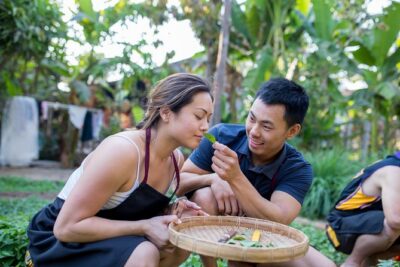
Khmer Cooking Class at a Local’s Home in Krong Siem Reap
Read our review →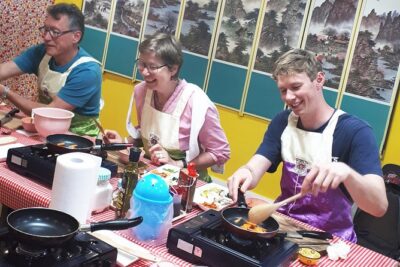
Local Home Korean Cooking Class & Market Adventure in Seoul
Read our review →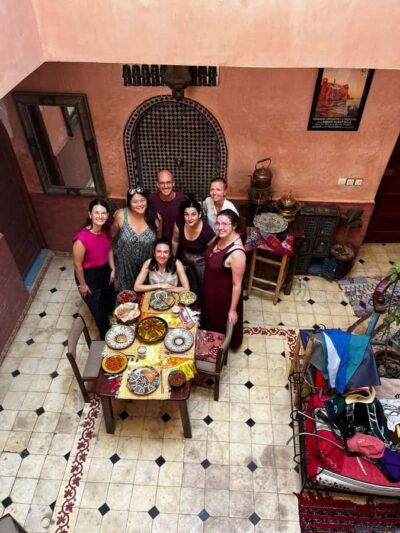
Mexican Cooking from Scratch in a Local Home in Tulum
Read our review →
Pastamama, Home Cooking Classes at Grace’s Home
Read our review →
Traditional Cooking Class & meal with Local Family
Read our review →
Lists this class appears in