

REVIEW · AIX-EN-PROVENCE, FRANCE
Aix en Provence Small group Croissant Baking Class with a chef
Butter, dough, and a very good afternoon. This three-hour workshop puts you in a professional kitchen just two minutes from Aix-en-Provence’s main square, where a local chef guides you through croissants, pain au chocolat, and pain au raisin. I especially like the small maximum group of eight, which gives you a better chance to get help with tricky dough and shaping. I also like that you eat the finished pastries at the end, rather than simply watching a demonstration.
The main thing to consider is the price: $127.36 per person is a serious sum for a baking class. You are paying for a three-hour, hands-on session, drinks, equipment, instruction, and recipes, but this is not a quick pastry lesson squeezed between sightseeing stops. Also, laminated dough takes practice, so your first home attempt may not look exactly like the chef’s.
Key points to know before booking
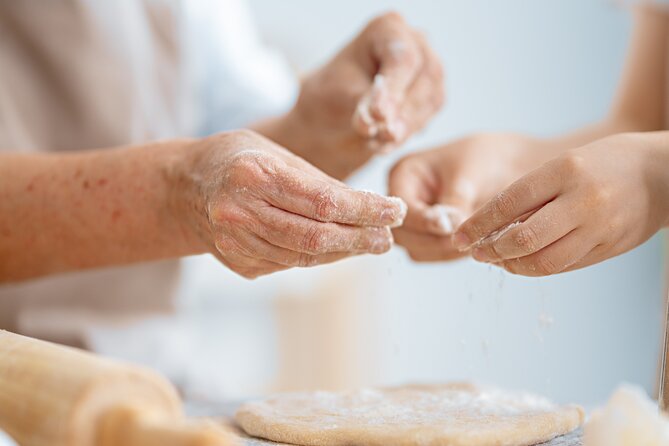
- Work in a professional kitchen: You use an equipped studio with an apron and utensils supplied.
- Learn three French pastries: The class covers croissants, pain au chocolat, and pain au raisin.
- Keep the group small: The maximum is eight participants, allowing more personal help.
- Meet at 2:00 pm: The workshop begins at 16 Rue Constantin in central Aix-en-Provence.
- Taste what you make: Hot and cold drinks are included, followed by a pastry tasting.
- Take the lesson home: Each participant receives an illustrated recipe booklet.
Starting at 16 Rue Constantin in central Aix
The workshop begins at 2:00 pm at 16 Rue Constantin, in the historic center of Aix-en-Provence. This is a useful location for a sightseeing day because it is only about two minutes from the main square, cafes, and restaurants. You can spend the morning exploring the old town, have lunch nearby, and arrive without needing a long taxi ride or a separate excursion.
The activity ends back at the same meeting point. It is also near public transportation, which helps if you are staying outside the center. You receive confirmation at booking, and the experience is offered in English, so you do not need to speak French to follow the instructions.
Allow a little breathing room before the start time. Baking is easier when you are not rushing in from another appointment with a map in one hand and a melting ice cream in the other. The stated start time is 2:00 pm, and the full session lasts about three hours, so plan on finishing around 5:00 pm.
More Baking Classes in France
- Paris Croissant Small-Group Baking Class with a Chef
★ 5.0 · 910 reviews - Paris: French Croissant Baking Class with a Chef
★ 4.9 · 712 reviews - Paris Macarons Small-Group Baking Class with a Chef
★ 5.0 · 316 reviews
Inside the professional kitchen
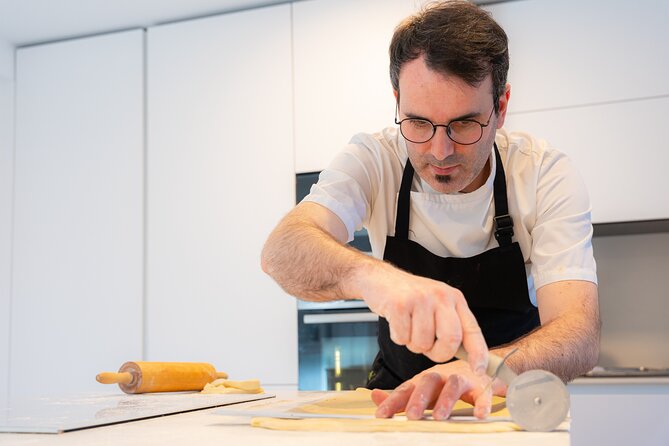
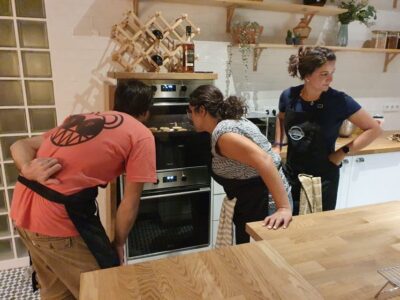
You step into a fully equipped kitchen studio and meet the local chef and the rest of your group. An apron and utensils are provided, so you do not need to bring baking equipment with you. The clean, attractive, well-organized setting matters here because laminated pastry can quickly become a flour-covered mess.
The room is designed for participation rather than passive watching. You make and knead the dough, shape the pastries, and take part in the baking process. That makes the class useful for two types of people: confident home bakers who want to improve their technique, and beginners who want a friendly introduction to viennoiserie.
The maximum group size is eight. That is small enough for the chef to watch what your hands are doing and correct problems before they ruin the dough. One of the strongest features of this class is the chance to ask questions as you work. Cécile and Gaëtane have been praised for being patient and welcoming, with enough humor to keep the session from feeling like a technical lecture.
You should still expect some uneven results. Everyone works at a different speed, and pastry dough can be fussy. The point is not to produce eight identical bakery-window pastries. The point is to understand how the dough behaves and leave with a better sense of what to do at home.
Kneading dough and learning the butter work
The class begins with dough preparation and kneading. This is not the glamorous part, but it is where the final texture begins. You follow the chef’s instructions step by step, learning how to bring the ingredients together before moving on to the more delicate shaping work.
Croissant dough needs care. Too much force, poor timing, or uneven handling can make the finished pastry dense rather than light and flaky. A recipe can tell you quantities and oven temperatures, but it cannot easily explain how the dough should feel under your hands. That is where direct instruction is valuable.
The butter stage is another reason to take a class instead of relying only on a cookbook. The dough must be handled in a way that creates layers, and the group receives practical guidance that is difficult to communicate in a printed recipe. The instructor can show you what to do when the dough feels too soft, too firm, or hard to shape.
One amusing tip comes from the class atmosphere itself. When a participant mentioned seeing butter grated for lamination, the chef gave a joking response about the British not making croissants. That kind of dry humor seems to be part of the appeal. You get useful pastry advice without the session becoming stiff or overly formal.
Shaping three French pastry favorites
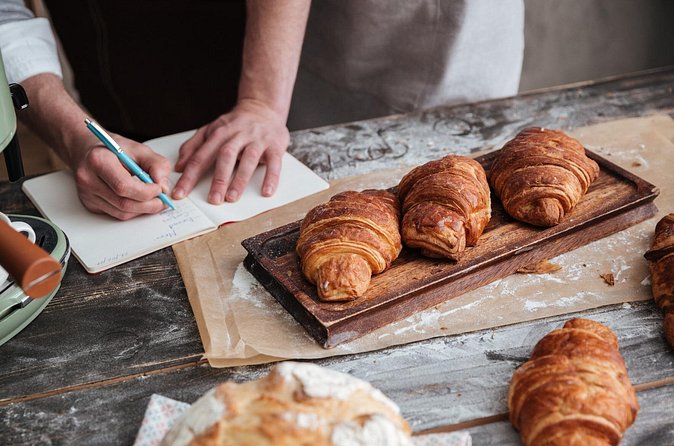
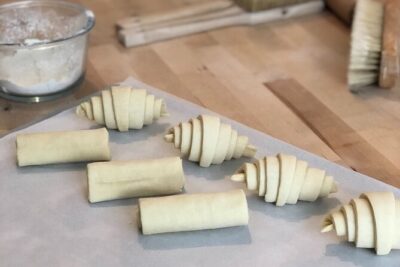
Once the dough is ready, you move to shaping. The classic croissant comes first, giving you a chance to work on the familiar crescent form and understand how the dough should be rolled and handled.
Then you try pain au chocolat. This is a good comparison because its shape is more compact, but it still depends on careful layering and even handling. For many people, this may be the pastry they most want to recreate at home. The combination of crisp layers and chocolate makes it an easy favorite, and learning it alongside the croissant gives you more value from the same dough work.
The session also includes pain au raisin, adding a third French pastry to the lesson. Each shape calls for a slightly different approach, so you are not repeating the same task three times. That variety keeps the afternoon active and gives you more than one technique to practice later.
The chef provides step-by-step instructions throughout. This is especially useful if you bake rarely. You do not need to arrive with advanced skills, and the class has worked well for people with no prior experience as well as people who already bake. If you are already comfortable with pastry, you may find the pace gentler than a professional course, but the small group allows you to ask more detailed questions.
Same place, a different thing to cook:
- Paris Cooking Class and Lunch with Wine plus Market Visit Option
★ 5.0 · 1,024 reviews - Paris Cooking Class: Learn How to Make Macarons
★ 5.0 · 634 reviews - Paris: French Macaron Culinary Class with a Chef
★ 4.9 · 591 reviews - Paris Evening Cooking Class French Dinner and Market Visit Option
★ 5.0 · 430 reviews
Baking, drinks, and the reward at the end
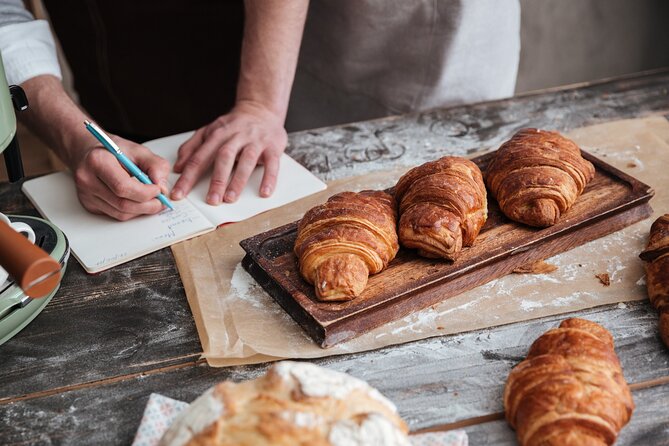
While the pastries bake, you can enjoy complimentary hot and cold drinks. This is a small detail, but it makes the three-hour format more comfortable. You are not standing at a counter waiting for an oven timer with nothing to do.
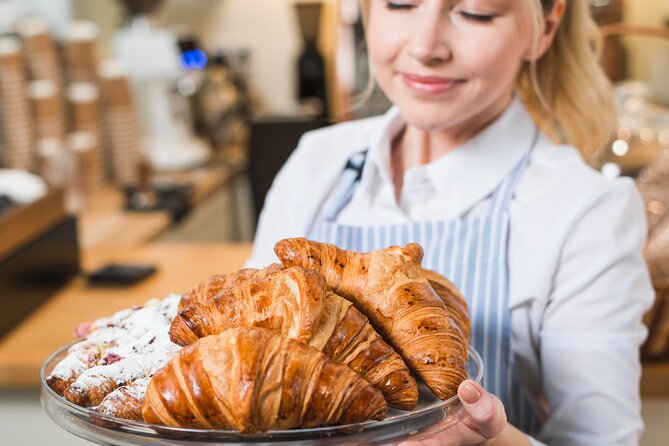
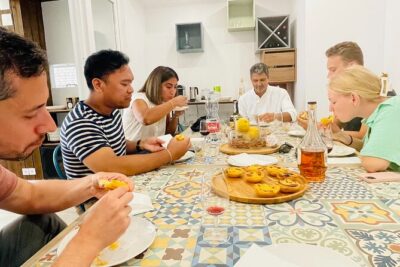
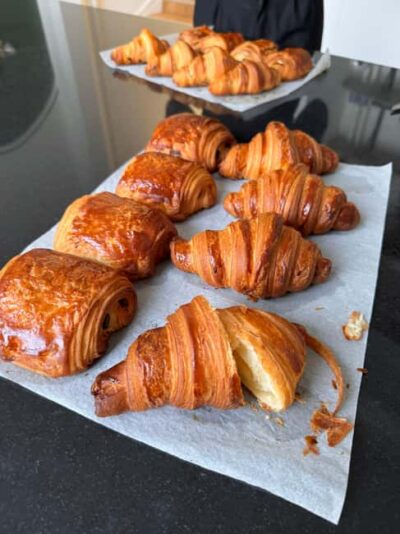
The best part comes when the pastries leave the oven. You sit down for a tasting of your creations, including the croissants and other pastries you made during the class. This gives the lesson a clear payoff. You can inspect the color, texture, layers, and flavor while the process is still fresh in your mind.
Some participants have left with several pastries to enjoy later, including croissants and pain au chocolat for breakfast. The stated experience promises a tasting, so you should think of eating your work in the kitchen as the guaranteed reward. Any extra pastries to take away may depend on what you make and how the session is organized.
This tasting also gives you a useful reality check. A pastry can look attractive on the outside but still be underbaked or too dense inside. Sampling the result helps you connect the technique to the finished product. You can ask the chef what went right and what you should change next time.
What the $127.36 price really includes

At $127.36 per person, this class is not cheap. A croissant and coffee from a bakery will cost far less, and you should not book this simply to save money on breakfast.
The price makes more sense if you value the full activity. You receive about three hours of instruction, use a professional kitchen, get an apron and utensils, work with a local chef, enjoy hot and cold drinks, taste the pastries, and take home an illustrated recipe booklet. The small maximum group also matters because personalized help is part of what you are paying for.
You are buying a skill-based experience rather than a food sample. The recipe booklet helps you repeat the process, though it cannot replace the chef’s hands-on corrections. If you have been nervous about trying laminated dough, that personal support may be worth more to you than the pastries alone.
Still, be realistic about the value. One class will not turn you into a French pastry professional. Croissant dough requires patience, and results at home may vary. The class is best value for someone who wants a memorable activity, enjoys cooking, and will actually use the recipes afterward.
Who will enjoy this Aix afternoon
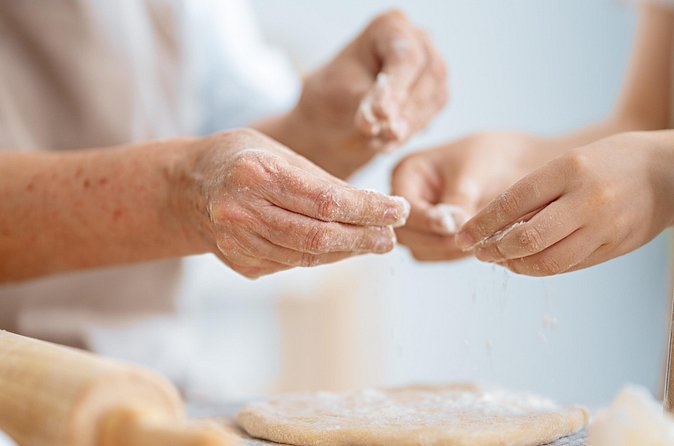
I would recommend this class to couples, friends, solo participants, and families who enjoy food-based activities. The group is intimate enough that a solo participant should not feel lost, while a pair or small family can share the work and the tasting.
It also suits mixed skill levels. A beginner can follow the chef’s instructions without needing prior baking experience. Someone who already bakes can ask about lamination, shaping, and practical ways to improve.
The session may not suit you if you want a fast, polished demonstration with little effort. You will be working with dough, following instructions, and waiting for the baking process. It is also less suitable if your schedule is packed, since the three-hour duration takes up much of the afternoon.
The location makes it a smart choice for a day based in central Aix. You can combine it with the old town, nearby cafes, and the main square rather than treating it as a separate half-day transport project.
Booking details and cancellation rules
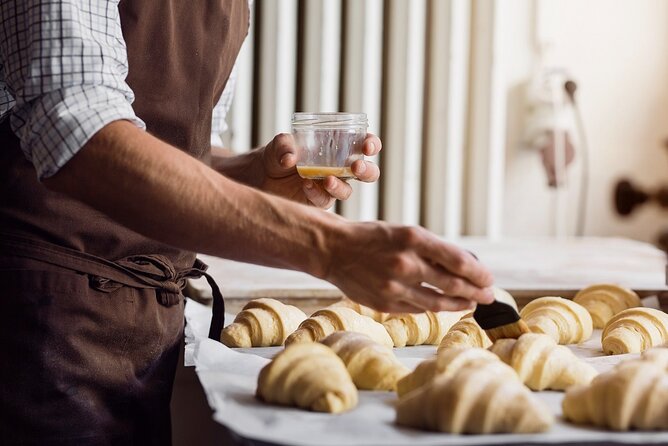
The experience is offered in English and uses a mobile ticket. The group maximum is eight participants, although the general tour description refers to an intimate small-group format. The stated meeting point is 16 Rue Constantin, 13100 Aix-en-Provence, France.
Free cancellation is available if you cancel at least 24 hours before the 2:00 pm start time. Changes or cancellations made less than 24 hours before the experience are not refunded or accepted. Cutoff times use local time.
The class requires a minimum number of participants. If that minimum is not reached and the experience is canceled, you can receive a full refund or choose another date or experience. Service animals are allowed.
Should you book this croissant class?
Book it if you want more than a bakery stop and like the idea of learning a practical French skill in a small group. The strongest reasons are the personal instruction, professional kitchen, friendly teaching style, and chance to taste the results the same afternoon.
At $127.36, it is an experience purchase, not a bargain meal. I would choose it for a food-focused afternoon in Aix, especially if you plan to use the illustrated recipes after returning home. If your main goal is simply to eat an excellent croissant, spend a few euros at a local bakery instead. If you want to understand how that croissant is made, ask questions, handle the dough, and leave with good memories and possibly pastries for breakfast, this class earns its place in your itinerary.
FAQ
Where does the croissant class begin?
The class begins at 16 Rue Constantin, 13100 Aix-en-Provence, France.
What time does the workshop start?
The workshop starts at 2:00 pm.
How long does the experience last?
The class lasts approximately three hours.
What pastries will I learn to make?
You will learn to make croissants, pain au chocolat, and pain au raisin.
Is the class offered in English?
Yes. The experience is offered in English.
How many people can join the class?
The maximum group size is eight participants.
Are drinks included?
Yes. Complimentary hot and cold drinks are provided during the workshop.
Can I cancel for a full refund?
Yes. You can cancel at least 24 hours before the start time for a full refund. Cancellations made less than 24 hours before the start time are not refunded.
Just added around France
- Six day French Cooking Course in Brittany★ 5.0 · 30 reviews
- Plant-based French Cooking Class in Historic Bordeaux Apartment★ 5.0 · 9 reviews
- Private cooking lesson – Canelés in 3 gourmet recipes★ 3.0 · 2 reviews
- Cooking Classes in Provence at La Belugue★ 5.0 · 4 reviews
- Cooking lessons★ 5.0 · 41 reviews
- Cooking workshop with an exceptional chef in Avignon★ 4.5 · 88 reviews
- Mediterranean Cooking Class in the heart of Aix-en-Provence★ 5.0 · 6 reviews
- Paris: Millefeuille baking class with a chef★ 5.0 · 5 reviews
Baking & Bread Classes, compared.
Paris Croissant Small-Group Baking Class with a Chef
Read our review →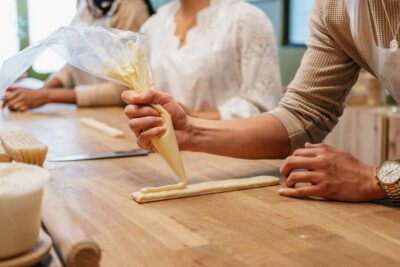
Paris Macarons Small-Group Baking Class with a Chef
Read our review →
Lists this class appears in