

REVIEW · SOUTH OF FRANCE, FRANCE
Aix-en-Provence: Croissant Baking Class
Butter, flour, and a little patience make magic. This three-hour croissant class in central Aix-en-Provence gives you hands-on practice with a local pastry chef, from dough to golden pastries. I like the small group of no more than eight people, and I like that you make both croissants and pain au chocolat rather than simply watching a demonstration. The main catch is that this is an express class, so it skips the full proving time used in a traditional pastry schedule.
You meet at Ma Cuisine on quiet Rue Constantin, just minutes from Aix’s main squares, cafés, and restaurants. The chef teaches in English or French, coffee and tea are included, and you leave with a recipe and technical sheet. It is a friendly, practical souvenir of Provence, though gluten and lactose intolerance make this a poor fit.
Key Points at a Glance
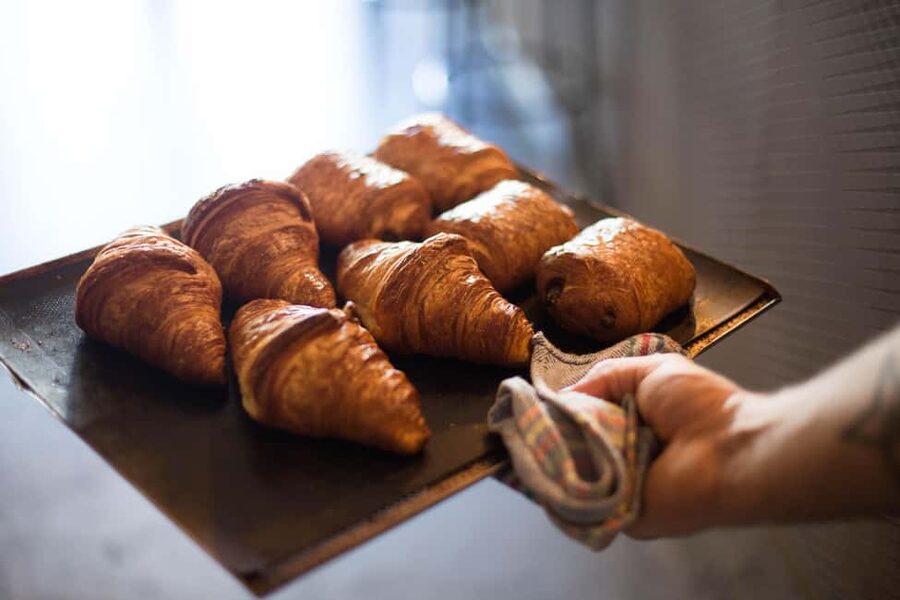
- A 55-layer French classic: Learn how butter and dough become the flaky structure of a proper croissant.
- Two pastries to make: Shape and bake two croissants and two pains au chocolat during the class.
- A genuinely small group: The workshop is limited to eight people, giving you room to follow instructions and ask questions.
- Central Aix location: Ma Cuisine is at number 4 Rue Constantin, on a quiet pedestrian street near the city center.
- Useful take-home material: You receive a croissant recipe and technical sheet for another attempt at home.
- Beginner-friendly, but fast-paced: The class suits first-time bakers, while experienced pastry makers may prefer an advanced course.
Finding Ma Cuisine on Rue Constantin
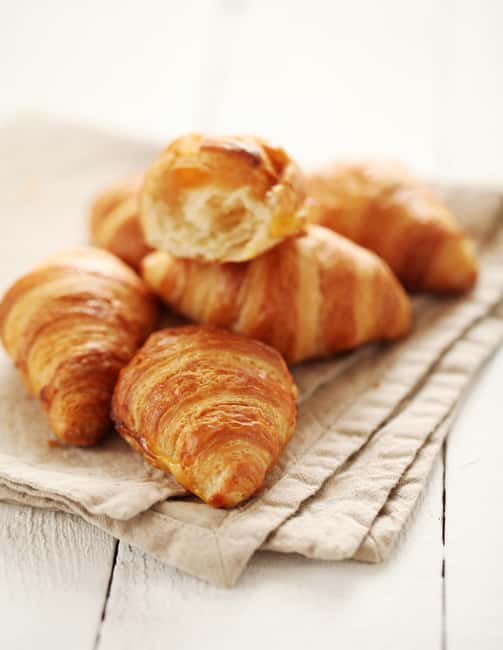
The workshop is held at Ma Cuisine, at number 4 Rue Constantin in Aix-en-Provence’s historic center. The address puts you within easy reach of the city’s main squares, cafés, and restaurants, making the class simple to fit into a day of sightseeing.
You do not need to arrive far ahead. The instruction is to arrive on time, with no need to come more than five minutes early because the kitchen may still be preparing for the class. That is useful advice in an old city where a few extra minutes can disappear while you search for the right pedestrian street.
Look for the workshop named Ma Cuisine. Comfortable shoes are the only required item. In summer, light clothing makes sense, since pastry work can become warm and you will be active at the counter rather than sitting through a long demonstration.
The location also makes this a good morning or afternoon plan. You can pair it with lunch or dinner nearby, although you will already have four freshly baked pastries in your hands by the end. Plan your appetite accordingly.
More Baking Classes in France
- Paris Croissant Small-Group Baking Class with a Chef
★ 5.0 · 910 reviews - Paris: French Croissant Baking Class with a Chef
★ 4.9 · 712 reviews - Paris Macarons Small-Group Baking Class with a Chef
★ 5.0 · 316 reviews
A Small Class With Room to Work
The group limit is eight participants. That number matters in a practical class. You need to see how the dough is handled, hear timing instructions, and get help when butter or dough does not behave as planned.
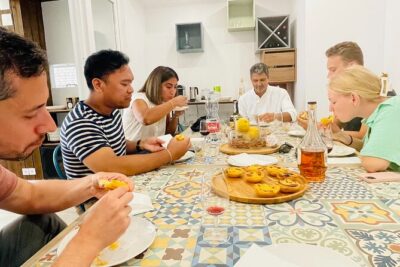
The small format also works well for solo participants. One solo participant described the instructor as excellent and found the class both fun and successful. You do not need to arrive with a baking partner to feel part of the activity.
The atmosphere is meant to be welcoming rather than formal. Coffee or tea is offered during the class, and fresh drinking water is available at any time. One participant particularly enjoyed being welcomed with an espresso before getting hands-on. That small touch helps the session feel like a local kitchen experience instead of a factory-style demonstration.
Children are welcome only if they are interested and able to follow instructions fully. The stated minimum is age 12, so families with younger children should not book this class. If you are unsure how your children will manage a three-hour kitchen session, a private family class is suggested instead.
What You Learn About Croissant Dough
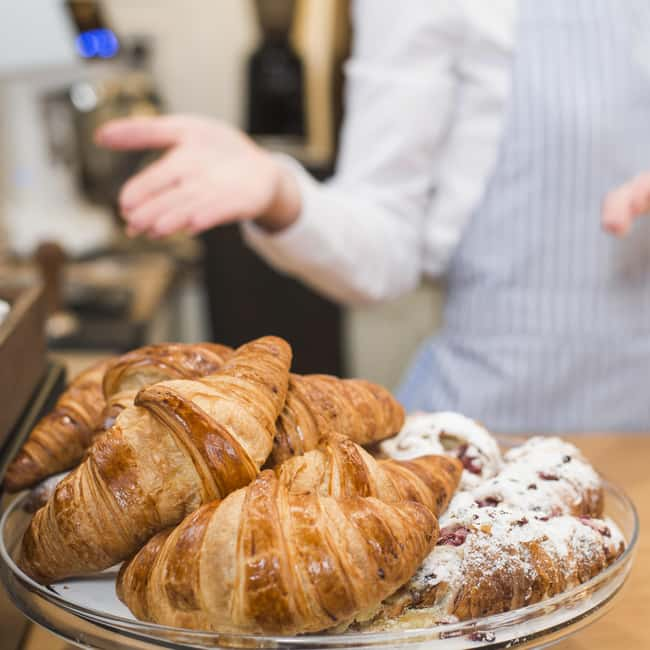
The central lesson is lamination, the process that creates thin layers of dough and butter. A classic French croissant has 55 layers, and the class uses that fact to show why technique matters. You are not simply mixing ingredients and cutting shapes. You are learning how the dough and butter work together to create the crisp outside and soft interior.
The class covers the main stages:
- Kneading the dough
- Working with butter and dough
- Laminating the pastry
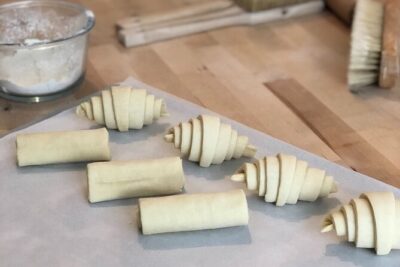
- Shaping croissants
- Shaping pains au chocolat
- Baking the finished pastries
The instructor guides you through each step. That structure is helpful for beginners, since laminated pastry can feel intimidating when you first see it done by a professional. The class breaks the work into manageable actions, allowing you to handle the dough rather than only take notes.
The ingredients are described as top quality, with French wheat flour, butter, and milk used for the croissants. The emphasis on ingredients is important because laminated pastry has nowhere to hide. The butter affects flavor and texture, while the flour affects how the dough stretches and holds its shape.
You should not expect a full professional pastry-school program in three hours. Instead, you get a focused introduction that lets you experience the key techniques without spending all day in the kitchen.
Making Two Croissants and Two Pains au Chocolat
The class has a clear, satisfying goal: you make two croissants and two pains au chocolat. That gives you enough repetition to learn from the first attempt and improve on the second.
Croissant shaping teaches you to work with a triangle of dough and create the familiar curved pastry. Pain au chocolat uses a different shape and adds chocolate, so you get a useful contrast between two French bakery favorites.
The hands-on format is one of the strongest parts of the experience. You knead, shape, and bake the pastries yourself, with guidance from the chef. At the end, the result is not just a certificate or a photograph. It is food you can eat.
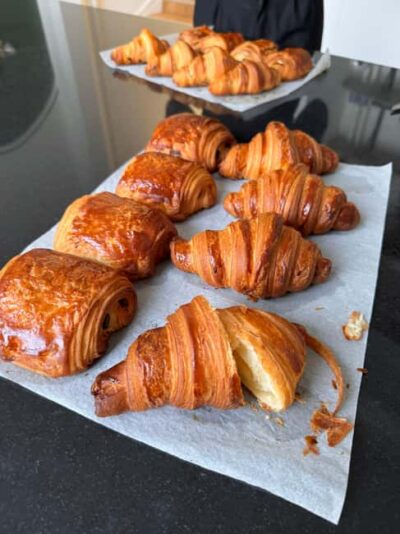
Several participants praised the final pastries, describing the croissant and pain au chocolat as beautiful and delicious. One person ate the baked goods immediately after the class and was already looking forward to trying them again at home. That is a good sign for anyone who wants a tasty activity rather than a purely educational one.
You should also keep your expectations realistic. Homemade laminated pastry may not look identical to a professional bakery display, especially on a first attempt. The point is to understand the method and leave with a result you can enjoy, not to produce a perfect pastry-shop window.
Same place, a different thing to cook:
- Paris Cooking Class and Lunch with Wine plus Market Visit Option
★ 5.0 · 1,024 reviews - Paris Cooking Class: Learn How to Make Macarons
★ 5.0 · 634 reviews - Paris: French Macaron Culinary Class with a Chef
★ 4.9 · 591 reviews - Paris Evening Cooking Class French Dinner and Market Visit Option
★ 5.0 · 430 reviews
How the Three-Hour Express Format Works
The class lasts three hours and is intentionally designed as an express workshop. The clever part is that you experience the important stages without waiting through the full hour and a half of proving time.
That time-saving choice makes the activity much easier to fit into an Aix itinerary. You spend your time kneading, laminating, shaping, and baking instead of waiting around while dough rests. It also explains why this is not a complete reproduction of every step in a traditional bakery production schedule.
The tradeoff is simple. You gain a compact class with finished pastries in three hours, but you lose some of the slower rhythm of professional pastry making. If you already bake often or work as a pastry chef, the organizers suggest choosing an advanced pastry or bakery class instead.
For beginners, the shorter format is likely an advantage. You get the excitement of making laminated dough without committing half a day or more. Still, the class may feel quick if you want long technical discussions or repeated practice with every stage.
English Instruction and the Local Chef
The class is taught by a local chef in English or French. English-language instruction makes the workshop accessible to international visitors, while French instruction gives French-speaking participants another option.
The teaching style receives strong praise for being clear and kind. Participants have described the instructors as professional, friendly, and very good at teaching the technique. One participant specifically praised the way the session covered dough, laminating, and shaping in a well-organized small group.
That combination matters. Pastry instruction can become frustrating if the teacher moves too quickly or assumes you already understand the terms. Here, the class is built for beginners, so you can ask questions and follow along even if you have never laminated dough before.
The experience is not only about learning a recipe. It also gives you a little contact with local food culture in Aix. You are working with a French pastry chef in a central kitchen, rather than buying a croissant already finished at a bakery counter. For a visitor, that makes the familiar French breakfast pastry feel more personal.
Is the $125 Price Worth It?
At $125 per person, this is not a cheap snack stop. The value comes from the combination of instruction, ingredients, equipment, four pastries, drinks, and take-home materials.
You are paying for a three-hour guided activity in a prime central location, with a group limited to eight. The small size is especially important here because the class depends on individual handling of dough. A larger group could mean more waiting and less help when shaping or laminating.
The recipe and technical sheet add lasting value. If you use them at home, the class becomes more than a one-time Aix memory. You can test the method again and learn from what changes in your own kitchen.
The price makes the most sense if you enjoy baking, want a hands-on food activity, or prefer experiences that teach a practical skill. It is harder to justify if you only want to taste a croissant, since a local bakery will cost far less.
I also see value for solo visitors. You do not need to pay for a private class to receive personal guidance, and the eight-person limit helps prevent the session from feeling anonymous. For couples, friends, and families with children aged 12 or older, it offers a shared activity with an edible reward.
Dietary Limits and Practical Comfort
This class uses wheat flour, butter, and milk. It is not suitable for people with gluten intolerance or lactose intolerance. You may still attend if you are willing to let friends or family enjoy your share, but that is not a satisfying plan for everyone.
There is no indication of an alternative recipe, so you should not book expecting gluten-free or dairy-free substitutions. Contacting the provider before booking may be sensible if your dietary needs are more complex, but the stated ingredients make the basic limitation clear.
Wear comfortable shoes. You will be standing and working in a kitchen for three hours, so practical footwear matters more than stylish footwear. In hot weather, light clothes are recommended.
Coffee, tea, and fresh water are included. That helps, but you should think of the drinks as refreshments during the lesson, not a separate meal. The pastries are the main edible result.
Who Should Book This Aix Activity?
I would recommend this class to:
- First-time bakers who want clear guidance
- Couples seeking a hands-on food activity
- Solo visitors who enjoy meeting people through a shared task
- Families with children aged 12 and older who can follow instructions
- Anyone who wants to recreate French pastries at home
- Visitors who enjoy food more when they understand how it is made
It may not suit you if you dislike standing, have a serious gluten or lactose restriction, or want an advanced pastry course. It is also not the best choice for someone who wants a slow, highly technical study of fermentation and proving.
The strongest fit is someone who wants a practical taste of French baking without giving up an entire day in Aix. You learn the main techniques, eat what you make, and leave with a recipe for another try.
Booking Details for a Smooth Visit
The class is offered at various starting times, so check availability for your preferred date. You can reserve now and pay later, which helps if your Provence schedule is still shifting.
Free cancellation is available up to 24 hours before the class for a full refund. That gives you some breathing room, but it is still wise to arrive on time. The kitchen may be preparing the room shortly before the lesson, so arriving much earlier does not provide an advantage.
The activity has a rating of 4.9 from 11 ratings, with praise focused on the friendly instructors, professional setting, small group, and quality of the finished pastries. The repeated approval of the teaching and atmosphere is more useful here than a simple score, since those are the parts that determine how enjoyable a practical class will be.
Should You Book the Croissant Class?
Book it if you want to do more than photograph a French pastry. The class gives you a real task, patient instruction, four baked goods, and a method you can try at home.
The $125 price is fair for a three-hour small-group workshop with ingredients, equipment, drinks, and a local chef, but it is a poor value if you only want breakfast. Beginners should find the express format manageable, while serious bakers should choose a more advanced class.
My practical advice is to book this as a relaxed Aix activity for a morning or afternoon when you want a break from sightseeing. Wear comfortable shoes, arrive on time, and come ready to handle butter, dough, and a few imperfect shapes. That is part of the fun.
FAQ
Where is the croissant class held?
The class is held at Ma Cuisine, at number 4 Rue Constantin in the pedestrian center of Aix-en-Provence.
How long does the class last?
The workshop lasts three hours.
How many people can join?
The class is limited to eight participants.
Is the class taught in English?
Yes. The class is taught in English or French by a local chef.
What pastries will I make?
You will make two croissants and two pains au chocolat.
Are beginners welcome?
Yes. The class is open to beginners and does not require previous baking experience.
What is included in the price?
The class includes equipment, tools, ingredients, a kitchen apron, coffee or tea, fresh drinking water, and instruction from the chef.
Do I receive a recipe?
Yes. You receive a croissant recipe and a technical sheet to use at home.
Is the class suitable for children?
Children aged 12 and older may join if they are interested and able to follow instructions. Children under 12 are not suitable for this activity.
Can I join if I cannot eat gluten or lactose?
No. The croissants use French wheat flour, butter, and milk, so the class is not suitable for people with gluten or lactose intolerance.
Just added around France
- Six day French Cooking Course in Brittany★ 5.0 · 30 reviews
- Plant-based French Cooking Class in Historic Bordeaux Apartment★ 5.0 · 9 reviews
- Private cooking lesson – Canelés in 3 gourmet recipes★ 3.0 · 2 reviews
- Cooking Classes in Provence at La Belugue★ 5.0 · 4 reviews
- Cooking lessons★ 5.0 · 41 reviews
- Cooking workshop with an exceptional chef in Avignon★ 4.5 · 88 reviews
- Mediterranean Cooking Class in the heart of Aix-en-Provence★ 5.0 · 6 reviews
- Aix en Provence Small group Croissant Baking Class with a chef★ 5.0 · 15 reviews
Baking & Bread Classes, compared.
Paris Croissant Small-Group Baking Class with a Chef
Read our review →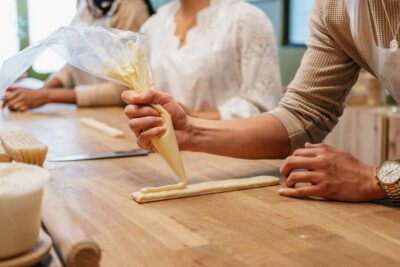
Paris Macarons Small-Group Baking Class with a Chef
Read our review →
Lists this class appears in