
REVIEW · NORTHERN VIETNAM, VIETNAM
Sapa Cooking Class With Ethnic Minorities Chef In Village
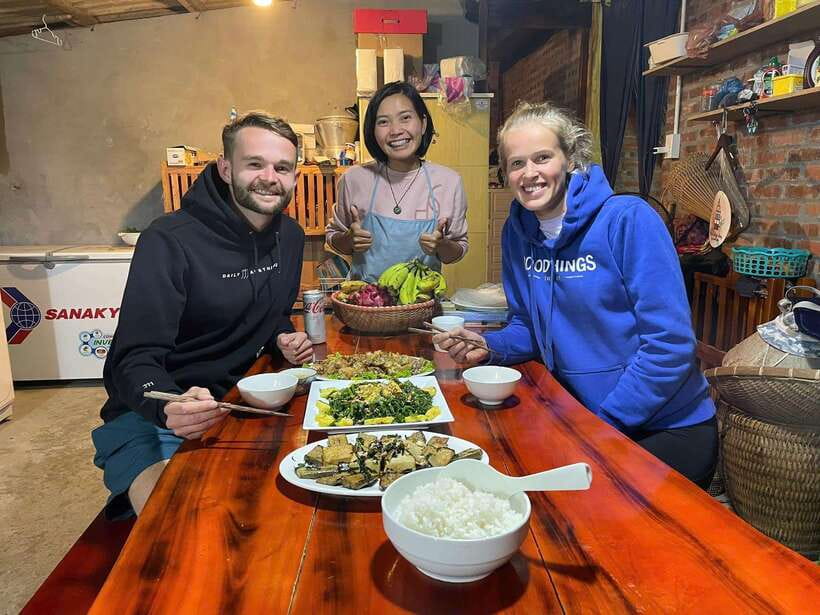
Food is a fine way to meet Sapa. This small-group cooking experience pairs a local market visit with hands-on Northern Vietnamese cooking led by an English-speaking ethnic minority chef. I like the full start-to-finish format, and I like that you select ingredients yourself rather than simply arriving at a prepared kitchen. The main consideration is that this is not a good fit for people with back problems, and the outdoor setting means you should prepare for changing weather.
At $45 per person, the price covers transport from your accommodation, ingredients, kitchen equipment, instruction, and a seasonal tea. That makes it a fair choice if you want more than a meal. You are paying for practical time with a local cook, a market visit, and recipes you can use at home.
Key Points Before You Book
- Shop before you cook: You visit a local market with a guide and choose fresh ingredients for the dishes.
- Learn from an ethnic minority chef: The class connects Northern Vietnamese food with a local cultural perspective.
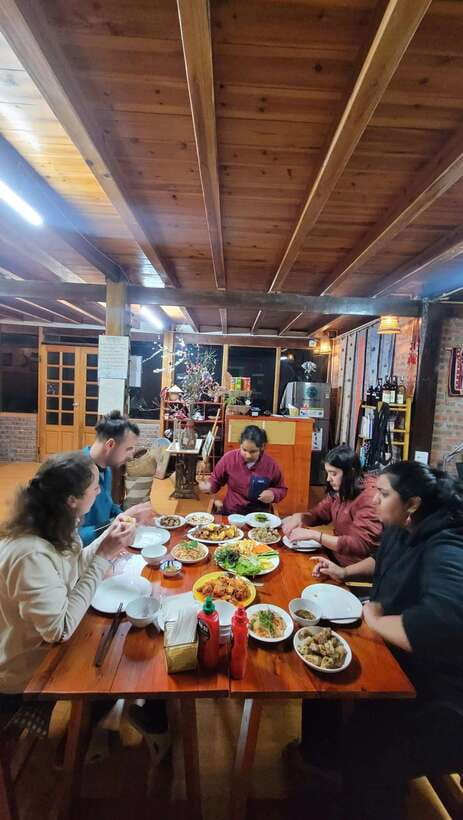
- Cook from A to Z: You take part in shopping, preparation, cooking, and eating, rather than watching a demonstration only.
- Transport is included: Pickup and drop-off are provided by motorbike or car, based on your group size.
- A seasonal tea comes with the meal: This simple extra gives you a local drink to enjoy alongside your cooking.
- Plan for outdoor conditions: Comfortable clothes, sunscreen, water, insect repellent, and a camera are useful.
Why This Sapa Cooking Class Works
Many food classes begin at the cutting board. This one begins earlier, at the market. That matters because you get to see the ingredients before they have been cleaned, chopped, or turned into a finished dish. A guide helps you choose what you need, so the market becomes part of the lesson rather than just a quick stop.
I like this format because it gives you a better sense of how Northern Vietnamese cooking begins. You can pay attention to color, texture, fragrance, and freshness. You also get a clearer idea of what local cooks actually buy, instead of working from a fixed tray of ingredients prepared in advance.
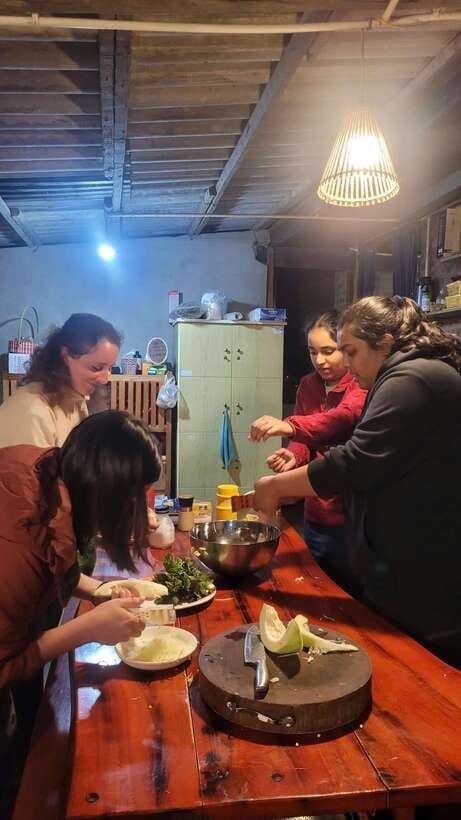
The second strong point is the hands-on approach. You are expected to help prepare and cook the food from start to finish. That gives the class more value than a short demonstration, especially if you enjoy learning by doing. You can ask questions while you work, practice the steps yourself, and leave with recipes to share at home.
The food focus is Northern Vietnamese cuisine. The class description does not name the exact dishes, so you should not book expecting a particular recipe unless you confirm it before paying. The advantage is that the menu can focus on available seasonal ingredients. The tradeoff is less certainty for anyone hoping to learn one specific dish.
More Farm Cooking Classes in Vietnam
- Mekong Day Trip Explore Village Bicycle CookingClass Group 12 Pax
★ 5.0 · 705 reviews - Cocolocal Farm Cooking Class with market tour and basket boat
★ 5.0 · 231 reviews - Full Experience Tour: Cooking Class & Basket Boat at Eco-Village
★ 5.0 · 187 reviews
Starting With Sapa’s Local Market
The market visit is the part that gives the class its sense of place. Instead of treating food as an isolated activity, you see the ingredients in their local setting and choose what will go into your meal. A guide accompanies you, which is helpful when you need to identify ingredients or decide how much to buy.
The market can also help you understand the logic of the recipes. Fresh vegetables, herbs, seasonings, and other ingredients do not all play the same role. Some provide fragrance, some add texture, and some create the base flavor of a dish. Your chef can explain these essentials as you shop, then show you how they work once you reach the kitchen.
I would bring your camera at this stage, but use it respectfully. The guidance asks you to respect local customs and traditions, so ask before photographing people. Keep your belongings simple, and wear clothes you can move around in comfortably.
Do not expect a polished food hall or a predictable supermarket-style stop. The details of the market visit can change with season and availability. That is part of the appeal, but it also means you should stay flexible. The menu is tied to what is fresh and suitable at the time.
Meeting the Ethnic Minority Chef
The chef is the heart of the class. You learn from a local ethnic minority cook who speaks English, allowing you to follow instructions and ask questions without relying only on gestures. The cultural connection is important here. You are not simply learning a generic Vietnamese recipe from a distant instructor. You are being introduced to Northern Vietnamese food through someone from the local community.
That does not mean every part of the class will be a formal cultural talk. The supplied details focus on cooking, ingredients, and market shopping. Still, the setting gives ordinary kitchen skills a local meaning. You can ask about how ingredients are used, how recipes are adapted, and which flavors matter most in the region.
I would pay attention to small cooking choices. Ask when ingredients should be added, how to judge doneness, and what can be substituted at home. Those questions often make the difference between remembering a recipe and being able to cook it again.
The English-language instruction is a useful feature, but you should keep your expectations practical. It promises communication in English, not a specialist culinary course or a professional qualification. The value is in learning local dishes in a friendly, direct way.
Cooking From Preparation to the Plate
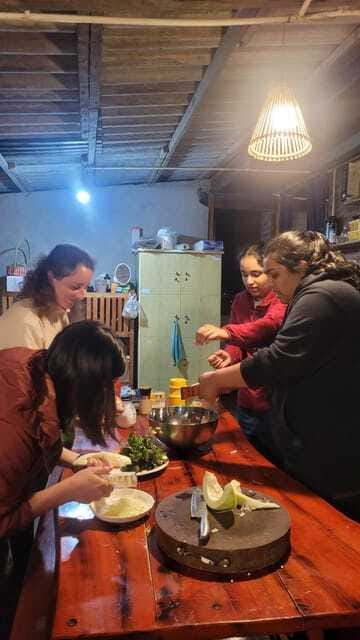
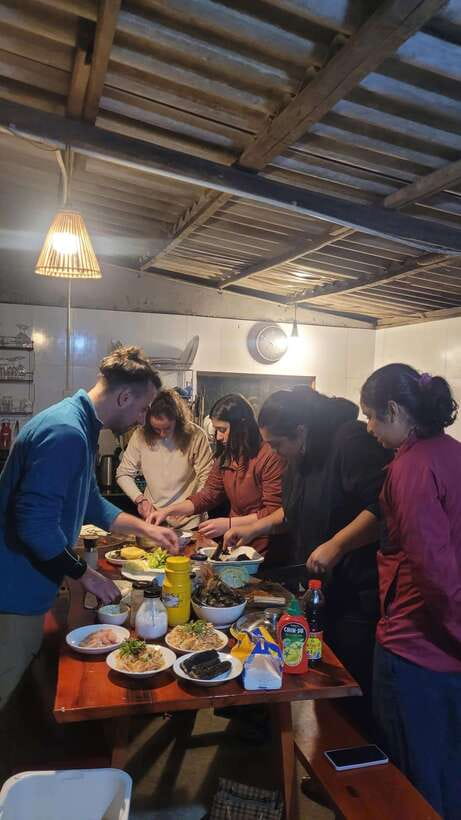
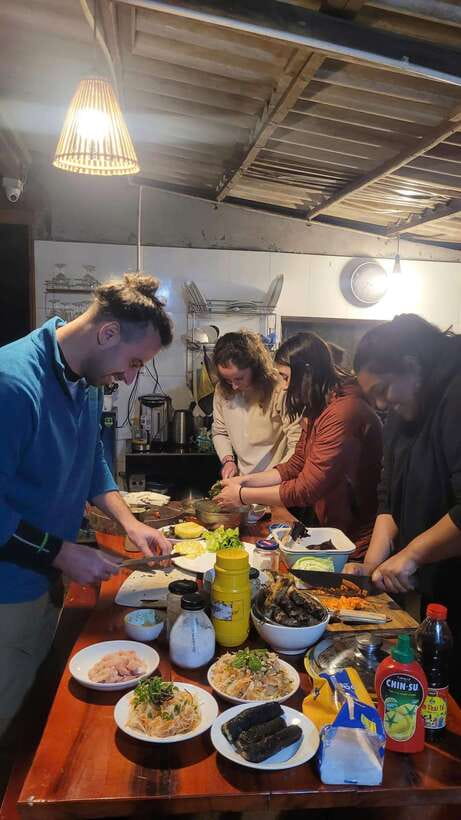
After shopping, you move into the preparation and cooking stage. Kitchen tools, cooking ingredients, and the cooking space are included, so you do not need to bring equipment. You can focus on the work itself: preparing the ingredients, following the method, and helping produce the meal.
The A to Z approach is especially useful for first-time visitors to Vietnamese cooking. You see how the dish develops instead of receiving only the final recipe. You may find that the most useful lessons are basic ones, such as how ingredients are cut, when flavors are added, and how several components come together.
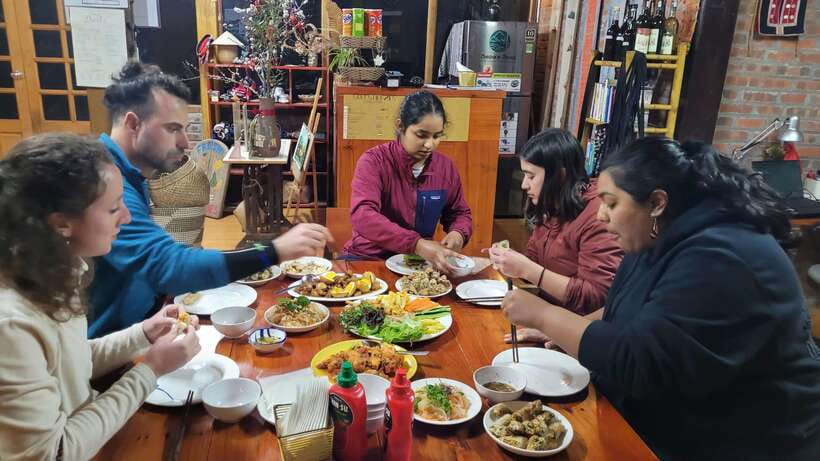
This is also where the class becomes social. Cooking beside other people gives you a natural reason to talk, compare techniques, and share tasks. The available information does not specify the group size or duration, so contact the provider if those details matter to you. A smaller class usually feels more personal, but you should not assume a particular group arrangement here.
Expect to be active. The advice to wear comfortable clothing and prepare for outdoor activities suggests that this is not a sit-down tasting with only occasional participation. People with back problems should choose another activity. The note about seasickness may seem unusual for a Sapa cooking class, but it is part of the stated suitability guidance, so anyone prone to it should take the warning seriously.
Same place, a different thing to cook:
- Hanoi Cooking Class: Culture, Local Market & Meaning CSR Impact
★ 5.0 · 5,147 reviews - 5 Traditional Dishes Hanoi Cooking Class with Market Trip
★ 5.0 · 4,890 reviews - Cooking Class Hoi An:Local Market, Basket Boat, Fishing & Cooking
★ 5.0 · 3,660 reviews - Hoi An Cooking Class(Market,BasketBoat Crabfishing&Cooking Class)
★ 5.0 · 3,386 reviews
Seasonal Tea and the Meal You Make
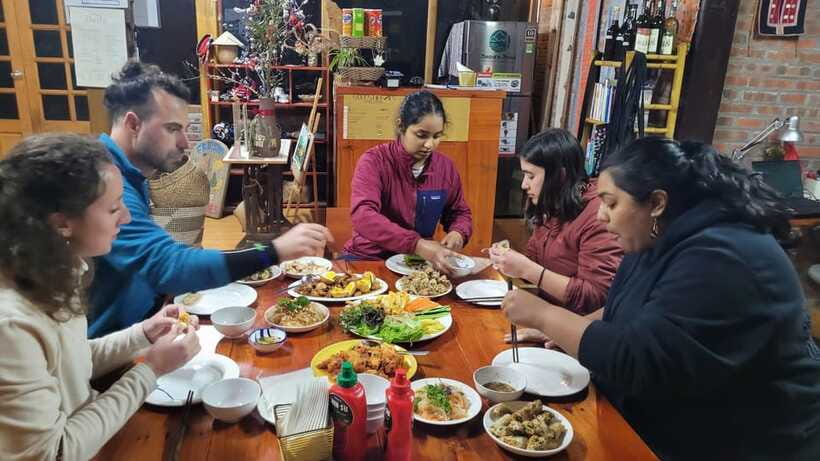
A free seasonal tea is included with the cooking session. It is a modest detail, but a useful one. Tea gives you a chance to slow down and taste the meal with a local drink rather than rushing away after the final dish.
Because the tea is seasonal, you should not expect one fixed variety at every visit. That can be a benefit if you enjoy trying what is available at the time, though it may disappoint anyone looking for a specific tea. The main point is that it complements the meal and adds another small piece of local food culture.
The meal itself is the reward for the work. You have seen the ingredients at the market, prepared them, and cooked them with guidance. That makes eating more satisfying than simply ordering a dish from a restaurant. You also leave with recipes that you can try with family or friends.
Keep in mind that the class is about learning and participation, not a guarantee of restaurant-level presentation. Your result depends partly on the group, the ingredients, and your own cooking confidence. That is a good thing for many people. A few unevenly cut vegetables do not ruin the lesson.
Transport, Clothing, and Practical Comfort
Pickup and drop-off at your accommodation are included. Transport is provided by motorbike or car, with the arrangement based on your group size. This removes one of the common small hassles in Sapa, especially if you are unsure how to reach the cooking location.
The transport option also affects what you wear and carry. Choose comfortable clothes that work for movement and outdoor conditions. Avoid bringing anything you would worry about around food, market stalls, or motorbike transport.
Pack:
- Water
- Sunscreen
- Insect repellent
- A camera
- Comfortable clothing
Sapa weather can change, so be prepared for more than one kind of condition. The guidance specifically calls for flexibility with the weather and clothing suitable for outdoor activities. I would also keep your camera protected if conditions turn wet, though no special equipment is required.
Smoking and littering are not allowed, and you should not touch plants. These rules are simple, but they matter in a local setting. Respect for the kitchen, market, people, and surrounding area is part of making the activity worthwhile.
What the $45 Price Includes
At $45 per person, this class sits in the midrange for a guided food activity, but the value depends on how much participation you want. You are not paying for food alone. The cost includes accommodation pickup and drop-off, the kitchen, cooking tools, cooking ingredients, an English-speaking chef, market guidance, the class, and seasonal tea.
That package is useful if you would otherwise need to arrange transport, buy ingredients, and find a kitchen yourself. It also removes the risk of buying unfamiliar ingredients without knowing how to use them. For a visitor who wants a structured introduction to local food, the price is reasonable.
The value is weaker if you only want a quick meal or a short tasting. You will get more from the $45 if you enjoy asking questions, helping with preparation, and remembering the recipes. You should also budget for a tip if you feel the chef and guide provided good service, since gratuity is not included.
No duration, exact menu, or group size is provided. Those are the three details I would confirm before booking, especially if your schedule is tight or you have a strong preference for a private class.
Who Should Book This Class?
I would recommend it to food-minded visitors who want a practical connection with Sapa. It suits people who enjoy markets, cooking, local ingredients, and meeting a community member through an everyday activity. It is also a good choice for couples, families with older children, and small groups looking for something more personal than a standard restaurant meal.
You do not need to be a skilled cook. The chef provides the tools, ingredients, and instruction. Curiosity matters more than knife skills.
I would think twice if you have back problems, dislike active participation, or want a fixed menu confirmed far in advance. The class includes market shopping and cooking, so it asks for more effort than a passive food tour. You should also consider the weather and your comfort with motorbike or car transport.
The class has a rating of 5 from two reviews, which is encouraging, though the sample is small. I would treat that as a positive sign rather than proof that every part will suit everyone. The clearest strengths are the market visit, the ethnic minority chef, and the chance to cook the food yourself.
Should You Book It?
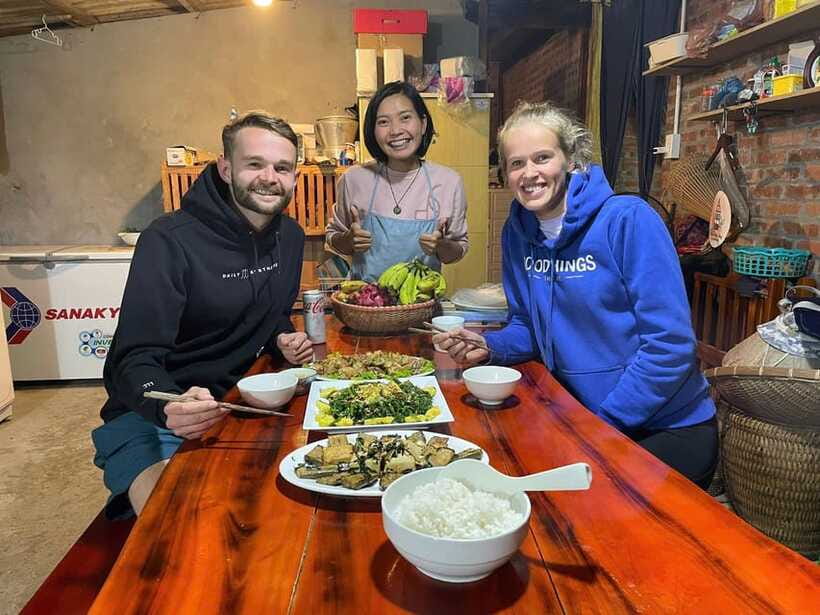
Book this Sapa cooking class if you want to understand Northern Vietnamese food through action, not just eating. The market visit gives the activity a local foundation, the chef provides personal instruction, and the included transport and ingredients keep the day simple.
Skip it if you want a short, polished tasting or if physical comfort is a concern. Before confirming, ask about the menu, duration, group size, and transport arrangement. If those details fit your plans, $45 is a sensible price for a cooking lesson, market visit, meal, and a few recipes you can carry home.
Cancellation is allowed up to 24 hours before the activity for a full refund, and you can reserve now and pay later. That flexibility helps if your Sapa plans are still shifting.
FAQ
How much does the Sapa cooking class cost?
The price is $45 per person.
What is included in the price?
The price includes pickup and drop-off at your accommodation by motorbike or car, a kitchen, cooking tools, cooking ingredients, and an English-speaking chef. A seasonal tea is also included.
Is transportation provided?
Yes. Pickup and drop-off at your accommodation are provided by motorbike or car, according to your group size.
Who teaches the cooking class?
A local ethnic minority chef leads the class. The chef speaks English.
Will I visit a local market?
Yes. You shop at a local market with a guide and select fresh ingredients for the dishes you will prepare.
What type of food will I learn to cook?
The class teaches traditional Northern Vietnamese recipes. The exact dishes are not specified, so confirm the menu if you need to learn a particular recipe.
What should I bring?
Bring a camera, sunscreen, water, comfortable clothes, and insect repellent.
Is the class suitable for people with back problems?
No. The activity is not suitable for people with back problems.
Can I cancel for a full refund?
Yes. You can cancel up to 24 hours in advance for a full refund. You can also reserve and pay later.
Just added around Vietnam
- Can Tho Cooking Class in the countryside – Vegetarian available★ 5.0 · 10 reviews
- Biking and Cooking Class in Can Tho Rural★ 5.0 · 5 reviews
- Full-Day Experience in Mekong Cycling and Authentic Home Cooking★ 5.0 · 89 reviews
- Cooking, Farming and Waterfall In Vietnam Countryside★ 3.0 · 6 reviews
- Cooking class & Vibrant Market by Scooter/Tuktuk (Half-Day)★ 5.0 · 55 reviews
- Top Home Cooking Class with Stunning River View AC Kitchen★ 5.0 · 25 reviews
- Tam Coc Cooking Class with Unique Experience★ 4.3 · 13 reviews
- Street Food Walking Tour with a Cooking Instructor★ 5.0 · 5 reviews
Farm & Countryside Cooking Classes, compared.

Half-Day Thai Cooking Class at Organic Farm in Chiang Mai
Read our review →
Cooking Class and Lunch at a Tuscan Farmhouse with Local Market Tour from Florence
Read our review →
Authentic Cooking Class with Market & Farm Visit
Read our review →

Hands-On Cooking Class & Farmhouse Tour on the Amalfi Coast
Read our review →Lists this class appears in