
REVIEW · KERALA, INDIA
Authentic local vegetarian Kerala cooking class in Wayanad
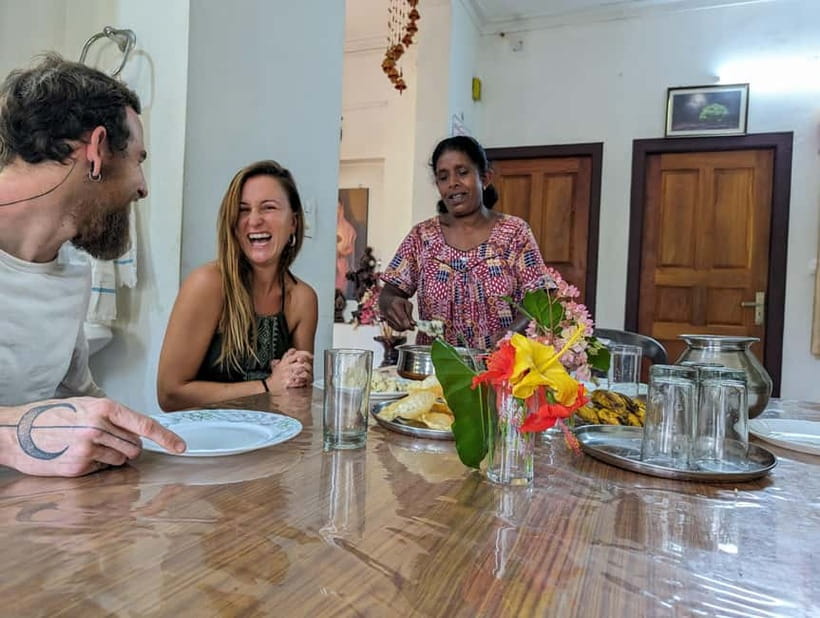
Kerala tastes best at home. This small-group cooking class brings you to Rahul’s family home in Karani, Wayanad, where I like the mix of garden and plantation walks and hands-on cooking with Rahul and Sharadha. I also like that you leave with printed recipes, not just a full stomach. The main drawback is the age limit: children under 16 cannot join.
The 3.5-hour visit offers a close look at local life, farming, spices, and family cooking. You may cut your own coconut or pineapple, inspect plants growing near the house, and prepare traditional vegetarian dishes. It is a strong value at $15 per person, though it suits curious food lovers more than anyone seeking a polished restaurant-style lesson.
Key details before you book
- Rahul’s family home: Meet at Centre Home Villa Wayanad for a personal introduction to life in Karani.
- Garden and coffee walk: Visit the garden, fields, coffee and banana plantations, farm, and temple before cooking.
- Hands-on local food: Work with ingredients such as coconut, vegetables, papadam, rava, and Indian spices.
- Sharadha leads the kitchen: She teaches traditional techniques and guides you through the recipes.
- Small group of up to six: The limited size should make questions and individual help easier.
- Best for adults and older teens: The class is not suitable for children under 16, and English is the teaching language.
Starting with coconut, fields, and family life
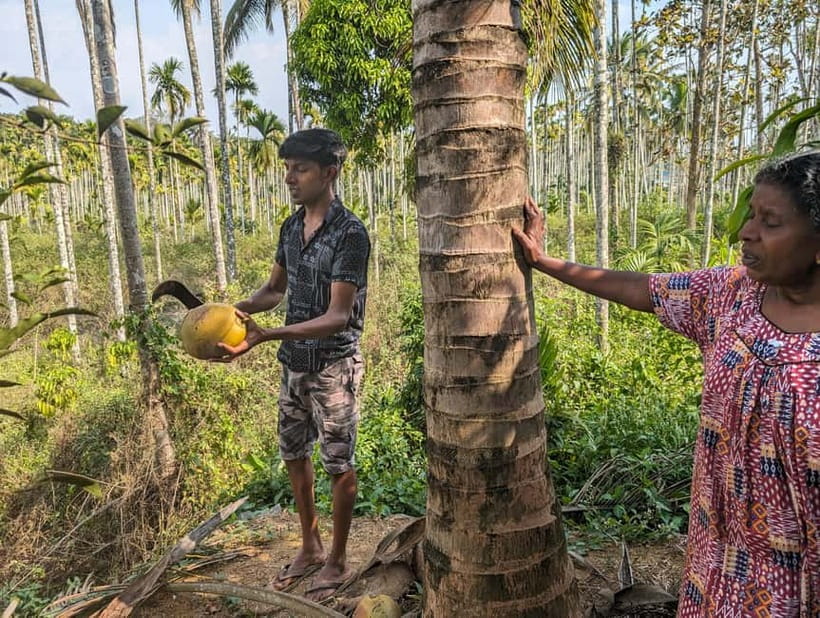
The experience begins at Centre Home Villa Wayanad, Rahul’s home base. Rather than sending you straight to a kitchen counter, the visit starts outdoors with a refreshing coconut and a walk around the property.
That opening matters. Kerala cooking makes more sense when you see where some of its ingredients grow. Rahul was born and raised in the area, and he leads you through the local setting around Karani, Wayanad. You visit the garden, fields, farm, temple, and coffee and banana plantations.
I like this part because it gives the meal a sense of place. You are not simply learning how to follow a recipe. You are seeing the plants, crops, and working spaces connected to the food on your plate.
The garden walk can be especially rewarding for anyone who enjoys practical food knowledge. You may see spices and other plants being picked right in front of you. One particularly hands-on detail from the experience is the chance to chop coconuts and pineapples yourself. That is a small moment, but it helps turn a familiar ingredient into something real and local.
Do not expect a formal agricultural tour with labels and displays. This is a family setting, so the experience is likely to feel informal and conversational. That is part of its appeal, but it also means the pace and exact outdoor route may depend on the household and the day.
More Vegetarian Cooking Classes in India
- Jaipur Market Tour & Vegetarian Rajasthani Home Cooking Class
★ 5.0 · 113 reviews - Private Vegetarian Indian Cooking Class in Mumbai
★ 5.0 · 17 reviews - South Indian Vegetarian Cooking Class in Chennai with Meena
★ 5.0 · 17 reviews
Rahul’s view of Wayanad
Rahul is more than the person who brings you to the kitchen. He acts as your local guide and gives the visit its connection to the surrounding community.
The walk introduces you to local people, daily life, nature, and agriculture. The temple visit adds another small window into the area, while the coffee and banana plantations show two important parts of the local setting. You get a better feel for Wayanad by moving through these ordinary places than you would from a cooking room alone.
I would pay attention to the questions you have before arriving. This is a good setting to ask about spices, farming, local meals, or how particular ingredients are used at home. The class is conducted in English, so you can communicate directly with Rahul and Sharadha.
The strongest praise for the experience centers on the warmth of Rahul and his family. Their friendliness is not a side feature. It is what makes the class feel like an invitation into a home rather than a commercial demonstration.
For solo visitors, that personal contact may be a major reason to choose this activity. The small group, limited to six people, should also make it easier to speak with the hosts without competing with a large crowd.
Sharadha’s kitchen lesson
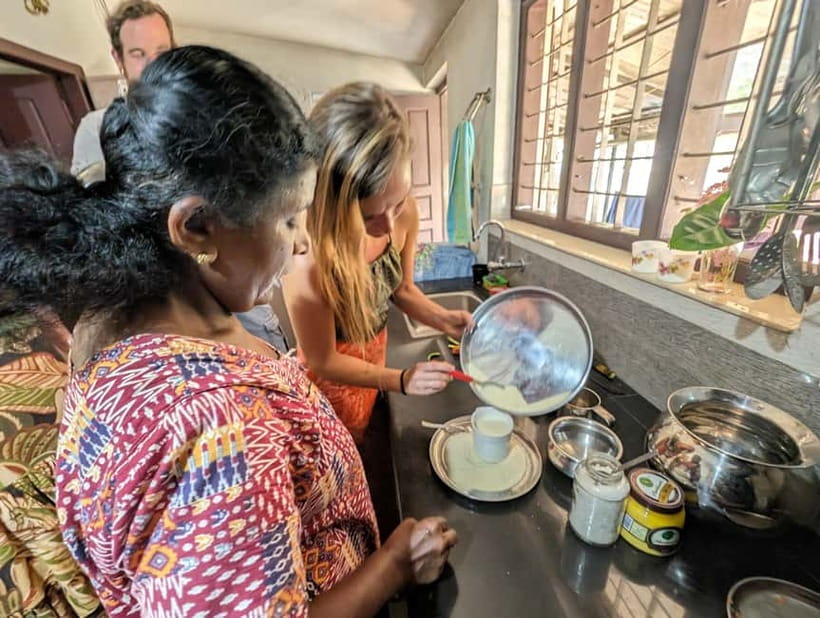
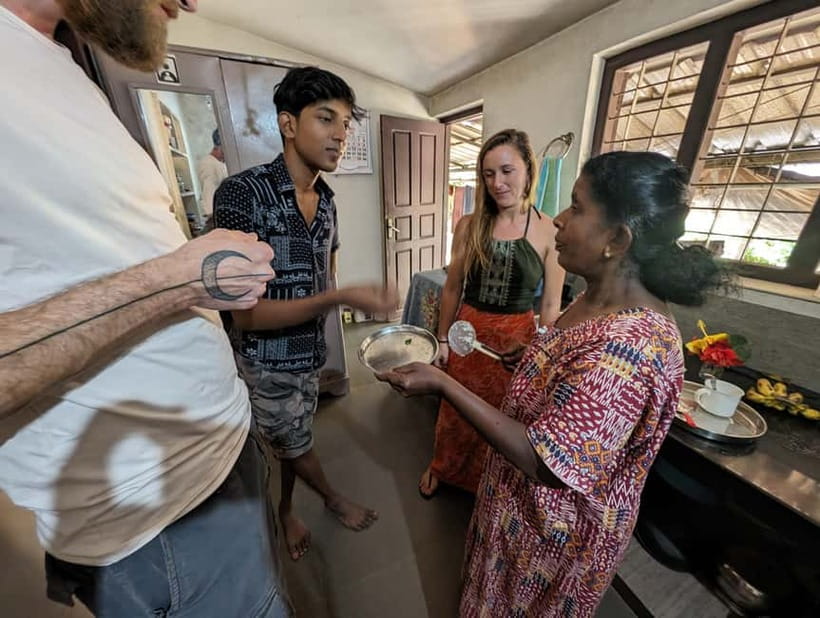
After the outdoor visit, you return to the kitchen for the cooking session with Sharadha. She guides you through traditional Kerala dishes and explains the techniques needed to prepare them.
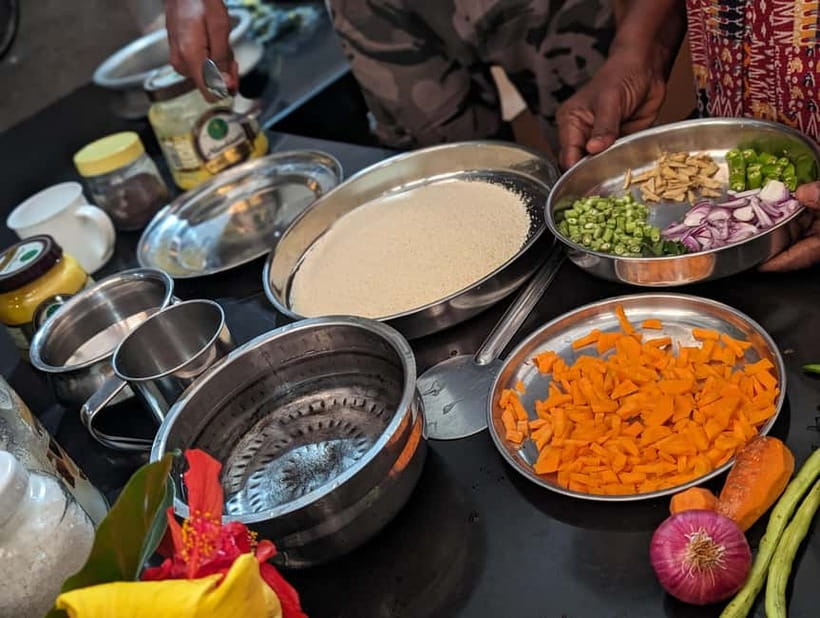
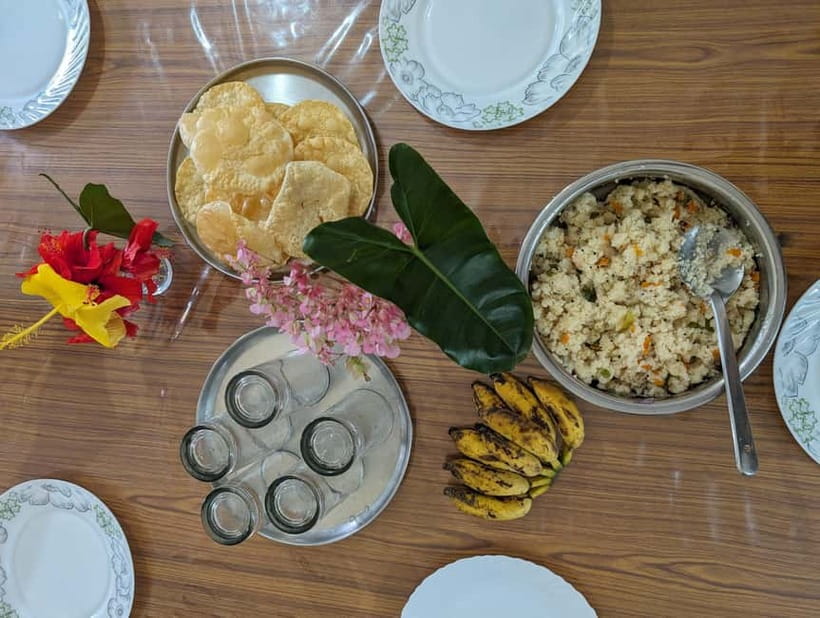
The exact dishes are not specified in advance, so you should not book this expecting a fixed restaurant menu. You can expect vegetarian cooking and ingredients that may include vegetables, coconut, papadam, rava, and Indian spices. The recipes are presented as typical Kerala food, with the focus on learning how to make the flavors taste local.
This is where the class becomes useful beyond the day itself. Sharadha does not simply prepare a dish in front of you while you watch. You take part in chopping, mixing, and cooking, then eat the food you helped prepare.
The practical lesson is in the small choices. Indian cooking often depends on the order of ingredients, the handling of spices, and the balance of textures. A printed recipe gives you a reference later, but the in-person guidance helps you understand how the food should look and feel while it is being made.
You may also appreciate the contrast between the garden walk and the kitchen. Outside, Rahul connects the food to its source. Inside, Sharadha shows you how those ingredients become a family meal. The two parts work well together.
What you may cook and eat
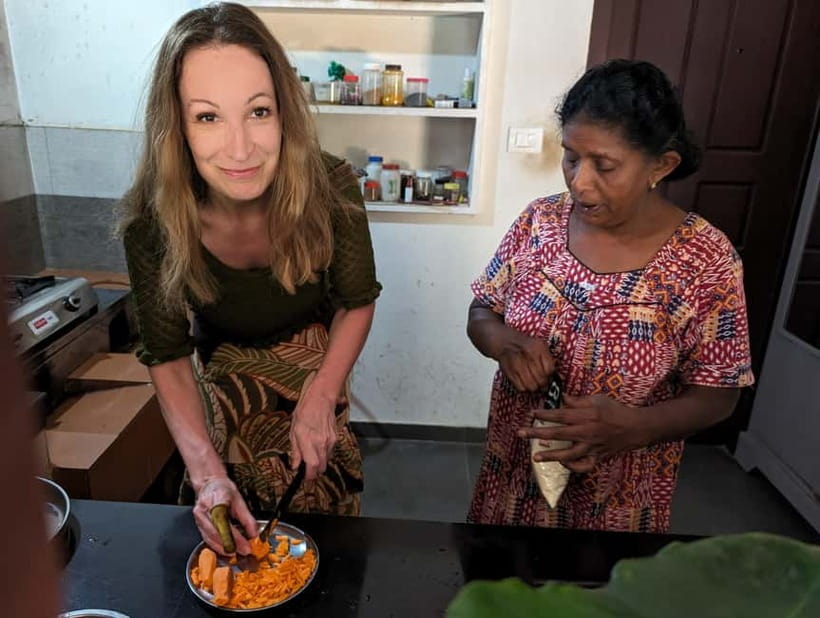
The class focuses on vegetarian Kerala food, making it a straightforward choice for people who want a meat-free local meal. The information provided names rava, vegetables, papadam, Indian spices, coconut, and other ingredients, but it does not promise a particular dish list.
That uncertainty is worth noting. If you need to avoid a specific ingredient, ask before booking or at the start of the class. The available details do not state how dietary substitutions are handled.
The food should appeal to you if you enjoy cooking with fresh ingredients and strong spice combinations. The emphasis is not on complicated restaurant presentation. It is on the flavor, method, and everyday character of Kerala home cooking.
The final meal is included, so you eat together after preparing the dishes. This shared meal is a natural ending to the visit. It also lets you judge the results immediately, rather than taking a cooking lesson and leaving before tasting what you made.
I like that the recipe printout is included. Many food classes are memorable for an afternoon and then difficult to recreate. Here, you have something concrete to take home and cook for your family.
Same place, a different thing to cook:
- Pink City Cooking Class
★ 5.0 · 452 reviews - Five Course Cooking Class & Meal
★ 5.0 · 250 reviews - Veg and Non veg : Private Cooking Class in Delhi home (7 meal)
★ 5.0 · 226 reviews - Indian Cooking Class in an Authentic Local Home – Learn 6 Dishes
★ 5.0 · 195 reviews
Why the garden visit adds value
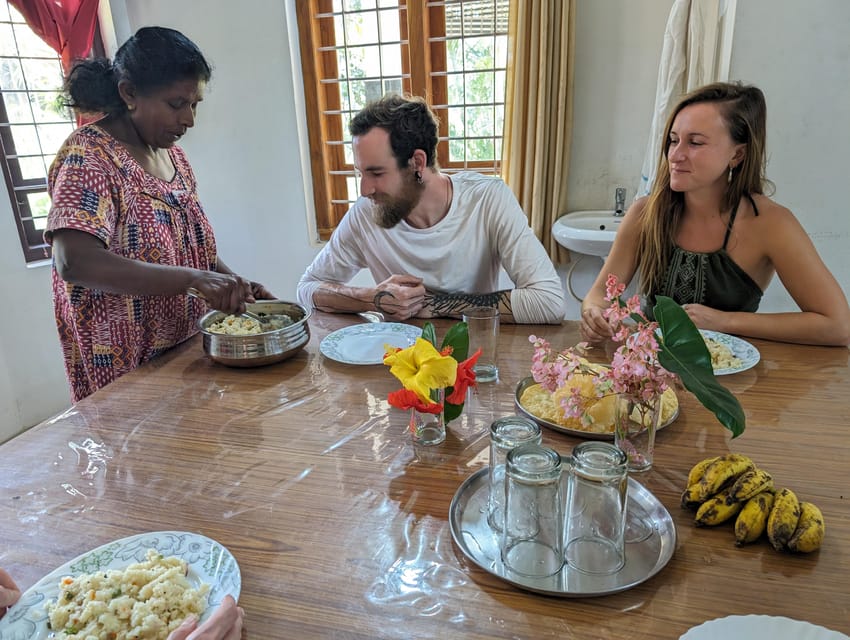
At $15 per person, the class is inexpensive for a 3.5-hour activity. The value comes from the combination of several parts: the coconut welcome, the garden and plantation walk, the local conversation, the cooking instruction, the meal, and the printed recipe.
If this were only a cooking demonstration, the price would still be modest. But you are also getting an introduction to Rahul’s home area and family life. That makes the experience more useful for someone who wants cultural contact, not just another meal.
The outdoor portion also breaks up the kitchen time. Some people enjoy three hours of cooking, but others prefer a change of setting. Here, you walk through fields and plantations before sitting down to prepare food.
The activity is not designed as a luxury food tour. You should choose it for personal contact and a local setting, not for air-conditioned facilities, a highly polished culinary school, or a long menu of dishes.
Group size, age limit, and timing
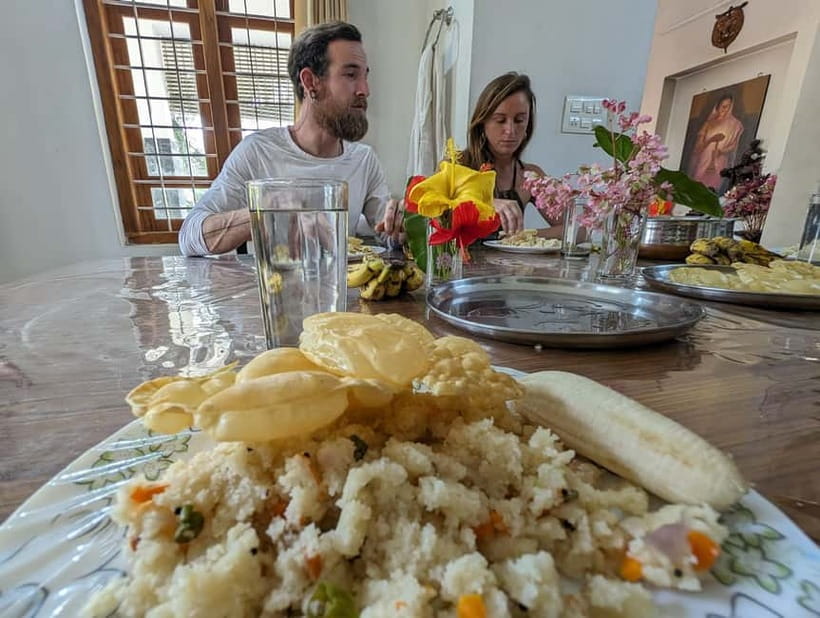
The class lasts 3.5 hours and accepts no more than six participants. That is a comfortable size for a home kitchen. You should have a better chance to see what Sharadha is doing, ask questions, and take part rather than standing at the back.
The English-language instruction is useful for international visitors. Rahul and Sharadha can explain the cooking process and answer questions in English, according to the activity details.
The age restriction is firm: children under 16 are not suitable for this activity. Families with younger children should choose another food experience in Wayanad.
Starting times are not fixed in the supplied details, so you need to check availability for your date. The meeting point is Centre Home Villa Wayanad. Plan around the full 3.5 hours, since the walk and cooking session are both important parts of the visit.
Cancellation is flexible, with a full refund available if you cancel at least 24 hours ahead. You can also reserve now and pay later, which helps if your Wayanad schedule is still moving around.
What the strongest praise tells you
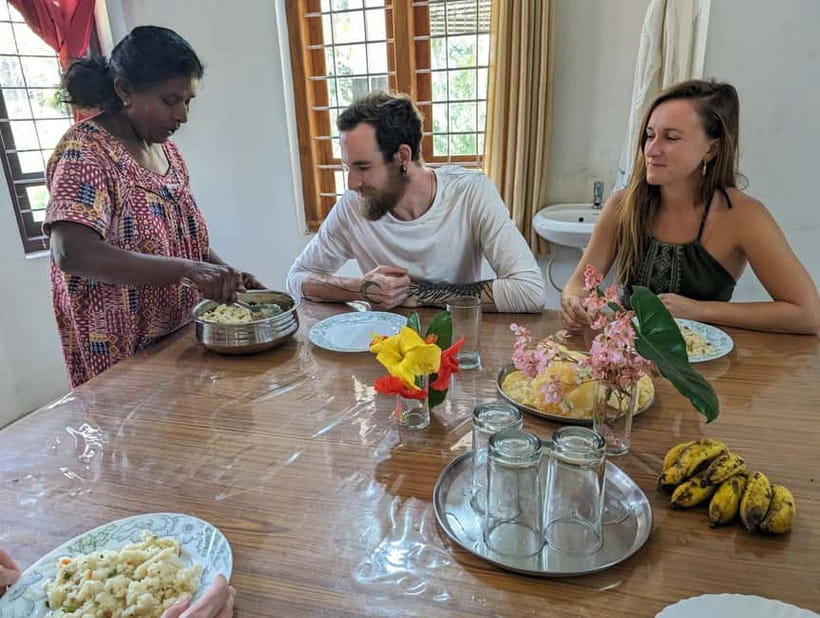
The most consistent praise is for the hosts. Rahul is described as friendly, enthusiastic, and generous with his time, while Sharadha receives praise for being kind and supportive in the kitchen.
That matters because a home cooking class depends heavily on the people leading it. A good recipe alone cannot create a warm visit. Here, the personal welcome appears to be one of the main reasons the experience works so well.
The outdoor walk also earns strong approval. Seeing spices picked near the house and walking across the fields gives the food a direct connection to Wayanad. The opportunity to handle coconuts and pineapples adds a playful, practical touch.
The class has received five out of five from three verified ratings. That is a small sample, so I would not treat it as proof that every part will suit everyone. Still, the same strengths appear repeatedly: the family atmosphere, the garden walk, the useful cooking lesson, and the sense of making a personal connection.
Who should choose this Wayanad cooking class?
I would recommend it most strongly if you:
- Want a small, personal activity rather than a large group tour
- Enjoy vegetarian food and hands-on cooking
- Care about where ingredients come from
- Like meeting local people in a home setting
- Want a recipe you can recreate at home
- Have at least half a day available in Wayanad
- Are traveling alone or with a small group of adults
It is also a good choice if you have already seen Wayanad’s main outdoor sights and want an activity focused on daily life. The temple, fields, garden, and plantations create a different kind of local experience.
I would be more cautious if you need a guaranteed menu, have strict dietary requirements that have not been discussed, or prefer a formal cooking school. The class is personal and flexible, which is exactly what some people want and others may find less predictable.
Should you book it?
Yes, I would book this class if your idea of a good food experience includes a family home, a walk through gardens and plantations, and cooking beside local hosts. At $15, it offers unusually strong value for 3.5 hours, especially with the meal and recipe included.
Book it for the people and the setting, not just for a list of dishes. Rahul’s local knowledge, Sharadha’s kitchen instruction, the chance to handle fresh ingredients, and the small group make this one of the more personal ways to experience Kerala food in Wayanad.
If you are under 16, need a fixed menu, or want a restaurant-level culinary course, skip it. For adults seeking friendly conversation, practical recipes, and a closer look at everyday Kerala life, Centre Home Wayanad is an easy choice.
FAQ
Where does the Kerala cooking class take place?
The class takes place at Centre Home Villa Wayanad, Rahul’s family home in Karani, Wayanad, Kerala.
How long does the experience last?
The activity lasts 3.5 hours, including the outdoor visit and cooking session.
What is included in the price?
The experience includes a fresh coconut, the cooking class with a local family, a printed recipe, the meal you prepare, and a garden, coffee, and banana plantation tour.
Is the cooking class vegetarian?
Yes. The class focuses on authentic local vegetarian Kerala cooking.
How many people can join?
It is a small-group experience limited to six participants.
Can children attend the class?
Children under 16 are not suitable for this activity.
Just added around India
- Private tour to learn Traditional Indian Art, craft & Cooking★ 5.0 · 4 reviews
- Neighborhood Market Tour & South Indian Cooking Class in Chennai★ 5.0 · 7 reviews
- Traditional Chettinad Cooking Class in a Local Home near Chennai★ 4.5 · 12 reviews
- Chennai Super Market Tour and Cooking Class with a Fun Local★ 5.0 · 9 reviews
- Chennai Dosa Making Class & Home-Dining Experience with Jyashree★ 5.0 · 8 reviews
- Cooking experience in Bangalore, a half day tour★ 5.0 · 5 reviews
- Discover Bangalore’s Cuisine: Private Half-Day Cooking Experience★ 5.0 · 3 reviews
- Traditional Gowda Cooking Class and Meal in a Bangalore Home★ 5.0 · 31 reviews
Vegan & Vegetarian Cooking Classes, compared.
Moroccan Cooking Class for vegetarians and vegan
Read our review →
Vegetarian Cooking Class w Local Family and transfer
Read our review →
Jaipur Market Tour & Vegetarian Rajasthani Home Cooking Class
Read our review →
Ramen & Dumpling Cooking in Tokyo with Chef/Vegan possible
Read our review →Private Cooking Class – Personalized menu with glutenfree & vegan
Read our review →
Hoi An/Da Nang: Vegetarian Cooking Class & Basket Boat Ride
Read our review →Lists this class appears in