
REVIEW · LUANG PRABANG (PROVINCE), LAOS
Luang Prabang: Cooking Class at the Former Royal Palace
Market, cooking, and Mekong views in one morning. This Luang Prabang experience combines a guided morning-market visit with a hands-on Lao cooking class at Victoria Xiengthong Palace and Alame Restaurant. I like the chance to learn what unfamiliar herbs and vegetables are before cooking, and I like ending with a generous meal of dishes you helped prepare. The small group, capped at 10, also makes it easier to ask questions.
The main drawback is the timetable. After the market, the chef may need about two hours to prepare ingredients, leaving you free to visit nearby temples, cafés, and shops before cooking resumes. That break suits a relaxed morning, but it may disappoint you if you expect four straight hours of kitchen work.
Key points to know before booking
- The morning market is the real introduction: A local chef explains Lao ingredients and may buy small items for you to taste.
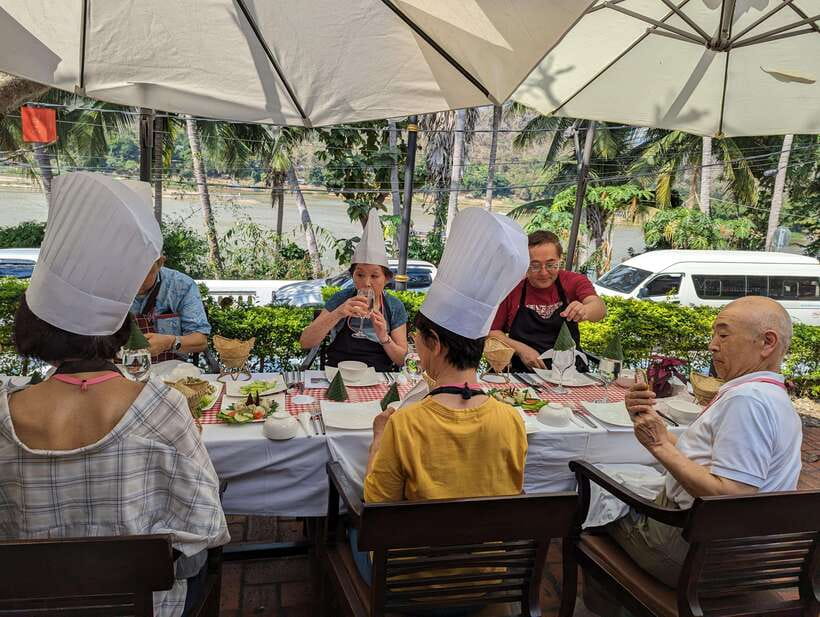
- Cooking takes place beside the Mekong: The terrace setting at Alame Restaurant gives lunch a calm, scenic finish.
- You cook as a group: Everyone contributes to several dishes, rather than making each recipe alone from beginning to end.
- Expect roughly four hours overall: The plan includes transport, market time, cooking, and lunch, with a preparation break between the first two activities.
- Noi is a particularly well-liked instructor: Her clear explanations, humor, patience, and easy pace appear repeatedly in the experience feedback.
- Vegetarian cooking is possible: Tell the provider in advance if you need a vegetarian menu.
Why this cooking class works well in Luang Prabang
A cooking class can be a useful break from temple visits, but this one does more than put you in front of a chopping board. It begins with the food itself, at Luang Prabang’s morning market, then follows the ingredients to the kitchen and finally to your lunch plate.
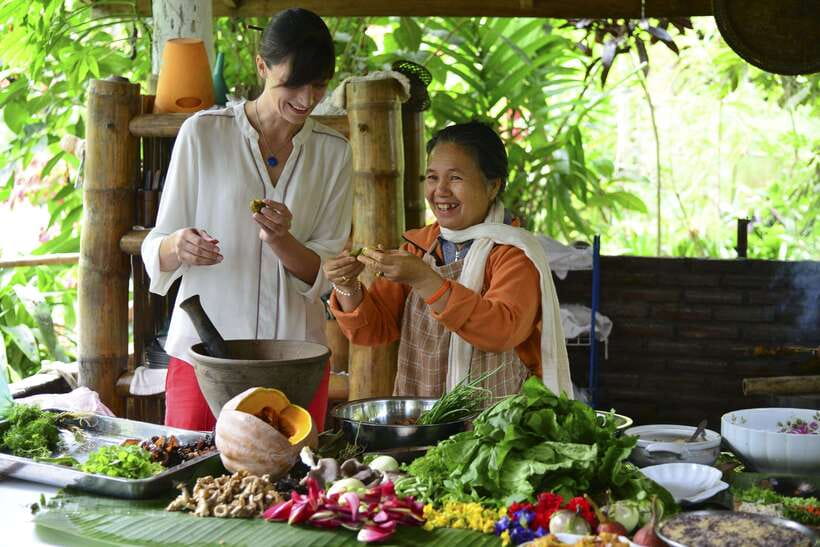
I like that order. Lao food can include herbs, vegetables, spices, and produce that are unfamiliar if you shop only in restaurants. Seeing those ingredients in their everyday market setting gives you a better sense of how Lao cooking is built. You are not simply handed premeasured items and told to follow a recipe.
The setting adds another layer. Victoria Xiengthong Palace is near Wat Xiengthong Temple on Kounxoau Road, in Ban Phonehueng. The class and meal take place at Alame Restaurant, described as a peaceful riverside setting connected with the hotel. Several sessions have used a terrace overlooking the Mekong, so the experience is as much about the setting and pace as it is about food.
The experience earns a 4.9 rating from 51 bookings, with especially strong praise for the guides, the market visit, the food, and the pleasant riverside meal. That does not mean every part will suit every cooking enthusiast. The class is collaborative, and the kitchen team may prepare much of the early work while you take a break.
A few more cooking classes around the world worth a look
- Half-Day Thai Cooking Class at Organic Farm in Chiang Mai
★ 5.0 · 19,087 reviews - Florence: Pasta Cooking Class with Unlimited Wine
★ 4.9 · 10,285 reviews - 3 in 1 Cooking Class near Navona: Fettuccine, Ravioli & Tiramisu
★ 5.0 · 7,376 reviews
Starting near Wat Xiengthong Temple
You meet at Victoria Xiengthong Palace, Kounxoau Road, near Wat Xiengthong Temple. This location is useful if you are staying in or exploring Luang Prabang’s old town. The morning begins with transport to the market by bicycle or tuk tuk, depending on the arrangement.
The bicycle option adds a little movement and local texture. The tuk tuk is likely easier if you are carrying belongings or prefer not to cycle. The supplied information does not promise one fixed mode for every departure, so confirm the day’s transport when booking.
The setting near Wat Xiengthong also makes this easy to pair with other sightseeing. You do not need to spend the whole day on the activity. The listed plan includes about one hour of sightseeing, two hours of cooking, and one hour for lunch, although the total booking duration is given as four hours.
That difference is worth noting. The working schedule can stretch because market transport and the kitchen preparation break sit around those timed sections. Plan for a half-day rather than trying to squeeze in a tightly timed museum visit afterward.
The morning market with a local chef
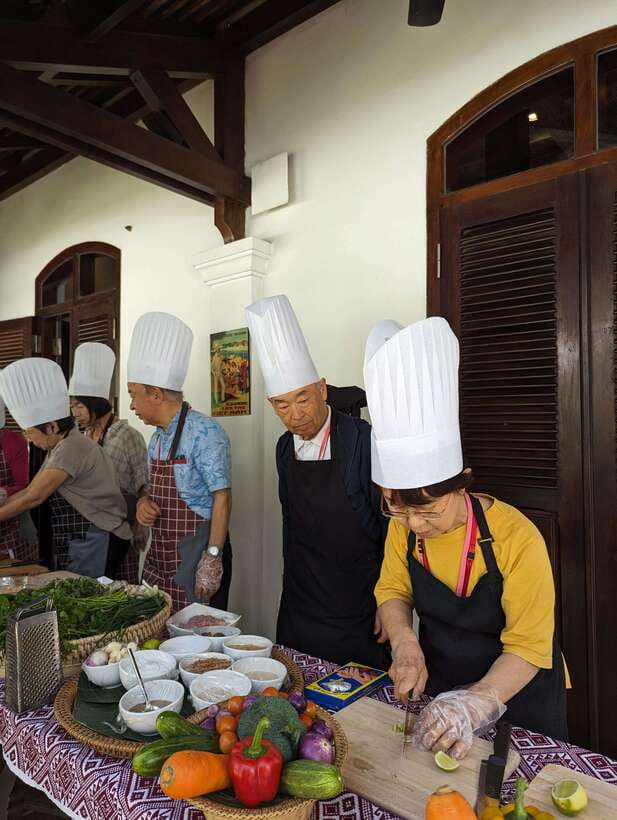
The market visit is the strongest part for anyone who wants context with their meal. You walk through the local stalls with an English-speaking chef, see the ingredients used in Lao food, and learn how they fit into everyday cooking.
The exact stall-by-stall route is not specified, so I would not book this expecting a formal market lecture. It sounds more like an informal walk with practical explanations. That can be the better approach. You can ask what a particular herb is, how produce is used, or which items are worth tasting.
Chef Noi is praised for explaining ingredients clearly and for keeping the mood light. One session included small items bought for the group to try. Another began with fruit and juice for a participant. These details suggest the market is not just a transfer stop before the class. It gives you a chance to taste and ask questions while the food is still in its everyday setting.
The market can also be intense. One description calls the visit interesting and hair raising, which is fair warning for anyone who dislikes crowded stalls, traffic, or unfamiliar food displays. Wear a hat, as requested, and choose light clothing suitable for standing and walking.
I would allow yourself to be curious rather than trying to identify every ingredient. The value is in seeing how Lao food begins, not in memorizing a market catalogue.
The two-hour preparation pause
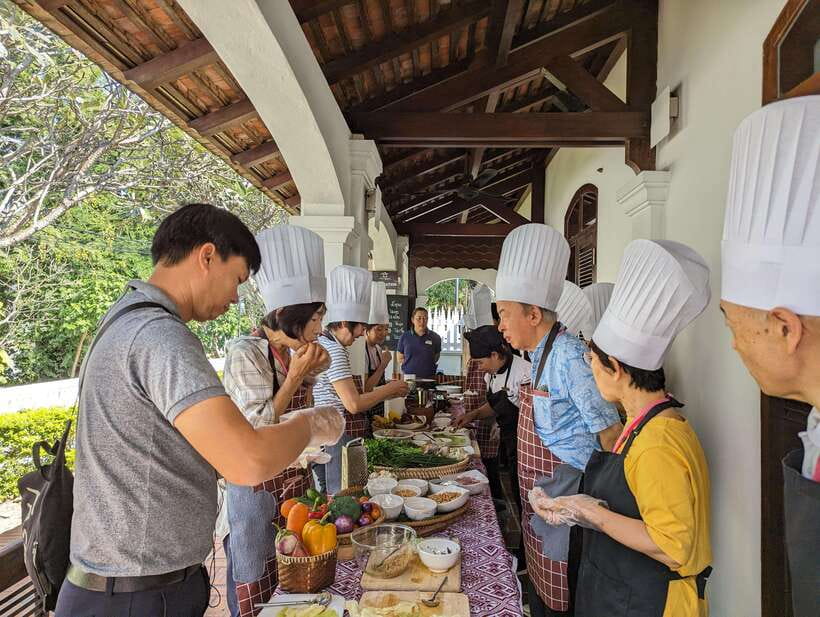
This is the section that needs the clearest explanation. After the market, the chefs may need time to prepare ingredients before the hands-on class. You might have about two hours to get coffee, visit nearby temples, browse shops, or simply sit by the Mekong.
Some people will welcome this pause. Luang Prabang rewards a slower rhythm, and the break gives you time to look around instead of spending every minute in a classroom. It also means the cooking area can be properly arranged when you return.
If you want nonstop participation, though, this may feel like dead time. One booking described the break as a wait and wander period and suggested that the class could be stronger if participants handled more preparation themselves. That is a fair criticism.
The best way to view it is as a split morning: market and orientation first, free time second, cooking and lunch last. Do not assume you will be actively slicing and stirring from the moment the market ends.
Same place, a different thing to cook:
- Florence: Pasta & Tiramisu Cooking Class with Unlimited Wine
★ 4.9 · 6,708 reviews - Hanoi Cooking Class: Culture, Local Market & Meaning CSR Impact
★ 5.0 · 5,147 reviews - 5 Traditional Dishes Hanoi Cooking Class with Market Trip
★ 5.0 · 4,890 reviews - Cooking Class and Lunch at a Tuscan Farmhouse with Local Market Tour from Florence
★ 5.0 · 4,831 reviews
Cooking four Lao dishes with the group
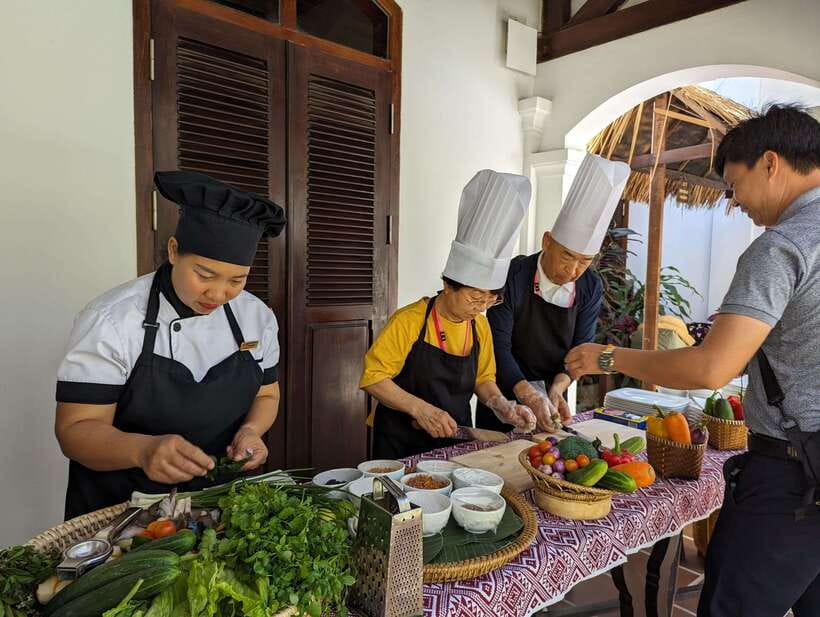
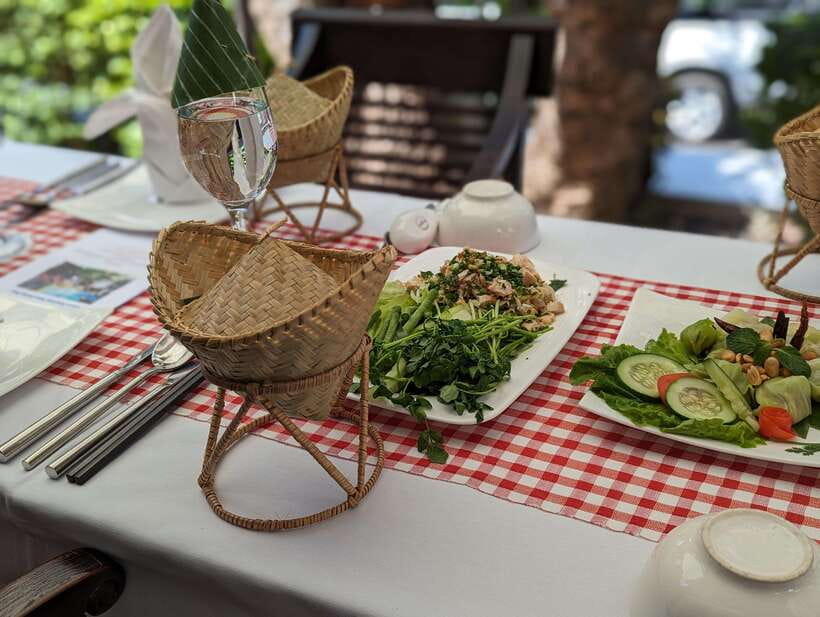
The cooking section lasts about two hours. The dishes vary by session, but the food described includes soup, laab salad, sticky rice, fresh appetizers, sour soup with pork and mushrooms, chicken laab, and a coconut dessert. One class made rice balls in coconut milk, while another prepared three courses including soup, laab, and coconut dessert.
That variety is a real strength. You get a taste of several parts of Lao cooking: herbs and fresh vegetables, a savory soup, a well-seasoned salad, sticky rice, and a sweet finish. The recipes also give you a useful starting point for cooking Lao food at home.
The class is genuinely hands-on, but understand the format. The group works together on the dishes, with the chef or sous chef guiding the preparation. You may chop, mix, cook, and assemble parts of the meal, but you are not guaranteed to make every dish alone from start to finish.
I prefer classes where each person completes one full recipe, so I would find this format slightly less satisfying if my main goal were technical kitchen practice. On the other hand, a shared approach keeps the work manageable and lets you sample more dishes. It also suits beginners who would rather learn without being rushed.
Chef Noi receives especially warm praise for being patient, funny, organized, and clear. Vannasone is also singled out for leading a useful market tour and guiding the cooking with skill. Since the experience is taught in English, you can expect explanations in English, but the pace may depend on the group and the instructor assigned that day.
Bring your questions. Ask about substitutions, spice levels, herbs, and what can be found outside Laos. The recipe book or recipe sheets make those questions more useful once you return home.
Lunch on the riverside terrace
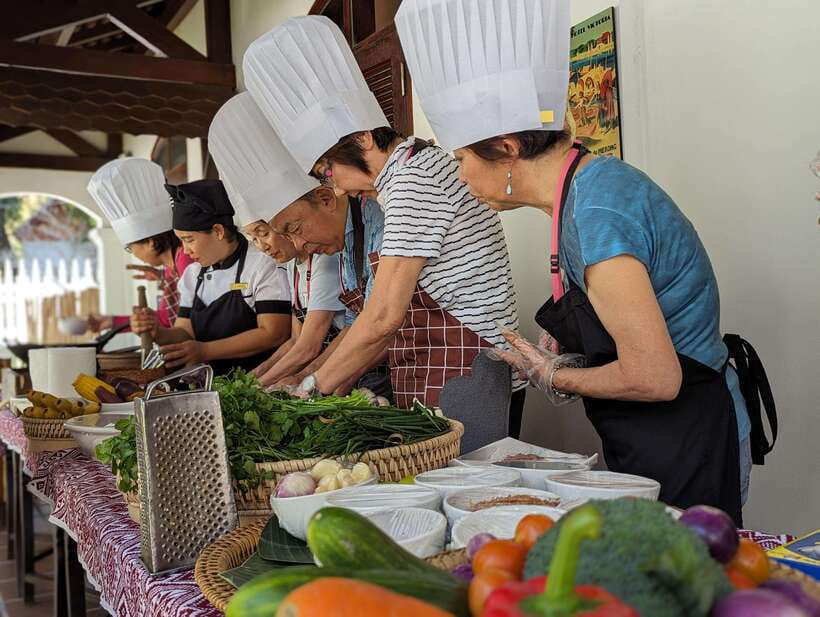
After the cooking, you sit down to eat what the group has made. This is not a separate restaurant meal added on top of the class. Your lunch is the result of the morning’s work, which makes the food more memorable and gives you a better reason to pay attention during preparation.
The riverside setting is a major part of the appeal. Several descriptions place the meal on a terrace with views of the Mekong, and one notes the activity on the river during lunch. After the market and kitchen work, sitting outside with a prepared meal gives the morning a calm finish.
The menu is not fixed in the supplied details, so do not book with one particular dish in mind. You might make laab, a soup, sticky rice, a fresh appetizer, and a coconut-based dessert, but the final selection can differ.
The meal can be substantial. One participant said they ate more than expected, which is easy to understand when several dishes are shared. Drinks are not included, so budget separately if you want something beyond the prepared food. Tips are also excluded.
The food itself receives almost universal praise. That is partly due to the ingredients and recipes, but also because you have seen the work behind each dish. A bowl of soup tastes different when you have handled the herbs and watched the group build its flavor.
What the $45 price buys you
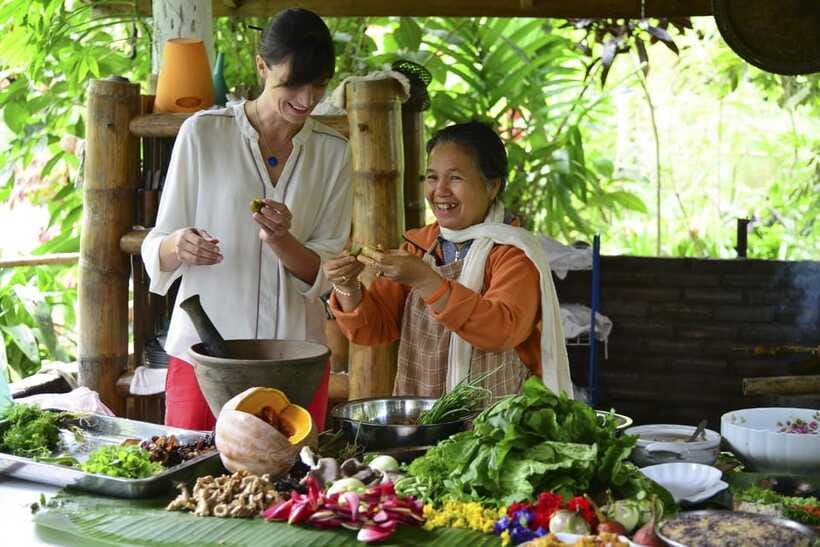
At $45 per person, the experience is not the cheapest way to eat in Luang Prabang. It is good value if you want several services combined: market transport by bicycle or tuk tuk, an English-led ingredient tour, instruction, ingredients, a full lunch, and recipes to take home.
The price also covers the setting. You are not only paying for a basic kitchen lesson. You get a class connected with a heritage hotel and a riverside restaurant near one of Luang Prabang’s important temples.
Value depends on your priorities. If you mainly want a cheap meal, spend the money at a local restaurant instead. If you want to understand Lao ingredients and leave with skills you can use, the price is easier to justify.
The small-group limit of 10 matters here. A class of that size should give you a better chance to hear the chef and take part than a large demonstration. Still, the shared-dish format means your personal kitchen time depends on how the group divides the tasks.
Free cancellation up to 24 hours before the activity and the reserve-now, pay-later option reduce the risk of booking early. Those policies are useful if your Luang Prabang plans are still moving around.
Who will enjoy this most
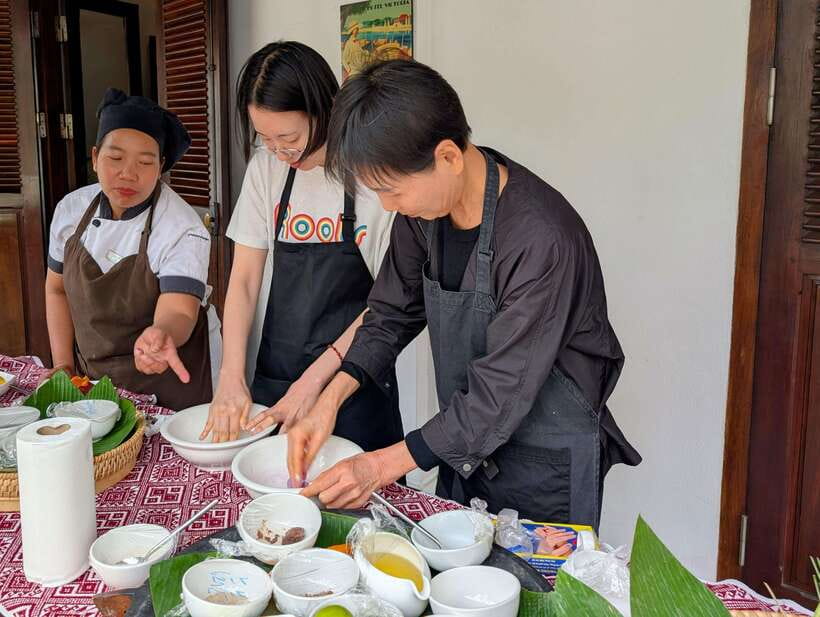
I would recommend this experience to food-focused visitors who want more than a restaurant meal. It suits couples, small groups, solo participants, and beginners. A solo participant once received a private class when no one else had booked, though you should not count on that arrangement.
It is also a good choice if you enjoy cultural activities that are not built around a long lecture. The market, tasting, cooking, and lunch connect naturally. You see, handle, prepare, and eat the food in one morning.
Vegetarians can take part if they notify the provider in advance. That point matters because some of the described dishes use pork or chicken. Ask about the final menu before the day if your diet is strict.
You should be comfortable standing for extended periods. The activity is not suitable for wheelchair users, babies under one year, or people over 95. Baby carriages are not allowed, and drinks cannot be carried in the vehicle. Bring a hat, especially for the outdoor market portion.
The small drawbacks to weigh
The preparation break is the biggest issue. It can be pleasant free time, but it reduces the amount of active cooking you do. If you want to practice every stage of every recipe, ask how much hands-on work is planned for your group.
The transport and timing also deserve attention. The activity is advertised at around four hours, while the detailed schedule totals about three hours and includes the market, cooking, and lunch. Treat it as a half-day experience with some flexibility rather than a precise 9:00 to 1:00 appointment.
The menu may vary. That is normal for a cooking class based on market ingredients, but it means you cannot guarantee a favorite dish. Drinks cost extra, and the meal is a group effort rather than a private chef lesson.
These are modest limitations, not deal breakers. The strong instruction, scenic lunch, recipes, and market context make the experience more useful than a standard demonstration class.
Should you book this Lao cooking class?
Book it if you want a relaxed, food-centered morning that connects Luang Prabang’s market with the Mekong. I especially recommend it if you are curious about herbs and produce, enjoy eating what you make, and like the idea of learning from an instructor such as Noi or Vannasone.
Skip it if you want four uninterrupted hours of intensive cooking or if you dislike standing and group work. The two-hour preparation pause may test your patience, and you will not necessarily complete each dish alone.
For most food lovers, the balance is favorable. You get a guided market visit, several Lao dishes, an English-speaking chef, a small group, a riverside lunch, and recipes for $45. Just arrive expecting a gentle cultural morning, not a professional kitchen boot camp.
FAQ
How long does the Lao cooking class last?
The activity is listed as four hours, with a detailed schedule of about one hour for sightseeing, two hours for cooking, and one hour for lunch. The market transfer and preparation break can affect the exact timing.
Where does the experience begin?
You meet at Victoria Xiengthong Palace on Kounxoau Road in Ban Phonehueng, near Wat Xiengthong Temple in Luang Prabang.
Is transportation to the market included?
Yes. The experience includes a morning market tour by bicycle or tuk tuk.
Are drinks included?
No. Drinks are not included, and tips are also separate.
Can I request vegetarian dishes?
Yes. Vegetarian options are available, but you need to notify the provider in advance.
Is the class suitable for wheelchair users or babies?
No. The activity is not suitable for wheelchair users or babies under one year. Participants should also be comfortable standing for extended periods.
Just added around the world
- Aroidee’s Farm-Fresh Thai Cooking Experience★ 5.0 · 8 reviews
- Signature Thai Cooking Course★ 5.0 · 79 reviews
- Private Half-Day Thai Cooking Class in Chiang Mai★ 5.0 · 4 reviews
- Half Day Guided Thai Cooking Class in Chiang Mai★ 5.0 · 13 reviews
- Online Thai and Akha Cooking Class★ 5.0 · 70 reviews
- Private Virtual Thai Cooking Class★ 5.0 · 9 reviews
- Northern Thai Cooking Class in Chiang Mai in a Countryside Home★ 5.0 · 2 reviews
- Traditional Northern Home Cooking Experience with Raunkaew Yanon Family★ 5.0 · 4 reviews
Cooking Classes, compared.
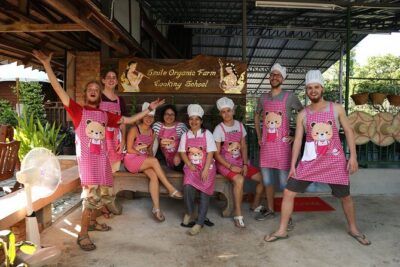
Half-Day Thai Cooking Class at Organic Farm in Chiang Mai
Read our review →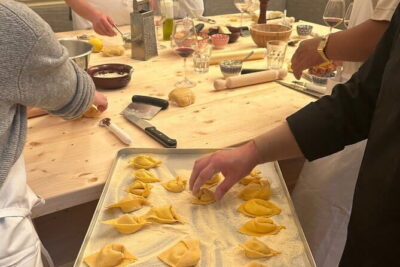
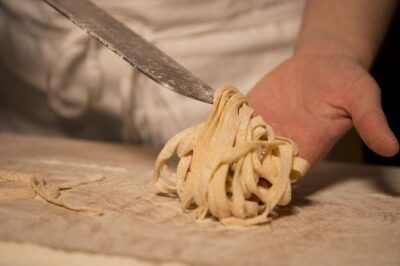
3 in 1 Cooking Class near Navona: Fettuccine, Ravioli & Tiramisu
Read our review →
Pasta & Tiramisu Cooking Class with Unlimited Wine
Read our review →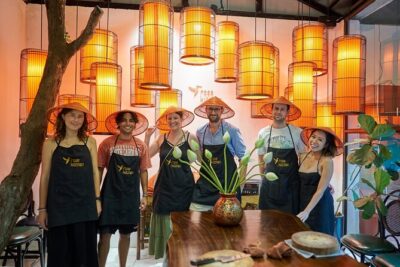
Hanoi Cooking Class: Culture, Local Market & Meaning CSR Impact
Read our review →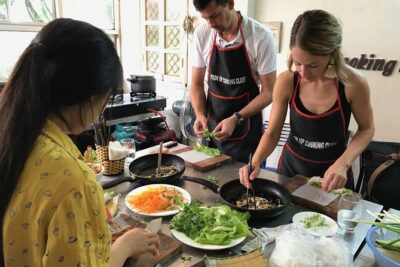
5 Traditional Dishes Hanoi Cooking Class with Market Trip
Read our review →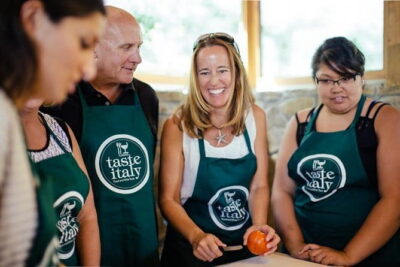
Cooking Class and Lunch at a Tuscan Farmhouse with Local Market Tour from Florence
Read our review →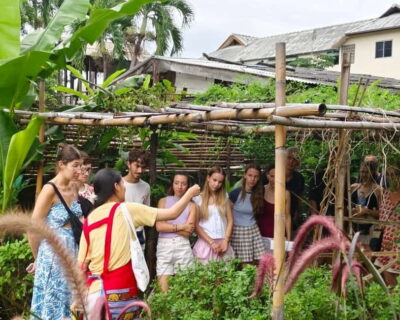
Cooking Class, Market & Thai Herbs Garden Tour
Read our review →Lists this class appears in