
REVIEW · LISBON DISTRICT, PORTUGAL
Lisbon: Portuguese street food cooking class with Drinks
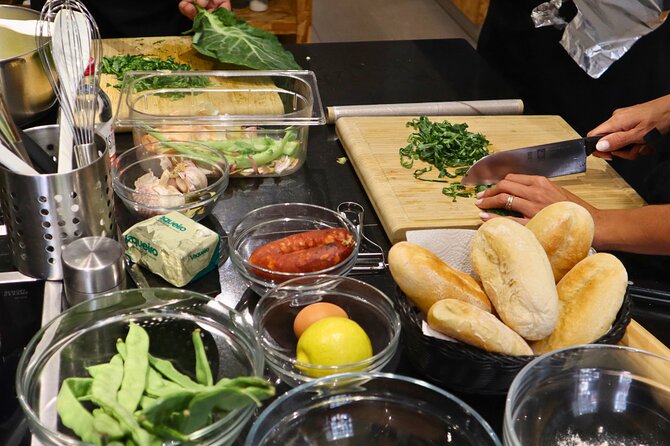
Come hungry, leave with recipes. This two-hour class at Compadre Cooking School gives you a tasty way to meet Portuguese food beyond the usual pastel de nata and codfish. I like the focus on everyday dishes, especially the pork bifana and caldo verde, and I like that you eat the meal you help prepare. The price is also fair at $55, with ingredients, instruction, wine, Ginja, and the shared meal included.
The main consideration is that this is a group class, so your cooking time may vary depending on the pace of the room. One participant felt the guidance was occasionally a little too hands-on, while most praised the clear teaching and the chance for everyone to take part. You also need comfortable shoes, and the kitchen is not suitable for wheelchair users.
Key points before you book
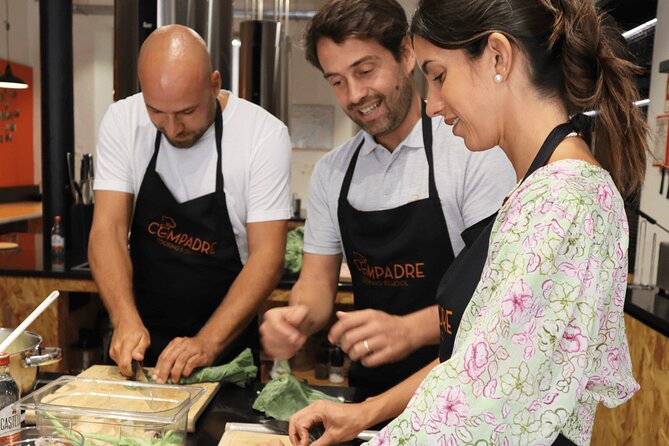
- Three everyday Portuguese dishes: Prepare bifana, caldo verde, and peixinhos da horta, the fried green bean dish linked to the origin of tempura.
- A full meal, not just a demonstration: You help cook, then sit down together to eat the finished dishes.
- Portuguese drinks included: Enjoy one glass of red or white wine and a tasting of Ginja, the country’s cherry liqueur.
- Good for beginners: No cooking experience is required, and the English-speaking chefs guide each step.
- A social two-hour activity: You work at shared cooking stations and eat with the rest of the group.
- Strong value at $55: Ingredients, instruction, drinks, and food are all covered, though extra drinks cost more.
Why these dishes tell you more about Portugal
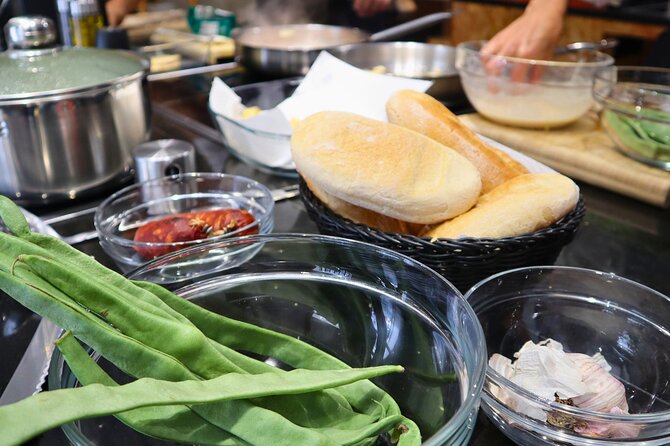
A cooking class can be a useful break from sightseeing, but this one earns its place by choosing foods tied to ordinary Portuguese life. These are not precious restaurant creations. They are the sort of satisfying dishes associated with snack bars, festivals, family kitchens, and quick meals.
The bifana is the best example. It is a simple pork sandwich, but the pleasure comes from the seasoning, the tender meat, and the way a few modest ingredients become a much-loved national snack. Preparing it yourself helps you understand why such a straightforward sandwich matters.
Caldo verde offers a different lesson. This traditional soup, made with potatoes and finely sliced collard greens, is comfort food in a bowl. It is also practical and inexpensive, which tells you something about the role of home cooking in Portugal. One participant singled out the soup as the favorite dish, while others praised the recipes for being simple enough to make again at home.
The third dish, peixinhos da horta, may be the surprise. Green beans are prepared and fried in a way that recalls tempura. The class presents the dish as the inspiration for the famous Japanese preparation, giving you a small but memorable link between Portuguese and global food traditions.
That mix makes the class more useful than one focused only on well-known tourist foods. You still get a taste of Portugal, but you also learn what people eat when they want something familiar, filling, and easy to share.
More Food and Drink Trips in Lisbon:
- Lisbon Market and Food Tour with Cooking Class and Lunch
★ 5.0 · 117 reviews - Lisbon: Portuguese Cooking Class with Wine Tasting
★ 5.0 · 4 reviews - Small Group Cooking Class & Market Food Tour in Florence
★ 5.0 · 1,574 reviews
Arriving at Compadre Cooking School
The meeting point is the Compadre Cooking School kitchen in the Lisbon District. You arrange your own way there, since transportation is not included. Arrive five minutes early so you can settle in, put on suitable shoes, and start without rushing.
The school has been described as modern, clean, spacious, and welcoming. That matters in a hands-on class. You want enough room to work without bumping elbows, and you want cooking surfaces that feel orderly and well cared for. The available feedback repeatedly highlights the professional cooking stations and spotless preparation areas.
Wear comfortable clothing and shoes suitable for standing and cooking. Smoking is not allowed, and alcohol or drugs are prohibited. The class provides the drinks that are part of the experience, but any additional drinks are at your own cost.
The class is taught in English. That makes it a practical choice if you want food instruction and cultural background without needing Portuguese. The chefs explain the dishes, their place in daily life, and the steps needed to recreate them.
The opening food story
The class begins with a short introduction to the dishes and their cultural background. This is an important part of the experience, because the recipes make more sense once you know where they fit in Portuguese life.
You hear how these foods are connected to local snack bars and public celebrations, rather than being treated simply as items on a menu. The aim is not to turn the class into a long lecture. Instead, the background gives meaning to the ingredients and helps you notice why each dish is considered familiar and important.
I like this approach for first-time visitors. You may have eaten Portuguese food before, but it is easy to leave Lisbon knowing the names of dishes without understanding how people actually enjoy them. Here, the cooking gives you a practical connection to that food culture.
The class also keeps the recipes manageable. You are not expected to become a professional cook in two hours. You learn methods and combinations that can work in an ordinary kitchen after you return home.
Cooking bifana, caldo verde, and peixinhos da horta
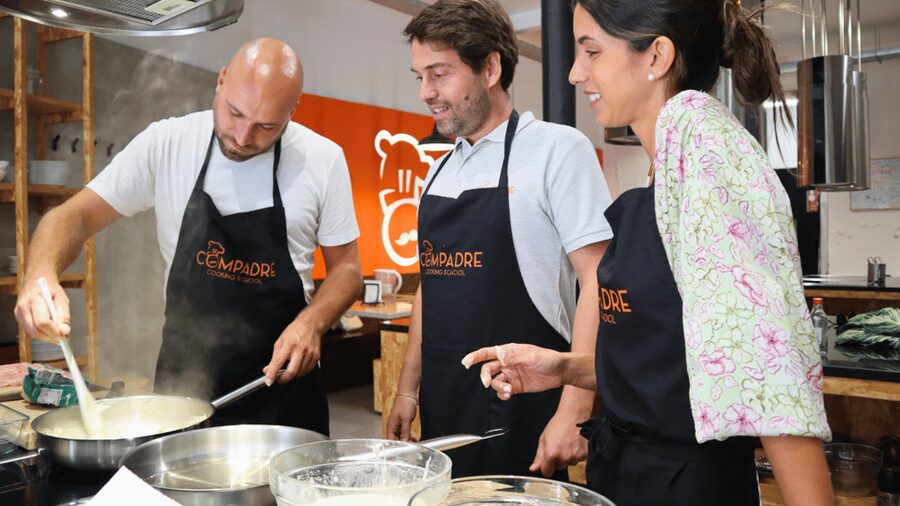
After the introduction, you work alongside the other participants under the chef’s direction. The class is designed for beginners, so you do not need special skills or previous cooking experience. You should still expect to take part rather than simply watch.
That distinction is important. The strongest part of the experience is the shared work. One participant praised the fact that everyone had enough steps to stay involved through most of the process. Another noted that the cooking areas were spacious, which makes the practical work easier and more pleasant.
The bifana gives the class its most recognizable snack. You learn how to prepare the pork and assemble the sandwich, with the chef explaining the process as you work. It is a useful recipe to take home because it does not depend on complicated presentation.
The caldo verde lets you work with a classic Portuguese soup. The recipe is straightforward, yet the finished dish has plenty of character. If you want a dish that feels especially practical for home cooking, this is likely the strongest candidate.
The peixinhos da horta adds texture and fun to the menu. Fried green beans provide a contrast to the soup and sandwich, and the connection to tempura gives the dish a story worth remembering. It is also the sort of food that works well at a shared table, where everyone can try a little.
The instructors guide the group, but the exact amount of individual attention can depend on the room. Most of the available feedback praises the teaching, with particular warmth for Marta and Anna. One person felt that Anna sometimes stepped in too much instead of letting participants handle the work themselves. That is a minor but fair point to keep in mind if you prefer a slower, more independent class.
More Food Trips in Lisbon:
- Athens: Food Market Visit and Cooking Class with Wine
★ 4.9 · 1,087 reviews - Undiscovered Charleston: Half Day Food, Wine & History Tour with Cooking Class
★ 5.0 · 948 reviews - Vietnamese Food Cooking Class in Hanoi with Market Experience
★ 5.0 · 778 reviews - Milan: Italian Cooking Class with Food and Wine
★ 4.7 · 509 reviews
The shared meal is part of the lesson
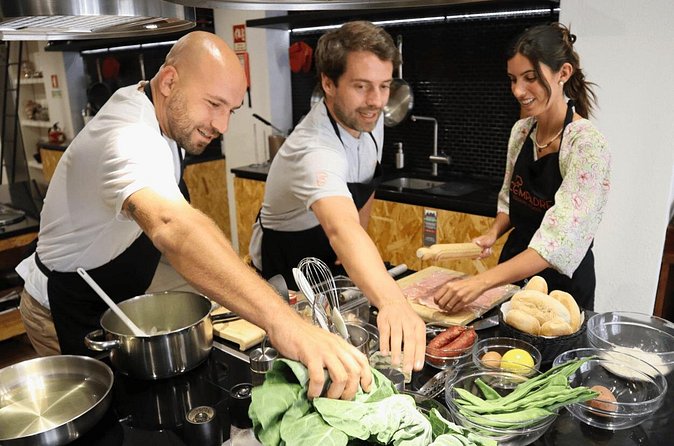
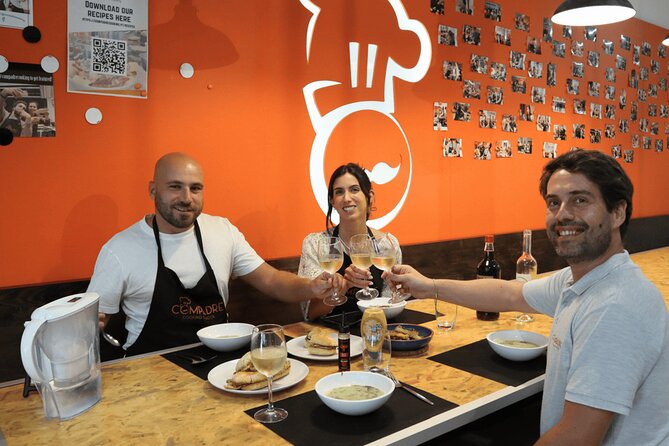
Once the cooking is finished, everyone sits down to eat the prepared dishes. This is not a quick sample at the counter. The meal is part of the two-hour experience and gives you time to appreciate how the recipes work together.
The shared table also changes the mood of the class. You are not just following instructions and leaving with a sheet of recipes. You get a chance to talk with the other participants and compare the dishes you have just made. Several people valued this social finish, especially because the group can include people from different countries.
I think this is one of the best reasons to choose the class early in a Lisbon visit. It offers a friendly introduction to Portuguese food while giving you a natural setting to meet others. It is especially useful for solo visitors and couples who want an activity with conversation built in.
The food itself receives the strongest praise. People repeatedly describe the recipes as delicious, simple, and worth making at home. The soup, bifanas, and fried beans each have a clear role on the table, so the meal feels varied rather than repetitive.
Wine and Ginja finish the experience
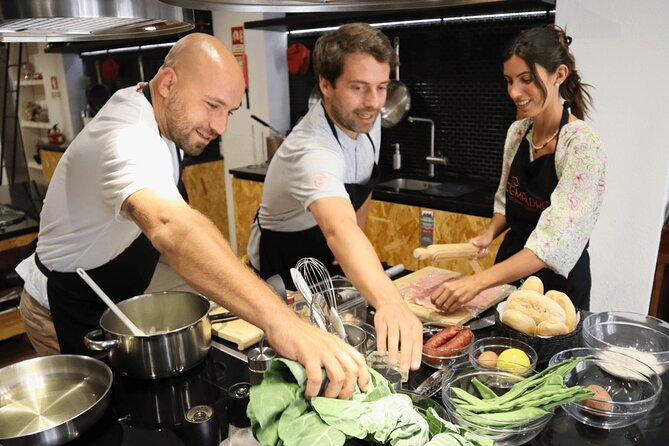
The class includes one glass of wine, either red or white, with the meal. You do not need to purchase a drink package, and the wine helps make the shared table feel like a proper Portuguese meal rather than a classroom exercise.
At the end, you taste Ginja, a traditional Portuguese cherry liqueur. This adds a small but distinctive local touch. If you have encountered Ginja in Lisbon before, the tasting gives you a chance to connect the drink with the food and social customs introduced during the class.
The included drinks help justify the $55 price. You receive the ingredients, chef instruction, meal, wine, and Ginja in a compact two-hour session. Additional drinks are not included, so budget extra only if you want more than the provided serving.
One piece of feedback focused on Roy and the chance to learn more about a drink, including its production process and industry standards. That comment suggests the drink portion can sometimes receive extra attention, though the exact presentation may depend on the instructor and class format.
Is $55 a good value?
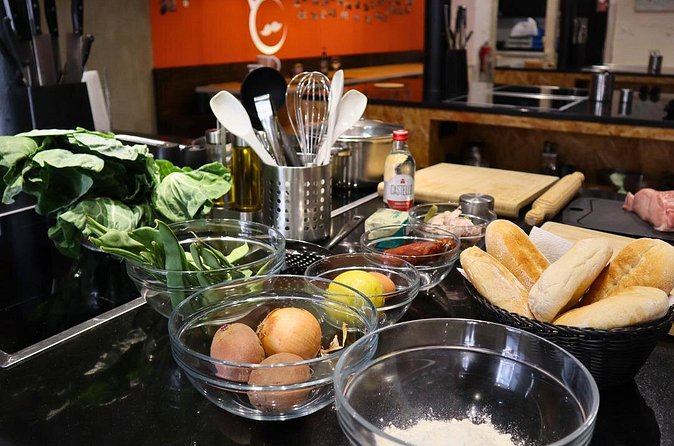
For Lisbon, $55 is a reasonable price for a two-hour food activity that includes a complete meal and drinks. The value is strongest if you want more than a tasting. You are paying for participation, instruction, ingredients, and the chance to repeat the recipes later.
A restaurant meal could cost less, depending on where you eat, but it would not give you the cooking guidance or the background on the dishes. A more elaborate cooking workshop could cost more, especially if it lasts half a day. This class sits in the middle: short enough to fit into a busy Lisbon schedule, but substantial enough to feel like a real activity.
The price also works well for people who want a break from museums and walking tours. Two hours is long enough to cook and eat without taking over your day. You can schedule it as an afternoon or evening activity, depending on the available starting time.
The value is weaker if you want a private class, advanced culinary training, or a long market visit. Nothing in the experience suggests private instruction or a professional-level course. This is a social introduction to Portuguese home-style and street food.
Who will enjoy this class most?
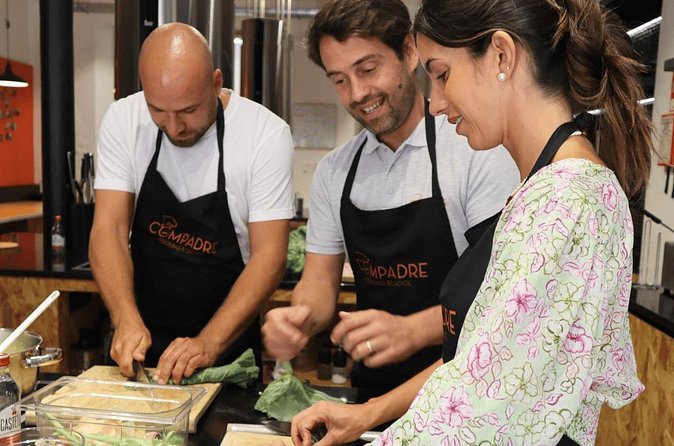
I would recommend it to food-focused visitors, curious beginners, couples, solo visitors, and families with participants who can comfortably stand and work in a kitchen. The recipes are approachable, and the instruction is in English.
It also suits anyone who wants to understand Portugal through ordinary food rather than only famous pastries and seafood. The dishes give you a broader picture of what people eat at snack bars, festivals, and informal gatherings.
You may want to choose another activity if you dislike group work or prefer to watch a chef demonstrate everything. This class expects participation. You chop, prepare, cook, and share the final meal with the group.
People with specific dietary needs should contact the school in advance. The recipes can be adapted, but you should not wait until the class begins to raise the issue. Also note that the activity is not suitable for wheelchair users.
Practical timing and preparation
Plan for two hours, plus the time needed to reach the kitchen. Since transportation is not provided, check your route before leaving and arrive five minutes early.
Comfortable shoes are essential. You will be working in a kitchen, and the guidance specifically asks you to wear suitable footwear and comfortable clothing. Leave bulky bags and anything that could get in the way at your accommodation if possible.
The class has free cancellation up to 24 hours before the start time for a full refund. You can also reserve and pay later, which helps if your Lisbon schedule is still changing.
The overall rating is 4.9 from 37 reviews, with nearly all feedback giving the highest mark. The praise centers on the food, friendly instructors, clean kitchen, clear explanations, and shared meal. Keep the one small criticism in perspective: group classes always involve some variation in how much individual attention you receive.
Should you book this Lisbon cooking class?
Book it if you want an easy, social introduction to Portuguese food and like the idea of cooking your own meal. The strongest reasons are the unusual menu, the practical recipes, the friendly English instruction, and the included wine and Ginja.
I especially recommend it if you have already sampled Lisbon’s famous pastries and want something more connected to everyday eating. The bifana, caldo verde, and peixinhos da horta give you three different tastes and three useful recipes to remember.
Skip it if you need a private class, wheelchair access, or a long technical course. Otherwise, $55 buys a well-rounded two-hour activity with enough food, instruction, and local character to make it a sensible addition to a Lisbon visit.
FAQ
Where does the cooking class take place?
The class takes place at the Compadre Cooking School kitchen in Lisbon District, Portugal.
How long does the experience last?
The cooking class lasts two hours.
What dishes will I learn to prepare?
You will learn to prepare bifana, a Portuguese pork sandwich, caldo verde, a traditional collard greens soup, and peixinhos da horta, fried green beans associated with the origin of tempura.
Is the class taught in English?
Yes. The listed instruction language is English.
Do I need cooking experience?
No. Previous cooking experience is not required.
Are food and ingredients included?
Yes. The cooking ingredients and a shared meal of the prepared dishes are included.
Which drinks are included?
You receive one glass of red or white wine and a tasting of Ginja, a traditional Portuguese cherry liqueur. Additional drinks are not included.
What should I wear or bring?
Bring comfortable shoes and wear comfortable clothing suitable for cooking.
Can dietary requirements be accommodated?
The recipes can be adapted for specific dietary needs, but you should contact the school in advance to discuss your requirements.
Just added around Lisbon
- Lisbon: Traditional Portuguese Cooking Class★ 5.0 · 41 reviews
- Lisbon: Setúbal Market and Wine tour with Cooking class★ 5.0 · 4 reviews
- Lisbon: Portuguese Petiscos Cooking Class★ 4.7 · 6 reviews
- Lisbon: Portuguese Cooking Class with Wine Tasting★ 5.0 · 4 reviews
- Lisbon: Pasteis de Nata Baking Class★ 5.0 · 134 reviews
- Lisbon: Portuguese Cooking Class for Beginners★ 4.9 · 78 reviews
- Private Traditional Portuguese Cooking Class in Lisbon with Paula★ 5.0 · 50 reviews
- Lisbon Market and Food Tour with Cooking Class and Lunch★ 5.0 · 117 reviews
Cooking Classes, compared.

Half-Day Thai Cooking Class at Organic Farm in Chiang Mai
Read our review →

3 in 1 Cooking Class near Navona: Fettuccine, Ravioli & Tiramisu
Read our review →
Pasta & Tiramisu Cooking Class with Unlimited Wine
Read our review →
Hanoi Cooking Class: Culture, Local Market & Meaning CSR Impact
Read our review →
5 Traditional Dishes Hanoi Cooking Class with Market Trip
Read our review →
Cooking Class and Lunch at a Tuscan Farmhouse with Local Market Tour from Florence
Read our review →
Cooking Class, Market & Thai Herbs Garden Tour
Read our review →Lists this class appears in