
REVIEW · SPLIT, CROATIA
Split Cooking Class
Split’s markets make a fine classroom. This five-hour cooking experience pairs a green-market and fish-market visit with practical lessons from chefs who have worked in some of Croatia’s best restaurants. I especially like the chance to choose ingredients before cooking, and the relaxed meal with wine at the end. The main drawback is that you need to enjoy seafood and hands-on work, though vegetarian and market-free options are available.
You’ll meet at 9 a.m. on Hrvojeva Street, close to Diocletian’s Palace, then walk through central Split before settling into a professional cooking academy. Chef Marin, Željko, and Drago are among the instructors praised for their patience and warmth. Plan on giving the whole morning and lunch to the experience, not squeezing it between other major sights.
Key points to know before booking
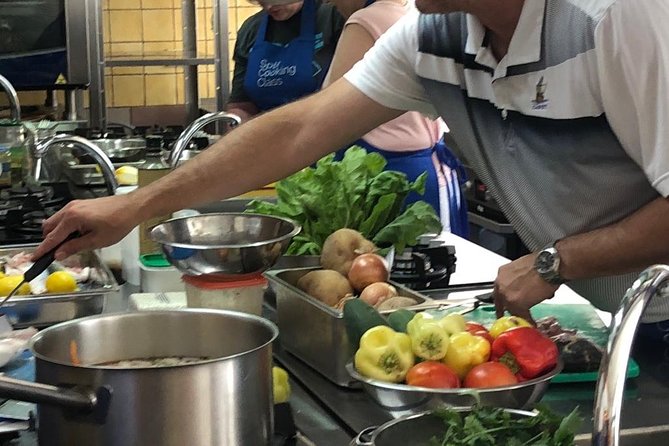
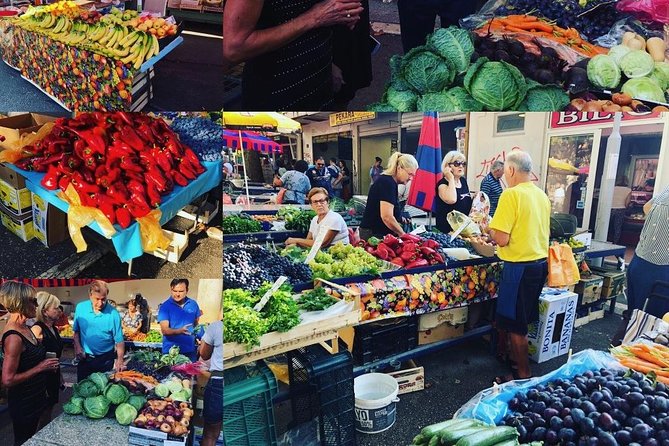
- The morning begins at Split’s Green Market, where you help select seasonal vegetables and other ingredients from local producers.
- The fish market adds real local flavor, with instruction on choosing and cleaning fish rather than simply watching a demonstration.
- Cooking is genuinely hands-on, including work with seafood, bread, sauces, desserts, and traditional Dalmatian side dishes.
- Chef-led instruction is a major strength, with teachers such as Marin, Željko, and Drago offering cooking advice and local context.
- The class ends with a generous shared lunch, accompanied by wine, snacks, coffee, tea, and other beverages.
- The small-group format matters, with a maximum of 12 people and vegetarian or market-free versions available.
Why this Split cooking class feels different
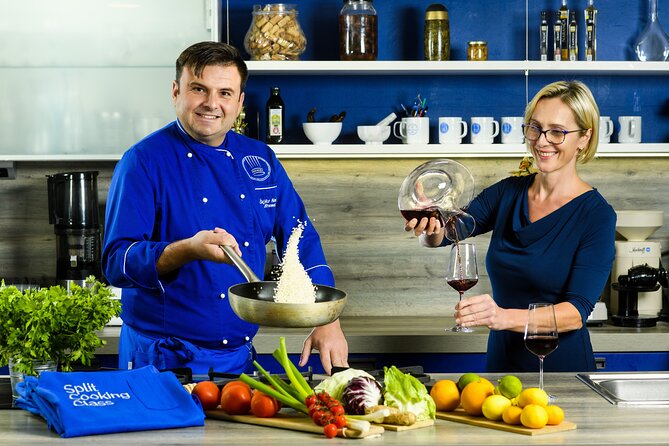
Many food classes start in a kitchen with ingredients already measured and waiting. This one begins outdoors, in the places where Split residents shop. That first step gives the meal a sense of place. You see the produce and seafood before they become lunch, and you learn how the city’s food culture depends on fresh, seasonal supplies.
I like that the market walk is not treated as a quick photo stop. The route includes the Green Market and Split Fish Market, plus some explanation of the city along the way. One class even included a short old-town walk and local history before reaching the cooking school. It is a useful way to get your bearings near the palace without signing up for a separate city tour.
The class is designed for all skill levels. You do not need to be an experienced cook, and you should not expect to sit at the edge of the room while a chef does everything. You will chop, prepare, cook, and take part in the meal. The instructors help where needed, but the point is to work in the kitchen.
That makes this a strong choice for couples, families, friends, and solo food lovers. It also suits people who already cook at home. Several dishes and techniques are practical enough to repeat later, including fish preparation, bread baking, sauce making, and risotto.
A few more cooking classes around the world worth a look
- Half-Day Thai Cooking Class at Organic Farm in Chiang Mai
★ 5.0 · 19,087 reviews - Florence: Pasta Cooking Class with Unlimited Wine
★ 4.9 · 10,285 reviews - 3 in 1 Cooking Class near Navona: Fettuccine, Ravioli & Tiramisu
★ 5.0 · 7,376 reviews
Starting at the Green Market
Your 9 a.m. meeting point is Hrvojeva 4, 21000 Split. From there, the class heads toward the Green Market, where you help select vegetables and other ingredients for the meal. The produce changes with the season, so the exact menu is not fixed in the information provided. That is part of the appeal: Croatian cooking is tied to what is available now, not to a rigid restaurant menu.
The market visit gives the chef a chance to explain local products and how they are used. You might learn why one vegetable is chosen over another or how a particular ingredient fits into a traditional dish. The pace includes some walking, but it is described as a small amount. If walking through the markets is not suitable for you, a class without the market visits is available.
The market portion also helps you understand the price. You are paying for instruction, but you are also getting a short food-focused introduction to Split, ingredient shopping, snacks, drinks, and a substantial lunch. It is more than a standard cooking demonstration.
At Split Fish Market
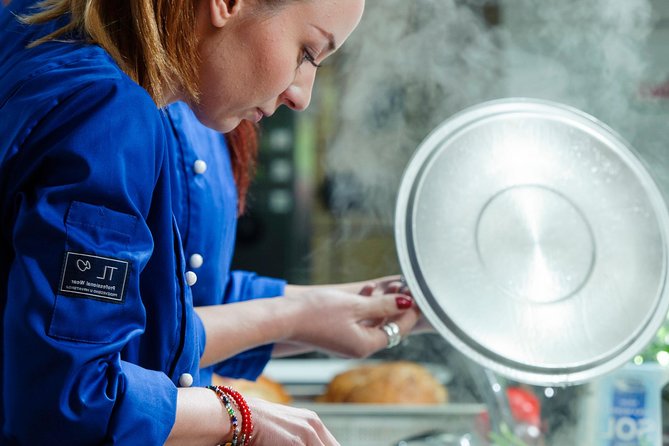
The fish market is the most distinctive stop. You help choose seafood with the chef, then learn more about the fish that will be prepared in class. For people from places with a limited seafood selection, this can be a particularly useful part of the morning.
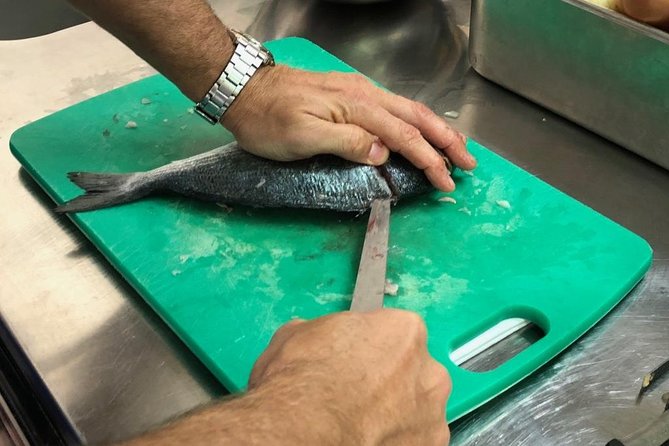
Fish preparation is not skipped. The class may include cleaning or filleting fish, and this is one area where the teaching approach matters. The instructors are expected to guide beginners patiently, so you can ask questions and work at a comfortable pace. It is a practical skill, not just a story about coastal cooking.
Seafood is central to the class experience, but the organizers ask you to provide dietary requirements when booking. A vegetarian option is available if requested in advance. If you have allergies or strongly dislike fish, contact the provider before committing, since the exact meal changes and the standard format includes a fish-market visit.
The fish market can also be the point where some people decide the class is not for them. Handling and cleaning fish is part of the work. If you prefer a gentler food activity, choose the market-free or vegetarian format and make your requirements clear ahead of time.
Walking to a professional cooking academy
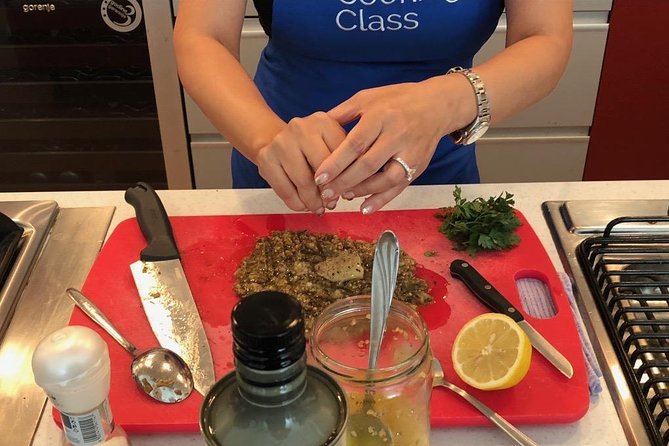
After the markets, you continue to the cooking school near Split’s historic center. The school is close enough to the palace to reach on foot from many central accommodations, and the setting has proper kitchen facilities rather than a makeshift counter.
A snack and drink await you before the main preparation begins. This small pause is useful after the morning walk and gives the group time to meet. Classes are capped at 12 people, though some sessions are smaller. One group had seven people, while an off-season class was especially small. Group size can affect how much direct attention you receive, but even the maximum is reasonably limited for a practical lesson.
The experience may divide the group into smaller working sections. In one format, the fish and vegetable preparation offered the most direct participation, while bread and dessert included more watching. That balance is worth understanding. You will be actively involved, but not every dish will require every person to perform every step.
The chefs bring professional experience from leading Croatian restaurants, yet the tone appears friendly rather than formal. Marin is praised for his enthusiasm, Željko for patient instruction, and Drago for his personable approach. The best part of the teaching is not fancy culinary language. It is the explanation of why a method works and how you can use it at home.
Same place, a different thing to cook:
- Florence: Pasta & Tiramisu Cooking Class with Unlimited Wine
★ 4.9 · 6,708 reviews - Hanoi Cooking Class: Culture, Local Market & Meaning CSR Impact
★ 5.0 · 5,147 reviews - 5 Traditional Dishes Hanoi Cooking Class with Market Trip
★ 5.0 · 4,890 reviews - Cooking Class and Lunch at a Tuscan Farmhouse with Local Market Tour from Florence
★ 5.0 · 4,831 reviews
Cooking seafood, bread, risotto, and more
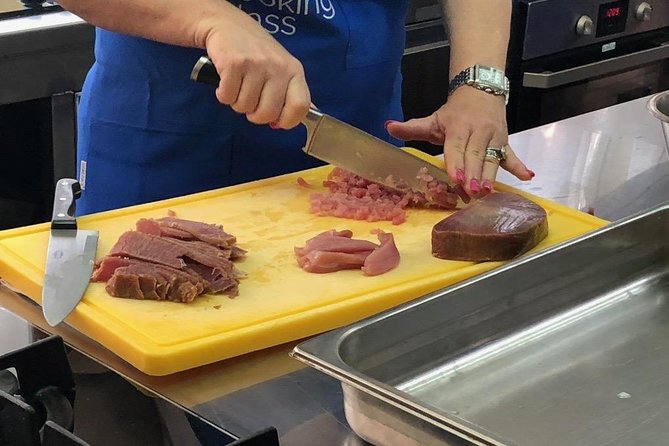
The meal is built from scratch over the course of the class. Past menus have included several seafood dishes, bread, desserts, sauces, and risotto. A well-prepared risotto was a particular highlight for one participant, while another class included stingray, fish filleting, and freshly baked bread.
These details show the range of the experience. You are not simply learning one Croatian recipe. You may work across several kinds of preparation, from handling fresh fish to building a sauce base or preparing a sweet course. The precise menu varies, so book this for the process and the local ingredients rather than for one guaranteed dish.
The traditional side dishes can be just as useful as the seafood. One class worked with Swiss chard, potatoes, and garlic, a simple combination that reflects the coastal cooking of Dalmatia. It is the sort of dish you can recreate without special equipment or hard-to-find ingredients.
The lessons also include cultural context. The chef explains what you are making and why it matters, rather than treating each recipe as an isolated technique. You learn about Croatian food through the ingredients, the market, the meal, and the habit of sitting down together at midday.
You should arrive ready to participate. The class is relaxed, but it is not passive. Expect to chop, prepare, stir, shape, clean, or cook depending on the menu. If you want to watch a chef prepare a meal while you take notes, this is not the right format.
The shared lunch and local drinks
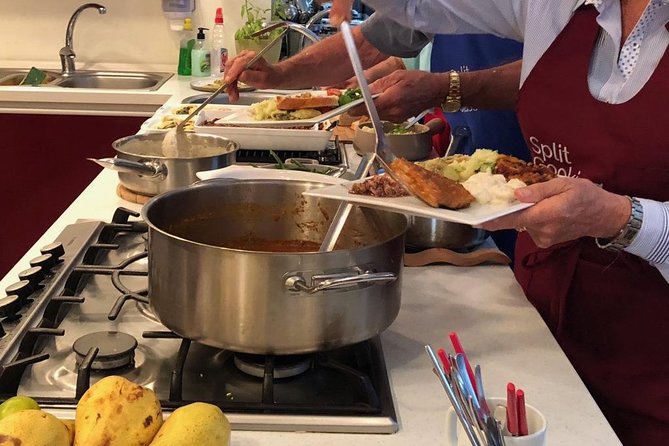
The reward comes at the end, when the group sits down to eat what it has prepared. Lunch is included, along with beverages, snacks, wine tasting, and coffee or tea. The shared table is an important part of the experience, especially in a Mediterranean setting where a midday meal is meant to be social and unhurried.
You may taste several courses rather than a single starter. The published sample menu only names a Croatian meal as the starter, while the class descriptions and participant experiences point to multi-course cooking that can include seafood, bread, side dishes, risotto, and dessert. Since the menu is seasonal, ask about the planned dishes if a particular ingredient matters to you.
The wine is not an afterthought. Having a drink while cooking and then sitting down together helps the experience feel like a meal with friends rather than a timed lesson. Still, the class includes much more than wine, so non-drinkers are not left without refreshments.
Plan to be hungry. The food is described as generous, and the class runs into lunch. Eating a large breakfast beforehand would be a mistake, especially since snacks are served during the session.
What the $211.72 price buys you
At $211.72 per person, this is not a budget activity. The value depends on how you spend your time in Split. You are paying for roughly five hours, a market visit, ingredient selection, professional instruction, kitchen use, snacks, drinks, wine tasting, and lunch. Hotel pickup and drop-off can also be included if you select that option.
For a short city break, the price can make sense because it combines a food tour, a practical class, and a meal. You do not need to arrange separate market visits, restaurant research, or a food-focused excursion. The class also gives you skills and recipes to take home, which adds value beyond the lunch itself.
I would be more cautious if you are mainly looking for a cheap meal or a quick activity between palace visits. The class occupies most of the morning and reaches into lunchtime. It also asks you to work, especially if seafood preparation is part of the menu. The price is easiest to justify if you care about food, local culture, and learning something you can repeat at home.
Advance demand is worth noting. It is booked an average of 49 days ahead, so last-minute availability may be limited, particularly during the busy season. That does not guarantee every date will sell out, but it is a good reason to reserve early if this is one of your main Split plans.
Who will enjoy it most
I would recommend this class to:
- Couples who want a shared activity beyond sightseeing
- Families with older children who are comfortable participating in kitchen work
- Home cooks who want to learn fish preparation or Croatian techniques
- Solo visitors who enjoy meeting people over a meal
- Food-focused visitors who want direct contact with local markets
- Anyone seeking a rainy-day activity with indoor cooking and lunch
It is less suitable if you dislike fish, avoid kitchen work, have serious dietary restrictions that have not been discussed in advance, or want a short and inexpensive excursion. The vegetarian option helps, but you still need to state your requirements when booking.
The class is also a good fit for a slower day in Split. Do not schedule a packed afternoon immediately afterward. You might finish in time for other plans, but the full value comes from allowing the morning, cooking, eating, and conversation to unfold without watching the clock.
Practical details that matter
The experience is offered in English and uses a mobile ticket. It begins at 9 a.m. at Hrvojeva 4 and ends back at the meeting point. Hotel pickup and drop-off are available only if you choose the relevant option.
A small amount of walking is involved between the markets and school. The provider also offers a version without the vegetable and fish market visits, which is useful if you prefer less walking or want to focus on the kitchen.
Tell the provider about allergies, dietary restrictions, or vegetarian needs when booking. The experience has a maximum of 12 people, though group sizes can be smaller, particularly outside the busiest season.
Free cancellation is available when you cancel at least 24 hours before the local start time. Changes or cancellations within 24 hours are not accepted for a refund. The class also requires a minimum number of participants, so if the provider cancels for that reason, you can receive a different date or experience, or a full refund.
Should you book the Split Cooking Class?
Book it if you want to understand Croatian food by shopping for it, preparing it, and eating it with other people. The strongest parts are the market visits, the chance to handle fresh fish, the patient chef instruction, and the generous shared meal. Chef Marin, Željko, and Drago each receive praise for making the kitchen friendly and practical rather than intimidating.
Skip it if you want a low-cost activity, dislike seafood, or prefer to observe instead of cook. For everyone else, the $211.72 price is fair when you count the market tour, instruction, drinks, wine, and lunch. I would reserve ahead, request the vegetarian or market-free format if needed, and leave the rest of the day open.
FAQ
Where does the Split Cooking Class begin?
It begins at Hrvojeva 4, 21000, Split, Croatia, at 9 a.m. The activity ends back at the meeting point.
How long does the cooking class last?
The experience lasts approximately five hours and includes the market visits, cooking, and lunch.
Is the class offered in English?
Yes. The class is offered in English.
Are the market visits included?
The morning format includes visits to Split’s Green Market and Fish Market, where ingredients are selected. A version without the vegetable and fish market visits is also available.
Is a vegetarian option available?
Yes. A vegetarian option is available, but you should request it when booking.
How many people can join the class?
The maximum group size is 12 people.
What is included in the price?
The experience includes beverages, lunch, snacks, wine tasting, and coffee or tea. Hotel pickup and drop-off are included only if that option is selected.
Just added around the world
- Aroidee’s Farm-Fresh Thai Cooking Experience★ 5.0 · 8 reviews
- Half Day Guided Thai Cooking Class in Chiang Mai★ 5.0 · 13 reviews
- Signature Thai Cooking Course★ 5.0 · 79 reviews
- Private Half-Day Thai Cooking Class in Chiang Mai★ 5.0 · 4 reviews
- Online Thai and Akha Cooking Class★ 5.0 · 70 reviews
- Private Virtual Thai Cooking Class★ 5.0 · 9 reviews
- Northern Thai Cooking Class in Chiang Mai in a Countryside Home★ 5.0 · 2 reviews
- 5 Hour Morning Thai Cooking Course★ 5.0 · 31 reviews
Cooking Classes, compared.
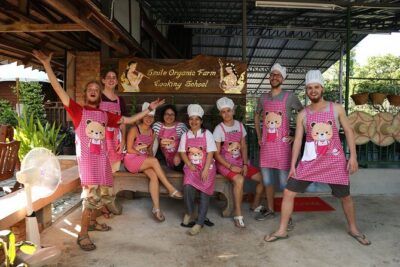
Half-Day Thai Cooking Class at Organic Farm in Chiang Mai
Read our review →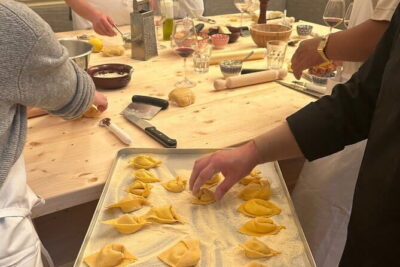
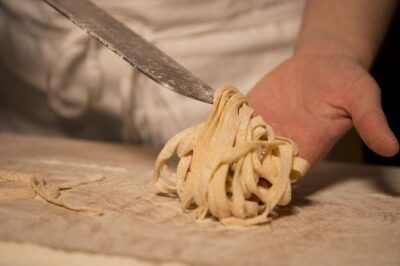
3 in 1 Cooking Class near Navona: Fettuccine, Ravioli & Tiramisu
Read our review →
Pasta & Tiramisu Cooking Class with Unlimited Wine
Read our review →
Hanoi Cooking Class: Culture, Local Market & Meaning CSR Impact
Read our review →
5 Traditional Dishes Hanoi Cooking Class with Market Trip
Read our review →
Cooking Class and Lunch at a Tuscan Farmhouse with Local Market Tour from Florence
Read our review →
Cooking Class, Market & Thai Herbs Garden Tour
Read our review →Lists this class appears in