
REVIEW · SINGAPORE
Singapore: Hands-on Cooking Class with Cultural Immersion
Food tells Singapore’s story. This three-hour class turns that story into lunch, with local instructors guiding you through family recipes, ingredient traditions, and a full three-course meal. I like the mix of hands-on cooking and cultural conversation, and I like that every weekday menu changes. The biggest catch is simple: you must climb to a second-floor conservation shophouse with no lift.
You begin with coffee or tea and nostalgic snacks, then take part in a heritage-themed ice-breaker before cooking. I also appreciate the human side of the class, including stories about how the instructors overcame difficult periods and helped bring stay-at-home mothers back into the workforce. The food is the main event, but the personal connection gives the morning more weight.
The $94 price is not cheap for a three-hour activity, but it covers ingredients, instruction, drinks, kitchen equipment, and a complete meal. If you want a quick demonstration, this may feel too involved. If you want recipes you can try at home and a useful introduction to Singaporean food culture, the cost is easier to justify.
Key Points at a Glance
- A different menu each day: Choose from seven fixed menus, including nasi lemak, laksa, curry chicken, char kway teow, and nasi biryani.
- Cooking takes place beside the Buddha Tooth Relic Temple: The studio is in Chinatown, making it easy to pair with a walk through the neighborhood.
- You cook three complete dishes: Each menu includes a main dish, a second savory item, and a dessert or sweet.
- The class is built around family recipes: Instructors explain where the dishes come from and how local ingredients shape their flavor.
- English-speaking instructors offer close guidance: Past classes have been led by instructors including Nur, Mrs Lee, Sara, Annie, Helen, Cindy, YY, and Wy Wy.
- The setting has one important limitation: The studio is on level two, with no lift, so it is not suitable for people with limited mobility.
A Food Class With a Singapore Story
Singaporean food is not one narrow cuisine. It reflects Malay, Chinese, Indian, Peranakan, and other influences that have shaped daily life on the island. This class gives you a practical way to see those connections, not through a long lecture, but through spices, dough, coconut, noodles, rice, and seafood.
The class opens in a relaxed way. You settle in with coffee or tea and small nostalgic bites while meeting the instructors and other participants. A light ice-breaker game follows, focused on Singapore’s food, heritage, and culture. That opening matters because it helps you understand the dishes before you start chopping and stirring.
You also hear about the people behind the class. The instructors share personal stories about challenges they faced and how the program helped create work opportunities for women returning to the workforce after time at home. That makes the activity feel more personal than a standard cooking demonstration.
The tone appears friendly and patient. Sara has been praised for explaining steps clearly and making complex dishes seem manageable. Helen is known for helping cooks with different skill levels, while Annie has been described as funny, patient, and easy to follow. You may have a different instructor on your visit, but the teaching style is clearly a major part of the experience.
A few more cooking classes around the world worth a look
- Half-Day Thai Cooking Class at Organic Farm in Chiang Mai
★ 5.0 · 19,087 reviews - Florence: Pasta Cooking Class with Unlimited Wine
★ 4.9 · 10,285 reviews - 3 in 1 Cooking Class near Navona: Fettuccine, Ravioli & Tiramisu
★ 5.0 · 7,376 reviews
Choosing the Right Day and Menu
The menu is fixed by day, so check it before booking. This is one of the most important practical details. You cannot simply arrive and request a different set of dishes.
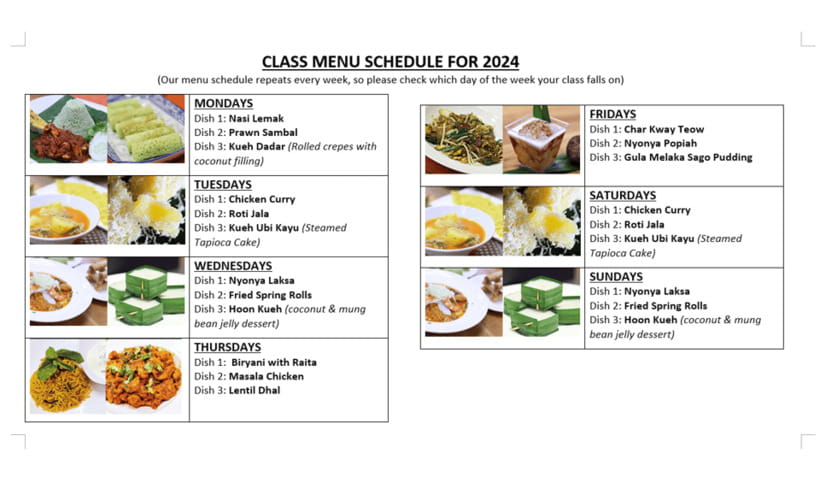
Here is the weekly schedule:
- Monday: Nasi lemak, sambal prawns, and kueh dadar
- Tuesday: Curry chicken, roti jala, and ondeh ondeh
- Wednesday: Laksa, fried spring rolls, and hoon kueh
- Thursday: Nasi biryani, masala chicken, and lentil dhal
- Friday: Char kway teow, Nyonya popiah, and sago gula Melaka
- Saturday: Curry chicken, roti jala, and ondeh ondeh
- Sunday: Laksa, fried spring rolls, and hoon kueh
The menus offer a useful cross-section of Singaporean cooking. Monday is a good pick if you want coconut rice, prawns, sambal, and a pandan-style crepe dessert. Tuesday and Saturday suit anyone interested in curry, handmade flatbread, and sweet coconut balls.
Wednesday and Sunday focus on laksa, a noodle dish with a fragrant, spicy broth, alongside spring rolls and hoon kueh. Thursday leans toward Indian-influenced cooking, with biryani, masala chicken, and dhal. Friday gives you some of the most recognizable hawker-style flavors: char kway teow, Nyonya popiah, and sago gula Melaka.
The menu descriptions sometimes use different spellings for the same or similar dessert. For example, ondeh ondeh is described in one account as pandan sugar coconut balls, while kueh dadar is a coconut-filled crepe. If a particular dish matters to you, confirm the exact menu on your chosen date.
From Coffee and Snacks to the Kitchen
The first part of the class is social rather than technical. Coffee, tea, drinking water, and small nostalgic snacks are included. You can settle in without needing to organize breakfast before arriving, though the class later becomes a full meal rather than a light tasting.
The heritage game helps set the context. Instead of treating food as a list of recipes, the instructors connect it to Singaporean life and local customs. You hear about dishes beyond the menu as well, which is useful if you plan to eat around the city after class.
Then comes a briefing on the three dishes for the day. The instructors explain each dish’s origins, the ingredients involved, and the role of local flavors. This is where the class can feel slower than a simple cooking lesson, but that extra time is valuable if you want to understand why the recipes work.
If you prefer to get straight to the stove, you may find the introductory conversation longer than expected. If you enjoy food history and cultural context, it is one of the best parts of the morning. The class is not just about copying motions. It aims to help you recognize the ingredients and methods when you cook later.
Three Dishes, One Fully Equipped Workstation
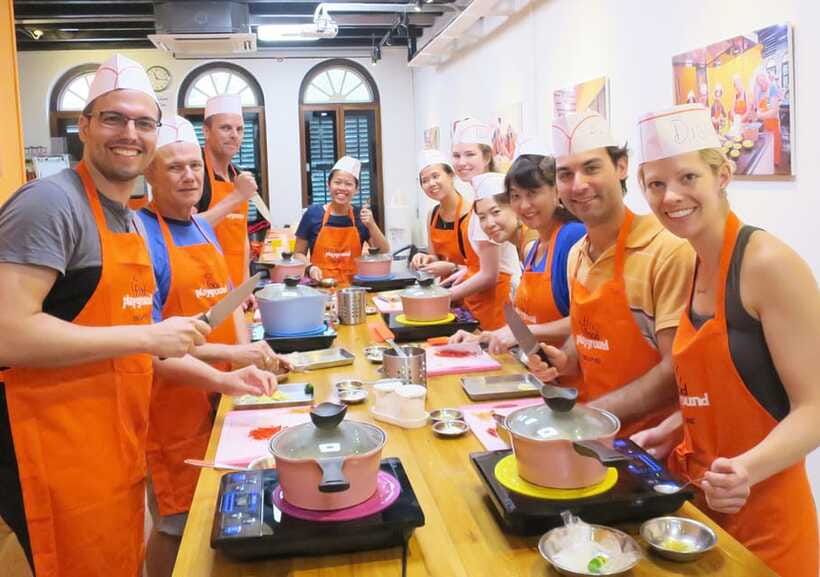
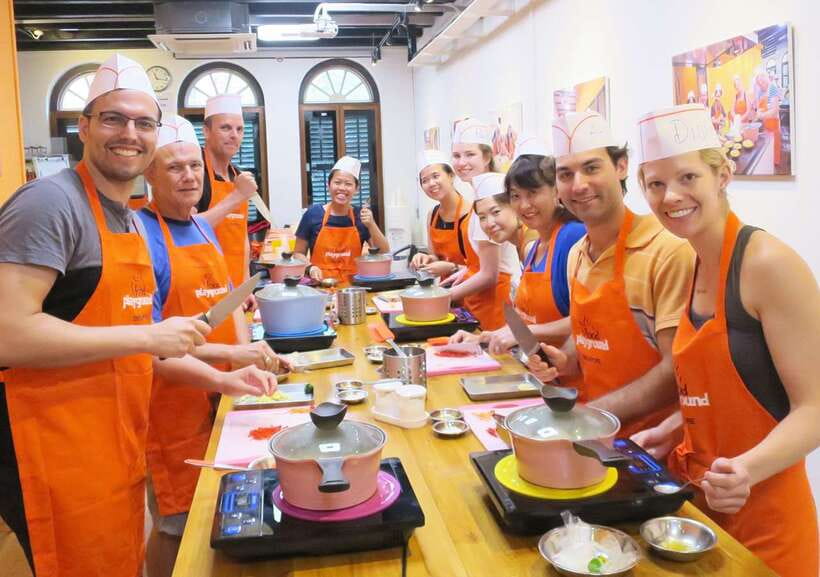
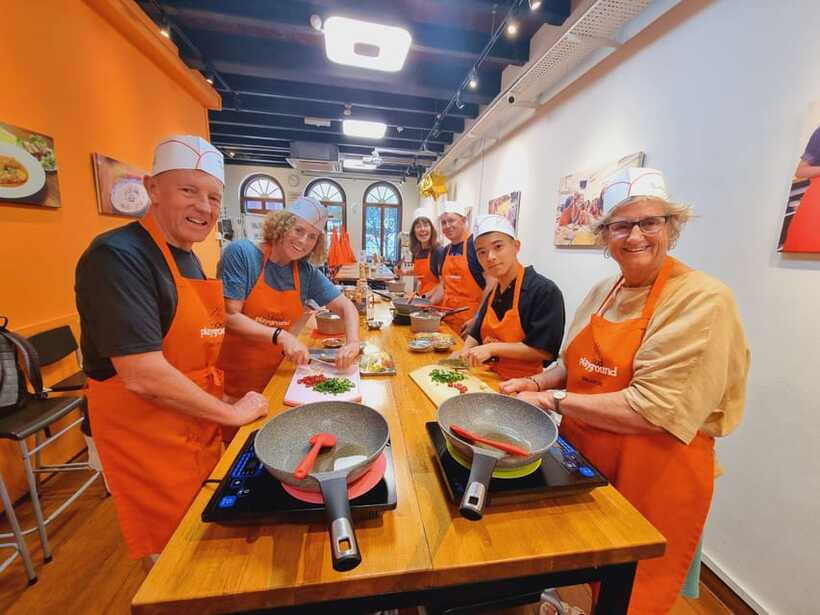
Once the introduction is finished, you put on a chef hat and apron and move into the kitchen. Your workstation comes equipped with the required ingredients and cooking equipment, so you do not need to bring special tools or shop for anything beforehand.
The teaching is hands-on. You are not simply watching an instructor prepare the meal while standing at the side. The aim is for you to complete the steps yourself, with guidance when you need it. This gives you a better chance of remembering the process after returning home.
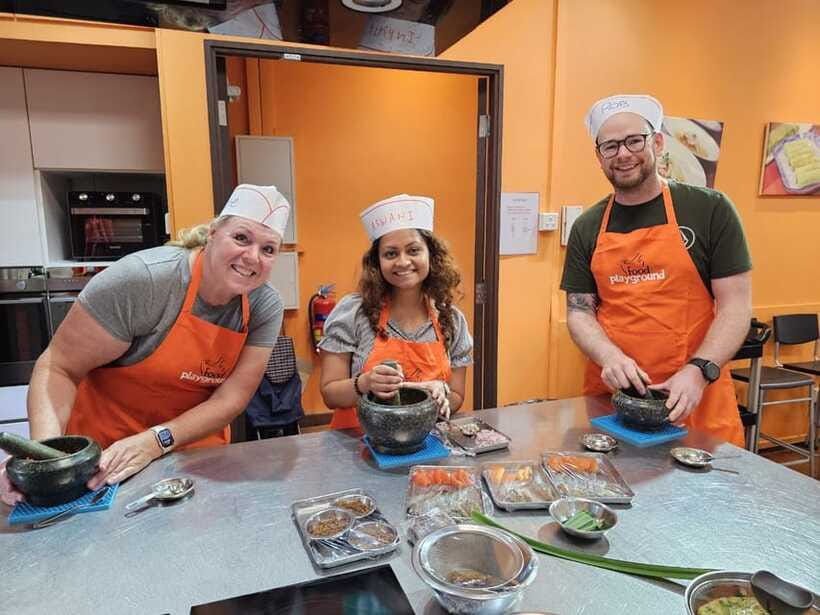
Past participants have singled out the fresh ingredients and careful preparation. One class member particularly enjoyed grinding fresh spices for chicken curry. Another found that recipes which first seemed complicated became quite manageable once Sara demonstrated each step.
That is a useful distinction. Some Singaporean recipes involve several ingredients and layers of seasoning. A class can show you the order of operations, the texture to look for, and the point at which a dish is ready. Those small visual and practical cues are often harder to get from a recipe card alone.
The pace is designed for mixed skill levels. Ann has been praised for allowing people to work at their own speed, while Helen has been appreciated for her patience with different abilities. You should still expect to take part actively. This is not a sit-back-and-watch activity.
Video recording is not allowed. Keep that in mind if you hoped to film the entire lesson for later reference. You can focus on the cooking, and the instructors provide guidance as you go, but the supplied information does not promise printed recipes or permission to record.
Same place, a different thing to cook:
- Florence: Pasta & Tiramisu Cooking Class with Unlimited Wine
★ 4.9 · 6,708 reviews - Hanoi Cooking Class: Culture, Local Market & Meaning CSR Impact
★ 5.0 · 5,147 reviews - 5 Traditional Dishes Hanoi Cooking Class with Market Trip
★ 5.0 · 4,890 reviews - Cooking Class and Lunch at a Tuscan Farmhouse with Local Market Tour from Florence
★ 5.0 · 4,831 reviews
The Meal You Helped Make
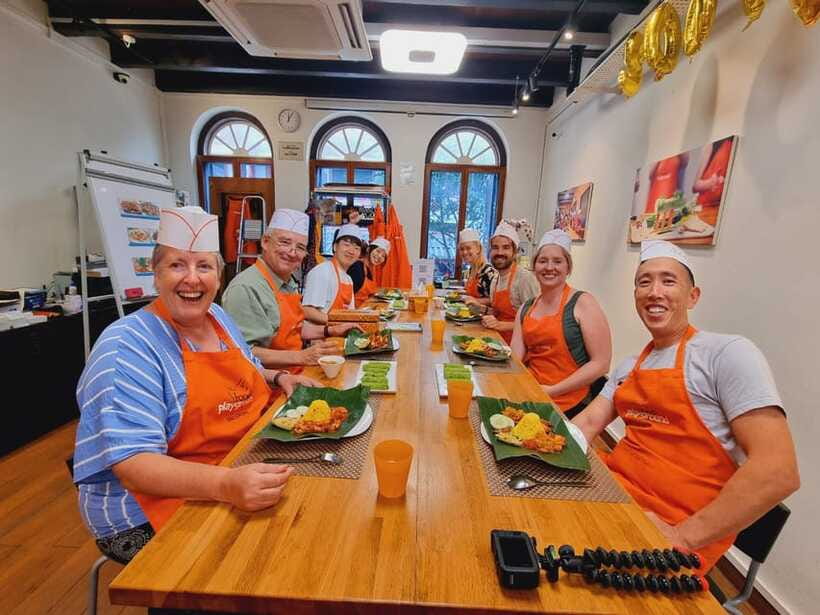
After the cooking, everyone sits down to eat the food prepared during the class. This is more than a final tasting. You have helped produce the full spread, so the meal gives you a clear sense of how the separate steps came together.
The three-course format also adds solid value. At $94, you are paying for an activity and lunch, not just a short sample of one dish. The price includes ingredients, use of the kitchen, apron and chef hat, coffee, tea, water, and high-speed Wi-Fi.
The shared table is another strong feature. You can compare techniques with other participants and continue talking with the instructors while eating. This is a good time to ask for suggestions about places to eat or things to do during the rest of your stay in Singapore.
The food itself receives steady praise for being fresh and delicious. The most useful point is that the dishes are meant to be repeatable at home. You are not simply tasting something prepared by a professional chef. You leave with a better idea of how to recreate at least some of the meal in your own kitchen.
There is also a practical bonus: the cooking team handles the cleanup. That means you can enjoy the meal without ending the morning at a sink full of pans. It is a small detail, but it makes the three-hour schedule feel better balanced.
The Chinatown Location and What to Expect
The studio is next to the Buddha Tooth Relic Temple and Museum in Chinatown. Look for an orange sign bearing the local partner’s name when you are near the temple. Since hotel pickup and drop-off are not included, you need to make your own way to the meeting point.
The location works well as part of a Chinatown morning. You can visit the temple and nearby streets before or after the class, though the cooking activity itself takes place inside the studio rather than as a walking tour. The central setting also makes it easier to continue exploring Singapore afterward.
The studio is in a conservation shophouse on level two. There is no lift. This is not suitable for people with mobility impairments, and you should take the stairs seriously when deciding if the class is right for you.
The class lasts three hours, with starting times subject to availability. Allow yourself enough time to locate the orange sign and arrive without rushing. The meeting point is near a major landmark, but Chinatown can still be busy and easy to navigate too quickly if you are watching the clock.
Is $94 Good Value?
The price is above what you might pay for an ordinary meal in Singapore, but that is not the right comparison. You are buying a cooking lesson, ingredients, cultural background, drinks, kitchen use, a three-course meal, and direct access to local instructors.
The value is strongest if you plan to cook after your trip. The class teaches several dishes in one session, and the menus cover different cooking traditions. You also gain practical food advice for the rest of your stay, which can help you choose hawker dishes and restaurants with more confidence.
The value is weaker if you are mainly looking for a cheap lunch or a quick cooking demonstration. You will spend three hours on the activity, and part of that time is devoted to stories, discussion, and the heritage game. That is a plus for some people and unnecessary padding for others.
The high rating of 4.9 from 107 published ratings reflects how consistently people respond to the instruction, the food, and the welcoming atmosphere. The praise is not limited to one instructor. Names such as Nur, Mrs Lee, YY, Sara, Annie, Helen, Cindy, and Wy Wy appear in positive accounts, suggesting that the quality is tied to the team rather than one individual teacher.
Who Will Enjoy This Class Most?
I would recommend this experience to anyone who sees food as part of the place they are visiting. It suits couples, friends, solo visitors, and families with older children who can take part safely in a kitchen setting.
It is especially good for you if:
- You want to learn several Singaporean recipes in one morning.
- You like meeting local instructors rather than watching a polished stage show.
- You want cultural background alongside practical cooking.
- You plan to repeat the recipes at home.
- You enjoy a shared meal with people from different places.
- You want a Chinatown activity that also covers lunch.
You may want to skip it if you dislike group activities, do not want to cook, or need step-free access. It is also not ideal if your schedule is too tight for three hours, since the class includes introductions, cultural discussion, cooking, and the final meal.
Practical Booking Advice
Choose your day based on the food, not simply on availability. Friday is the obvious choice for char kway teow and Nyonya popiah, while Thursday is better for biryani, masala chicken, and dhal. If curry chicken is your priority, choose Tuesday or Saturday.
Book with the menu in mind because the schedule is fixed. You can cancel up to 24 hours in advance for a full refund, and the reserve-now-pay-later option allows you to hold a place without paying immediately.
The class is conducted in English. Ingredients, chef hats, aprons, coffee, tea, water, and Wi-Fi are included. Hotel transfers are not, and video recording is prohibited.
Should You Book the Singapore Cooking Class?
Book it if you want a warm, practical introduction to Singapore through food. The strongest reasons are the family recipes, patient instruction, useful cultural background, and the chance to eat a proper three-course meal that you helped prepare.
I would choose the class as a first or second day activity, when advice about local food can still shape the rest of your visit. Check the daily menu, allow time to find the Chinatown studio, and be certain you can manage the stairs.
Skip it if you want a short demonstration, a bargain meal, or a fully accessible venue. For everyone else, the combination of cooking, conversation, and local recipes makes this one of the more useful food activities in Singapore.
FAQ
How long does the Singapore cooking class last?
The class lasts three hours. It includes refreshments, a cultural introduction, hands-on cooking, and a shared three-course meal.
Where is the cooking studio located?
The studio is next to the Buddha Tooth Relic Temple and Museum in Chinatown. Look for an orange sign with the local partner’s name near the temple.
What food will I cook?
The menu depends on the day. Options include nasi lemak and sambal prawns, curry chicken and roti jala, laksa and spring rolls, nasi biryani and dhal, or char kway teow and Nyonya popiah.
Is the menu the same every day?
No. The class uses a fixed menu schedule, with different dishes assigned to each day of the week. Check the menu for your chosen date before booking.
Is the class suitable for people with limited mobility?
No. The studio is on the second floor of a conservation shophouse and has no lift access.
What is included in the price?
The $94 price includes all ingredients, use of chef hats and aprons, coffee, tea, drinking water, high-speed Wi-Fi, instruction, and the meal you prepare. Hotel pickup and drop-off are not included.
Just added around the world
- Aroidee’s Farm-Fresh Thai Cooking Experience★ 5.0 · 8 reviews
- Half Day Guided Thai Cooking Class in Chiang Mai★ 5.0 · 13 reviews
- Signature Thai Cooking Course★ 5.0 · 79 reviews
- Private Half-Day Thai Cooking Class in Chiang Mai★ 5.0 · 4 reviews
- Online Thai and Akha Cooking Class★ 5.0 · 70 reviews
- Private Virtual Thai Cooking Class★ 5.0 · 9 reviews
- Northern Thai Cooking Class in Chiang Mai in a Countryside Home★ 5.0 · 2 reviews
- 5 Hour Morning Thai Cooking Course★ 5.0 · 31 reviews
Cooking Classes, compared.

Half-Day Thai Cooking Class at Organic Farm in Chiang Mai
Read our review →

3 in 1 Cooking Class near Navona: Fettuccine, Ravioli & Tiramisu
Read our review →
Pasta & Tiramisu Cooking Class with Unlimited Wine
Read our review →
Hanoi Cooking Class: Culture, Local Market & Meaning CSR Impact
Read our review →
5 Traditional Dishes Hanoi Cooking Class with Market Trip
Read our review →
Cooking Class and Lunch at a Tuscan Farmhouse with Local Market Tour from Florence
Read our review →