
REVIEW · SAMARQAND REGION, UZBEKISTAN
Samarkand: Uzbek Cooking Class in a Village Home
Get beyond Samarkand’s monuments. This five-and-a-half-hour outing takes you about an hour into the Samarqand Region, where Bekjon and his family welcome you into a village home for a hands-on lesson in Uzbek cooking. I especially like the wood-fired plov and the chance to see daily village life up close, from garden plots to farm animals. The main thing to consider is the long transfer and meat-focused menu, which may not suit every diet or mobility level.
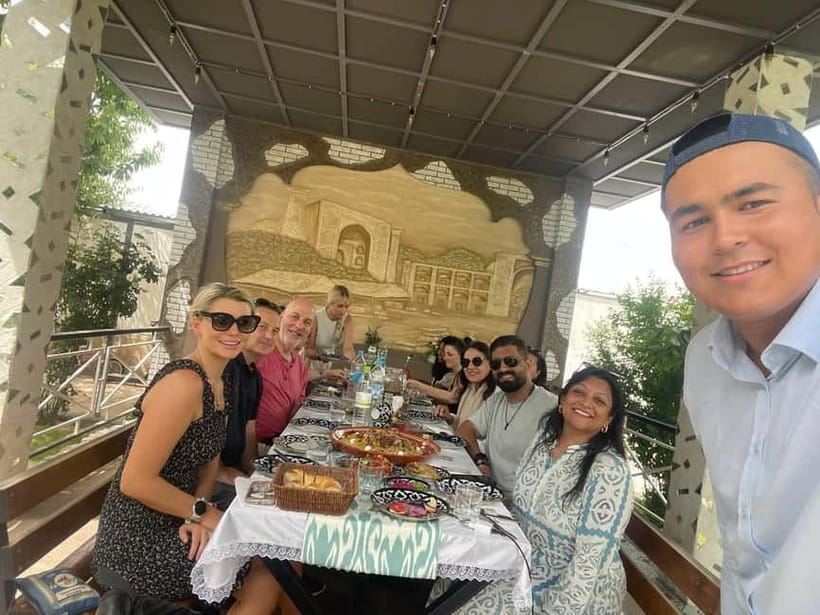
I also like the warm, personal scale of the experience. You are not simply watching a chef work in a studio kitchen. You help prepare ingredients, shape mantu, share tea beneath a grapevine, and eat the food with the family who made it possible. If you want a polished restaurant class or a short city activity, this will feel less convenient and more rustic.
Key details that make this cooking class special
- Plov cooked over an open fire: Help prepare Uzbekistan’s national dish in a large qozon, the traditional cast-iron cooking pot.
- Mantu made by hand: Roll dough, fill dumplings with meat and onions, and shape them for steaming in a mantuvarka.
- A real village home: The setting includes a clay-brick house, gardens, fruit trees, vegetable patches, and farm animals.
- Bekjon as your local guide: He provides pickup, explains Uzbek culture and history, and communicates in English.
- Tea beneath a grapevine: While the food cooks, you can relax with green tea and local snacks.
- A five-and-a-half-hour escape: The activity includes transport from Samarkand, roughly an hour each way, plus the village visit and cooking.
Leaving Samarkand for the Uzbek countryside
The day begins with pickup in Samarkand. Your address can be a hotel, train station, or airport, so the arrangement works well if you are connecting through the city or fitting the class between other plans. Bekjon is known for punctual pickup and clear communication before the outing, including questions about dietary needs and expectations.
The drive takes about one hour. That matters because the cooking class is not a quick stop just outside the city. You are giving up most of a day, but in return you get a change of pace from Samarkand’s grand squares, tiled monuments, and busy streets.
The countryside portion is part of the point. You see a quieter side of Uzbekistan, with broad fields, gardens, and homes shaped around family life. I would plan this for a day when you want cultural contact rather than another museum or monument.
Depending on the plan for your outing, Bekjon may add local sights or a market stop. One described visit included buying ingredients at a local market before returning to the family home. Since the exact schedule can vary, it is worth asking in advance if this is important to you.
More Farm Cooking Classes in the world:
- Half-Day Thai Cooking Class at Organic Farm in Chiang Mai
★ 5.0 · 19,087 reviews - Cooking Class and Lunch at a Tuscan Farmhouse with Local Market Tour from Florence
★ 5.0 · 4,831 reviews - Chiang Mai: Authentic Cooking Class with Market & Farm Visit
★ 4.9 · 4,546 reviews
Arriving at the family home
The village house is described as a traditional clay-brick home among fruit trees and vegetable patches. It is not a staged cooking school. The setting gives you a look at a working family household, where the garden, animals, outdoor stove, and kitchen all have a practical role.
You may meet cows, sheep, chickens, and donkeys. The animal visit is a small part of the day, but it helps explain rural life in a way that a guided city walk cannot. You can explore the garden, feed the animals, or sit beneath a grapevine with tea while the main dish cooks.
This relaxed time is important. Uzbek cooking is not built around rushing from one task to the next. Food preparation is social, and waiting is part of the meal. You have time to ask questions about family customs, village life, local food, and Uzbek traditions.
Bekjon’s mother receives particular praise for her cooking guidance and patience. His English is described as solid, and he has also explained Uzbek history and culture during the drive. Translation apps may help with some family conversations, but the overall communication is supported in English.
Cooking plov over a wood fire
Plov, also called pilaf or pilov, is the centerpiece of the class. It is Uzbekistan’s best-known dish and an important part of weddings, family meals, holidays, and communal gatherings.
The basic ingredients include rice, carrots, onions, lamb or beef, and spices. What makes the class worthwhile is not simply learning the ingredient list. You see how the dish is built in layers and how the cooking method affects the final result.
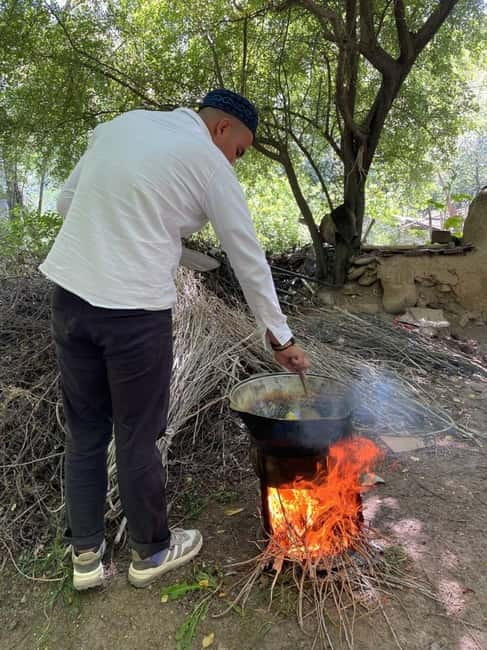
You help select and prepare fresh ingredients, then take part in cooking them in a qozon over an open fire. This is a far more useful lesson than watching someone produce a finished dish in a restaurant kitchen. You can stir, taste, ask questions, and watch the host adjust the cooking as it develops.
The outdoor stove adds atmosphere, but it also means the experience is rustic. Smoke, heat, uneven surfaces, and outdoor conditions may be part of the setting. Wear comfortable clothing and shoes that can handle a village home and garden. Sunscreen is sensible, especially if you spend time outside.
As the plov cooks slowly, the aromas become part of the memory. The cooking itself creates natural conversation. You learn not only how Uzbek cooks prepare rice and meat, but also why large dishes like plov carry social meaning.
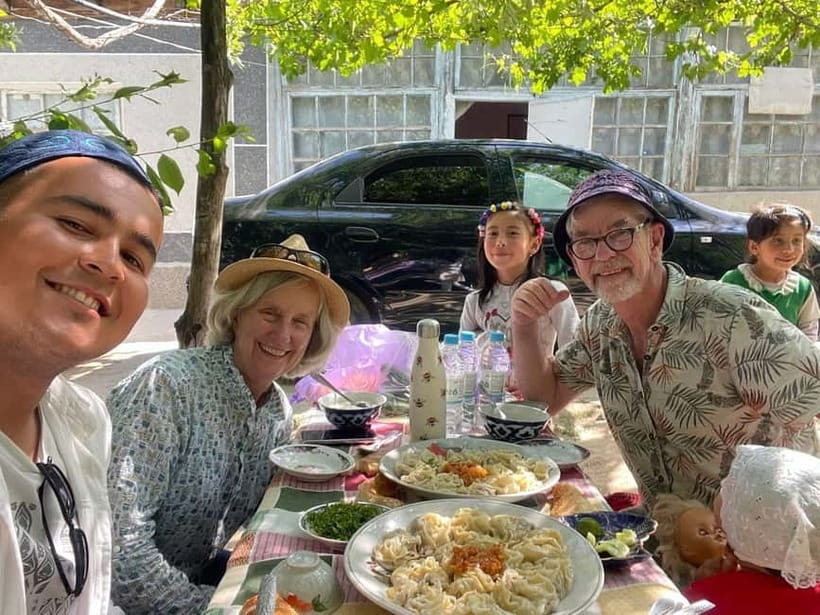
Portions can be generous. One person described sharing a plate with Bekjon’s mother because the serving was substantial. That is useful to know if you are a light eater, traveling with a partner, or hoping to sample both plov and mantu.
Shaping mantu with the family
The second cooking project is mantu, steamed dumplings made from thin dough and filled traditionally with minced meat and onions. You roll the dough, add the filling, shape each dumpling, and place them in a mantuvarka, a multi-layered steamer.
Mantu takes patience. The dumplings are handmade, so they will not all look identical, and that is part of the charm. You are learning a household skill, not producing factory-perfect parcels.
The preparation also gives you a closer look at the social side of Uzbek cooking. Mantu is often made by women in village homes during holidays and family gatherings. Folding dumplings together creates time for conversation, teaching, and shared work.
The class can offer pumpkin or potato mantu for vegetarian visitors, but the overall activity is still strongly meat-centered. The practical information specifically warns that the experience may not suit vegetarians or vegans, so you should discuss your needs before booking rather than assume the alternative filling will replace every meat dish.
The same caution applies to food allergies and diabetes. Ingredients and cooking methods are not presented as medically tailored, and the experience is not suitable for people with food allergies according to the activity information.
A few more cooking classes around the world worth a look
- Florence: Pasta Cooking Class with Unlimited Wine
★ 4.9 · 10,285 reviews - 3 in 1 Cooking Class near Navona: Fettuccine, Ravioli & Tiramisu
★ 5.0 · 7,376 reviews - Florence: Pasta & Tiramisu Cooking Class with Unlimited Wine
★ 4.9 · 6,708 reviews - Hanoi Cooking Class: Culture, Local Market & Meaning CSR Impact
★ 5.0 · 5,147 reviews
Tea, snacks, animals, and local customs
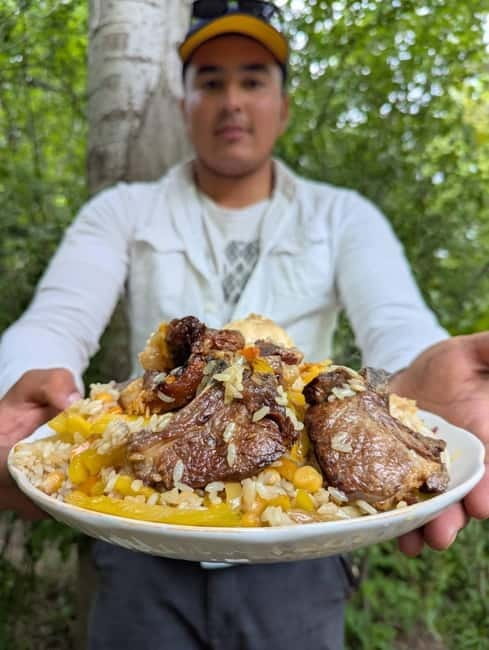
The quieter parts of the day may be just as memorable as the cooking. Green tea is served under a grapevine, often with local snacks. You can use this pause to look around the garden, feed animals, or simply sit and talk.
A few outings have also included a chance to try traditional wedding clothing while learning about local customs. This is not listed as a guaranteed part of every departure, so treat it as a possible extra rather than a promise. Still, it shows the sort of personal cultural exchange Bekjon may add to the day.
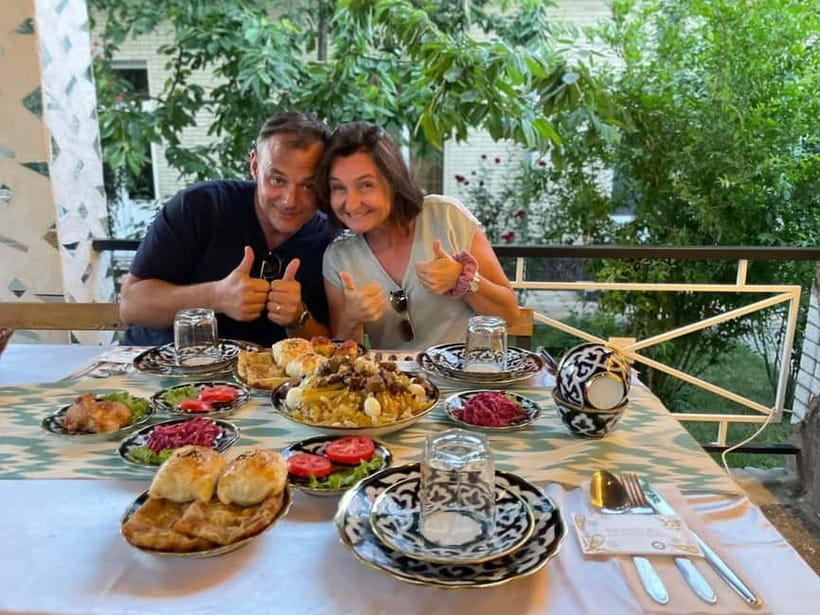
The meal itself is communal. You eat the food you helped prepare with the host family, rather than being sent away with a recipe and a bill. That shared table is where the activity feels most genuine. Uzbek hospitality is expressed through food, generous portions, tea, and time spent together.
You should not expect a formal restaurant setting. You may sit in a family room or outdoor area, and the pace depends on the cooking and the household. For me, that is a strength if you want a personal encounter. It is a drawback if you need a tightly timed itinerary.
What the $52 price delivers
At $52 per person, the value rests mainly in the combination of transport, instruction, food, and access to a family home. The price includes hotel, train station, or airport transfer in the Samarkand area, the cooking masterclass, ingredients, the village visit, and tea beneath the grapevine.
The transport alone matters. You avoid arranging a private ride to a village about an hour away, then finding your way back after a full meal and several hours of cooking. You also receive an English-speaking guide, which adds context to the drive and the home visit.
This is not the cheapest way to eat plov in Uzbekistan. A local restaurant meal costs less, and you could sample the dish in Samarkand without leaving town. You are paying for participation and access, not just lunch.
The strongest value comes if you care about how food connects to family and community. You learn the method, meet the people who cook it, and see the household setting. If your only goal is tasting plov, spend less at a restaurant. If you want to understand why the dish matters, the price is reasonable.
Timing, comfort, and who should book
The total duration is five and a half hours, including travel. Cooking takes about three hours and forty minutes within the broader outing, so you have enough time for preparation, conversation, the village visit, and the meal.
I would schedule this on a day when you have no tight afternoon appointment. Pickup times vary, and cooking over a fire does not follow a stopwatch. The return journey also takes about an hour.
Bring a camera, sunscreen, and comfortable clothes. The day includes outdoor cooking, gardens, animals, and time on village property, so practical clothing is more useful than anything formal.
The experience is best for:
- Couples and small groups seeking a personal cultural activity
- Food lovers who want to make, not just eat, Uzbek dishes
- Visitors with a free half-day in Samarkand
- Families and curious adults who enjoy local homes and rural life
- Anyone who wants to understand plov beyond its place on a restaurant menu
It is not suitable for babies under one year, people with recent surgery, people with back problems, people over 95, or those with animal allergies. The activity information also lists diabetes, food allergies, vegetarian diets, and vegan diets as reasons it may not be suitable.
The most important point is mobility. This is not a passive sightseeing ride. You may stand, work at an outdoor stove, move around a garden, and handle dough and ingredients. Ask for details before booking if standing or outdoor cooking could be difficult.
The human side of the experience
Bekjon receives consistent praise for organization, friendliness, and communication. He contacts people before the activity, asks about expectations, arrives on time, and explains local culture during the drive.
His family adds the warmth. His mother is closely involved in the plov class, and other family members have helped demonstrate plov and mantu. That family participation gives the class a sense of shared work instead of a guide simply performing a demonstration.
The English-language guidance is another practical plus. You can ask about cooking, village customs, Uzbek history, and daily life during the outing. Conversations may sometimes rely on translation apps when speaking with relatives, but the main guide can handle the activity in English.
Every published rating is five out of five, with praise focused on the food, punctual transport, welcoming family, clear coordination, and the chance to learn about ordinary Uzbek life. Those repeated strengths are exactly what I would value here: the experience depends on hospitality and organization, and both appear to be central to the day.
Should you book this Samarkand cooking class?
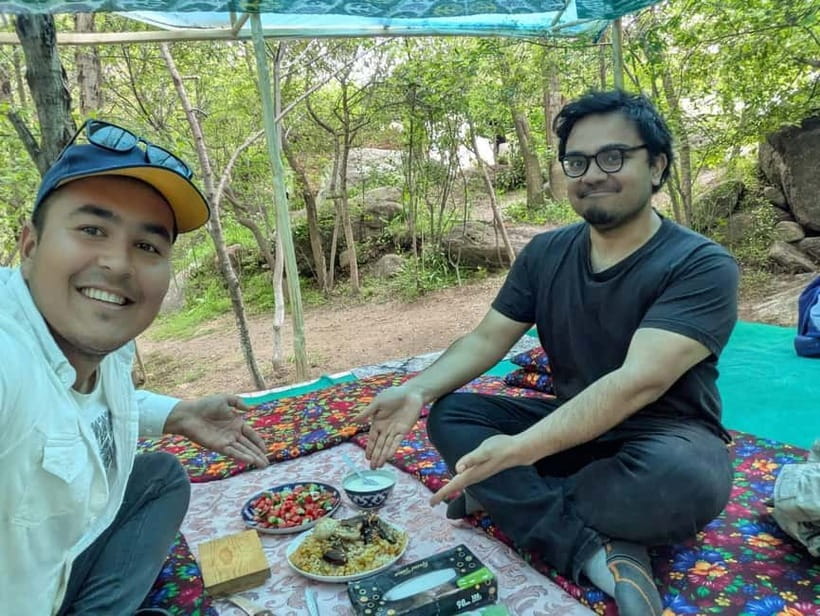
Book it if you want to leave the city, eat with a local family, and learn why plov and mantu matter in Uzbek life. The combination of an open-fire qozon, handmade dumplings, village animals, garden time, and family conversation is difficult to recreate independently.
Skip it if you have a strict schedule, need a fully accessible setting, avoid meat, or prefer a short and polished cooking demonstration. Before booking, confirm the pickup point, the menu for your dietary needs, and whether you will make plov, mantu, or both.
For most food-minded visitors with a free half-day, this is a strong use of time in Samarkand. You return with a full stomach, a better grasp of Uzbek hospitality, and at least a rough idea of how to make the country’s most famous dish at home.
FAQ
How long does the cooking class last?
The full activity lasts five and a half hours, including transportation between Samarkand and the village.
How far is the village from Samarkand?
The village is located about one hour from Samarkand.
What dishes will I learn to make?
The class focuses on Uzbek plov and may also include mantu, steamed dumplings filled traditionally with minced meat and onions.
Is transportation included?
Yes. Transfer between Samarkand and the village is included, with pickup available from a hotel, train station, or airport.
Is an English-speaking guide provided?
Yes. The activity includes a live guide in English, and Bekjon provides cultural explanations during the outing.
What is included in the price?
The price includes the cooking masterclass, ingredients, a guided village visit, tea under a grapevine, and round-trip transfer.
Are vegetarian options available?
Pumpkin or potato mantu may be offered as alternatives, but the activity is generally meat-focused. Vegetarian and vegan visitors should confirm the menu before booking.
Can I cancel for a full refund?
Yes. You can cancel up to 24 hours in advance for a full refund.
What should I bring?
Bring a camera, sunscreen, and comfortable clothing.
Who may find this activity unsuitable?
The activity may not suit vegans, vegetarians, people with diabetes, food or animal allergies, back problems, recent surgery, babies under one year, or people over 95.
Just added around the world
- Aroidee’s Farm-Fresh Thai Cooking Experience★ 5.0 · 8 reviews
- Signature Thai Cooking Course★ 5.0 · 79 reviews
- Private Half-Day Thai Cooking Class in Chiang Mai★ 5.0 · 4 reviews
- Half Day Guided Thai Cooking Class in Chiang Mai★ 5.0 · 13 reviews
- Online Thai and Akha Cooking Class★ 5.0 · 70 reviews
- Private Virtual Thai Cooking Class★ 5.0 · 9 reviews
- Northern Thai Cooking Class in Chiang Mai in a Countryside Home★ 5.0 · 2 reviews
- 5 Hour Morning Thai Cooking Course★ 5.0 · 31 reviews
Farm & Countryside Cooking Classes, compared.

Half-Day Thai Cooking Class at Organic Farm in Chiang Mai
Read our review →
Cooking Class and Lunch at a Tuscan Farmhouse with Local Market Tour from Florence
Read our review →
Authentic Cooking Class with Market & Farm Visit
Read our review →
Hands-On Cooking Class & Farmhouse Tour on the Amalfi Coast
Read our review →Lists this class appears in