
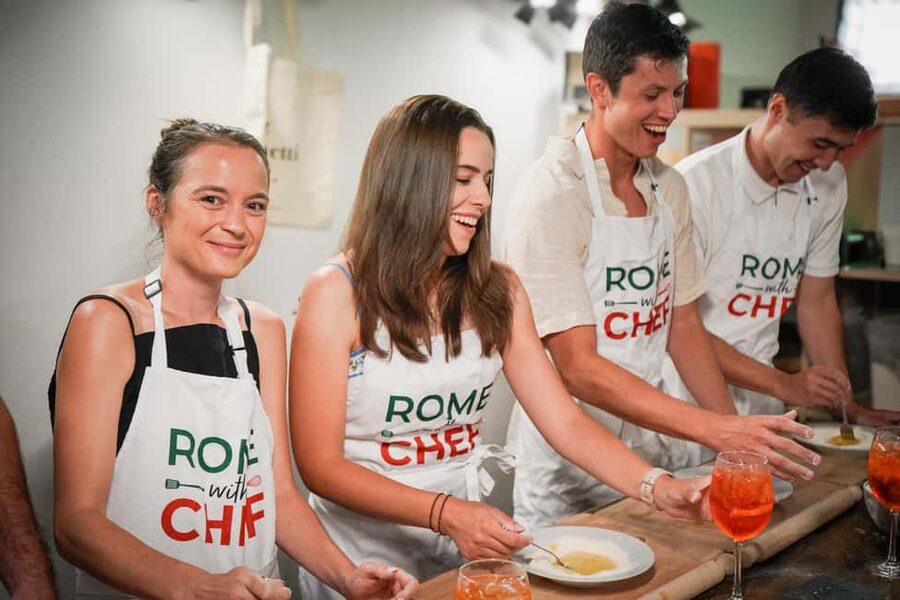
REVIEW · LAZIO, ITALY
Rome: Spritz & Spaghetti Cooking Class
Pasta tastes better when you make it. This three-hour Rome class combines hands-on pasta making with three Italian spritzes, and I like the mix of real cooking and easy social fun. I also like the small group limit of 14, which gives you a better chance to work directly with the chef instead of watching from the edge of a crowded room.
The main drawback is dietary flexibility. The menu uses gluten, dairy, and other animal products, so this is not suitable for people with coeliac disease, gluten intolerance, vegan diets, or lactose intolerance. If you can eat the menu, though, this is a lively way to spend part of your Rome visit, especially with guides such as Marzia, Bart, Jem, Ida, Laura, and Chef Sunny earning especially warm praise for their humor, energy, and clear instruction.
Key points at a glance
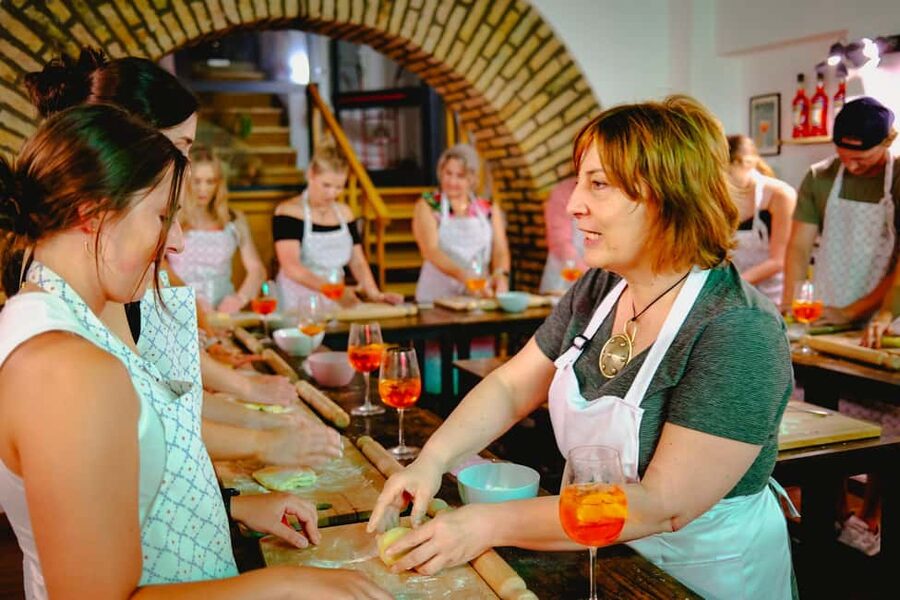
- Three drinks, not just one: Make an Aperol spritz, a Hugo spritz, and a Limoncello spritz during the class.
- Fettuccine from scratch: Roll, cut, and cook your own fresh pasta, then pair it with carbonara or cacio e pepe.
- A social group size: Shared classes hold no more than 14 people, while private bookings are available.
- Strong instructors: Guides including Marzia, Bart, Jem, Ida, Laura, and Chef Sunny are praised for making beginners feel involved.
- You eat what you make: Your finished pasta becomes the main meal, with recipes to take home.
- Plan for a drink-focused afternoon or evening: Three spritzes are included, and several class members describe the pours as generous.
Why this Rome cooking class feels different
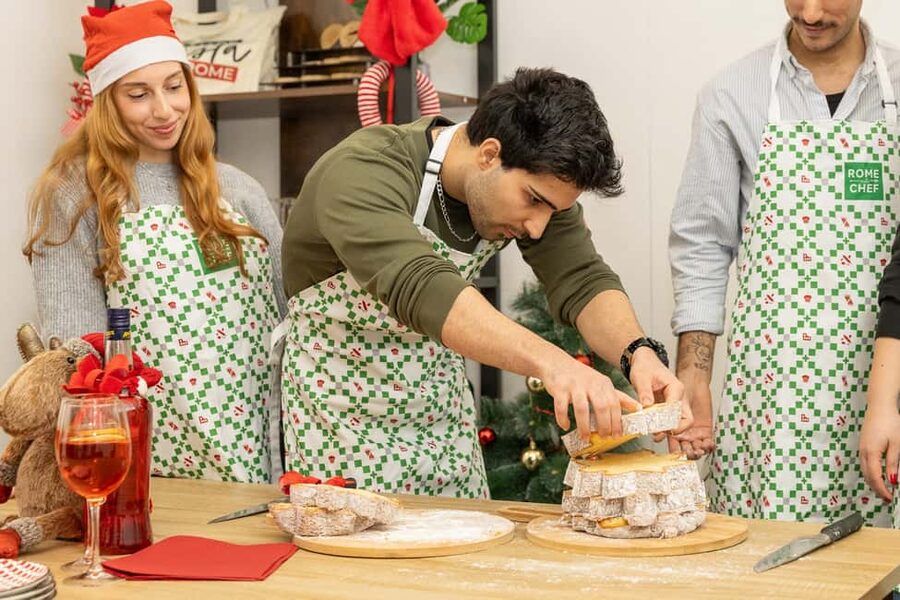
Rome has plenty of pasta classes. This one adds a clear twist: you are learning Italian drinks at the same time. The result is less like a formal kitchen lesson and more like a social meal where you happen to learn useful skills along the way.
The class is promoted as Rome’s only tipsy cooking class. The important point for you is that the drinks are built into the experience rather than added as an afterthought. You begin with an Aperol spritz, move on to a Hugo spritz while preparing pasta, and finish with a Limoncello spritz alongside the meal.
That rhythm helps break up the class. You are not standing at a worktable for three straight hours listening to instructions. You get time to meet the group, work with the ingredients, sit down to eat, and chat with the chef and other participants.
The English-speaking format also makes the class easy to follow for international visitors. The instructors have to balance cooking instruction with entertainment, and the strongest feedback points to people who do both well. Marzia is praised for explaining regional cooking differences and making participants feel like chefs in training. Bart is described as funny, inclusive, and good at keeping the room involved. Ida receives similar praise for her energy and kindness.
A few more cooking classes around Rome worth a look
- 3 in 1 Cooking Class near Navona: Fettuccine, Ravioli & Tiramisu
★ 5.0 · 7,376 reviews - Rome Cooking Class: Make Pasta and 3 Spritz Cocktails
★ 5.0 · 2,937 reviews - Rome: 3-in-1 Fettuccine, Ravioli, and Tiramisu Cooking Class
★ 4.9 · 2,704 reviews
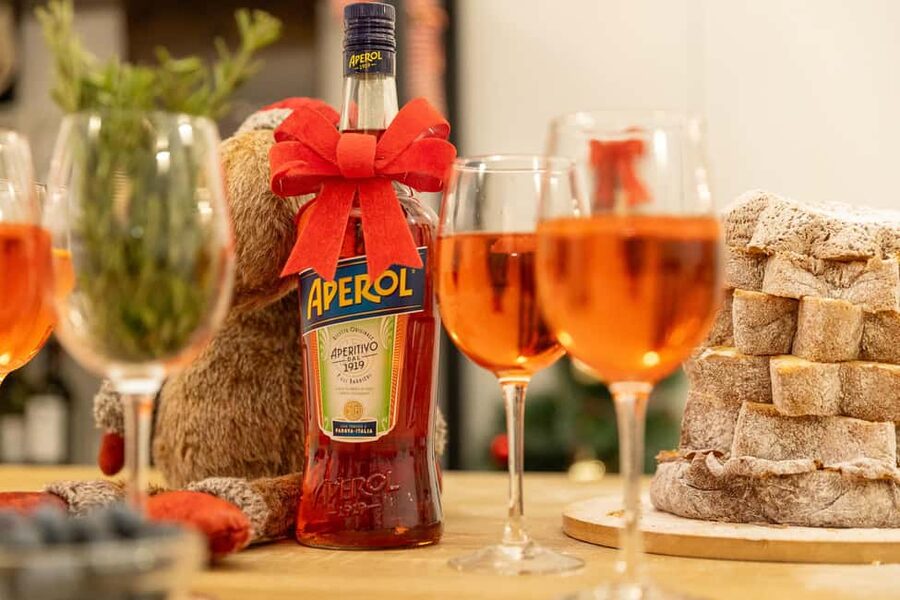
Starting with an Aperol spritz
The first drink is an Aperol spritz, a sensible choice for setting the tone. It is one of Italy’s best-known aperitivo drinks and gives everyone a simple activity before the pasta work begins.
This opening matters if you arrive alone or as part of a small pair. The class is designed to encourage conversation, and the first drink gives you a natural way to meet the other people at your table. Several people particularly like the chance to make friends from different countries while cooking together.
Do not read the phrase tipsy cooking class as a promise of unlimited alcohol. The included drinks are one Aperol spritz, one Hugo spritz, and one Limoncello spritz. Water and soft drinks are also included. Some participants describe the spritzes as strong or generous, so pace yourself and drink water as you go.
The atmosphere can vary with the group and the instructor. The feedback includes plenty of praise for funny, energetic leaders, including Jem, Sushi, Ari, Ele, Adriano, Loana, Sherry, and Eleanora. That range of names suggests that several chefs and hosts lead the sessions, so your exact style of class will depend on who is scheduled.
Making pasta by hand in a Roman kitchen
Once the introductions are over, the focus shifts to pasta. You work with fresh, locally sourced ingredients and learn the basic process for making handmade fettuccine.
The useful part is the hands-on format. You roll and cut the dough yourself, rather than simply watching a chef demonstrate it. The class also gives you a chance to take part in most stages of the process, from preparation through cooking.
That is valuable for beginners because pasta making can look easier than it is. Getting the dough to the right texture, rolling it evenly, and cutting it cleanly are small skills that make a major difference at home. You leave with a recipe, but you also leave with a better sense of how the dough should feel.
The cooking section includes some Italian food background, including the history of Italian cooking and differences between regional styles. Marzia is singled out for explaining those distinctions, which adds context to the dish instead of treating pasta as a generic European food.
The setting is described as a real Roman kitchen. That is more appealing than a polished demonstration theater if you want a practical class. It also means you should expect a working kitchen environment rather than a quiet restaurant meal. You will be handling ingredients, moving through preparation steps, and sharing the cooking space with other people.
Choosing between carbonara and cacio e pepe
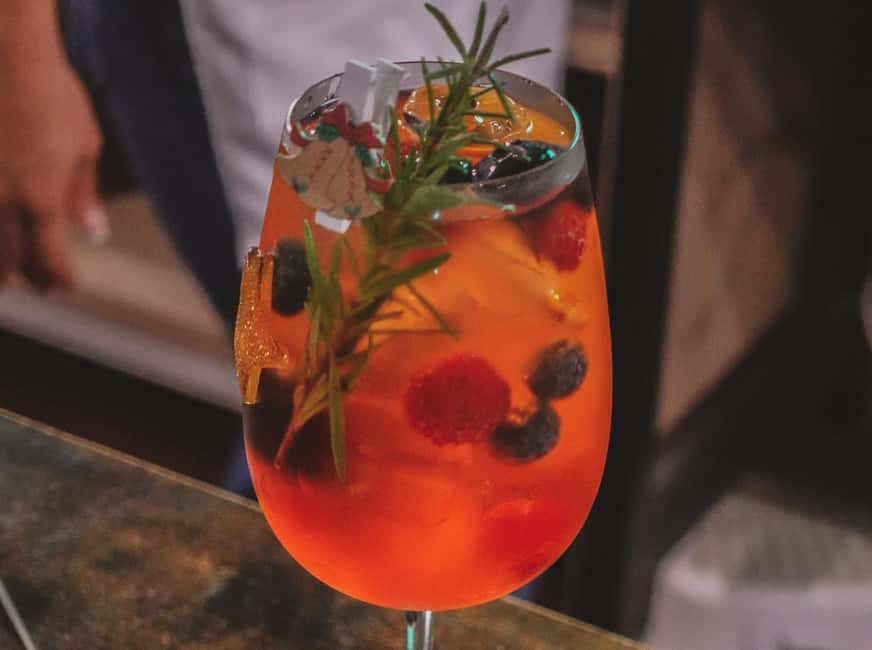
The pasta is paired with a traditional sauce, specifically carbonara or cacio e pepe. Both are Roman classics, but they teach different lessons.
Carbonara depends on balancing pasta water, egg, cheese, and the savory element of the sauce without scrambling the egg. Cacio e pepe looks simple, but its smooth cheese and pepper sauce also requires care. A class that lets you prepare either dish gives you a useful introduction to two of Rome’s most familiar pasta styles.
Several people say the homemade carbonara and cacio e pepe were better than versions they had eaten in Roman restaurants. That is not a promise that your first attempt will beat every professional kitchen, but it does show why this format appeals. The pleasure comes from eating a dish you helped create, while learning the small choices that affect texture and flavor.
Vegetarian options are available. The supplied information does not specify which sauce or ingredient changes are used, so you should ask in advance if that matters to you. The class cannot accommodate vegan, gluten-free, or dairy-free diets, and it cannot accommodate coeliac disease, gluten intolerance, or lactose intolerance because the menu uses gluten and dairy products.
Same place, a different thing to cook:
- Rome: Pasta Making Class with Wine, Limoncello, and Dessert
★ 4.9 · 3,177 reviews - Rome: Fettuccine Pasta Cooking Class in Rome’s City Center
★ 4.8 · 2,414 reviews - Fettuccine & Tiramisù: Cooking Class with Wine & Limoncello
★ 4.9 · 2,103 reviews - Pasta Cooking Class Near the Colosseum with 3 Spritz Cocktails
★ 5.0 · 1,686 reviews
A Hugo spritz while the pasta cooks
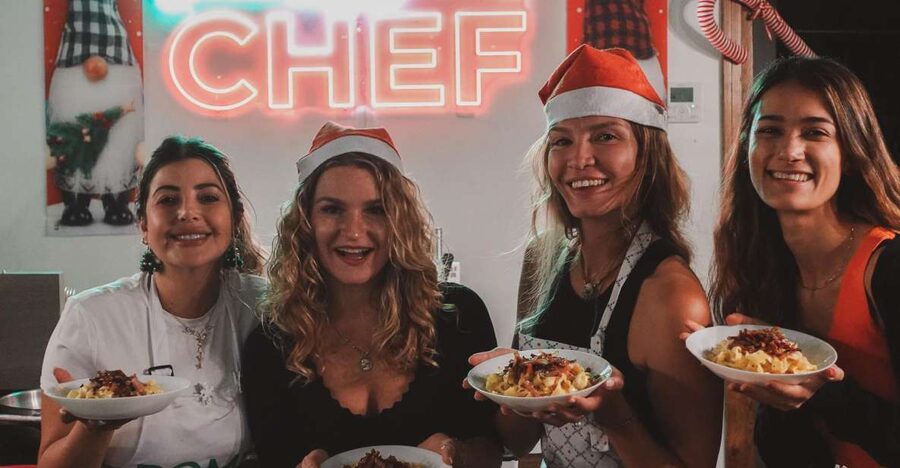
The second drink is a Hugo spritz, served during the cooking portion. This is a good point in the schedule for another drink because the most active pasta work is underway and the group is already comfortable with one another.
The class combines mixology with cooking rather than keeping them in separate blocks. You learn to prepare three staple Italian cocktails, with a local chef and a mixologist guiding the session. That makes the experience useful for anyone who wants more than a pasta recipe to take home.
At the same time, this is where you should be honest about your own drinking habits. Three alcoholic drinks across three hours may be comfortable for some people and too much for others, especially when you are on holiday, cooking in a warm kitchen, or arriving without having eaten. Water and soft drinks are included, and using them is a sensible choice.
The drink element also makes this a better fit for adults looking for a social night than for anyone seeking a quiet, technique-heavy culinary course. You will learn, but the mood is meant to be relaxed and playful.
Sitting down to eat your finished pasta
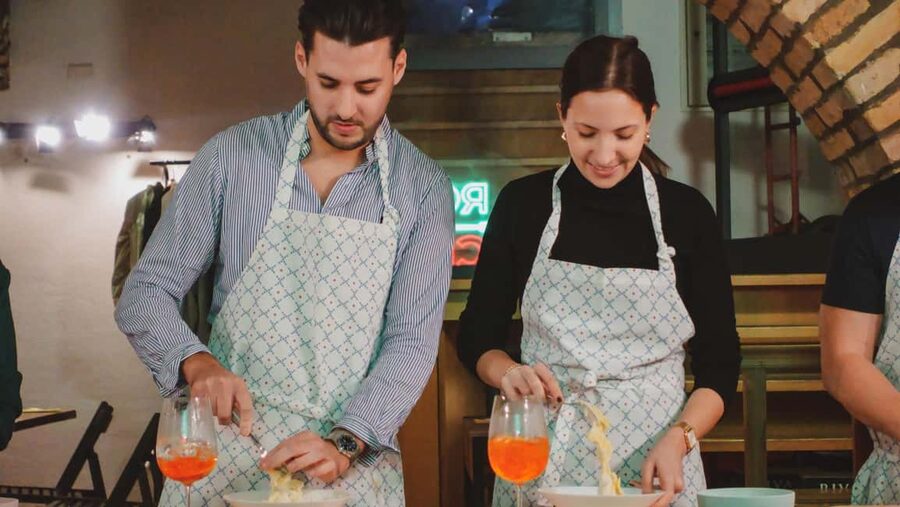
The final food stage is the payoff. Once the pasta and sauce are ready, you sit down and eat what you made with the group, the chef, and the last drink, a Limoncello spritz.
This meal gives the class a satisfying shape. You begin with a drink and introductions, work through the pasta, share another spritz during preparation, and then finish by eating together. It feels like a complete evening activity rather than a short demonstration followed by a rushed exit.
The included meal is also part of the value. At a price of $112.15 per person, you are paying for instruction, three cocktails, ingredients, the cooked meal, and an organized social experience. That is more than the cost of a casual plate of pasta, but the comparison is not really restaurant versus restaurant. You are also buying a recipe, practical instruction, and three hours of hosted activity.
For a private group, the price may make sense if you want a birthday activity, couples outing, or family event centered on food. For a shared class, the value depends more on how much you enjoy meeting new people. The group size is capped at 14, which is small enough to feel personal but large enough to create the lively atmosphere many people want.
The instructors shape the whole experience
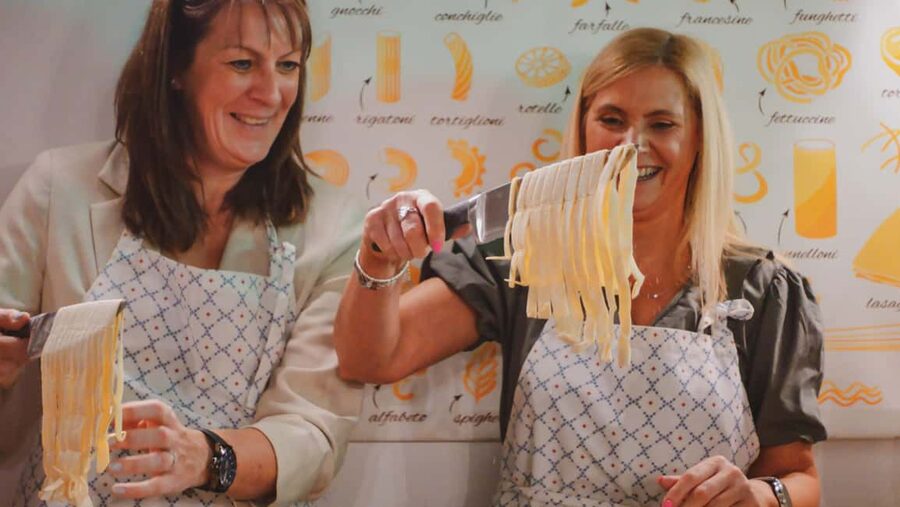
The clearest strength of this activity is the staff. The food matters, but the tone depends heavily on the chef and hosts leading your session.
Marzia receives praise for being fun, clear, and generous with cooking advice. She is also credited with explaining regional differences and involving participants as hands-on assistants. Bart is praised for including everyone and making the class interesting, while Jem is remembered for both excellent pasta and a warm personality.
Chef Sunny is described as funny, personable, and well informed. Laura is praised for being accommodating and helpful, and Ida is noted for her strong energy and friendly manner. Other positive mentions include Benjamin, Simay, Kysusha, Sushi, Ari, Ele, Adriano, Loana, Sherry, and Eleanora.
You cannot choose your instructor from the information provided, so keep that in mind. The consistently positive response to different team members is encouraging, but the experience will still have a personal element. Some chefs may be more theatrical, while others may focus more on instruction.
What to bring and how to plan your evening
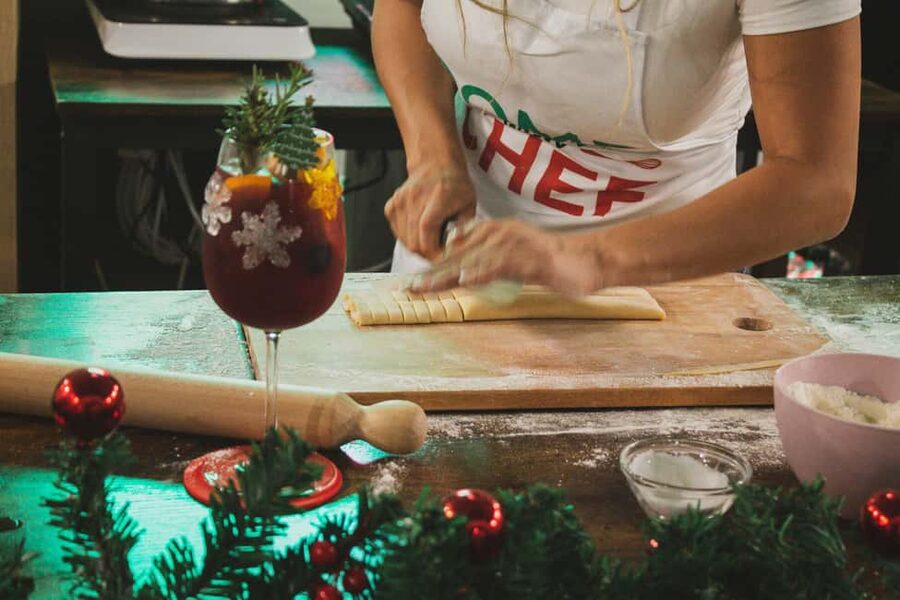
Wear clothing that you can cook in comfortably. The class involves rolling, cutting, preparing, and cooking pasta, so this is not the place for an outfit you need to protect at all costs.
Check the meeting point carefully when you book. The starting location can vary by the option selected, and the activity finishes back at the meeting point. The class lasts three hours, but starting times vary, so confirm the time that works with your Rome plans.
I would avoid scheduling a major timed sight immediately afterward. The class has a set duration, but cooking and a shared meal are better enjoyed without rushing away. If you book an evening session, it can serve as both your activity and dinner.
The class is conducted in English. Private group bookings are available, while shared groups are limited to 14 people. Cancellation is free up to 24 hours in advance, and you can reserve now and pay later, which helps if your Rome schedule is still shifting.
Who will enjoy this class most
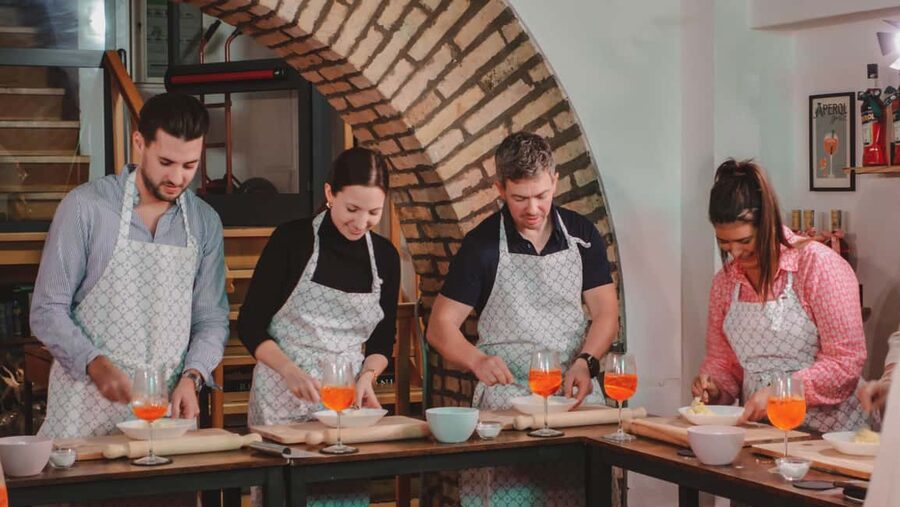
I would recommend it to you if you want a social food experience rather than a quiet technical workshop. It suits couples, friends, solo visitors who enjoy meeting people, and groups looking for a memorable evening.
It is especially good for anyone who likes to participate. You are not simply watching a chef make pasta while you take photographs. You roll, cut, cook, mix drinks, and eat the result.
It may not suit you if you do not drink alcohol, dislike group activities, or have strict dietary restrictions. The vegetarian option helps some participants, but the class cannot handle vegan, gluten-free, dairy-free, coeliac, gluten-intolerant, or lactose-intolerant diets.
Families should also check the booking details carefully before choosing it. The supplied information does not specify age requirements, so do not assume that children can join without confirming first.
Should you book the Spritz and Spaghetti class?
Book it if you want hands-on pasta making, three Italian drinks, and an easy way to meet people in one three-hour activity. The high 4.9 rating from 374 reviews fits the strongest pattern here: the staff create a welcoming mood, the pasta is enjoyable, and the class feels more personal than a large group demonstration.
The best reason to book is not simply the carbonara or the spritzes. It is the combination of food, instruction, and company. Choose it for a social Rome evening, especially if you like learning by doing.
Skip it if dietary restrictions rule out the menu or if alcohol is not part of your holiday plans. For everyone else, $112.15 is a fair price for a meal, a cooking lesson, three cocktails, recipes to take home, and three hours of organized fun.
FAQ
How long does the Rome Spritz and Spaghetti cooking class last?
The class lasts three hours. Starting times vary, so check availability for the date you want.
What drinks are included?
You make and receive one Aperol spritz, one Hugo spritz, and one Limoncello spritz. Unlimited water and soft drinks are also included.
What pasta will I make?
You will roll, cut, and cook handmade fettuccine. The pasta is served with a traditional carbonara or cacio e pepe sauce.
Can vegetarians join the class?
Yes, vegetarian options are available. Tell the provider about your dietary needs in advance so they can confirm what can be prepared.
Can people with gluten or dairy restrictions participate?
No. The class cannot accommodate coeliac disease, gluten intolerance, vegan diets, or lactose intolerance because the menu uses gluten and dairy products.
Is the class private or shared?
You can choose a private group or a shared class. Shared groups have a maximum of 14 people.
What language is the class conducted in?
The class is conducted in English with a live guide.
What is included in the price?
The price includes the chef-led spritz and pasta workshop, a local chef and mixologist, fresh local ingredients, three spritzes, water and soft drinks, handmade pasta and sauce, use of a Roman kitchen, the meal you prepare, and recipes to take home.
Just added around Rome
- Testaccio: Home Cooking Cacio e Pepe, Amatriciana, Carbonara★ 4.9 · 57 reviews
- Super Fun Pasta and Gelato Cooking Class by the Vatican★ 5.0 · 6 reviews
- Spritz and Spaghetti Traditional Cooking Class in Rome★ 4.9 · 30 reviews
- ROME:Hands-On Lasagna & Marsala Tiramisu Cooking Experience”★ 5.0 · 3 reviews
- Rome: Trastevere Pasta Making Class★ 4.9 · 33 reviews
- Rome: Traditional Pasta and Tiramisu Cooking Class★ 5.0 · 4 reviews
- Rome: Vatican Food Tours, Cooking classes & Free Tours★ 4.9 · 11 reviews
- Rome: Small Group Pasta cooking class near Piazza Navona★ 4.9 · 8 reviews
Cooking Classes, compared.
Half-Day Thai Cooking Class at Organic Farm in Chiang Mai
Read our review →
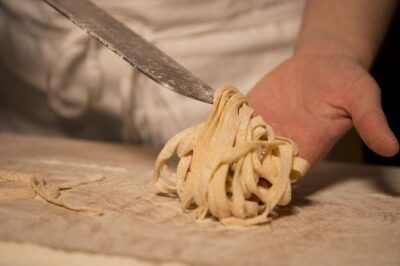
3 in 1 Cooking Class near Navona: Fettuccine, Ravioli & Tiramisu
Read our review →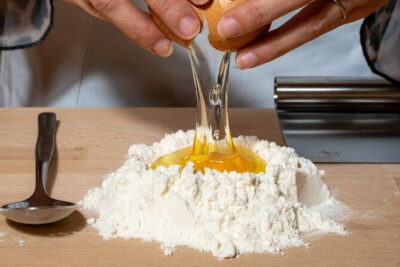
Pasta & Tiramisu Cooking Class with Unlimited Wine
Read our review →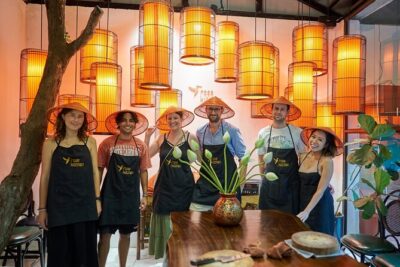
Hanoi Cooking Class: Culture, Local Market & Meaning CSR Impact
Read our review →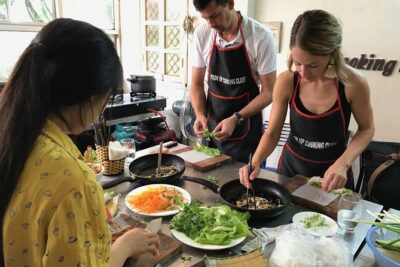
5 Traditional Dishes Hanoi Cooking Class with Market Trip
Read our review →
Cooking Class and Lunch at a Tuscan Farmhouse with Local Market Tour from Florence
Read our review →
Cooking Class, Market & Thai Herbs Garden Tour
Read our review →Lists this class appears in