REVIEW · LAZIO, ITALY
Rome: Homemade Pasta and Tiramisu Cooking Class
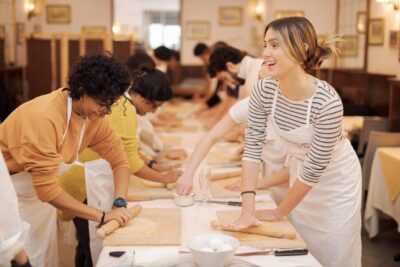
Fresh pasta is Rome’s best souvenir. This 2.5-hour class at Osteria San Giorgio gives you a useful taste of Roman food culture, not just another meal at a restaurant. You mix, knead, roll, and cut pasta by hand, then make tiramisu and sit down to eat what you prepared. I like the hands-on format, and I like that the lesson includes practical advice on ingredients and pasta shapes. The main drawback is that it is not suitable for vegans or anyone with gluten or lactose intolerance.
The class costs $65 per person, including ingredients, equipment, water, instruction, and a glass of wine. That is a fair price for a meal plus a skill you can take home. Instructors such as Kristian, Luca, and Elisabetta have been praised for making the class relaxed and easy to follow, though the experience can vary with the group and teacher on duty.
- Hand-cut Roman pasta: Work with dough from the first mix through kneading, rolling, and cutting.
- Three pasta shapes: Learn how pappardelle, tagliatelle, and tonnarelli differ in size and texture.
- A full meal at the restaurant: Eat the pasta and tiramisu you make, with a glass of wine included.
- Useful kitchen guidance: Get tips on choosing better ingredients and repeating the recipes at home.
- English instruction: The class is taught in English and is wheelchair accessible.
- Flexible booking: You can cancel up to 24 hours before the class for a full refund and reserve now while paying later.
What the $65 Rome Cooking Class Really Includes
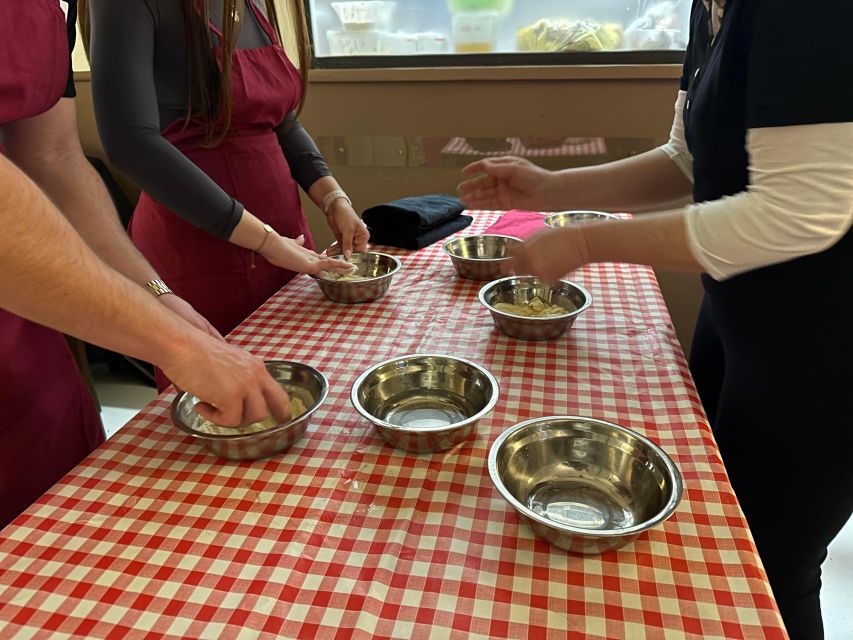
This is a compact food experience with a clear payoff. You do not simply watch a chef prepare dinner. You handle the ingredients, learn the basic method, and then eat the results at the same restaurant.
The price includes the class, instructor, ingredients, utensils, water, and one glass of wine. Since the finished pasta and dessert become your meal, the cost compares well with a standard restaurant dinner, especially if you value an activity as much as the food.
I also like the fact that the lesson focuses on two dishes you can repeat at home. Fresh pasta can seem tricky when you see it in a Roman kitchen, but the process here is broken into ordinary steps: mix, knead, roll, cut, cook, and eat. Tiramisu follows the same practical idea. You learn the method behind a familiar dessert rather than merely ordering a slice.
The class has earned a 5 out of 5 rating from 57 bookings, with repeated praise for friendly instruction, good food, and the relaxed mood. That is a strong signal, though you should still remember that a cooking class depends partly on the particular instructor and the people sharing your table.
Meeting at Osteria San Giorgio
You go directly to Osteria San Giorgio in Rome. The restaurant is both the meeting point and the setting for the lesson, so you do not need to move between a separate kitchen and dining room.
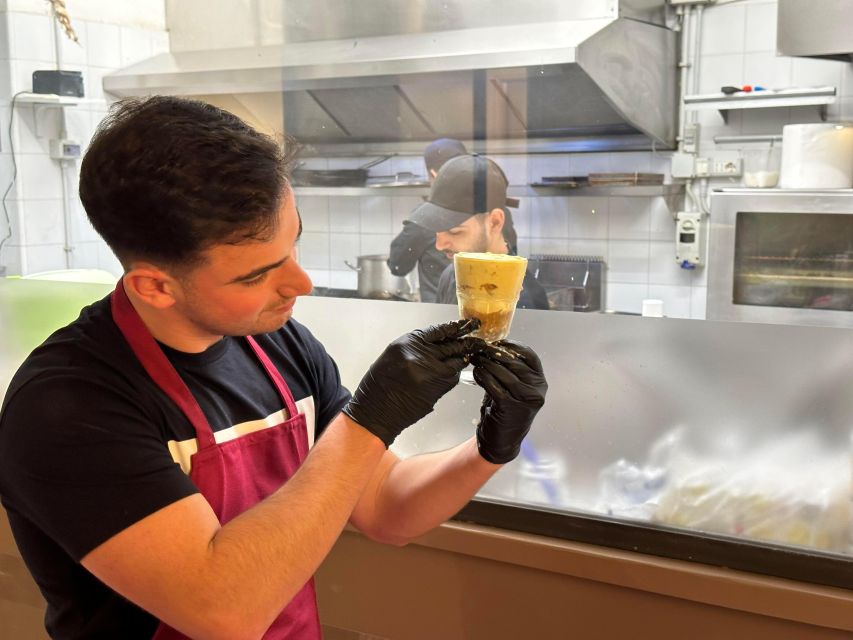
That restaurant setting gives the class a useful connection to Roman dining. You are not in a generic demonstration studio. You prepare food in a traditional restaurant, then eat it there with the staff nearby. One participant described the restaurant as beautiful and its staff as helpful during the pasta-making session.
The setting may feel more public than a private cooking school. One pair found that kitchen staff watched them closely while they cooked, which felt slightly uncomfortable. That is worth noting if you prefer a quiet, private lesson. At the same time, the class can sometimes be very small. One couple found that they were the only two people booked and ended up with what felt like a private lesson.
Because the group size is not guaranteed, you should expect some variation. A small group means more direct attention. A larger group may feel more social, but you may have less time for individual correction.
More Pasta Making Classes in Rome
- 3 in 1 Cooking Class near Navona: Fettuccine, Ravioli & Tiramisu
★ 5.0 · 7,376 reviews - Rome: Pasta Making Class with Wine, Limoncello, and Dessert
★ 4.9 · 3,177 reviews - Rome Cooking Class: Make Pasta and 3 Spritz Cocktails
★ 5.0 · 2,937 reviews
Mixing Flour, Water, and Roman Tradition
The pasta portion begins with the basics. You mix flour and water, knead the dough, roll it out, and cut it by hand. These are simple actions, but they show you what fresh pasta should feel like at every stage.
The instructor also explains the place of food in Italian life and gives background on the recipes. That cultural context matters. You learn why pasta shapes are not just decorative and why the texture, width, and sauce pairing can change the finished dish.
You also hear about selecting good ingredients. The advice is aimed at home cooks, so it can help you shop after returning from Rome. Instead of treating pasta as a restaurant secret, the class shows you how ordinary ingredients and careful handling produce a better result.
Do not expect an advanced chef course. The class is designed for people who want a practical introduction. If you already make fresh pasta often, some of the basic steps may feel familiar. For a first attempt, though, the format makes the task less intimidating.
Pappardelle, Tagliatelle, and Tonnarelli
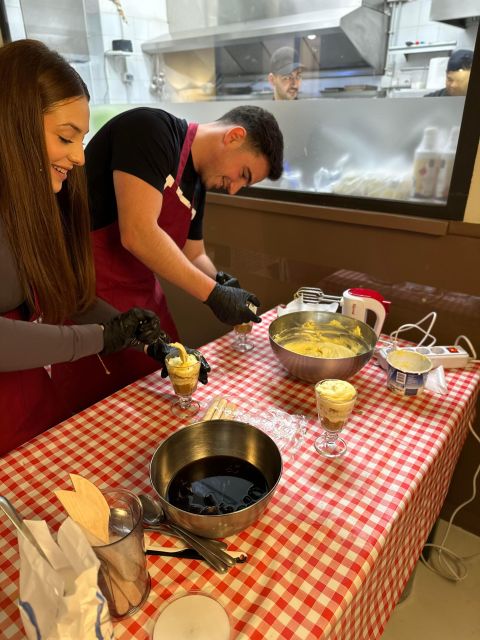
The class covers three pasta shapes: pappardelle, tagliatelle, and tonnarelli. Learning their differences adds more value than simply cutting noodles without knowing what you are making.
Pappardelle is the broadest of the three, giving you a wide ribbon with a substantial bite. Tagliatelle is narrower and more delicate. Tonnarelli is a thicker, square-shaped strand associated with Roman pasta dishes. The lesson helps you see how cutting changes the texture and the way sauce clings to the pasta.
You may also find that hand-cutting is less exact than factory-made pasta. That is part of the charm. Your strands may not all match perfectly, but the exercise teaches control and gives you a better sense of the dough.
The useful lesson is not simply remembering three names. It is learning that pasta shape affects the eating experience. Once you understand that, you can make more sensible choices in your own kitchen instead of using the same noodle for every sauce.
Making Tiramisu Without the Fuss
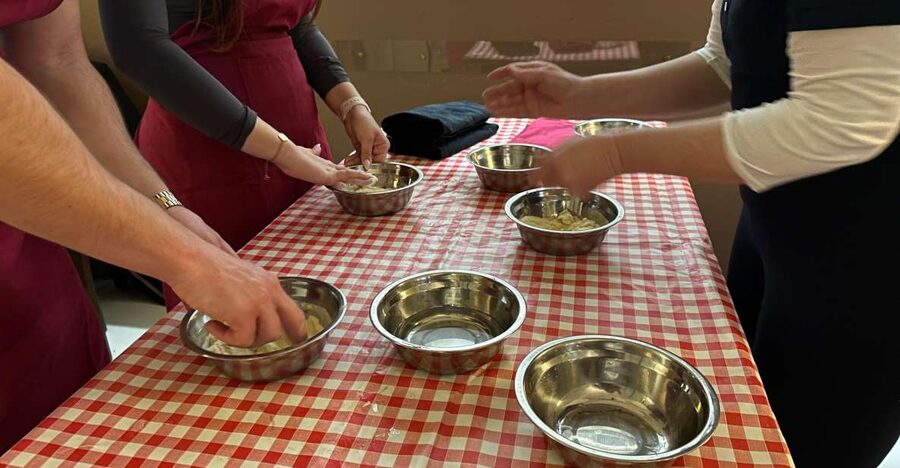
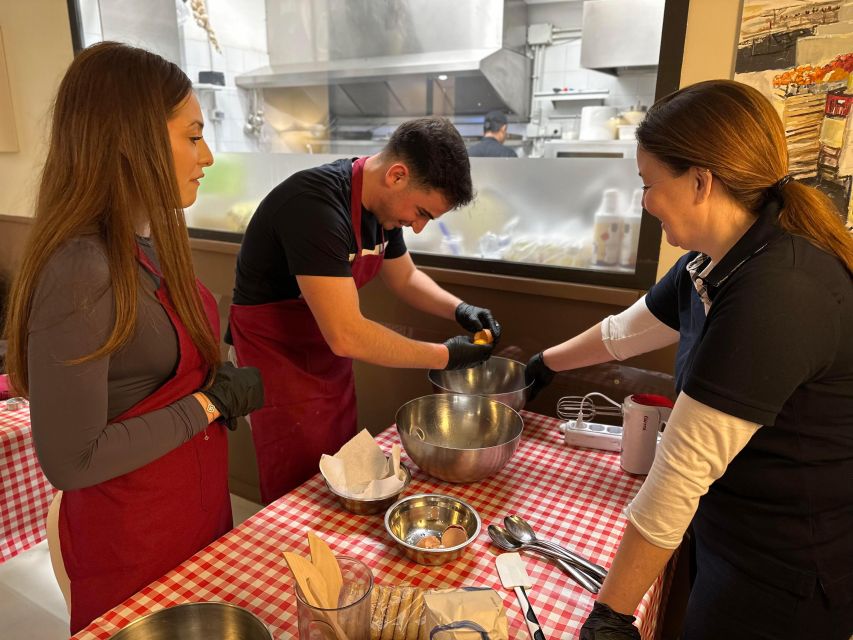
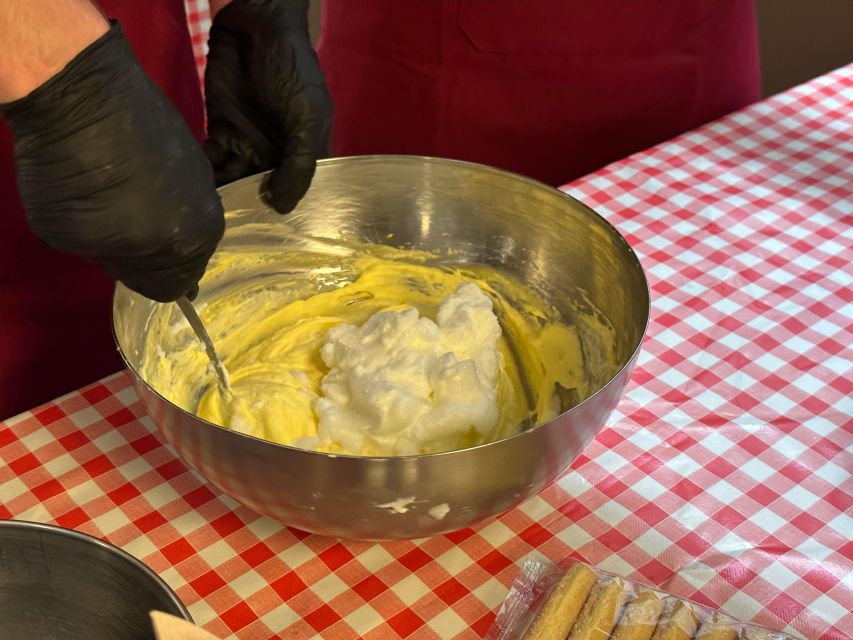
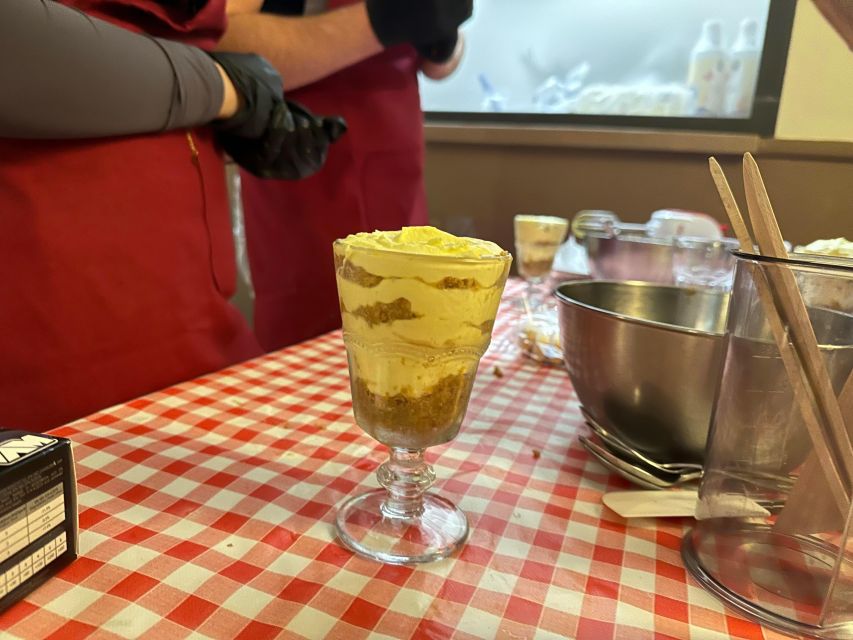
After the pasta, you prepare tiramisu. The dessert uses espresso-dipped ingredients and a creamy mixture, following the familiar Italian style.
This is a good second dish for the class because it requires a different set of skills. Pasta asks you to work with dough and pressure. Tiramisu asks you to measure, combine, and handle the dessert carefully. The change keeps the lesson moving and gives you both a main course and a sweet course to eat.
Several participants singled out the tiramisu as especially fun and surprisingly simple. That is useful for home cooks. The dessert looks refined on a restaurant plate, but the class presents it as something you can make for friends and family without turning your kitchen into a pastry shop.
The exact recipe details are not provided in advance, so you should not assume the class covers every possible tiramisu variation. The clear focus is the classic espresso-dipped preparation. If you have dietary restrictions involving dairy, this part will be a problem, since the experience is not suitable for people with lactose intolerance.
More Tiramisu and Dessert Classes in Rome
- Rome: 3-in-1 Fettuccine, Ravioli, and Tiramisu Cooking Class
★ 4.9 · 2,704 reviews - Fettuccine & Tiramisù: Cooking Class with Wine & Limoncello
★ 4.9 · 2,103 reviews - Rome: Pasta & Tiramisu Cooking Class near the Spanish Steps
★ 4.8 · 1,395 reviews - Cooking Class in the Heart of Rome: Pizza and Tiramisu Making
★ 5.0 · 1,330 reviews
Sitting Down to Eat Your Own Work
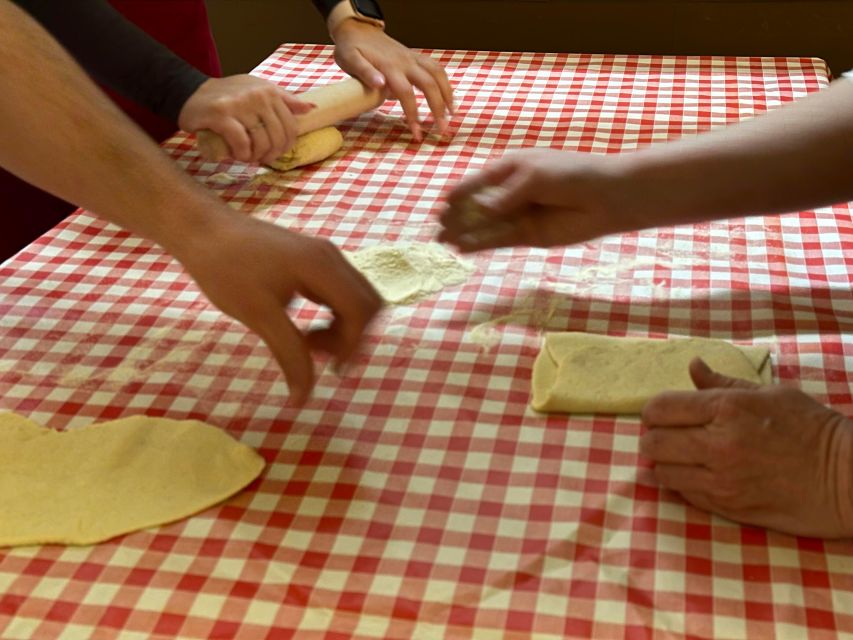
The final meal is the reward for the practical work. You eat the pasta and tiramisu you prepared, with a glass of wine included. Water is also provided.
I like this ending because it turns the class into a complete evening rather than a short demonstration. You get to taste the result while the instructions are still fresh in your mind. If the pasta is uneven or the tiramisu looks less polished than a restaurant version, that is part of the learning process.
The meal also gives you time to talk with the instructor. Kristian, Christian Simeoni, Luca, and Elisabetta have each been praised for friendly teaching, clear explanations, and helpful conversation about Rome, food, wine, and local life. Those comments suggest that the best part of the class may be the human contact as much as the recipes.
Wine is included, but the supplied details do not promise a choice of several wines or a formal tasting. Think of it as one glass to accompany your meal, not a wine course.
The Instructors Make the Difference
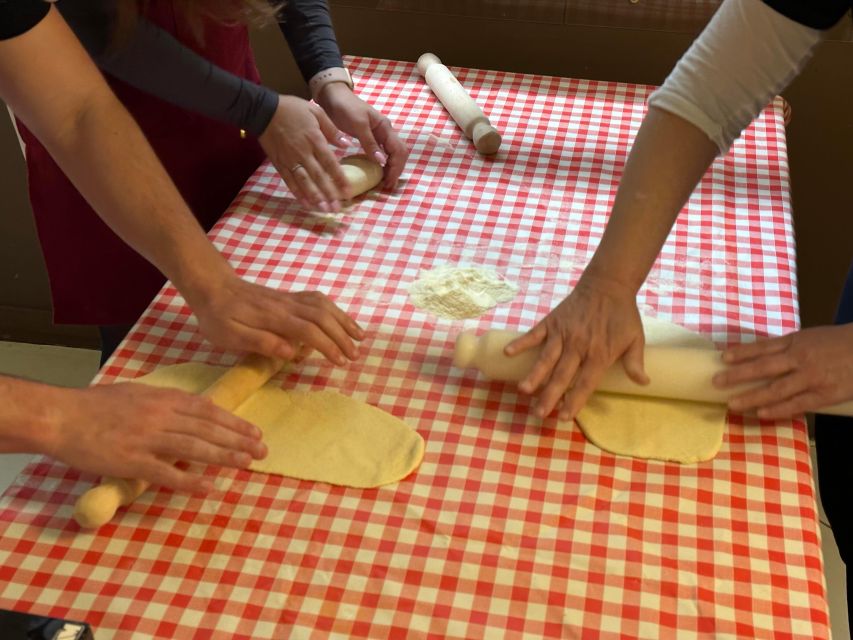
The teaching style appears to be one of the strongest parts of this experience. Kristian was described as relaxed, friendly, and experienced. Luca was praised for his food knowledge and clear teaching. Elisabetta was noted for patient, detailed explanations, especially when working with children.
That matters because pasta-making benefits from quick corrections. A teacher can show you how firmly to knead, how thin to roll the dough, or how to cut the strands without crushing them. A patient instructor also makes the class more comfortable for someone who has never cooked a complex dish before.
The class has worked well for couples, families, and first-time cooks. One participant took two children and found that they enjoyed the activity. Another couple said one partner had never made anything so complex before, yet still had fun and produced good pasta.
You should feel free to ask questions about Italian cooking and Rome. The instructors have also offered local suggestions and additional recipes. Just keep in mind that different teachers may bring different personalities and teaching habits to the session.
Who Should Book This Experience?
I would recommend this class to you if you want an activity that combines food, conversation, and a proper meal. It suits couples looking for something beyond monuments, families with children who enjoy hands-on tasks, and solo visitors who like meeting people around a shared table.
It is also a sensible choice for anyone who wants to return home with a repeatable skill. The lesson is not just about eating Italian food in Italy. It shows you how to create two familiar dishes with basic equipment and ingredients.
The class may be less appealing if you want a silent, private kitchen lesson or a highly technical course. You may also find the restaurant setting a little exposed, particularly if staff or other diners are watching as you work.
This is not suitable for vegans, people with gluten intolerance, or people with lactose intolerance. The available information does not list substitute menus, so you should not book expecting the recipes to be adapted.
Timing, Access, and Booking Details
The class lasts 2.5 hours. That is long enough for a full cooking session and meal without taking up an entire day in Rome. Check the available starting times when booking, then allow enough time to reach Osteria San Giorgio.
English is the listed teaching language. The experience is wheelchair accessible, which is useful if you need step-free access or a more manageable activity during a busy sightseeing schedule.
You can cancel up to 24 hours before the start for a full refund. You can also reserve now and pay later, giving you some flexibility while arranging your Rome plans.
Because the class includes a meal, schedule it when you are ready to eat afterward. It would be wasteful to place it right before a large dinner reservation.
Is the Pasta Class Worth It?
Yes, for most visitors who eat dairy, gluten, and animal products, this is a strong-value Rome activity. The $65 price covers instruction, ingredients, cooking tools, a meal, dessert, water, and wine. More important, you leave knowing how to repeat the dishes instead of carrying home another souvenir that sits on a shelf.
Book it if you like friendly instruction, simple Roman food, and the chance to make something with your own hands. Skip it if you want a private culinary setting, a specialist pasta workshop, or a class that can handle vegan, gluten-free, or lactose-free diets.
For a first cooking class, the balance is appealing: enough background to give the food meaning, enough practice to make the lesson useful, and enough food at the end to make the effort worthwhile.
FAQ
Where does the Rome cooking class meet?
The meeting point is Osteria San Giorgio in Rome.
How long does the cooking class last?
The experience lasts 2.5 hours.
What food will I prepare?
You will make fresh pasta and tiramisu. The pasta lesson covers pappardelle, tagliatelle, and tonnarelli.
Is food and drink included?
Yes. Ingredients and utensils are included, along with water and one glass of wine. You eat the pasta and tiramisu you prepare.
Is the class taught in English?
Yes. English is the listed language for the instructor and class.
Is the experience wheelchair accessible?
Yes, the activity is listed as wheelchair accessible.
Can I cancel the booking?
Yes. You can cancel up to 24 hours in advance for a full refund. You can also reserve now and pay later.
Who should not book this class?
The class is not suitable for vegans, people with gluten intolerance, or people with lactose intolerance.
Just added around Rome
- Testaccio: Home Cooking Cacio e Pepe, Amatriciana, Carbonara★ 4.9 · 57 reviews
- Super Fun Pasta and Gelato Cooking Class by the Vatican★ 5.0 · 6 reviews
- Spritz and Spaghetti Traditional Cooking Class in Rome★ 4.9 · 30 reviews
- ROME:Hands-On Lasagna & Marsala Tiramisu Cooking Experience”★ 5.0 · 3 reviews
- Rome: Trastevere Pasta Making Class★ 4.9 · 33 reviews
- Rome: Traditional Pasta and Tiramisu Cooking Class★ 5.0 · 4 reviews
- Rome: Vatican Food Tours, Cooking classes & Free Tours★ 4.9 · 11 reviews
- Rome: Small Group Pasta cooking class near Piazza Navona★ 4.9 · 8 reviews
Pasta Making Classes, compared.


3 in 1 Cooking Class near Navona: Fettuccine, Ravioli & Tiramisu
Read our review →
Pasta & Tiramisu Cooking Class with Unlimited Wine
Read our review →
Pasta Making Class with Wine, Limoncello, and Dessert
Read our review →
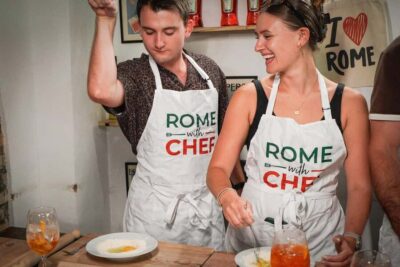
Rome Cooking Class: Make Pasta and 3 Spritz Cocktails
Read our review →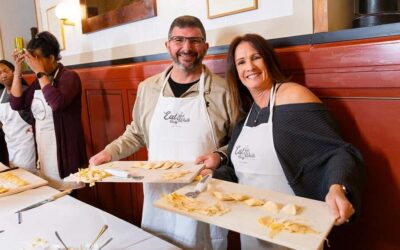
3-in-1 Fettuccine, Ravioli, and Tiramisu Cooking Class
Read our review →