REVIEW · GREATER MEXICO CITY, MEXICO
Mexico City: Authentic Mexican Cooking Class & Market Tour
Mexico City tastes better when you shop first. This small-group cooking class links a Roma Norte market walk with hands-on recipes, so you learn where Mexican ingredients come from before putting them in the pan. I especially like the stop at the organic tortillería, where you can see native-corn nixtamalization, and the chance to try unusual foods such as chicatana ants and chinicuil worms. The main drawback is the $204 price, which is high for a half-day activity, even with lunch and drinks included.
The setting also sounds appealing: a polished, intimate studio rather than a crowded demonstration kitchen. Guides including Pame, Mariana, Pamela, Lorena, and Chef Kristel have been praised for warm teaching and good energy. Still, this is not a casual food walk. You will handle ingredients, taste alcohol, walk through a market, and spend about 4.5 hours on your feet, so it suits curious adults more than families with young children.
Key things to know before booking
- Mercado de Medellín comes before the cooking: You taste native-corn quesadillas, cacao, seasonal fruit, ice cream, and even Mexican insects before returning to the studio.
- The class covers four substantial courses: You prepare sopes with two salsas, a vegetable mextlapique, white mole, and pastel de elote.
- The group is limited to seven people: That gives you a real role in the cooking instead of leaving you to watch from the edge.
- Drinks are part of the meal: Agua fresca, Mexican craft beer, Oaxacan mezcal, and wine from Valle de Parras are included.
- The market visit has a cultural purpose: You learn about ingredients, chili varieties, local food customs, and the neighborhood’s Colombian heritage.
- Food restrictions matter: The experience is not suitable for people with nut allergies, children under 12, or people with mobility impairments.
Starting with agua fresca in Roma Norte
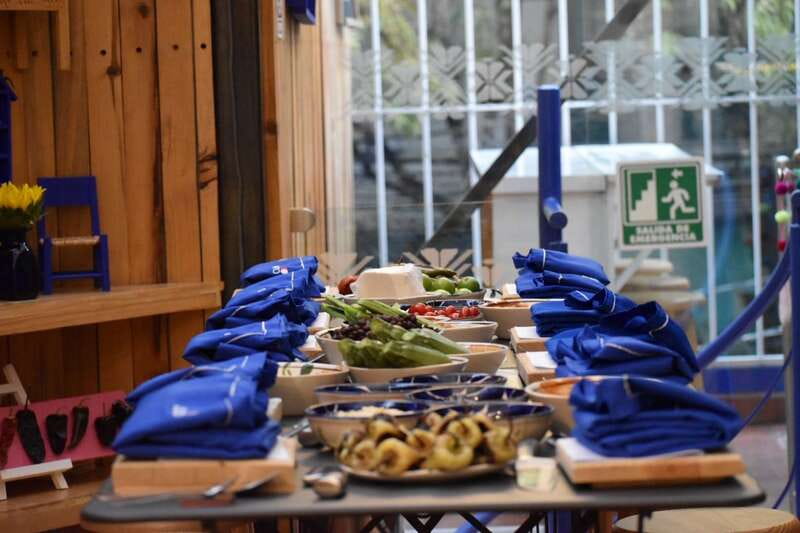
The experience begins at Aura Cocina Mexicana, at Medellín 191a in Roma Norte. Since Medellín street numbers are not in sequence, use the cross streets, Chiapas and Tapachula, to find the studio more easily.
You begin with agua fresca, selected Mexican coffee, or a special infusion. This is a useful soft landing before the market walk. The chef also introduces the broad story of Mexican cuisine, giving you a little context before you start tasting and cooking.
I like this order. You are not simply handed a recipe and told to copy it. You first hear why ingredients matter, then see them in their everyday setting, and only after that return to prepare them. It gives the cooking a purpose.
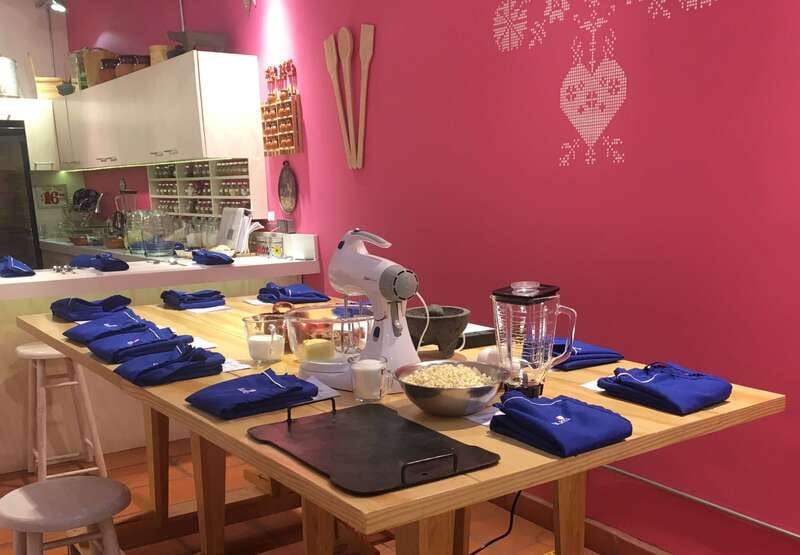
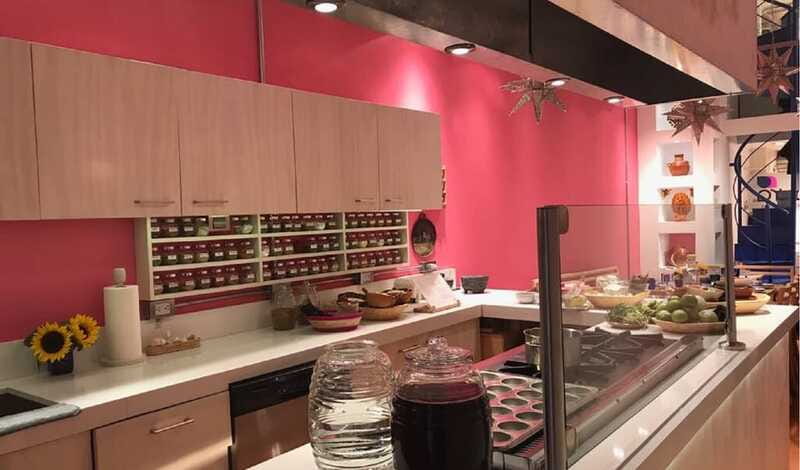
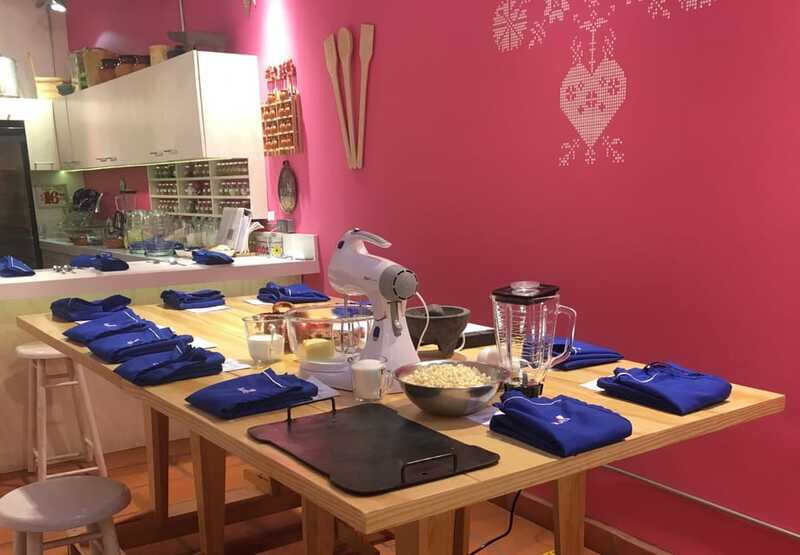
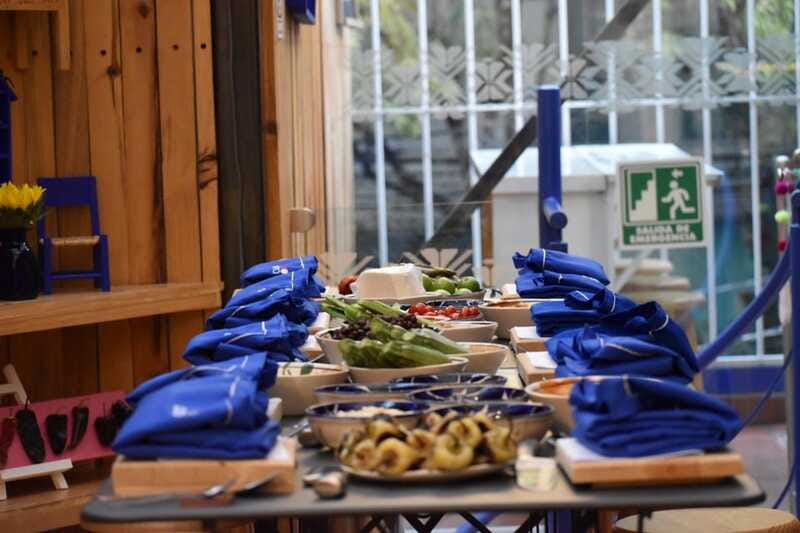
The studio itself is described as contemporary in design, intimate, and carefully arranged. That matters in a class of this type. A pleasant kitchen helps, but the real test is participation. With no more than seven people, each person can take on a task. One person may work on salsa while another handles vegetables or the mole.
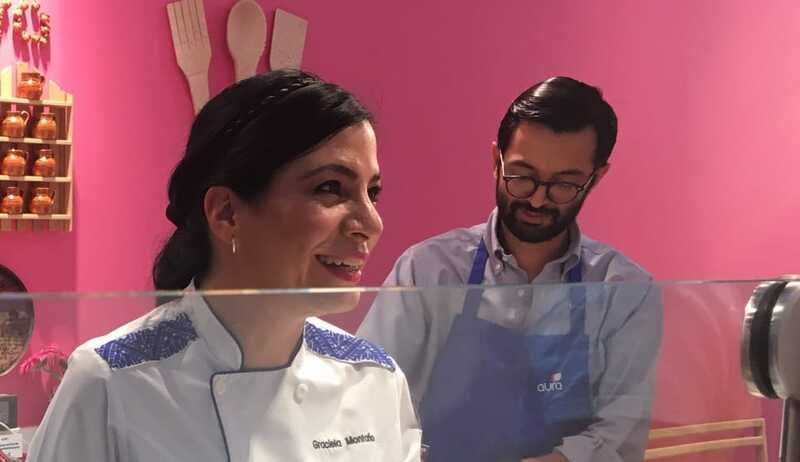
Several guides have received especially warm praise for their teaching style. Pame is described as funny, friendly, and good at making sure no one is left out. Mariana is praised for her calm manner and command of Mexican food. Lorena and Chef Kristel also received strong marks for making the class both relaxed and useful. Your instructor will depend on the date, but the consistent strength is personal attention.
More Cooking Classes with a Market Tour in Mexico
- Puerto Vallarta Cooking Class Experience with Market Tour
★ 5.0 · 698 reviews - Mexican Cooking Class with Food Market Visit in Mexico City
★ 5.0 · 506 reviews - Flavors of Oaxaca: Cooking Class with No Set Menu and Local Market Tour
★ 4.5 · 333 reviews
Mercado de Medellín, a useful look at daily food culture
The walk to Mercado de Medellín is short, and the market visit is more than a quick produce stop. You learn how the market is organized, what its different halls sell, and how the neighborhood uses it.
This is where the experience feels most connected to ordinary Mexico City life. The market is full of ingredients in their working form, not just arranged for a visitor’s camera. You see the foods that shape Mexican cooking, then taste several of them at selected stands.
The organic tortillería is a highlight. You try quesadillas made with native corn and can view the traditional nixtamalization process. Nixtamalization is the treatment of corn with an alkaline solution, a method that changes its texture and makes it suitable for tortillas and related foods. You do not need a technical lecture to appreciate the point: the tortilla is not a neutral wrapper. The corn variety and preparation affect the final flavor.
The chili stand adds another useful lesson. Instead of treating chili as one broad category called spicy, the guide explains different varieties and shows how cooks use them. One of the most practical lessons described in the class is learning to build different levels of heat from separate parts of the same chili.
You also taste raw cacao and handmade chocolate from Oaxaca. This gives you a helpful contrast between the plain ingredient and the finished sweet. Mexican chocolate is not only a candy flavor. Cacao connects to drinks, sauces, and ceremonial food, and the class later brings that idea back with water-based chocolate.
Cacao, insects, fruit, and ice cream
The market tasting takes you beyond familiar tacos and tortillas. You may sample crickets, chicatana flying ants, and chinicuil worms. The guide presents them as part of Mexican food culture rather than as a stunt.
If you are nervous, the small group helps. You can ask questions, take a cautious taste, and watch others try them first. Several people found that the guide’s good humor made this easier. Still, nobody should book this expecting a menu limited to familiar foods. The unusual tastings are part of the point.
Seasonal native fruit adds a gentler part of the walk. The examples include mamey, chicozapote, and tuna. Their names may be familiar only from a cookbook or market stall, so this is a good chance to taste them in Mexico rather than guess what they are like at home.
The stop at a handmade ice cream seller rounds out the market visit. The exact flavors can depend on the season, but the larger lesson remains useful: Mexican food is not limited to savory dishes. Fruit, cacao, corn, chilies, and local sweets all belong to the same food culture.
You should expect to walk through a working market, not a quiet museum. People are shopping, stands are active, and space may be tight. Wear comfortable shoes and keep your belongings secure. The activity is not suitable for people with mobility impairments, so consider that before booking.
Four courses, four different views of Mexican cooking
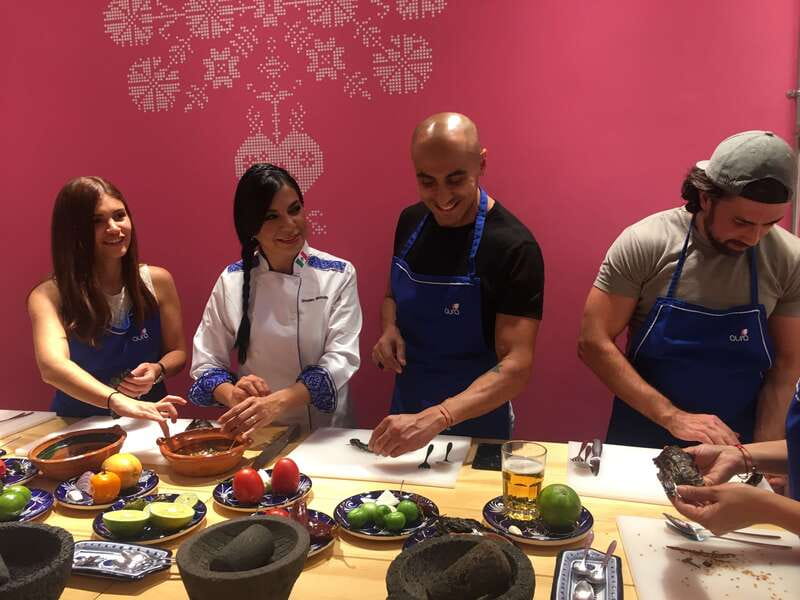
After the market, you return to the studio for the cooking portion. You receive an apron, ingredients, printed recipes, and guidance from the professional chef. The class is hands-on, so you should expect to chop, mix, shape, season, and assemble rather than simply watch a chef work.
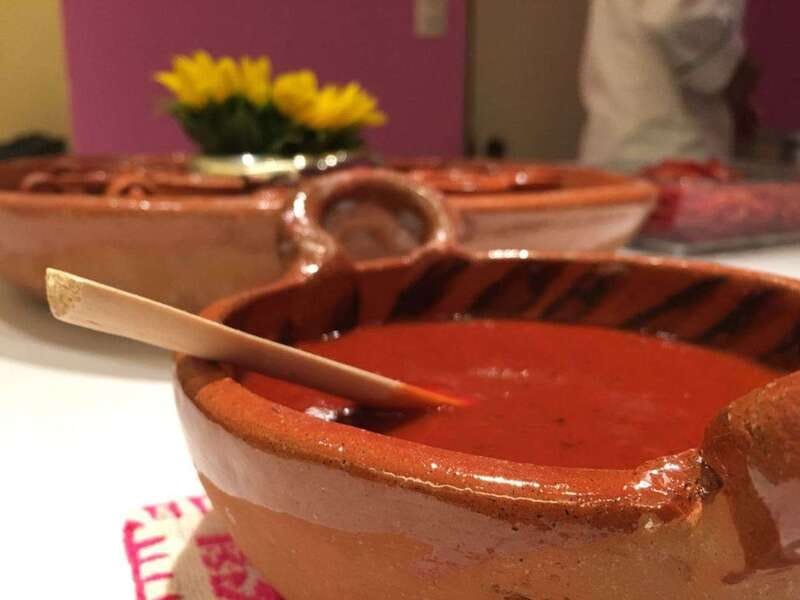
The first course is built around Mexican antojitos, or small street-style foods. You prepare sopes with two salsas: a red molcajete sauce and a green sauce.
This is a smart first recipe. Sopes teach you how masa behaves, and the two salsas show how a meal can change through roasting, grinding, and balancing heat. You also get a practical lesson in seasoning. The point is not to make one sauce that everyone finds equally mild. It is to understand how different ingredients and chili parts create different levels of heat.
The second course is a vegetable mextlapique. It has a pre-Hispanic origin and is a type of tamal without masa. That difference makes it especially interesting. Many people arrive expecting tamales to mean a masa-based parcel, so this dish expands that idea.
The vegetable filling is covered with hierbabuena sauce. It is a simpler preparation than the white mole, but it has plenty of character. One participant singled out the tamale-style course as simple but full of flavor, which is a useful clue for cooks who prefer dishes that do not require a long ingredient list.
More Cooking Classes with a Market Tour in Mexico City
- Essence of Mexico: Authentic Mexican Cooking Class & Market Tour
★ 5.0 · 289 reviews - Mexican Street Tacos Hands-on Cooking Class and Market Tour
★ 5.0 · 37 reviews - Coyocán: Market Tour and Cooking Class
★ 5.0 · 23 reviews - Market tour, cooking class & three-course Mexican feast
★ 4.4 · 17 reviews
White mole is the class centerpiece
The white mole is likely the most demanding and most memorable recipe of the day. It comes from central Mexico and is associated with celebrations. Its pale color comes from ingredients such as white pine nuts, almonds, peanuts, blonde raisins, and chile guero.
The sauce can be served with chicken, mushrooms, or panela cheese. This choice is helpful if your group has different preferences, though people with nut allergies cannot take part safely because the dish includes several nuts.
Mole often intimidates home cooks. There are many ingredients, and the finished sauce depends on balance more than on a single strong flavor. The class breaks the process into manageable steps, which is where the chef’s guidance matters most. You learn how a pale sauce can have depth without relying on the dark chocolate profile many people associate with mole.
If you want to take home one lesson that changes your cooking, this may be it. The class teaches a dish that looks special enough for a celebration but also explains the method in plain steps. Just remember that the printed recipe is a guide, not a promise that every ingredient will be easy to find outside Mexico.
Pastel de elote and a proper sit-down meal
The final dish is pastel de elote, a sweet corn cake or cornbread served with water-based chocolate. One person who normally dislikes cake praised this course highly, which tells you that the corn flavor and texture make it different from a standard dessert.
Pastel de elote also brings the day back to one of Mexico’s core ingredients. Corn appears in the market, in the antojitos, in the mextlapique tradition, and again in dessert. That repeated thread makes the menu feel planned rather than like four unrelated recipes.
Once the cooking is done, you sit down to eat the meal you helped prepare. Pairings include agua fresca, Mexican craft beer, Oaxacan mezcal, and premium white or red wine from Valle de Parras.
The drinks add real value to the $204 cost, especially if you enjoy tasting regional beverages. They also give the chef a chance to explain how different drinks work with spicy, nutty, smoky, or sweet foods. On the other hand, if you do not drink alcohol, part of the price is less useful to you. Agua fresca is included, but the experience is designed around a full food and drink pairing.
What the $204 price really buys
At $204 per person, this is not a bargain cooking lesson. You are paying for a small group, a professional chef guide, a market walk, all ingredients, printed recipes, a four-course lunch, and several alcoholic drinks.
The group size is important. Seven participants or fewer means you are more likely to get direct help and a genuine role in each course. A cheaper class with a large audience might offer a demonstration, but this one is built around doing the work yourself.
The market tastings also add value. You are not paying only for recipes. You get an introduction to native corn, chili varieties, Oaxacan cacao, unusual ingredients, seasonal fruit, and Mexican drinks. For someone who wants a food-focused understanding of Mexico City, the package makes more sense than the price alone suggests.
Still, you should compare it with your own priorities. If your main goal is a low-cost lunch, this is too expensive. If you want a polished half-day activity with food, instruction, market access, and drinks in one package, the cost is easier to defend.
The official duration is 4.5 hours. One participant described spending more than five hours, so do not schedule an important appointment immediately afterward. The class may run longer if the group is engaged and the cooking takes its natural pace.
Who will enjoy this class most
I would recommend this experience to adults who like to ask questions, taste unfamiliar foods, and take part in the preparation. It is also a strong choice for couples or small groups who want more than a restaurant meal.
You will get the most from it if you are open to food history, regional ingredients, and hands-on work. The guides bring in topics ranging from pre-Hispanic food traditions to the modern character of Roma Norte and its Colombian heritage.
It is less suitable for children under 12, people with nut allergies, and anyone with mobility limitations. The menu includes nuts, the market requires walking, and the experience is not designed for a young-child audience.
The class is offered in English and Spanish. That makes it accessible to many international visitors, but you should still be ready to follow instructions in a working kitchen. An apron is provided, but comfortable clothing and shoes remain a sensible choice.
Free cancellation is available up to 24 hours before the activity, and you can reserve now and pay later. Those terms help if your Mexico City schedule is still taking shape.
Should you book Aura Cocina Mexicana?
Book it if you want to understand Mexican food through ingredients, not just eat a finished plate. The combination of Mercado de Medellín, native-corn tortillas, unusual tastings, white mole, and a small hands-on class gives the day real substance.
Skip it if you want a cheap meal, dislike alcohol, have a nut allergy, or would rather watch than cook. For everyone else, the $204 fee is justified by the small group, generous food and drink, and the chance to leave with recipes and new confidence.
My best practical advice is to arrive ready to taste widely and allow more than the stated 4.5 hours if your schedule permits. This is a food class with a market attached, not a quick cooking demonstration. That is exactly why it can become one of the more useful food experiences in Mexico City.
FAQ
Where does the experience begin?
It begins at Medellín 191a in Roma Norte, Mexico City. Medellín street numbers are not in sequence, so use the location between Chiapas and Tapachula streets to find the meeting point.
How long does the experience last?
The stated duration is 4.5 hours. One participant reported spending more than five hours, so it is wise to leave extra time after the class.
How many people can join the class?
The group is limited to seven participants.
Which languages are available?
The experience is offered in English and Spanish.
What food will I prepare?
You prepare sopes with red and green Mexican salsas, a vegetable mextlapique with hierbabuena sauce, white mole served with chicken, mushrooms, or panela cheese, and pastel de elote with water-based chocolate.
What drinks are included?
The meal includes agua fresca, Mexican craft beer, Oaxacan mezcal, and premium white or red wine from Valle de Parras.
Is the market tour included?
Yes. The tour of Mercado de Medellín is included, along with selected tastings such as quesadillas, cacao, chocolate, seasonal fruit, ice cream, and Mexican insects.
Are ingredients and recipes provided?
Yes. The experience includes all ingredients, a printed recipe collection, and an apron for use during the class.
Who should not book this experience?
It is not suitable for children under 12, people with nut allergies, or people with mobility impairments.
More Mexican Cooking Classes in Mexico
- Cabo San Lucas Mexican Cooking Class Experience and Local Markets
★ 5.0 · 915 reviews - Mexican Cooking from Scratch in a Local Home in Tulum
★ 5.0 · 585 reviews - Authentic Mexican Legacy Cooking Class in Cabo San Lucas
★ 5.0 · 530 reviews - Playa del Carmen Mexican Cooking Class
★ 5.0 · 306 reviews
Just added around Mexico
- Private Pre-Hispanic Cooking Class in Mexico City with Martha★ 5.0 · 19 reviews
- Flavors of Mexico: Cancun Cooking Class & Market Visit★ 4.5 · 5 reviews
- Private Authentic Mexican Cooking Class in Cancun with Alberto★ 5.0 · 3 reviews
- Tasty Mexican Cooking Class with Feast in Riviera Maya★ 5.0 · 99 reviews
- Cancun small group Cooking Class with Local Chef★ 5.0 · 61 reviews
- 4h Cooking Class in Cancun with 8 Recipes & Bottomless Drinks★ 5.0 · 50 reviews
- Cancun Hands-On Mexican Cooking Class★ 4.5 · 95 reviews
- Private Mexican Cooking Class in Your Cabo San Lucas Villa or Condo★ 5.0 · 8 reviews
Cooking Classes with a Market Tour, compared.
Hanoi Cooking Class: Culture, Local Market & Meaning CSR Impact
Read our review →
5 Traditional Dishes Hanoi Cooking Class with Market Trip
Read our review →
Cooking Class and Lunch at a Tuscan Farmhouse with Local Market Tour from Florence
Read our review →
Cooking Class, Market & Thai Herbs Garden Tour
Read our review →
Authentic Cooking Class with Market & Farm Visit
Read our review →
Paella Cooking Experience & Boqueria Market Tour
Read our review →
Cooking Class Hoi An:Local Market, Basket Boat, Fishing & Cooking
Read our review →