
REVIEW · LOMBARDY, ITALY
Lake Garda: Cooking Class at a Local’s Home
Fresh pasta tastes better by hand. This three-hour class in a local home gives you two things I especially like: practical pasta skills you can repeat at home and a warm look at everyday Italian cooking. You also make tiramisu and begin with prosecco and snacks, so the lesson feels like a social meal rather than a formal demonstration.
I also like the personal touch of the Cesarine network, which pairs you with a home cook using family recipes. The main consideration is the location: you receive the full address only after booking, and one booking party found the final meeting information confusing. You should allow time to confirm the address and plan your taxi or other transport carefully.
Key points at a glance
- Three dishes in three hours: Make two pasta types from scratch, then prepare the classic tiramisu.
- Hand-rolled sfoglia: Learn the traditional Italian method of rolling fresh pasta dough by hand.
- A real home setting: The class takes place in a local host’s home, not a restaurant or cooking school.
- Aperitivo included: Prosecco, water, wine, coffee, and small snacks are part of the experience.
- Warm hosts matter here: Mariolina and Ada are praised for their patience, hospitality, and clear teaching.
- Plan the arrival carefully: The host’s exact address arrives after booking, and transportation is not included.
Why this Lake Garda cooking class feels different
Lake Garda offers plenty of scenic sightseeing, but a cooking class gives you a different kind of Italian memory. Instead of simply looking at villages, water, and historic streets, you spend an afternoon or evening doing something ordinary and meaningful: making the food families have prepared for generations.
This class is hosted through Cesarine, an Italian network of local home cooks. The word refers to a home cook, and that tells you what to expect. You are not entering a polished restaurant kitchen with a professional chef running a fast-paced show. You are visiting a local home, meeting a host, and learning recipes connected to family cooking.
That difference is the chief appeal. A home cook can explain how pasta should feel between your fingers, how thin the dough needs to be, and when a mixture is ready by sight and touch. Those small lessons are often more useful than watching someone else perform every step perfectly.
The class is offered in Italian and English. Your host may vary, but two particularly well-praised hosts are Mariolina, also called Maria, and Ada. Their patience and friendly manner helped make the session comfortable for adults, families, and an older teenager.
A few more cooking classes around Italy worth a look
- Florence: Pasta Cooking Class with Unlimited Wine
★ 4.9 · 10,285 reviews - 3 in 1 Cooking Class near Navona: Fettuccine, Ravioli & Tiramisu
★ 5.0 · 7,376 reviews - Florence: Pasta & Tiramisu Cooking Class with Unlimited Wine
★ 4.9 · 6,708 reviews
Starting with prosecco and Italian snacks
The food lesson begins with an Italian aperitivo. You receive prosecco and nibbles before getting fully to work, creating a relaxed start to the class.
This is more than a pleasant extra. In Italy, an aperitivo is a social ritual. It gives everyone a moment to meet the host, settle into the home, and warm up before handling flour, eggs, and other ingredients. If you arrive with companions, this is an easy point at which to talk through the plan for the meal.
The included drinks are broader than the opening prosecco. Water, wine, and coffee are included as well. The exact selection is not specified, so you should not expect a full wine tasting or a large spread of appetizers. Think of it as a friendly welcome and a small pre-meal bite.
I like this structure because it prevents the class from feeling rushed. You are not pushed straight from the front door to the work surface. The aperitivo helps set the tone for a shared meal, which is exactly what the experience is trying to create.
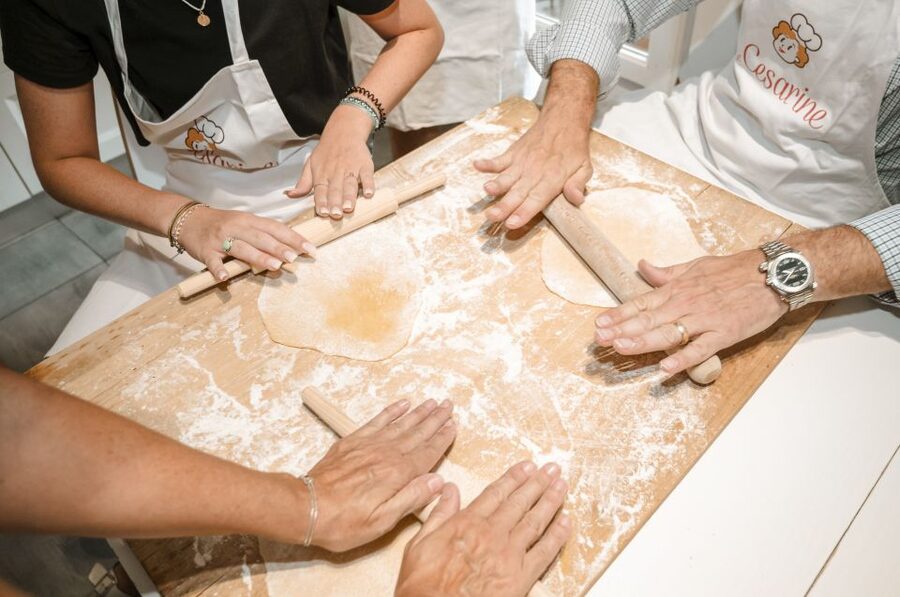
Rolling sfoglia by hand
The main lesson is fresh pasta. You learn to roll sfoglia, the thin sheet of pasta dough, by hand.
This is the part that requires the most useful hands-on attention. Pasta machines can produce even sheets quickly, but rolling by hand teaches you what the dough is doing. You learn how it changes as it is worked, how thin it should become, and how to handle it without tearing it.
Your host guides you through the process rather than expecting you to arrive with cooking skills. That makes the class suitable for beginners. You should still be ready to get involved. This is not a passive food demonstration where you watch while someone else does the work.
The joy here is slightly messy and very practical. Your first sheet may not be perfectly even. That is fine. The point is to understand the technique well enough to try again at home. The instruction is built around doing, correcting, and learning by touch.
The class includes two different pasta types. The precise shapes are not specified in advance, so you should not book expecting a particular regional form. The benefit is variety: you get to see how one basic dough can become two distinct dishes.
Making two pasta recipes from scratch
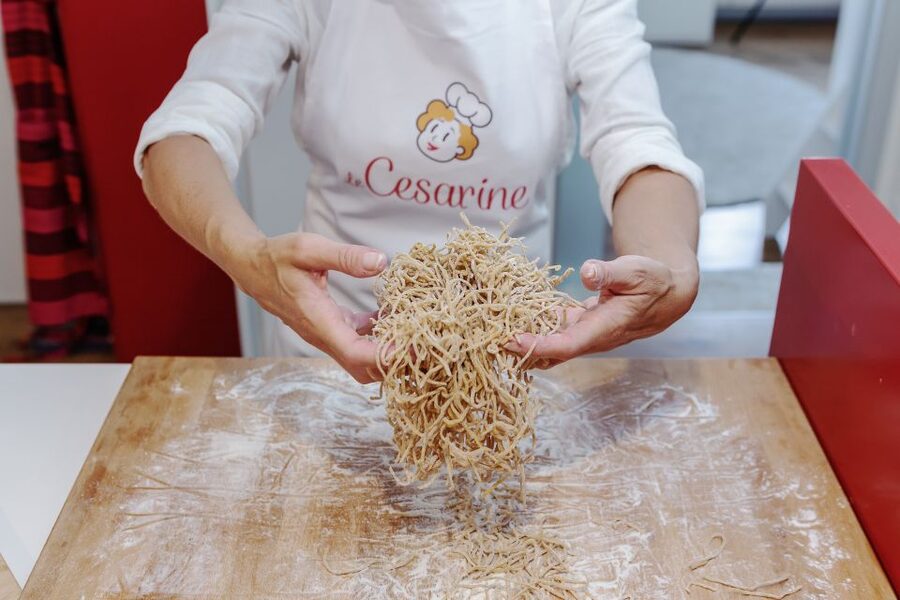
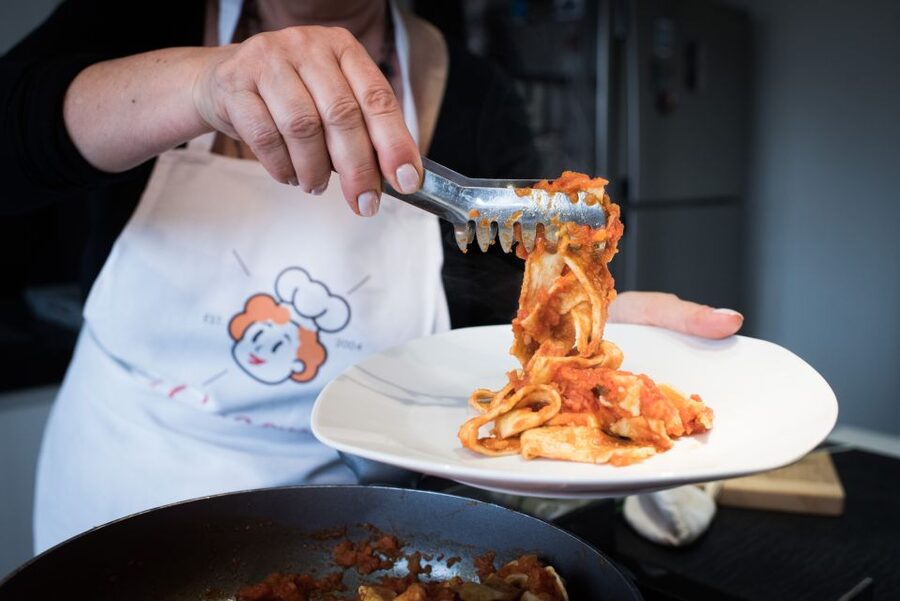
After preparing the dough, you work on two iconic pasta preparations. The recipes are described as simple, which is good news if you want skills you can actually use after returning home.
A complicated recipe can be fun once, but simple pasta is more likely to become part of your regular cooking. You can pay attention to dough texture, shaping, and timing instead of trying to memorize a long list of difficult steps.
Your host uses recipes from a family cookbook and focuses on local Italian cooking. That gives the class a stronger sense of place than a generic pasta workshop. The food connects to the host’s own household traditions, even though the exact recipes may vary with the cook you are matched with.
The two dishes are not merely samples for you to watch. You prepare them and later taste both. That makes the lesson satisfying in two ways: you gain a technique and sit down to eat the result.
A useful expectation is that the class teaches a method, not professional kitchen speed. You may leave knowing how to make fresh pasta, but you will not necessarily learn every sauce, filling, or regional variation found around Lake Garda. For a three-hour class, the focus stays sensibly narrow.
Same place, a different thing to cook:
- Cooking Class and Lunch at a Tuscan Farmhouse with Local Market Tour from Florence
★ 5.0 · 4,831 reviews - Rome: Pasta Making Class with Wine, Limoncello, and Dessert
★ 4.9 · 3,177 reviews - Pastamania – Florence Pasta Making Class
★ 5.0 · 3,050 reviews - Rome Cooking Class: Make Pasta and 3 Spritz Cocktails
★ 5.0 · 2,937 reviews
Preparing tiramisu before the meal
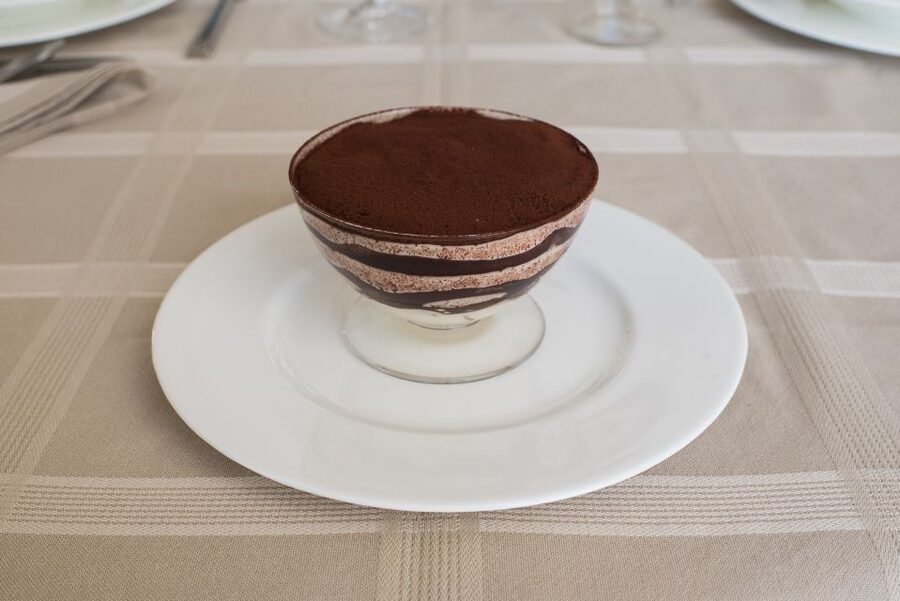
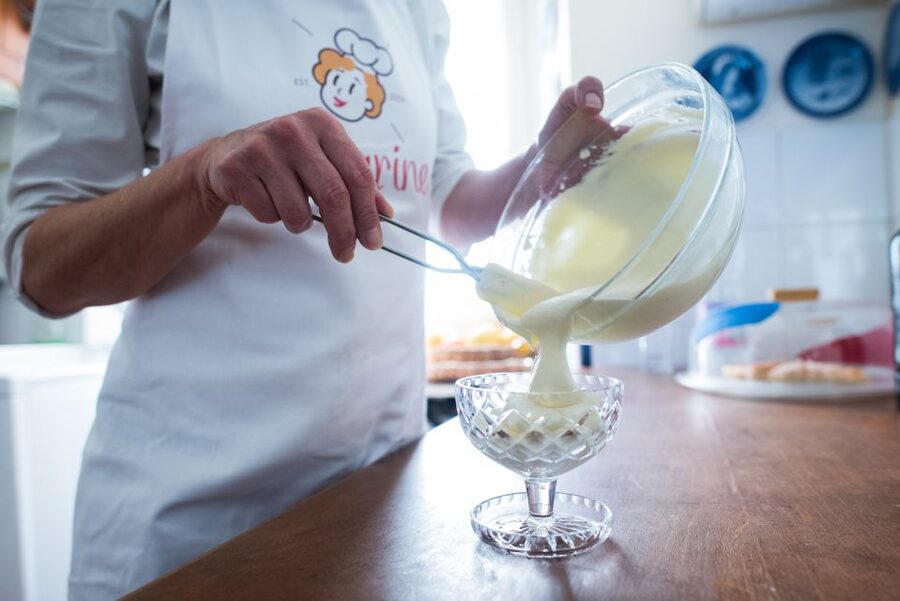
Tiramisu supplies the sweet finish. You learn how to prepare this well-known Italian dessert as part of the same session.
Including tiramisu is a smart choice. Pasta alone would make a fine class, but the dessert gives you another recipe with a different rhythm and set of techniques. It also means the meal covers a full Italian course, from aperitivo to pasta to dessert.
One family group made tiramisu first and pasta afterward. That order may vary, but it has a practical advantage: the dessert can be ready to rest while you turn your attention to the pasta. You should not assume the exact sequence is fixed, since the host may arrange the class around the kitchen and timing.
The value of learning tiramisu at home is similar to the value of learning pasta. You get a recipe you can recreate for friends and family, and you can ask questions while making it. The final tasting is included, so you do not have to wonder whether your work turned out well.
Sitting down to taste what you made
The best part of the class is the meal at the end. You taste both pasta recipes and the tiramisu, with drinks included.
That closing meal gives the activity a clear payoff. You have handled the ingredients, shaped the pasta, and prepared the dessert. Now you get to sit down and enjoy the results with your host and the other participants.
The atmosphere appears to be one of the strongest reasons to book. Mariolina is described as making people feel like they were visiting a long-lost family member. Ada’s home was described as beautiful, and the setting made the cooking feel like a special chance to enter a real Italian household.
You should keep your expectations grounded. This is not described as a formal restaurant dinner with a printed menu and multiple courses beyond the food you prepare. It is a home-cooked meal built around your class work. That is precisely why it can feel personal.
For families, the hands-on format works well. One family found it especially enjoyable with an older teenager, who could take part in the cooking rather than simply wait at the table. Younger children may or may not suit the class, since no minimum age or child-specific arrangement is provided.
The real cost of $152.93 per person
At $152.93 per person, this is not a low-cost meal. You are paying for three hours of instruction, a home visit, an aperitivo, beverages, two pasta preparations, tiramisu, and the food you make and eat.
The price makes more sense if you value personal contact and active participation. A restaurant meal could cost less, but it would not teach you how to roll sfoglia or create two pasta types. A standard cooking school might offer more equipment and a larger professional kitchen, but it may not provide the same household setting.
The value is strongest for people who want a memorable activity rather than a quick meal. If you are curious about Italian food and expect to cook the recipes again, the class gives you something to take home beyond photographs.
The value is weaker if your main goal is a cheap introduction to pasta or if you dislike group cooking. The information does not specify group size, so you should ask if that matters to you. You also should not expect transportation to be included. The price covers the culinary experience, not your journey to the host’s home.
Getting to a private home in Lombardy
The class does not use one public meeting point. It takes place at a local host’s home in Lombardy, and the full address is provided after booking for privacy reasons.
This arrangement helps protect the host, but it requires more planning from you. When you book, provide the neighborhood where you are staying and explain how you plan to reach the host’s home. You should also send any food allergies or intolerances at that time, or email them with your booking reference and name.
Once those details are received, the operations team sends the host’s name, telephone number, and full address. Keep those details available on the day of the class.
One party was initially confused because the destination appeared to be only 0.8 kilometers away shortly before the activity, while the actual address was about 15 minutes by taxi. The practical lesson is simple: confirm the final address with your hotel or host before leaving, and do not rely on an early map marker.
The activity ends back at the host’s home. Transportation is not included, and the experience is not suitable for wheelchair users. These points matter more here than on a normal restaurant visit because the destination is private and may not be obvious from the first booking details.
Who should book this experience
I would recommend this class to you if you want a social food experience with real participation. It suits couples, families with older teenagers, and anyone who likes the idea of learning a recipe while meeting a local host.
It is also a good choice if you have already seen the famous Lake Garda sights and want an activity that changes the pace. Three hours in a kitchen gives you a break from sightseeing and a chance to connect with Italian culture through ordinary food.
The class may not suit you if you need an accessible venue, dislike uncertain meeting arrangements, or want a tightly scheduled professional workshop. The private-home format has charm, but it also means the host, home, and final address vary.
You should also tell the organizers about allergies before the day of the class. The experience is built around food, so this is not a minor detail.
Booking flexibility and language
The class is offered in Italian and English. You can cancel up to 24 hours in advance for a full refund, and you can reserve now while paying later. Those policies are useful when your Lake Garda plans may change.
The activity lasts three hours, but starting times depend on availability. Check the available time before you book, especially if you are coordinating it with a boat trip, train, or other timed outing.
The customer operations team is available seven days a week for further questions. Use that support to confirm the host address, transport plan, language, or dietary needs before the class rather than trying to solve those issues at the door.
Should you book the Lake Garda pasta class?
Yes, if you want an authentic-feeling food activity and are happy to pay for personal instruction, a home setting, and a complete meal. The strongest reasons are the hand-rolled sfoglia, the two pasta types, the tiramisu lesson, and hosts such as Mariolina and Ada, whose patience helped make the class welcoming.
I would book it as a special afternoon or evening, not as a cheap way to eat. Confirm the final address, allow time for transport, share allergies in advance, and check whether the private home works for your mobility needs. If those details suit you, this is the kind of Lake Garda experience that can follow you home in the form of a recipe, a new skill, and a meal you will want to make again.
FAQ
Where does the cooking class take place?
The class takes place in a local host’s home in Lombardy. The full address is sent after booking for privacy reasons.
How long does the experience last?
The cooking class lasts three hours. Starting times depend on availability.
What will I learn to cook?
You will learn to make two pasta types from scratch and prepare tiramisu. You will also learn to roll sfoglia, or fresh pasta dough, by hand.
Is food included?
Yes. The class includes tasting both pasta recipes and the tiramisu you prepare.
Are drinks included?
Yes. Prosecco and snacks are included for the Italian aperitivo. Water, wine, and coffee are also included.
Is transportation included?
No. Transportation to and from the host’s home is not included.
What languages are available?
The experience is offered in Italian and English.
When will I receive the host’s address?
You receive the host’s full address and telephone details after booking and after providing the requested information for matching.
Can I share allergy information?
Yes. You should provide food intolerance and allergy details when booking or email them with your booking reference and name.
Is the experience wheelchair accessible?
No. The activity is not suitable for wheelchair users.
Can I cancel the booking?
Yes. You can cancel up to 24 hours in advance for a full refund. You can also reserve now and pay later.
Just added around Italy
- Cooking Class in a Sicilian countryhouse★ 5.0 · 5 reviews
- Cesarine: Home Cooking Class & Meal with a Local in Catania★ 4.5 · 10 reviews
- Cesarine: Market Tour & Home Cooking Class in Catania★ 4.0 · 6 reviews
- Cooking Class in Taormina with Lunch Included★ 5.0 · 2 reviews
- Cooking Class and Wine Pairing in Capri★ 5.0 · 57 reviews
- Cooking class in Capri for small groups★ 4.0 · 4 reviews
- Private Cooking Class Experience in Reggio Calabria★ 5.0 · 5 reviews
- Lezione di Cucina : Pasta Fresca★ 5.0 · 12 reviews
Cooking Classes, compared.

Half-Day Thai Cooking Class at Organic Farm in Chiang Mai
Read our review →

3 in 1 Cooking Class near Navona: Fettuccine, Ravioli & Tiramisu
Read our review →
Pasta & Tiramisu Cooking Class with Unlimited Wine
Read our review →
Hanoi Cooking Class: Culture, Local Market & Meaning CSR Impact
Read our review →
5 Traditional Dishes Hanoi Cooking Class with Market Trip
Read our review →
Cooking Class and Lunch at a Tuscan Farmhouse with Local Market Tour from Florence
Read our review →